DMZ Visit Guide 2026: Tours, Tips & What to Expect
Planning a trip to the edge of North Korea this year? Here is everything you need to know about the current JSA closure, the brand-new 2026 transit rules.
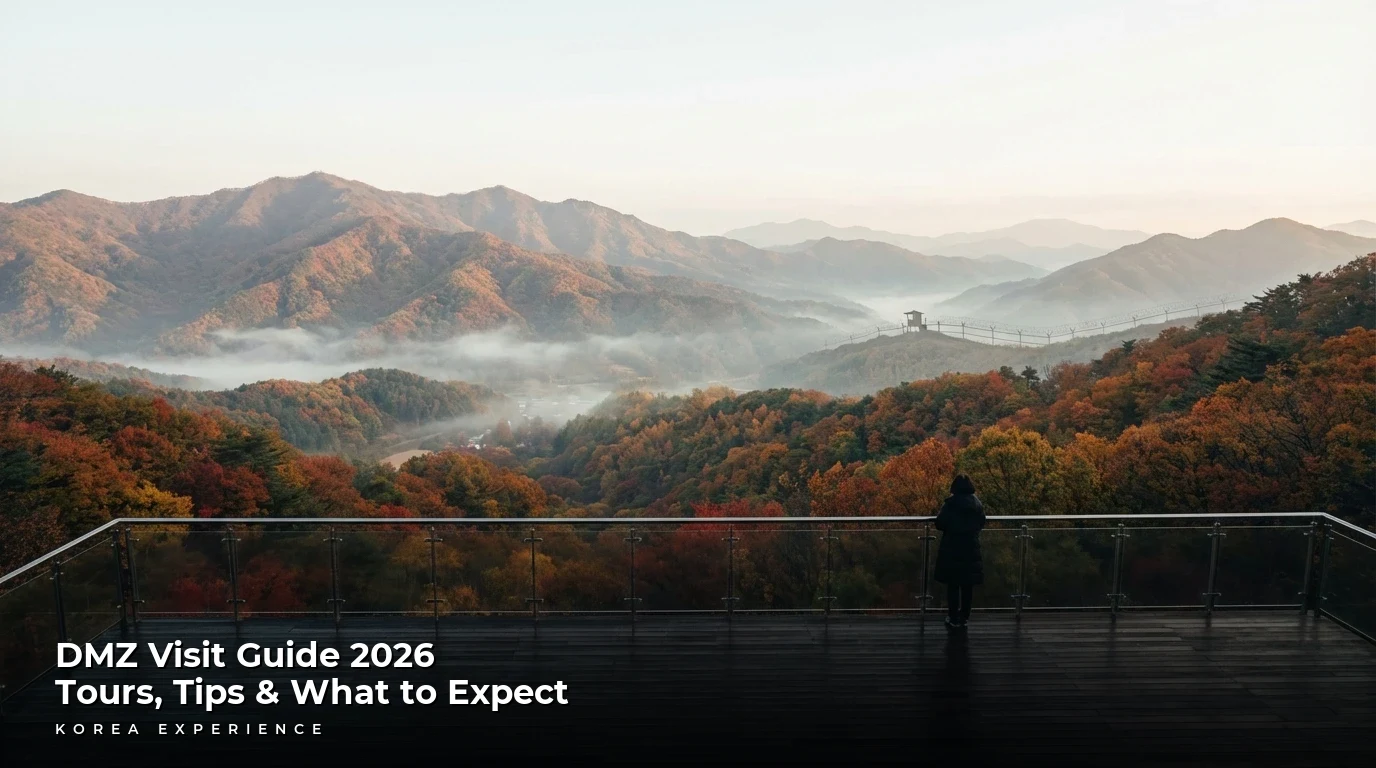
The short answer is: Yes, you can absolutely visit the DMZ right now, but the famous blue conference buildings at the JSA (Panmunjom) are still closed to the general public. You'll want to pivot your plans toward the Third Infiltration Tunnel in Paju or the high-tech Aegibong Peace Park if you want to see into the North.
The DMZ is just one option. Explore other best day trips from Seoul for more ideas. For booking details and tour comparisons, see our complete guide to booking a DMZ tour from Seoul.
Not sure which tour type to choose? Read our JSA vs tunnel tour comparison.
Key Takeaways
- 1The short answer is: Yes, you can absolutely visit the DMZ right now, but the famous blue conference buildings at the JSA (Panmunjom) are still closed to the general public. You'll want to pivot your plans toward the Third Infiltration Tunnel in Paju or the high-tech Aegibong Peace Park if you want to see into the North.
- 2Here is the big number you need to remember: ₩8,000. That is the small extra fee you pay to turn your 2026 Korail Pass into a 'Pass Plus,' which lets you use one single card for the KTX, subways, and even those remote buses near the border. It is about the cost of two convenience store lunches, and it will save you a massive headache.
- 3If you're coming as a tourist, don't even think about leaving your physical passport at the hotel. Look, I've seen it happen—people show up at the military checkpoint with just a photo of their passport on their phone, and the ROK Army soldiers will turn you around faster than you can say 'K-pop'. Grab that physical blue or red book and keep it in your bag!
📋 DMZ Visit Quick Facts
The DMZ History and 2026 Status
DMZ Timeline: From War Zone to Tourist Destination
Armistice Agreement
The 250km-long buffer zone is established following the Korean War.
3rd Tunnel Discovery
A massive North Korean invasion tunnel is found just 52km from Seoul.
DMZ Peace Trail
The government launches 11 walking routes along the border for the first time.
Travis King Incident
A US soldier runs across the JSA border, causing an immediate civilian tour shutdown.
Security Closures
Key trails in Paju and Cheorwon are closed due to rising regional tensions.
The DMZ Act
South Korean lawmakers propose a law to take over DMZ access from the UN Command.
Comparing Your DMZ Tour Options
DMZ Tour Options Comparison
| Feature | Paju (The Classic) | Cheorwon (The Wild) | Aegibong (The Modern) | Goseong (The Coastal) |
|---|---|---|---|---|
| Cost | ₩55,000+ | ₩72,000+ | ₩67,000 | ₩80,000+ |
| Travel Time | 1 hour from Seoul | 2+ hours from Seoul | 1.5 hours from Seoul | 3+ hours from Seoul |
| Activity | 3rd Infiltration Tunnel | 2nd Infiltration Tunnel | Starbucks & VR Museum | Unification Tower |
| Intensity | High (Steep walking) | Moderate (Monorail) | Low (Scenic) | Low (Museum focus) |
| Best For | First-timers | Nature/History lovers | Relaxed vibe/Coffee | Coastal scenery |
| 2026 Update | High-tech AR exhibits | Expanded train routes | 5G-enabled VR hubs | Reopening Peace Trails |
Paju DMZ Tour (3rd Tunnel)
- ✓Time Saver: Since it is only about 50km from Seoul, you can do a half-day trip and still be back in Myeongdong for dinner.
- ✓The 'Full' Story: You get to see the tunnel, the observatory, the Bridge of Freedom, and a real village inside the restricted zone.
- ✓Budget Friendly: Because of the high volume, competition among tour operators keeps prices relatively low for travelers.
- ✗The Crowds are Real: It is the most popular spot, so expect to wait in line for the tunnel and jostle for a spot at the telescopes.
- ✗Physical Burn: Walking back up that tunnel incline is no joke—it's like a 20-minute StairMaster session in a hard hat.
- ✗Strict Schedule: You are tied to your tour group bus. If you want to linger at the observatory, you usually can't because the bus is leaving.
How to Book and Visit
📖 How to book and survive your 2026 DMZ Trip
Step 1: Pick your tour and book 48 hours out
In 2026, the demand is huge, so don't wait until you arrive in Seoul. Use an app like Klook or Viator to grab a spot on a 'No Shopping' tour—trust me, you don't want to spend an hour in a ginseng factory when you could be looking at North Korea.
Step 2: The Physical Passport Check
The night before, put your physical passport in your day bag. Digital copies, scans, or photos are 100% not accepted by the ROK Army soldiers at the Unification Bridge.
Step 3: Head to the Meeting Point (Early!)
Most tours meet at Myeongdong Station or Hongik University Station. In 2026, Seoul traffic is crazier than ever, so give yourself an extra 15 minutes to find your specific bus.
Step 4: The Checkpoint and the Tunnel
When you reach the Civilian Control Line, stay quiet and have your passport ready for the soldier who will board the bus. Once inside, follow your guide's instructions about where you can and cannot take photos.
Honestly, the best hack for 2026 is the Aegibong Starbucks tour on a Monday. Most of the standard DMZ sites in Paju and Cheorwon are closed on Mondays, but Aegibong stays open. You get the world's closest view of North Korea while sipping a latte, and the crowds are half the size.
Pro Tip: Local Soybean Ice Cream
Grab a bowl of the local soybean ice cream in the Unification Village (Tongil-chon). It's made from beans grown right there in the DMZ soil, and it's surprisingly delicious.
Warning: No Gestures
Do not point or wave toward the North Korean side when you are at the observatories. The soldiers are watching through binoculars, and any "provocative" gestures can get the whole group kicked out or even cause a security incident.
No Korean Phone/ARC? Here's What To Do
Look, I know how annoying the Korean app verification is for tourists. For 2026, skip the official Korail apps and use Klook or Trazy for your bookings—they take international credit cards without needing a Korean ID. For getting around, download Naver Map (set it to English) and Papago for translations. If you need food delivered to your hotel, the Baemin app finally started allowing international phone numbers for verification in late 2025!
❓ Frequently Asked Questions
Have more questions?Contact us →
Your Complete DMZ Experience
So, you're sitting in your hotel in Seoul, scrolling through your phone, and wondering: "Can I actually go to the DMZ today?" The answer is a big, resounding YES, but there is a catch that catches most people off guard. Look, if you're picturing yourself standing in that famous blue room where world leaders shake hands (the JSA), I've got some bad news. As of February 2026, that specific spot is still totally off-limits to the general public. Ever since that US soldier made a run for the border back in 2023, the UN Command has been keeping those doors locked tight for security reviews.
But here is the thing: the DMZ is huge, and almost everything else is wide open and better than ever. In fact, in 2026, we're seeing a record-breaking 1.2 million people visiting the border regions annually. You've got three main "flavors" of the DMZ to choose from now. The "Classic" is the Paju tour, where you descend into the 3rd Infiltration Tunnel—a massive granite tube dug by the North that could move 10,000 soldiers an hour. The "Modern" vibe is at Aegibong, where you can literally sip a Starbucks latte while looking at North Korean villages just 1.4 kilometers away. And then there's the "Wild" route in Cheorwon, which is way less crowded and perfect if you want to see endangered cranes and a more authentic military atmosphere.
The biggest change in 2026 isn't just where you go, but how you get there. The South Korean government has poured a ton of money into making this "Smart Tourism." We're talking AR exhibits where you can hold up your phone and see what the border looked like in the 1950s, and a brand-new transit pass called the Korail Pass Plus that makes getting to these remote spots a breeze. So, don't let the JSA closure bum you out—there is so much to see that you'll actually find the half-day Paju tour feels a bit rushed!
Understanding the DMZ's History
To really get why the DMZ is such a weird, fascinating place, you have to look at how we got here. It's not just a line on a map; it's a living museum of a war that never technically ended. Back in 1953, the North and South signed an "Armistice" (basically a ceasefire, not a peace treaty), and they drew this 250km-long line across the peninsula. Each side backed off 2km, creating this 4km-wide "no man's land" filled with landmines, rare birds, and a whole lot of tension.
The story of the tunnels is what really changed things for tourists. In the 70s, the South started finding these massive secret tunnels—four of them so far—that the North had dug deep underground. The 3rd Tunnel, which is the one you'll likely visit, was found in 1978 after a defector gave them a tip. When the South confronted the North about it, the North actually claimed they were just "digging for coal" and even painted the walls black to try and prove it! Trust me, once you're down there looking at the granite, you'll see right through that story.
Fast forward to 2026, and we're in the middle of a whole new chapter. There is this huge legislative battle happening in Seoul right now called the "DMZ Act." Here is the deal: the South Korean government (under President Lee Jae Myung) wants to take control of who gets to enter the DMZ. For the last 70 years, the US-led UN Command has had the "sole authority" over access. The South Korean government says, "Hey, this is our land, we should decide when tourists can visit our peace trails". The UN Command says, "Wait a minute, the Armistice says we're in charge to prevent another war". This tug-of-war is why some trails in Paju and Goseong were closed in 2024 and are only just now starting to reopen in 2026.
Your Action Plan
Alright, let's wrap this up so you can get out there and explore. Your first 24 hours in Korea will be much smoother if you follow this simple plan: Download K.Ride and Uber while you're still on the airport Wi-Fi. Book your DMZ tour through Klook or Viator for early morning pickup. Make absolutely certain your physical passport is in your day bag—not a photo, not a scan, the actual booklet.
For your first ride from the airport, try using the tour company's shuttle service. It's low-stress and gives you a chance to meet other travelers. Once you complete your DMZ tour and return to Seoul, you'll realize that the Korean DMZ experience is actually one of the most unique tourist activities in the world. It's heavy, it's educational, and standing at the edge of one of the last Cold War frontiers while surrounded by 2026 technology is a perspective you just can't get anywhere else.
Sources
- DMZ Tour Official Portal - Real-time pricing and JSA status
- KORAIL Tourism Development - Info on 2026 DMZ Peace Train expansion
- Korea JoongAng Daily - Details on the 2026 DMZ Act controversy
- VVIP Travel Seoul - Comparison of tunnel tours and Aegibong Starbucks info
- Visit Korea (KTO) - Identification requirements and regional tourism infrastructure
About the Author
Korea Experience Team
Written by the Korea Experience editorial team - experts in Korean medical tourism, travel, and culture with years of research and firsthand experience.
Explore more in Travel & Tourism
From Seoul's neon-lit streets to Jeju's volcanic landscapes — discover the best of Korea with insider travel tips, itineraries, and seasonal guides.
Browse All Travel & Tourism ArticlesContinue Reading
Explore more articles you might find interesting
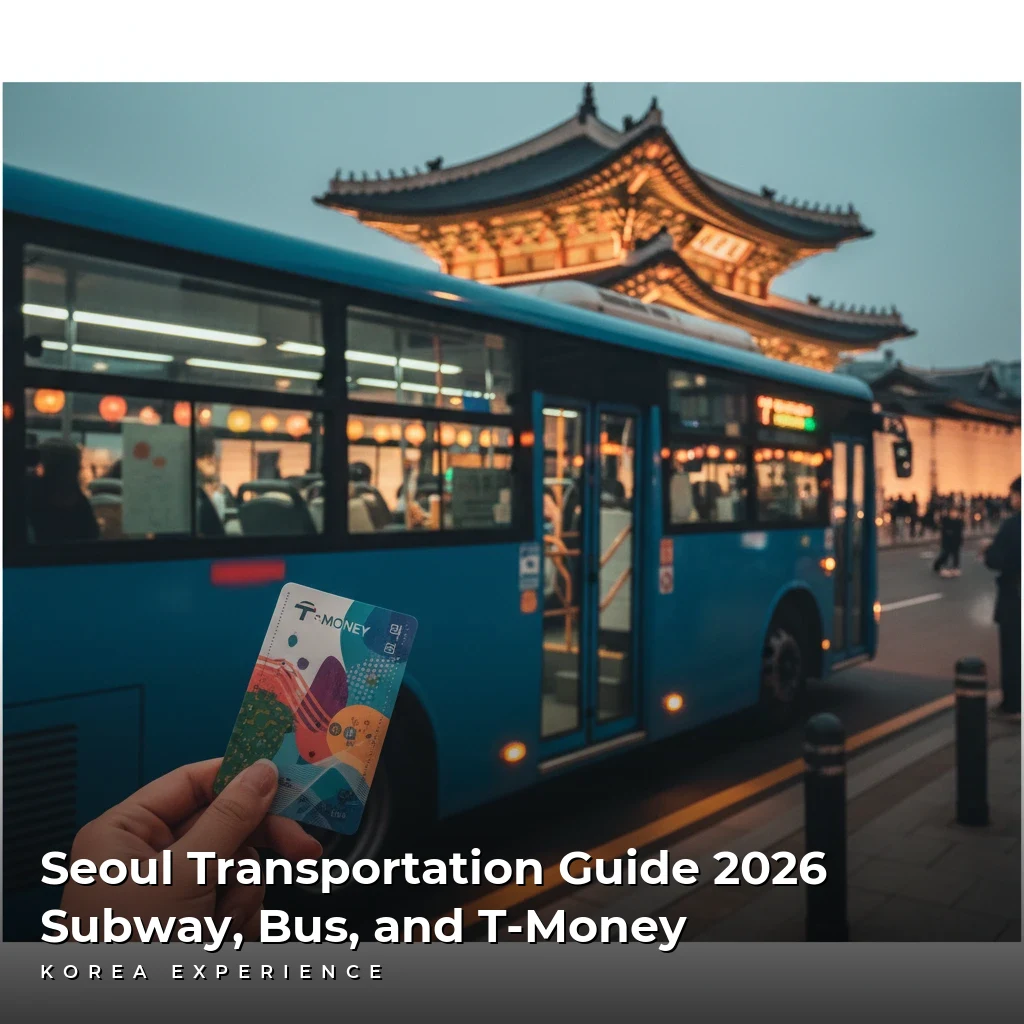
Master Seoul's 2026 transit system. From the Climate Card saving you ₩62,000 to new AREX schedules, here is everything tourists need to navigate like a local.

Everything you need to know about renting traditional Korean dress in Seoul including latest 2026 prices, style comparisons, and palace entry rules.

Don't let the rain ruin your trip. Here is the ultimate guide to Korea's 2026 monsoon season, featuring 15+ indoor activities and essential survival tips.
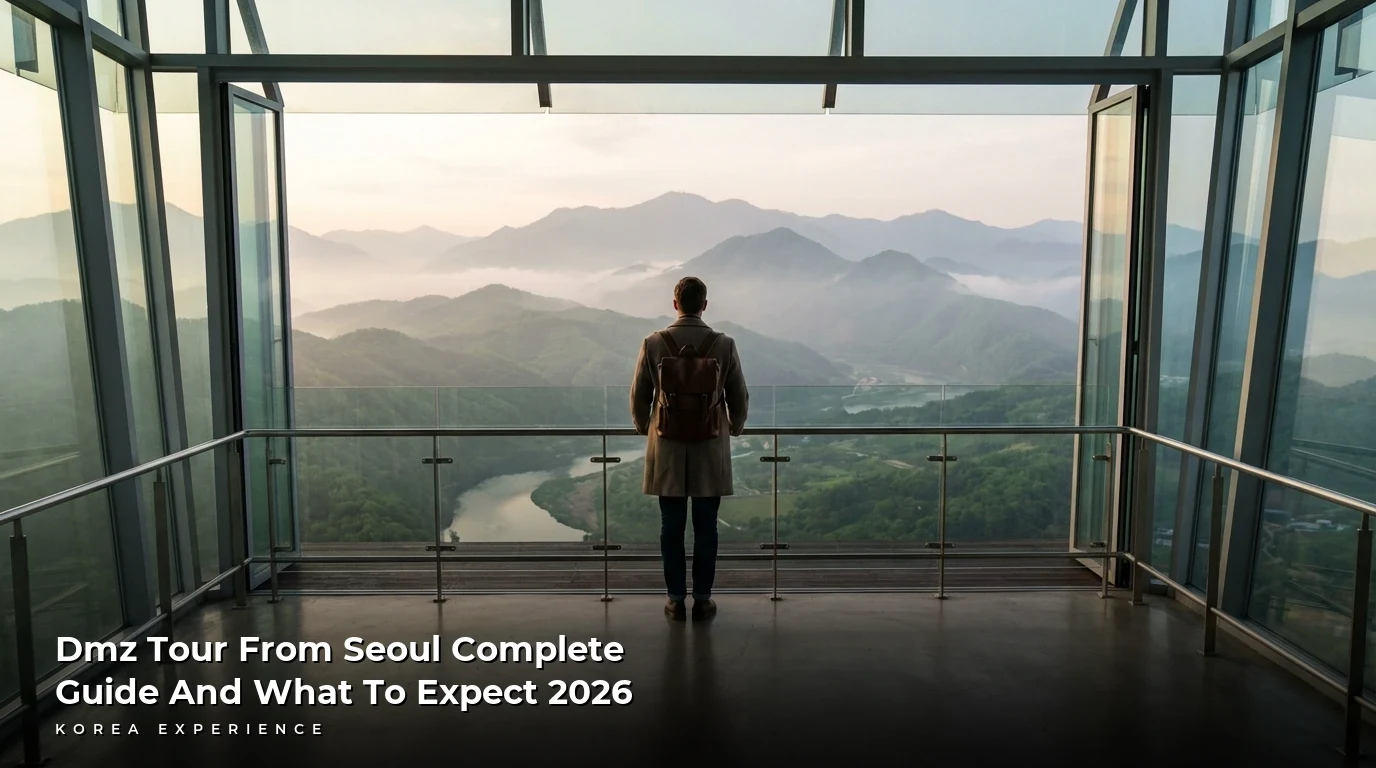
Comprehensive 2026 guide to DMZ tours from Seoul. Includes booking tips, JSA status updates, dress codes, and price comparisons starting at ₩55,000.

Planning a trip for Korea's 2026 cherry blossoms? Here is the full forecast, from Jeju's March 22nd bloom to Seoul's April 4th peak, plus top viewing spots.

So, you are in Seoul, your head is pounding from that 14-hour flight, or maybe you went a little too hard on the spicy tteokbokki—don't worry, I have got you.