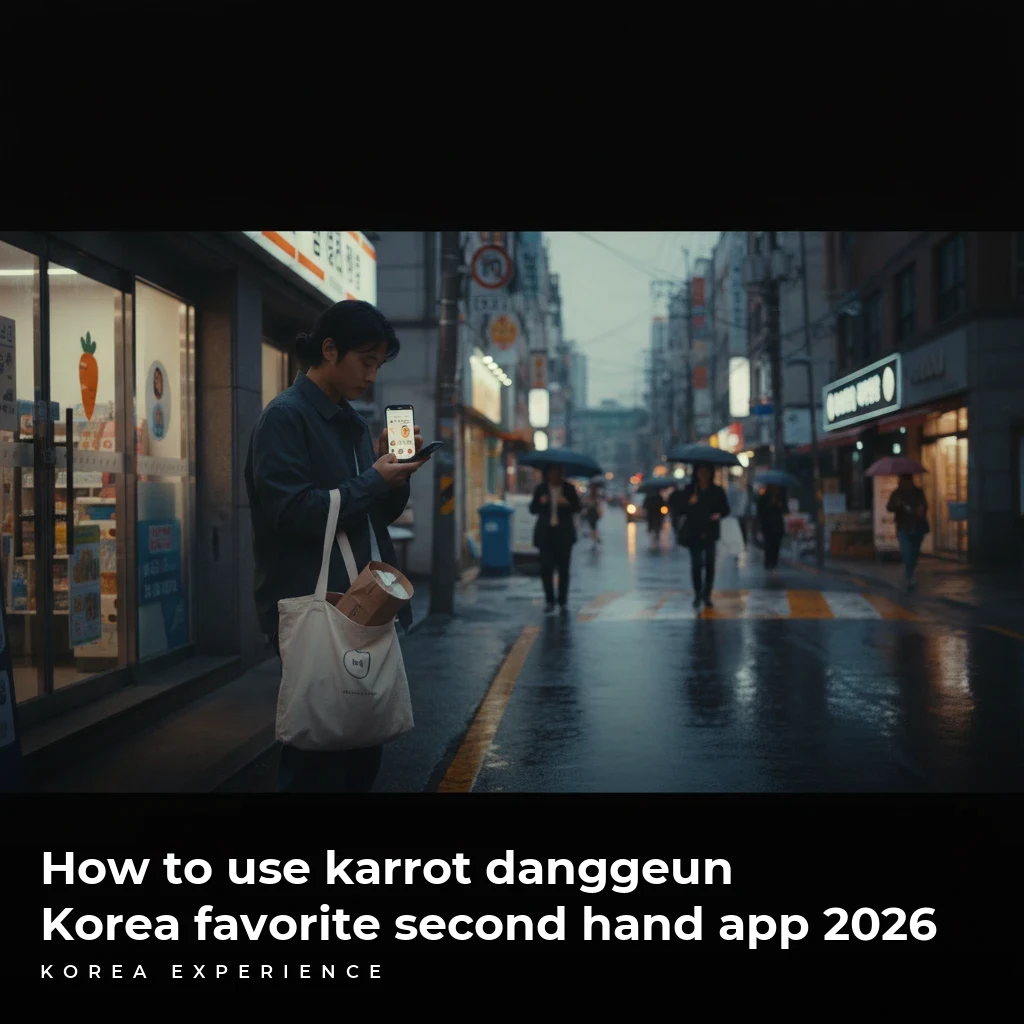
Karrot Danggeun Korea Your Guide to Second-Hand Finds 2026
Master Karrot Danggeun the essential second-hand app in Korea for expats and travelers in 2026. Unlock smart shopping and sustainable living experiences.
How to Use Karrot Danggeun Korea Favorite Second-hand App 2026
Korea, a nation renowned for its rapid technological advancements and bustling urban centers, is also quietly cultivating a vibrant culture of sustainability and community-driven commerce. In the heart of this movement lies Karrot, known locally as Danggeun Market (당근마켓), which translates to "Carrot Market." This revolutionary second-hand app has transformed the way residents, including the growing international community, buy and sell pre-loved items, fostering local connections and promoting eco-conscious living.
For expats, long-term residents, and even savvy international travelers arriving in Korea in 2026, understanding and utilizing the Karrot app is not just a convenience; it's an indispensable tool for settling in, saving money, and authentically engaging with local life. From furnishing a new apartment to finding unique Korean treasures, or even selling items before a big move, Karrot Danggeun Korea offers an unparalleled platform.
This comprehensive guide will walk you through everything you need to know about navigating Karrot in 2026. We'll cover how to download and set up the app, master buying and selling strategies, understand local etiquette, and ensure safe and successful transactions. By the end, you'll be well-equipped to use Karrot Danggeun like a seasoned local, unlocking a world of affordable goods and community interactions right at your fingertips.
Understanding Karrot Danggeun Market: Korea's Digital Flea Market
Karrot, or Danggeun Market, is more than just a second-hand app; it's a hyperlocal community marketplace designed to connect neighbors for buying, selling, and even sharing services within a specific geographic radius. Its name, "Carrot Market," reflects its focus on connecting people "as close as carrots in a field," emphasizing locality and community trust.
Why Karrot Danggeun is a Must-Have for Expats and Travelers
For those new to Korea, the initial setup costs for a home can be daunting. Karrot provides an affordable solution for everything from furniture and home appliances to electronics and clothing. Beyond mere savings, it offers a glimpse into local consumer culture and a chance to interact directly with Korean residents, practicing language skills and building connections.
- Cost Savings: Acquire essential items at a fraction of their retail price.
- Sustainability: Contribute to a circular economy by giving items a second life, reducing waste.
- Community Engagement: Connect with locals, understand neighborhood dynamics, and even find local services.
- Convenience: Browse and transact from the comfort of your home, with meetings often just a short walk or subway ride away.
- Unique Finds: Discover one-of-a-kind items, vintage pieces, or Korean cultural artifacts that aren't available in regular stores.
The Evolution of Second-Hand Culture in Korea
Historically, second-hand shopping in Korea was largely confined to traditional flea markets like those at Dongmyo or Hwanghak-dong, or small consignment shops. The advent of digital platforms like Karrot has democratized this market, making it accessible, convenient, and popular across all demographics. This shift reflects a growing global trend towards sustainability and conscious consumption, even in a country known for its fast-paced trends. Karrot is at the forefront of this cultural evolution, continually updating its features to meet user demands, making the "Karrot app Korea" experience smoother and more integrated into daily life.
Getting Started with the Karrot App in 2026
Using Karrot is straightforward, but setting it up correctly is key to a seamless experience. This section guides you through the initial steps for downloading, registering, and customizing your profile.
Downloading and Installing the Karrot App
The Karrot app is available on both iOS (Apple App Store) and Android (Google Play Store). Search for "Karrot" or "Danggeun Market." The app interface is predominantly in Korean, but many core functions have English translations, and the visual cues are intuitive.
- Search: Open your app store and type "Karrot" or "Danggeun."
- Download: Look for the orange carrot logo. Install the app.
- Permissions: Grant necessary permissions like location services. This is crucial as Karrot is location-based.
Registration and Neighborhood Verification
Registration typically requires a Korean phone number. This is a critical point for new expats or short-term visitors without a local number. Options exist, such as using a friend's number initially (though this is not recommended for long-term use due to verification issues) or obtaining a temporary Korean SIM card upon arrival.
- Phone Number Verification: Enter your Korean phone number to receive a verification code.
- Nickname Setup: Choose a friendly nickname. This will be visible to other users.
- Location Verification: This is the most vital step. Karrot requires you to verify your neighborhood (동네 인증 – dongne injeung). The app uses your device's GPS to confirm your current location and asks you to select your neighborhood from a list. You can set up to two neighborhoods: your primary living area and perhaps a workplace or a frequently visited area. This ensures you see listings relevant to your immediate vicinity. Karrot typically allows trades within a few kilometers of your verified location.
Setting Up Your Profile for Success
A well-rounded profile enhances trust and makes transactions smoother.
- Profile Picture: While optional, a friendly profile picture can make you appear more approachable.
- "Manner Temperature" (매너온도 – Maekmaet Ondo): This is Karrot's unique reputation system. It starts at 36.5 degrees Celsius (normal body temperature) and fluctuates based on user reviews after transactions. Positive feedback increases your temperature, while negative feedback lowers it. A higher temperature indicates a reliable user, a crucial trust factor in the second-hand market.
- Self-Introduction: Write a brief, polite introduction in the "About Me" section. Even a simple "안녕하세요! 잘 부탁드립니다." (Hello! Please take good care of me/look forward to working with you.) or an English equivalent noting you're an expat can be helpful.
Navigating Karrot for Buyers: Finding Your Next Treasure
Once your profile is set up, the fun begins! Buying on Karrot is an intuitive process, but knowing the nuances can significantly improve your chances of securing great deals.
Searching and Browsing Items
The app's main screen displays listings from your verified neighborhoods.
- Category Browsing: Karrot organizes items into various categories like Digital & Home Appliances, Furniture & Interior, Children & Baby, Clothing & Accessories, Books & CDs, etc.
- Keyword Search: Use the search bar (돋보기 아이콘 – magnifying glass icon) to look for specific items. For instance, "냉장고" (refrigerator), "책상" (desk), "자전거" (bicycle), "아이폰" (iPhone). While Karrot is a Korean app, many users now include English keywords for popular international brands or items, so try both Korean and English terms.
- "My Neighborhood Settings" (내 동네 설정): Refine your search by adjusting your primary and secondary neighborhood radii to see more or fewer listings.
Contacting Sellers and Making Offers
When you find an item you like, the next step is to contact the seller.
- Chat Function: Each item listing has a "Chat with Seller" (판매자와 채팅하기) button. This is the primary mode of communication.
- Initial Inquiry: Start with a polite greeting. A simple "안녕하세요, 혹시 이 제품 아직 판매중인가요?" (Hello, is this item still for sale?) is a good start. If you're an English speaker, you can indicate that directly: "Hello, is this still available? I am an English speaker." Many younger Koreans or those who have lived abroad might be comfortable responding in English. Google Translate is your best friend here!
- Asking Questions: Don't hesitate to ask about the item's condition, usage history, original price, or any defects. Request additional photos if needed.
- Making an Offer: If the price is negotiable (often indicated by "가격 제안 가능" – gageok je-an ganeung), you can make a polite offer. Do not lowball excessively, as this can be considered impolite. A common phrase for offering is "혹시 네고 가능할까요?" (Is negotiation possible?).
Arranging Meet-Ups and Transactions
Karrot emphasizes direct, in-person transactions, known as jikgeorae (직거래).
- Meeting Location: Sellers often suggest a convenient public place within the neighborhood, such as a subway station exit, a convenience store, or a specific landmark. Be clear about the exact meeting point and time.
- Payment: Cash (현금 – hyeongeum) is the most common payment method. Always bring the exact amount. Some sellers might accept bank transfers (계좌이체 – gyejwa ichae), but cash is generally preferred for immediate transactions.
- Item Inspection: Thoroughly inspect the item before handing over payment. Test electronics, check furniture for damage, and verify clothing sizes. If the item isn't as described, you have the right to decline the purchase politely.
- Safety Tips: Always meet in a well-lit, public place during daylight hours. Inform a friend or family member of your meeting location and time.
Table: Buying vs. Selling on Karrot Danggeun
| Feature | Buying on Karrot | Selling on Karrot |
|---|---|---|
| Primary Goal | Acquire items at a lower cost, find unique goods | Declutter, earn money, contribute to sustainability |
| Key Actions | Search, browse, chat, negotiate, inspect, pay | List, photograph, describe, communicate, arrange meet-up |
| Communication Focus | Inquire about item, offer price, confirm meet-up | Answer questions, provide details, respond promptly |
| Payment Method | Mostly cash, sometimes bank transfer | Mostly cash, sometimes bank transfer |
| Considerations | Item condition, seller reputation, meeting logistics | Item appeal, pricing strategy, communication clarity |
| Challenges | Language barrier, item availability, negotiation | Attracting buyers, dealing with lowball offers, no-shows |
Mastering Karrot for Sellers: Turning Clutter into Cash
Selling on Karrot is an excellent way for expats to declutter before a move, earn some extra cash, or simply give unused items a new home. The process is similar to buying but with a few distinct responsibilities.
Listing Your Items Effectively
A good listing attracts more buyers and leads to quicker sales.
- High-Quality Photos: Take clear, well-lit photos from multiple angles. Highlight any defects honestly.
- Detailed Description: Provide all relevant information:
- Item Name: Use descriptive keywords (e.g., "IKEA LACK TV Stand," "Samsung Galaxy S24 Ultra").
- Condition: Be honest about the item's state (new, like new, good, used, fair, damaged).
- Usage History: How long have you had it? How often was it used?
- Original Price (Optional): Helps justify your selling price.
- Dimensions/Specifications: Crucial for furniture and electronics.
- Reason for Selling: (e.g., "moving out," "no longer needed").
- Pickup Location/Method: Clearly state if it's pickup only, or if you're willing to meet at a specific location.
- Language: Consider adding a brief English description if you anticipate international buyers.
- Pricing Strategy: Research similar items on Karrot to set a competitive price. Be realistic. Remember, buyers are looking for a deal. Indicating "가격 제안 가능" (negotiable) can attract more interest, but be prepared for offers below your asking price.
Communicating with Potential Buyers
Prompt and polite communication is vital for successful sales.
- Quick Responses: Buyers appreciate quick replies. Try to respond within a few hours.
- Clear Answers: Answer all questions honestly and thoroughly. If there are defects, explicitly point them out.
- Confirming Details: Double-check the meeting time, date, and location. Provide clear directions if necessary.
- Dealing with "No-Shows": Unfortunately, "no-shows" happen. It's frustrating, but try to remain polite. You can block users who repeatedly waste your time, or report them if their behavior is inappropriate.
Safety Tips for Sellers
Just as with buying, prioritize safety when selling.
- Public Meeting Places: Always arrange to meet in a public, well-lit area. Avoid inviting strangers to your home, especially if you live alone.
- Cash Transactions: Stick to cash payment whenever possible. If accepting bank transfer, confirm the money has landed in your account before handing over the item.
- Trust Your Gut: If a buyer's communication seems suspicious or pushy, it's okay to decline the sale. Your safety is paramount.
- Large Items: For large items like furniture, coordinate with the buyer for pickup. You may need to help them load it, but never go to their residence alone to deliver.
Table: Common Karrot Item Categories and Examples for Expats
| Category | Example Items (English) | Example Items (Korean translation commonly seen) | Expat Relevance |
|---|---|---|---|
| Digital & Home Appliances | Rice cooker, microwave, mini-fridge, smartphone, tablet | 밥솥 (bapsot), 전자레인지 (jeonjareinji), 미니 냉장고 (mini naengjanggo), 스마트폰 (seumateupon), 태블릿 (taeheullit) | Essential for setting up a new home; often expensive new. |
| Furniture & Interior | Desk, chair, bed frame, small sofa, lamp, bookshelf | 책상 (chaeksang), 의자 (uija), 침대 프레임 (chimdae peureim), 소파 (sopa), 스탠드 (seutaendeu), 책장 (chaekjang) | Crucial for furnishing apartments, especially studio living. |
| Children & Baby | Stroller, car seat, toys, baby clothes, books | 유모차 (yumochja), 카시트 (kasiteu), 장난감 (jangnangam), 아기옷 (agi-ot), 아기책 (agichaek) | High turnover for families; significant savings for temporary stays. |
| Clothing & Accessories | Jackets, coats, bags, shoes, seasonal wear | 자켓 (jaket), 코트 (koteu), 가방 (gabang), 신발 (sinbal), 계절옷 (gyejeol-ot) | Finding unique styles or affordable seasonal updates. |
| Sports & Leisure | Bicycle, gym equipment, hiking gear, camping items | 자전거 (jajeongeo), 헬스 기구 (helseu gigu), 등산용품 (deungsanyongpum), 캠핑용품 (kaempingyongpum) | For exploring Korea's outdoors without major investment. |
| Books & CDs/DVDs | English novels, Korean language textbooks, K-Pop albums | 영어 소설 (yeong-eo soseol), 한국어 교재 (hangugeo gyogye), K-팝 앨범 (K-pap aelbeom) | Finding rare editions or affordable study materials. |
| Other (생활용품) | Kitchenware, tools, pet supplies, cosmetics | 주방용품 (jubangyongpum), 공구 (gonggu), 반려동물용품 (banryeodongmullyongpum), 화장품 (hwajangpum) | Daily necessities and niche items. |
Advanced Tips and Etiquette for Karrot Users
Beyond the basics, a few insider tips and an understanding of local etiquette can elevate your Karrot experience.
Building Your Manner Temperature
Your "Manner Temperature" is your reputation. Aim to keep it high by:
- Prompt Communication: Respond quickly to messages.
- Punctuality: Be on time for meet-ups. If you're running late, inform the other party immediately.
- Accurate Descriptions: As a seller, be honest about item condition. As a buyer, don't demand an item to be in perfect condition if the description stated flaws.
- Politeness: Use polite language (존댓말 – jondaetmal) in your messages. Simple phrases like "감사합니다" (thank you) and "죄송합니다" (I'm sorry) go a long way.
- Leaving Feedback: After a successful transaction, both parties are prompted to leave "Manner Feedback" for each other. This is crucial for building a strong community. Always leave positive feedback if the transaction was smooth.
Negotiating Prices: The Art of "Nego"
"Nego" (네고), a Konglish term for negotiation, is common on Karrot, but it has its boundaries.
- Be Reasonable: Don't offer ridiculously low prices. A general rule of thumb is to offer 10-20% less than the asking price, if negotiation is indicated as possible.
- Explain Your Offer (Optional): Sometimes briefly explaining why you're offering a lower price (e.g., "I'd love to buy this, but I'm on a student budget, so is X amount possible?") can be helpful.
- Accepting a Counter-Offer: Be prepared to meet halfway or accept a counter-offer. If the seller declines negotiation, respect their decision.
Dealing with Problematic Transactions
While most Karrot transactions are smooth, issues can arise.
- Item Not as Described: If an item at the meet-up is significantly different from its description or photos, politely decline the purchase.
- No-Shows/Late Arrivals: If a seller or buyer is excessively late or doesn't show up, you can politely message them and eventually report them to Karrot if it becomes a pattern.
- Reporting Misconduct: Karrot has a reporting function for inappropriate behavior, scams, or prohibited items. Use it responsibly to keep the community safe.
Leveraging Karrot for Community and Services
Beyond buying and selling, Karrot offers community features.
- "Neighborhood Life" (동네생활 – dongne saenghwal): This section is a local bulletin board where users post questions, share information about local events, recommend businesses, or even find study partners. It's an excellent way to tap into local knowledge and connect with your neighbors.
- "Local Jobs" (알바 – alba): You might find listings for part-time jobs or local gigs.
- "Nearby Places" (내 근처 – nae geuncheo): Discover local businesses and promotions.
Karrot and the Expat Lifestyle: Beyond Just Buying and Selling
For international residents, Karrot Danggeun Korea offers unique advantages that extend beyond transactional benefits.
Furnishing Your Korean Apartment Affordably
Setting up an apartment in Korea, especially in high-rent areas like Seoul (Gangnam, Hongdae, Sinchon) or Busan (Haeundae, Seomyeon), can be expensive. Karrot is invaluable for finding:
- Basic Furniture: Desks, chairs, small tables, bed frames suitable for typical Korean apartment sizes.
- Kitchen Essentials: Rice cookers, induction stoves, pots, pans, dishes.
- Electronics: TVs, vacuum cleaners, sometimes even used phones or laptops.
- Seasonal Items: Electric blankets for winter, fans for summer.
You can often find entire sets of items, like "moving sale" (이사 정리 – isa jeongni) listings, where people sell off almost everything before leaving the country. This is a goldmine for newly arrived expats.
Sustainable Living in Korea
Korea has a strong emphasis on recycling and waste reduction. Using Karrot aligns perfectly with this ethos. By buying second-hand, you reduce demand for new products and prevent perfectly usable items from ending up in landfills. This is a great way to integrate into Korea's environmentally conscious practices.
Finding Local Cultural Items and Practicing Korean
Want to learn Korean? Look for used textbooks! Interested in Korean handicrafts or traditional items? Karrot might have unique finds. The direct interaction with sellers provides an informal opportunity to practice your Korean language skills, even if it's just a simple "감사합니다" (gamsahamnida - thank you).
Internal Linking Opportunity: Beyond Karrot
While Karrot is fantastic for second-hand items, for brand new products or specific services, you might explore other platforms. We could discuss "Online Shopping in Korea: A Guide to Coupang and Gmarket" or "Navigating Public Transport in Korea: T-Money and Kakao T."
Table: Karrot Danggeun vs. Traditional Flea Markets (2026 Perspective)
| Feature | Karrot Danggeun (Online) | Traditional Flea Markets (e.g., Dongmyo Flea Market, Hwanghak-dong) |
|---|---|---|
| Accessibility | Accessible 24/7 from anywhere with a phone | Limited to specific operating hours and physical locations |
| Searchability | Keyword search, categories, location filters | Manual browsing, requires physical presence and luck |
| Item Variety | Wide range, often household goods, electronics, furniture | Eclectic mix, vintage, antiques, tools, unique finds |
| Pricing | Often fixed but negotiable, transparent initial price | Highly negotiable, bargaining is expected |
| Convenience | Chat from home, meet locally | Requires travel to market, on-the-spot decision making |
| Community | Digital community features, local interaction | Physical interaction with vendors and shoppers |
| Language | Primarily Korean, but translation tools help; some English | Primarily Korean, less structured English interaction |
| Experience | Modern, efficient, convenient | Rustic, bustling, treasure-hunt like |
| Logistics | Arrange specific pick-up, potentially large item transport | Carry items yourself, may need to arrange separate transport for large items |
Safety and Security on Karrot Danggeun: Best Practices
Your safety is paramount when using any peer-to-peer marketplace. Karrot has robust features, but user vigilance is always necessary.
Verifying Users and Trust Signals
- Manner Temperature: As discussed, a higher manner temperature generally indicates a more reliable user.
- User Reviews: Check the reviews left by other users. These can provide insight into a user's communication style and reliability.
- Transaction History: Some profiles show the number of completed transactions. More transactions can indicate an experienced and trustworthy user.
- Recent Activity: Look for recent activity; an inactive account might be a red flag for a slow response or a ghost listing.
Protecting Your Personal Information
- No Sharing Sensitive Data: Never share your full name, exact home address, bank account details (unless for a confirmed bank transfer), or other sensitive personal information in initial chats.
- Meet in Public: Always meet in public places, never invite strangers to your home, and avoid going to theirs. Subway stations, convenience stores, or cafe entrances are ideal.
- During Daylight Hours: Whenever possible, schedule meet-ups during the day when there are more people around.
- Bring a Friend: If you feel uncomfortable, bring a friend with you to the meet-up.
Recognizing and Avoiding Scams
While Karrot is generally safe, be aware of potential red flags:
- Too Good to Be True Prices: If an item is listed at an unbelievably low price, it might be a scam.
- Pressure to Act Quickly: Scammers often pressure buyers to make a decision or transfer money immediately.
- Requests for Personal Information: Be wary of users asking for unnecessary personal details or trying to move the conversation off the Karrot chat to external messaging apps where less oversight exists.
- Unusual Payment Requests: Stick to cash or bank transfers within Korea. Be suspicious of requests for gift cards, cryptocurrency, or international wire transfers.
- Reporting: If you encounter anything suspicious, use Karrot's in-app reporting function immediately.
FAQ: Your Karrot Danggeun Questions Answered
Q1: Can I use Karrot Danggeun without a Korean phone number in 2026?
A1: As of 2026, Karrot still primarily requires a Korean phone number for registration and verification. This is to ensure local community authenticity. While you might be able to register with a temporary number, consistent use and re-verification will likely require a stable local number. Consider getting a local SIM card or e-SIM if you plan an extended stay.
Q2: Is it safe to meet strangers from Karrot in person?
A2: Yes, generally it is safe, but always exercise caution. Always choose a well-lit, public place for meet-ups during daylight hours. Inform a friend or family member of your plans, and never share your home address. Karrot's "Manner Temperature" and user reviews can also help you assess a user's reliability.
Q3: What if I don't speak Korean? Can I still use Karrot Danggeun effectively?
A3: While the app is in Korean, many aspects are intuitive, and visual aids help. For communication, Google Translate is an invaluable tool. Many younger Koreans are comfortable with basic English, and some sellers even include English in their listings. Don't be afraid to state that you are an English speaker in your initial message.
Q4: How do I handle large items like furniture or appliances bought on Karrot?
A4: For large items, you will typically need to arrange transportation yourself. This might involve a taxi large enough to accommodate the item, or a local delivery service (용달 – yongdal). Discuss logistics with the seller before committing to the purchase. Some sellers may offer assistance with loading, but it's not guaranteed.
Q5: What is "Manner Temperature" and how important is it?
A5: "Manner Temperature" (매너온도) is Karrot's unique reputation system, starting at 36.5 degrees Celsius. It increases with positive feedback (e.g., promptness, politeness, accurate item description) and decreases with negative feedback. It's very important as it serves as a trust signal within the Karrot community. A higher temperature indicates a more reliable and reputable user, making transactions smoother.
Conclusion: Embrace the Karrot Danggeun Lifestyle in Korea 2026
The Karrot Danggeun Korea app in 2026 is much more than a platform for buying and selling second-hand goods; it's a gateway to sustainable living, community engagement, and smart savings for anyone living in or visiting Korea. From furnishing your first apartment to finding unique souvenirs or simply offloading items before you leave, Karrot offers a convenient, efficient, and often exciting way to interact with the local economy.
By mastering the app's features, understanding local etiquette, and prioritizing safety, you'll find Karrot to be an invaluable tool in your Korean journey. It empowers you to live more sustainably, connect with your neighborhood, and discover unexpected treasures, all while making your life in Korea more affordable and enriching. So, go ahead, download the Karrot app, verify your neighborhood, and start exploring the vibrant world of second-hand commerce that awaits you. Happy hunting, and happy selling!
About the Author
Korea Experience Team
Written by the Korea Experience editorial team - experts in Korean medical tourism, travel, and culture with years of research and firsthand experience.
⚠️ Medical Disclaimer
The information provided on this website is for general informational purposes only and does not constitute medical advice. Always consult with qualified healthcare professionals before making any medical decisions.
Continue Reading
Explore more articles you might find interesting
Discover the best expat clubs and networking events in Seoul for 2026. This guide helps you build a vibrant community, make friends, and thrive in Korea.
Unlock harmonious living in Korea's apartments with this essential guide to local etiquette. Learn what your neighbors truly expect in 2026.
Discover top weekend getaways in Korea for expats to escape city burnout in 2026. Find serene nature, cultural gems, and adventure.