Living in Korea

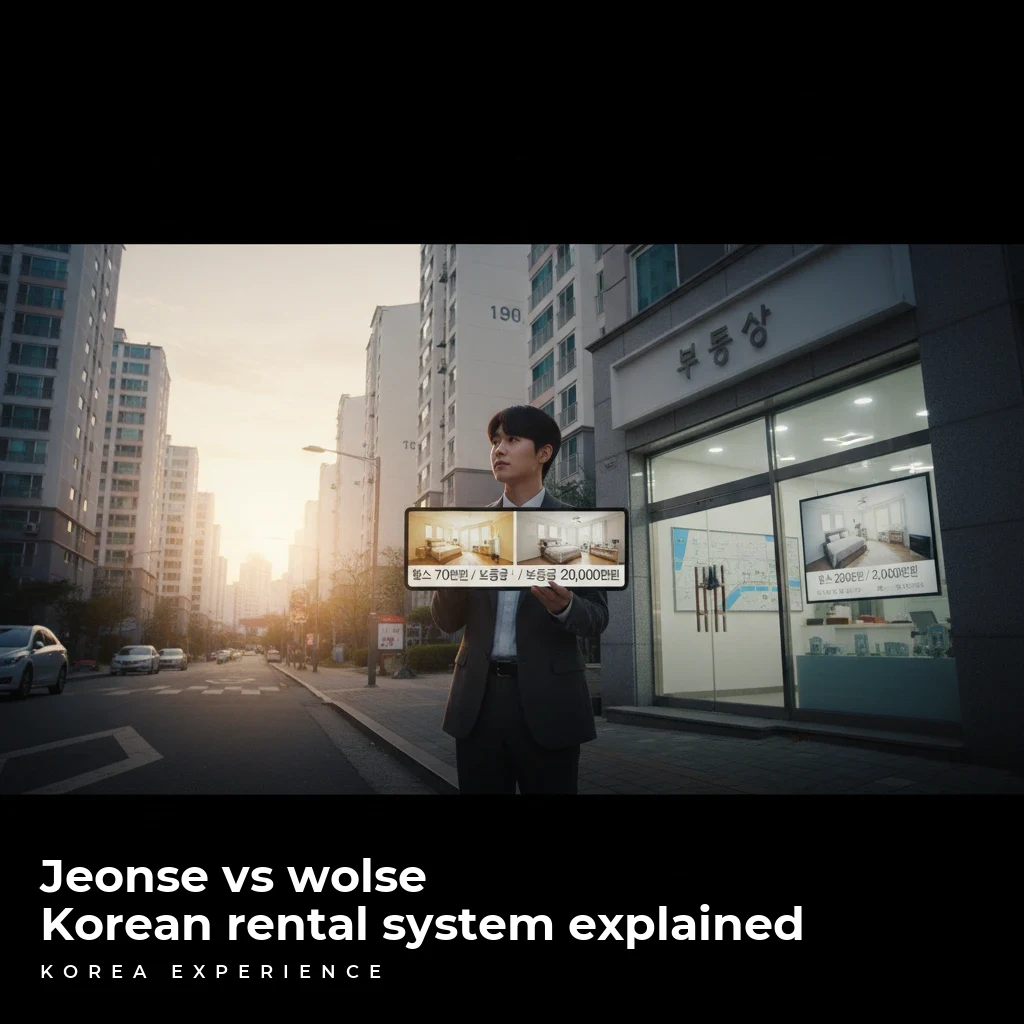
Jeonse vs Wolse Korean Rental System Explained

Unlock Korea's unique rental market. This guide details Jeonse and Wolse systems, offering expat tips and crucial financial insights.

Jeonse vs Wolse Korean Rental System Explained: Your Expat Guide to Renting in Korea

Navigating the housing market in a new country can be daunting, and Korea's rental system presents a unique set of challenges and opportunities for international residents. Unlike the familiar monthly rent systems found in most Western countries, Korea offers two primary housing contracts: Jeonse and Wolse. Understanding the fundamental differences between these two systems is crucial for any expat planning to live in Korea, as your choice will significantly impact your financial planning, living experience, and even your long-term stability.

This comprehensive guide aims to demystify the Jeonse vs Wolse Korean rental system, providing you with all the essential information needed to make an informed decision. We'll delve deep into how each system works, explore their respective advantages and disadvantages, highlight hybrid options, and offer practical tips for expats. By the end of this post, you'll be equipped with the knowledge to confidently secure your ideal home in Korea, whether in the bustling streets of Seoul or the tranquil suburbs of Gyeonggi Province.

Understanding Korea's Unique Rental Landscape

Before diving into the specifics of Jeonse and Wolse, it's important to grasp why Korea's rental market operates so differently. Historically, the Korean economy and banking system developed in a way that favored large, lump-sum deposits over traditional monthly rental payments. This structure created a unique symbiotic relationship between landlords and tenants that continues to shape the housing market today.

A System Different from Home

Most international readers are accustomed to a rental model where a relatively small security deposit is paid upfront, followed by recurring monthly rent payments. In Korea, while this "Wolse" system exists, the "Jeonse" system offers a completely different financial arrangement. This distinction is not merely semantic; it represents a fundamental shift in how housing costs are managed and how money flows between tenants and landlords. Without this understanding, expats often find themselves confused and potentially vulnerable to misunderstandings.

The Two Pillars: Jeonse and Wolse

At its core, the Korean rental market is built upon these two systems:

  • Jeonse (pronounced "jun-seh"): A large, upfront, interest-free security deposit is paid to the landlord for the duration of the contract, typically two years. No monthly rent is paid.
  • Wolse (pronounced "wol-seh"): A smaller security deposit is paid upfront, followed by regular monthly rent payments. This is more akin to rental systems found in Western countries.

Both systems have their own nuances, benefits, and drawbacks, especially for foreigners navigating a new country.

Why the Difference Matters for Expats

For expats, the choice between Jeonse and Wolse is not just about preference; it's about practicalities. Your visa status, length of stay, financial liquidity, and risk tolerance will all play a significant role in determining which system is more suitable. Understanding the legal protections, potential pitfalls, and financial implications of each is paramount to a smooth and secure housing experience in Korea.

Delving into Jeonse: The Key Money Deposit System

The Jeonse system is arguably the most distinct aspect of the Korean rental market and often the most perplexing for newcomers. It's a system with a long history, deeply embedded in Korean financial culture.

What is Jeonse?

At its simplest, Jeonse involves a tenant paying a substantial, lump-sum security deposit—often 50% to 80% (or even higher) of the property's market value—to the landlord. Crucially, this deposit is interest-free and no monthly rent is paid. The landlord essentially uses this large sum as an interest-free loan for two years, investing it or using it to pay off their own mortgage. At the end of the contract, the full deposit is returned to the tenant, assuming no damages beyond normal wear and tear.

Think of it as the tenant lending the landlord a significant amount of money in exchange for living in the property rent-free. The landlord profits from the investment returns on that money, and the tenant benefits from not paying monthly rent.

How Jeonse Works for Landlords and Tenants

  • For the Tenant: You hand over a large sum of money (the Jeonse deposit) to the landlord. You live in the property for two years (the typical contract length) without paying any monthly rent. At the end of the term, you expect the full deposit back.
  • For the Landlord: They receive a significant amount of cash, which they can invest (e.g., in other real estate, stocks, or businesses) or use to pay down a mortgage on the property. Their profit comes from the returns on this invested capital.

This system relies heavily on trust and the assumption that the landlord will be able to return the full deposit at the end of the contract.

Financial Considerations: Typical Deposits and Financing Options

Jeonse deposits can range dramatically depending on the location, size, and type of property.

  • Seoul (popular areas like Gangnam, Mapo, Yongsan): Deposits can easily range from 300 million Korean Won (approximately 225,000 USD) to over 1 billion Korean Won (750,000+ USD) for larger apartments. Smaller studio apartments (one-rooms) might have deposits starting from 50 million Korean Won (37,500 USD).
  • Gyeonggi Province (e.g., Suwon, Bundang, Ilsan): Deposits tend to be lower but can still be substantial, perhaps from 150 million Korean Won (112,500 USD) upwards.

Given the substantial amounts involved, many Koreans utilize Jeonse loans (Jeonse Dae-chul). These are government-backed or bank-issued loans specifically for Jeonse deposits, often with favorable interest rates. While Jeonse loans are readily available for Korean citizens, obtaining one as a foreigner can be challenging. Eligibility typically depends on your visa type, income, and residency status. Some banks do offer options for long-term residents with stable income, but it usually requires extensive documentation and a strong credit history in Korea. It's essential to consult with major Korean banks (like Kookmin Bank, Shinhan Bank, Woori Bank, Hana Bank) directly about their specific requirements for foreigners.

The Risks and Rewards of Jeonse

AspectDescription
ProsNo Monthly Rent: Once the deposit is paid, you live rent-free, saving significant monthly expenses.
Potential for Savings: If you have the capital, it's a way to avoid paying rent that would otherwise be gone forever.
Deposit Return: The full lump sum is returned at the end of the contract (barring damages).
Good Investment (for landlords): Allows landlords to invest the money, and tenants to live free.
ConsHigh Upfront Capital: Requires a very large sum of money upfront, which is a major barrier for many expats.
Deposit Risk: The biggest risk is the landlord's financial instability. If the landlord defaults on their mortgage or declares bankruptcy, retrieving your deposit can be difficult and lengthy.
Liquidity Issue: Your money is tied up for two years.
Finding Options: Jeonse properties can be harder to find, especially for certain property types or in high-demand areas, and may require a quick decision.

The risk of not getting your Jeonse deposit back, often referred to as "Budo" (bankruptcy), has become a more prominent concern in recent years, particularly with fluctuating real estate markets. It is crucial to perform thorough due diligence on the landlord and the property's financial standing, which we'll discuss later.

Exploring Wolse: The Monthly Rent System

For many expats, Wolse is the more familiar and often more accessible rental option. It closely resembles the conventional monthly rental systems found globally.

What is Wolse?

Wolse involves paying a security deposit upfront, which is typically much smaller than a Jeonse deposit, followed by recurring monthly rent payments. This system provides a more predictable and manageable financial outflow for many individuals who may not have the substantial capital required for a Jeonse contract.

How Wolse is Structured

  • For the Tenant: You pay a security deposit (called "Bo-jeung-geum") and then a fixed amount of rent each month. The deposit serves as a safeguard for the landlord against unpaid rent or damages.
  • For the Landlord: They receive a smaller upfront sum but benefit from a steady stream of income through monthly rent, which can cover their mortgage payments, property taxes, and maintenance.

Financial Considerations: Deposit and Rent Ranges

Wolse deposits are significantly lower than Jeonse.

  • Deposits: Typically range from 5 million Korean Won (approximately 3,750 USD) to 50 million Korean Won (37,500 USD), though higher deposits can sometimes lower monthly rent.
  • Monthly Rent: Varies widely based on location, size, and amenities.
    • Seoul (standard one-room or small officetel): 500,000 Korean Won to 1.5 million Korean Won per month (approx. 375 USD - 1,125 USD).
    • Seoul (larger apartments/premium locations like Gangnam): 2 million Korean Won to 5 million+ Korean Won per month (approx. 1,500 USD - 3,750+ USD).
    • Outside Seoul (e.g., Gyeonggi Province cities like Suwon, Daejeon): 350,000 Korean Won to 1 million Korean Won per month (approx. 260 USD - 750 USD).

Additionally, almost all rental properties in Korea, whether Jeonse or Wolse, will have a monthly Gwan-li-bi (maintenance fee). This covers common area electricity, cleaning, elevator maintenance, and sometimes internet/cable TV. Gwan-li-bi can range from 50,000 Korean Won to 200,000+ Korean Won per month, depending on the building type and size. Always confirm the Gwan-li-bi amount before signing a contract.

Flexibility and Predictability

Wolse offers greater flexibility, making it a popular choice for expats who may not be sure of their long-term stay or who prefer not to tie up large sums of capital. The predictable monthly payments make budgeting easier, and the lower upfront cost reduces the initial financial burden.

AspectDescription
ProsLower Upfront Cost: Significantly smaller security deposit, making it more accessible.
Financial Predictability: Fixed monthly rent makes budgeting straightforward.
Less Financial Risk: While there's still a deposit, the potential loss is much smaller compared to Jeonse.
Easier to Find: More widely available, especially for shorter-term stays or smaller units.
Familiar System: Closely resembles rental systems in many home countries.
ConsOngoing Monthly Expense: Rent is a continuous drain on your income.
No Return on Investment: Unlike Jeonse where your money is returned, monthly rent is a recurring expense with no financial return.
Gwan-li-bi (Maintenance Fee): An additional monthly cost on top of rent.
Deposit Can Still Be High: While lower than Jeonse, the deposit can still be substantial for higher-end properties.

Hybrid Options: Ban-Jeonse and Other Variations

The Korean rental market is not always a strict binary between Jeonse and Wolse. There are also hybrid options that offer a middle ground, providing more flexibility for both landlords and tenants.

Introducing Ban-Jeonse

Ban-Jeonse (pronounced "bahn-jun-seh"), also known as "Bo-jeung-geum-Wolse" or "semi-Jeonse," is a common hybrid rental type. It combines elements of both Jeonse and Wolse: a higher security deposit than pure Wolse, but significantly lower than Jeonse, in exchange for reduced monthly rent.

For example, a property might be available for 100 million Korean Won (approx. 75,000 USD) Jeonse, or 10 million Korean Won deposit with 1 million Korean Won monthly rent (Wolse). A Ban-Jeonse option for the same property might be 50 million Korean Won deposit with 500,000 Korean Won monthly rent. The idea is that for every X amount of deposit you increase, the monthly rent decreases by Y amount.

This option is particularly appealing to tenants who have some savings but not enough for a full Jeonse, or who want to reduce their monthly outgoings without tying up all their capital. Landlords often prefer Ban-Jeonse as it gives them both a lump sum for investment and a steady monthly income.

Negotiating Your Terms

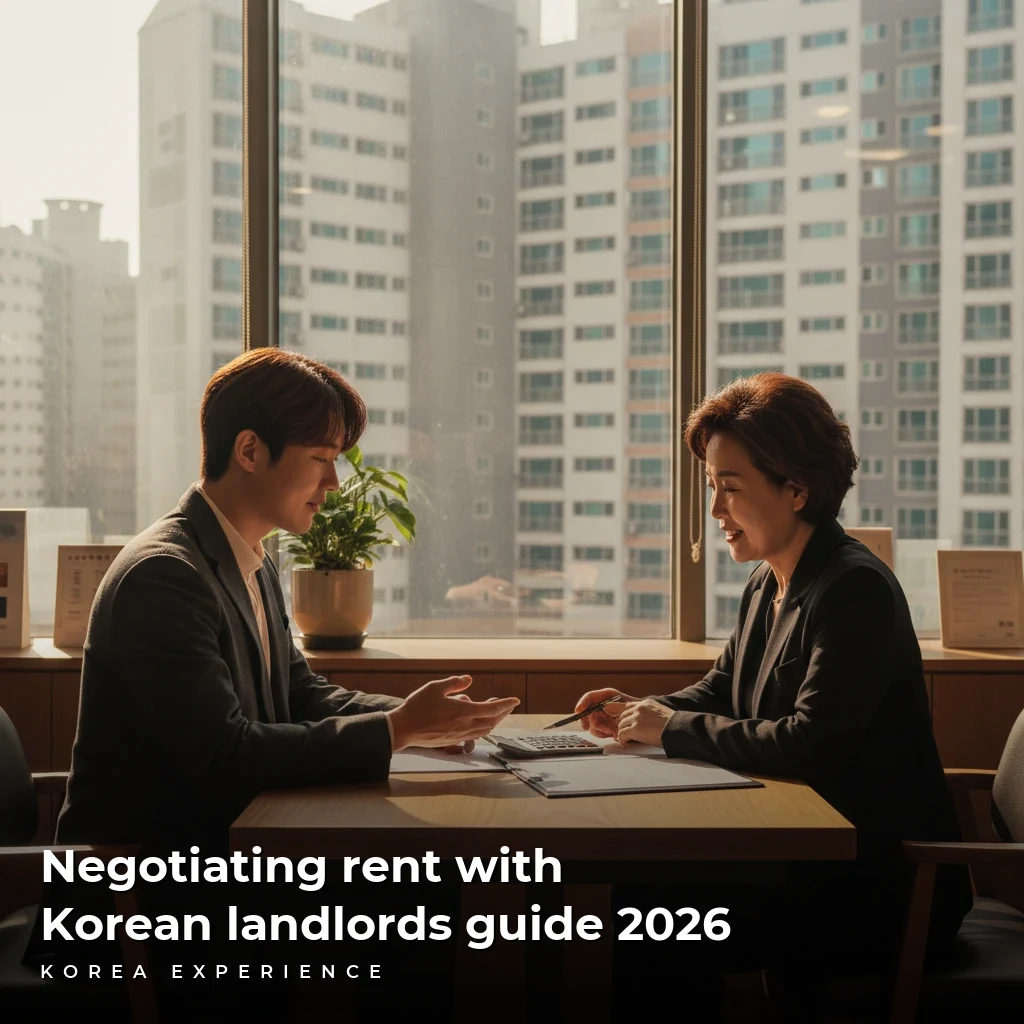
In Korea, there's often room for negotiation, especially with Ban-Jeonse. Landlords might be flexible in adjusting the deposit-to-rent ratio based on their financial needs and the tenant's offer. For instance, if you offer a higher deposit, the landlord might be willing to lower the monthly rent. Conversely, if you need a lower deposit, they might ask for slightly higher monthly rent. A good real estate agent (Bu-dong-san) can be invaluable in these negotiations, helping to bridge communication gaps and secure favorable terms.

Renting in Korea involves several steps, and understanding the process is key to a smooth transition.

Finding Your Home: Online Portals and Real Estate Agents

  • Online Portals: Websites like Naver Real Estate (Naver Bu-dong-san) and Daum Real Estate are popular, but primarily in Korean. Apps like Zigbang (Jik-bang) and Dabang (Da-bang) offer listings, some with limited English interfaces.
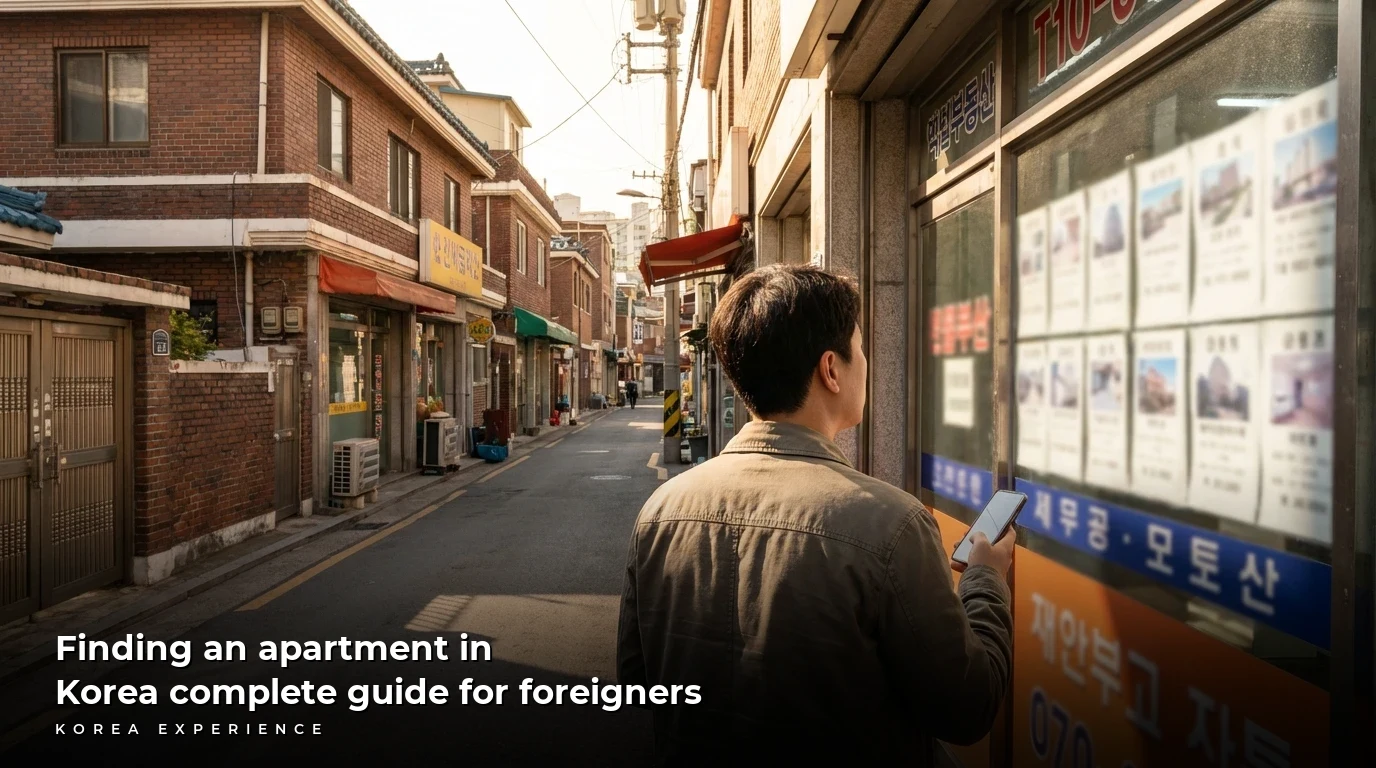
  • Real Estate Agents (Bu-dong-san): This is by far the most recommended method for expats. Real estate agents, identifiable by their green or yellow signs with "Bu-dong-san" written on them, are licensed professionals who can guide you through the entire process.
    • Benefits: They speak Korean, understand the local market, can negotiate on your behalf, verify property details, and help with paperwork.
    • Finding an Agent: Look for agents near your desired neighborhood. Many agents in expat-heavy areas (like Itaewon, Yongsan, Gangnam) will have some English-speaking staff or can arrange a translator.
    • Fees: Agents charge a commission (brokerage fee) based on a government-regulated sliding scale tied to the contract value. For Wolse, it's typically around 0.3% to 0.5% of the deposit plus 100 times the monthly rent. For Jeonse, it's often 0.3% to 0.4% of the Jeonse deposit. Always confirm the fee structure upfront.

Key Documents and Information Needed

As an expat, you'll generally need:

  • Alien Registration Card (ARC): Essential for all official procedures.
  • Passport: For identification.
  • Proof of Income/Employment: To show financial capability.
  • Bank Account in Korea: For transactions and monthly rent payments.
  • Visa Information: Your visa type can impact eligibility for certain housing types or loans.

The Lease Agreement: What to Look For

Korean lease agreements are legally binding documents.

  • Read Carefully: Ensure you understand all terms and conditions. If your Korean isn't fluent, bring a trusted Korean speaker or a professional translator. Do not sign anything you do not fully comprehend.
  • Key Details:
    • Property address (Dongho-su: building and unit number)
    • Contract term (typically two years)
    • Jeonse/Wolse deposit amount
    • Monthly rent (for Wolse/Ban-Jeonse)
    • Gwan-li-bi (maintenance fee)
    • Payment schedule
    • Responsibilities for repairs
    • Landlord and tenant contact information
  • Inventory: For furnished apartments, make sure a detailed inventory is attached and checked.

Essential Steps After Signing

Once your lease is signed and the initial payment made, there are critical steps to take:

  1. Register Your Lease (Ju-min-deung-rok) and Get Hwak-jeong-il-ja:
    • Go to your local community center (Dong Ju-min Center) with your lease agreement and ARC.
    • Ju-min-deung-rok (Resident Registration): Register your address to establish your legal residency.
    • Hwak-jeong-il-ja (Confirmed Date): Get a confirmed date stamp on your lease agreement. This is paramount as it legally protects your Jeonse or Wolse deposit against third-party claims (e.g., if the landlord defaults on their mortgage after you've moved in). Without it, your deposit might not be prioritized in case of landlord bankruptcy.
  2. Utility Setup: Your real estate agent can often help you set up electricity, gas, water, and internet services.
  3. Understanding Gwan-li-bi: Remember the monthly maintenance fee (Gwan-li-bi) is separate from rent and covers building upkeep. Clarify what exactly it includes.

Location, Location, Location

Your choice of neighborhood will significantly impact your living experience and rental costs.

  • Seoul:
    • Gangnam/Seocho: High-end, business hub, expensive.
    • Mapo/Yongsan (Hongdae, Sinchon, Itaewon): Trendy, expat-friendly, lively, diverse housing options, convenient for public transport.
    • Jongno/Jung-gu (Gwanghwamun, City Hall): Central, historical, close to government offices, good for professionals.
    • Songpa (Jamsil): Family-friendly, Lotte World, parks, good public transport.
    • Smaller "One-room" or "Officetel" apartments: Common in university areas or business districts, offering compact living for singles or couples.
  • Gyeonggi Province: Offers more affordable options with slightly longer commutes to Seoul. Cities like Suwon, Bundang, Ilsan, and Paju have well-developed infrastructure and can provide a quieter lifestyle. Housing here might offer more space for the same price as a smaller Seoul apartment.
  • Hak-gun (School District): For families with children, proximity to specific school districts is a major factor influencing rental prices. Elite Hak-gun areas often command higher rental costs.

Internal Linking Opportunity: For more detailed insights into different areas, check out our guide on "Finding the Best Neighborhoods for Expats in Seoul."

Understanding your rights and taking preventative measures are vital, especially with the higher stakes of a Jeonse contract.

Tenant Rights and Landlord Obligations

Korean tenant protection laws are generally robust. Key aspects include:

  • Contract Term: Standard rental contracts are for two years. Tenants have the right to renew for another two years under the same terms (known as "contract renewal request right"), unless the landlord or their direct family intends to move in.
  • Deposit Return: Landlords are legally obligated to return the full deposit at the end of the contract.
  • Major Repairs: Landlords are typically responsible for major structural repairs (e.g., plumbing, heating, major appliance malfunctions). Tenants are responsible for minor wear and tear and damages caused by their negligence.

Understanding Deposit Protection: Ju-min-deung-rok and Hwak-jeong-il-ja

As mentioned, obtaining your Hwak-jeong-il-ja (Confirmed Date) at your local community center after registering your address (Ju-min-deung-rok) is your single most important step for protecting your deposit. This stamp creates a legal priority for your deposit claim over other creditors (like banks with mortgages on the property) in case the landlord faces financial difficulties or sells the property. Without it, your deposit could be at severe risk.

Beware of Jeonse Scams and Risks

The Jeonse system, while beneficial, carries inherent risks, particularly with recent fluctuations in the real estate market.

  • Landlord Financial Instability (Budo): The biggest risk is that your landlord may declare bankruptcy or default on their mortgage, making it difficult or impossible to retrieve your deposit immediately.
    • Check the Property's Mortgage: Your real estate agent should help you verify the property's mortgage status before signing the contract. The Jeonse deposit should ideally be less than the remaining mortgage amount, or at least the combined sum of the mortgage and Jeonse deposit should not exceed 60-70% of the property's market value.
    • Recent Sales History: Ask about recent sales or previous Jeonse deposits on the property.
  • Property Ownership: Ensure the person you are signing the contract with is indeed the registered owner of the property (verified through property records called "Deung-gi-bu-deung-bon" or "registered copy of the immovable property").
  • Timing of Deposit Return: Even if the landlord is solvent, they might need time to secure a new Jeonse tenant to return your deposit. Plan your finances accordingly.

Renewing or Terminating Your Lease

  • Renewal: If you wish to renew, you must notify your landlord between 6 months and 2 months before your contract ends. If neither party notifies the other, the contract is automatically renewed under the same terms.
  • Termination: If you plan to move out, you must notify your landlord between 6 months and 2 months before the contract end date. If you terminate early, you may be responsible for finding a new tenant or paying a penalty, including the agent's commission for finding a replacement.

Internal Linking Opportunity: For a more comprehensive guide on managing finances in Korea, read our article "Understanding the Cost of Living in Seoul: A Guide for Expats."

Making Your Choice: Jeonse vs. Wolse for Expats

Deciding between Jeonse and Wolse requires careful consideration of your personal circumstances.

Factors Influencing Your Decision

  1. Financial Liquidity:
    • Jeonse: Requires significant upfront capital. Do you have this amount readily available or can you qualify for a loan?
    • Wolse: Requires less upfront capital but recurring monthly payments.
  2. Length of Stay in Korea:
    • Short-term (1-2 years): Wolse or a Ban-Jeonse might be more practical due to the lower upfront cost and potentially less hassle with deposit retrieval.
    • Long-term (3+ years): If you plan to stay for an extended period and have the capital, Jeonse can offer significant savings over time by eliminating monthly rent.
  3. Risk Tolerance:
    • Jeonse: Carries a higher financial risk if the landlord defaults. Mitigation strategies (Hwak-jeong-il-ja, due diligence) are essential.
    • Wolse: Lower financial risk concerning deposit loss, but your money is constantly leaving your account.
  4. Visa Type and Employment Status: Some visas or employment contracts might influence your ability to secure Jeonse loans or tie up large sums of money.
  5. Preference for Stability vs. Flexibility: Jeonse offers financial stability (no monthly rent) but less liquidity. Wolse offers financial flexibility (smaller upfront commitment) but ongoing monthly expenses.

Long-Term vs. Short-Term Perspective

From a purely financial perspective, if you have the capital and plan to stay long-term, Jeonse can be more cost-effective over several years as you avoid accumulating monthly rent payments. However, the initial hurdle is substantial, and the risk management is paramount. For shorter stays or those with less capital, Wolse offers a simpler, more accessible path into the Korean rental market.

Seeking Professional Advice

Before making any final decisions, it is highly recommended to:

  • Consult with multiple real estate agents: Get a feel for the market and available options.
  • Speak with other expats: Learn from their experiences and get recommendations.
  • If considering a Jeonse loan, consult with Korean banks: Understand their specific requirements for foreigners.
  • Consider legal advice: For large Jeonse contracts, a lawyer specializing in real estate can provide an additional layer of security.
FeatureJeonse (전세)Wolse (월세)
Upfront CostVery high, large lump-sum deposit (e.g., 50M - 1B+ KRW)Moderate, smaller security deposit (e.g., 5M - 50M KRW)
Monthly PaymentNone (only Gwan-li-bi)Monthly rent + Gwan-li-bi
Deposit ReturnFull deposit returned at contract endDeposit returned at contract end (minus damages/unpaid rent)
Financial RiskHigher (risk of landlord default on large deposit)Lower (smaller deposit at risk)
AccessibilityDifficult for many expats due to high capital, Jeonse loan challengesEasier due to lower upfront cost, more widely available
Financial BenefitRent-free living, potential for savings in the long termPredictable monthly expenses, no large capital tied up
FlexibilityLess flexible (large capital tied up for 2+ years)More flexible (easier to budget for shorter stays)

Frequently Asked Questions about Korean Rental Systems

Here are answers to some common questions expats have about Jeonse and Wolse:

Q1: Can foreigners get a Jeonse loan?

A1: Yes, it is possible, but generally more difficult than for Korean citizens. Eligibility often depends on your visa type (e.g., F-series visas may have more options), length of residency in Korea, stable income, and a good credit history within Korea. Major Korean banks offer various Jeonse loan products; it's best to visit different banks (Kookmin, Shinhan, Woori, Hana) directly with your ARC and income statements to inquire about specific requirements for foreigners.

Q2: What is Gwan-li-bi and what does it cover?

A2: Gwan-li-bi (관리비) is a monthly maintenance fee common in most Korean apartment and officetel buildings. It covers shared building expenses like common area electricity, cleaning services for hallways and lobbies, elevator maintenance, building security, garbage disposal, and sometimes basic internet/cable TV packages. The amount varies based on the building's size, age, and amenities. Always ask your agent to clarify what the Gwan-li-bi includes.

Q3: How much deposit do I need for a Wolse apartment?

A3: Wolse deposits can vary significantly. For a small studio apartment (one-room) or officetel, deposits can start from 5 million Korean Won. For larger apartments or those in more expensive areas of Seoul, deposits can range from 10 million to 50 million Korean Won or even higher. Generally, a higher deposit often allows for a slightly lower monthly rent.

Q4: What happens if my landlord doesn't return my Jeonse deposit?

A4: This is a serious concern. If your landlord fails to return your Jeonse deposit at the end of the contract, your first and most critical step is to have secured your Hwak-jeong-il-ja (Confirmed Date) on your lease at your local community center. This provides legal protection and establishes your priority claim. You would then typically pursue legal action, which can involve filing a deposit return lawsuit. It's crucial to seek legal counsel specializing in real estate law in Korea immediately if you face this situation.

Q5: Is it possible to negotiate rent in Korea?

A5: Yes, negotiation is often possible, especially for Wolse or Ban-Jeonse contracts. The degree of flexibility depends on market conditions (supply and demand), the landlord's urgency to rent, and the property's attractiveness. A skilled real estate agent can be very helpful in negotiating on your behalf. For example, you might negotiate a slightly lower monthly rent, or offer a higher deposit in exchange for lower rent (Ban-Jeonse), or ask for minor repairs/upgrades before moving in.

Conclusion: Your Korean Home Awaits

Navigating the Korean rental market as an expat can seem overwhelming, but with a clear understanding of the Jeonse vs Wolse Korean rental system, you're well on your way to finding your ideal home. Whether you opt for the rent-free living of Jeonse or the familiar monthly payments of Wolse, remember that thorough research, due diligence, and the guidance of a trusted real estate agent are your best allies.

Always prioritize the legal protection of your deposit by registering your lease and getting your Hwak-jeong-il-ja. Consider your financial situation, length of stay, and risk tolerance carefully. Korea offers a vibrant and welcoming environment, and securing comfortable housing is a fundamental step to enjoying your experience to the fullest. Armed with the knowledge from this guide, you can confidently embark on your journey to finding your perfect spot in this dynamic country. Happy house hunting!

About the Author

Korea Experience Team

Written by the Korea Experience editorial team - experts in Korean medical tourism, travel, and culture with years of research and firsthand experience.

⚠️ Medical Disclaimer

The information provided on this website is for general informational purposes only and does not constitute medical advice. Always consult with qualified healthcare professionals before making any medical decisions.

Continue Reading

Explore more articles you might find interesting