Korean Apartment Etiquette What Neighbors Expect 2026
Master Korean apartment etiquette in 2026. From strict recycling rules to noise control, learn how to be the perfect neighbor in Korea.
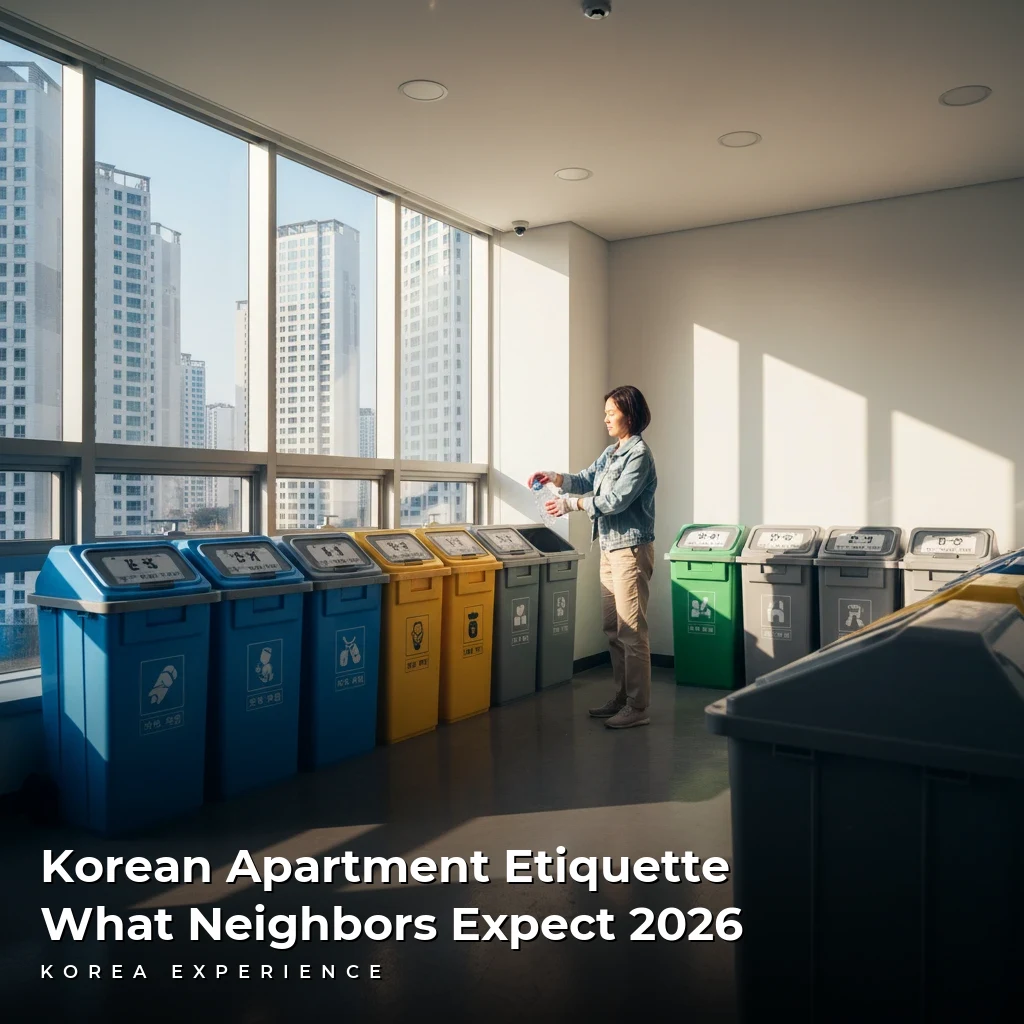
Living in a Korean apartment complex (known locally as "apateu") is a distinct cultural experience that defines the lifestyle of over 51% of the country's population. By 2026, the standards for community living have evolved, blending traditional Confucian values of respect with high-tech smart living systems. For international residents, navigating these unwritten rules is crucial to avoiding conflict and enjoying a harmonious life in Seoul or Busan.
Unlike housing in many Western countries, Korean apartments are high-density vertical villages where sound travels easily and community rules are strictly enforced. Understanding the nuances of "Cheunggan-soeum" (inter-floor noise) and the meticulous "Jongnyangje" (volume-based waste disposal system) isn't just about following laws—it is about showing respect to the people living 20 centimeters above and below you.
You might also enjoy our article about Finding an apartment in Korea complete guide for foreigners.
Key Takeaways
- 1Floor noise is the #1 cause of neighbor disputes; walking softly is mandatory
- 2Recycling requires strict separation; fines start at ₩100,000 for violations
- 3Quiet hours generally run from 10:00 PM to 6:00 AM daily
The Golden Rule: Silence is Sacred
The single most significant source of conflict in Korean apartment buildings is inter-floor noise. In 2025 alone, the Ministry of Environment reported over 212,000 official complaints regarding residential noise. The construction style of many Korean apartments involves concrete slabs that transmit impact sounds—like footsteps or dropping items—remarkably well.
You might also enjoy our article about Korean Business Etiquette 2026 Guide to Cards and Bowing.
To combat this, the government has set strict legal limits. As of 2026, the direct impact noise limit is 39 decibels (dB) during the day and 34 dB at night. To put this in perspective, a quiet library registers around 40 dB. Surpassing these levels can lead to mediation by the Noise Dispute Arbitration Center or civil lawsuits.
You might also enjoy our article about Korean work culture office etiquette for foreigners maste....
📊 Noise Complaint Statistics
The "Slipper" Culture
Upon moving in, your first purchase should be high-quality noise-canceling slippers. These are not just for comfort; they are a tool for community peace. Most Korean families wear cushioned slippers indoors to dampen the sound of heel strikes. If you have children, installing noise-dampening play mats (usually 4 centimeters thick) in the living room is not optional—it is a social expectation.
If you receive a complaint about noise via the intercom, do not argue. Apologize immediately and explain you will be more careful. If you are the one suffering from noise, never go directly to the neighbor's door. Call the management office (Gwanli-samuso) instead. Direct confrontation often escalates quickly in Korea.
Household Appliances and Timing
Operating washing machines, vacuum cleaners, or blending smoothies late at night is considered extremely rude. The general consensus for "quiet hours" has tightened in 2026 as more people work from home.
Daily Noise Etiquette Schedule
Green Zone
Vacuuming, laundry, and piano practice permitted.
Yellow Zone
Wind down. TV volume lowered. No heavy cleaning.
Red Zone
Strict silence. No laundry, no showers if pipes are loud.
The Complex Art of Waste Disposal
If noise is the biggest social hurdle, trash disposal is the biggest logistical one. Korea has one of the world's most sophisticated recycling systems, with a recycling rate topping 86%. The system relies on the "Jongnyangje" principle: pay-as-you-throw.
You cannot simply toss trash into a bin. You must purchase specific standard plastic bags for general waste and food waste from local convenience stores or supermarkets. These bags act as a tax to cover disposal costs.
💵 Standard Garbage Bag Costs (Seoul 2026)
For non-recyclable dry waste
For wet organic waste only
Sorting It Out
Recycling areas in apartment complexes are usually monitored by CCTV and security guards. Detailed sorting is required. You will typically find separate bins for:
- Vinyl (wrappers)
- Clear PET bottles (labels removed)
- Colored plastics
- Paper
- Cans
- Glass
- Styrofoam
📖 How to Handle Large Waste (Furniture/Electronics)
Step 1: Identify the Item
Items like suitcases, tables, or broken chairs require a sticker.
Step 2: Visit District Office or Website
Go to your local Gu-office website or app to report large waste disposal.
Step 3: Pay the Fee
Fees range from 2,000 to ₩15,000 depending on size.
Step 4: Attach Sticker & Discharge
Write the code on a paper or attach the printed sticker. Place item in designated area.
Food Waste Reality Check
Hard shells (eggs, clams, walnuts), tea bags, bones (chicken, beef), and fruit pits (peach, avocado) are NOT food waste. They go in the General Waste bag. If an animal cannot eat it, it is not food waste.
Common Spaces and Elevator Etiquette
In a building with 20 to 30 floors, the elevator is a primary social space. Efficiency is key. The average wait time for an elevator in a high-rise Seoul apartment is approximately 90 seconds, but during rush hour (8:00 AM - 9:00 AM), it can stretch to 3-5 minutes.
When entering the elevator, it is polite to lightly bow or nod to existing passengers. A simple "Annyeong-haseyo" (Hello) is appreciated but not mandatory if you are shy. However, holding the door for someone rushing toward the elevator is expected.
The Close Button
In Korea, pressing the "Close" button immediately after entering is standard behavior to speed up service. It is not considered rude; it is considered efficient.
Hallways and Stairwells
Personal items should never obstruct the hallway. While you might see a bicycle or a stroller parked outside a door in older buildings, strict fire safety regulations in 2026 enforce clear paths. Inspections are frequent, and fines for blocking fire escapes start at ₩300,000.
Parking: The "Neutral Gear" Phenomenon
Parking is a scarce resource in Korea. The average parking ratio in Seoul is about 1.2 cars per household, leading to severe overcrowding at night. This has birthed the unique culture of parallel double parking.
If you arrive late at night and all marked spots are full, you may be forced to park in front of another car.
If you double park, you MUST leave your car in 'Neutral' (N) gear and release the parking brake. This allows the person you blocked to push your car out of the way in the morning. Also, verify that your phone number is visible on your dashboard.
Failure to leave a contact number is a major breach of etiquette. Most drivers display a "parking number plate" on the windshield. If someone calls you at 7:00 AM to move your car, you must answer and move it immediately (within 5 minutes is the expected courtesy).
Maintenance Fees and Security
Living in an apartment comes with a monthly bill called "Gwanlibi" (maintenance fee). This is separate from your rent and individual utility usage. It covers the security guards, elevator maintenance, cleaning of common areas, and increasingly, the upkeep of community gyms and libraries.
For a standard 84-square-meter (approx. 25 pyeong) apartment, the average maintenance fee in 2026 hovers between ₩200,000 and ₩350,000 per month, varying by the age of the building and the number of units sharing the cost.
Housing Maintenance Fee Comparison
| Type | Avg Fee (Monthly) | Security Level | Amenities |
|---|---|---|---|
| Officetel | ₩250k - 400k | High | Gym/Conv. Store |
| Apartment Complex | ₩200k - 300k | Very High | Parks/Library/Gym |
| Villa (Low-rise) | ₩50k - 100k | Low | None |
Smart Security
Modern Korean apartments are fortresses of technology. 85% of new builds feature wall-pad systems that control heating, gas, and entry. You can often call the elevator from your living room before putting your shoes on.
📋 Smart Home Features 2026
Smoking and Balcony Use
Smoking inside apartments, including on balconies and in bathrooms, is strictly taboo and often prohibited by the complex's regulations. Cigarette smoke travels through vents and open windows, affecting neighbors instantly.
In 2026, many apartment complexes are designated as "Non-Smoking Buildings." If caught smoking in prohibited areas (corridors, stairs, elevators, underground parking), the fine is ₩100,000. Smokers must go to designated outdoor smoking booths, which are usually located at least 10 meters away from the building entrances and playgrounds.
Ground Floor Living
- ✓No need for elevators
- ✓High tolerance for jumping children
- ✓Often cheaper rent/price
- ✗Privacy issues (people can see in)
- ✗More noise from outside pedestrians
- ✗Potential for humidity/bugs
Conflict Resolution: The "Jeong" Way
Despite the strict rules, Korean community life is underpinned by "Jeong" (a deep connection or bond). While direct confrontation is discouraged, small gestures go a long way.
In the past, new neighbors would hand out "Siru-tteok" (red bean rice cakes) to the whole building. Today, that tradition has faded due to privacy concerns and changing tastes. However, leaving a small note and a pack of standard garbage bags (a very practical gift) or some fruit at your immediate neighbors' doors when you move in can buy you immense goodwill.
If a conflict arises, rely on the management office. They act as the neutral arbiter. Document issues (like recording noise or taking photos of trash violations) before reporting.
Getting Help: Administrative Resources
Sometimes you need official help. Every neighborhood has a "Dong Office" (Community Service Center) where you can get trash stickers, register your residency, and get official documents.
Global Village Center (Yeoksam)(역삼 글로벌 빌리지 센터)
Frequently Asked Questions
❓ Apartment Life FAQ
Have more questions?Contact us →
By adhering to these etiquette standards, you ensure that your time in Korea is defined by cultural immersion rather than neighborly friction. The rules may seem rigid at first, but they create a safe, clean, and quiet environment that makes high-density living surprisingly comfortable.
About the Author
Korea Experience Team
Written by the Korea Experience editorial team - experts in Korean medical tourism, travel, and culture with years of research and firsthand experience.
Explore more in Living in Korea
Everything expats and long-term visitors need to know — from visa requirements and housing to banking, healthcare, and daily life tips.
Browse All Living in Korea ArticlesContinue Reading
Explore more articles you might find interesting
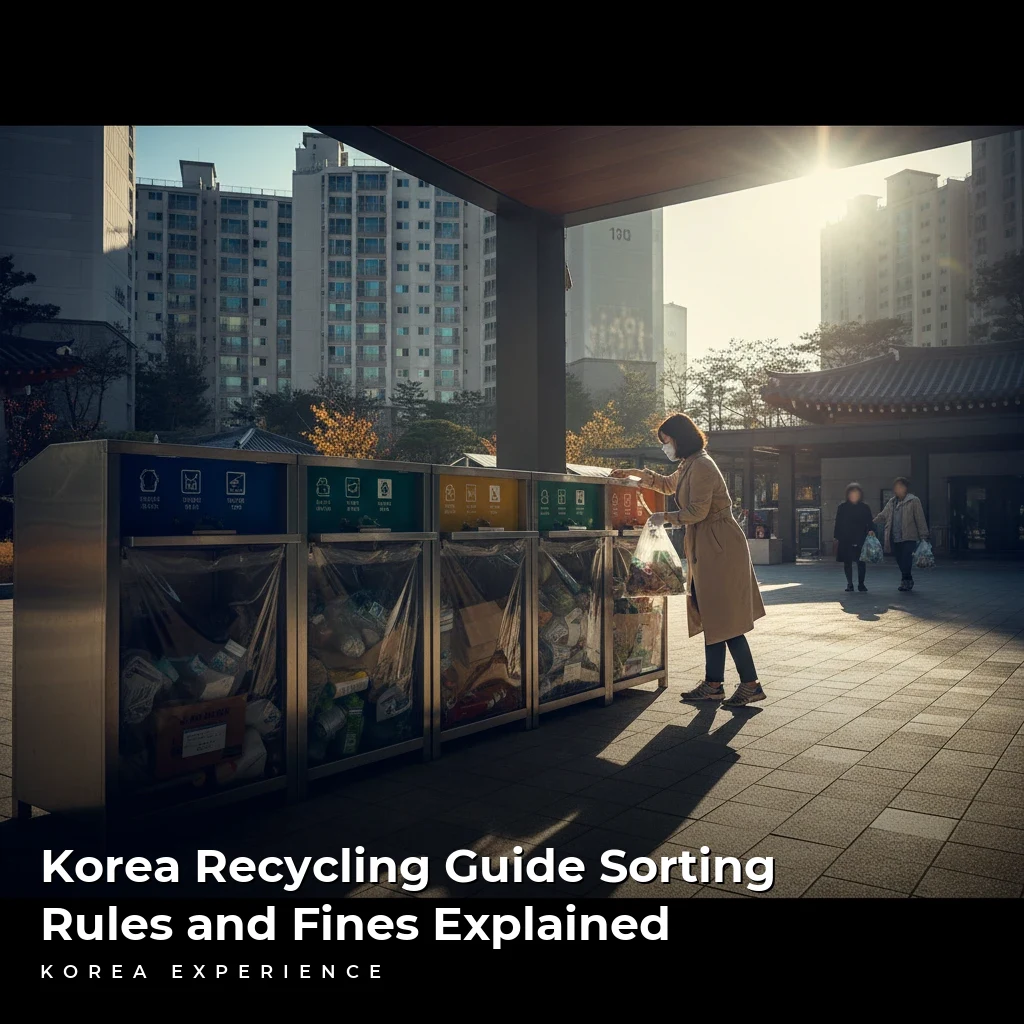
Master the strict South Korean recycling system. Learn about sorting categories, specific colored bags, disposal schedules, and how to avoid heavy fines.
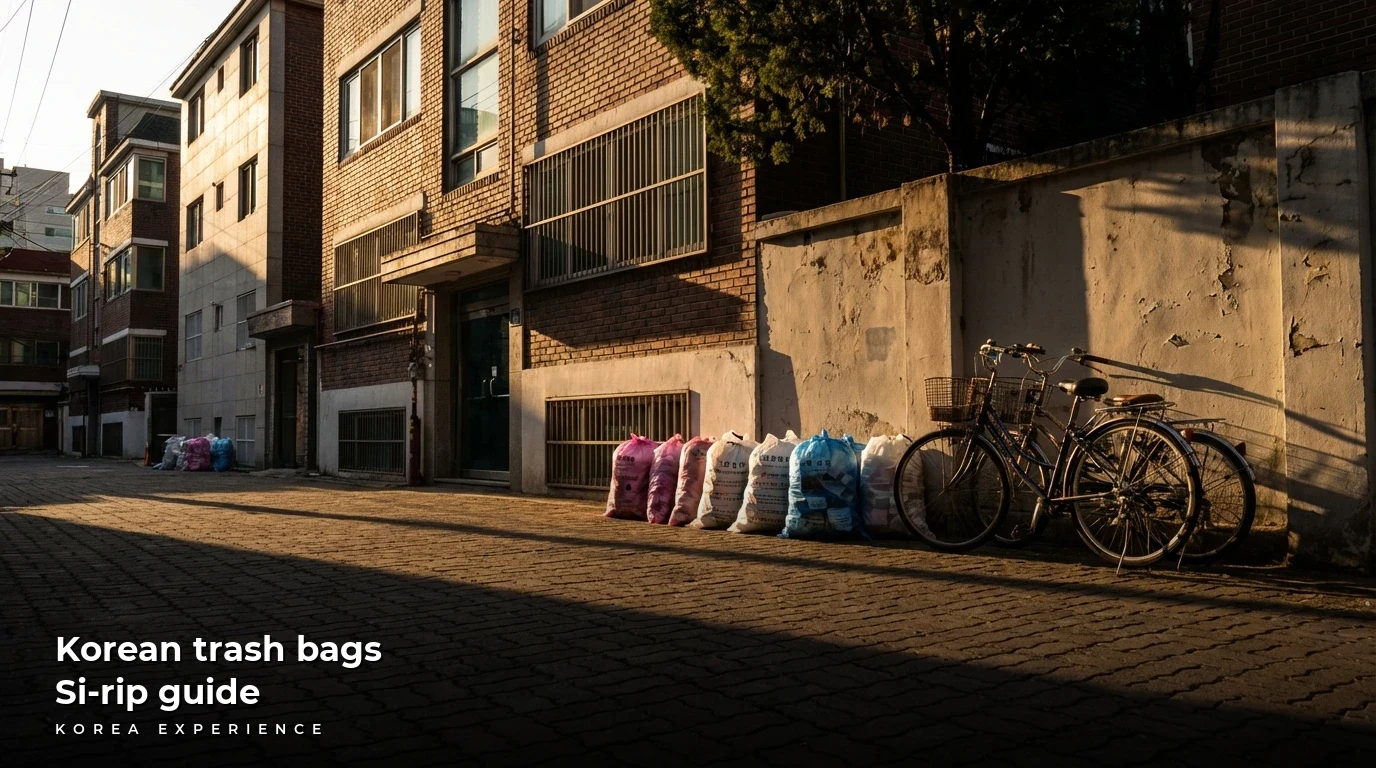
Master the 2026 Korean trash system to avoid 100,000 KRW fines. Learn bag prices, sorting rules, and how to recycle 60% of waste like a local.

Master Korean dining rules and learn why lifting your rice bowl is a cultural taboo. Essential guide for travelers in 2026.

Master Korean drinking etiquette pouring and toasting rules. Learn the essential customs, from the two-hand pour to the senior turn.
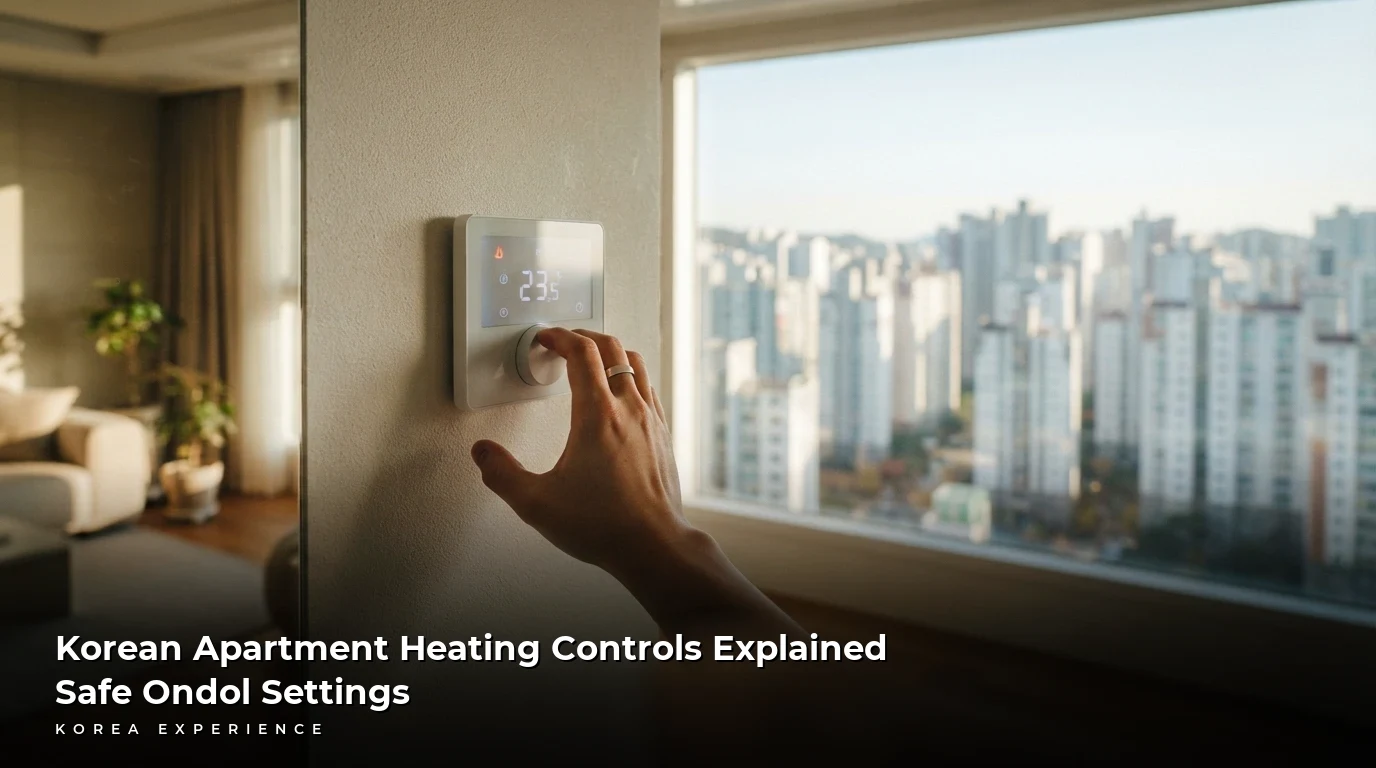
Master Korean apartment heating controls. Learn essential ondol terms, how to set room vs. floor temperature, and safe practices for energy efficiency.
Complete guide to working in Korea on D-2 and D-4 visas. Learn hourly limits, permit applications, and strict regulations for 2026 student employment.