Korean Bowing Etiquette: When and How Deep to Bow in 2026
If you're heading to Seoul, that 15-degree bow is way more than just a polite nod—it's the ultimate social lubricant that opens doors.
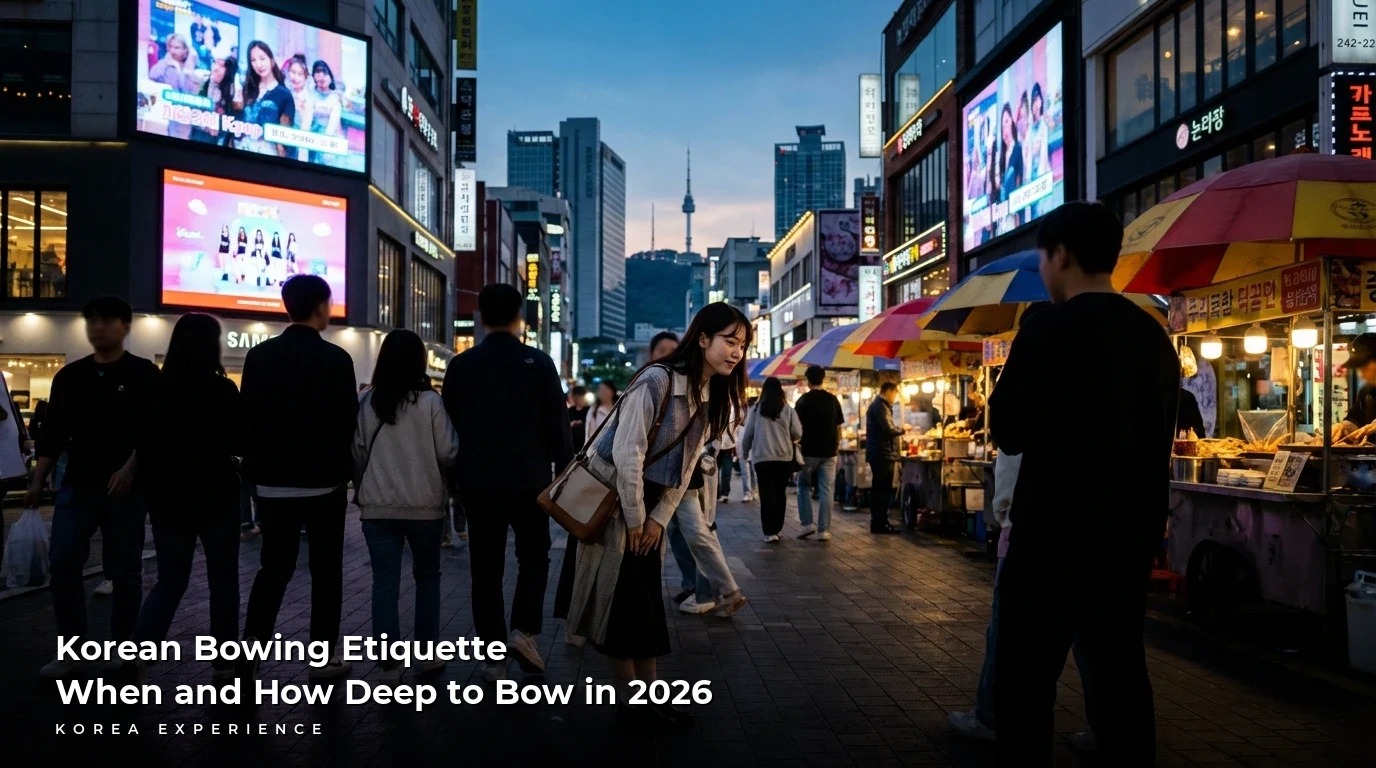
So, you've finally made it to Seoul. You're standing at the entrance of a tiny, steaming-hot Gukbap restaurant in Yeonnam-dong, and the grandmother running the place greets you with a quick, rhythmic bow. What do you do? The short answer is: tilt your upper body forward about 15 degrees, drop your eyes for a split second, and say "Annyeonghaseyo." That's it. That tiny gesture is your golden ticket to being treated like a local instead of a tourist.
For the full business context, see our guide to Korean business meeting etiquette including cards and bowing. Bowing extends into the workplace. Learn more about Korean work culture and office etiquette.
Social bowing also appears in drinking settings. Explore our guide to Korean drinking culture and etiquette.
Key Takeaways
- 1The short answer is: The 15-degree bow, known as Mok-rye, is the 'Swiss Army Knife' of Korean social interactions. It's used for everything from saying hello to a shopkeeper to acknowledging a colleague in a cramped elevator.
- 2Here's the most important number: You'll likely perform a 15-degree bow about 20 to 30 times a day if you're out and about in Seoul. That's enough repetitions to make it muscle memory within 48 hours.
- 3Here's the actionable advice: Don't overthink the geometry! While we talk about degrees, nobody is bringing out a protractor. Just bend from your waist, not your neck, keep your eyes down for a second, and always verbalize your greeting at the same time.
📋 Korean Bowing Quick Facts
Why 15 Degrees is the Magic Number
Here's why that specific angle matters. If you don't bow at all, you might come off as cold or even arrogant—like you're "above" the interaction. If you bow too deep—say, 45 or 90 degrees—to a cashier at Olive Young, they're going to be incredibly confused, maybe even weirded out, thinking they did something wrong or that you're mocking them.
The 15-degree bow is the Goldilocks zone. It's respectful enough for a first meeting but casual enough for buying banana milk at GS25. Think of it as a "waist nod"—quick, fluid, and meant to be performed while you're standing relatively still.
In a city of 10 million people where personal space is at a premium, this tiny gesture acts as a protective bubble for everyone's Kibun—that's the Korean word for "inner mood" or "face." When you tilt your torso just 15 degrees, you're signaling: "I see you" and "I respect your space."
Bowing in Korean History
Three Kingdoms Period
Bowing traditions emerge as part of an intricate system of 100+ different greeting gestures.
Joseon Dynasty Begins
Confucian values solidified, making bowing a mandatory reflection of social hierarchy.
First US Mission
Korean envoys (Bobbingsa) performed deep bows to the US President, causing confusion in Washington.
End of Monarchy
Formal 90-degree bows to royalty became less common as Korea modernized.
MZ Generation Shift
Young Koreans reclaim traditional etiquette as 'Newtro' (New + Retro) trend.
K-ETA Waiver Extension
Ministry of Justice extends temporary waiver until December 31, making tourism easier than ever.
The Bow Cheat Sheet: 15, 30, or 90?
Korean Bow Types Explained
| Bow Type | Angle | When to Use | Duration |
|---|---|---|---|
| Casual (Mok-rye) | ~15° | Quick greetings, shops, elevators | ~1 second |
| Respectful (Keirei) | ~30-45° | First meetings, bosses, elders | ~2 seconds |
| Deep (Saikeirei) | 45-90° | Sincere apologies, gratitude | 3+ seconds |
| Full Prostration (Keunjeol) | Floor | Weddings, funerals, Lunar New Year | 5+ seconds |
The 15-Degree "Daily Driver" (Mok-rye) This is your default setting. Use it for greeting shopkeepers, saying thanks when someone holds the elevator, acknowledging a neighbor, or casual introductions with people your age. It's almost more of a "waist nod"—quick and fluid.
The 30-Degree "Respectful" Bow (Keirei) Put more "oomph" into your politeness when meeting your boss for the first time, greeting your partner's parents (critical!), or showing sincere gratitude for a big favor. Pause for a split second at the bottom—this "beat" shows you aren't rushing through the respect.
The 45-90 Degree "Service & Apology" Bow You'll see this at department stores (the famous "Belly Button Bow") or from public figures after a scandal. As a tourist, you'll almost never need this unless you've caused a major scene or need to give a world-class apology.
📖 How to Master the 15-Degree Everyday Bow
Step 1: Stop and Align
Before you even think about bending, stop walking. Bowing while moving is a major faux pas. Place your feet together and let your arms hang naturally at your sides.
Step 2: The Verbal Lead
Start saying your greeting ('Annyeonghaseyo' or 'Gamsahamnida') just as you begin to tilt. You want to finish the sentence as you're coming back up.
Step 3: The 15-Degree Tilt
Bend from your waist—not your neck. Keep your back straight and tilt your upper torso forward about 15 degrees. Your eyes should naturally drop toward the ground.
Step 4: The Smooth Return
Hold the position for just a fraction of a second at the bottom, then rise back up at a steady pace. Smile and re-engage eye contact.
Mastering the 15-Degree Bow
- ✓Instant Respect: When you bow 15 degrees, you're saying 'I understand your social rules.' It creates immediate warmth with locals who might otherwise be shy around foreigners.
- ✓The Universal Translator: Even if your Korean language skills are zero, a well-timed bow acts as a universal sign for 'I'm a polite person.'
- ✓Physical Synchronization: Research shows that bowing helps you 'sync up' with the person you're talking to, setting a rhythmic pace for natural conversation.
- ✗The 'Awkward Neck' Trap: Beginners often just bob their heads like a pigeon. This looks weird and can be seen as lazy. Remember to use your waist.
- ✗Staircase Stammering: Bowing to someone while standing on a higher step is a huge mistake—it looks like you're bowing 'down' at them. Scurry to their level first.
- ✗Overdoing It: If you bow 90 degrees to a convenience store clerk, you'll make them super uncomfortable. Wrong 'dose' of bowing leads to confused stares.
Most tourists think bowing is about submission, but in modern Korea, it's about space. The 15-degree bow creates a respectful distance that makes everyone comfortable. If you're ever unsure, just match the other person's depth—but maybe go just an inch deeper if they're older than you!
The Stuff Nobody Tells You
Here are the "black belt" level details that separate people who "read a blog post" from people who actually get the culture:
The Staircase Rule: If you're walking up stairs and see your boss walking down, do NOT bow from where you are. Bowing from a higher step means you're looking down at them while bowing—basically an insult. Scuttle down to their level before you tilt.
The "Silent Bow" Taboo: A bow without a "Hello" (Annyeonghaseyo) or "Thank you" (Gamsahamnida) feels robotic or dismissive. Always vocalize. The only exception is places where silence is expected, like libraries or funerals.
The "Sync" Strategy: Expert etiquette masters suggest you inhale as you bend, pause, and exhale as you come up. If you and the other person do this, you "sync" your rhythms, making the following conversation way more harmonious.
Never Hands in Pockets: Bowing with your hands in your pockets is incredibly disrespectful. Even if it's freezing in January, pull those hands out for the three seconds it takes to greet someone.
Pro Tip: The Crowded Elevator
If you're in a packed elevator or subway, don't try a full waist bow—you'll headbutt someone! In these cases, a casual bow can be reduced to a simple, polite head nod with eye contact.
Warning: Hands in Pockets
Never, ever bow with your hands in your pockets. It's considered incredibly disrespectful and arrogant. Even if it's cold, pull those hands out for the three seconds it takes.
No Korean Phone/ARC? Here's What To Do
If you're a tourist in 2026, navigating apps can be a nightmare without an ARC. The Hack: Download Catchtable Global for restaurant bookings (it takes foreign numbers!) and use the Shuttle app for food delivery—it accepts international cards without needing local ID.
❓ Frequently Asked Questions
Have more questions?Contact us →
Your 24-Hour Action Plan
Here's exactly what you should do in your first 24 hours in Korea to master the bow:
At Incheon Airport: After clearing immigration, go to a convenience store. When the clerk hands you your purchase, give a quick 15-degree bow and say "Gamsahamnida." Boom—first cultural interaction complete.
Checking In: When you arrive at your hotel, give the staff a polite 15-degree bow. Use the "two-hand rule" when handing over your passport. They'll likely become much more helpful immediately.
Your First Meal: When the waiter brings your food, give a tiny seated head-bob (the "seated" version of the 15-degree bow) and say "Jal-meokgesseumnida" (I will eat well). When leaving, that final tilt at the door is your "thank you" for the experience.
Don't sweat the small stuff. Koreans are incredibly kind and don't expect you to be a pro overnight. The fact that you're even thinking about the 15-degree bow puts you ahead of 95% of other visitors.
Take a deep breath, tilt your torso just a little bit, and get ready for the best trip of your life. You've got this!
Sources
- Learn Korean Cultural Guide - Explains the secret behind the 15-degree bow and common greetings.
- US Army Garrison Yongsan - Historical context and modern bowing situations for expats.
- CCorea Cultural Blog - Detailed breakdown of bow types and specific etiquette "don'ts."
- Korea JoongAng Daily - Analysis of 2026 consumer behavior and the "Newtro" trend.
- Ministry of Justice (MOFA) - Official government notice on K-ETA temporary exemption through 2026.
About the Author
Korea Experience Team
Written by the Korea Experience editorial team - experts in Korean medical tourism, travel, and culture with years of research and firsthand experience.
Explore more in K-Culture
K-Pop, K-Drama, traditional arts, and modern culture — dive deep into the cultural phenomena that have captivated the world.
Browse All K-Culture ArticlesContinue Reading
Explore more articles you might find interesting
The ultimate guide to Gugak, Pansori, and fusion performances in Seoul. Discover venues, prices, and etiquette for the 2026 travel season.
Get your own custom name stamp in Seoul for just ₩30,000 in 2026. Discover why nearly 100 percent of Korean adults use these unique stone souvenirs today.

Navigate Seoul in 2026 without an ARC. Learn how k.ride and Taba let tourists hail cabs for just ₩4,800 using foreign phone numbers and credit cards.
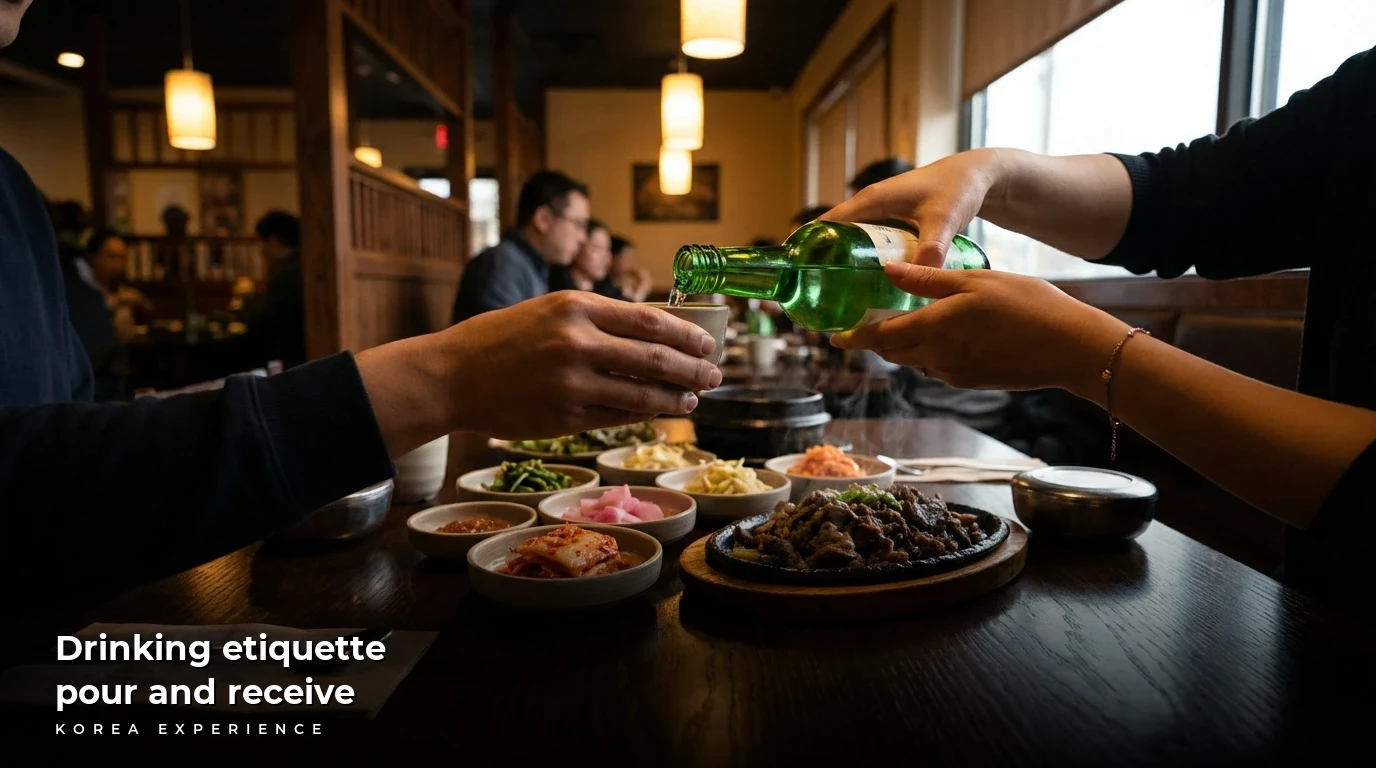
Master the two-hand tuck and polite turn. Learn why soju costs 7,000 KRW in 2026 and how to avoid the 50% refill rule mistake in this essential guide.

The ultimate guide to building a social circle in Korea. Discover where to meet locals, cultural etiquette, and the best apps for making Korean friends.
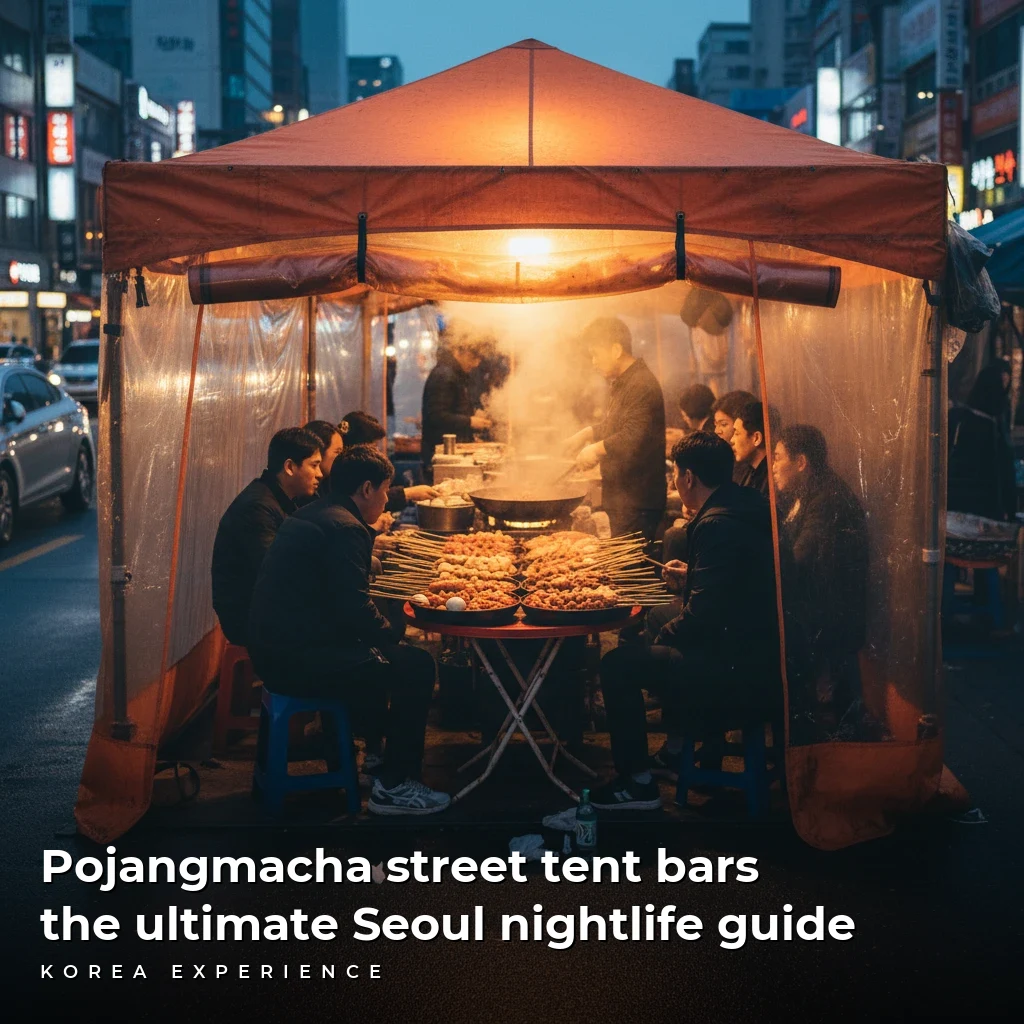
Discover the authentic charm of Korea's pojangmacha. A complete guide to tent bar locations, menu prices, etiquette, and tips for 2026.