Korean traditional music and performance guide 2026
The ultimate guide to Gugak, Pansori, and fusion performances in Seoul. Discover venues, prices, and etiquette for the 2026 travel season.
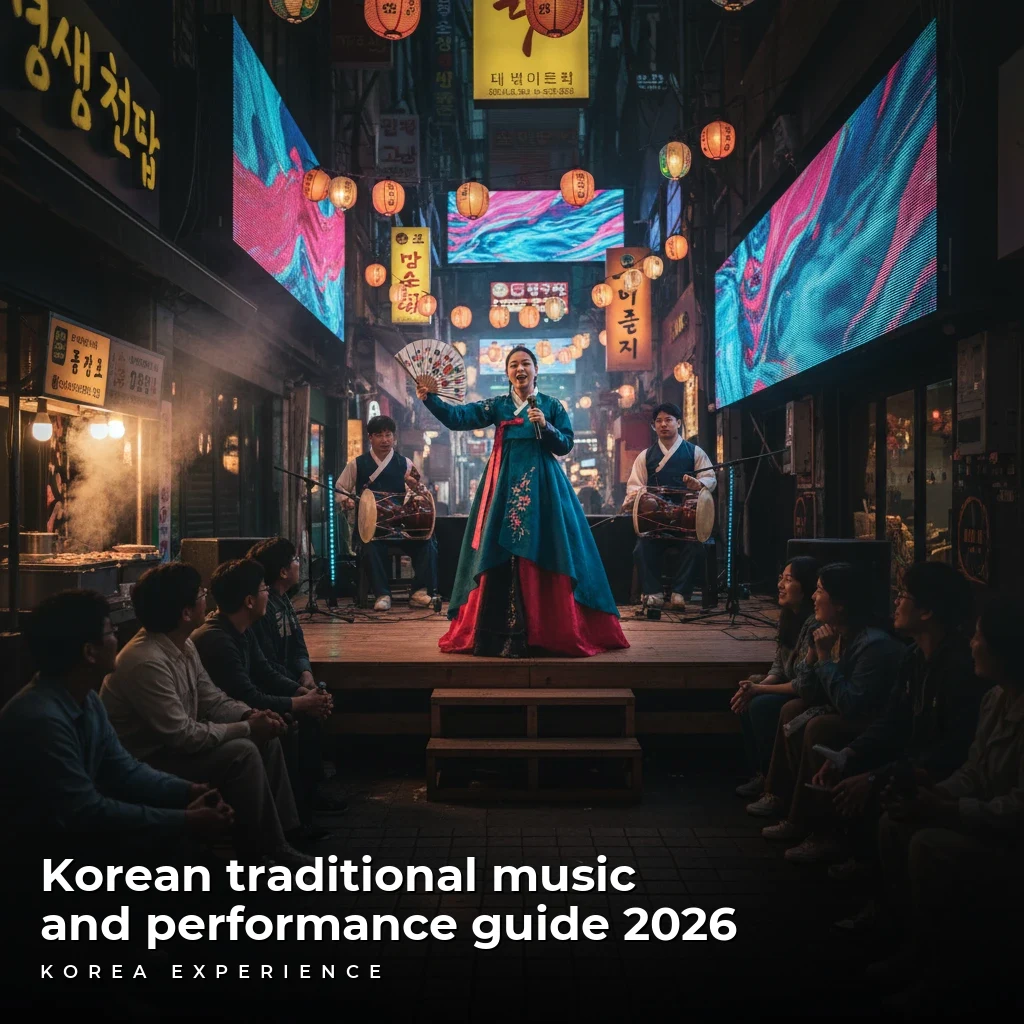
Korean traditional music, or Gugak, is the heartbeat of the nation's history, resonating through the palaces of Seoul and the folk villages of the countryside. As we enter the 2026 travel season, the landscape of Korean performance art has evolved, blending 5,000 years of history with cutting-edge digital scenography. Whether you are seeking the solemnity of royal court music or the energetic rhythm of a fusion percussion show, this guide serves as your comprehensive roadmap.
With the recent surge in global interest—highlighted by a 40% increase in foreign ticket reservations for traditional performances in late 2025—securing your seat at these cultural spectacles requires more planning than before. From the haunting vibrations of the Gayageum to the thunderous beats of Samulnori, we will explore where to go, how much to pay, and how to truly appreciate the sound of Korea.
For more details, check out our guide on Korean Traditional Music Gugak Performance Venues Guide.
Key Takeaways
- 1Book tickets for major venues like NCKTPA at least 3 weeks in advance for 2026 shows
- 2Average ticket prices range from ₩20,000 ($15) to ₩120,000 ($90)
- 3The Saturday Performance of Korean Music at NCKTPA is the best value for beginners
Understanding Gugak: More Than Just Music
To appreciate the performance, one must understand the philosophy. Gugak literally translates to "national music." Unlike Western music, which often prioritizes harmony and chords, Korean traditional music emphasizes melody and rhythm, specifically the concept of Han—a complex emotion of deep sorrow and resentment that transforms into hope.
For more details, check out our guide on Bonsai and Zen gardens finding peace in Korea traditional....
In 2026, the definition of Gugak has expanded. While preservation remains key, venues are increasingly adopting "Neo-Gugak," utilizing projection mapping and surround sound systems. A standard performance now lasts between 70 to 90 minutes, a reduction from the historical multi-hour sessions, catering to modern attention spans while maintaining artistic integrity.
Related reading: Ultimate Guide to K-Pop Music Show Recordings in Seoul.
📊 Gugak Audience Growth
The Two Pillars: Court Music vs. Folk Music
Korean music is historically divided into two main categories: Jeongak (Court Music) and Minsogak (Folk Music).
Related reading: Rainy Seoul Evenings.
Jeongak was enjoyed by the royalty and aristocracy. It is slow, solemn, and highly formalized. The tempo is often incredibly slow, with one beat sometimes lasting up to 3 seconds. This music was designed to cultivate a peaceful mind.
Minsogak, by contrast, is the music of the common people. It includes Pansori (musical storytelling) and Sanjo (instrumental solos). It is fast, emotional, and improvised. The tempo can accelerate from a slow 40 beats per minute (BPM) to a frantic 160 BPM in the final movements, mirroring the turbulent lives of the peasantry during the Joseon Dynasty (1392–1910).
Pro Tip
If you find slow, meditative music difficult to engage with, skip the Royal Ancestral Rituals and opt for a Samulnori or Pansori performance. These are high-energy and emotionally charged, making them more accessible for first-time listeners.
The National Center for Korean Traditional Performing Arts (NCKTPA)
Located in Seocho-gu, Seoul, the NCKTPA is the headquarters of Korean traditional music. It is an immense complex spanning over 35,000 square meters, housing four different theaters and a museum. For 2026, they have renovated the Yeak-dang (main hall) to improve acoustics for non-amplified instruments.
The center hosts the famous "Saturday Performance of Korean Music," which has been running for over 30 years. This performance is an omnibus show, offering a buffet of different styles—court music, dance, and instrumental solos—in a single 70-minute session.
National Center for Korean Traditional Performing Arts(국립국악원)
📋 Saturday Performance Details
The complex is situated roughly 12 kilometers south of the popular Myeongdong district. A taxi ride from central Seoul will cost approximately ₩20,000 ($15 USD) and take about 35 minutes depending on traffic. However, taking the subway Line 3 is highly recommended for reliability.
Pansori: The Sound of the Soul
Designated as a UNESCO Masterpiece of the Oral and Intangible Heritage of Humanity, Pansori is often called "Korean Opera," though it is distinctly different. It involves a single vocalist (Sorikkun) and a single drummer (Gosu). The singer uses a fan to gesture and plays all characters in the story.
A full Pansori performance can last up to 8 hours, but tourist-friendly versions in 2026 are condensed to 60-90 minutes. The drummer provides the beat using a Buk (barrel drum) and shouts words of encouragement called Chuimsae (like "Eolssigu!" or "Jota!").
Don't be afraid to make noise! Unlike Western classical concerts where silence is golden, in Pansori, the audience is expected to participate. If the singer hits a high note or expresses deep emotion, you can shout 'Eolssigu!' (Bravo). It gives energy to the performer.
Pansori vs. Western Opera
| Feature | Pansori | Western Opera |
|---|---|---|
| Performers | One singer, one drummer | Full cast, orchestra |
| Staging | Minimal (mat and screen) | Elaborate sets |
| Vocal Style | Husky, chest voice | Resonant, head voice |
| Duration | Historically 3-8 hours | 2-4 hours |
Best Places for Pansori
The Jeongdong Theater near Deoksugung Palace remains a top choice. Their 2026 seasonal show typically runs daily at 4:00 PM and 8:00 PM. The theater is located just 400 meters from City Hall Station (Line 1, Exit 12). Tickets average ₩50,000 ($38 USD) for R-seats and ₩40,000 ($30 USD) for S-seats.
Samulnori and Namsadang: The Rhythm of Agriculture
If Pansori is the soul, Samulnori is the heartbeat. Originating from farming rituals intended to ensure a good harvest, this percussion music involves four instruments representing nature:
- Kkwaenggwari (Small Gong): Represents thunder / Lightning.
- Jing (Large Gong): Represents the wind.
- Janggu (Hourglass Drum): Represents rain.
- Buk (Barrel Drum): Represents clouds.
A typical Samulnori performance hits a tempo of 120 to 140 beats per minute, creating a trance-like state. It is loud, energetic, and visually dynamic, often accompanied by ribbon-hat dances (Sangmo) where performers spin long white ribbons attached to their hats.
💵 Percussion Performance Costs (2026)
Comedy & Rhythm fusion
Authentic folk experience
Where to Watch for Free
You don't always need a ticket. The Namsangol Hanok Village hosts traditional performances every weekend from April to October.
- Time: 2:00 PM - 3:00 PM (Saturdays and Sundays)
- Cost: Free
- Location: 300 meters from Chungmuro Station (Line 3/4), Exit 3.
- Capacity: Outdoor seating for roughly 200 people.
Royal Rituals: Jongmyo Jeryeak
For the ultimate authentic experience, witness the Jongmyo Jeryeak. This is the royal ancestral ritual music performed at Jongmyo Shrine, a UNESCO World Heritage site. It is arguably the oldest complete orchestral music still performed in the world, dating back to the 15th century.
The main ceremony occurs once a year on the first Sunday of May. In 2026, this falls on May 3rd. The ritual involves hundreds of performers in red robes.
Jongmyo Jeryeak Experience Timeline
Parade Starts
Royal Procession from Gyeongbokgung to Jongmyo (2.5km route)
Ritual Begins
Main gate opens; solemn music starts
Main Performance
Orchestral performance with 64 dancers (Ilmu)
Crowd Warning
The annual Jongmyo Jeryeak draws over 30,000 spectators. If you want a view of the main courtyard, you must arrive by 8:30 AM. There is usually a specialized viewing area for foreigners, but capacity is limited to about 200 seats.
If you miss the annual event, the NCKTPA performs excerpts of this music regularly, and smaller reenactments occur at the shrine on Saturday mornings in the spring and autumn months (April, May, September, October).
Learning the Instruments: A Hands-on Guide
Listening is one thing; playing is another. In 2026, experiential tourism is a major trend. Several cultural centers offer one-day classes for travelers. The most popular instrument to learn is the Janggu (hourglass drum) because basic rhythms can be mastered in a single session.
Classes typically cost between ₩30,000 and ₩50,000 ($23 - $38 USD) per person. Sessions usually last 90 to 120 minutes.
📖 How to Book a Gugak Class
Step 1: Choose Your Instrument
Select 'Janggu' for rhythm or 'Gayageum' for melody.
Step 2: Visit K-Heritage Sites
Go to the Korea Cultural Heritage Foundation website or Klook.
Step 3: Select a Time Slot
Classes usually run at 10:00 AM or 2:00 PM.
Korea House in Chungmuro is the premier destination for this.
- Address: 10, Toegye-ro 36-gil, Jung-gu, Seoul
- Transit: Chungmuro Station, Exit 3, 2-minute walk.
- Class Size: Usually limited to 10-15 participants for personalized instruction.
Contemporary Fusion: The New Wave
Since the viral explosion of bands like Leenalchi and Jambinai in the early 2020s, fusion Gugak has become a staple of Seoul's nightlife. These bands mix heavy metal, funk, or pop with traditional instruments like the Haegeum (fiddle) and Geomungo (zither).
For 2026, the hot spots for these performances are not traditional theaters, but live clubs in the Hongdae and Seongsu-dong areas.
Traditional vs. Fusion Performances
- ✓Traditional: Authentic historical connection
- ✓Traditional: Meditative and calming
- ✓Fusion: High energy and modern vibe
- ✓Fusion: Familiar Western musical structures
- ✗Traditional: Can be slow for some audiences
- ✗Traditional: Strict etiquette required
- ✗Fusion: Can be loud (amplified)
- ✗Fusion: Less focus on acoustic purity
Venue Recommendation: The Seoul Donhwamun Traditional Theater Located opposite Changdeokgung Palace, this venue specializes in modern adaptations. It is an intimate space with only 140 seats, ensuring you are never more than 10 meters from the stage.
- Ticket Price: Average ₩20,000 ($15 USD).
- Vibe: Casual, often includes talk-shows with the musicians.
Practical Information: Tickets and Etiquette
Ticket Purchasing
For 2026, the primary platforms for booking performance tickets are Interpark Ticket Global and Melon Ticket Global. Both offer English interfaces and accept international credit cards.
Cancellation Policies
Most Korean ticket sites have strict cancellation fees. Canceling on the day of the show usually incurs a 90% fee. Canceling 1-2 days before costs 30-50%. Always check the "Refund Policy" tab before paying.
Cost Analysis
To help you budget, here is a breakdown of expected costs for a couple attending a premium evening performance:
- Tickets (R Seat): ₩100,000 ($76 USD) x 2 = ₩200,000
- Transport (Taxi roundtrip): ₩40,000 ($30 USD)
- Pre-show Dinner (Korean Table d'hote): ₩80,000 ($60 USD)
- Total Evening Cost: ~₩320,000 ($240 USD)
However, budget travelers can enjoy the "Saturday Performance" at NCKTPA for a total evening cost of under ₩60,000 ($45 USD) for two, including subway fare and a casual dinner.
Etiquette 101
- Photography: Strictly prohibited during performances unless explicitly stated (often allowed during curtain calls).
- Attire: Smart casual is the norm. Shorts and flip-flops are frowned upon at venues like the National Theater of Korea.
- Food: No food or drink allowed inside the seating area, except for water.
- Late Arrival: You will likely be held in the lobby until an intermission or a specific break in the music.
Regional Specialties: Beyond Seoul
While Seoul is the hub, specific styles originate from different provinces. If your 2026 itinerary takes you outside the capital, consider these:
- Jindo Island (South Jeolla Province): Famous for Jindo Arirang and the Miracle Sea Road Festival. It is roughly 380km south of Seoul (4.5 hours by bus).
- Namwon (North Jeolla Province): The birthplace of Chunhyang-ga, the most famous Pansori story. The National Gugak Center in Namwon offers free shows on Wednesday evenings.
- Andong (North Gyeongsang Province): Home to the Hahoe Mask Dance Drama (Hahoe Byeolsingut Talnori). Performances are held at the Hahoe Village, 3 hours from Seoul by KTX train (approx. ₩40,000 one way).
Regional Performance Hubs
| Region | Specialty | Distance from Seoul | Best Venue |
|---|---|---|---|
| Seoul | Royal Court Music | 0 km | NCKTPA |
| Jeonju | Pansori | 200 km (1.5 hrs KTX) | Jeonju Sori Arts Center |
| Busan | Dongnae Yaryu (Field Dance) | 325 km (2.5 hrs KTX) | Busan National Gugak Center |
Conclusion
As you plan your 2026 Korean adventure, making space for a traditional music performance will elevate your trip from a simple vacation to a cultural immersion. Whether it is the thunderous drums of a Samulnori troupe echoing through a summer night or the delicate, tear-inducing pluck of a Gayageum string, these sounds tell the story of a resilient, passionate people.
Remember to book your NCKTPA tickets at least three weeks in advance, pack a smart-casual outfit, and prepare your heart for the unique emotional journey of Han.
❓ Frequently Asked Questions
Have more questions?Contact us →
About the Author
Korea Experience Team
Written by the Korea Experience editorial team - experts in Korean medical tourism, travel, and culture with years of research and firsthand experience.
Explore more in K-Culture
K-Pop, K-Drama, traditional arts, and modern culture — dive deep into the cultural phenomena that have captivated the world.
Browse All K-Culture ArticlesContinue Reading
Explore more articles you might find interesting
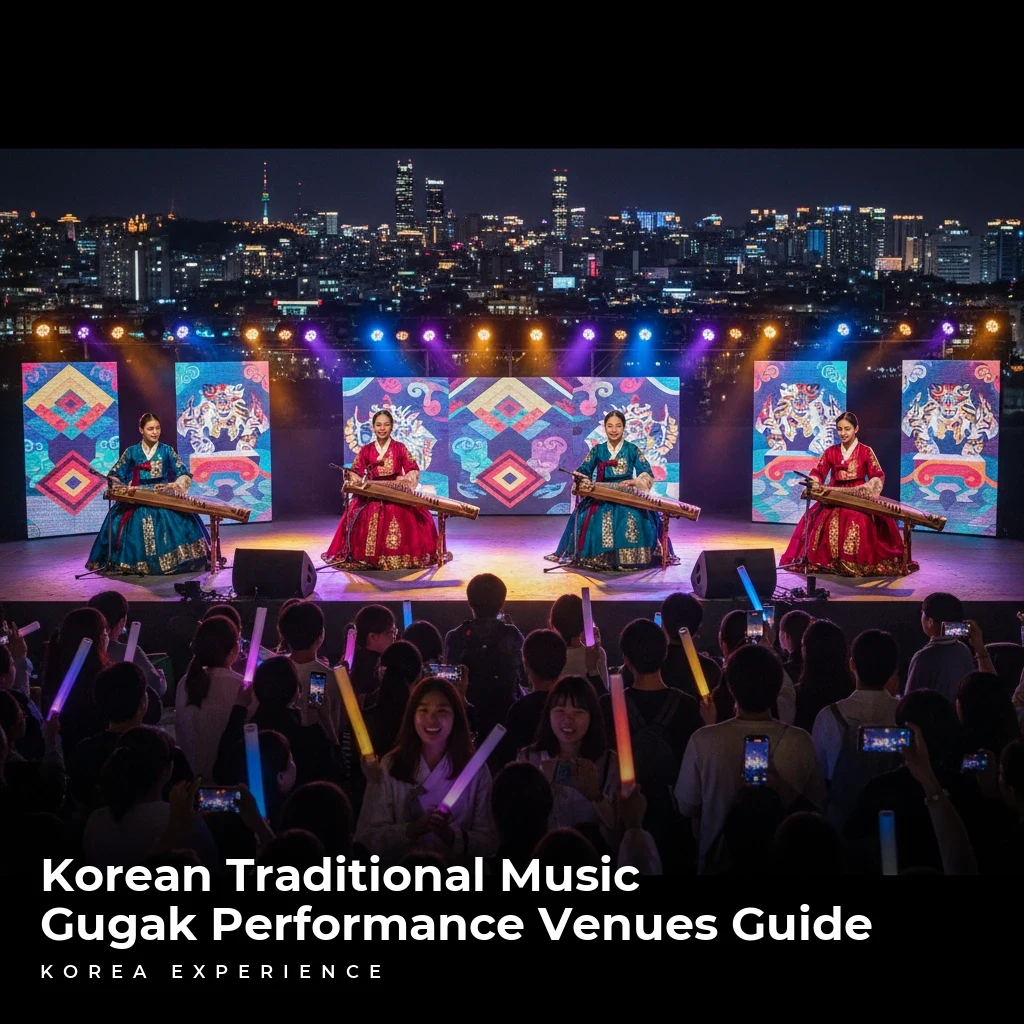
Discover the best venues for Gugak performances in Seoul. From royal palaces to modern theaters, find ticket info, etiquette, and top cultural experiences.
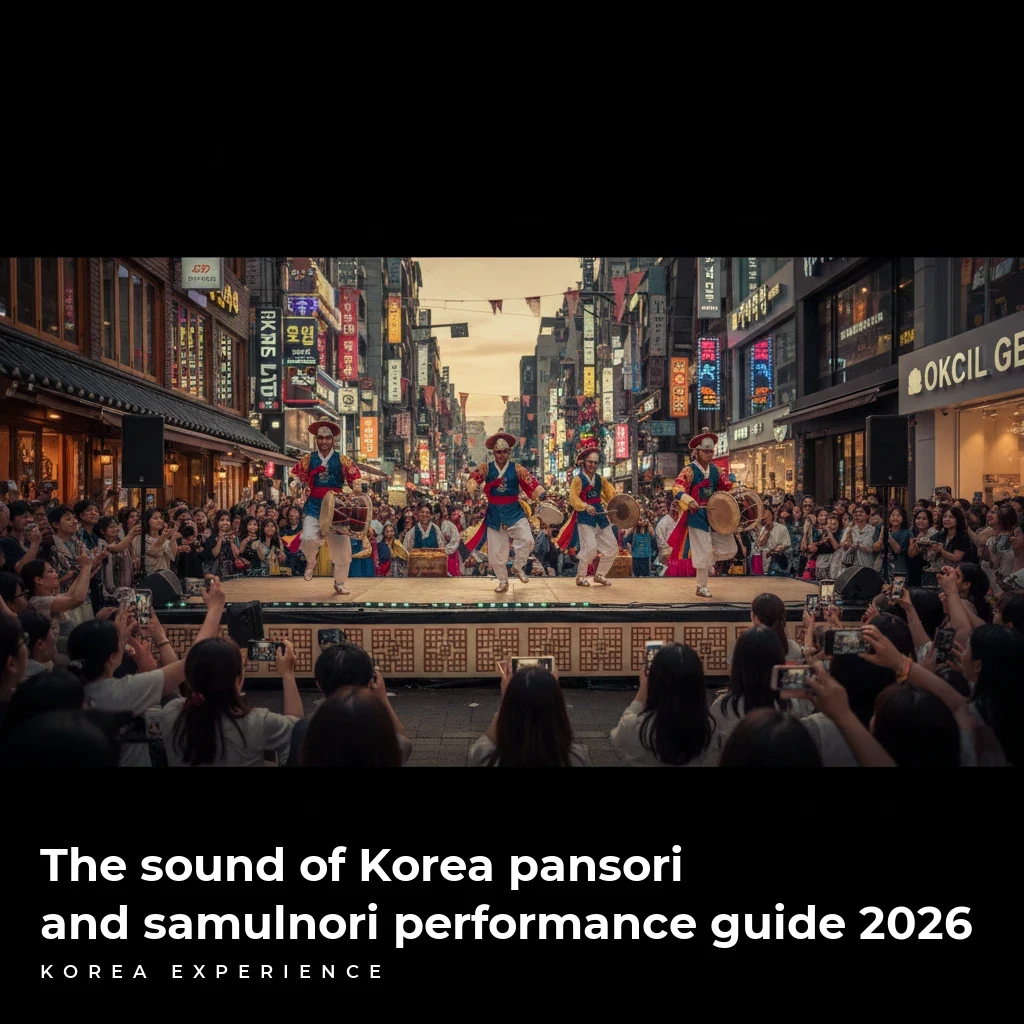
Discover the soul of Korean music. A complete 2026 guide to Pansori and Samulnori performances, venues, tickets, and etiquette for travelers.
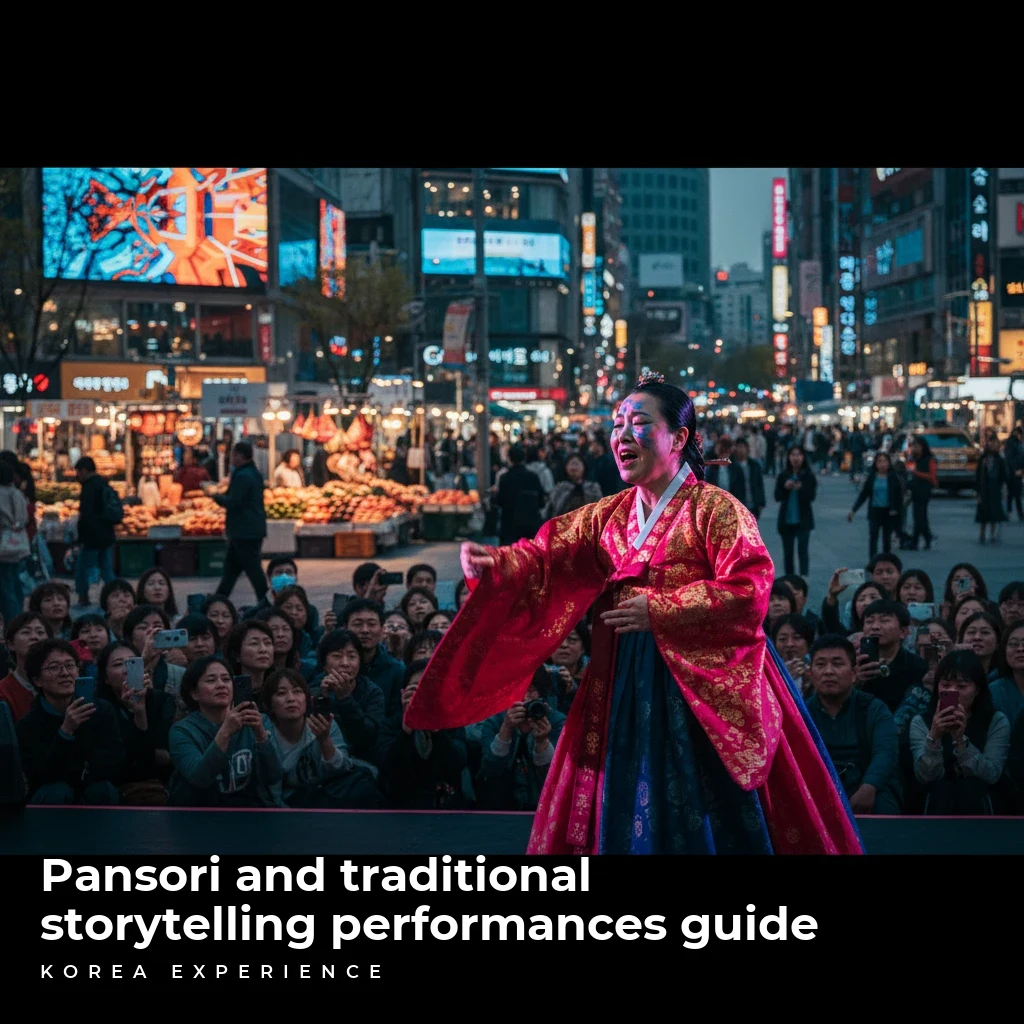
Discover the soul of Korea through Pansori. A complete guide to traditional storytelling venues, tickets, and etiquette for travelers.
Explore the ultimate guide to K-Drama filming locations and cafe culture in Seoul. Discover iconic spots, prices, and travel tips for fans.
Discover Korea's best markets beyond Seoul. Explore Busan, Jeju, and Daegu with specific food prices, transport tips, and 2026 travel data.
The ultimate 2026 guide to Seoul traditional markets. Discover prices, hidden stalls, and expert tips for Gwangjang, Noryangjin, and local favorites.