Seoul Public Transport 2026: Fares, Transfers & Climate Card Guide
Discover 2026 Seoul transit updates including the 1,550 won base fare and new Climate Card options that save money for travelers taking over 3 rides daily.
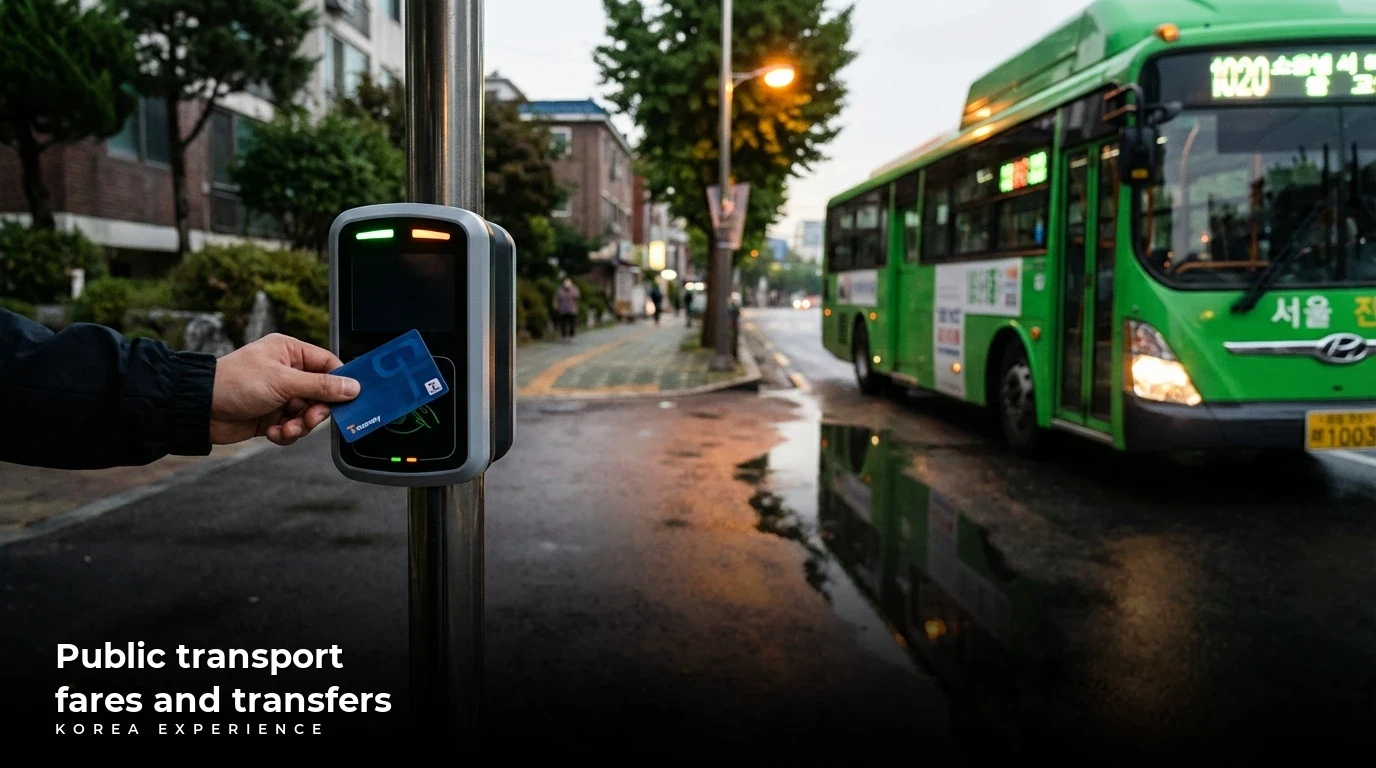
So you've just landed at Incheon Airport and you're staring at two cards at the convenience store—Climate Card and T-money. Which one do you actually need? Don't worry, I've got you covered.
So you've heard about the fare hikes and the fancy new Climate Card, but you're not sure if you should ditch the trusty T-money? Grab a coffee, because I'm going to break down exactly how to save money and avoid getting stuck at the turnstile in 2026.
Key Takeaways
- 1The base fare is now ₩1,550. Gone are the days of the ₩1,250 ride; daily commuters will feel the difference of the 2026 price adjustment.
- 2The Climate Card is your new best friend if you ride 3+ times a day. The 3-day pass at ₩10,000 breaks even quickly compared to pay-as-you-go.
- 3Actionable advice: Bring CASH to top up. Despite Korea's tech status, loading transport cards at machines still requires physical Korean won bills.
📋 Quick Facts
So, Why is Everyone Talking About 1,550 Won?
Look, let's cut straight to the chase because I know why you're here. You're trying to budget for your Seoul trip, or maybe you just moved here and realized your T-money balance is draining faster than usual. Here is the deal: The base fare for the subway in Seoul is now ₩1,550.
"Wait," you might say, "Wasn't it 1,250 not too long ago?" Yes, it was. But inflation hits everywhere, and Seoul's massive, spotless, and incredibly efficient subway system has been running at a deficit for years. The city government finally ripped the bandage off. Starting with a hike to 1,400 won in late 2023, they pushed it up again to 1,550 won (approx. $1.15 USD) as we moved into the 2025-2026 period.
Why does this matter to you? Well, if you're a tourist taking 4 or 5 rides a day, that extra 300 won per trip adds up to... well, basically a free kimbap every couple of days. But more importantly, this price hike changes the math on which card you should buy. For years, the advice was "Just get a T-money card and fill it up." That advice is officially outdated.
With the base fare sitting at 1,550 won, the new Climate Card (which gives you unlimited rides for a flat fee) is suddenly looking like the deal of the century. If you take just four rides a day (1,550 x 4 = 6,200 won), you are already saving money with a 5,000 won 1-Day Climate Pass. It’s practically a steal. For a deeper analysis on the math, check out our guide on Seoul Climate Card 2026: Is the Unlimited Transit Pass Worth It?.
How We Got Here (A Brief History of the Hike)
Okay, let me nerd out for a second on how this happened, because it's actually kind of interesting (I promise). For over eight years, Seoul froze its public transport fares. Imagine that—gas prices went up, electricity went up, but the subway stayed cheap. It was amazing for riders but terrible for Seoul Metro, which was racking up debt in the trillions of won.
The situation got critical around 2023. The city announced they needed to raise fares by 300 won just to keep the lights on and the trains running safely. But because they didn't want to shock everyone all at once, they split it into two phases. Phase 1 hit in October 2023, bumping us to 1,400 won. Then, Phase 2 dropped, landing us at the current 1,550 won figure.
But here is where the plot twists: To soften the blow, Seoul introduced the Climate Card (Gihu-Donghaeng Card) in 2024. Originally, it was just a monthly pass for residents (₩62,000 for 30 days). It was a huge hit because it encouraged people to ditch their cars. Seeing the success, the city realized tourists were being left out. So, in July 2024, they dropped the Tourist Climate Card—short-term passes for 1, 2, 3, or 5 days. This was a game-changer. Before this, tourists were stuck paying per ride. Now, you have a legitimate "All-You-Can-Ride" buffet option for the subway.
First Major Hike
Base subway fare increased from ₩1,250 to ₩1,400 to address massive deficits.
Climate Card Launch
Seoul launches the unlimited transit pass (Climate Companion Card) for residents (₩62,000/month).
Tourist Pass Launch
Short-term Climate Cards (1, 2, 3, 5-day) introduced specifically for visitors.
Second Fare Hike
Base subway fare increased by another ₩150, reaching the current ₩1,550.
Tagless Pilot
Tagless payment systems piloted on select bus routes and subway lines.
The New Normal
Full implementation of ₩1,550 fares; Climate Card covers Greater Seoul Area for exiting passengers.
Breaking Down Your Options (Which Card is You?)
So you're standing at the convenience store counter. The clerk is staring at you. Which card do you grab? Let's break it down by who you are.
The "I'm Here for a Good Time, Not a Long Time" Traveler
If you are in Seoul for 3 to 7 days and you plan to hit all the spots—Gyeongbokgung in the morning, Hongdae for lunch, Gangnam for dinner—get the Climate Card. Trust me. The 3-Day pass is ₩10,000. That is insanely cheap. You will break even by the afternoon of Day 2. Plus, the psychological freedom of not worrying about tapping your card for a "quick stop" is worth its weight in gold.
The "I'm Travelling All Over Korea" Explorer
If your itinerary looks like "Seoul -> Busan -> Jeju -> Seoul," do NOT rely solely on the Climate Card. The Climate Card works only in Seoul (and specifically on lines managed by Seoul). It won't work on the Busan subway. It won't work on buses in Jeju. For you, the classic T-money card is still the king. It works everywhere in the country. You can tap it in a taxi in Busan or a convenience store in Jeju. It is the universal currency of Korean transit.
The "I Don't Want to Touch Cash" Digital Nomad
If the idea of carrying paper bills terrifies you, check out WOWPASS. It’s a prepaid debit card that has a T-money chip inside it. You can load the debit part with foreign currency (USD, EUR, etc.) at kiosks in hotels and stations. However, here's the catch: You usually still have to load the T-money transit part with cash at a subway station. It's a hybrid solution, but it's great for shopping at places like Daiso Korea without foreign transaction fees.
| Feature | T-money (Classic) | Climate Card (Challenger) | WOWPASS (Hybrid) |
|---|---|---|---|
| Cost (Card itself) | ₩3,000 - ₩4,000 | ₩3,000 (Physical) | ₩5,000 (Membership) |
| Fare Structure | Pay-per-ride (₩1,550+) | Unlimited rides (Flat fee) | Pay-per-ride |
| Processing Time | Instant tap | Instant tap | Instant tap (needs setup) |
| Duration/Validity | Forever (Balance stays) | 1, 2, 3, 5, 7, or 30 days | Forever (Balance stays) |
| Requirements | None (Cash to load) | None for physical card | Passport required |
| Best For | Light travelers / Nationwide | Heavy Seoul users (3+ rides/day) | Cashless travelers / Shoppers |
| 2026 Changes | Base fare is ₩1,550 | Includes 1-7 day tourist options | Improved app integration |
Pros and Cons: The Climate Card for Tourists
Pros
- ✓Psychological Freedom: You don't have to check your balance every time you tap. Took the wrong exit? Hop back in. Want to visit a café two stops away? Just go.
- ✓Insane Value: With the 3-day pass for ₩10,000, you only need to ride the subway about 7 times total over three days to break even.
- ✓Cultural Discounts: Showing your Climate Card gets you 50% off at places like the Seoul Science Center and Seoul Grand Park.
Cons
- ✗The Incheon Airport Trap: You CAN use the Climate Card to get FROM Seoul TO Incheon Airport, but NOT to board AT Incheon Airport to go to Seoul.
- ✗Cash Only for Top-up: Unless you have a Korean bank account, you have to load the physical card with cash at the station. No credit cards allowed at reload machines.
- ✗Seoul Only: If you take a day trip to Suwon, Chuncheon, or Busan, this card stops working the moment you leave the Seoul designated zone.
The Complete How-To (Mastering the Transfer)
Navigating the Seoul subway is easy... until it isn't. Here is your crash course in not looking like a confused tourist.
First, Buying the Card. You can buy T-money cards at literally any convenience store (CU, GS25, 7-Eleven). They cost about ₩3,000 for the card itself (maybe more if it has a cute Pokémon on it). The Climate Card is a bit trickier—it sells out fast. Your best bet is the Customer Safety Center (essentially the info booth) inside major subway stations like Seoul Station or Myeongdong. Ask for the "Physical Climate Card" (Shil-mul card).
Second, The Top-Up. This is where people get stuck. You walk up to the machine, shove your credit card in, and... nothing. The subway reload machines only take Korean Won CASH. I cannot stress this enough. Keep a stash of 10,000 won bills. Place your card on the tray, select "English," pick your amount or duration, and feed the machine the cash. It takes 10 seconds. If you are struggling with payment kiosks elsewhere, check out our guide on Foreign Card Rejected at Korean Kiosks.
Third, The Transfer. Seoul has a brilliant transfer system. You can switch between the subway and a bus, or between two different buses, for free within 30 minutes. (It extends to 60 minutes between 9 PM and 7 AM). BUT—and this is a huge but—you MUST TAP OUT. If you get off the bus and forget to tap the reader by the back door, the system assumes you rode to the end of the line. When you tap in for your next ride, you will be hit with a penalty fare (usually double) and your free transfer will be void. Always, always tap out.
📖 How to Ride Like a Local (Without Getting Fined)
Step 1: Choosing Your Weapon
Head to a convenience store or subway station. For heavy travel (3+ rides/day), ask for the 'Gi-hu Dong-haeng Card' (Climate Card). For light travel, ask for T-money. Note: Convenience stores sell the Climate Card but often cannot load the unlimited data; you must do that at the station.
Step 2: Loading the Card
Find a ticket vending machine. Place your card on the 'Reload' pad. For T-money, insert cash for the amount. For Climate Card, select 'Load Day Pass', choose duration (1-7 days), and insert exact cash. Keep the receipt!
Step 3: Tapping In (The Right Way)
Approach the turnstile. Tap your card flat against the reader on the right. Wait for the 'Beep' and green circle. Avoid 'Card Clash' by removing it from your wallet if you have other cards.
Step 4: Transfers and Tapping Out
ALWAYS TAP OUT. Even if the gate is open. This ensures you get the free transfer (within 30 mins) and avoids maximum distance penalties on your next ride.
Tourists always panic when the gate beeps red. 99% of the time, it's not a broken card—it's because they tried to tap out at the same station they entered within 5 minutes. We have a 'same station' rule now where if you enter, realize you forgot something, and exit within 5 minutes, it's free. But if you take too long, it errors out. Just press the 'Help' button; we see this ten times a day.
The Stuff Nobody Tells You (Pro Tips)
The "Bathroom Break" Rule
Did you know that if you tap out of a subway station and tap back in at the same station within 15 minutes, you aren't charged again? This was introduced recently for people who need to use the restroom or buy a coffee mid-journey. It only works once per trip, but it's a lifesaver.
The "Red Bus" Trap
The Climate Card covers Blue (Mainline) and Green (Branch) buses. It usually does NOT cover the Red (Gwangyeok) buses that go to satellite cities like Bunang or Yongin. If you hop on a Red bus with a Climate Card, you'll get an error and an angry bus driver staring at you. Have a backup T-money card or cash ready if you plan to leave Seoul proper.
The 5-Minute Re-entry Rule
We've all done it. You tap into the station, walk down the stairs, and realize you went to the wrong platform (or you need to use the bathroom, which is outside the gate). In the past, you had to pay again to get back in. Not anymore. As of late 2023/2024, if you tap out and tap back in at the same station within 5 minutes (some sources say 15, but stick to 5 to be safe), you are not charged. It registers as the same trip. This is a lifesaver for confusing stations like Sindorim or Wangsimni.
No Korean Phone/ARC? Here's What To Do
This is the biggest stressor for tourists. The "K-Pass" (another refund card you might read about) requires a Resident ID (ARC). You cannot get it.
The Solution: Ignore the K-Pass entirely. It is not for you.
- Buy the PHYSICAL Climate Card. You do not need a phone number or ID to buy the plastic card for ₩3,000.
- Top it up with cash. No ID verification needed.
- Use WOWPASS if you want a card that acts like a debit card and a T-money card. It requires a passport to set up, but it's designed specifically for tourists without an ARC.
Detailed Price Breakdown
While we covered the basics, here is a detailed look at the pricing tiers available in 2026.
| Option | Price | Category | Description |
|---|---|---|---|
| 1-Day Pass | ₩5,000 | Budget | Unlimited rides for 24 hours (Climate Card) |
| 3-Day Pass | ₩10,000 | Best Value | Unlimited rides for 72 hours (Perfect for weekenders) |
| 5-Day Pass | ₩15,000 | Extended | Unlimited rides for 5 days (Great for deeper exploration) |
| T-money Load | ₩30,000 | Flex | Standard load for a traveler not using unlimited passes |
| AREX Express | ₩11,000 | Premium | Non-stop train from Incheon Airport to Seoul Station |
Where to Buy: Essential Locations
If you are having trouble finding the cards, try these specific spots:
Seoul Tourism Plaza (Tourist Information Center)
- Address: 85 Cheonggyecheon-ro, Jongno-gu, Seoul
- Nearest Transit: Jonggak Station (Line 1), Exit 5
- Why go here: If convenience stores are sold out of the physical Climate Cards, they usually have stock here. Plus, English-speaking staff can help.
CU Convenience Store (Incheon Airport T1 Arrivals)
- Address: Incheon International Airport Terminal 1, Arrivals Hall (1F)
- Why go here: Buy your T-money card here immediately upon landing. Remember, you can't use the Climate Card to leave the airport yet, so T-money is your best bet for the first leg!
FAQ
❓ Frequently Asked Questions
Have more questions?Contact us →
Conclusion: Your Action Plan
Alright, we've covered a lot. Here is your game plan for your first 24 hours in Seoul in 2026:
- Land at Incheon. Buy a T-money card at the airport CU or GS25. Load it with ₩10,000.
- Take the AREX (All-Stop Train) into Seoul.
- Once you get to your hotel and drop your bags, head to the nearest subway station.
- Buy a Climate Card (Physical) for ₩3,000.
- Load a 3-Day or 5-Day pass on it using CASH.
- Enjoy unlimited travel and stop worrying about the 1,550 won fare.
Seoul's transport system is honestly one of the best in the world. Once you have the right card in your pocket, the whole city opens up. Enjoy the ride, and don't forget to tap out! For more safety tips while traveling, check out our guide on the Emergency Ready App Korea 2026.
Sources
About the Author
Korea Experience Team
Written by the Korea Experience editorial team - experts in Korean medical tourism, travel, and culture with years of research and firsthand experience.
Explore more in Living in Korea
Everything expats and long-term visitors need to know — from visa requirements and housing to banking, healthcare, and daily life tips.
Browse All Living in Korea ArticlesContinue Reading
Explore more articles you might find interesting
Save money in Seoul with the 2026 Climate Card. We analyze if the 62,000 KRW monthly pass beats T-Money for your 30-day stay based on 40 rides.

Compare Wowpass vs. Namane for 2026. Learn why the 1,550 KRW subway fare means you need a Climate Card Tourist Pass to save money in Seoul.
If you're planning to hit more than three spots a day in Seoul, the Climate Card is your absolute best friend.
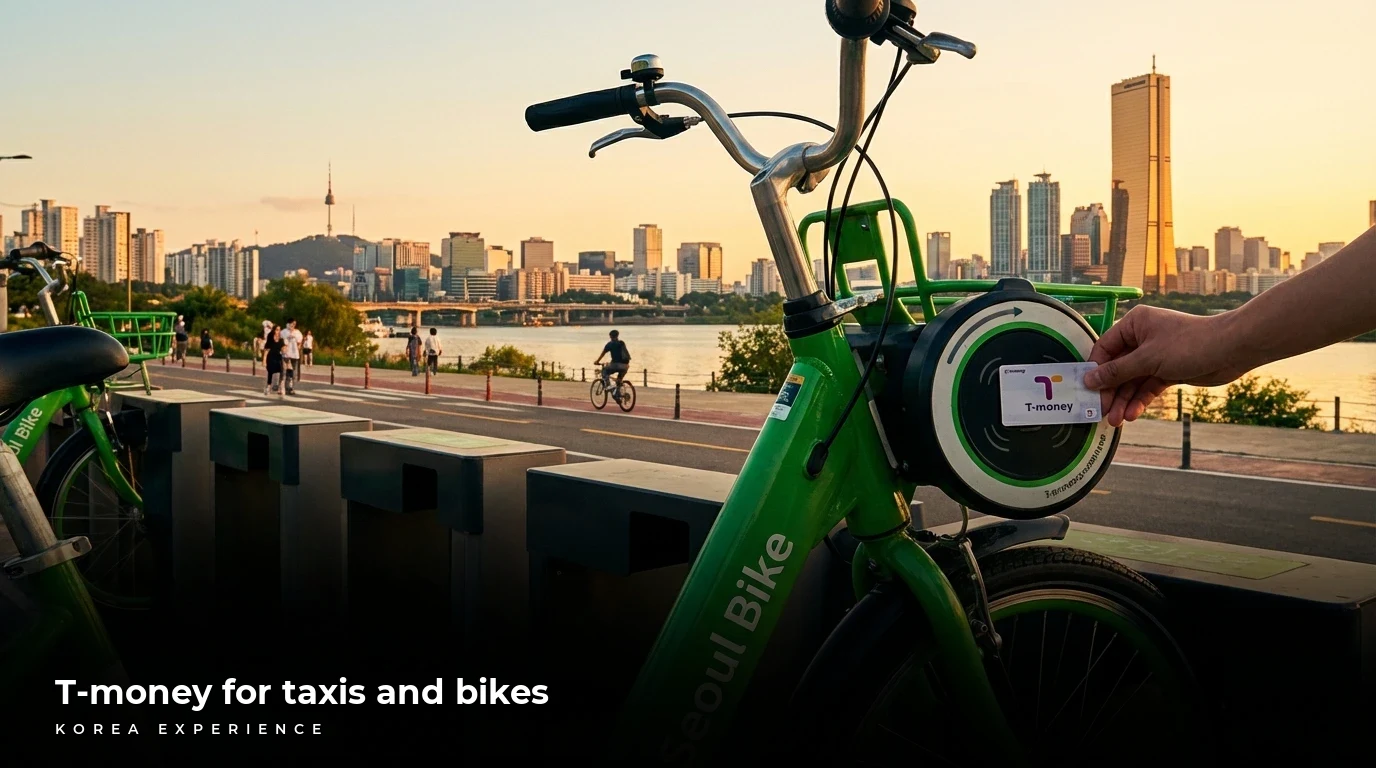
Master Seoul transit in 2026. Learn why T-money costs 4,000 KRW, how to rent 1,000 KRW bikes without an ARC, and the truth about the Climate Card for tourists.
Compare KakaoMetro vs. Seoul Subway apps for 2026. Learn about the 1,550 KRW base fare, Climate Card savings, and why Google Maps fails in Korea.
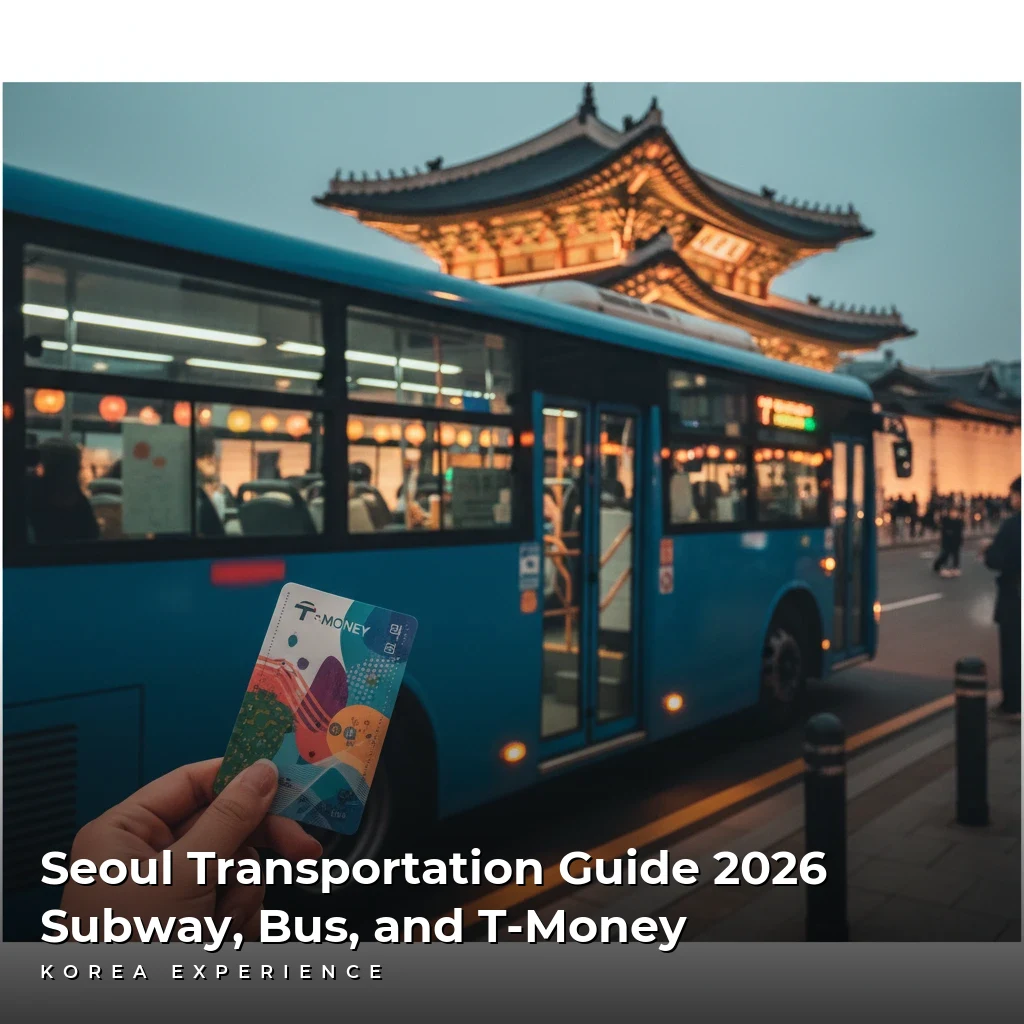
Master Seoul's 2026 transit system. From the Climate Card saving you ₩62,000 to new AREX schedules, here is everything tourists need to navigate like a local.