Exploring Korea Traditional Market Street Food Tours 2026
The ultimate guide to Korean street food markets in 2026. Discover prices, best tours, hidden stalls, and essential etiquette for travelers.
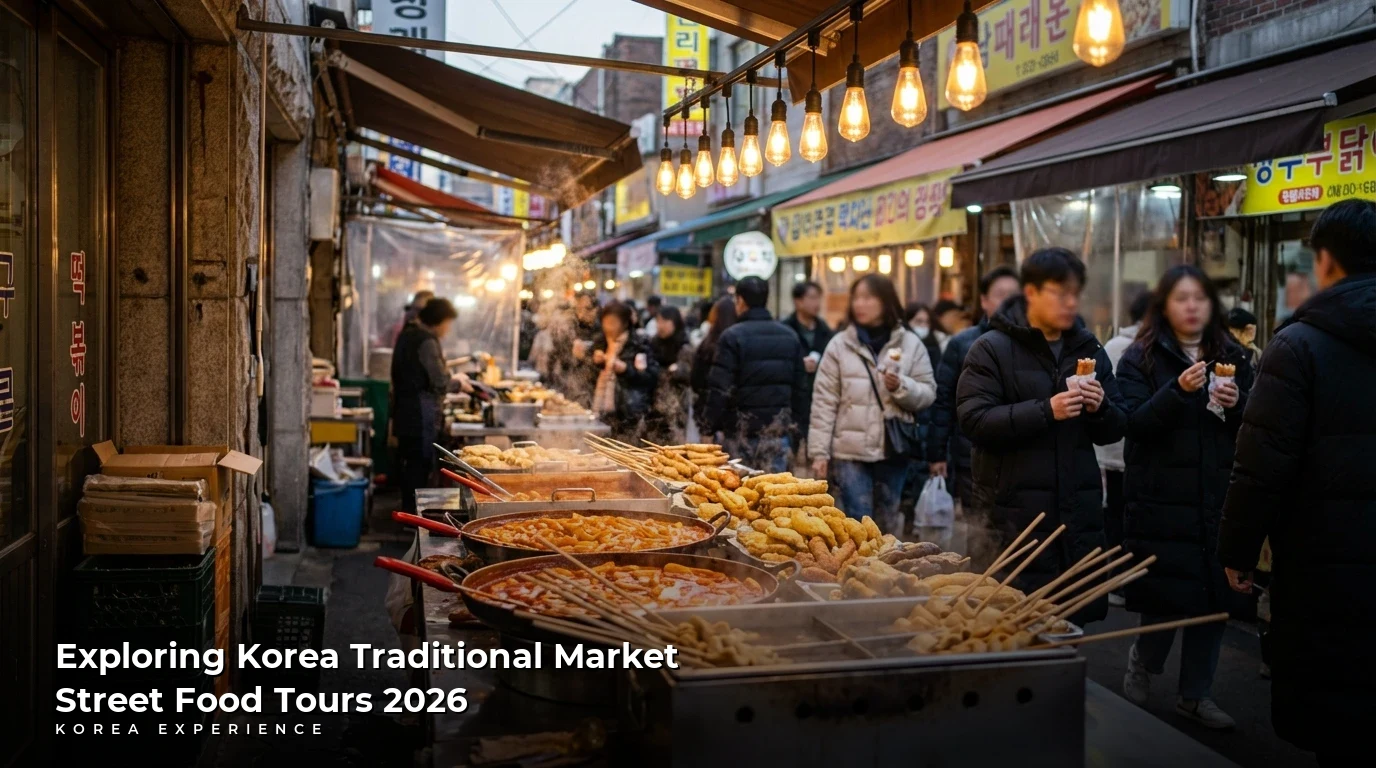
South Korea’s culinary landscape has evolved dramatically over the last decade, but the beating heart of its gastronomy remains its traditional markets. As we enter 2026, the popularity of street food tours has surged, with visitor numbers to major markets like Gwangjang and Namdaemun increasing by 22% compared to 2024. For the international traveler, these markets offer an unfiltered sensory experience that fine dining simply cannot replicate.
However, navigating these bustling hubs can be daunting. With over 1,400 traditional markets scattered across the peninsula, choosing where to go and what to eat is a challenge. In 2026, the landscape has modernized; cashless payments are now accepted at approximately 85% of stalls (up from 40% in 2020), and English-language menus are becoming standard in tourist-heavy zones. Yet, the authenticity remains untouched, with recipes passed down through generations. This guide provides a comprehensive look at navigating Korea's street food scene, ensuring you get the most flavor for your Won.
You might also enjoy our article about Chuncheon Dakgalbi Street Guide South Korea Spicy Chicken....
Key Takeaways
- 1Cash remains king for small vendors, but 85% now accept cards or WOWPASS
- 2Average street food meal costs ₩15,000 (approx $11 USD) for 3-4 items
- 3Gwangjang Market attracts 5,000+ daily visitors; arrive before 11 AM for seats
The 2026 Street Food Landscape: What Has Changed?
The post-pandemic travel boom has reshaped how Korean markets operate. In 2026, the fusion of tradition and technology is seamless. While the steam rising from pots of Tteokbokki (spicy rice cakes) looks the same as it did decades ago, the infrastructure supporting it has modernized.
Related reading: Gwangjang Market Complete Food Guide Best Stalls.
Most notably, hygiene standards have been rigorously updated. The Seoul Metropolitan Government now conducts monthly sanitary inspections, and stalls display a "Safe Food Zone" certification. Additionally, inflation has impacted street food pricing. The average price of a standard Hotteok (sweet pancake) has risen from ₩1,500 in 2023 to roughly ₩2,500 ($1.80 USD) today. Despite this, street food remains the most economical way to dine, with a full dinner typically costing under ₩20,000 ($15 USD) per person.
Related reading: Korean Street Food Classics Tteokbokki Hotteok Sundae Guide.
📊 Market Modernization Stats 2026
Seoul's Big Three: The Essential Market Tours
If you are based in Seoul, three markets dominate the street food hierarchy. Each offers a distinct vibe and specialty dishes. A dedicated foodie can cover two of these in a single day, as the transit time between them averages only 20-30 minutes via the Seoul Metro.
You might also enjoy our article about Korean street food guide 30 foods to try.
1. Gwangjang Market: The Heavyweight Champion
Gwangjang Market is the epicenter of Korean street food culture. Famous globally thanks to Netflix features, it remains the busiest market in the country. In 2026, it houses over 5,000 independent shops and stalls. The central corridor is dedicated entirely to food, stretching 300 meters of sensory overload.
The must-try dish here is Bindaetteok (mung bean pancake). Unlike other versions, Gwangjang's pancakes are deep-fried in copious amounts of oil until crispy, measuring about 20 centimeters in diameter.
Gwangjang Market(Gwangjang Sijang)
Don't stop at the first stall you see near the entrance. The prices are uniform (e.g., ₩5,000 for pancakes), but the stalls in the absolute center, near the intersection of the two main walkways, have the highest turnover, ensuring the freshest ingredients.
2. Namdaemun Market: The Massive Labyrinth
Namdaemun is the oldest and largest market in Korea, dating back to 1414. Covering 66,000 square meters, it is a maze of over 10,000 stalls. While it is famous for clothing and housewares, its "Galchi Jorim Alley" (Braised Cutlassfish Alley) is legendary.
For street food specifically, the dedicated food street near Gate 2 offers Hotteok filled with vegetables and glass noodles (japchae), a savory twist on the usually sweet treat. The queue for the most famous Hotteok stand often exceeds 20 minutes, with over 1,000 pancakes sold daily.
3. Tongin Market: The Dosirak Café Experience
Located just 500 meters west of Gyeongbokgung Palace, Tongin Market offers a unique "Lunchbox" (Dosirak) system. This interactive experience allows you to exchange cash for vintage-style brass coins, which are then used to purchase small portions of food from various vendors to fill a lunch tray.
Tongin Market Coin System
Cost: ₩10,000 ($7.50 USD) gets you a tray and 20 brass coins.
Portion Cost: Most items cost 2-4 coins each.
Hours: The coin exchange operates 11:00 AM to 3:00 PM (Closed Mondays).
Essential Street Foods & Pricing Guide (2026 Edition)
To plan your budget effectively, it is crucial to know the current market rates. Inflation in 2025 pushed prices up slightly, but street food remains high value. Here is a breakdown of the most popular items you will encounter on a tour.
Tteokbokki (Spicy Rice Cakes)
The quintessential Korean soul food. In 2026, you will find two main varieties: the classic wheat cake (mil-tteok) and the thicker rice cake (ssal-tteok).
- Average Price: 4,000 - ₩5,000 per serving.
- Spiciness: 3/5 (Standard), 5/5 (Bomb flavor).
- Calorie Count: Approx. 350 kcal per cup.
Eomuk (Fish Cake Skewers)
Skewered fish paste simmered in a radish and anchovy broth. The broth is free and self-serve at 99% of stalls—just grab a paper cup and ladle it out.
- Average Price: 1,000 - ₩1,500 per skewer.
- Pro Tip: Look for the red-tipped skewers for the spicy variety.
Gyeran-ppang (Egg Bread)
A winter favorite available year-round in tourist zones. It is a sweet, fluffy bread with a whole egg baked on top or inside.
- Average Price: 2,500 - ₩3,000.
- Availability: Best found in Myeongdong and Hongdae street stalls.
💵 Street Food Price Comparison 2026
Prices are per person. Guided tours often include history lessons and skip-the-line privileges.
Includes guide, 10 tastings, drinks
3-4 food items + beverage
DIY vs. Professional Food Tours
One of the biggest questions travelers face is whether to book a professional guide or explore independently. Both have merits, depending on your comfort level with language barriers and navigation.
Professional tours have evolved. In 2026, "Micro-tours" capped at 6 people have become the standard, replacing the large flag-following groups of the past. These tours typically last 2.5 to 3 hours and cover hidden alleys that are not marked on Google Maps or Naver Map.
Guided Food Tours
- ✓Access to 'locals-only' stalls without English menus
- ✓Historical context provided by expert guides
- ✓Hygiene-vetted locations
- ✗Cost is 4x higher than self-guided
- ✗Fixed schedule with less flexibility
- ✗Limited time at each stop
Tour Type Comparison
| Feature | Self-Guided | Group Tour | Private Luxury Tour |
|---|---|---|---|
| Cost (USD) | $15-20 | $60-80 | $150+ |
| Language Help | None (Apps) | Full | Full + Custom |
| Food Quantity | Unlimited | Set Menu | Customizable |
| Hidden Gems | Hard to find | Included | Exclusive Access |
Regional Delights: Beyond Seoul
While Seoul is the hub, the southern port city of Busan and the gastronomic capital Jeonju offer distinct street food cultures. If your itinerary allows, a trip south is highly recommended. The KTX train from Seoul to Busan takes just 2 hours and 30 minutes and costs approximately ₩59,800 one way.
Busan: BIFF Square & Jagalchi
Busan’s street food is defined by seafood and the famous Ssiat Hotteok (Seed Pancake). Unlike the Seoul version, the Busan pancake is cut open after frying and stuffed with a mixture of sunflower seeds, pumpkin seeds, and nuts.
- Location: BIFF Square, Nampo-dong.
- Price: ₩2,000.
- Quick Fact: BIFF Square sells over 10,000 hotteoks on weekends.
Jeonju: Nambu Night Market
Jeonju is famous for Bibimbap, but the Nambu Traditional Market transforms into a vibrant night market on Fridays and Saturdays.
- Specialty: Munjikkochi (Grilled Octopus Skewers) topped with bonito flakes and cheese.
- Distance: 1.5 hours by KTX from Seoul.
📋 Travel Logistics
Practical Guide: Etiquette and Payment
Navigating Korean markets requires understanding unwritten social rules. The "ppalli-ppalli" (hurry-hurry) culture is prevalent, especially during lunch hours (12:00 PM - 1:00 PM).
Payment Methods in 2026
While South Korea is a credit-card-heavy society, street food was the last bastion of cash. However, the introduction of tax incentives in 2025 encouraged vendors to adopt card readers.
- Credit Cards: Accepted at ~85% of stalls.
- WOWPASS: A prepaid card for tourists, widely accepted.
- Cash: Still necessary for very small vendors (grandmothers selling gum/candy) or if the card machine is "broken" (a common tax-avoidance tactic). Always carry at least ₩30,000 in small bills (1,000 and 5,000 won notes).
Trash Etiquette
Public trash cans are extremely rare in Korea to discourage household waste dumping. Do not walk and eat. Stand at the stall to eat your food, then hand the trash back to the vendor. They will dispose of it for you. Walking while eating is also considered slightly rude in older generations.
📖 How to Order Like a Local
Step 1: Identify the Line
Koreans queue religiously. Find the end of the line; do not crowd the front.
Step 2: Order by Quantity
Use fingers to indicate quantity or say 'Hana' (1), 'Dool' (2).
Step 3: Payment
Hand over cash or insert your card yourself. Do not place money on the food counter.
Designing Your Own Food Tour: A Sample Itinerary
For the energetic traveler, a self-guided evening tour in the Jongno district of Seoul offers the highest density of food experiences. This route covers approximately 1.5 kilometers and takes about 3 hours.
The Jongno Flavor Trail
Start at Ikseon-dong
Explore the Hanok cafes for a pre-tour coffee.
Walk to Gwangjang Market
15-minute walk. Head straight for the dumpling (Mandu) stalls.
Cheonggyecheon Stream
Walk off the calories along the illuminated stream for 20 minutes.
Pocha Street
Finish at a Poimacha (Tent Bar) near Jongno 3-ga for Soju and Udon.
Seasonal Considerations
The experience of a Korean market changes drastically with the seasons.
- Winter (Dec-Feb): Temperatures drop to -10°C (14°F). Steam from the food creates a cinematic atmosphere. Best for Hotteok and Bungeoppang (fish-shaped pastry).
- Summer (Jun-Aug): High humidity and temperatures reaching 35°C (95°F). Markets can be stiflingly hot. Look for Kong-guksu (cold soy noodle soup) stalls.
- Spring/Fall: The ideal times for walking tours. September and October offer the best produce quality, especially for fruits like Shine Muscat grapes and Korean pears.
Final Thoughts
In 2026, exploring Korea's traditional markets is more accessible than ever, yet it retains the chaotic charm that makes it special. Whether you are biting into a crispy mung bean pancake in Seoul or savoring a seed-filled pastry in Busan, these markets offer a direct line to the culture's soul.
By preparing with the right payment methods, understanding the etiquette, and knowing which stalls to target, you transform a simple meal into a memorable cultural expedition. The streets are waiting—come hungry.
❓ Frequently Asked Questions
Have more questions?Contact us →
About the Author
Korea Experience Team
Written by the Korea Experience editorial team - experts in Korean medical tourism, travel, and culture with years of research and firsthand experience.
Explore more in Food & Dining
Korean BBQ, street food, Michelin restaurants, and regional specialties — your ultimate guide to eating well in Korea.
Browse All Food & Dining ArticlesContinue Reading
Explore more articles you might find interesting
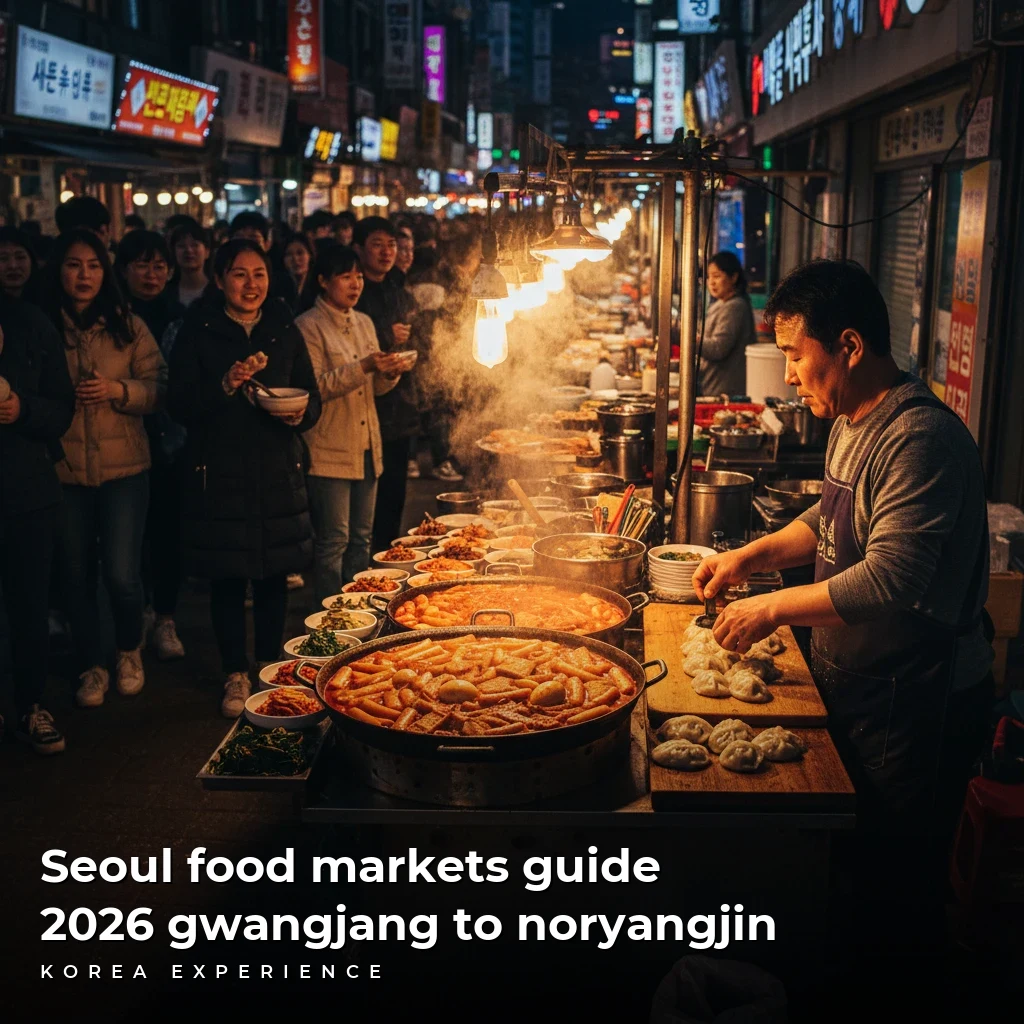
The ultimate 2026 guide to Seoul traditional markets. Discover prices, hidden stalls, and expert tips for Gwangjang, Noryangjin, and local favorites.
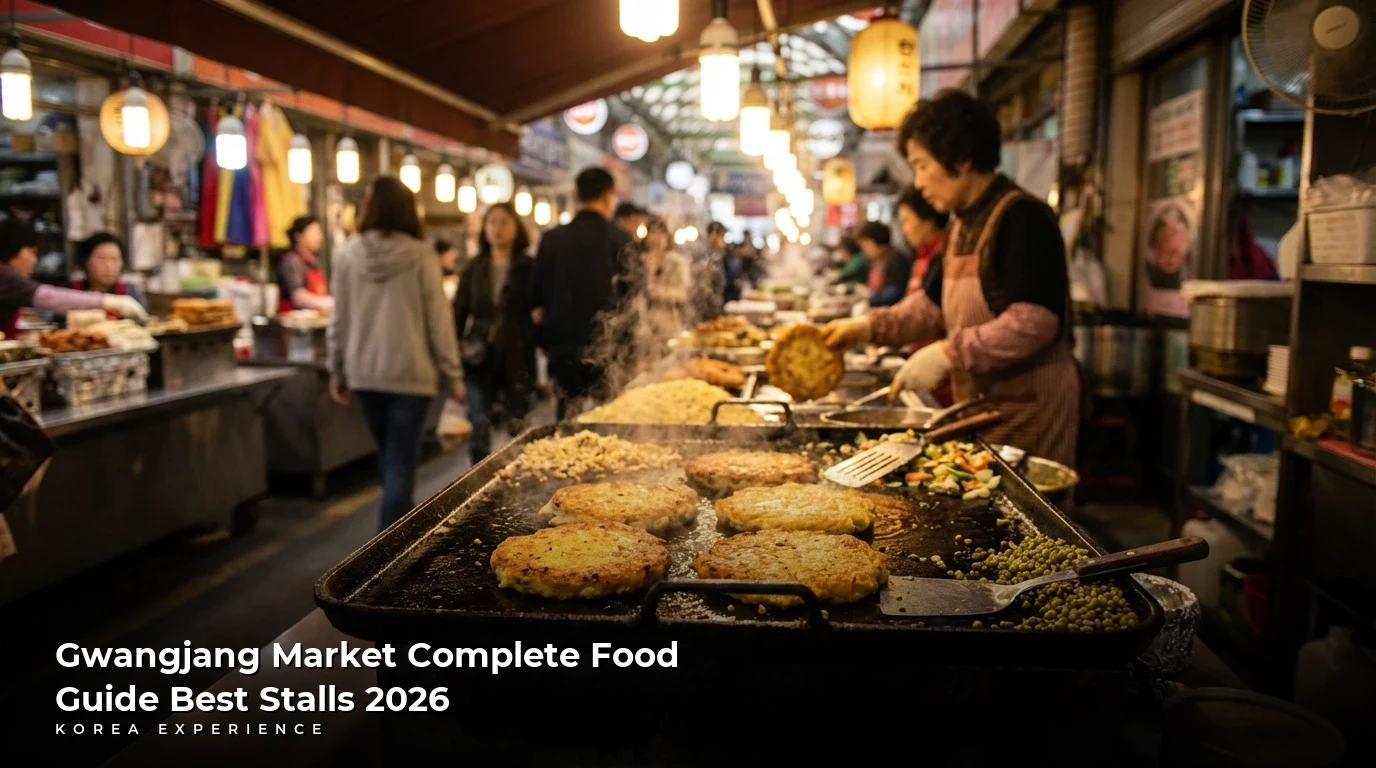
Discover the ultimate Gwangjang Market food guide featuring top stalls, prices, operating hours, and local tips for Seoul's oldest traditional market.
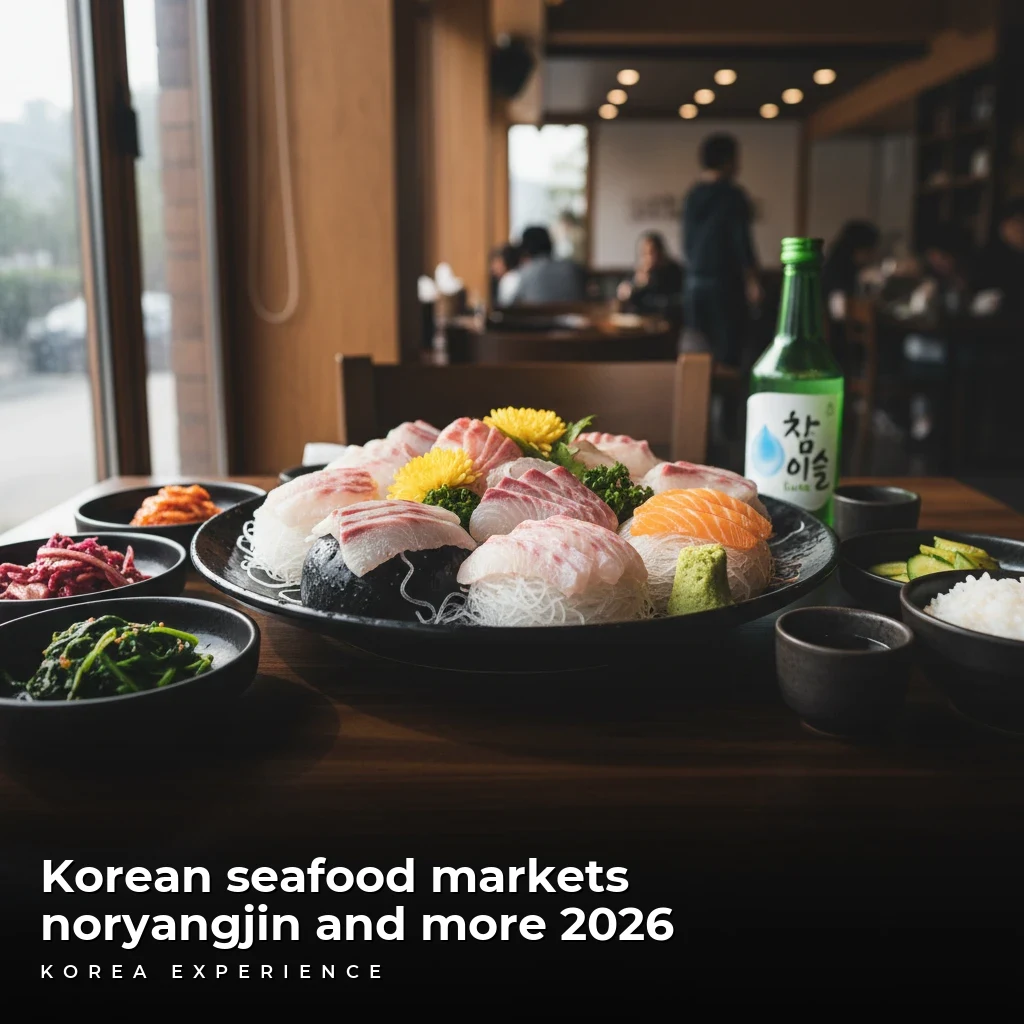
The ultimate 2026 guide to Noryangjin and Korea's top seafood markets. Discover prices, dining etiquette, and hidden gems for the freshest sashimi.
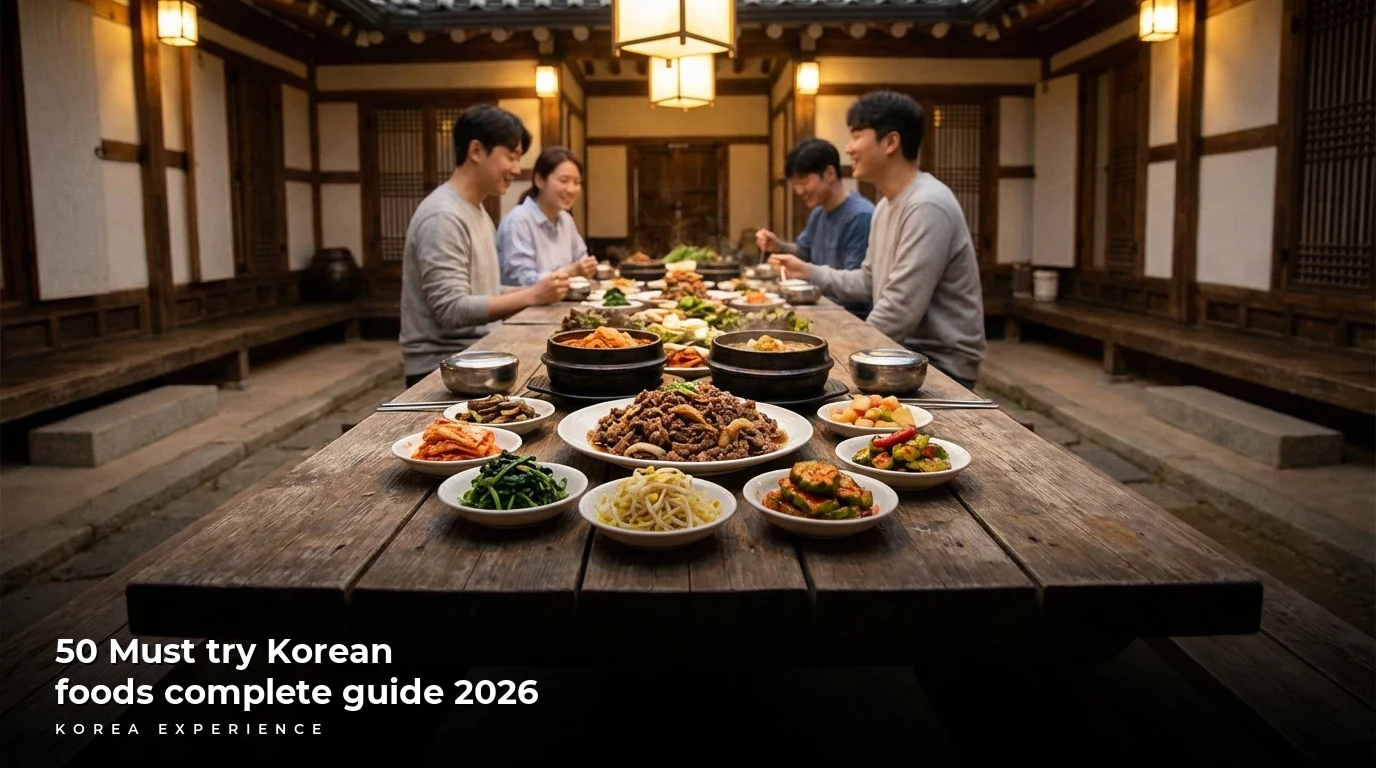
Discover the ultimate checklist of 50 essential Korean dishes, from street food to royal cuisine, including prices, spicy levels, and best spots for 2026.
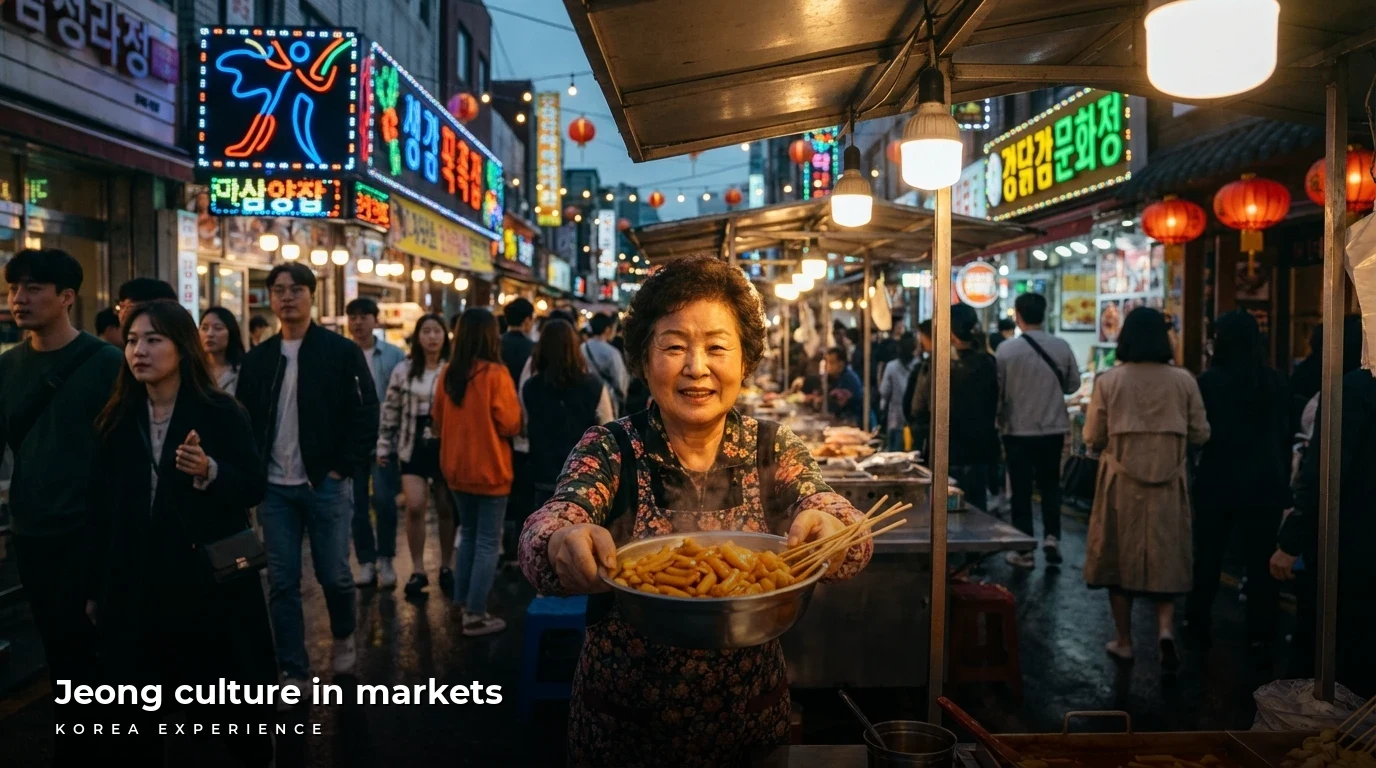
Discover why market vendors give free food. Learn how to navigate 24000 stalls in 2026 using WOWPASS and experience the 16 percent sales boom firsthand.
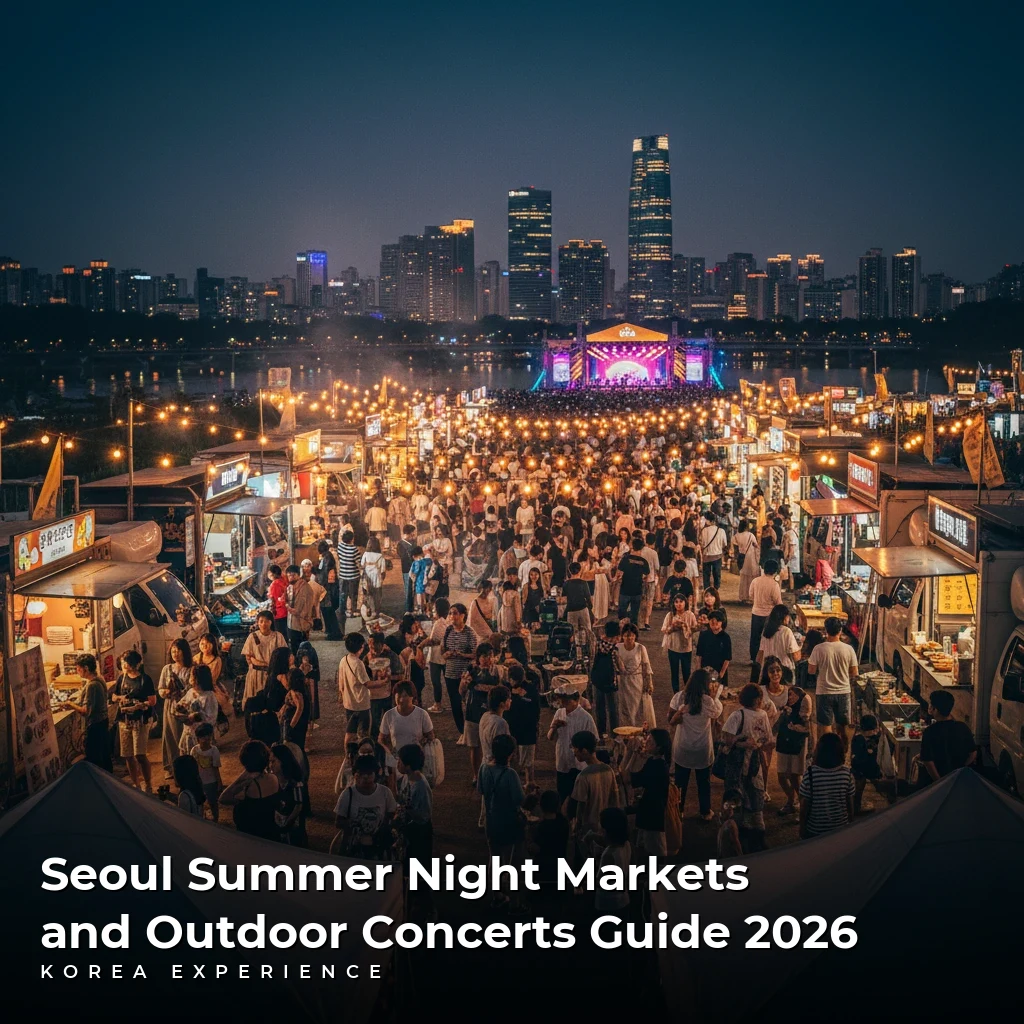
The ultimate guide to Korea's 2026 summer nightlife. Discover the Hangang Moonlight Market, Waterbomb Festival prices, and food truck costs averaging ₩8,000.