Seoul food markets guide 2026 gwangjang to noryangjin
The ultimate 2026 guide to Seoul traditional markets. Discover prices, hidden stalls, and expert tips for Gwangjang, Noryangjin, and local favorites.
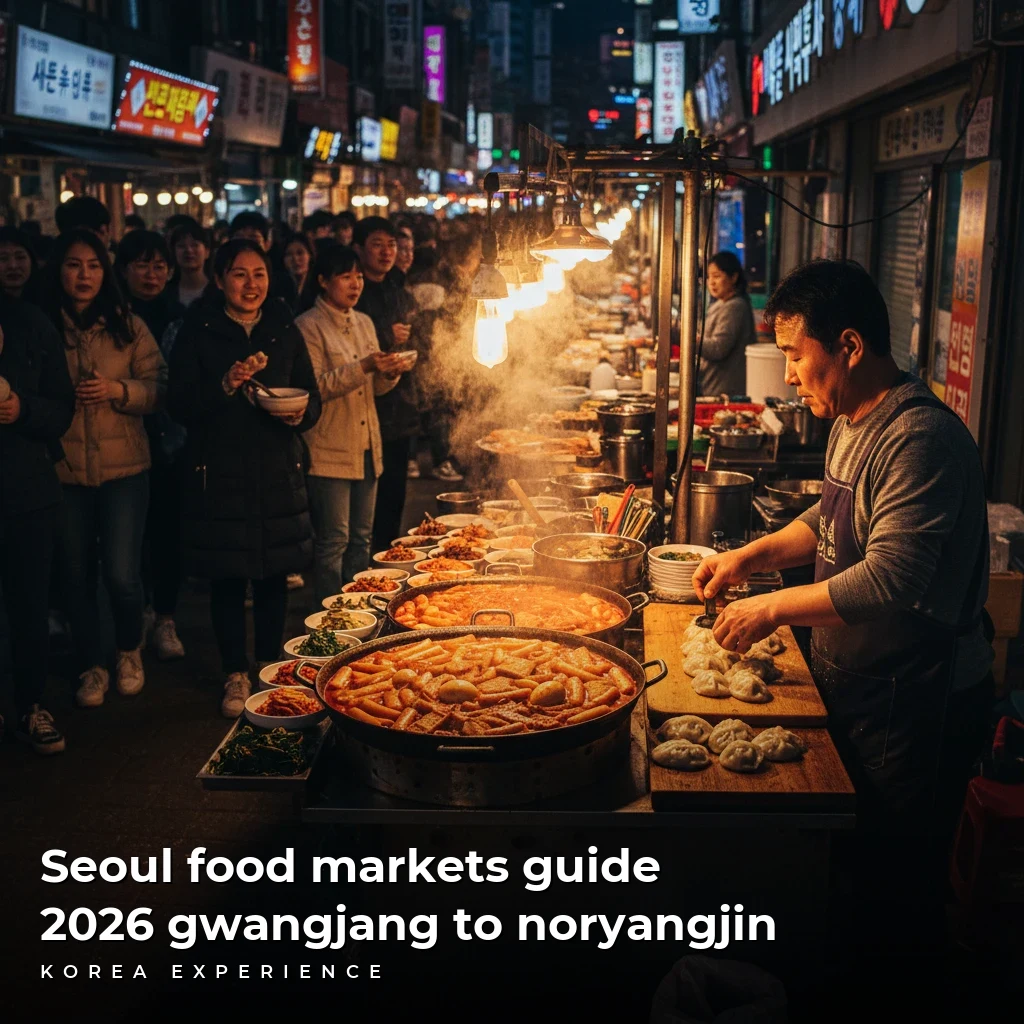
Seoul’s culinary soul doesn't reside in its Michelin-starred restaurants in Gangnam, but rather in the steam-filled, chaotic, and utterly mesmerizing alleyways of its traditional markets. By 2026, the landscape of Seoul's food markets has evolved, blending centuries-old traditions with modern conveniences like QR payments and digital kiosks, yet the fundamental flavors remain unchanged. Whether you are hunting for the perfect crispy mung bean pancake or navigating the intricate auctions of a massive fish market, understanding the ecosystem of these culinary hubs is essential for any traveler.
From the tourist-heavy corridors of Gwangjang to the oceanic depths of Noryangjin, this guide covers the essential ground. We have analyzed current 2026 pricing, transport data, and local dining trends to ensure you navigate these spaces like a seasoned Seoulite, not just a passing tourist.
Related reading: Gwangjang Market Complete Food Guide Best Stalls.
Key Takeaways
- 1Gwangjang Market remains the top street food spot, but prices have risen by approx 15% since 2024.
- 2Noryangjin Fish Market now requires digital weighing for transparency, reducing tourist scams significantly.
- 3Mangwon Market offers the best price-to-quality ratio for travelers on a budget in 2026.
Gwangjang Market: The Heavyweight Champion
Gwangjang Market is undeniably the most famous traditional market in South Korea, boasting over 100 years of history. In 2026, it remains the epicenter of Seoul's street food culture, drawing an estimated 45,000 visitors daily. While it has become increasingly commercialized, the quality of its staple dishes ensures it remains a must-visit destination. The market is covered, making it an excellent all-weather option, spanning approximately 42,000 square meters.
Learn more in our comprehensive guide to Korean seafood markets noryangjin and more.
The Holy Trinity of Gwangjang Eats
To truly experience Gwangjang, you must prioritize three specific dishes that define the market's culinary identity.
For more details, check out our guide on The 2026 Seoul Street Food Showdown.
1. Bindaetteok (Mung Bean Pancake) The sound of sizzling oil greets you the moment you enter the East Gate. These thick, savory pancakes are made from ground mung beans, vegetables, and meat. As of early 2026, the average price for a standard Bindaetteok is ₩5,000, while those with minced meat average ₩6,000.
You might also enjoy our article about Best food apps for English speakers TableCheck vs CatchTable.
2. Mayak Gimbap (Drug Rolls) Named for their addictive quality, these are bite-sized seaweed rice rolls filled simply with carrot, pickled radish, and spinach. They are served with a pungent mustard dipping sauce. A serving typically contains 6 to 8 pieces and costs roughly ₩4,000.
3. Yukhoe (Beef Tartare) Gwangjang has a dedicated "Yukhoe Alley." Here, raw beef is seasoned with sesame oil and pear, topped with an egg yolk. A standard plate (200g) in 2026 averages 19,000 to ₩21,000, a slight increase from previous years due to beef supply costs.
Gwangjang Market(Gwangjang Sijang)
Crowd Control
Visiting Gwangjang between 12:00 PM and 2:00 PM on weekends can result in wait times of 30+ minutes for popular stalls. For a relaxed experience, arrive at 10:30 AM or after 3:00 PM on weekdays.
Cost Analysis: Street Food vs. Sit-Down
Travelers often wonder if they should eat at the center stalls or the restaurants lining the aisles. Here is a breakdown of the 2026 pricing structures.
💵 Gwangjang Dining Costs (2026)
Pancake + Gimbap + Makgeolli (Rice Wine)
Noryangjin Fisheries Wholesale Market: The Seafood Giant
If Gwangjang is about history, Noryangjin is about scale and freshness. Located just South of the Han River, this massive complex handles nearly 50% of the metropolitan area's marine products. The modern building, completed a few years ago, is clean and efficient, stretching 6 stories high with a basement floor. It is located just 150 meters from Noryangjin Station, making it highly accessible.
Understanding the System
Noryangjin operates on a unique two-step system that can be intimidating for first-timers.
- Purchase: You buy your seafood alive on the 1st floor.
- Dining: You take your purchase to the 2nd or 5th-floor "condiment restaurants" which cook it for a fee.
📖 How to Navigate Noryangjin Market
Step 1: Browse the 1st Floor
Walk through the aisles. Prices are usually displayed per kilogram. Look for the 'Recommended Store' plaque.
Step 2: Negotiate and Buy
Select your fish or crab. In 2026, vendors use digital scales connected to a central display to prevent weight fraud.
Step 3: Move Upstairs
A runner will guide you or take your fish to a restaurant on the 2nd floor.
Step 4: Pay the Table Fee
You pay the restaurant separately for cooking and seating. Basic table fee is approx ₩5,000 per person.
2026 Pricing Guide: King Crab and Sashimi
The price of seafood fluctuates daily based on catch volume and imports. However, based on Q1 2026 averages, you can expect the following:
- King Crab (Red): ₩75,000 - ₩95,000 per kilogram. A typical crab weighs 2.5kg to 3kg.
- Flatfish (Halibut) Sashimi: ₩30,000 - ₩40,000 per kilogram.
- Cooking Fees: Steaming a crab costs roughly ₩8,000 to ₩10,000 per kg at the upstairs restaurants.
Many tourists visit the new market building, but for a truly local vibe, visit the auction floor at 3:00 AM. If you are eating dinner, go to the 5th floor instead of the 2nd. The restaurants there have rooftop gardens with a view of the 63 Building and are generally cleaner.
Mangwon Market: The Hipster's Choice
Located in the Mapo district, just a 15-minute walk from the Han River Park, Mangwon Market has exploded in popularity among younger demographics. Unlike the tourist-heavy Gwangjang, Mangwon serves the local residents of the trendy Mangwon-dong neighborhood. The walkway is narrower, about 3 meters wide, creating an intimate bustling atmosphere.
Why Choose Mangwon?
Mangwon offers a fusion of traditional market staples and modern, Instagrammable snacks. It is significantly cheaper than tourist centers. For example, a bag of 3 twisted donuts (Kkwabaegi) here costs ₩2,000, compared to ₩3,000 in Myeongdong.
Market Comparison: Gwangjang vs. Mangwon
| Feature | Gwangjang Market | Mangwon Market |
|---|---|---|
| Primary Crowd | Tourists & Seniors | Young Locals & Couples |
| Price Level | $$ (Tourist Premium) | $ (Local Prices) |
| Seating | Center Aisle Benches | Take-out Focused |
| Best For | Classic Korean Experience | Fusion Snacks & Picnics |
Must-Try: Mangwon Croquettes & Dakgangjeong
The queues at Mangwon are usually for the croquettes and sweet crispy chicken (Dakgangjeong).
- Croquettes: Spicy Kimchi or Pizza flavor. Price: ₩1,500 each.
- Dakgangjeong: Available in sizes from a cup (₩5,000) to a whole box (₩22,000). The "Cheese Mustard" flavor is a 2026 bestseller.
Picnic Strategy
Buy your food at Mangwon Market and walk 15 minutes (approx 900 meters) to the Mangwon Hangang Park. It is one of the most popular sunset spots in Seoul.
Tongin Market: The Lunchbox Time Machine
Located west of Gyeongbokgung Palace, Tongin Market offers a unique "Dosirak" (Lunchbox) Café experience that turns dining into a game. The market itself is smaller, roughly 200 meters in length, but it packs a cultural punch.
The Brass Coin System
In 2026, the price for a bundle of 10 brass coins (Yeopjeon) is ₩6,000. This includes a plastic tray. Each coin is valued at ₩600.
- Step 1: Purchase coins at the customer service center (entrance).
- Step 2: Wander the market. Participating stalls display a "Lunchbox Café" sign.
- Step 3: Pay in coins (usually 2-4 coins per dish).
- Step 4: Eat at the café on the 2nd floor, where rice and soup are available for purchase (₩1,000 each, cash/card only).
The Tongin Lunch Experience
Cafe Opens
Coin sales begin. Best time to arrive to get fresh food.
Peak Variety
All stalls are fully stocked with Oil Tteokbokki and pancakes.
Coin Sales End
You cannot buy coins after this time.
Cafe Closes
Seating area closes, though market stalls remain open.
📊 Tongin Visitor Stats
Emerging & Niche Markets
While the "Big 4" attract the crowds, several other markets are gaining traction in 2026 due to the "Retro-Newtro" trend sweeping Korea.
Gyeongdong Market: The Herb & Hipster Hub
Once known solely for medicinal herbs and ginseng, Gyeongdong Market (Jegi-dong Station) has transformed. The 2026 highlight is the massive Starbucks located inside a renovated 1960s theater within the market complex.
- Distance: 20 minutes by subway from Dongdaemun.
- Specialty: Ginseng wholesale. A standard gift set starts at ₩40,000, significantly cheaper than duty-free shops.
Namdaemun Market: Galchi Jorim Alley
Namdaemun is the oldest and largest market, with over 10,000 stores. However, for foodies, the destination is the "Galchi Jorim" (Braised Cutlassfish) Alley.
- The Dish: Spicy braised fish served in battered nickel-silver pots.
- Cost: ₩12,000 - ₩14,000 per person (min 2 people usually).
- Vibe: Intense, loud, and authentic.
Namdaemun Market Analysis
- ✓Largest variety of goods in Seoul
- ✓Famous specialized food alleys
- ✓Walking distance from Myeongdong
- ✗Extremely aggressive touts
- ✗Navigation is confusing
- ✗Closes early (around 17:00 for many stalls)
Practical Guide for the 2026 Traveler
Navigating Seoul's markets requires more than just an appetite. Here is the logistical data you need to ensure a smooth trip.
Payment Methods
By 2026, South Korea has moved rapidly toward a cashless society, but markets are the exception where cash is still king for small purchases.
- Cash: Essential for amounts under ₩5,000.
- Credit Cards: Accepted at 95% of stalls in tourist markets (Gwangjang, Noryangjin).
- WOWPASS/T-Money: Many vendors now accept these transit/payment cards directly.
- Mobile Pay: Apple Pay is available at major vendors, but Samsung Pay is universal.
Transport & Logistics
- Subway Fares: The base fare for the Seoul subway in 2026 is ₩1,500 (up to 10km).
- Taxi: Base fare is ₩5,800. Using the Kakao T or Uber (UT) app is recommended over hailing from the street to avoid language barriers.
- Restrooms: Market restrooms can be hit-or-miss. Pro tip: Use the restrooms in the nearest subway station or a large café within the market perimeter.
📋 Market Survival Kit
Conclusion
Seoul's markets in 2026 offer a dynamic blend of the past and present. Whether you are navigating the slippery floors of Noryangjin to negotiate for a King Crab or exchanging brass coins for a retro lunchbox at Tongin, these spaces offer the most authentic connection to Korean culture. The prices have shifted, and technology has integrated into the stalls, but the warmth of the Ajumma (market auntie) serving you a hot bowl of noodles remains the city's most enduring asset.
❓ Frequently Asked Questions
Have more questions?Contact us →
About the Author
Korea Experience Team
Written by the Korea Experience editorial team - experts in Korean medical tourism, travel, and culture with years of research and firsthand experience.
Explore more in Food & Dining
Korean BBQ, street food, Michelin restaurants, and regional specialties — your ultimate guide to eating well in Korea.
Browse All Food & Dining ArticlesContinue Reading
Explore more articles you might find interesting
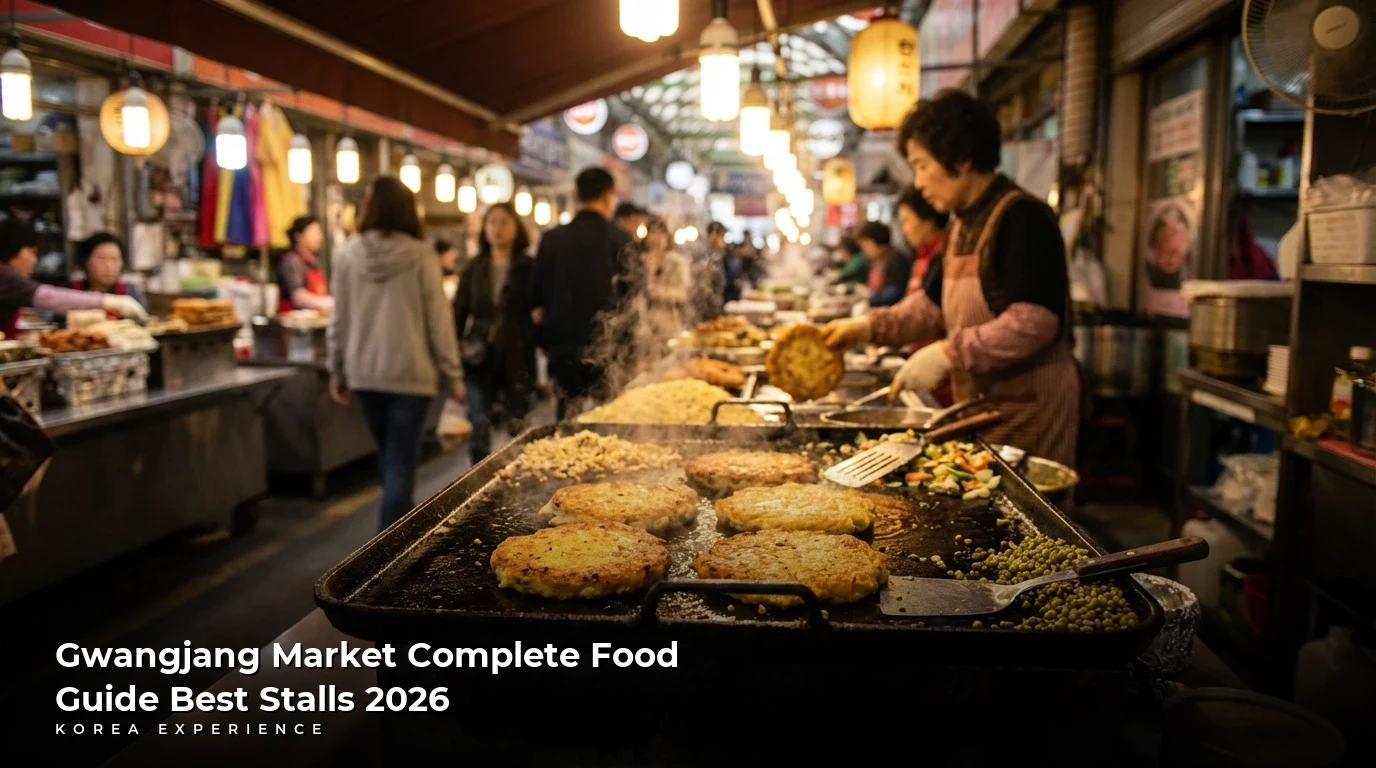
Discover the ultimate Gwangjang Market food guide featuring top stalls, prices, operating hours, and local tips for Seoul's oldest traditional market.
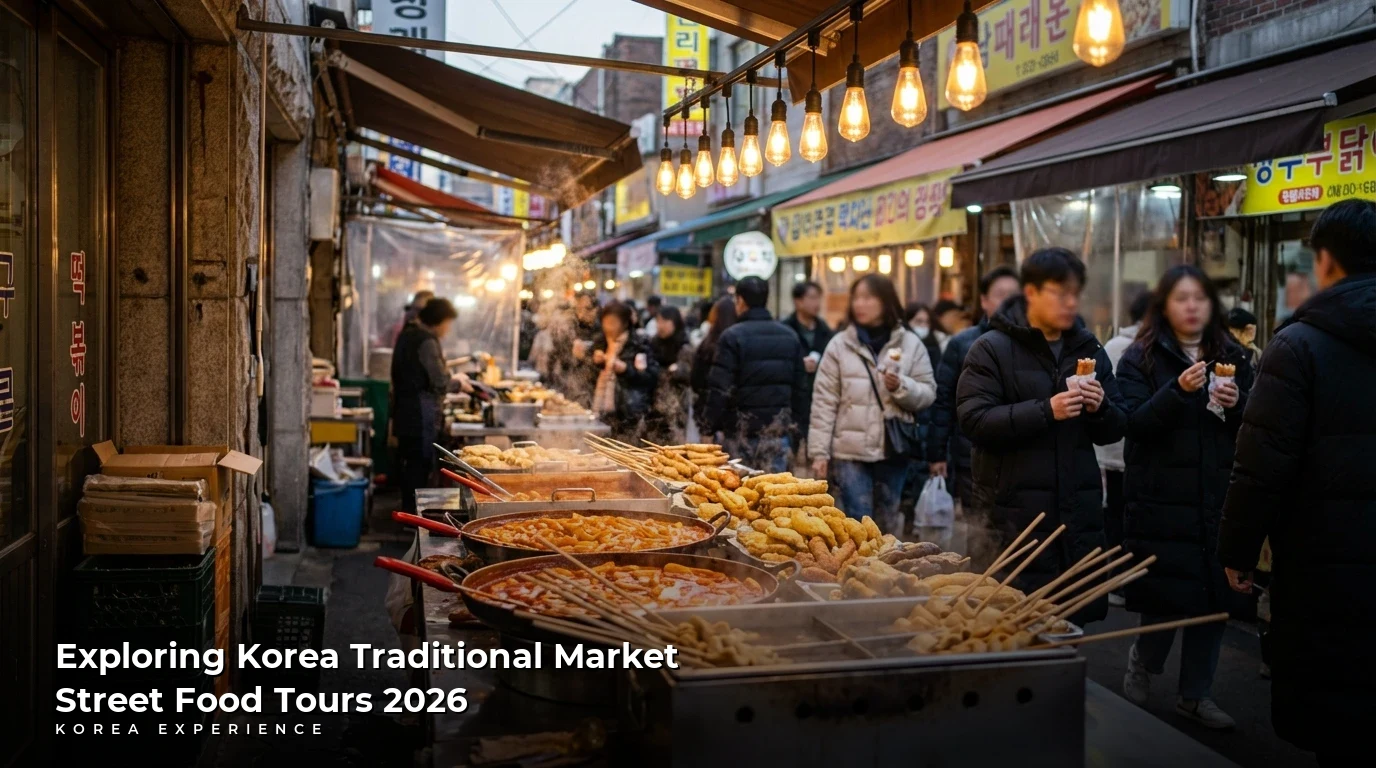
The ultimate guide to Korean street food markets in 2026. Discover prices, best tours, hidden stalls, and essential etiquette for travelers.
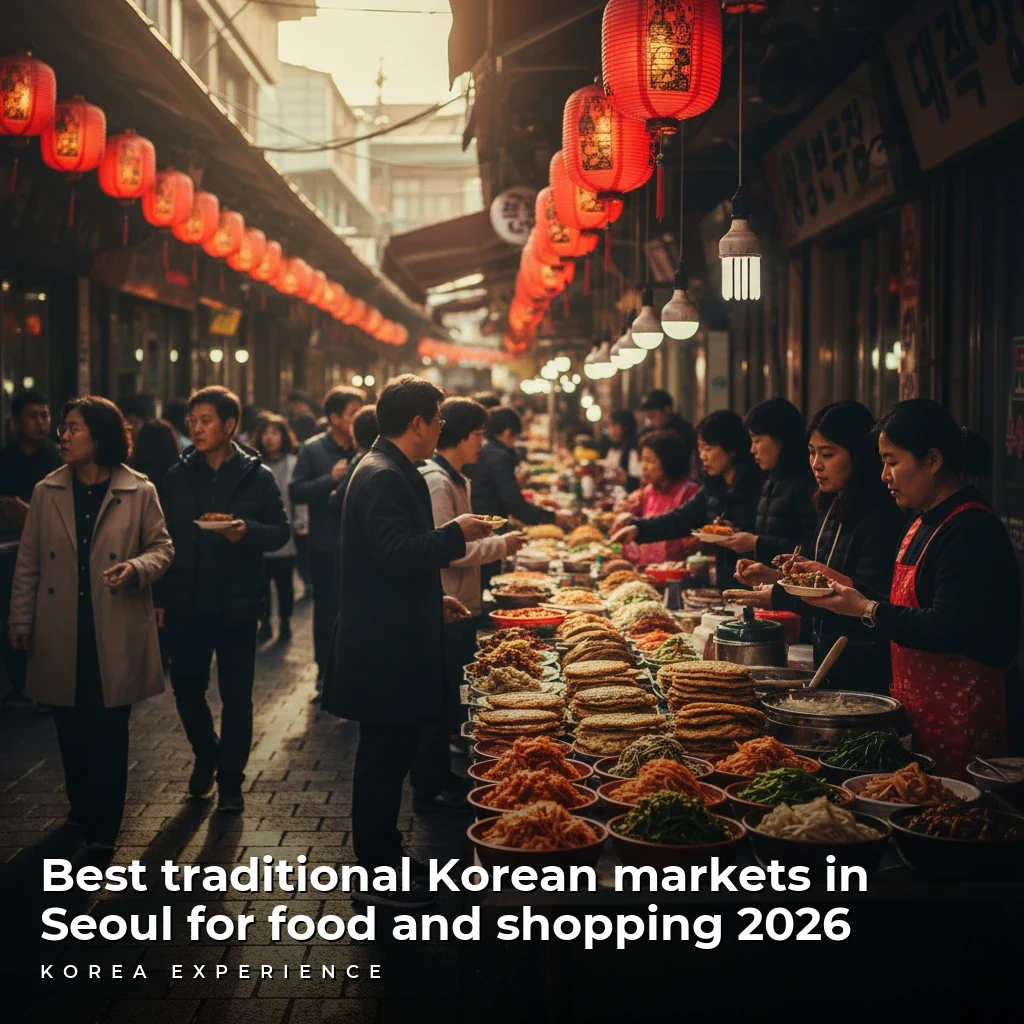
Discover Seoul's top 8 traditional markets. From Gwangjang's ₩5,000 noodles to Namdaemun's 10,000+ shops, get the ultimate 2026 shopping guide.
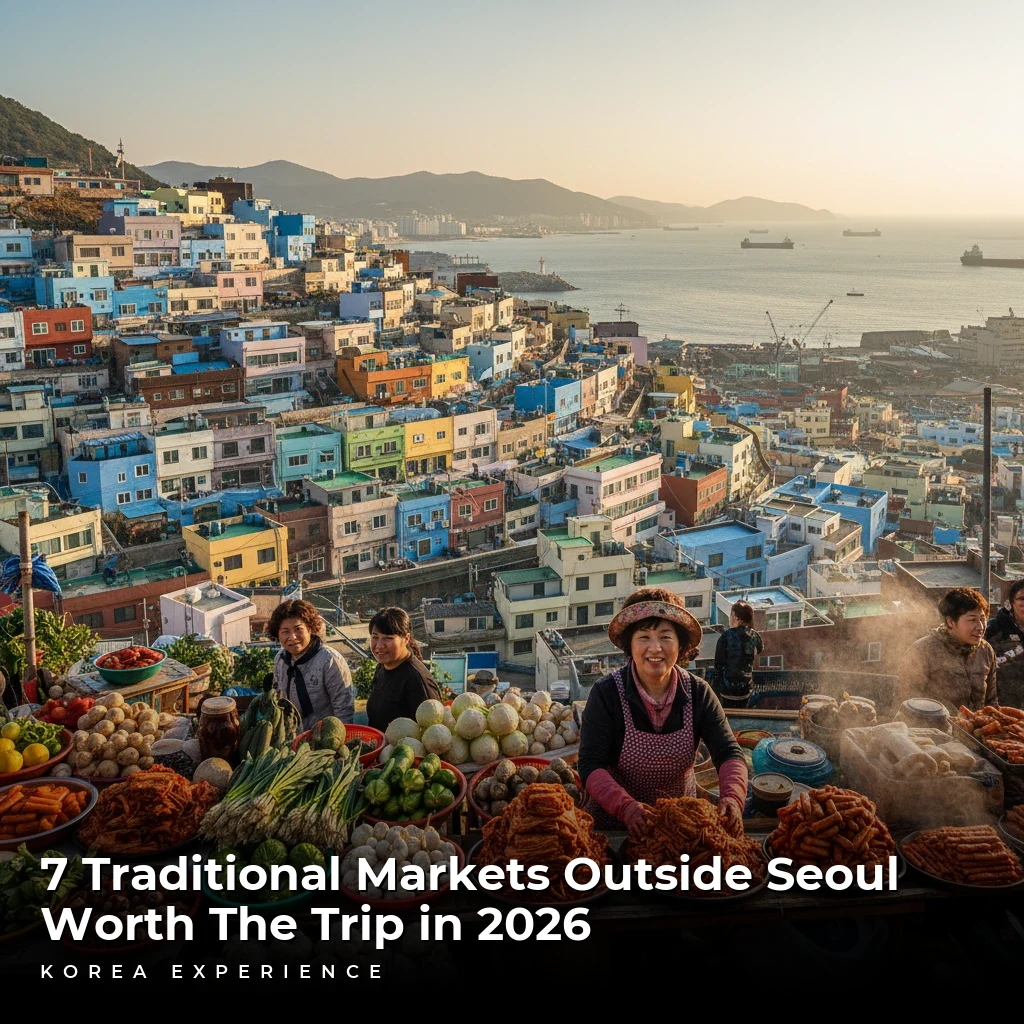
Discover Korea's best markets beyond Seoul. Explore Busan, Jeju, and Daegu with specific food prices, transport tips, and 2026 travel data.
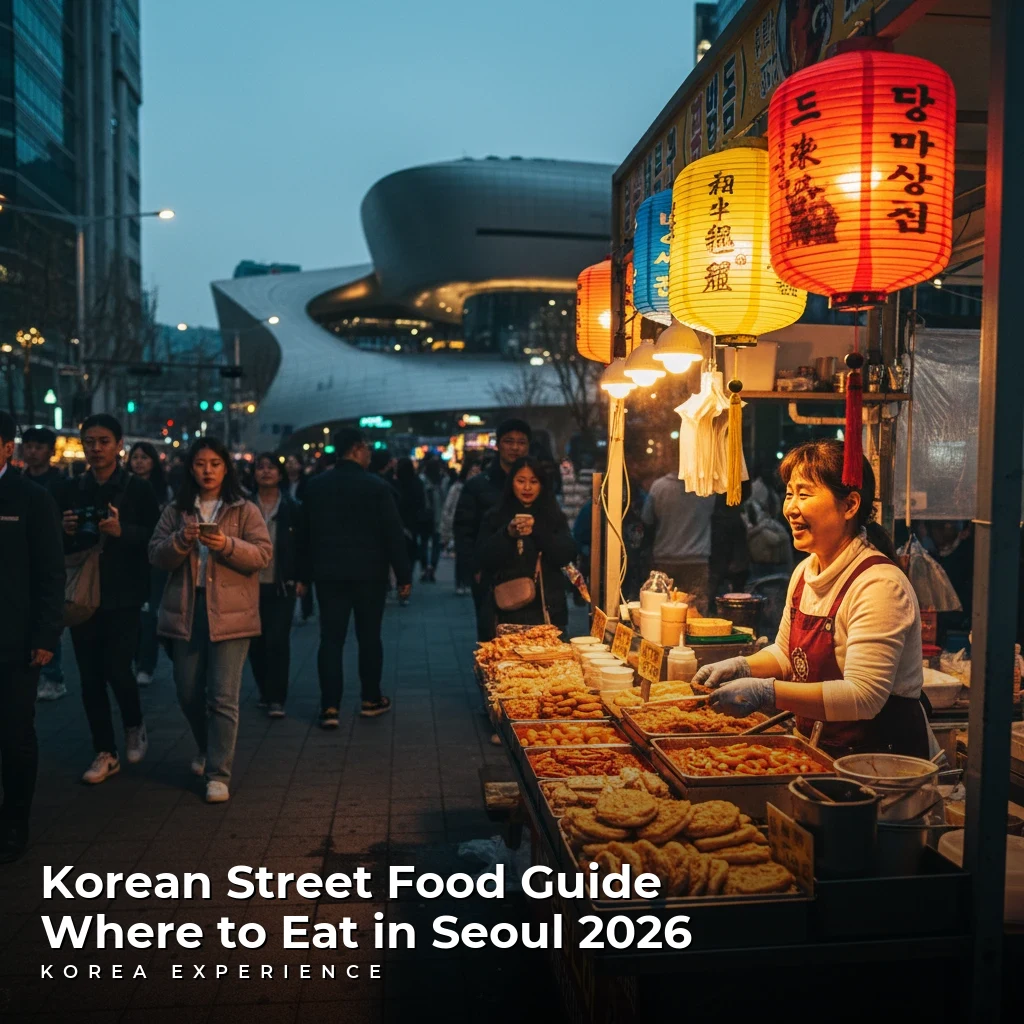
The ultimate guide to street food in Seoul for 2026. Discover prices, best markets like Gwangjang, and must-eat snacks from hotteok to tteokbokki.
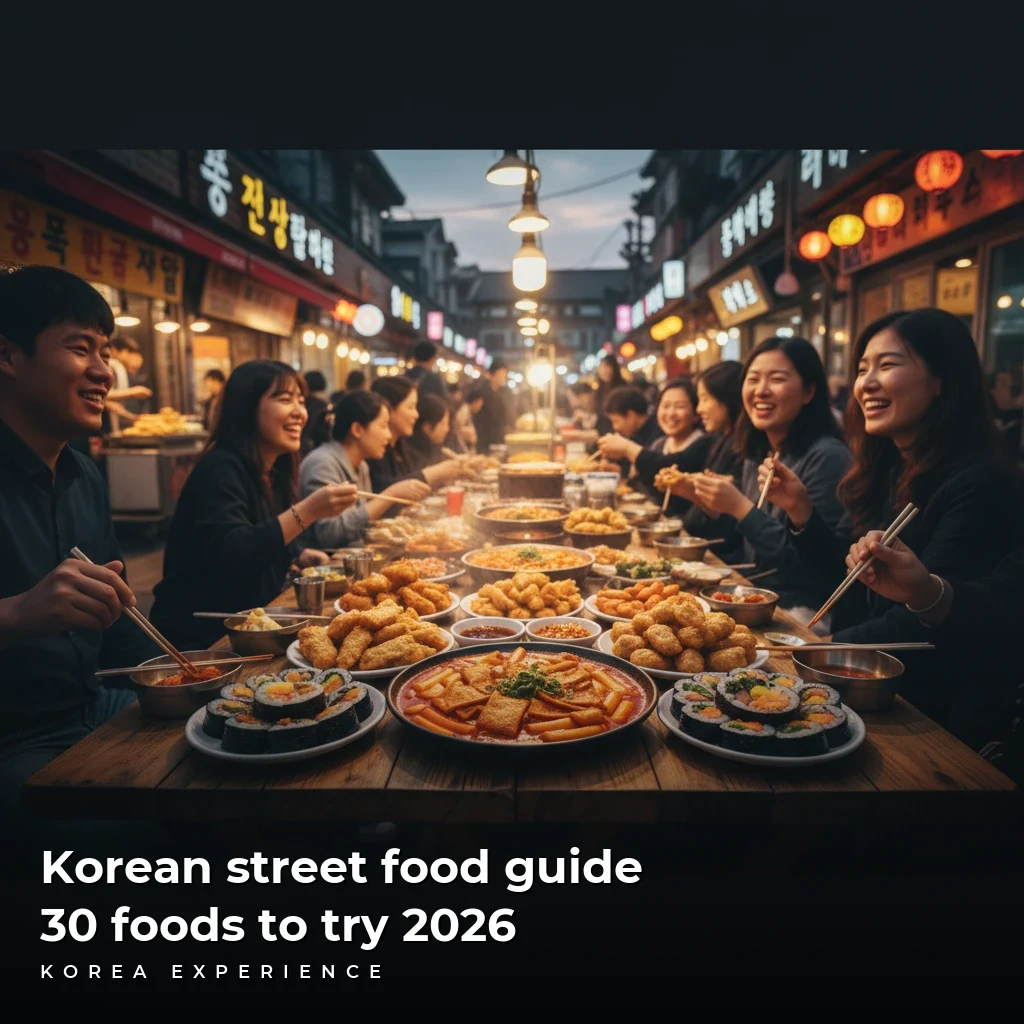
Discover the ultimate list of 30 must-try Korean street foods for 2026, from classic spicy rice cakes to trendy fusion snacks, with prices and local tips.