Korean street food guide 30 foods to try 2026
Discover the ultimate list of 30 must-try Korean street foods for 2026, from classic spicy rice cakes to trendy fusion snacks, with prices and local tips.
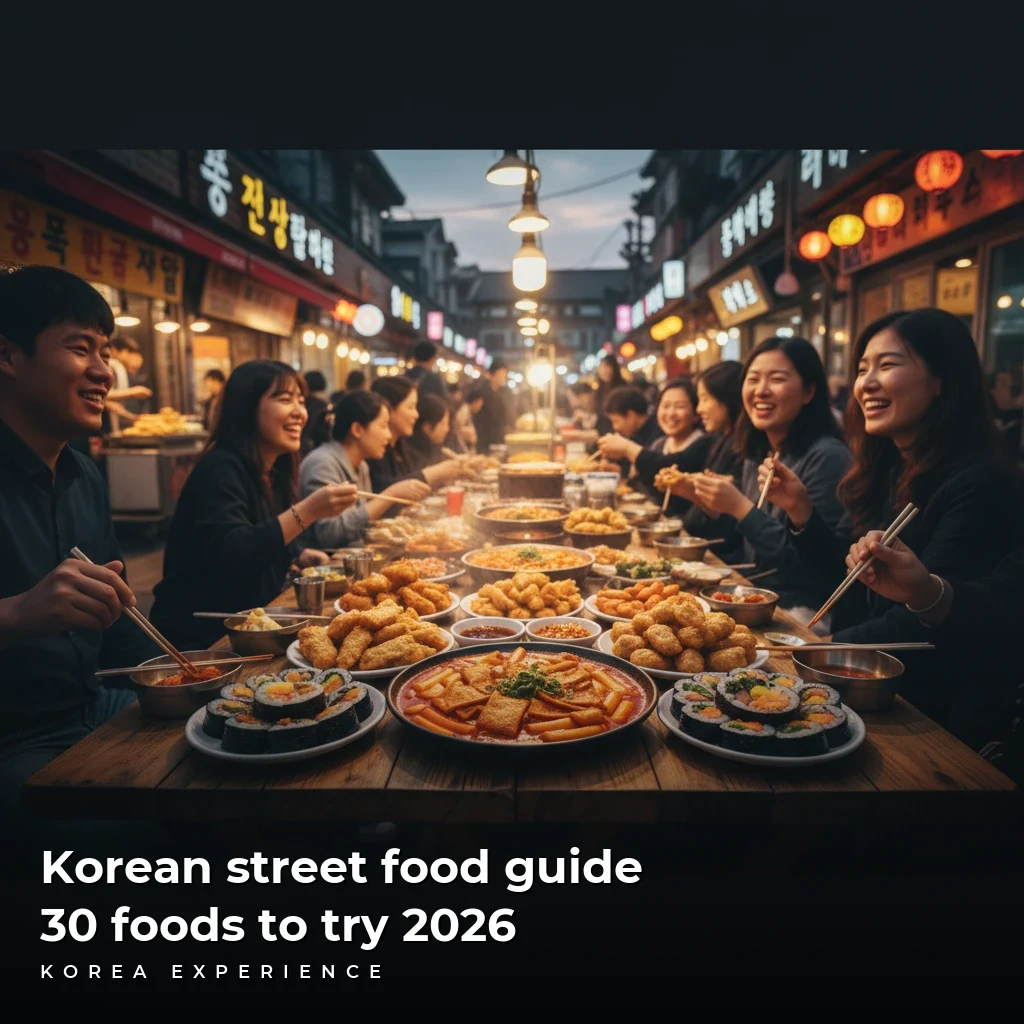
The streets of Seoul, Busan, and Jeonju are alive with the scent of grilling meats, simmering broths, and sweet pastries. In 2026, Korean street food culture has evolved from simple sustenance to a global culinary phenomenon. While inflation has adjusted prices slightly—with most snacks now averaging between ₩2,000 and ₩7,000—the quality and variety remain unmatched in Asia.
For more details, check out our guide on 50 Must Try Korean Foods Complete Guide.
Related reading: Best Korean Convenience Store Food Must Try Items.
You might also enjoy our article about Chuncheon Dakgalbi Street Guide South Korea Spicy Chicken....
Learn more in our comprehensive guide to Exploring Korea Traditional Market Street Food Tours.
Navigating the endless rows of orange tented wagons (Pojangmacha) and modern food trucks can be overwhelming for first-time visitors. Whether you are looking for the fiery kick of traditional spice or the Instagram-worthy aesthetics of modern fusion treats, this guide covers the essential 30 foods you must try.
Key Takeaways
- 1Carry cash: 60% of traditional market stalls still prefer physical currency over cards.
- 2Bunsik is the term for inexpensive Korean snack food, averaging ₩5,000 per portion.
- 3Myeongdong is best for variety, while Gwangjang Market offers authentic traditional taste.
The "Bunsik" Classics: The Holy Trinity
If you only eat three things in Korea, let them be these staples. "Bunsik" refers to inexpensive Korean snack foods commonly found at school fronts and subway stations. As of 2026, a full "Bunsik" set typically costs around ₩12,000.
1. Tteokbokki (Spicy Rice Cakes)
Tteokbokki is the undisputed king of Korean street food. These chewy, cylindrical rice cakes are simmered in a thick, sweet, and spicy red chili paste (gochujang) sauce. Modern variations include "Rose Tteokbokki" (with heavy cream) and Curry Tteokbokki.
- Average Price: ₩4,000 – ₩5,000 per serving.
- Spice Level: 3/5 to 5/5.
Pro Tip
If the red Tteokbokki is too spicy for you, look for "Gungjung Tteokbokki" (Royal Court Rice Cakes), which is stir-fried in a non-spicy soy sauce base.
2. Eomuk / Odeng (Fish Cake Skewers)
Often served alongside Tteokbokki to balance the heat, these are flat fish cake sheets folded onto long skewers and boiled in a radish and anchovy broth.
- Average Price: ₩1,000 – ₩1,500 per skewer.
- Calories: Approximately 70 kcal per stick.
3. Sundae (Korean Blood Sausage)
Unlike Western blood sausages, Korean Sundae is made by steaming cow or pig's intestines stuffed with glass noodles (dangmyeon), barley, and pork blood. It is usually served with liver and lung slices on the side.
- Average Price: ₩5,000 per serving.
4. Twigim (Korean Tempura)
Deep-fried goodness ranging from sweet potatoes and dumplings to peppers and squid. You typically pick 3 to 5 pieces, and the vendor will re-fry them for crispiness.
- Serving Size: Usually sold in sets of 3 or 5.
💵 Bunsik Price Comparison (2026)
Light snack for one
Savory Pancakes and Fried Delights
Korean savory pancakes are a staple on rainy days, often paired with Makgeolli (rice wine).
5. Hotteok (Sweet Syrupy Pancakes)
A winter essential. Dough balls are filled with a mixture of brown sugar, cinnamon, and nuts, then pressed flat on a greased griddle. In 2026, savory versions filled with japchae (glass noodles) or kimchi cheese are trending in Busan.
- Cooking Time: 3-5 minutes per batch.
- Temperature: Caution! The syrup inside exceeds 80°C (176°F).
6. Bindae-tteok (Mung Bean Pancake)
Made by grinding soaked mung beans into a batter and mixing with vegetables and meat. This is deep-fried rather than pan-fried, resulting in a thick, crunchy texture.
- Best Location: Gwangjang Market.
- Diameter: Typically 20-25cm wide.
Sunhee's Bindaetteok(순희네 빈대떡)
7. Pajeon (Green Onion Pancake)
A batter mixed with an abundance of green onions. Seafood Pajeon (Haemul Pajeon) is the most popular upgrade, packed with squid, shrimp, and clams.
8. Gyeran-ppang (Egg Bread)
A warm, fluffy loaf of sweet bread with a whole egg cracked inside. It is a popular breakfast item for commuters, typically available from 7:00 AM near subway stations.
- Protein: ~6g per serving.
- Cost: ₩2,000.
9. Mandu (Dumplings)
Steamed or fried, Korean dumplings are filled with minced meat, tofu, green onions, and garlic. Kimchi Mandu offers a spicy kick.
Meat Lovers' Paradise
Korea’s meat-based street foods have become significantly more premium in 2026, with vendors using high-quality cuts and blow-torch finishing techniques.
10. Dak-kkochi (Chicken Skewers)
Grilled chicken and scallion skewers brushed with a sticky, sweet soy or spicy sauce. They are often 30cm long.
- Variations: Salt-grilled (Sogeum-gui) vs. Sauce-grilled (Yangnyeom-gui).
11. Tteok-galbi Meatballs
Minced beef and pork short ribs, marinated in a sweet soy glaze and grilled into meatballs.
- Serving: Usually 4-5 meatballs per skewer.
12. Korean Corn Dogs (Gamja-hotdog)
A global sensation. A sausage or mozzarella block on a stick, dipped in batter, rolled in french fry cubes, deep-fried, and coated in sugar.
- Sauce Rule: Ketchup + Honey Mustard + Sugar is the standard triad.
📋 Meat Street Food Stats
13. Grilled Lobster with Cheese
Exclusive primarily to Myeongdong, this luxury street food features half a lobster tail grilled with butter and topped with melted mozzarella.
- Cost: ₩18,000 – ₩25,000 (The most expensive item on this list).
14. Samgyeopsal Gimbap
An entire roll of Gimbap filled with freshly grilled pork belly, lettuce, ssamjang paste, and garlic. It’s a full BBQ meal in a convenient roll.
15. Cup-bap (Cup Rice)
Popularized in Noryangjin (the exam village), this is a large cup filled with rice, kimchi, spam, eggs, and nori. It is the ultimate budget meal for students.
- Volume: ~500g of food.
- Price: ₩4,500 – ₩6,000.
The Seafood Selection
With Korea being a peninsula, seafood street snacks are abundant, especially in coastal cities like Busan and Sokcho.
16. Butter Grilled Squid (Ojingeo-beoteo-gui)
Dried or semi-dried squid roasted over hot stones with a generous slab of butter. The smell is irresistible and can be detected from 50 meters away.
17. Sannakji (Live Octopus)
Chopped raw octopus that is still squirming. While technically a "dish," it is often sold in small cups at markets like Noryangjin Fish Market.
- Safety Warning: Chew thoroughly to prevent suction cups from sticking to your throat.
18. Scallop Cheez-gui
Large scallops grilled in their shells, topped with corn, cheese, and sweet chili sauce.
19. Eomuk-bar (Fish Cake Bar)
Unlike the skewered soup version, this is a deep-fried fish cake stick, often wrapped around perilla leaves, sausages, or cheese.
Sweet Treats & Trendy Desserts (2026 Edition)
Desserts are where the most innovation happens. In 2026, the trend has shifted towards texture contrasts—crispy shells with soft interiors.
20. Tanghulu (Candied Fruit)
Whole strawberries, grapes, or mandarin oranges coated in a thin, glass-like sugar shell.
- Sugar Content: High.
- Texture: Crunchy then juicy.
21. 10-Won Bread (Sip-won-ppang)
A large coin-shaped waffle filled with stretching mozzarella cheese. It originated in Gyeongju but is now ubiquitous in Seoul.
22. Croffle (Croissant Waffle)
Croissant dough pressed in a waffle iron, topped with cream, cheese, or chocolate.
- Popularity: Still a top café item in 2026.
23. Bungeoppang (Fish-Shaped Pastry)
Similar to Japanese Taiyaki. A batter poured into a fish-shaped mold, filled with red bean paste (pat) or custard cream (shu-cream).
- Availability: Strictly seasonal (October to March).
"In 2026, look out for 'Pizza Bungeoppang' or 'Sweet Potato Mousse' fillings. However, the most authentic experience is still buying 3 red bean ones for ₩2,000 from a grandmother on a street corner, not a fancy mall kiosk."
24. Dalgona (Honeycomb Toffee)
Made famous by "Squid Game," this old-school candy is made of melted sugar and baking soda.
- Challenge: Try to trim the shape without breaking it.
25. Twisted Donuts (Kkwabaegi)
Twisted dough that is deep-fried and rolled in sugar and cinnamon. Best eaten fresh out of the fryer.
- Price: Very cheap, often 3 for ₩2,000.
26. S'mores Ice Cream
Toasted marshmallow covering a scoop of chocolate or vanilla ice cream. The outside is hot and gooey, the inside cold.
27. Hodugwaja (Walnut Cakes)
Small, walnut-shaped cakes filled with red bean paste and a chunk of real walnut. Common at highway rest stops.
28. Dragon's Beard Candy
16,000 strands of honey stretched by hand, wrapped around almonds or peanuts. Watching the masters make it is part of the experience.
29. Sikhye (Rice Punch)
A traditional sweet rice beverage containing grains of cooked rice. It aids digestion and is often sold in frozen slushy form.
30. Banana Nutella Crepes
While Western in origin, the Myeongdong style involves towering heaps of whipped cream and cereal toppings, making it a visual spectacle.
Where to Eat: The Top 3 Street Food Hubs
Not all street food zones are created equal. Here is how they compare in 2026.
Street Food Location Comparison
| Feature | Myeongdong | Gwangjang Market | Hongdae |
|---|---|---|---|
| Primary Vibe | Tourist & Trendy | Traditional & Authentic | Youth & Fusion |
| Price Level | $$$ (Expensive) | $ (Budget) | $$ (Moderate) |
| Payment | Cards & Cash | Mostly Cash | Cards & Cash |
| Best For | Lobster, Croissants | Pancakes, Tartare | Waffles, Skewers |
How to Order Like a Local
The street food ordering process is fast-paced. Stalls in busy areas like Gangnam or Hongdae process hundreds of customers an hour.
📖 How to Order Street Food in Korea
Step 1: Identify the Line
Koreans respect queuing. If there is no line, stand in front of the food you want.
Step 2: Select and Point
You don't need to speak fluent Korean. Pointing and holding up fingers for quantity is perfectly acceptable.
Step 3: Payment
Hand over cash or insert your card into the reader facing you. Self-checkout pads are common in 2026 food trucks.
Step 4: Eat and Return
Stand near the stall to eat. When finished, return the skewer or cup to the vendor. Do not walk away with trash.
📊 Visitor Consumption Stats 2026
Safety and Hygiene
A common concern for travelers is food safety. Generally, Korean street food has high turnover rates, meaning food doesn't sit out long.
- Water: Drink bottled water, not tap water, though tap water is technically safe.
- Summer: Be cautious with raw seafood (like marinated crab or raw octopus) from street carts during July and August due to humidity.
- Allergies: If you have severe nut or sesame allergies, carry a translated card. Sesame oil is used in almost everything.
Pros and Cons of Street Food Dining
Street Food Experience Analysis
- ✓Immersive cultural experience
- ✓Significantly cheaper than restaurants
- ✓No reservation needed
- ✓Fast service
- ✗Standing room only (no seats)
- ✗Lack of public trash bins
- ✗Hygiene varies by stall
- ✗Weather dependent
Suggested Itinerary for a Foodie Night Out
To maximize your stomach space and experience, follow this timeline for an evening in Myeongdong or Hongdae.
The Ultimate Street Food Evening
Start Light
Begin with an Egg Bread (Gyeran-ppang) or Odeng soup to warm up the stomach.
Main Event
Hit the heavy hitters: Tteokbokki, Kimbap, or Fried Chicken Skewers.
Cleanse Palate
Grab a fresh juice (pomegranate or lemonade in bags) or Sikhye.
Dessert Phase
Finish with Hotteok, Tanghulu, or S'mores Ice Cream.
Conclusion
Exploring the street food of Korea is an adventure for the senses. In 2026, the blend of deep-rooted tradition and rapid modernization creates a menu that is both nostalgic and exciting. From the humble ₩1,000 fish cake to the luxurious grilled lobster, there is a flavor for every palate and every budget.
Remember to bring an empty stomach, a bit of cash, and a sense of adventure. The best stall is often the one with the longest line of locals—so join the queue and get ready to eat.
❓ Frequently Asked Questions
Have more questions?Contact us →
About the Author
Korea Experience Team
Written by the Korea Experience editorial team - experts in Korean medical tourism, travel, and culture with years of research and firsthand experience.
Explore more in Food & Dining
Korean BBQ, street food, Michelin restaurants, and regional specialties — your ultimate guide to eating well in Korea.
Browse All Food & Dining ArticlesContinue Reading
Explore more articles you might find interesting
Discover the ultimate checklist of 50 essential Korean dishes, from street food to royal cuisine, including prices, spicy levels, and best spots for 2026.
The ultimate guide to street food in Seoul for 2026. Discover prices, best markets like Gwangjang, and must-eat snacks from hotteok to tteokbokki.
The ultimate 2026 guide to Seoul traditional markets. Discover prices, hidden stalls, and expert tips for Gwangjang, Noryangjin, and local favorites.
Discover the ultimate Gwangjang Market food guide featuring top stalls, prices, operating hours, and local tips for Seoul's oldest traditional market.
Discover the best vegetarian and vegan Korean cuisine options. From Michelin-starred temple food to spicy street snacks, navigate dining in Korea easily.
Discover the ultimate guide to savory pancakes and rice wine in Seoul. Top spots, craft brews, and local tips for a perfect rainy day experience.