Living in Korea

Goshiwon vs Officetels Short-Term Rentals in Korea

Navigating short-term rentals in Korea can be daunting. This guide compares Goshiwon and Officetels, helping international expats choose the ideal temporary home.

Introduction: Your Gateway to Korean Living

The vibrant culture, advanced technology, and bustling cities of South Korea beckon travelers, students, and professionals from across the globe. Whether you are coming for a short study abroad program, a temporary work assignment, an extended vacation, or even planning to settle down, one of the first and most crucial decisions you will face is finding suitable accommodation. The Korean rental market, with its unique terminology and practices, can initially seem complex, especially for those seeking short-term solutions.

Many international visitors arrive seeking temporary housing that balances cost, convenience, and comfort. Two of the most common and often debated options for short-term stays are the Goshiwon and the Officetel. While both offer distinct advantages, understanding their nuances is key to making an informed choice that aligns with your lifestyle and budget.

This comprehensive guide will break down everything you need to know about Goshiwon and Officetels. We will explore their features, costs, pros and cons, and target demographics, equipping you with the knowledge to confidently select your ideal home away from home in Korea. By the end of this article, you will have a clear picture of which option best suits your needs, ensuring a smooth and enjoyable start to your Korean adventure.

Understanding Short-Term Accommodation in Korea

The Korean rental landscape is significantly different from many Western countries, particularly when it comes to short-term options. Traditional long-term leases (typically two years) often involve substantial upfront deposits, known as "Jeonse" (a large, refundable lump-sum deposit with no monthly rent) or "Wolse" (a monthly rent payment accompanied by a smaller but still significant refundable deposit). These options are usually inaccessible or impractical for those only staying a few months or a year.

This is where specialized short-term rental solutions like Goshiwon and Officetels become invaluable for international visitors. They bridge the gap between expensive hotel stays and restrictive long-term leases, offering a middle ground for flexibility and affordability.

Why Short-Term Solutions are Often Necessary:

  • Flexibility for New Arrivals: Many expats and students arrive in Korea without a clear long-term plan or the necessary documents (like an Alien Registration Card) to secure a traditional lease immediately. Short-term rentals offer a temporary base while they navigate initial administrative tasks and explore their surroundings.
  • Budget Management: Hotels can be incredibly expensive for extended periods. Goshiwon and Officetels provide more cost-effective alternatives without compromising too much on essential amenities.
  • Convenience and Furnishing: Most short-term options come furnished, eliminating the hassle and expense of buying and moving furniture, which is a major advantage for those on temporary stays.
  • Specific Program Needs: Exchange students, language learners, or short-term project workers often have stays ranging from a few months to a year, for which these options are perfectly suited.

Introduction to Goshiwon and Officetels as Primary Options:

The choice between a Goshiwon and an Officetel often boils down to balancing privacy, space, amenities, and cost. A Goshiwon offers a minimalist, budget-friendly experience, while an Officetel provides a more spacious, self-contained, and modern living environment, albeit at a higher price point. Understanding these fundamental differences is the first step in deciding which path to take for your short-term accommodation in Korea.

Goshiwon: The Budget-Friendly Micro-Living Experience

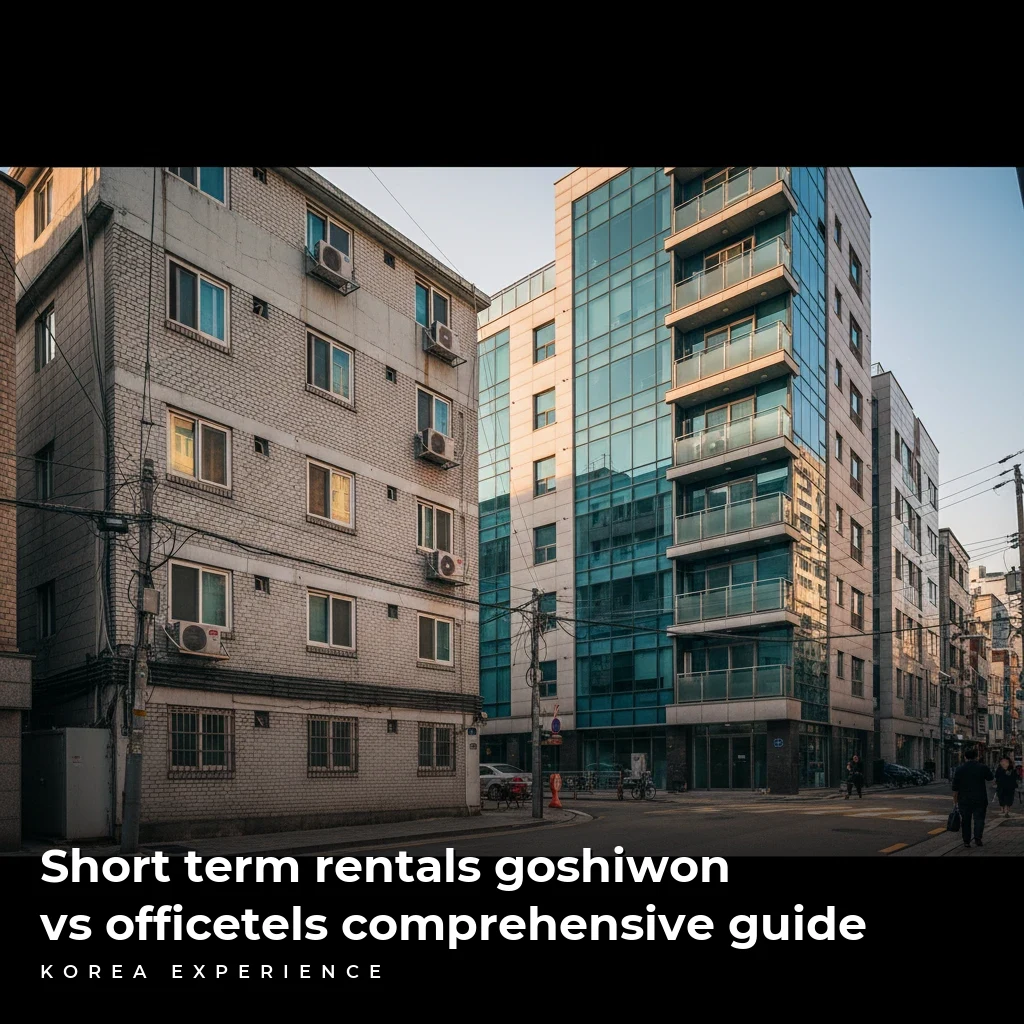
A Goshiwon (고시원) is perhaps the most unique and budget-conscious short-term rental option available in South Korea. Originally designed as study rooms for students preparing for high-stakes exams (the word "Goshi" refers to a state exam), they have evolved into compact, affordable living spaces primarily catering to students, solo travelers, and individuals seeking minimal living expenses.

What is a Goshiwon? A Goshiwon is a small, private room typically located within a multi-story building. These buildings are often dedicated entirely to Goshiwon rooms, or they might occupy several floors within a larger commercial or residential building. They emphasize practicality and affordability, often at the expense of space and luxurious amenities.

Typical Goshiwon Features:

  • Compact Room Size: This is the defining characteristic of a Goshiwon. Rooms are usually very small, ranging from 5 to 10 square meters (50 to 100 square feet). This means just enough space for the essentials.
  • Basic Furnishings: Each room typically comes furnished with a single bed (often a twin or bunk bed to maximize space), a small desk and chair, a mini-refrigerator, and a closet or storage cabinet. Linens are sometimes provided but often renters bring their own.
  • Shared Facilities: This is another key aspect distinguishing Goshiwon from other options. Most Goshiwon units feature shared common areas:
    • Kitchen: Equipped with cooking essentials like a rice cooker, microwave, stovetop, and sometimes free instant ramen, rice, and kimchi.
    • Laundry Room: Usually free-to-use washing machines and drying racks.
    • Bathrooms: Traditionally, bathrooms are shared among residents on a floor. However, a growing number of "Goshi-tel" or "One-roomtel" options offer rooms with private, en-suite bathrooms, which come at a slightly higher price.
  • Included Utilities and Internet: A major draw of Goshiwon is that utility costs (electricity, gas, water, heating, air conditioning) and high-speed internet (both wired and Wi-Fi) are almost always included in the monthly rent. This simplifies budgeting significantly.
  • No Deposit or Key Money: Unlike traditional Korean rentals that demand substantial "Jeonse" or "Wolse" deposits, Goshiwon typically require no deposit or a very minimal one (e.g., 50,000 to 100,000 Korean Won), which is often returned at the end of the stay. This makes them highly accessible for those with limited upfront funds.

Pros of Goshiwon:

  • Unbeatable Affordability: Goshiwon are among the cheapest private rental options in Korea, making them ideal for budget-conscious individuals.
  • No Upfront Deposit (Key Money): The absence of large deposit requirements is a massive advantage, especially for short-term visitors or those with limited savings.
  • All-Inclusive Rent: Utilities and internet being included simplify budgeting and remove the hassle of setting up accounts.
  • Flexible Lease Terms: Many Goshiwon offer monthly, or even weekly, contracts, allowing for significant flexibility.
  • Convenient Locations: Goshiwon are often strategically located near universities, subway stations, and commercial areas, ensuring easy access to amenities and public transportation.
  • Instant Community: Shared facilities can lead to informal interactions with other residents, providing a sense of community, especially for solo travelers.

Cons of Goshiwon:

  • Extremely Small Space: The compact nature of the rooms can feel claustrophobic for some, especially for extended stays or those with a lot of luggage.
  • Limited Privacy: Even with a private room, shared bathrooms and kitchens mean less personal space and potential noise from neighbors.
  • Potential for Noise: Thin walls are a common complaint in older Goshiwon, leading to noise disturbances from neighboring rooms or common areas.
  • Variable Quality: The quality and cleanliness can vary drastically between establishments. Some are modern and well-maintained, while others can be quite old and run-down.
  • Lack of Natural Light/Windows: Many Goshiwon rooms, particularly the cheapest ones, might have very small windows, or sometimes no external window at all (instead, a window looking into a corridor).

Ideal for: Students (especially language students or exchange students), budget travelers, solo short-term stays (a few weeks to a few months), temporary workers on a tight budget, or individuals needing a quick, no-frills landing pad while searching for more permanent accommodation.

Common Locations: You'll find a high concentration of Goshiwon near major university campuses in Seoul, such as Sinchon (Yonsei, Ewha), Hongdae (Hongik University), Konkuk University, and Korea University, as well as in bustling business districts like Gangnam, Jongno, and around major subway stations. These areas offer excellent public transport links and access to daily necessities.

Officetels: The Modern, Self-Contained Living Solution

An Officetel (오피스텔) is a unique Korean building type that combines the functions of an office and a hotel, providing compact, self-contained living and working spaces. They are essentially studio or one-bedroom apartments, designed for convenience and modern living, offering a step up in comfort and privacy compared to a Goshiwon.

What is an Officetel? The term "Officetel" is a portmanteau of "office" and "hotel." These buildings are typically high-rise, modern structures offering individual units that are legally designated for both residential and commercial use. This hybrid nature makes them popular among young professionals, single expats, and small businesses.

Typical Officetel Features:

  • Self-Contained Unit: Each Officetel unit is a private, independent space. This includes a private bathroom, a fully functional kitchenette, and a living/sleeping area.
  • More Spacious than Goshiwon: While still compact by international standards, Officetel units are significantly larger than Goshiwon rooms, typically ranging from 20 to 50 square meters (200 to 500 square feet). This allows for more personal space and distinct living zones.
  • Modern Amenities: Officetels are known for their built-in modern conveniences:
    • Kitchenette: Usually includes a sink, a two-burner electric stove, a small refrigerator, and sometimes a microwave.
    • Private Bathroom: Equipped with a toilet, sink, and shower (often a "wet bath" style where the entire bathroom floor gets wet).
    • Appliances: Most units come with an air conditioner, a washing machine (often a washer-dryer combo), and heating.
    • Furnishing (Variable): While some Officetels are rented unfurnished, many cater to expats and offer "fully furnished" options, which include a bed, sofa, TV, and basic kitchenware. Always confirm what is included.
  • Security and Building Management: Officetel buildings typically have 24/7 security, CCTVs, and an on-site building manager (Gwanlisa) who handles maintenance, package delivery, and general inquiries. This offers a higher sense of security and convenience.
  • Often Requires a Deposit (Wolse): Unlike Goshiwon, Officetels almost always require a "Wolse" (monthly rent) deposit. While smaller than a "Jeonse" deposit, it can still range from 5 million to 20 million Korean Won or more. For shorter-term rentals, it might be negotiable, sometimes higher rent for a lower deposit.
  • Separate Utility Bills: Utilities (electricity, gas, water, internet) are typically not included in the rent and must be paid separately by the tenant. There is also a monthly building maintenance fee (Gwanlibi) that covers common area cleaning, security, and sometimes basic internet services.

Pros of Officetels:

  • High Privacy and Independence: A completely private living space with your own kitchen and bathroom offers significant independence and peace of mind.
  • Modern Comforts: Built-in appliances and generally newer facilities make for a comfortable and convenient living experience.
  • Enhanced Security: The presence of security guards, access control, and CCTVs provides a secure environment.
  • Better for Longer Stays: The added space and amenities make Officetels much more suitable for stays of several months to a year or more.
  • Professional Environment: Often located in business districts, they offer a professional and quiet atmosphere.
  • Good for Couples: A larger space with private facilities makes Officetels suitable for couples, unlike the single-occupancy Goshiwon.

Cons of Officetels:

  • Higher Cost: Both monthly rent and the upfront deposit are significantly higher than Goshiwon.
  • Separate Utility Bills: Managing and paying for utilities can be an added hassle, and costs can accumulate, especially in winter (heating) or summer (AC).
  • Building Management Fees (Gwanlibi): These additional monthly fees can add a substantial amount to your living expenses.
  • Less Flexible Lease Terms: While some landlords might be open to shorter terms (e.g., 6 months), the standard is a one-year contract, and deposits can be higher for shorter durations.
  • Can Feel Impersonal: High-rise buildings with many units can sometimes lack a sense of community.
  • Furnishing Varies: Not all Officetels are fully furnished, meaning you might need to purchase some items if you don't find a specialized expat-friendly unit.

Ideal for: Professionals, digital nomads, couples, those on longer-term assignments (6 months to 2 years), individuals who prioritize privacy and modern amenities, and those with a higher budget for accommodation.

Common Locations: Officetels are ubiquitous in major urban centers, especially in upscale business districts and trendy areas. You'll find a high concentration in Gangnam, Yeouido (financial district), Mapo (near Hongdae/Sinchon), Jamsil, and anywhere with good subway access and commercial activity.

Key Differences: Goshiwon vs. Officetel at a Glance

To summarize the crucial distinctions and help you quickly compare, here's a detailed comparison table:

FeatureGoshiwonOfficetel
Typical Room SizeVery small (5-10 square meters)Small to medium (20-50 square meters)
Privacy LevelLimited (shared common areas, thin walls)High (private bathroom, kitchenette, dedicated unit)
Monthly Rent Range (KRW)300,000 - 700,000600,000 - 1,500,000+
Upfront Deposit (KRW)None or minimal (50,000-100,000 refundable)Substantial (5-20 million, negotiable for short-term)
Utilities (Electricity, Gas, Water)Usually included in rentSeparate; tenant pays monthly
InternetUsually included (Wi-Fi and/or LAN)Separate or included in Gwanlibi (maintenance fee)
Building Management Fee (Gwanlibi)Not applicableTypically 50,000 - 150,000 KRW/month
BathroomShared (common on floor) or private (Goshi-tel)Private, en-suite bathroom in every unit
Kitchen/CookingShared communal kitchen with basic appliancesPrivate kitchenette in unit with basic appliances
LaundryShared laundry room, often free-to-usePrivate washing machine (often built-in) in unit
FurnishingBasic (bed, desk, chair, mini-fridge)Built-in appliances (washer, AC, fridge, stove), some furnished options
SecurityVariable (keypad entry, sometimes CCTV)High (24/7 security, CCTV, access control)
Lease Term FlexibilityVery flexible (monthly, weekly options)Less flexible (typically 1 year, short-term negotiable with higher rent/deposit)
Noise LevelCan be high due to thin walls and shared spacesGenerally quieter, but depends on neighbors
Ideal ForStudents, budget travelers, solo short-term staysProfessionals, couples, longer-term, comfort seekers

Finding and securing a short-term rental in Korea requires a slightly different approach for foreigners. Language barriers, unfamiliar contract terms, and deposit requirements can be challenging, but with the right information, the process can be smooth.

Finding Listings:

  • Online Portals (Aggregators): While many local Korean real estate websites exist, navigating them can be tough without Korean proficiency. Look for platforms that cater to expats or have English interfaces. Some popular types of local platforms include "Zigbang" (직방) or "Dabang" (다방), which list Goshiwon, Officetels, and other apartments. While specific names are not provided here, searching for "Korea short-term rentals English" will yield useful aggregators.
  • Real Estate Agents (Budongsan): For Officetels, especially for short-term deals or if you need help with negotiations, a local real estate agent (부동산 중개인 - Budongsan Junggaein) is highly recommended. They can help with translation, finding suitable options, and explaining contract terms. Be aware that agent fees typically apply, usually around 0.3% to 0.5% of the total contract value (deposit + (monthly rent * 100)), but can be negotiated for short-term.
  • Goshiwon-Specific Websites: Many Goshiwon operators have their own websites or are listed on dedicated Goshiwon search portals. These are often easier to navigate than general real estate sites.
  • Expat Communities: Online forums and social media groups for expats in Korea are excellent resources for recommendations, warnings, and even direct listings from people subletting their places.

Understanding Contracts and Deposits:

  • Wolse (월세): This is the most common rental type for foreigners, where you pay a monthly rent plus a refundable deposit. For Officetels, this deposit can be substantial. For Goshiwon, it's usually minimal or non-existent.
  • Jeonse (전세): This involves a very large, lump-sum deposit (often 50% to 80% of the property's value) with no monthly rent. While more common for long-term Korean residents, it is extremely rare for short-term foreign renters due to the huge upfront capital required.
  • Short-Term Officetel Negotiations: Landlords may be hesitant to offer short-term (under 1 year) Officetel leases, as they prefer stable tenants. If they do, they might ask for a higher monthly rent to compensate for a lower deposit, or a slightly higher deposit for a shorter term. Be prepared to negotiate, and an agent can be invaluable here.

Communicating with Landlords/Agents:

  • Language Barrier: The biggest hurdle is often the language barrier. If you don't speak Korean, it's essential to have a Korean-speaking friend, colleague, or your real estate agent assist you with all communications, especially during viewing and contract signing.
  • Clear Expectations: Be very clear about your needs: desired length of stay, budget (including utilities/fees), preferred location, and essential amenities.

Required Documents:

  • Passport: Always required for identification.
  • Visa: Proof of legal stay in Korea.
  • Alien Registration Card (ARC): Once you obtain it, your ARC (외국인등록증) becomes your primary form of identification in Korea and is usually required for formal contracts, utility setup, and banking. While you can secure a Goshiwon without an ARC, it's often needed for Officetel contracts. For more detailed guidance on obtaining your ARC, explore our other articles on settling in Korea.
  • Proof of Income/Financials: For Officetels, landlords might ask for proof of employment or financial stability, especially for longer leases.

Practical Tips for Short-Term Renters in Korea

Making the right choice between a Goshiwon and an Officetel, and then securing it, involves more than just understanding the basics. Here are some insider tips to ensure a smooth and successful rental experience:

For Goshiwon Renters:

  • Always Inspect in Person: Pictures online can be deceiving. The size, cleanliness, and overall condition of Goshiwon rooms vary wildly. Visit multiple Goshiwon before committing. Pay attention to ventilation, window type, and the common areas.
  • Check for Soundproofing: Knock on the walls. If they sound hollow, noise might be an issue. Ask previous tenants or the manager about typical noise levels.
  • Understand Shared Facility Rules: Clarify the rules for the kitchen, laundry, and shared bathrooms. Are there specific usage times? Are there cleaning schedules? How often are shared spaces cleaned by staff?
  • Ask About Meal Provisions: Many Goshiwon offer free rice and kimchi. Some even provide instant ramen or other basic breakfast items. This can be a significant cost saver.
  • Confirm Private Bathroom (if applicable): If you are opting for a Goshi-tel with a private bathroom, confirm its condition, size, and whether it has a window or proper ventilation.
  • Consider "Inner-Window" Rooms: The cheapest Goshiwon rooms often have an "inner window" (창문 없는 방 - changmun eomneun bang) which opens to a hallway, not the outside. These are cheaper but lack natural light and fresh air, which can affect mood and air quality.

For Officetel Renters:

  • Factor in Utility Costs and Gwanlibi: Utilities (electricity, gas, water) can add 100,000 to 250,000 KRW or more to your monthly expenses, especially during extreme seasons. The "Gwanlibi" (maintenance fee) is also a fixed monthly cost. Always get a clear estimate of these additional expenses.
  • Negotiate Deposit for Shorter Terms: If you only need an Officetel for 6-11 months, try to negotiate the deposit. Some landlords might accept a lower deposit in exchange for a slightly higher monthly rent. This is where an experienced real estate agent is invaluable.
  • Seek "Fully Furnished" Options: If you are on a short-term stay, finding a fully furnished Officetel will save you immense hassle and expense. These are common in expat-dense areas like Gangnam or Itaewon but might come at a premium.
  • Understand Lease Renewal: If you might extend your stay, ask about the process and potential rent changes for lease renewal well in advance.
  • Check for Parking Availability and Cost: If you plan to have a car, parking can be an expensive and scarce commodity in Seoul, even in Officetel buildings.
  • Read the Contract Carefully: Officetel contracts are much more detailed than Goshiwon agreements. If you don't read Korean, ensure you have a trusted translator go through every clause, especially regarding repairs, early termination penalties, and deposit refund conditions.

General Tips for All Short-Term Renters:

  • Location, Location, Location: Prioritize proximity to your workplace or university, and excellent access to public transportation (subway stations, bus stops). Seoul's public transport system is world-class, making a well-connected location more important than being directly next to your destination.
  • Budget for Initial Setup: Even with furnished options, you might need to buy basic household items, toiletries, and groceries. Factor this into your initial budget.
  • Join Online Expat Communities: Facebook groups like "Seoul Expats," "Korea Housing," or university-specific groups are treasure troves of information. You can ask specific questions, get recommendations, and sometimes even find direct sublet opportunities.
  • Be Aware of "Maintenance Fees" (Gwanlibi): For Officetels, this fee is non-negotiable and covers building upkeep, security, and sometimes basic cable/internet. Always ask for its exact amount when inquiring about an Officetel.
  • Be Patient and Persistent: Finding the perfect short-term rental can take time. Don't rush into a decision, especially if you have specific requirements.
  • Safety First: When viewing properties, especially Goshiwon, it's advisable to go during the day, and ideally, bring a friend. Ensure the area feels safe and well-lit.
  • Learn Basic Korean Phrases: Even a few polite phrases like "Annyeonghaseyo" (hello), "Gamsahamnida" (thank you), and "Juseyo" (please give me) can go a long way in showing respect and facilitating communication.

Alternative Short-Term Options (Brief Mention for Context)

While Goshiwon and Officetels are the most common independent short-term rentals, other options exist depending on your budget and needs:

  • Serviced Apartments: These are higher-end, fully furnished apartments that offer hotel-like services (cleaning, concierge). They are significantly more expensive but provide maximum comfort and convenience, often favored by business travelers.
  • Airbnb/Guest Houses: Excellent for very short stays (days to a few weeks). They offer flexibility and a local experience but can become very costly for extended periods and may not offer the same level of privacy as an Officetel.
  • Dormitories: For students, university dormitories are often the most convenient and affordable option, but eligibility and availability are restricted.

FAQ: Your Top Questions Answered

Here are answers to common questions international residents have about short-term rentals in Korea:

1. Can I find a Goshiwon or Officetel without an Alien Registration Card (ARC)?

Goshiwon: Yes, it is generally much easier to secure a Goshiwon without an ARC. Many Goshiwon operators are accustomed to renting to new arrivals or short-term visitors who haven't yet received their ARC. You will typically only need your passport and visa information. However, for longer stays, some might eventually ask for it once you have it.

Officetel: It is more challenging to rent an Officetel without an ARC. Traditional Officetel contracts usually require an ARC as a primary form of identification for formal lease agreements, utility setup, and moving in. While some landlords or agents specializing in expat rentals might be flexible, especially for very short-term agreements or if you provide alternative proof of your stay (e.g., employer letter), it is not the norm. It's best to plan to have your ARC before attempting to secure an Officetel.

2. What is a typical deposit (key money) for an Officetel? Can it be reduced?

A typical "Wolse" (monthly rent with deposit) deposit for an Officetel in Seoul usually ranges from 5 million to 20 million Korean Won, though it can be higher for larger or prime location units. For foreigners seeking short-term leases (e.g., 3-6 months), landlords may be hesitant.

Can it be reduced? Yes, it is often negotiable.

  • Higher Rent for Lower Deposit: Some landlords might agree to a lower deposit (e.g., 2-3 million KRW) if you are willing to pay a slightly higher monthly rent. This is a common arrangement for foreigners on a budget who can't afford a large upfront deposit.
  • Agent Negotiation: A good real estate agent can be invaluable in negotiating these terms on your behalf.
  • Short-Term Premium: Be aware that even if the deposit is reduced, landlords might charge a higher monthly rent for a short-term lease to compensate for the potential hassle of finding new tenants sooner.

3. Are utilities really included in Goshiwon? What about air conditioning?

Yes, utilities are almost always included in the Goshiwon rent. This typically covers electricity, gas, water, heating, and internet (Wi-Fi and sometimes wired LAN). This is one of the biggest advantages of Goshiwon, as it simplifies budgeting and eliminates the need to set up utility accounts.

Air Conditioning: Air conditioning is usually available, especially during the hot Korean summer months.

  • Central AC: Many Goshiwon have central air conditioning for the building or a floor. In this case, it's typically included and managed by the Goshiwon operator (e.g., turned on for specific hours).
  • Individual AC: Some newer or more premium Goshiwon (often called "Goshi-tel" or "One-roomtel") might have individual AC units in each room. Even with individual units, the electricity cost is usually still covered by the inclusive rent. Always confirm the AC situation when you view a Goshiwon, especially if you are sensitive to heat.

4. How do I pay rent in Korea as a foreigner?

The most common methods for paying rent in Korea are:

  • Bank Transfer: Once you have a Korean bank account (which you can typically open after getting your ARC), you will usually transfer the monthly rent directly to your landlord's bank account. This is the preferred method for most landlords.
  • Cash: For Goshiwon, especially if you don't have a Korean bank account yet, cash payment is often accepted. You would typically pay the manager in person each month.
  • Automatic Transfer (CMS): For longer-term Officetel leases, you might be able to set up an automatic monthly transfer from your Korean bank account.

It's highly recommended to open a Korean bank account as soon as possible after obtaining your ARC, as it simplifies many financial transactions, including rent payments and utility bills (for Officetels). Our guide on "Opening a Bank Account in Korea as an Expat" provides a step-by-step process.

5. Is it safe for a single female to live in a Goshiwon or Officetel?

Generally, yes, both Goshiwon and Officetels are considered safe options for single females in South Korea. Korea is a country with a very low crime rate.

Goshiwon:

  • Security Features: Many Goshiwon have keypad entry systems at the main entrance and sometimes on each floor, as well as CCTV cameras in common areas.
  • Community Aspect: Living among other residents, often students, can provide a sense of informal community.
  • Room Doors: Individual Goshiwon room doors usually have their own lock (often a keypad lock), providing personal security.
  • Due Diligence: It's always wise to visit the specific Goshiwon, check the neighborhood, ensure the common areas are well-lit and clean, and read reviews if available. Some Goshiwon are women-only (여성전용 - yeoseong jeonyong) which provides an extra layer of comfort for some.

Officetel:

  • High Security: Officetels are typically high-rise, modern buildings with excellent security. This often includes 24/7 security guards, sophisticated access control systems (key card or password for entry to the building and sometimes elevators), and extensive CCTV coverage throughout the premises.
  • Private Units: The self-contained nature of an Officetel unit means you have your own private space, offering a higher sense of security and privacy compared to shared living.
  • Building Management: The presence of on-site building management (Gwanlisa) also contributes to a well-maintained and secure environment.

As with any accommodation choice, trust your instincts, thoroughly inspect the premises and the surrounding area, and ensure all locks and security features are functional.

Conclusion: Making Your Informed Decision

Navigating the array of short-term rental options in South Korea as an international traveler or expat can seem daunting, but by understanding the distinct characteristics of Goshiwon and Officetels, you are now well-equipped to make a confident decision.

In summary:

  • Choose a Goshiwon if your top priorities are extreme affordability, zero upfront deposit, all-inclusive utilities, and ultimate flexibility for very short stays. You are comfortable with minimal space, shared facilities, and a more basic living environment. This option is perfect for solo students or budget-conscious travelers focusing on experiencing Korea without the financial burden of high accommodation costs.
  • Opt for an Officetel if you value privacy, modern amenities, a self-contained living space, and greater comfort for longer stays. You are prepared for a higher monthly rent, a significant upfront deposit, and managing separate utility bills. Officetels are ideal for professionals, couples, or anyone seeking a more independent and comfortable home base in Korea.

Actionable Takeaways for Your Rental Journey:

  1. Prioritize Your Needs: Before you start searching, clearly define what matters most to you: budget, privacy, space, location, or lease flexibility.
  2. Inspect Thoroughly: Whether it's a tiny Goshiwon room or a spacious Officetel, always inspect the unit in person (or via video call with a trusted proxy) before signing any contract. Check for cleanliness, functionality of appliances, and general condition.
  3. Understand All Costs: Don't just look at the monthly rent. Factor in deposits, utility costs (for Officetels), and building maintenance fees (Gwanlibi) to get a true picture of your total living expenses.
  4. Seek Assistance: If Korean is not your strong suit, engage a reliable real estate agent for Officetels, or bring a Korean-speaking friend for Goshiwon viewings and contract discussions.
  5. Be Prepared for Documents: Have your passport, visa, and eventually your Alien Registration Card ready, as these are crucial for formalizing any rental agreement.

Your journey to living in Korea is an exciting one, and securing the right accommodation is a fundamental step. By carefully weighing the pros and cons of Goshiwon and Officetels, armed with the practical tips and detailed information provided here, you are ready to find your ideal short-term rental and embark on an unforgettable experience in this dynamic country.

For more detailed guides on obtaining your Alien Registration Card, navigating public transport in Seoul, or understanding Korean culture and etiquette, explore our other articles designed to enhance your "Korea Experience."

About the Author

Korea Experience Team

Written by the Korea Experience editorial team - experts in Korean medical tourism, travel, and culture with years of research and firsthand experience.

⚠️ Medical Disclaimer

The information provided on this website is for general informational purposes only and does not constitute medical advice. Always consult with qualified healthcare professionals before making any medical decisions.

Continue Reading

Explore more articles you might find interesting