Living in a goshiwon vs officetel pros cons and costs 2026
Compare costs, amenities, and lifestyle differences between Goshiwons and Officetels in Korea for 2026. Find your perfect Seoul accommodation.
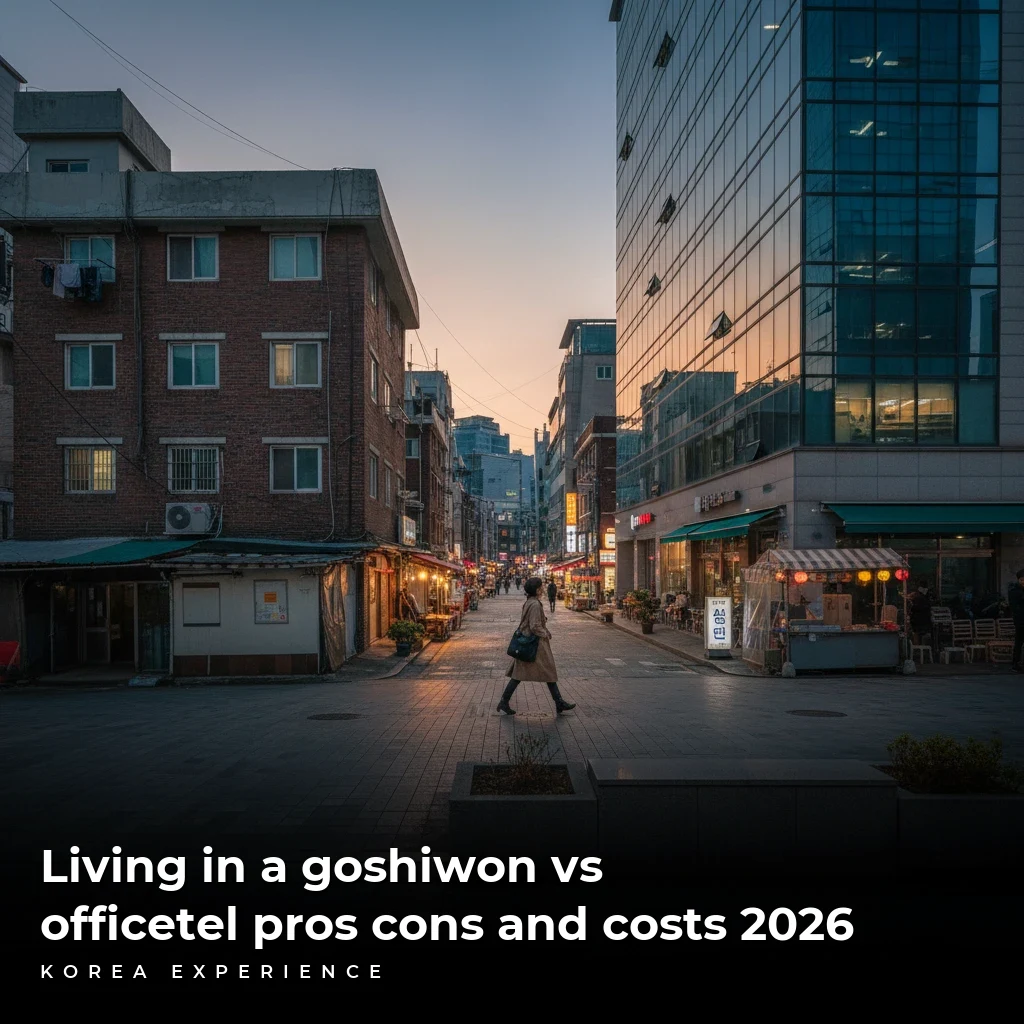
Finding accommodation in South Korea is the first major hurdle for any expat, student, or digital nomad arriving in 2026. Two terms dominate the rental market conversation: Goshiwon and Officetel. While both provide viable housing solutions in dense urban areas like Seoul and Busan, they cater to vastly different budgets, lifestyles, and contract durations.
As of early 2026, the housing market in Korea has shifted, with rental prices seeing a 4.2% increase year-over-year. Understanding the nuances between these two housing types is critical for managing your budget and expectations. Whether you are looking to save money in a compact space or seeking a modern apartment experience, this guide breaks down everything you need to know.
Learn more in our comprehensive guide to Cost of living in Seoul vs Busan comparison.
Key Takeaways
- 1Goshiwons require no deposit and start around $300 USD monthly
- 2Officetels need substantial deposits ($3,700+) but offer private facilities
- 3Goshiwon contracts are flexible (month-to-month); Officetels usually require 1 year
What is a Goshiwon (Goshitel)?
Historically, a Goshiwon (or Goshitel) was a tiny study room used by students preparing for government exams ("Goshi"). In 2026, they have evolved into the primary form of budget, short-term housing for foreigners and students.
For more details, check out our guide on Korean Healthcare System Guide.
Imagine a dormitory-style setup. You rent a private room, which is often very small (typically 3 to 6 square meters or 30-65 square feet). The defining feature is the shared infrastructure. While premium "Goshitels" now include private showers and toilets inside the room, the kitchen and laundry facilities remain communal.
Related reading: Short term rentals goshiwon vs officetels comprehensive g....
📋 Goshiwon Snapshot 2026
The major appeal of the Goshiwon is the barrier to entry: it is virtually non-existent. You do not need a large bank transfer, a complex contract, or even an Alien Registration Card (ARC) to secure one immediately upon arrival.
What is an Officetel?
An Officetel is a portmanteau of "Office" and "Hotel." These are modern, multi-purpose buildings that function as self-contained studio apartments. Unlike regular apartments in Korea, which are often in large family-oriented complexes, Officetels are usually single high-rise towers located near subway stations.
Living in an Officetel offers a "Western-style" privacy standard. You get a full private bathroom, a kitchenette with a stove and washing machine, and significantly more floor space (usually 20 to 35 square meters). However, this luxury comes with a steep financial requirement known as "Jeonse" or high-deposit "Wolse" (monthly rent).
Pro Tip
In 2026, many Officetels near university districts like Hongdae or Sinchon offer lower deposits specifically for foreign students, but you must ask for "low-deposit wolse" options specifically.
Cost Comparison: The Financial Breakdown
The financial difference between these two options is the deciding factor for 85% of newcomers.
Goshiwon Costs in 2026
Goshiwons are "all-inclusive." The monthly rent you pay covers high-speed internet, electricity, water, gas, and often basic food staples like rice, kimchi, and instant noodles in the communal kitchen.
- Budget Goshiwon: 300,000 – ₩400,000 ($225 – $300 USD)
- Standard Goshitel (Private bath): 450,000 – ₩600,000 ($335 – $450 USD)
- Premium Goshitel: 650,000 – ₩900,000 ($485 – $675 USD)
Officetel Costs in 2026
Officetels operate on the standard Korean rental system involving a "Key Money" deposit. As of 2026, the standard deposit for a decent studio in Seoul is roughly ₩10,000,000 ($7,500 USD), though ₩5,000,000 ($3,750 USD) options exist further from the city center.
On top of rent, you must pay a monthly building maintenance fee (Gwanlibi) and your individual utility usage.
💵 Monthly Expense Comparison (Seoul Central)
All bills included + Free Rice/Kimchi (No Deposit)
📊 2026 Rental Market Stats
Detailed Feature Comparison
To help you visualize the trade-offs, here is a direct comparison of the amenities and lifestyle features.
Amenities & Features Comparison
| Feature | Goshiwon | Officetel |
|---|---|---|
| Private Kitchen | ❌ | ✅ |
| Private Laundry | ❌ | ✅ |
| Visitors Allowed | ❌ | ✅ |
| Soundproofing | ❌ | ✅ |
| Contract Length | 1 Month+ | 1 Year+ |
| Furnished | ✅ | Semi-furnished |
The "Paper-Thin" Wall Reality
One specific data point travelers must understand is noise isolation. Goshiwons are notorious for thin walls. Many are constructed using plywood or lightweight gypsum board. In a Goshiwon, you will likely hear your neighbor's phone vibrate. In contrast, Officetels are built with reinforced concrete, offering 80-90% better sound insulation.
The Pros and Cons Analysis
Making the right choice depends on your tolerance for shared spaces versus your budget flexibility.
Living in a Goshiwon
Goshiwon Analysis
- ✓Zero deposit required (huge upfront savings)
- ✓No utility bills or maintenance fees to track
- ✓Short-term flexibility (move out with 2 weeks notice)
- ✓Located in prime areas (Gangnam, Myeongdong) for cheap
- ✗Extremely small rooms (claustrophobia risk)
- ✗Poor soundproofing (privacy is minimal)
- ✗Strict rules: No guests, no loud noise
- ✗Shared kitchen can be messy depending on neighbors
Living in an Officetel
Officetel Analysis
- ✓Total privacy and independence
- ✓Modern facilities with security guards/CCTV
- ✓Large windows and better ventilation
- ✓Ability to host friends and cook full meals
- ✗High deposit (₩5,000,000 to ₩20,000,000)
- ✗Contracts are rigid (usually 1 or 2 years)
- ✗Unfurnished (often need to buy bed, desk, microwave)
- ✗Maintenance fees average ₩100,000+ monthly
If you choose an Officetel, check the heating system. 'Central heating' means the building controls when the heat turns on/off. 'Individual heating' means you control the thermostat. Always aim for individual heating to save money and stay comfortable.
Location Spotlight: Where to Live?
In 2026, the most popular areas for foreigners remain Hongdae, Gangnam, and Itaewon. Here is an example of what to expect in a prime location.
Gangnam Station Area(Gangnam-yeok)
Rent in Gangnam for a Goshiwon averages ₩600,000 ($450 USD), while an Officetel rent averages ₩1,200,000 ($900 USD) plus a ₩10M deposit. Moving just 20 minutes away to an area like Sillim or Nakseongdae can drop these prices by 30%.
How to Secure Your Housing: A Timeline
The process of renting differs wildly between the two.
Rental Process Timeline
Download Apps
Install Zigbang, Dabang, or Goshipages (English friendly).
Viewings
Visit physically. Photos are often wide-angle and edited.
Signing (Goshiwon)
Sign simple form, pay 1st month rent, move in immediately.
Signing (Officetel)
Negotiate terms, sign with realtor, transfer deposit (10%), set move-in date.
Essential Apps for 2026
- Zigbang / Dabang: The industry standards. Requires basic Korean reading skills or a translation app.
- Goshipages / GoshiwonStory: Specialized for Goshiwons, often with English interfaces.
- Craigslist: Still used by foreigners, but prone to scams. Use with caution.
Step-by-Step Guide: Signing an Officetel Contract
Securing an Officetel is a legal process involving real estate agents (Budongsan).
📖 How to Rent an Officetel
Step 1: Visit a Realtor (Budongsan)
Go to a realtor in the specific neighborhood you want to live in. They have the local keys.
Step 2: Check the Register
The agent must show you the Certified Copy of Building Register to prove the landlord actually owns the unit and isn't bankrupt.
Step 3: Pay Key Money
Transfer 10% of the deposit to hold the room. Transfer the remaining 90% on move-in day.
Step 4: Get the Move-in Report
Visit the local ban-dong office to register your address (Hwajeong-ilja) to legally protect your deposit.
Warning: Deposit Protection
For Officetels, if you do not register your address with the local district office within 14 days of moving in, your large deposit is NOT legally protected if the building is auctioned off.
Which Should You Choose?
The decision ultimately comes down to your "Time vs. Money" matrix.
Choose a Goshiwon if:
- You are staying for less than 6 months.
- You have a budget under ₩700,000 ($525 USD) per month.
- You do not have ₩5,000,000 ($3,750 USD) for a deposit.
- You plan to spend most of your time outside exploring, working, or studying.
Choose an Officetel if:
- You are staying for 1 year or more.
- You value privacy, cooking, and inviting friends over.
- You have the capital for the deposit.
- You work from home and need a quiet environment.
Hybrid Strategy
Many expats start in a Goshiwon for their first month while waiting for their ARC (Alien Registration Card) and bank account setup, then hunt for an Officetel once they are settled.
Conclusion
Living in Korea in 2026 offers incredible convenience, but housing remains the biggest variable in your quality of life. The Goshiwon offers ultimate flexibility and frugality, perfect for the adventurer on the move. The Officetel provides a sanctuary and a true home base, ideal for the long-term resident.
By weighing the heavy deposit of the Officetel against the cramped quarters of the Goshiwon, you can make an informed decision that suits your Korean journey. Remember to visit locations in person, as photos in 2026 are more digitally enhanced than ever.
❓ Frequently Asked Questions
Have more questions?Contact us →
About the Author
Korea Experience Team
Written by the Korea Experience editorial team - experts in Korean medical tourism, travel, and culture with years of research and firsthand experience.
Explore more in Living in Korea
Everything expats and long-term visitors need to know — from visa requirements and housing to banking, healthcare, and daily life tips.
Browse All Living in Korea ArticlesContinue Reading
Explore more articles you might find interesting
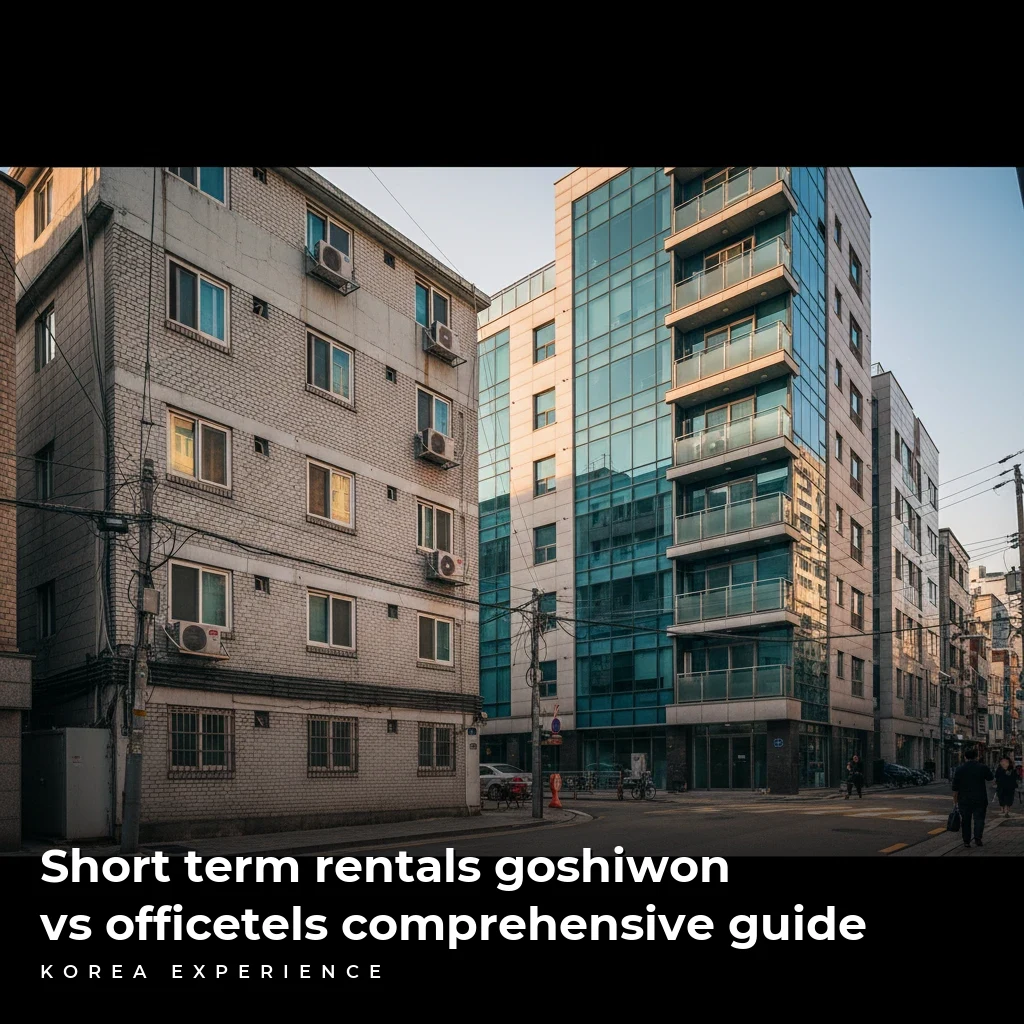
Compare Goshiwons and Officetels for short-term stays in Korea. We analyze costs, comfort, and contracts to help you choose the best housing option.
Compare medical tourism in Busan vs Seoul for 2026. Discover price differences, clinic quality, recovery spots, and pros/cons for your procedure.
A complete guide to same-day medical treatments in Seoul. We analyze safety, costs (saving up to 40%), and efficiency for travelers in 2026.

Compare Korean gel vs cream moisturizers. Find the perfect formula for Seoul's 80% summer humidity or dry winters. Prices from ₩15,000.
Complete 2026 guide to recovery hotels in Seoul. Compare prices (₩100k-500k/night), find nursing services, and book the perfect aftercare stay.
Compare costs, recovery timelines, and longevity of fat grafting vs fillers in Seoul. Find out which facial volume treatment fits your needs and budget.