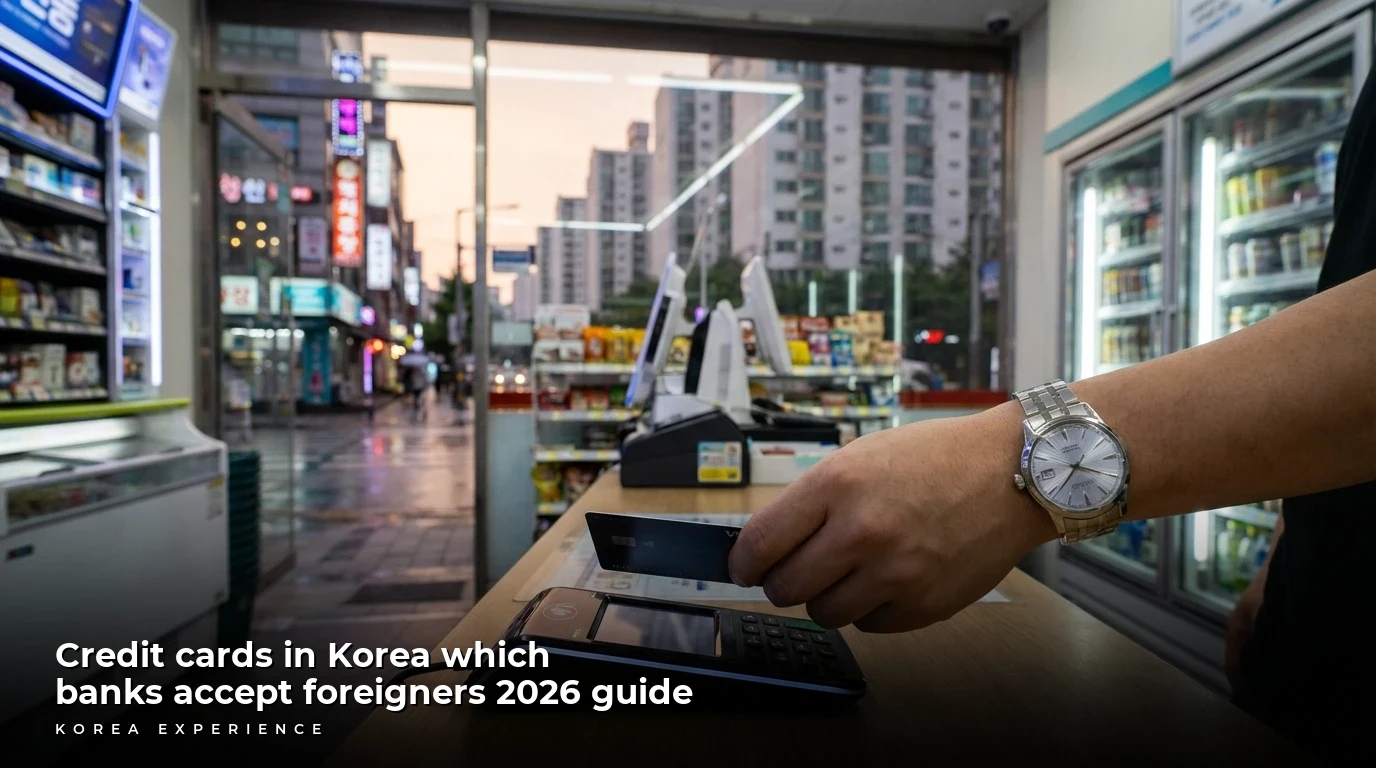
Credit Cards in Korea Which Banks Accept Foreigners
Navigating credit cards in Korea as a foreigner can be challenging. This guide covers banks, eligibility, application tips, and essential information to secure your card.
Unlocking Financial Convenience: Your Guide to Credit Cards in Korea for Foreigners
Korea, with its hyper-efficient public transportation, vibrant cities, and thriving digital economy, is a truly convenient place to live and travel. From seamless online shopping to paying for a quick coffee at a local cafe, credit cards are an indispensable tool for daily life. While debit cards are widely accepted, a credit card in Korea offers an extra layer of financial flexibility, security, and often, attractive rewards. However, for international travelers and expatriates, the process of obtaining a credit card in Korea can seem daunting, riddled with unfamiliar requirements and financial jargon.
The good news is that it’s entirely possible for foreigners to secure a credit card from a Korean bank. This comprehensive guide is designed to demystify the process, providing you with practical insights, step-by-step instructions, and insider tips to navigate the financial landscape successfully. Whether you’re a long-term resident, a student, or a professional on assignment, understanding the system is your first step towards financial freedom here. You'll learn about the primary eligibility criteria, discover which banks are most accommodating to foreigners, and get practical advice on how to maximize your chances of approval. Let's dive in and unlock the convenience of Korean credit cards together.
Understanding Credit Card Eligibility for Foreigners in Korea
Before you even think about stepping into a bank branch, it's crucial to understand the fundamental eligibility criteria for foreigners applying for a credit card in Korea. Korean banks, like financial institutions worldwide, prioritize stability and reliability. For foreign applicants, this often translates into proving a consistent income and a secure legal status in the country.
Key Requirements for Foreigners
The cornerstone of any credit card application for a foreigner in Korea is your legal residency status and your ability to prove stable ties to the country.
- Alien Registration Card (ARC): This is non-negotiable. Your Alien Registration Card (ARC), or your Foreigner Registration Card, serves as your primary identification and proof of legal residency in Korea. It contains vital information like your visa type, residency period, and address. Without a valid ARC, obtaining a credit card is virtually impossible. Ensure your ARC is valid for a sufficient period, usually at least six months, to cover the bank’s typical processing and card validity periods.
- Stable Income: Banks need assurance that you can repay your debts. This means demonstrating a stable and verifiable source of income. This could be your salary from a local employer, regular remittances, or a scholarship. The longer you have been employed or receiving stable income in Korea, the better your chances.
- Duration of Stay: While not a strict requirement for all banks, a longer history of residency in Korea generally improves your application. Banks prefer applicants who demonstrate a commitment to staying in the country, as it implies a lower risk of default and sudden departure. Typically, having resided in Korea for at least six months to a year on a long-term visa (such as D-2, D-4, E-2, E-7, F-2, F-4, F-5, F-6) is beneficial. Some banks might even require a minimum remaining visa validity period, often around one year.
- Valid Korean Bank Account: You will need a Korean bank account to facilitate repayments and for the bank to assess your financial activity. This account should ideally show a history of regular deposits and transactions, especially your monthly salary.
Income Verification and Documentation
Proving your income is perhaps the most critical step after having your ARC. Banks scrutinize this to determine your creditworthiness and the credit limit they can offer.
- Employment Certificate (재직증명서 - Jaejik Jeungmyeongseo): If you are employed, this document from your employer confirms your employment status, position, and start date.
- Salary Statements (급여명세서 - Geupyeo Myeongseso) or Bank Account Statements: Providing your last three to six months of salary statements or bank account transaction history showing regular salary deposits is essential.
- Income Tax Certificates (소득금액증명원 - Sodeuk Geumaek Jeungmyeongwon): This official document, obtainable from the National Tax Service (NTS) website or a local tax office, details your annual income. Banks highly value this as definitive proof of your earnings. It's often the most critical document for income verification. You will typically need to have filed at least one annual tax return in Korea to obtain this, which points back to the importance of having worked in Korea for at least a year.
- Proof of Scholarship/Allowance: For students, a letter from your university or scholarship provider detailing your monthly allowance can serve as income proof. However, obtaining a full credit card as a student without additional income might be more challenging, often leading to debit cards with credit card functions instead.
The Nuance of Credit History
Unlike countries such as the United States, your international credit history generally does not transfer to Korea. This means that if you're new to the country, you effectively have no credit history from the perspective of Korean banks, regardless of your excellent standing abroad.
- Building Local Credit: For new arrivals, building a local credit history takes time. This typically starts with using debit cards, paying utility bills on time, and responsibly managing any loans (e.g., phone contract installments). Showing consistent financial activity through a Korean bank account is key.
- Hybrid Cards and Debit Cards with Credit Functions: Some banks offer hybrid cards or debit cards with a small credit limit (usually for minor purchases or public transport). These can be easier to obtain initially and help you begin building a positive financial relationship with the bank.
- Secured Credit Cards: While less common for foreigners in Korea, a secured credit card requires you to deposit collateral, which then becomes your credit limit. This can be an option if traditional credit cards are out of reach.
Understanding these requirements is your first step. Gathering the correct documentation will significantly smooth out your application process.
Top Banks for Foreigner Credit Card Applications
While many Korean banks offer credit card services, some have more experience and established procedures for dealing with foreign residents. Choosing the right bank can significantly impact your application experience. Here are some of the most foreigner-friendly banks in Korea:
Shinhan Bank (신한은행)
Shinhan Bank is often cited as one of the most accommodating banks for expatriates. They have dedicated branches and staff that are more accustomed to handling foreign applications, often with English-speaking services available.
- Key Features for Foreigners:
- Strong international division, often with English service available at larger branches.
- A reputation for being relatively flexible with income requirements compared to some other banks.
- Offers various credit cards, including those specifically designed with travel or foreign remittance benefits in mind.
- Excellent mobile banking app with English support.
- Application Tips: Inquire about their "Global Credit Card" or cards aimed at residents. They also offer debit cards with a small credit limit which can be a good starting point.
Kookmin Bank (KB국민은행)
Kookmin Bank, often referred to as KB, is the largest bank in Korea by asset value and has the most extensive branch network. Its widespread presence makes it a convenient choice for many.
- Key Features for Foreigners:
- Extensive network means you're likely to find a branch near you, even in smaller cities.
- Generally professional and efficient service.
- Offers a broad range of credit cards catering to different lifestyles and spending habits.
- Their mobile banking app (KB Star Banking) also supports English.
- Application Tips: While slightly stricter on income verification, their vast network means more experience dealing with diverse customer profiles. Having a long-standing relationship with KB (e.g., maintaining a salary account there for a year) can be beneficial.
Woori Bank (우리은행)
Woori Bank has a strong focus on international business and expatriate services. They often have dedicated staff or resources for foreign residents, particularly in major expat hubs.
- Key Features for Foreigners:
- Known for being very welcoming to foreigners and providing good customer service.
- Often have well-trained staff capable of assisting in English.
- May offer specific products or services tailored to international residents.
- Application Tips: Woori Bank is a strong contender, especially if you prioritize good English support during your application. Like other banks, demonstrating a stable income and residence duration will be key.
Hana Bank (하나은행)
Hana Bank, which merged with Korea Exchange Bank (KEB) years ago, inherited a strong legacy in foreign exchange and international services. This makes them particularly adept at handling the financial needs of foreign residents.
- Key Features for Foreigners:
- Historically strong in foreign exchange, making them experienced with international customers.
- Often provides competitive foreign transaction services and potentially good options for international remittances.
- Generally offers comprehensive banking solutions for expats.
- Application Tips: Hana Bank can be a good choice, especially if you frequently deal with international transfers or need specialized foreign currency services. Ensure you inquire about their credit card offerings specifically for foreigners.
Bank Comparison for Foreigners
Here’s a comparative look at some of the top banks for foreign credit card applications, based on common foreigner experiences:
| Feature | Shinhan Bank | Kookmin Bank (KB) | Woori Bank | Hana Bank |
|---|---|---|---|---|
| Ease of Application for Foreigners | High – often has dedicated expat services | Medium-High – extensive network, experienced | High – strong focus on international customers | High – historically strong with foreign residents |
| Required Income (General) | Stable employment, minimum income (e.g., ₩20M+ annually) | Stable employment, minimum income (e.g., ₩20M+ annually) | Stable employment, minimum income (e.g., ₩20M+ annually) | Stable employment, minimum income (e.g., ₩20M+ annually) |
| English Support | Generally good, especially at larger branches | Decent, varies by branch | Often very good, especially in urban centers | Good, especially at international branches |
| Mobile Banking App | Excellent, full English support | Excellent, full English support | Good, with English options | Good, with English options |
| Likely Required Residency | 6 months to 1 year+ on long-term visa | 1 year+ on long-term visa | 6 months to 1 year+ on long-term visa | 6 months to 1 year+ on long-term visa |
| Key Advantage | Expat-focused products & services | Widest branch network | Strong customer service for foreigners | Excellent for international transactions |
Note: Income requirements are general estimates and can vary based on card type, individual financial standing, and bank policy changes. Always confirm with the bank directly.
The Application Process: Step-by-Step Guide
Applying for a credit card in Korea can be a structured process, and being well-prepared is key. Follow these steps to maximize your chances of a smooth application.
Pre-application Checklist: Gather Your Documents
Before you even leave your home, ensure you have all the necessary paperwork. This saves time and prevents multiple trips to the bank.
- Alien Registration Card (ARC): Original and a photocopy. Ensure it's valid for at least six months, preferably a year.
- Passport: Original and a photocopy.
- Proof of Income:
- Income Tax Certificates (소득금액증명원 - Sodeuk Geumaek Jeungmyeongwon): This is often the most critical. You can obtain this from your local tax office or via the Home Tax website if you have an accredited digital certificate. Ensure it shows income from at least the previous calendar year.
- Employment Certificate (재직증명서 - Jaejik Jeungmyeongseo): From your employer, stating your position, employment period, and often your salary.
- Bank Account Statements: Your main Korean bank account statements showing at least the last 3-6 months of salary deposits.
- Monthly Salary Slip: Some banks might ask for recent pay stubs.
- Proof of Address: While your ARC has your address, some banks might ask for additional proof, like a utility bill (electricity, gas, phone) in your name.
- Korean Bank Account Details: Your main bank account number for linking purposes and automatic deductions.
- Contact Information: Korean phone number and email address.
Insider Tip: Always bring originals AND photocopies of all documents. The bank may keep photocopies for their records.
Visiting the Bank: In-Person Application
Unlike many Western countries where online applications are common, most credit card applications for foreigners in Korea still require an in-person visit.
- Choose Your Branch Wisely: While any branch of your chosen bank might process applications, larger branches in major cities (e.g., Gangnam, Myeongdong, Itaewon in Seoul) or those known for international services are often more equipped with English-speaking staff. It’s a good idea to call ahead to inquire about English support or to book an appointment.
- Explain Your Purpose Clearly: Upon arrival, clearly state that you wish to apply for a "신용카드" (sinyongkadeu - credit card). If you have a specific card in mind (e.g., one with travel rewards), mention it.
- Consult with a Representative: A bank representative will guide you through the process. Be prepared for questions about your income, employment, duration of stay, and financial habits. This is where having your documents ready will shine.
- Fill Out the Application Forms: You'll be given forms to complete. These are usually in Korean, but the staff will assist you. If you're not confident, bringing a Korean-speaking friend can be invaluable.
- Review Terms and Conditions: Pay close attention to the annual fees, interest rates, credit limit, and any specific terms for foreigners. Don't hesitate to ask for clarification.
The Waiting Period and Approval
Once your application is submitted, it typically goes through an internal review process.
- Processing Time: This can vary from a few days to a couple of weeks, depending on the bank and the complexity of your application. The bank might call your employer to verify your employment.
- Credit Check: The bank will check your credit history with Korean credit bureaus (NICE Information & Credit Evaluation, Korea Credit Bureau). If you're a new resident, the lack of extensive history might influence their decision or the initial credit limit.
- Approval or Rejection:
- Approval: If approved, you will usually receive an SMS notification, and your card will be mailed to your registered address within a few business days.
- Rejection: If rejected, the bank might provide a reason, such as insufficient income, short residency, or lack of credit history. Don't be discouraged; use it as feedback to improve your next application.
Types of Credit Cards Available to Foreigners
Korean banks offer a diverse range of credit cards, each with unique features and benefits. While the most exclusive cards might be harder to obtain initially, several options are accessible to foreigners.
Standard Credit Cards (Visa, Mastercard, JCB, American Express)
These are the most common type of credit cards, widely accepted both domestically and internationally. Most major Korean banks issue cards under these international networks.
- Features: Come with various perks like cashback, travel points, discounts at specific merchants, or public transport card functionality.
- Eligibility for Foreigners: Requires stable income, a good length of residency, and usually at least one year of income tax filing in Korea. The specific card benefits and associated income requirements can vary significantly.
- Benefits: Global acceptance, robust reward programs, and often higher credit limits compared to hybrid cards.
Hybrid Cards (Debit + Credit Functionality)
These are an excellent stepping stone for foreigners who might not yet meet the full criteria for a standard credit card. They operate primarily as a debit card but have a small, pre-approved credit limit for specific transactions.
- Features:
- Debit Function: Funds are immediately drawn from your linked bank account.
- Credit Function: A small credit limit (e.g., ₩100,000 to ₩300,000, approximately $75-$225 USD) is available for specific uses, most commonly for public transport (후불교통카드 - hubul gyotongkadeu) or small purchases.
- Easier Approval: Due to the limited credit exposure, these cards are generally easier for foreigners to obtain, especially those with shorter residency or lower income verification.
- Eligibility for Foreigners: Often requires just a stable bank account with regular deposits. Less stringent income requirements.
- Benefits: Helps build local credit history, provides convenience for public transport and small emergency purchases, and bridge the gap until you qualify for a full credit card.
Pre-paid Cards / Debit Cards (Alternatives)
While not credit cards, these are important to mention as they serve as excellent alternatives and tools for financial management in Korea, especially for new arrivals.
- Pre-paid Cards: You load money onto these cards beforehand. They are useful for budgeting and are widely accepted like regular credit/debit cards. They don't require any credit check.
- Debit Cards: Directly linked to your bank account, funds are debited instantly. They are very common in Korea and accepted almost everywhere.
- Eligibility for Foreigners: Simply requires an active Korean bank account.
- Benefits: No credit check, easy to obtain, widely accepted, good for managing finances.
Credit Card Types Comparison
| Card Type | Eligibility for Foreigners | Primary Function | Key Benefit for Foreigners | Drawbacks |
|---|---|---|---|---|
| Standard Credit Card | Stable employment (1yr+), tax history, good residency | Full credit line | Rewards, higher limits, global acceptance | Hardest to obtain for new foreigners |
| Hybrid Card (Debit+Credit) | Stable bank account, some income history | Debit with small credit limit | Builds credit, public transport convenience | Very low credit limit, limited features |
| Pre-paid Card / Debit Card | Valid Korean bank account | Uses own funds | Easy to obtain, no credit check, budget control | No credit building, no emergency credit |
For many foreigners new to Korea, the path often begins with a debit card, possibly transitioning to a hybrid card, and eventually aiming for a standard credit card once a solid financial footprint has been established.
Maximizing Your Chances and Overcoming Challenges
Even with all the right documents, applying for a credit card as a foreigner in Korea can sometimes be a test of patience. Here are some strategies to improve your approval odds and navigate common hurdles.
Building Your Korean Credit History
Since your international credit history doesn't transfer, establishing a positive local financial record is paramount.
- Consistent Bank Activity: Maintain a main bank account where your salary is deposited regularly. Avoid frequent overdrafts. Show consistent savings, even small amounts.
- On-Time Payments: Always pay your utility bills (electricity, gas, internet, phone) and any other contractual obligations on time. While these might not directly build a "credit score" in the same way, they demonstrate financial responsibility.
- Utilize Hybrid Cards: If you manage to get a debit card with a small credit limit, use it responsibly and pay off the credit portion in full and on time. This is a direct way to show good credit behavior to the issuing bank.
- Installment Purchases: If you purchase a high-value item like a phone on an installment plan (through a Korean telecom company), make sure all payments are made punctually. This can contribute positively to your credit bureau records.
Leveraging Your Main Bank Relationship
Your relationship with your primary bank in Korea can be a powerful asset.
- Apply Where You Bank: It's almost always easier to get a credit card from the bank where you hold your main checking/savings account and where your salary is deposited. They already have a history of your financial activity and income.
- Long-Term Customer: The longer you've been a customer with a particular bank, the more comfortable they will be with your financial stability.
- Be Proactive: If you have a good relationship manager, discuss your interest in a credit card with them. They might be able to offer specific advice or products tailored to your situation.
Dealing with Rejection
It's common for foreign residents to face initial credit card application rejections, especially if they are relatively new to Korea. Don't let it discourage you.
- Ask for the Reason: Politely ask the bank representative why your application was rejected. This feedback is crucial for addressing shortcomings in future applications. Common reasons include insufficient income, short residency, or lack of credit history.
- Address the Issues:
- Insufficient Income/Residency: Wait a few more months to build up more income history or residency time.
- Lack of Credit History: Focus on building good financial habits through debit cards, hybrid cards, and on-time bill payments.
- Try Another Bank: While having a main bank is helpful, some banks might have different internal policies or a slightly higher risk tolerance. After getting feedback, consider trying another foreigner-friendly bank mentioned earlier.
- Consider Alternatives: If a full credit card isn't immediately possible, look into hybrid cards or even increasing the limit on your existing debit card for public transport.
The Importance of Language Support
Navigating financial institutions in a foreign country can be challenging, especially with complex terms and policies.
- Bring a Korean Speaker: If your Korean is not fluent, bringing a Korean-speaking friend, colleague, or even a paid translator can make a world of difference. They can help clarify questions, explain documents, and ensure nothing is lost in translation.
- Seek Branches with English Services: As mentioned, many larger branches of major banks in expat-heavy areas offer English-speaking staff. Call ahead to confirm availability.
- Utilize Translation Apps: For quick questions or understanding basic terms, translation apps can be helpful, but they shouldn't replace human assistance for critical financial decisions.
By being persistent, patient, and strategic, you significantly increase your chances of successfully obtaining a credit card in Korea.
Important Considerations and Practical Tips
Getting a credit card is just the beginning. Understanding how the Korean credit system works and managing your card responsibly are equally important.
Understanding Korean Credit Scores (NICE and KCB)
Korea has two main personal credit bureaus: NICE Information & Credit Evaluation (NICE) and Korea Credit Bureau (KCB). These agencies compile your financial data to generate a credit score, which banks use to assess your creditworthiness.
- How Scores are Built: Your credit score is influenced by factors such as timely repayment of loans, credit card usage, bank account activity, and even utility bill payments.
- Accessing Your Score: You can check your own credit score through services like NICE or KCB's websites (often requiring an accredited digital certificate) or through certain banking apps. While you likely won't have a robust score as a new arrival, it's good to be aware of the system.
- Building a Good Score: Consistently paying bills on time, responsibly using any credit products (even small ones), and maintaining stable financial activity will gradually build a positive credit history.
Annual Fees and Interest Rates
Like credit cards worldwide, Korean credit cards come with associated costs.
- Annual Fees (연회비 - yeonhoebi): Most credit cards in Korea have annual fees, which can range from a few thousand won to hundreds of thousands for premium cards. Inquire about these fees during your application. Sometimes, the fee can be waived for the first year or if you meet certain spending thresholds.
- Interest Rates (할부수수료 - halbussusuryo or 이자율 - ijayul): If you don't pay your balance in full each month, you'll incur interest charges. Korean credit card interest rates can be high, so it's always advisable to pay your statement balance in full to avoid debt. If you opt for installment payments (할부 - halbu), be aware of the associated fees and interest.
Safety and Security
Protecting your credit card information is paramount.
- Online Security: Use strong, unique passwords for online banking and credit card accounts. Be wary of phishing emails or suspicious websites.
- Reporting Lost or Stolen Cards: Immediately contact your bank if your card is lost or stolen. Most banks have a 24/7 hotline for this purpose. Keep the bank's emergency number stored in your phone.
- Monitoring Statements: Regularly check your monthly statements for any unauthorized transactions. Report discrepancies immediately.
- Contact Information Updates: Ensure your bank always has your current contact details (phone number, email, address) so they can reach you for important updates or security alerts.
Korean Terms to Know
Familiarizing yourself with a few key Korean financial terms can greatly assist your interactions with banks.
- Alien Registration Card (외국인등록증 - Oegugin Deungnokjeung): Your essential ID.
- Credit Card (신용카드 - Sinyongkadeu): The main keyword you'll use.
- Debit Card (체크카드 - Chekeukadeu): Often easier to obtain.
- Bank Account (은행 계좌 - Eunhaeng Gyejwa): Your primary account.
- Monthly Salary (월급 - Wolgeup): Your income.
- Annual Income (연봉 - Yeonbong): Your yearly earnings.
- Installment Payment (할부 - Halbu): Paying in parts over time.
- Annual Fee (연회비 - Yeonhoebi): The yearly charge for your card.
- Credit Limit (한도액 - Handoaek): The maximum amount you can spend.
- Won (원 - Won): The currency of Korea (₩).
By keeping these practical tips in mind and being proactive in managing your finances, you can ensure a positive and secure experience with your credit card in Korea.
Frequently Asked Questions (FAQ)
Here are answers to some common questions foreigners have about getting credit cards in Korea.
1. Can I get a credit card without an Alien Registration Card (ARC)?
No, it is not possible to obtain a standard credit card in Korea without a valid Alien Registration Card (ARC). The ARC is the fundamental document proving your legal residency and identity in Korea, which is essential for any financial institution to assess your application. For short-term visitors without an ARC, debit cards, pre-paid cards, or international credit cards are the only options.
2. How long do I need to live in Korea before applying for a credit card?
While there's no strict universal rule, most banks prefer applicants to have resided in Korea for at least 6 months to 1 year on a long-term visa. This duration allows you to establish a stable income history and potentially contribute to tax filings, which banks use for income verification. Some banks might require a minimum remaining visa validity of one year as well.
3. What's the minimum income required for a credit card in Korea?
Minimum income requirements vary significantly by bank and the type of credit card. Generally, you would need to demonstrate a stable annual income of at least 20 million Korean won (₩20,000,000) or more, verifiable through official income tax certificates. For premium cards, this threshold could be much higher. It's best to inquire directly with your chosen bank about their specific requirements.
4. Are there credit cards specifically for foreigners in Korea?
While there aren't many credit cards explicitly marketed "for foreigners" in the way some countries have, some banks, like Shinhan Bank, do offer cards with features that are particularly beneficial for expatriates (e.g., international remittance benefits, specific travel perks). More commonly, banks are simply more accustomed to processing applications from foreigners due to their experience and services for international residents. Hybrid cards (debit with a small credit limit) are often an easier initial step for foreigners.
5. What should I do if my credit card application is rejected?
If your application is rejected, politely ask the bank representative for the reason. Common reasons include insufficient income, short residency period, or a lack of Korean credit history. Use this feedback to improve your situation:
- Wait and Reapply: If it's due to residency or income, wait a few more months to build up more history.
- Build Credit: Focus on establishing a strong financial record by consistently paying bills on time, using debit cards responsibly, and considering hybrid cards to start building local credit.
- Try Another Bank: Some banks might have slightly different criteria. After addressing the issues, consider applying with another foreigner-friendly bank.
Conclusion: Empowering Your Financial Journey in Korea
Navigating the financial landscape as a foreigner in a new country can initially feel overwhelming, but securing a credit card in Korea is an achievable goal with the right approach and preparation. This guide has laid out the essential requirements, highlighted the most accommodating banks, detailed the application process, and provided crucial tips for maximizing your success.
Remember, patience and persistence are your greatest assets. Start by establishing a stable financial presence with a reliable Korean bank, focus on building a positive income and residency history, and gather all necessary documentation meticulously. Don't be discouraged by initial hurdles; each step, from opening a bank account to securing a hybrid card, contributes to building your financial footprint in Korea.
Having a credit card in Korea opens up a world of convenience, allowing you to fully immerse yourself in the cashless culture, enjoy rewards, and manage your finances with greater flexibility. It's not just a payment tool; it's a testament to your integration into Korean society and a key to unlocking a smoother, more convenient daily life. So take these insights, prepare your documents, and embark on your journey towards financial independence in the Land of the Morning Calm. For more tips on living and thriving in Korea, be sure to explore our other guides on topics like opening a bank account, finding housing, or understanding mobile plans.
About the Author
Korea Experience Team
Written by the Korea Experience editorial team - experts in Korean medical tourism, travel, and culture with years of research and firsthand experience.
⚠️ Medical Disclaimer
The information provided on this website is for general informational purposes only and does not constitute medical advice. Always consult with qualified healthcare professionals before making any medical decisions.
Continue Reading
Explore more articles you might find interesting
Navigating your Korea visa extension? Discover the comprehensive guide to both online and in-person methods, ensuring a smooth process.
Learn how to easily register your foreign address change in Korea in 2026, whether online via Hi-Korea or offline at an Immigration Office
Navigate Korea's used car market like a pro in 2026. This guide details K-Car and Encar platforms, helping expats make informed decisions for car ownership.