Understanding Uri We in Korean Culture 2026 Guide
Discover the deep meaning of Uri or We in Korean collectivism. Learn how this cultural concept shapes dining, social life, and travel in Korea for 2026.
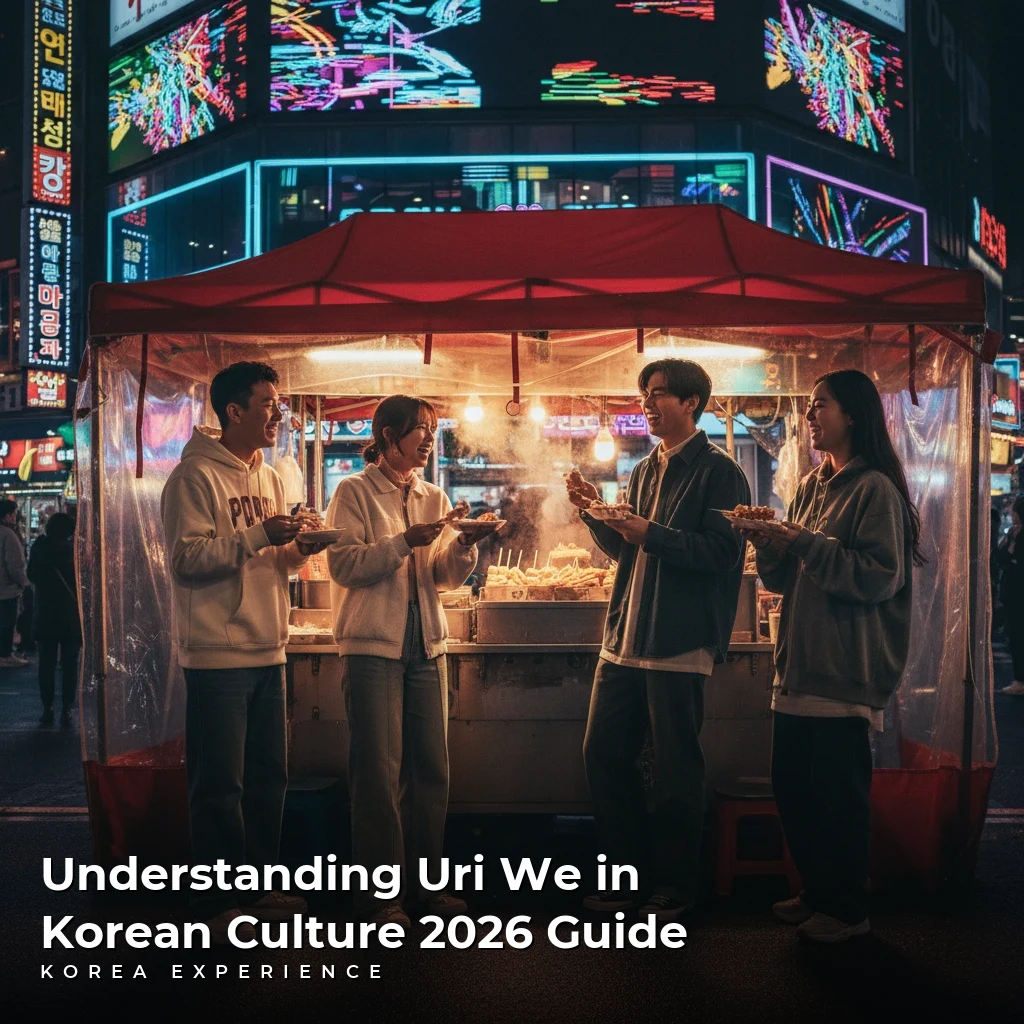
When you land at Incheon International Airport, stepping into a society that moves with a distinct, harmonious rhythm, you are entering the world of Uri (우리). Directly translated as "us" or "we," this single syllable is the bedrock of Korean society. It explains why a Korean husband might refer to his spouse as "our wife" even when speaking to a stranger, or why a solo traveler might feel a sudden, warm inclusion—or a stark exclusion—in a bustling restaurant.
To truly experience Korea in 2026, beyond the neon lights of Myeongdong and the historic silence of Gyeongbokgung, you must understand the invisible threads of collectivism that bind the nation together. It is not just a linguistic quirk; it is a lifestyle that influences everything from how you pay for a ₩5,000 coffee to how you navigate the rush hour subway at 8:00 AM.
Learn more in our comprehensive guide to Gaming culture visiting lol park and PC bang pro centers.
Key Takeaways
- 1Uri defines Korean collectivism, emphasizing the group over the individual in family, business, and society.
- 2Group dining culture is dominant, with shared meals averaging ₩40,000 per person in standard BBQ settings.
- 3Modern 2026 Korea balances traditional We culture with rising solo trends like Honbap (eating alone).
The Concept of Uri: More Than Just Grammar
In the West, the fundamental unit of society is "I." In Korea, it is "We." This concept of Uri stems from centuries of agrarian history and Confucian philosophy, where survival depended on communal effort. In 2026, despite Korea being a high-tech powerhouse where 98% of the population owns a smartphone, this communal DNA remains active.
For more details, check out our guide on K-Drama Cafe Culture Scene Filming Locations Guide.
When Koreans use Uri, they are drawing a circle of intimacy. Inside the circle is warmth, loyalty, and boundless sharing. Outside the circle, interactions can feel formal or even indifferent. For a traveler, the goal is to step inside that circle.
For more details, check out our guide on K-Pop album unboxing culture photocards and inclusions guide.
📊 Demographics & Density
The physical reality of Korea reinforces this mindset. With over 51 million people living in a country where 70% of the land is mountainous, the population density in cities like Seoul is incredibly high (approx. 16,000 people per square kilometer). You literally cannot exist without acknowledging the person next to you.
Learn more in our comprehensive guide to K-Pop fan cafe culture daum vs weverse guide for global fans.
Uri on the Table: The Shared Meal
The most tangible manifestation of Uri is found in dining. Unlike Western meals where you order "your" pasta or "your" steak, Korean dining is an exercise in communal ownership.
When you sit down for Dakgalbi (spicy chicken stir-fry) or Samgyeopsal (pork belly), there is one central heat source. The food belongs to the table, not the individual. In 2026, the average cost for a high-quality pork belly dinner in Seoul is roughly ₩19,000 per 180g serving, and a typical group of four will consume about 5 to 6 servings plus sides, totaling around 120,000 to ₩150,000.
Pro Tip
When dining in a group, never pour your own drink. In the spirit of Uri, you must fill your neighbor's glass when it is empty, and they will return the favor. This typically happens every 15-20 minutes during a lively dinner.
The Evolution of Hygiene
Historically, Uri meant everyone's spoon dipped into the same stew pot (Jjigae). However, post-2020 global health events have shifted this. In 2026, while the spirit of sharing remains, the practice has modernized. You will almost always be provided with a ladle and individual plates.
📖 How to Eat Korean BBQ Like a Local
Step 1: The Setup
Designate one person (usually the youngest or the host) to manage the grill.
Step 2: The Wrap (Ssam)
Take a lettuce leaf, add meat, garlic, ssamjang sauce, and kimchi.
Step 3: The Finish
Order cold noodles (Naengmyeon, ~₩11,000) or fried rice to finish the meal.
Nunchi: The Radar of Collectivism
If Uri is the engine of Korean society, Nunchi is the steering wheel. Often translated as "eye-measure," Nunchi is the art of sensing the mood, reading the room, and understanding what others are thinking without them saying a word.
To maintain the harmony of Uri, one must have fast Nunchi. For example, if you are in a quiet cafe in Seongsu-dong (where an Americano costs about ₩6,000) and everyone is whispering, loud conversation shows a lack of Nunchi. It disrupts the collective peace.
"Travelers often mistake the lack of 'excuse me' in crowded subways as rudeness. It's not. In the dense collective of a rush hour train, we accept physical contact as inevitable. We move as a fluid mass. Apologizing for every bump would actually slow the collective down."
The Economics of Us: Who Pays?
In strict individualist cultures, "Going Dutch" is the norm. In the Uri culture of Korea, splitting the bill down to the last won is often seen as cold or calculating, though this is changing among the younger generation (Gen Z).
Traditionally, the senior person or the inviter pays for the whole group. If a manager takes a team of six out for lunch (approx. ₩12,000 per person), the manager pays the full ₩72,000. The implicit understanding is that the junior members will pay for coffee afterward (approx. ₩30,000 total).
However, 2026 has seen the rise of "Dutch Pay" apps integrated into KakaoPay and Naver Pay, making it easier to split bills without the social awkwardness.
💵 Dining Cost Comparison (Group vs. Solo)
Includes meat, stew, alcohol, and sides.
Single serving meal (Honbap) at a franchise.
The Paradox: In-Group vs. Out-Group
One of the most confusing aspects for travelers is the duality of kindness. Within the Uri boundary (family, friends, colleagues), Koreans are incredibly self-sacrificing. A friend might drive 40 kilometers across Seoul traffic (taking over 90 minutes) just to deliver a gift.
However, to strangers outside the Uri boundary, interactions can seem transactional or pushy. This is most evident in public transit. When the subway doors open at Gangnam Station during the 6:30 PM rush, the "We" narrows down to "My survival."
📋 Transport Realities
This isn't malice; it's a different form of efficiency. Understanding this helps you not take a shove personally. The moment you ask that same "pusher" for directions, you often become a temporary member of their Uri, and they might walk you 500 meters to your destination to ensure you don't get lost.
Modern Shifts: Honbap and Individualism in 2026
Is Uri disappearing? Not exactly, but it is fragmenting. By 2026, single-person households in Korea have exceeded 35% of the population. This has given rise to Honbap (eating alone) and Honsul (drinking alone).
Restaurants that once turned away solo diners now offer single-seat kiosks. You can find premium solo dining spots in areas like Hongdae where a solo steak meal costs roughly ₩25,000. This is a reaction to the intense pressure of maintaining Uri harmony, which can be exhausting. Young Koreans sometimes need a break from the "We" to recharge the "I."
Collectivism for Travelers
- ✓Incredible hospitality once you make a connection.
- ✓Shared meals allow you to try more dishes.
- ✓Safety is high due to social responsibility.
- ✗Solo dining can still be limited in traditional places.
- ✗Navigating hierarchy (age/status) can be tricky.
- ✗Feeling excluded if you don't speak the language.
Uri in Business: The Hoesik Culture
If you are visiting Korea for business, you will encounter Hoesik (company dinner). This is Uri enforcement in a corporate setting. It is not just dinner; it is an extension of work where bonds are forged over Soju.
A typical Hoesik starts at 7:00 PM and can last until midnight, moving from a restaurant to a bar, and perhaps to a Karaoke (Noraebang, costing roughly ₩30,000 per hour). While the "compulsory" nature of these gatherings has softened by 2026 due to labor laws capping work hours (the 52-hour workweek), participating is still the fastest way to gain trust.
Business Socializing: West vs. Korea
| Feature | Western Style | Korean Uri Style |
|---|---|---|
| Purpose | Networking/Relaxation | Team Building/Solidarity |
| Who Pays | Split or Senior | Highest Ranking Person |
| Alcohol | Optional | Central Ritual (but pressure is decreasing) |
Practical Ways to embrace 'Uri' as a Tourist
You don't need to be Korean to participate in Uri. Small gestures go a long way in showing you understand the culture.
- Share your snacks: If you are hiking Bukhansan Mountain (entry is free, but gear rentals cost ~₩30,000), offer a piece of fruit or chocolate to fellow hikers. It instantly builds a bridge.
- Use both hands: When paying for your ₩4,500 subway card reload or handing a credit card to a cashier, use two hands. It signifies respect and acknowledges the relationship between giver and receiver.
- Respect the queue: In a collectivist society, cutting the line is a sin against the group. Whether waiting for the bus or a famous bagel shop (where wait times can hit 2 hours), patience is a virtue.
Tosokchon Samgyetang(토속촌 삼계탕)
Conclusion: The Warmth of We
Understanding Uri transforms your trip from a sightseeing tour into a cultural immersion. It explains the aggression on the subway and the tenderness at the dinner table. It explains why a grandmother might grab your hand to help you up a step, or why a shopkeeper gives you extra freebies ("Service") just because you smiled.
In 2026, Korea is a futuristic nation running on ancient software. The buildings are glass and steel, but the heart of the country is still built on connection. By respecting the "We," you ensure that your memories of Korea are not just of places seen, but of moments shared.
❓ Frequently Asked Questions About Korean Collectivism
Have more questions?Contact us →
About the Author
Korea Experience Team
Written by the Korea Experience editorial team - experts in Korean medical tourism, travel, and culture with years of research and firsthand experience.
Explore more in K-Culture
K-Pop, K-Drama, traditional arts, and modern culture — dive deep into the cultural phenomena that have captivated the world.
Browse All K-Culture ArticlesContinue Reading
Explore more articles you might find interesting
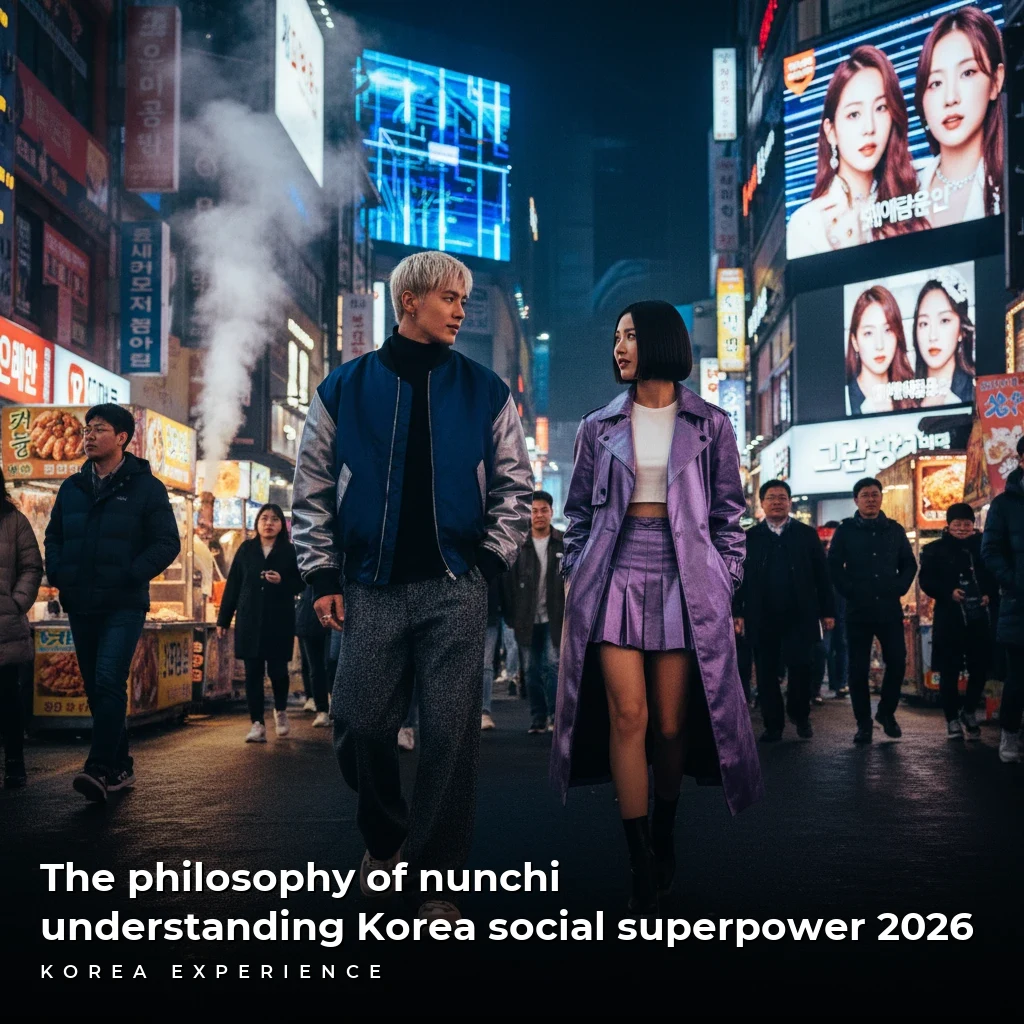
Master the art of Nunchi in 2026. Learn how this Korean social superpower unlocks smoother travel, business success, and deeper cultural connections.
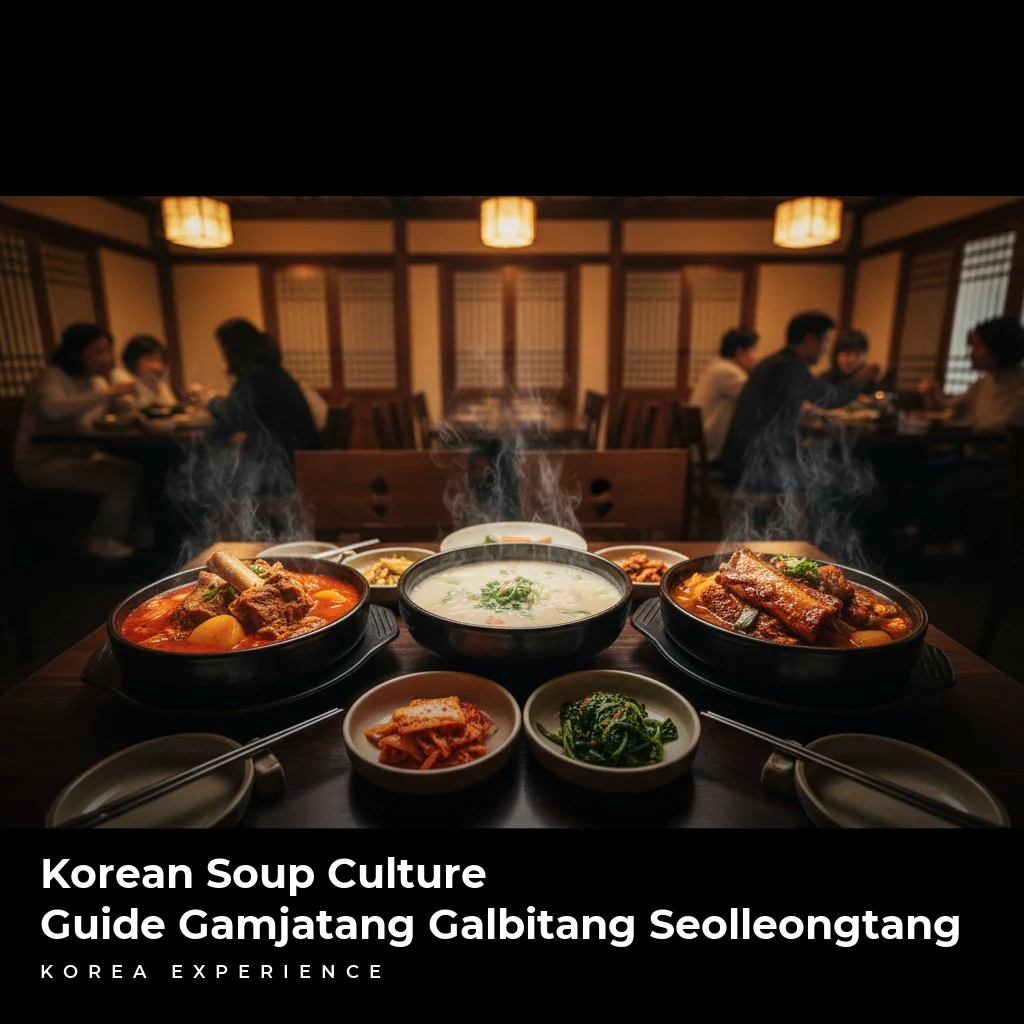
Discover the heart of Korean dining with our deep dive into Gamjatang, Galbitang, and Seolleongtang. Learn where to eat, how to order, and local etiquette.
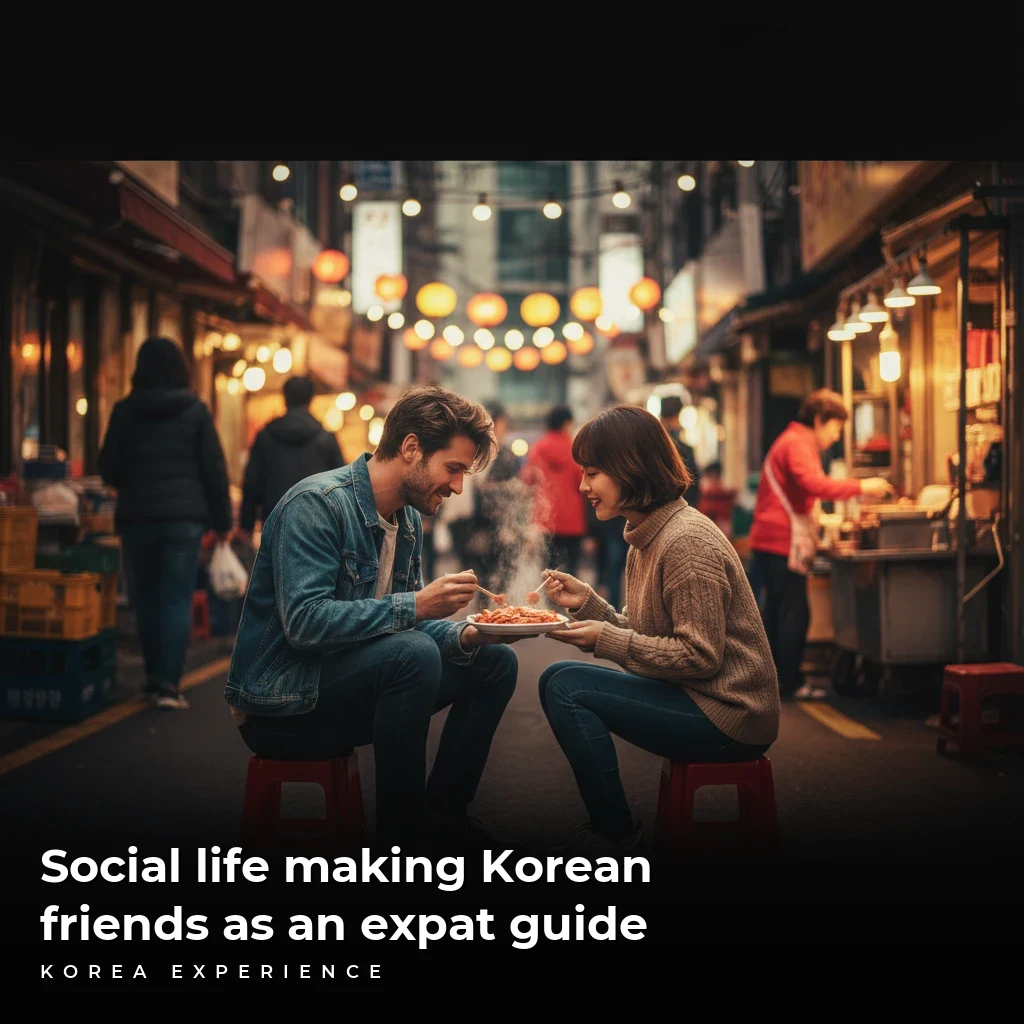
The ultimate guide to building a social circle in Korea. Discover where to meet locals, cultural etiquette, and the best apps for making Korean friends.
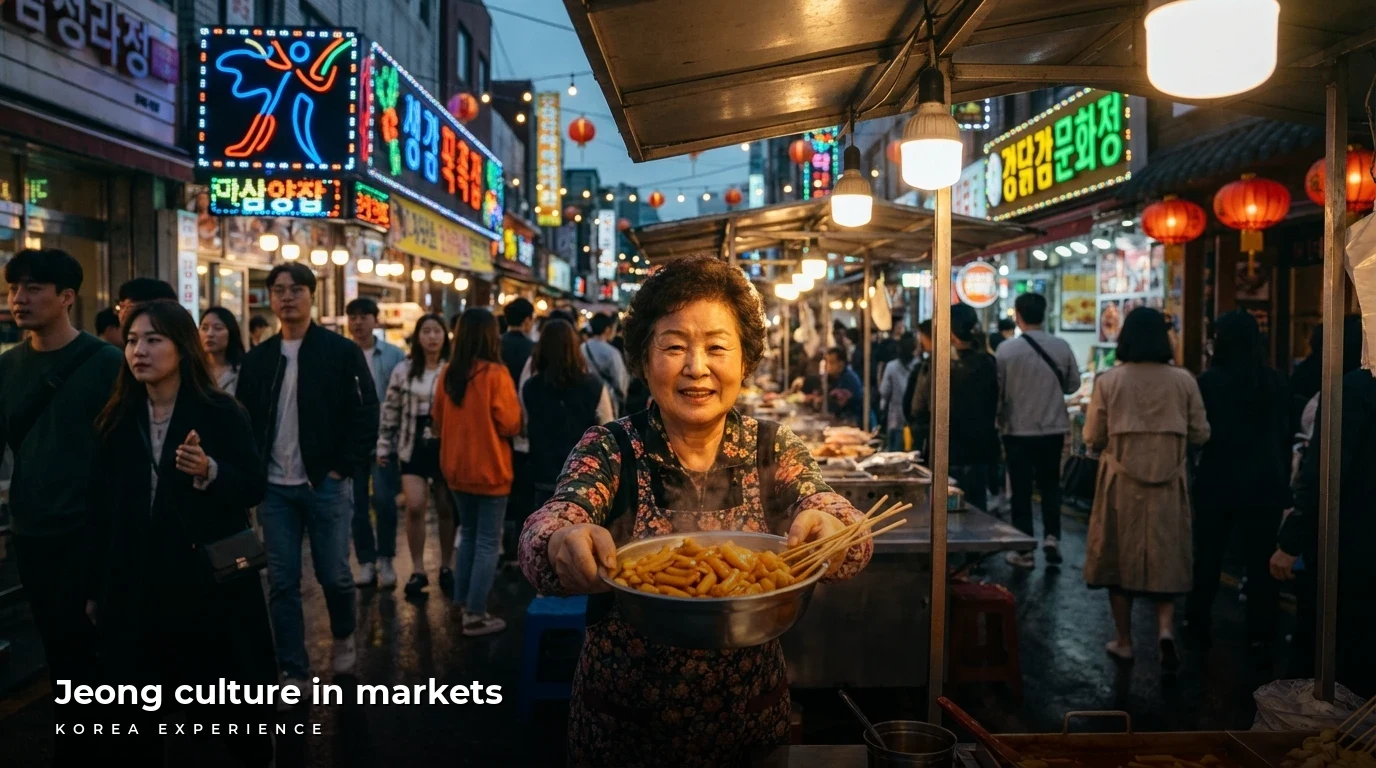
Discover why market vendors give free food. Learn how to navigate 24000 stalls in 2026 using WOWPASS and experience the 16 percent sales boom firsthand.
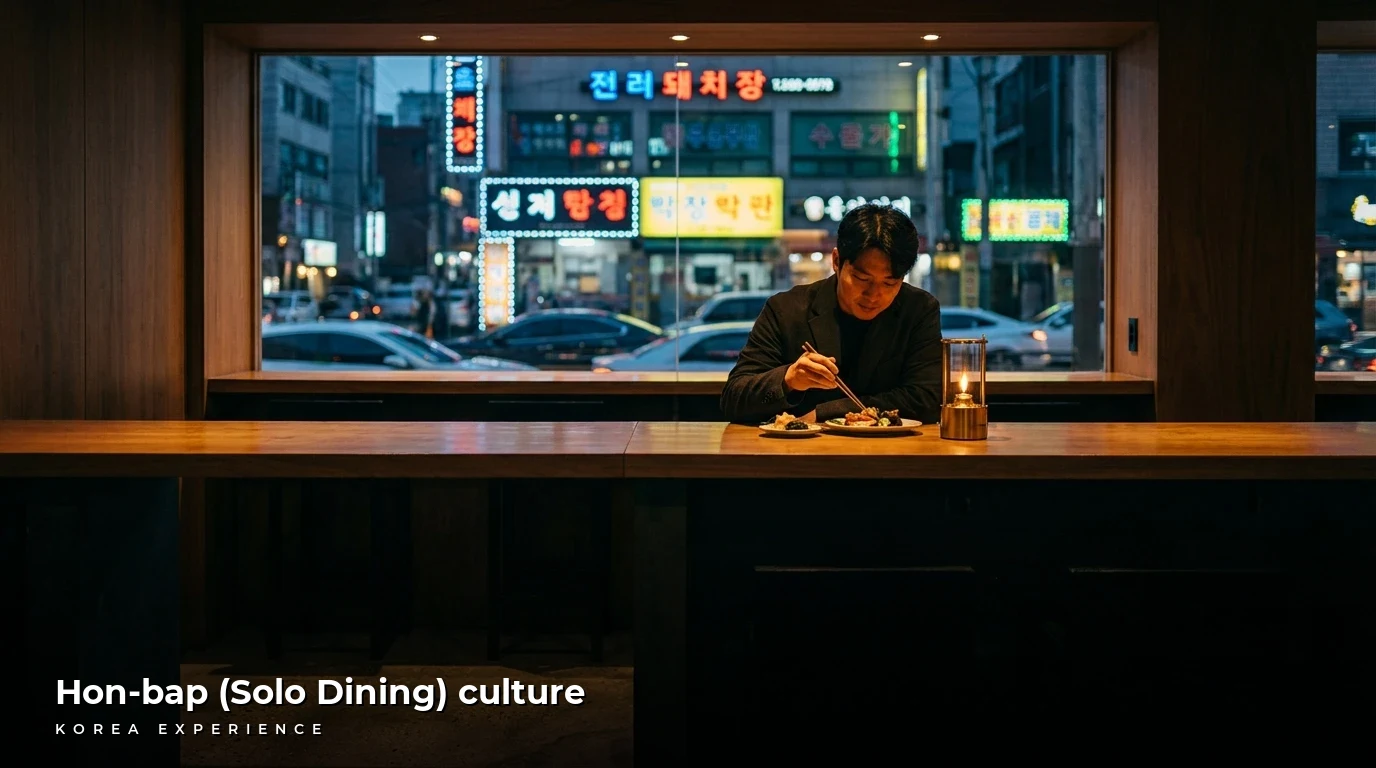
Discover the 2026 solo dining revolution in Seoul where 36.1% of households are single. Learn to navigate BBQ joints and avoid lunchflation prices.
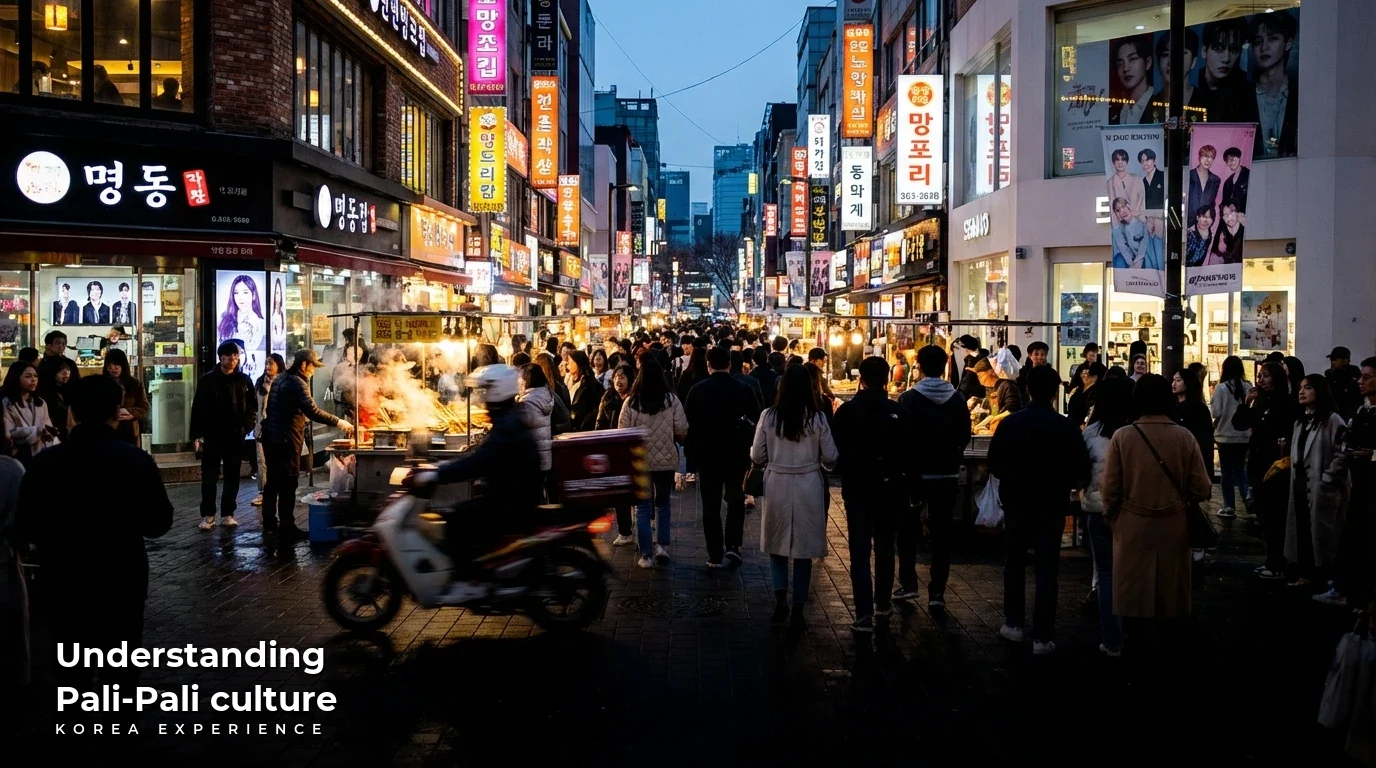
Discover why Seoul delivers groceries in 15 minutes and internet speeds hit 10Gbps. A guide to the speed-obsessed culture defining modern Korea.