The sound of Korea pansori and samulnori performance guide 2026
Discover the soul of Korean music. A complete 2026 guide to Pansori and Samulnori performances, venues, tickets, and etiquette for travelers.
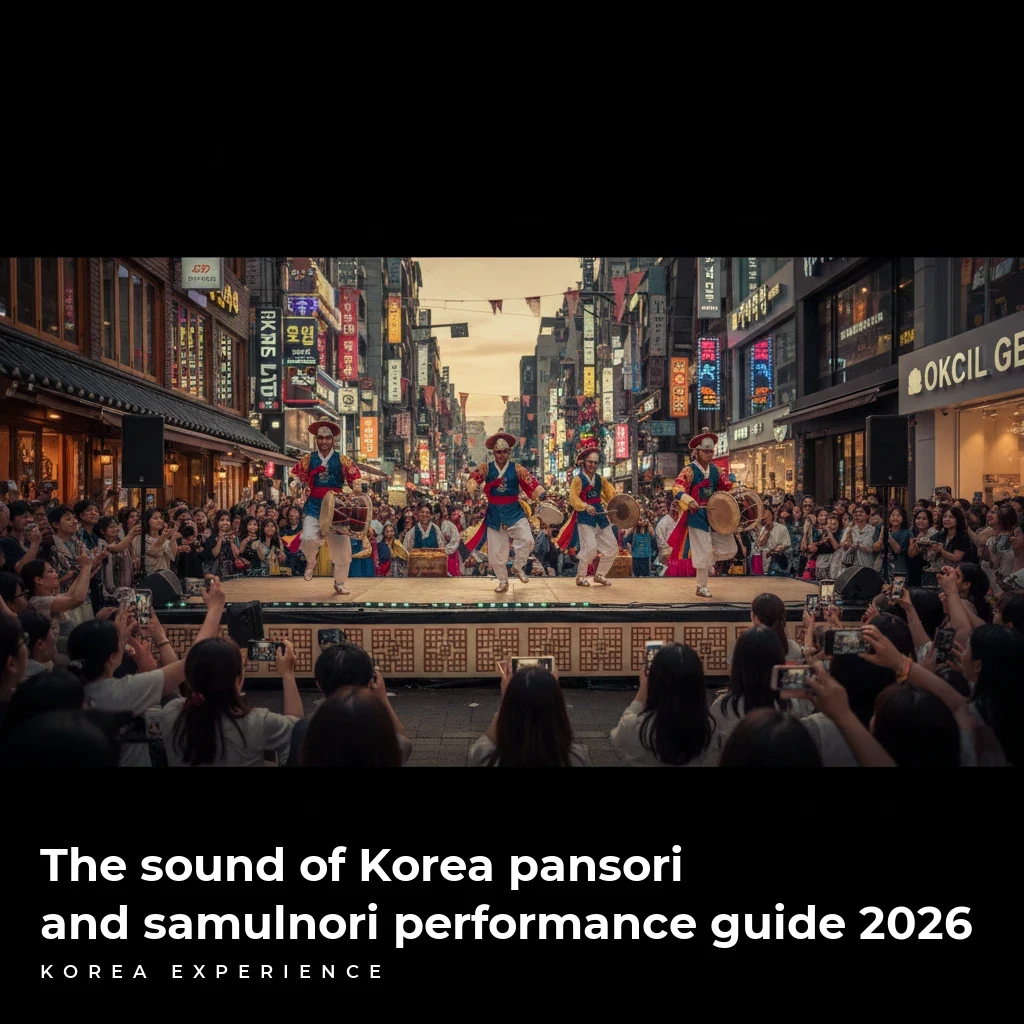
When you close your eyes and listen to the heartbeat of Korea, you don't hear K-Pop synthesizers; you hear the thunderous resonance of a drum and the raw, guttural wail of a storyteller. The sound of Korea is defined by two distinct yet interconnected traditions: Pansori (musical storytelling) and Samulnori (percussion quartet).
You might also enjoy our article about K-Pop Busking Hongdae Street Performance Schedule Guide.
Learn more in our comprehensive guide to Korean traditional music and performance guide.
For more details, check out our guide on Korean Traditional Music Gugak Performance Venues Guide.
You might also enjoy our article about Pansori and traditional storytelling performances guide.
For travelers visiting in 2026, witnessing a live performance is not just a cultural checkbox—it is a visceral entry point into the Korean spirit, known locally as Han and Heung. Whether you are sitting in a grand theater in Seoul or an open-air pavilion in Jeonju, the energy is palpable. However, navigating the traditional music scene can be daunting for non-Korean speakers. This guide breaks down exactly where to go, what to listen for, and how to book the best seats in the house.
Key Takeaways
- 1Pansori is UNESCO-listed epic storytelling; Samulnori is high-energy percussion.
- 2The National Gugak Center in Seoul offers the most authentic performances from ₩20,000.
- 3Book Saturday performances at 3:00 PM for the distinct 'Saturday Performance of Korean Music' series.
Understanding the Dual Soul: Pansori vs. Samulnori
Before you book tickets, it is crucial to understand that while both genres are "Gugak" (traditional national music), they offer vastly different experiences.
Pansori is often called "Korean Opera," though it is minimalistic. It features one vocalist (Sorikkun) and one drummer (Gosu). The singer plays all characters, utilizing a specific vocal technique that takes decades to master. In 2003, UNESCO proclaimed the Pansori epic chant a Masterpiece of the Oral and Intangible Heritage of Humanity.
Samulnori, by contrast, is a modern adaptation of traditional farm music (Nongak). Founded in 1978, it involves four musicians playing four specific percussion instruments. It is loud, rhythmic, and incredibly fast-paced, often reaching tempos of 120 to 140 beats per minute during the climax.
Pansori vs. Samulnori: Which is for you?
| Feature | Pansori | Samulnori |
|---|---|---|
| Primary Focus | Vocals & Storytelling | Rhythm & Percussion |
| Atmosphere | Emotional, Dramatic, Raw | Energetic, Loud, Festive |
| Language Barrier | High (needs subtitles) | None (instrumental) |
| Performers | 2 (Singer + Drummer) | 4 (Quartet) |
📊 Cultural Impact
The Instruments of Samulnori: A Cosmic Balance
Samulnori literally translates to "four objects play." These instruments are not random; they represent the weather and the balance of heaven and earth. Understanding this symbolism elevates the listening experience significantly.
- Kkwaenggwari (Small Gong): Represents thunder. It leads the group with high-pitched, metallic sounds.
- Jing (Large Gong): Represents the wind. It provides the deep, resonant background beats that sustain the rhythm.
- Janggu (Hourglass Drum): Represents rain. It is the most versatile instrument, capable of mimicking soft drizzles or pouring storms.
- Buk (Barrel Drum): Represents clouds. It provides the bass and the fundamental heartbeat of the music.
Acoustic Balance
In a traditional setting, the leather drums (Janggu and Buk) represent the sounds of the earth, while the metal gongs (Kkwaenggwari and Jing) represent the sounds of the heavens. A good performance creates a perfect harmony between heaven and earth (Yin and Yang).
Top Venues in Seoul: The 2026 Watchlist
Seoul has over 20 venues dedicated to traditional arts, but quality varies. For the 2026 season, three venues stand out for their accessibility to international visitors, technical quality, and subtitle support.
1. The National Gugak Center (Seocho-gu)
This is the Carnegie Hall of Korean traditional music. Located near the Seoul Arts Center, it houses four distinct theaters. The "Saturday Performance of Korean Music" is the gold standard for tourists.
Why go? It is government-subsidized, meaning you get world-class quality for a fraction of the price of commercial theaters.
National Gugak Center(Gugak-won)
💵 Ticket Pricing: National Gugak Center
Center view, best acoustics
Side view, excellent value
2. Seoul Donhwamun Traditional Theater (Jongno-gu)
Located directly across from Changdeokgung Palace, this venue is intimate. With less than 150 seats, you can see the sweat on the performers' brows and feel the vibration of the drums in your chest.
- Distance: 5-minute walk from Anguk Station (Line 3).
- Capacity: 140 seats.
- Vibe: Hanok-style architecture blended with modern acoustics.
3. Jeongdong Theater (Jung-gu)
Known for "Miso" and other long-running shows, this venue focuses on fusion and spectacular production values. While less "purely" traditional than the Gugak Center, it is highly entertaining and visually stunning, often incorporating dance and 3D projection mapping.
If you are worried that a 3-hour traditional Pansori might be too slow for you, start with Jeongdong Theater. Their shows are usually 70-80 minutes and are designed specifically to keep the modern audience engaged. It's the perfect 'gateway drug' to Korean traditional arts.
Regional Authenticity: Jeonju and Namwon
If your itinerary takes you outside Seoul (approx. 200km south), you are entering the spiritual home of Pansori. The Jeolla province is famous for its food and its sound.
Jeonju Sori Festival
Held annually in the fall (dates vary, typically late September or early October), this is a global music festival centered on Pansori.
- Travel Time: 1 hour 40 minutes via KTX from Seoul Station to Jeonju.
- Cost: One-way KTX ticket is approximately ₩34,600 ($26 USD).
- Venue: Sori Arts Center of Jeollabuk-do.
Namwon National Gugak Center
Namwon is the setting of Chunhyangga, the most famous Pansori love story. The city breathes this history.
- Performance: "Korean Traditional Music Performance for Tourists" runs deeply authentic shows.
- Frequency: Every Wednesday to Saturday during peak seasons (May-Oct).
📋 Regional Travel Facts
How to Book Your Tickets (2026 Process)
Booking tickets for traditional performances has become easier for foreigners, but popular shows at the National Gugak Center sell out weeks in advance.
Booking Process Timeline
Check Schedule
Visit Gugak Center or Interpark Global website.
Purchase Tickets
Select seats. Center block, rows 5-10 are best for audio.
Confirm Transport
Check subway route (KakaoMetro app).
Ticket Pickup
Arrive 30 mins early. Bring passport/ID for pickup.
📖 How to Book via Interpark Global
Step 1: Navigate to Global Site
Go to ticket.interpark.com/global to view the English interface.
Step 2: Search 'Gugak'
Use the search bar. Sometimes searching 'National Gugak Center' yields better results than 'Pansori'.
Step 3: Select Date & Seat
Click 'Buy Tickets'. You will need to create a guest account or log in.
Step 4: Payment
International credit cards (Visa/Mastercard) are widely accepted. Print the confirmation voucher.
Etiquette: The Art of 'Chuimsae'
Western classical music etiquette dictates silence. Korean traditional music dictates participation. This interaction is called Chuimsae.
When the drummer or the singer executes a particularly emotional or difficult passage, it is customary for the drummer—and the audience—to shout encouragement. Common phrases include:
- "Eol-su!" (Right on! / Excellent!)
- "Jal-handa!" (Well done!)
- "Jota!" (Good!)
Timing is Everything
While participation is encouraged, timing matters. Do not shout during a quiet, mournful sorrowful passage. Wait for the rhythmic climax or the end of a stanza. If you are unsure, wait for the locals to shout first, then join in.
Learning the Rhythms: One-Day Classes
Watching is one thing; playing is another. For travelers who want a tactile experience, Samulnori classes are incredibly popular. You can usually learn a basic rhythm on the Janggu (hourglass drum) within 60 to 90 minutes.
Where to learn:
- National Gugak Center (e-Academy): Offers foreigner-specific classes on Saturday mornings.
- Cost: Approx. 10,000 - ₩30,000 per session.
- Class Size: Usually capped at 15 participants.
Taking a Samulnori Class
- ✓Hands-on cultural immersion
- ✓Great stress relief (hitting drums)
- ✓Usually includes English instruction
- ✗Requires physical stamina (sitting on floor)
- ✗Can be loud (earplugs recommended)
- ✗Fixed schedules (usually weekends only)
Pansori Stories You Should Know
To enjoy a Pansori performance, knowing the plot is essential, as the archaic Korean language used is difficult even for native speakers to understand fully without context. There are five surviving stories (Madang):
- Chunhyangga: The most famous. A Romeo & Juliet style love story between a magistrate's son and a gisaeng's daughter. It focuses on fidelity and resistance against corruption.
- Simcheongga: A story of filial piety. A daughter sacrifices herself to the sea god to restore her blind father's sight.
- Heungbuga: A fable about two brothers—one greedy, one kind. The kind brother heals a swallow's leg and is rewarded with magical gourd seeds.
- Sugungga: A satire involving a rabbit and a turtle (or dragon king). The turtle tries to trick the rabbit into giving up its liver.
- Jeokbyeokga: Based on the Chinese "Romance of the Three Kingdoms," focusing on the Battle of Red Cliffs. It is the most martial and masculine of the tales.
Most performances in 2026 will feature excerpts (Nun-dae-mok) from these five stories rather than the full 4-8 hour narrative.
Practical Logistics for 2026 Travelers
When planning your evening, consider the timing. Most performances start at 7:30 PM on weekdays or 3:00 PM / 5:00 PM on weekends.
- Dinner: If the show is at 7:30 PM, eat a light dinner beforehand. Traditional performances do not have intermissions for food, and eating inside the hall is strictly prohibited.
- Dress Code: Smart casual is the norm. You do not need a suit, but shorts and flip-flops are generally discouraged at venues like the National Gugak Center.
- Accessibility: Major venues like the National Gugak Center and Jeongdong Theater are fully wheelchair accessible.
📊 Audience Satisfaction
FAQ: Common Traveler Questions
❓ Frequently Asked Questions
Have more questions?Contact us →
Final Thoughts: The Resonance of Korea
By 2026, K-Culture has expanded far beyond pop music and dramas. But to truly understand the emotional depth of the Korean people—their resilience, their joy, and their sorrow—you must return to the source.
Pansori teaches you about the history of the heart, while Samulnori aligns your pulse with the rhythm of the land. Whether you spend ₩10,000 for a B-seat at the National Gugak Center or take a day trip to Jeonju, the "Sound of Korea" will leave a resonance in your memory long after the final gong has faded.
Ready to explore?
Check the official National Gugak Center website (gugak.go.kr) for the latest 2026 schedules. Booking 2-3 weeks in advance is highly recommended for weekend shows.
About the Author
Korea Experience Team
Written by the Korea Experience editorial team - experts in Korean medical tourism, travel, and culture with years of research and firsthand experience.
Explore more in K-Culture
K-Pop, K-Drama, traditional arts, and modern culture — dive deep into the cultural phenomena that have captivated the world.
Browse All K-Culture ArticlesContinue Reading
Explore more articles you might find interesting
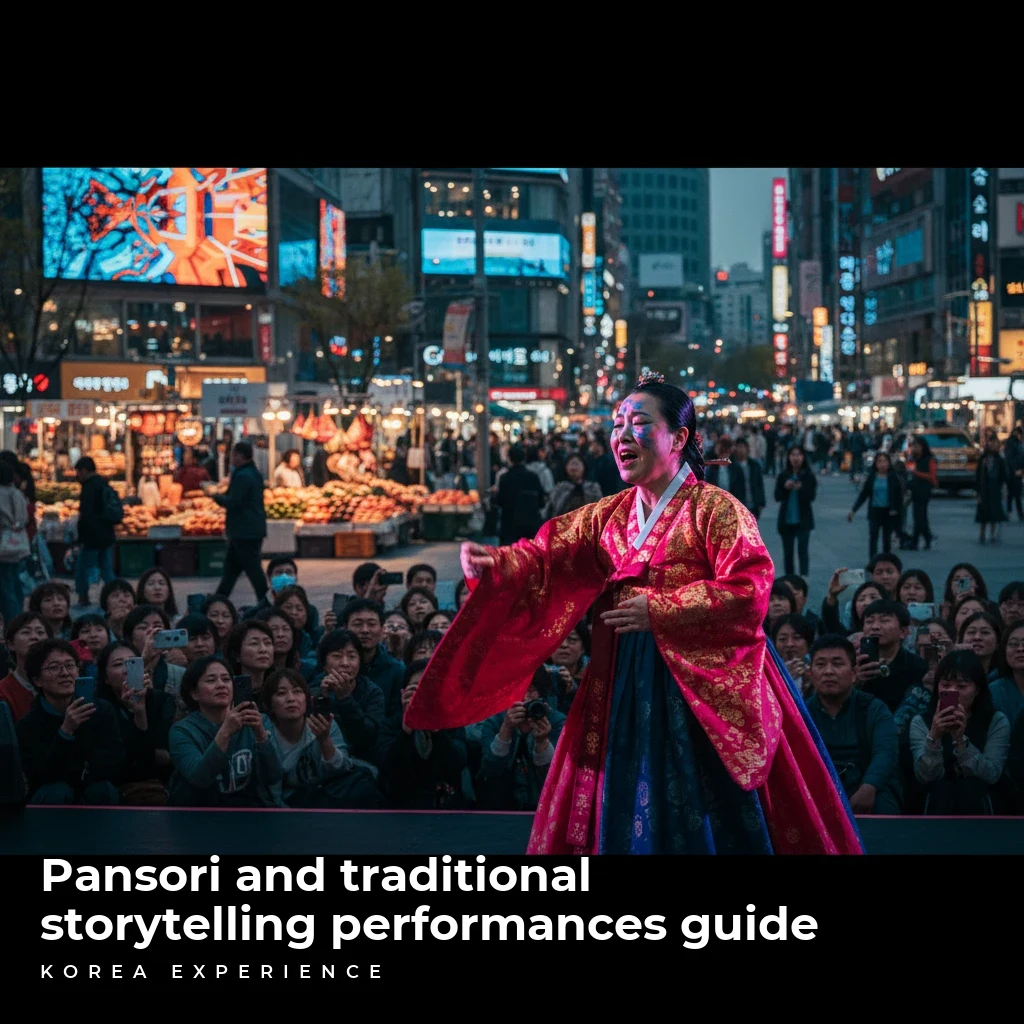
Discover the soul of Korea through Pansori. A complete guide to traditional storytelling venues, tickets, and etiquette for travelers.
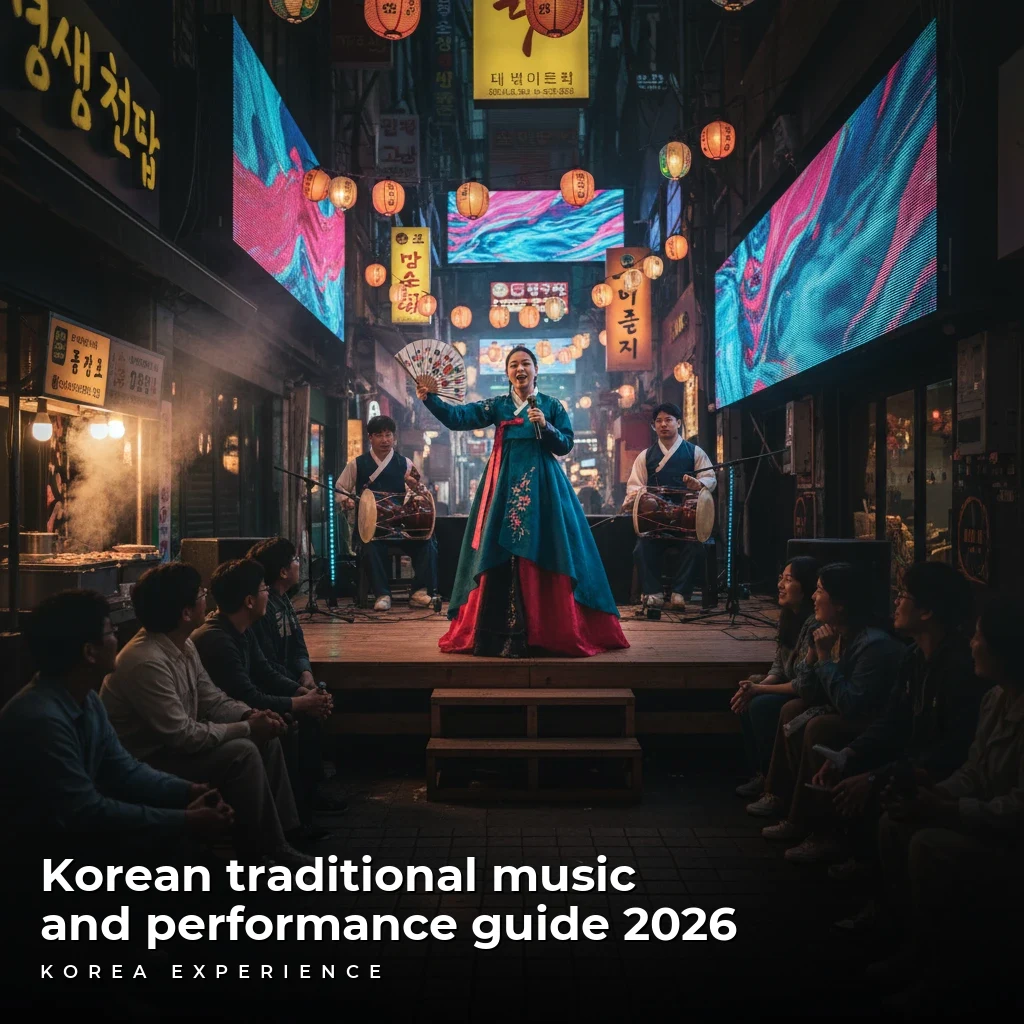
The ultimate guide to Gugak, Pansori, and fusion performances in Seoul. Discover venues, prices, and etiquette for the 2026 travel season.
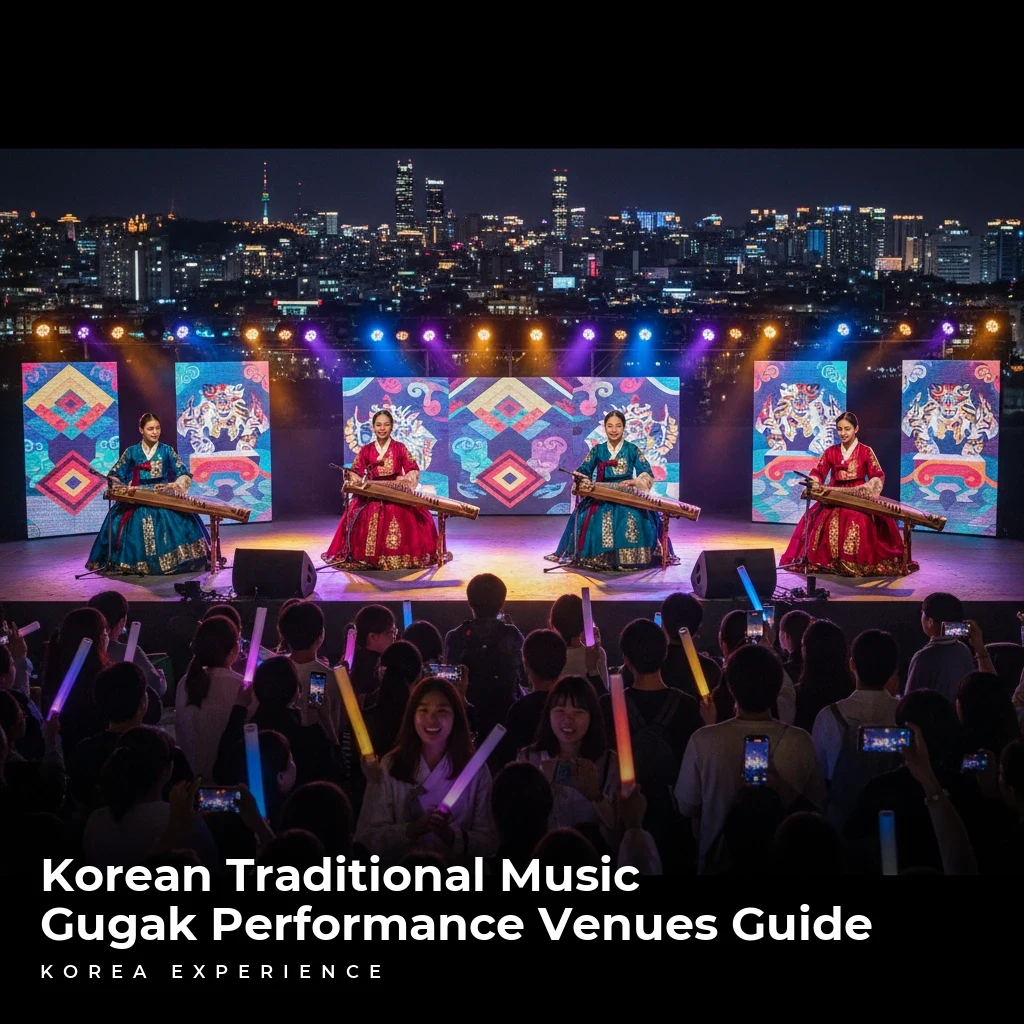
Discover the best venues for Gugak performances in Seoul. From royal palaces to modern theaters, find ticket info, etiquette, and top cultural experiences.
Discover the top live music venues in Hongdae for K-Indie and underground rock. A complete guide to tickets, lineups, and vibes for travelers in 2026.
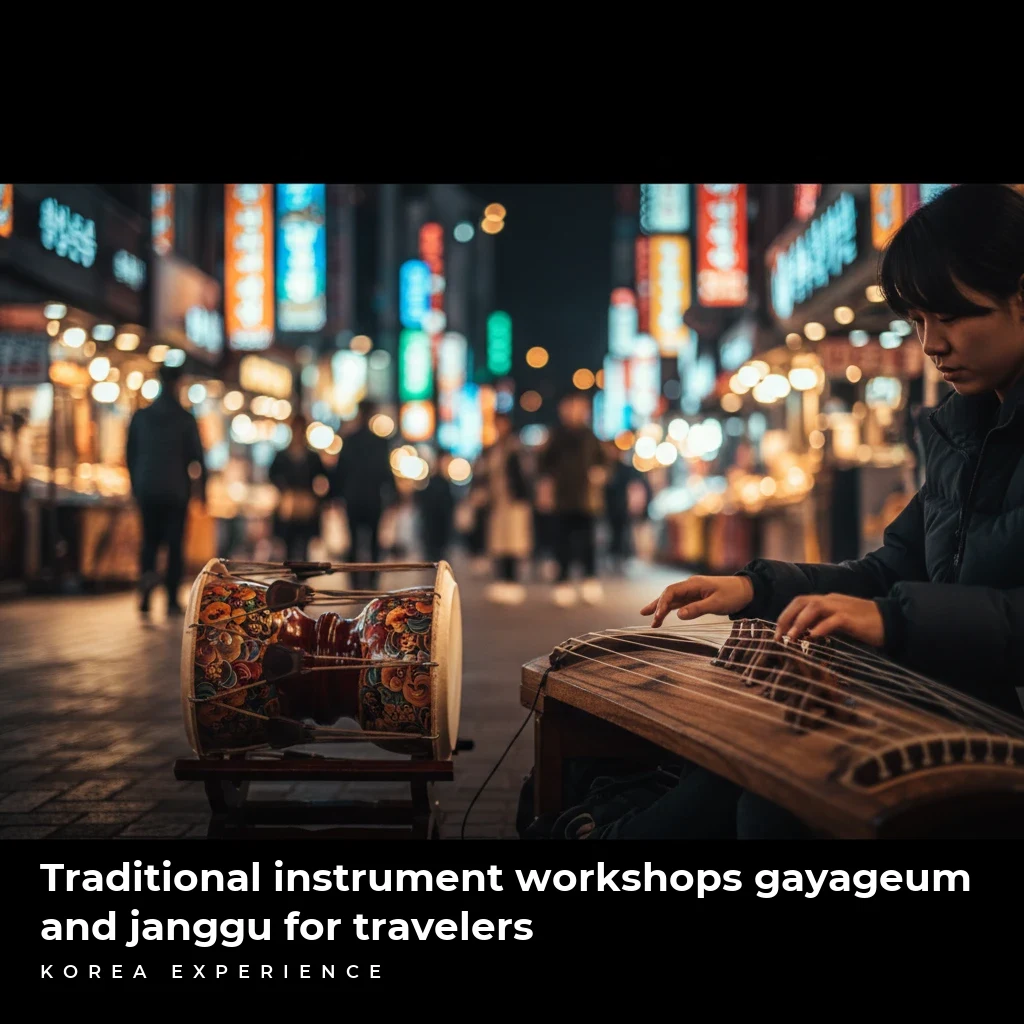
Discover the soul of Korea through sound. A complete guide to booking and experiencing traditional Gayageum and Janggu classes in Seoul.
Experience the electric atmosphere of LCK and Valorant matches in Korea. Complete guide to tickets, venues, and gaming culture for travelers.