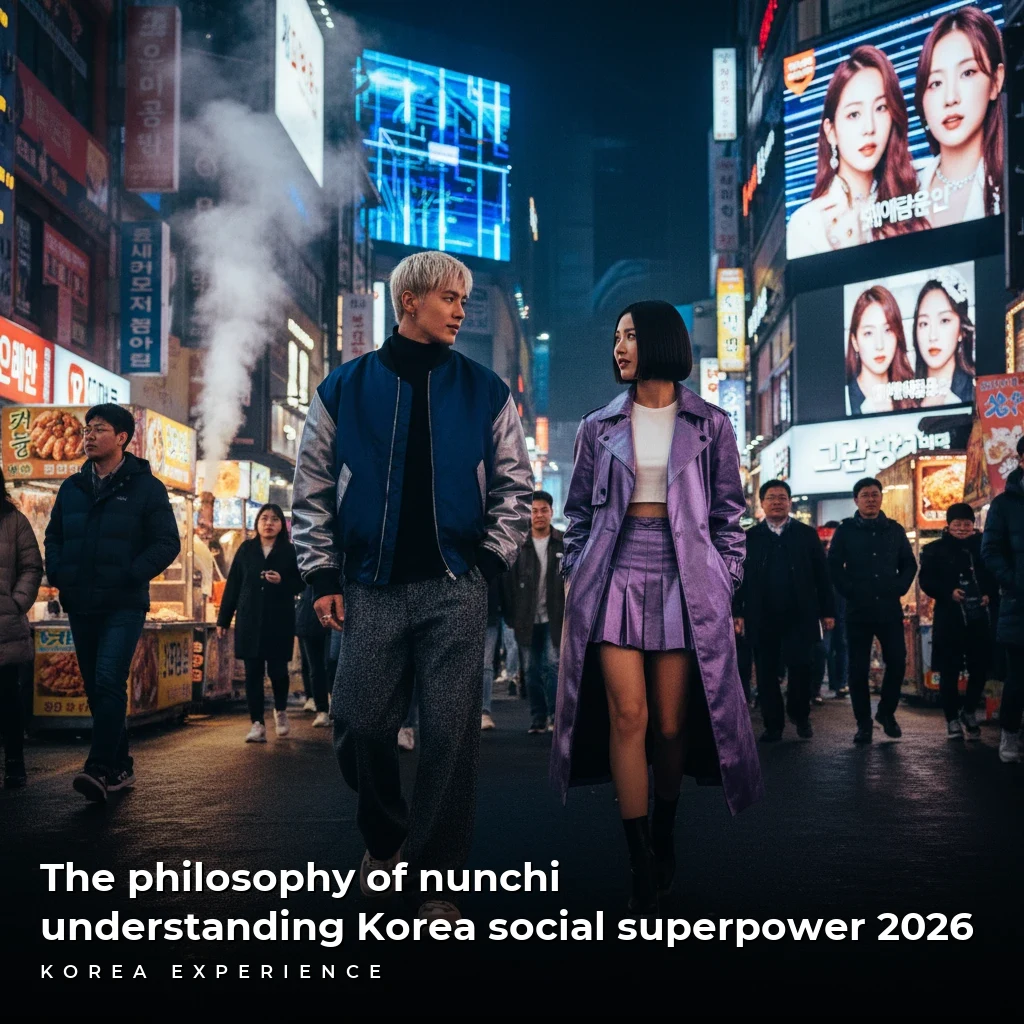
The Philosophy of Nunchi: Korea's Social Superpower 2026
Unlocking Korea's unique social intelligence, Nunchi. Discover how this unspoken art of reading the room shapes every aspect of Korean life for travelers and expats in 2026.
The Philosophy of Nunchi: Understanding Korea's Social Superpower 2026
Welcome to the vibrant, dynamic landscape of South Korea in 2026 – a nation celebrated globally for its cutting-edge technology, mesmerizing K-culture, and deeply rooted social tapestry. As an international traveler or expat, navigating this rich environment successfully requires more than just knowing a few Korean phrases or understanding the subway system. It demands an appreciation for an underlying social philosophy, a silent art that profoundly influences every interaction: Nunchi.
Nunchi, often translated as "eye measure" or "the art of reading the room," is Korea's unspoken social superpower. It's the subtle, intuitive ability to gauge a situation, understand others' moods, and react appropriately, often before words are even exchanged. In a society that values harmony, collective well-being, and indirect communication, Nunchi isn't just a desirable trait; it's an essential skill for social cohesion and personal success.
Many newcomers to Korea find themselves perplexed by subtle cues, unspoken expectations, and the fluid nature of social interactions. Misinterpretations can lead to awkward moments, misunderstandings, or even missed opportunities. Without Nunchi, one might inadvertently disrupt social harmony, appear insensitive, or struggle to form genuine connections.
This comprehensive guide aims to demystify The Philosophy of Nunchi, providing you with the insights and tools to understand and even cultivate this critical Korean social superpower. By the end of this post, you'll gain a deeper appreciation for Korean culture, learn practical strategies for navigating social situations, and be better equipped to thrive in Korea in 2026 and beyond. Prepare to unlock a new dimension of cultural understanding and transform your Korean experience.
What is Nunchi? The Art of Reading the Room
At its core, Nunchi (pronounced "noon-chee") is more than just social awareness; it's an active, ongoing process of observation, interpretation, and appropriate response within a social context. The literal translation of the term – "eye measure" – perfectly encapsulates its essence: using your eyes (and all your senses) to measure the atmosphere, the unspoken intentions, and the underlying dynamics of a situation.
Nunchi is fundamental to Korean communication, which often favors indirectness and context over explicit statements. In Korea, what is not said can be as important, if not more important, than what is said. A person with good Nunchi can perceive subtle shifts in tone, body language, facial expressions, and even silence to grasp the true meaning of an interaction. This allows them to anticipate needs, avoid potential conflicts, and ensure smooth, harmonious exchanges.
Nunchi vs. Empathy: A Key Distinction
While Nunchi shares some common ground with concepts like empathy or social intelligence, there are crucial distinctions. Empathy primarily focuses on understanding and sharing the feelings of others. Nunchi, while incorporating empathy, extends beyond feeling into action and anticipation. It's about how you adapt your behavior based on your understanding of the situation to maintain group harmony and facilitate a positive outcome.
| Feature | Nunchi | Empathy |
|---|---|---|
| Primary Goal | Harmonious social interaction, group cohesion, appropriate action | Understanding and sharing another's feelings |
| Focus | Observing external cues, predicting outcomes, adapting behavior | Internal emotional state, perspective-taking |
| Action | Proactive adjustment of one's own words/actions to fit the situation | Responsive understanding, offers support or validation |
| Context | Group dynamics, social hierarchy, unspoken rules | Individual's emotional experience |
| Origin | Rooted in collectivist cultures, historical need for collective survival | Universal human capacity, often emphasized in individualistic cultures |
Historical Context and Evolution
The concept of Nunchi has deep roots in Korea's collectivist history, where communal living and group survival were paramount. In agrarian societies, anticipating the needs of neighbors, understanding the mood of the village elder, or subtly coordinating efforts without explicit commands were crucial for efficiency and harmony. Over centuries, this practical necessity evolved into a sophisticated social skill, becoming an ingrained part of Korean etiquette and identity.
Even in modern 2026, with its hyper-connected urban centers and global influences, Nunchi remains a cornerstone of social interaction. From the boardrooms of Seoul's tech giants to the bustling street markets of Busan, the ability to read the room continues to be a highly valued trait, influencing everything from career advancement to personal relationships. Understanding Nunchi isn't just about cultural curiosity; it's about gaining access to the unspoken rulebook that governs much of Korean society.
Nunchi in Everyday Life: Navigating Korean Society
Nunchi isn't a theoretical concept; it's a practical skill applied constantly across all facets of Korean life. For international travelers and expats, recognizing and responding to Nunchi-driven behaviors can significantly enhance your experience and smooth out potential social friction.
Workplace Dynamics: Hierarchy and Meetings
In Korean workplaces, Nunchi is paramount. Hierarchy is deeply respected, and knowing your place within it is crucial. A person with good Nunchi will:
- Defer to seniors: Allow superiors to speak first, offer opinions cautiously, and use respectful language (honorifics).
- Observe meeting dynamics: Understand when to contribute, when to listen, and when a decision is already implicitly made, even if not explicitly stated. For example, during a team meeting at a startup in Pangyo Techno Valley, a junior employee with good Nunchi might notice the CEO subtly nodding along to a particular proposal and adjust their own feedback to align, ensuring team harmony and efficiency.
- Anticipate needs: Offer assistance to colleagues or superiors before being asked, such as refilling a water glass or preparing documents.
Social Gatherings: Restaurants and Public Transport
Public spaces are prime testing grounds for Nunchi.
- Restaurants: When dining out, especially in busy eateries like those in Myeongdong or Hongdae, Nunchi dictates awareness of shared space. Don't linger too long if there's a queue, avoid excessively loud conversations, and if sharing a table, respect the privacy of others. For instance, at a popular Gogi-jip (Korean BBQ restaurant), someone with Nunchi will intuitively know to quickly move their bag to free up space for a new diner, or understand when it's appropriate to signal for a server without being disruptive.
- Public Transport: On the subway, like Seoul's Line 2, Nunchi means giving up your seat to the elderly, pregnant women, or those with children without being asked. It means keeping your voice down when talking on the phone and avoiding blocking the doors. It's an unspoken agreement to maintain order and comfort for all passengers.
Family Interactions and Dating
Family is the bedrock of Korean society, and Nunchi plays a critical role in maintaining harmony.
- Family Meals: During a family gathering, say during Chuseok celebrations in Busan, a person with good Nunchi will offer to help set the table, assist with serving food, or clear dishes without being prompted. They will notice if an elder needs something and quietly attend to it.
- Dating: In relationships, Nunchi is about understanding your partner's unspoken desires, comfort levels, and potential concerns. It's noticing a slight hesitation in their voice or a subtle change in their expression and responding with sensitivity. For example, sensing your date is uncomfortable in a crowded bar in Itaewon, a person with Nunchi might suggest moving to a quieter cafe or ending the evening early, demonstrating consideration without needing explicit prompting.
Practical Example: Dining Out in Gangnam
Imagine you're at a trendy cafe in Apgujeong, Gangnam, famous for its artisanal desserts. You're with a group of friends, and the cafe is packed.
- Low Nunchi approach: You might talk loudly, oblivious to the quiet ambiance. You might spread your belongings across an empty chair, even if the cafe is busy. You might order a complex drink just before closing time, putting pressure on the barista.
- High Nunchi approach: You'd notice the hushed conversations around you and lower your voice. You'd keep your bags tucked away, ready to free up space if needed. You'd observe the queue at the counter and be ready with your order, choosing something simpler if it's clear the staff are overwhelmed. If you see someone struggling to find a seat, you might offer to share your table if appropriate. This demonstrates respect for others and the establishment, fostering a positive environment for everyone.
Developing Your Nunchi: Practical Tips for Travelers and Expats
While Nunchi is deeply ingrained in Korean culture, it's not an exclusive trait. International visitors and residents can absolutely develop their own Nunchi, significantly enhancing their cultural integration and overall experience. It requires conscious effort, observation, and a willingness to learn.
Active Observation and Listening
The first step to cultivating Nunchi is to become an astute observer.
- Look and listen: Pay attention to more than just the words being spoken. Watch body language – hand gestures, posture, eye contact (or lack thereof). Listen to tone of voice, pauses, and the speed of speech. Is the general mood relaxed, tense, formal, or casual?
- Scan the environment: What's the general atmosphere of the room? Are people quiet or boisterous? Are they rushing or taking their time? In a bustling market like Gwangjang Market, observing how locals navigate the crowds and interact with vendors can teach you volumes about efficient and polite conduct.
- Identify social roles: Who is the senior person in the group? Who seems to be leading the conversation? Understanding these dynamics will help you tailor your own behavior.
Understanding Non-Verbal Cues
Korean communication is rich in non-verbal signals.
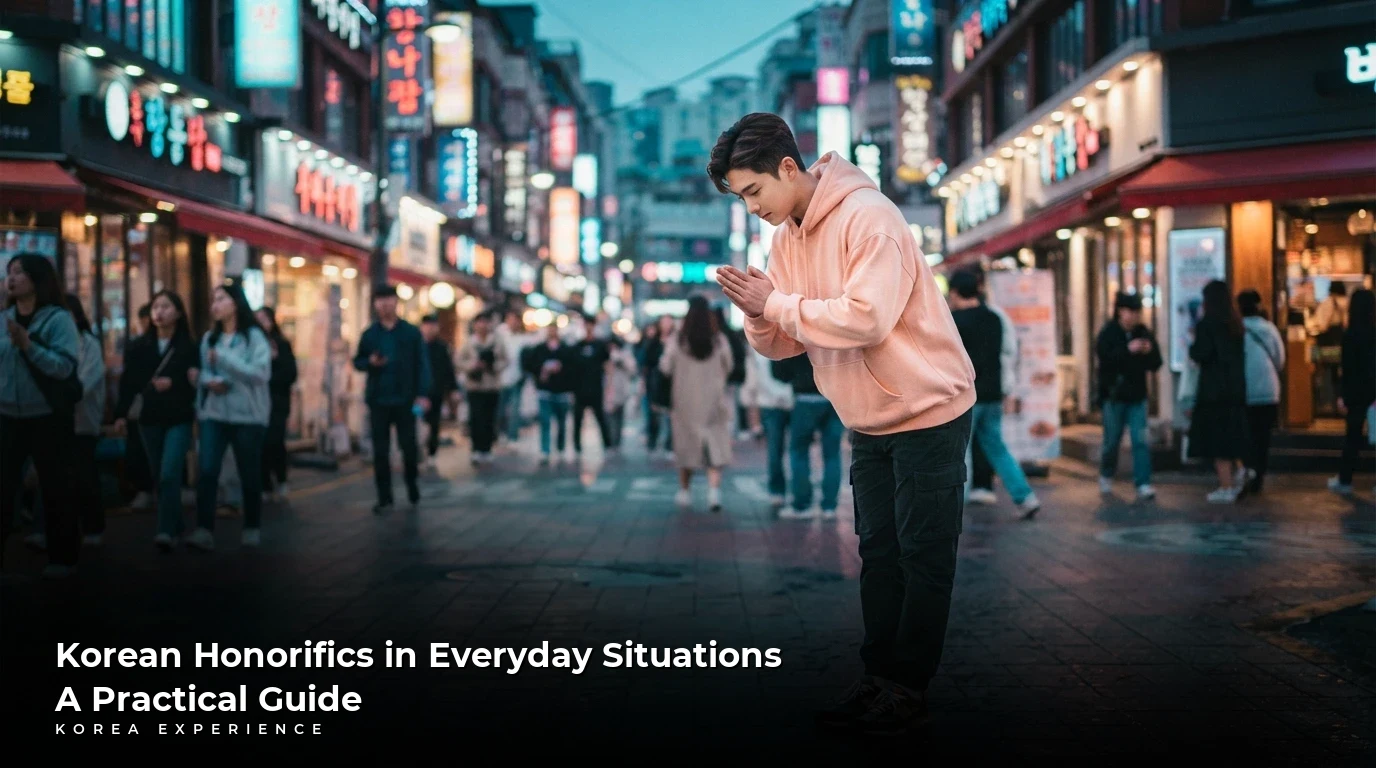
- Bowing: The depth and duration of a bow indicate respect and formality. A slight nod for acquaintances, a deeper bow for elders or superiors. In business settings in Yeouido, observe how Korean colleagues bow to clients or senior management and mimic their level of deference.
- Eye Contact: Direct, prolonged eye contact can sometimes be perceived as aggressive or challenging, especially with elders or superiors. Subtle, indirect eye contact is often more common and respectful.
- Hand Gestures: Pay attention to how people point (usually with an open hand, not a single finger) or pass objects (usually with two hands, especially to elders).
- Silence: Don't be afraid of silence. In some contexts, it can indicate reflection, disagreement, or a moment for others to speak. Resist the urge to fill every quiet moment with conversation.
Mimicry and Subtle Adjustments
Once you've observed, the next step is to subtly adjust your own behavior.
- Mirroring: Gently mirroring the energy, volume, and pace of the people you're interacting with can help build rapport. If everyone is speaking softly, lower your voice. If a group is laughing and animated, feel free to join in.
- Anticipate needs: If you see someone struggling with bags on the subway, don't wait to be asked; offer help. If you're at a group dinner and notice a dish is running low, consider discreetly ordering more or asking if others would like more.
- Flexibility: Be prepared to adapt your plans or opinions if the situation calls for it. Being overly rigid can be seen as lacking Nunchi. For instance, if a group plans to go to a certain attraction but senses someone isn't keen, a person with Nunchi might suggest an alternative that subtly accommodates everyone.
Don't Be Afraid to Make Mistakes (But Learn from Them)
Developing Nunchi takes time and practice. You will make mistakes, and that's perfectly normal.
- Acknowledge and apologize: If you realize you've made a social faux pas, a simple, sincere apology (e.g., "joesonghamnida" – I'm sorry) and an attempt to correct your behavior can go a long way.
- Seek feedback (gently): If you're close with a Korean friend or colleague, you might gently ask for advice on navigating a specific situation. They'll appreciate your effort to understand their culture.
- Reflect: After social interactions, take a moment to reflect on what went well and what could have been handled differently. This continuous learning is key.
Resources for Cultural Immersion
To deepen your understanding and accelerate your Nunchi development:
- Language Learning Apps: Apps like Duolingo or Papago (for translation) can help you pick up conversational Korean, but also pay attention to how phrases are used in different contexts.
- Cultural Experience Centers: Many cities in Korea offer cultural classes. The Seoul Global Center (located in Jongno-gu) frequently hosts workshops on Korean etiquette, traditional crafts, and even introductory language courses, which often touch upon social norms. Check their 2026 schedule for specific Nunchi-focused programs.
- Local Friendships: The best way to learn Nunchi is through genuine interactions with Korean people. Be open, ask questions (respectfully), and observe your friends' behaviors.
The Impact of Nunchi on Korean Business and Innovation
Nunchi is not confined to personal interactions; it's a powerful force shaping the Korean business landscape, influencing everything from team dynamics to global market strategies. In 2026, as Korea continues its ascent as a global economic player, understanding the role of Nunchi in its business environment is crucial for international professionals.
Teamwork and Collaboration
Korean companies, renowned for their efficiency and speed, attribute much of their success to highly cohesive teams. Nunchi is the invisible lubricant that allows these teams to operate seamlessly.
- Anticipating needs: Team members with good Nunchi proactively assist colleagues, foresee potential problems in projects, and offer solutions before issues escalate. This reduces friction and enhances overall productivity.
- Consensus Building: Decisions, especially important ones, are often reached through a process of careful discussion and consensus-building, rather than direct confrontation. Nunchi helps individuals gauge the collective mood and present ideas in a way that respects existing opinions while subtly guiding towards a desired outcome.
- Subtle Communication: In a team meeting at a major tech company in Gangnam, a manager with Nunchi might notice a junior employee struggling with a task but unwilling to voice it. Instead of directly asking, they might assign a senior colleague to "mentor" the junior on a related aspect, subtly offering support without causing loss of face.
Client Relations and Negotiations
Building strong relationships is paramount in Korean business, and Nunchi is key to cultivating trust and long-term partnerships.
- Reading the Client: A business professional with Nunchi will carefully observe the client's mood, interests, and potential unspoken concerns during meetings. They'll know when to push an agenda and when to pivot to more casual conversation.
- Indirect Communication: Rather than directly rejecting a proposal, a Korean client might use phrases like "Let's think about this further" or "It might be difficult." Good Nunchi means understanding these subtle rejections and adjusting your strategy without causing discomfort.
- Relationship Building (Jeong): Beyond formal dealings, Nunchi contributes to building "Jeong" (pronounced "jung"), a deep sense of affection, attachment, and loyalty. Knowing when to offer a small gift, suggest an informal dinner, or simply show genuine concern for a client's well-being are all Nunchi-driven actions that strengthen business bonds.
Understanding Market Trends and Innovation
Korea's rapid adaptation to global trends and its leadership in areas like K-pop, gaming, and consumer electronics owe much to a collective Nunchi that senses shifts in consumer desires.
- Cultural Sensitivity: Innovators and marketers with strong Nunchi can perceive nuances in local and global tastes, leading to highly successful products and campaigns. They understand not just what people want, but why they want it and how it fits into their lifestyle.
- Rapid Prototyping: The speed at which Korean companies often develop and iterate products is partly driven by a collective Nunchi that quickly assesses market reception and adjusts course.
- Global Nunchi: As Korean companies expand internationally, they're increasingly developing a "global Nunchi," understanding and adapting to the social and cultural nuances of diverse markets.
Comparison Table: Nunchi-Driven vs. Direct Communication Styles
Understanding these differences is vital for international business professionals collaborating with Korean counterparts.
| Feature | Nunchi-Driven Communication (Korea) | Direct Communication (e.g., Western Cultures) |
|---|---|---|
| Primary Goal | Maintain harmony, save face, build relationships | Clear message delivery, efficient information exchange |
| Approach to Conflict | Avoids direct confrontation, uses intermediaries, subtle hints | Addresses issues directly, open discussion and debate |
| Decision Making | Often by consensus, implicit agreements, leader seeks input before stating final decision | Explicit discussion, clear directives, individual accountability |
| Feedback | Indirect, constructive criticism often softened, given privately | Direct, often explicit, can be given in group settings |
| "Yes" or "No" | "Yes" might mean "I understand," not "I agree." "No" is rarely said directly, often implied. | "Yes" means agreement, "No" means disagreement, clear and unambiguous |
| Focus | Context, unspoken cues, non-verbal signals | Verbal message, explicit statements, facts |
Nunchi Beyond Korea: A Global Social Superpower?
While Nunchi is deeply rooted in Korean culture, its underlying principles are universally applicable. In an increasingly interconnected world, developing Nunchi-like abilities can transform individuals into more effective communicators, leaders, and global citizens, regardless of their background. In 2026, as cross-cultural interactions become the norm, Nunchi isn't just a Korean superpower; it's a valuable skill for everyone.
Universal Applicability
The core idea of Nunchi – paying attention, understanding context, and responding appropriately – transcends cultural boundaries.
- Enhanced Communication: Whether you're in a business meeting in New York, a social gathering in Paris, or negotiating a deal in Singapore, the ability to read the room, understand unspoken cues, and adapt your approach will always give you an advantage. It helps prevent misunderstandings that arise from different communication styles.
- Improved Relationships: By being more attuned to the feelings and needs of others, you can build stronger, more empathetic relationships in any cultural setting. People appreciate those who show genuine consideration and thoughtfulness.
- Leadership Skills: Leaders with good Nunchi can better understand team dynamics, anticipate employee concerns, and foster a more inclusive and productive work environment. They can adapt their leadership style to suit different individuals and situations.
Enhancing Cross-Cultural Communication
For individuals regularly engaging with people from diverse backgrounds, Nunchi is an invaluable tool.
- Bridging Gaps: It helps bridge the gap between high-context cultures (like Korea, Japan, China) where much is communicated implicitly, and low-context cultures (like Germany, USA) where communication is more explicit. A person with Nunchi can adapt their style to better connect with either.
- Reducing Bias: By consciously observing and interpreting behavior, one can challenge preconceived notions and biases, leading to more objective and fair interactions.
- Navigating Global Events: As Korea hosts more international conferences, sports events, and cultural festivals (like the "Global Tech Innovation Summit 2026" planned for Kintex in Gyeonggi-do), participants with Nunchi will naturally navigate these diverse gatherings with greater ease and respect.
Future Trends in Globalized Societies
In 2026 and beyond, globalization continues to accelerate, bringing together more cultures and communication styles than ever before.
- Hybrid Work Models: With remote and hybrid work becoming standard, the ability to "read the virtual room" – understanding cues from video calls, chat messages, and email tones – is a new form of Nunchi that's becoming increasingly important.
- Cultural Intelligence (CQ): Nunchi contributes significantly to one's Cultural Intelligence, the capability to function effectively in culturally diverse situations. As businesses become more global, CQ is a highly sought-after skill.
- Ethical AI and Design: The principles of Nunchi can even inform the design of AI and technology, creating systems that are more culturally sensitive, context-aware, and user-friendly, anticipating human needs and reactions.
Case Study: International Events in Seoul 2026
Consider the "Future of Urban Living Expo 2026" hosted at COEX in Gangnam, Seoul. This event brings together delegates from dozens of countries.
- An organizer with Nunchi: Would ensure diverse dietary options, clear signage in multiple languages, and provide quiet spaces for networking, anticipating varied cultural preferences for interaction. They would also subtly observe group dynamics during presentations, noticing if a particular panel is losing audience engagement and adjusting the flow or calling for a break.
- An attendee with Nunchi: Would observe local Korean customs (e.g., bowing during introductions), be mindful of personal space, and gauge the appropriate level of formality when engaging with delegates from different regions. They would also subtly notice if a conversation is running long and gracefully excuse themselves to allow others to network. This kind of awareness fosters positive international relations and successful event outcomes.
The Future of Nunchi in 2026 and Beyond
As Korea charges into the future, a global leader in technology and culture, the role of Nunchi continues to evolve. While some might question its relevance in an increasingly globalized and digitally-driven world, Nunchi remains a powerful and enduring force, adapting to new contexts while holding steadfast to its core philosophy.
How Technology Impacts Nunchi
The rise of digital communication presents both challenges and new dimensions for Nunchi.
- Digital Nunchi: In 2026, much communication happens online. "Digital Nunchi" involves understanding the unspoken rules of chat groups, email etiquette, and social media interactions. It's knowing when to use emojis, when to reply instantly, and when a message requires a more thoughtful, delayed response. For example, in a KakaoTalk group chat for a work project, someone with good Nunchi will know not to spam with irrelevant messages or send urgent requests late at night, respecting others' boundaries.
- Information Overload: With vast amounts of information available, the ability to quickly filter and interpret crucial data, including subtle cues from online reviews or social media sentiment, is a modern form of Nunchi for businesses and individuals alike.
- AI and Human Interaction: As AI becomes more sophisticated, understanding human Nunchi will be crucial for creating truly intuitive and helpful AI companions or customer service bots that can "read" user intent and mood, much like the advanced AI assistants now integrated into public transport systems in Seoul to predict passenger needs.
Maintaining Traditional Values
Despite technological advancements, Nunchi acts as a vital bridge, connecting modern Korea to its traditional roots. It reinforces core values that have always been central to Korean society:
- Harmony (Hwasaeng): Nunchi continues to promote social harmony and collective well-being, prioritizing the group over individual desires.
- Respect (Jonjung): It underscores the importance of showing respect for elders, superiors, and others, fostering a respectful social hierarchy.
- Community (Gongdongche): By encouraging consideration and subtle support, Nunchi strengthens the bonds of community, both within families and broader society.
- Guanxi (관계): While a Chinese term, the concept of building and maintaining personal connections and networks through mutual understanding and favors has a Korean equivalent, and Nunchi is fundamental to navigating and strengthening these relationships.
Nunchi as a Continuing Cultural Cornerstone
In 2026, Nunchi is not just a relic of the past; it's a dynamic, living philosophy that continues to shape Korea's identity and its interactions with the world.
- Educational Emphasis: Korean education, from early childhood, implicitly and explicitly teaches Nunchi through group activities, respectful interactions, and emphasis on collective responsibility.
- Global Recognition: As K-culture continues to captivate global audiences, the underlying social dynamics, including Nunchi, are gaining more international attention and academic study, seen as a unique aspect of Korea's soft power.
- A Guide for the Future: In an unpredictable world, the ability to quickly assess situations, adapt, and foster harmonious relations – the essence of Nunchi – will remain an invaluable skill for both Koreans and those seeking to understand and engage with Korean society. It offers a powerful framework for navigating the complexities of human interaction in any context.
Frequently Asked Questions (FAQ) about Nunchi
Q1: Is Nunchi something you are born with, or can it be learned? A1: While some individuals may have a natural predisposition for social awareness, Nunchi is largely a learned skill. It's cultivated through observation, practice, and experience within a social environment, making it absolutely attainable for anyone willing to put in the effort.
Q2: Can I be too Nunchi-conscious, to the point of being overly cautious or anxious? A2: Yes, it's possible. While good Nunchi is about being aware, excessive worry about every social cue can lead to anxiety or prevent genuine self-expression. The goal is balance: be observant and thoughtful, but also authentic. Don't let the pursuit of Nunchi stifle your personality; rather, use it to enhance your interactions.
Q3: How quickly can an international person expect to develop good Nunchi? A3: Developing good Nunchi is a continuous process, not an overnight achievement. Most international residents notice significant improvements in their social navigation skills after 6-12 months of immersive living in Korea. Full mastery might take years, but noticeable progress is certainly achievable within your first year.
Q4: Is Nunchi only relevant in formal settings, or does it apply to casual interactions too? A4: Nunchi applies to virtually all interactions, from highly formal business negotiations to casual hangouts with friends. The degree of formality and the specific cues may change, but the underlying principle of reading the room and responding appropriately remains constant across all social situations in Korea.
Q5: What's the biggest Nunchi mistake an expat might make without realizing it? A5: One common mistake is failing to pick up on indirect communication, especially when someone implies a "no" or disagreement without explicitly saying it. For instance, if you ask a friend to join an activity and they respond with "I'll think about it" accompanied by a hesitant expression, a lack of Nunchi might lead you to push for a direct answer, causing discomfort. A Nunchi-aware person would understand the subtle refusal and offer an alternative or drop the suggestion.
Conclusion: Your Nunchi Journey in Korea
As we've explored, The Philosophy of Nunchi Understanding Korea Social Superpower 2026 is far more than a simple social concept; it's a profound cultural intelligence that underpins the harmonious and dynamic nature of Korean society. From navigating the bustling streets of Seoul to fostering deep business relationships and making lasting friendships, cultivating your Nunchi will be your most valuable asset during your time in Korea.
Remember, Nunchi isn't about perfectly imitating others, but about developing a keen awareness and adapting your behavior respectfully. It's a journey of continuous observation, learning, and cultural immersion. By embracing this unique "social superpower," you'll not only avoid cultural misunderstandings but also unlock deeper, more meaningful connections with the people and the vibrant culture of Korea.
Actionable Takeaways for Your Nunchi Development:
- Become an Active Observer: Consciously pay attention to non-verbal cues, environmental context, and group dynamics in every interaction.
- Practice Empathetic Anticipation: Try to predict what others might need or how they might feel in a given situation, and subtly adjust your actions accordingly.
- Embrace Indirect Communication: Understand that not everything will be said explicitly. Look for subtle hints and listen to what isn't being said.
- Learn from Every Interaction: View every social moment as a learning opportunity. Reflect on what worked well and what could be improved.
- Be Patient and Forgiving: Nunchi takes time. Don't be discouraged by mistakes; learn from them and continue your journey of cultural understanding.
Your adventure in Korea in 2026 is an incredible opportunity for personal growth and cultural enrichment. With Nunchi as your guide, you're not just a visitor; you're becoming an integral part of the intricate, fascinating tapestry of Korean life. Start observing, start listening, and start experiencing the true social superpower of Korea.
Looking for more insights into Korean culture or practical tips for living in Korea? Explore our other articles on Korean dining etiquette or understanding the concept of "Jeong" for a truly immersive experience!
About the Author
Korea Experience Team
Written by the Korea Experience editorial team - experts in Korean medical tourism, travel, and culture with years of research and firsthand experience.
⚠️ Medical Disclaimer
The information provided on this website is for general informational purposes only and does not constitute medical advice. Always consult with qualified healthcare professionals before making any medical decisions.
Continue Reading
Explore more articles you might find interesting
Discover the captivating world of Pansori, Korea's unique operatic storytelling. Learn about its history, performances, and how to experience this UNESCO-recognized art form.
Discover the tranquil world of Korean tea ceremonies in Seoul. This guide explores the history, etiquette, and best places to experience this ancient tradition.
Explore the captivating world of K-Pop album unboxing, photocards, and unique inclusions. Discover where to buy in Korea and how to join the global collecting community.