The history of Kimchi more than just a side dish 2026
Discover the 3000 year history of kimchi, from ancient preservation to modern superfood. Includes 2026 travel tips, museum guides, and cooking class costs.
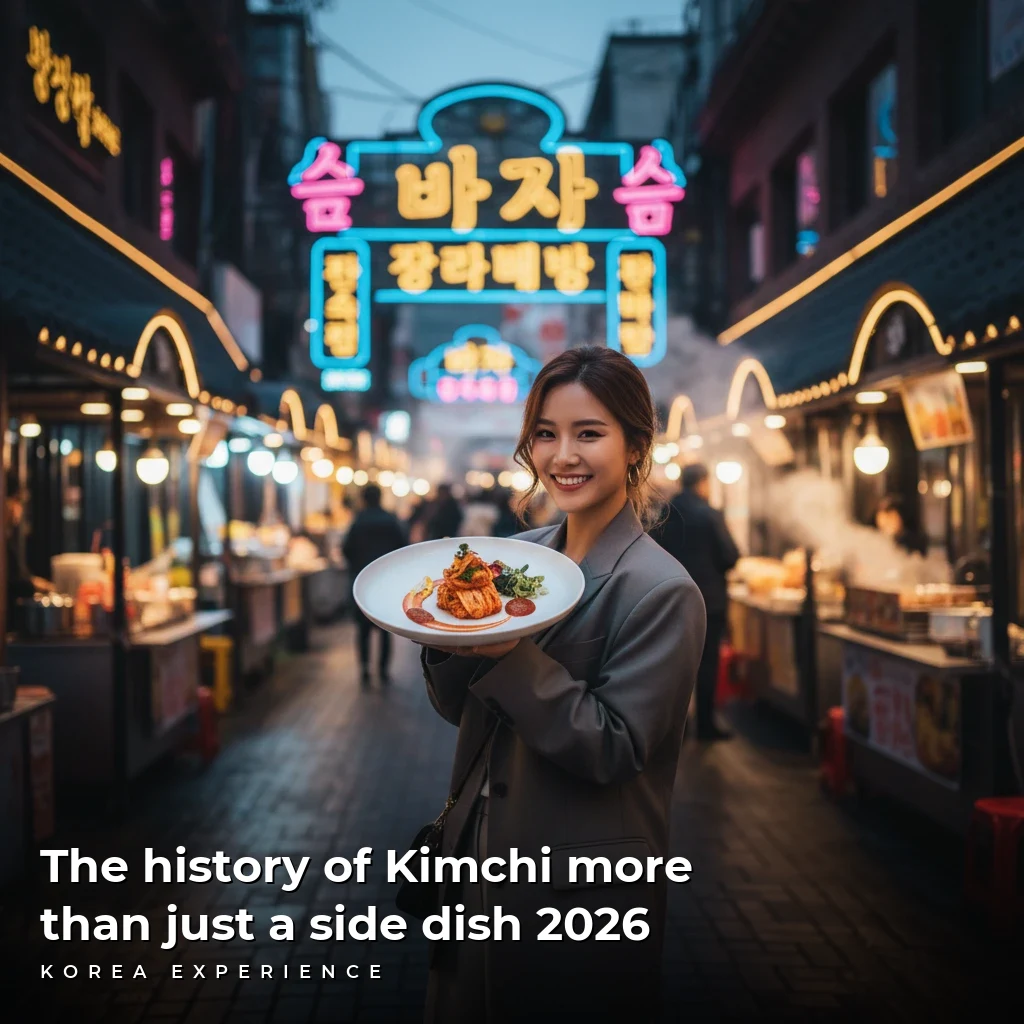
Kimchi is not merely a fermented vegetable dish; it is the soul of Korean cuisine, a symbol of national identity, and a global superfood that has transcended borders. As we step into 2026, the global fascination with this spicy, tangy staple has reached new heights, yet its profound history remains a mystery to many. To understand Korea is to understand kimchi—a culinary journey that spans over three millennia, surviving wars, modernizing through technology, and retaining its status as a daily necessity on dining tables from Seoul to New York.
While most international travelers recognize the spicy red cabbage version, the history of kimchi reveals a complex evolution involving ancient preservation techniques, trade routes, and the scientific mastery of fermentation. In this comprehensive guide, we explore the deep roots of kimchi, its transformation over centuries, and how you can experience authentic kimchi culture during your visit to Korea in 2026.
Key Takeaways
- 1Kimchi history spans over 3,000 years, originally starting as non-spicy white pickled vegetables.
- 2The iconic red chili powder was only introduced in the late 16th century via trade routes.
- 3Over 200 recognized varieties exist, varying significantly by region and seasonal ingredients.
The Ancient Origins: The White Era (37 BC – 918 AD)
The story of kimchi begins long before the introduction of the chili pepper. Historical records trace the origins of Korean fermented vegetables back to the Three Kingdoms period (37 BC – 668 AD). During this era, winters in the Korean peninsula were harsh, with temperatures frequently dropping below -10°C (14°F). To survive these months without fresh produce, early Koreans developed ingenious preservation methods using salt.
Originally, kimchi was called ji or chimchae, meaning "submerged vegetables." It was a simple dish, consisting of radish, cucumber, or cabbage salted and preserved in brine. It bore no resemblance to the fiery red dish we know today. It was white, salty, and purely functional—designed to provide essential vitamins and minerals during the barren winter months.
Related reading: Behind the scenes K-Drama production tours 2026 guide.
Historical Note
The earliest written record of kimchi appears in the Samguk Sagi (History of the Three Kingdoms). It mentions that fermented vegetables were widely consumed alongside soybean paste and salt as early as the establishment of the Silla Kingdom.
By the Goryeo Dynasty (918–1392), new ingredients began to enter the mix. Garlic, pine nuts, and sesame oil were added to enhance flavor, transforming kimchi from a survival food into a culinary delight. However, it remained "white kimchi" (baek-kimchi). Trade with neighboring nations introduced Chinese cabbage, though it was a luxury item reserved for the upper class, costing nearly 10 times the price of local radishes.
The Red Revolution: Introduction of Chili Peppers (1600s)
The most significant turning point in the history of kimchi occurred in the late 16th century. During the Imjin War (1592–1598), Portuguese traders brought chili peppers to Japan, which eventually made their way to Korea. Initially, these red peppers were viewed with suspicion and primarily used medicinally or as a poison due to their intense heat.
It wasn't until the 18th century that chili powder (gochugaru) became a staple ingredient in kimchi making. The addition of chili peppers was a game-changer for three reasons:
- Flavor: It added the distinct spicy kick that balances the sour fermentation.
- Visuals: It gave kimchi its appetizing crimson hue.
- Preservation: Capsaicin, the active component in chili peppers, helped delay spoilage and reduce the amount of salt needed, making the dish healthier and more palatable.
By the 19th century, the Napa cabbage kimchi (baechu-kimchi) seasoned with chili powder, garlic, ginger, and salted seafood (jeotgal) became the standard, solidifying the recipe that is most famous globally today.
Evolution of Kimchi
The Salt Era
Vegetables preserved strictly in brine without spices.
Goryeo Flavor
Introduction of garlic, pine nuts, and spices (excluding chili).
The Red Turn
Chili peppers introduced to Korea via trade.
Modern Kimchi
Napa cabbage and chili powder become the standard recipe.
Kimjang: A UNESCO Intangible Cultural Heritage
Understanding kimchi requires more than just tasting it; one must understand Kimjang. This represents the traditional communal act of making and sharing kimchi, typically taking place in late autumn (November to early December). In 2013, UNESCO inscribed Kimjang on the Representative List of the Intangible Cultural Heritage of Humanity, recognizing it as an essential part of Korean identity that fosters family cooperation and social cohesion.
Historically, a single household might prepare 50 to 100 heads of cabbage to last through the winter. This massive undertaking required the entire village or extended family to gather. The labor was intensive, involving washing, salting, draining, and seasoning hundreds of kilograms of vegetables over 2 to 3 days.
📊 Kimchi by the Numbers
In 2026, while urbanization has reduced the scale of Kimjang for many city dwellers, the tradition persists. Many families still gather to make smaller batches, while others order "Kimjang kits" online—packages containing salted cabbage and pre-made seasoning—averaging ₩80,000 (approx. $60 USD) for 10kg.
Related reading: Why koreans love mbti the psychology behind the trend.
Regional Varieties: A Geography of Taste
Korea's geography significantly influences kimchi styles. The climate gets warmer as you move south, affecting fermentation speeds and ingredient availability.
Northern Style (Seoul, Gyeonggi, Hwanghae)
The weather in the north is colder, meaning fermentation is slower. Consequently, northern kimchi tends to be less salty and less spicy. It is often "waterier" and more refreshing.
- Key Ingredients: Pear, raw seafood (oysters), mild chili.
- Famous Dish: Baek-kimchi (White Kimchi) and Dongchimi (Radish Water Kimchi).
Southern Style (Jeolla, Gyeongsang)
Warmer southern temperatures require more salt and stronger spices to prevent the kimchi from spoiling too quickly. The flavor is robust, pungent, and deeply savory.
You might also enjoy our article about Korean traditional music and performance guide.
- Key Ingredients: Heavy salted anchovy sauce (myeolchi-jeot), salted shrimp, generous amounts of garlic and chili powder.
- Famous Dish: Gat-kimchi (Mustard Leaf Kimchi).
North vs. South Kimchi Styles
| Feature | Northern Style (Seoul) | Southern Style (Jeolla) |
|---|---|---|
| Salt Level | Low / Mild | High / Intense |
| Spiciness | Moderate | Very Spicy |
| Broth/Liquid | Generous / Watery | Minimal / Thick Paste |
| Fermentation Speed | Slow | Fast |
The Science of Fermentation and Health
In 2026, kimchi is celebrated globally not just for taste, but for its health benefits. It is widely considered one of the world's healthiest foods. The magic lies in fermentation, specifically the production of Lactobacillus kimchii and other beneficial lactic acid bacteria.
A standard serving of properly fermented kimchi contains over 100 million lactic acid bacteria per gram—more than many commercially available yogurts. These probiotics aid digestion, boost the immune system, and are linked to anti-aging properties.
The Innovation of the Kimchi Refrigerator
To maintain the perfect fermentation environment year-round, Korea invented the specialized "Kimchi Refrigerator." Unlike standard fridges that fluctuate in temperature, kimchi refrigerators maintain a precise, constant temperature (usually between -1°C and 0°C) and mimic the environment of the traditional clay pots (onggi) buried underground. In 2026, over 90% of Korean households own a specialized kimchi refrigerator, with premium models costing upwards of ₩3,000,000 ($2,250 USD).
Related reading: Stand up comedy in Seoul English shows venues and tickets.
"The optimal time to eat kimchi for probiotic benefits is when it is 'well-fermented'—usually 2 to 3 weeks after preparation if stored at 4°C. You will know it's ready when the pH level drops to about 4.2, giving it that perfect sour tang."
Experiencing Kimchi Culture in 2026: A Travel Guide
For travelers visiting Korea, experiencing kimchi goes beyond ordering it as a side dish. Seoul offers immersive experiences ranging from museums to hands-on cooking classes.
Museum Kimchikan
Located in the heart of Insadong, this museum is a must-visit. It was selected by CNN as one of the world's top 11 food museums. It offers digital interactive exhibits, tasting rooms, and a deep dive into the history we've discussed.
Museum Kimchikan(뮤지엄 김치간)
Cooking Classes: Price vs. Experience
Travelers often ask whether they should join a generic class or a premium masterclass. Here is a breakdown of what you can expect in 2026.
💵 Kimchi Making Class Comparison
3 hours. Market tour included. Make 3 types. Traditional lunch included. 2kg to take home.
60 mins. Make 1 type (usually cabbage). Pack 500g to take home. Large group setting.
How to Make Simple Kimchi (A Traveler's Guide)
If you are staying in an Airbnb or want to try this back home, here is a simplified method. Traditional kimchi takes days, but "Mak-kimchi" (Easy/Rough Kimchi) can be made in about 2 hours.
📖 How to Make Mak-kimchi (Easy Kimchi)
Step 1: Cut and Salt
Cut 1 Napa cabbage into bite-sized squares. Massage with ½ cup of coarse sea salt. Let sit for 60 mins, turning every 20 mins.
Step 2: Make Porridge
Mix 1 tbsp sweet rice flour with ½ cup water. Simmer until it bubbles and thickens. Let cool.
Step 3: Prepare Paste
Blend porridge with ½ cup chili flakes (gochugaru), ¼ cup fish sauce, ¼ cup minced garlic, 1 tsp ginger, and 1 tbsp sugar.
Step 4: Mix and Ferment
Rinse cabbage 3 times and drain well. Mix with the paste and chopped scallions. Store in an airtight jar at room temperature for 24 hours, then refrigerate.
Purchasing Kimchi to Take Home
Bringing kimchi home is a popular souvenir choice. However, because kimchi continues to ferment (producing gas), traveling with it requires care.
Travel Warning: Exploding Luggage
Kimchi ferments and releases carbon dioxide. If you pack a regular jar in your checked luggage, the pressure changes and gas buildup can cause it to explode. Always buy "Travel Pack" kimchi, which comes in vacuum-sealed, gas-absorbing pouches, or buy canned kimchi.
Where to Buy:
- Department Stores (Lotte, Shinsegae): High-end, premium ingredients. They offer professional vacuum packing services for travel (cost: approx. ₩2,000 per pack).
- Duty-Free Shops: Convenient but limited variety. Prices are roughly 15-20% higher than local marts.
- Local Marts (Emart, Lotte Mart): Best value. Look for brands like Jongga or Bibigo.
Buying vs. Making Kimchi as a Souvenir
- ✓Professional vacuum packaging prevents leaks
- ✓Certified fermentation dates
- ✓Access to premium regional varieties
- ✗Heavy to carry (baggage weight limits)
- ✗Risk of spoilage if flight is delayed >24h
- ✗Homemade has sentimental value but risks leakage
The Future of Kimchi
As we look toward the future, kimchi continues to evolve. In 2026, we are seeing a surge in Vegan Kimchi, which replaces salted shrimp and fish sauce with soy sauce and fruit extracts to cater to the global plant-based market. Additionally, "Kimchi Powder" has become a trendy seasoning in Western countries, used on everything from popcorn to pizza.
Despite these modern innovations, the heart of kimchi remains its history—a testament to Korean resilience, community, and the wisdom of living in harmony with the seasons.
❓ Frequently Asked Questions
Have more questions?Contact us →
About the Author
Korea Experience Team
Written by the Korea Experience editorial team - experts in Korean medical tourism, travel, and culture with years of research and firsthand experience.
Explore more in K-Culture
K-Pop, K-Drama, traditional arts, and modern culture — dive deep into the cultural phenomena that have captivated the world.
Browse All K-Culture ArticlesContinue Reading
Explore more articles you might find interesting

Solo travel in Korea is incredibly safe, with crime rates 50% lower than US cities. Discover top meetup apps, dining tips, and night safety guides for 2026.

Discover top Korean beaches from Yangyang surfing to Jeju snorkeling. Includes 2026 prices, transport tips, and water activity costs for summer travel.

Discover how traditional Korean Hanbok evolved from Joseon dynasty attire to 2026 global streetwear trends, including rental tips and shopping guides.

The ultimate guide to Korean film festivals including BIFF, Jeonju, and Bucheon. Discover dates, ticket guides, and travel tips for international cinema lovers.

Discover the ultimate 2026 BTS tour in Seoul. Explore 15+ must-visit locations, from HYBE HQ to rookie-era eateries, with costs and travel tips.

Discover Seoul's underground malls where trendy fashion costs just 10,000 KRW. Our 2026 guide covers 5 top locations, shopping hacks, and essential locker tips.