The evolution of Hanbok from dynasty to modern streetwear 2026
Discover how traditional Korean Hanbok evolved from Joseon dynasty attire to 2026 global streetwear trends, including rental tips and shopping guides.
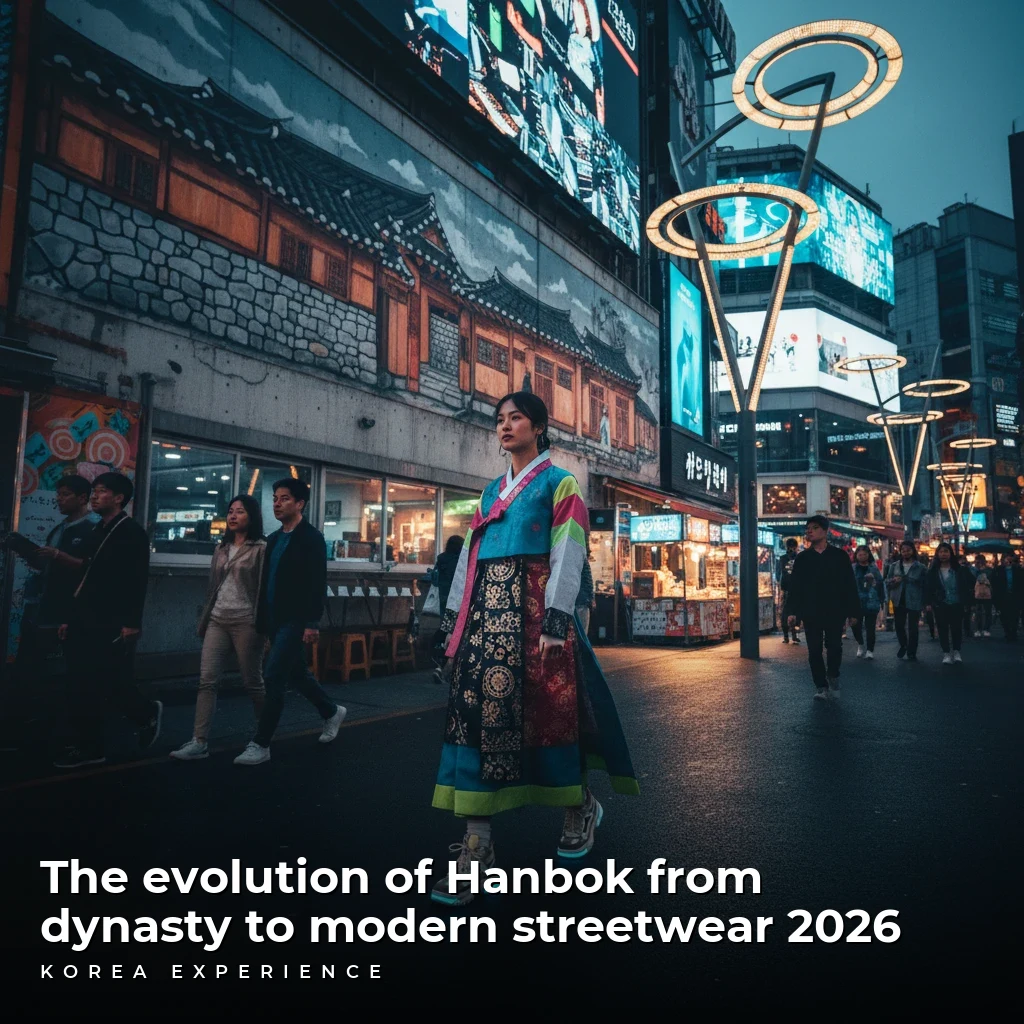
The silhouette of the Hanbok is unmistakable. With its gentle curves, vibrant colors, and voluminous skirts, it serves as the enduring symbol of Korean identity. However, walking through the streets of Seoul in 2026, you will notice something fascinating. The Hanbok is no longer confined to historical dramas or weddings. It has spilled onto the streets of Hongdae and Gangnam, reimagined as high-fashion streetwear that bridges a 600-year gap between tradition and modernity.
You might also enjoy our article about Hanbok rental complete guide styles and pricing.
For more details, check out our guide on K literature in English top books to understand modern Korea.
Learn more in our comprehensive guide to Korean Webtoon to K-Drama Timeline.
Learn more in our comprehensive guide to Modern Korean art scene top contemporary galleries in han....
For the international traveler, understanding this evolution is key to appreciating the visual tapestry of contemporary Korea. Whether you are planning to rent a traditional set for a palace photoshoot or looking to buy a modern "crop-jeogori" jacket to wear back home, the Hanbok offers a unique lens into how Korea balances its rich heritage with its futuristic ambition.
Key Takeaways
- 1Modern Hanbok revenue has grown 200 percent since 2020 due to K-Pop integration
- 2Palace entry is free (save ₩3,000) when wearing any form of Hanbok
- 32026 trends favor sustainable fabrics and gender-neutral designs in streetwear
The Roots: Understanding the Joseon Aesthetic
To appreciate where we are in 2026, we must look back to the Joseon Dynasty (1392–1910). The traditional Hanbok consists primarily of the jeogori (upper jacket) and chima (skirt) for women, or baji (pants) for men. The beauty of the garment lies in its "lines of abundance"—it is designed not to hug the body but to flow with movement, creating an elegant silhouette that allows for air circulation, crucial for Korea's humid summers which average 25°C (77°F) in August.
Historically, colors indicated social status. Commoners wore white (hence the nickname "The White-Clad People"), while royalty and nobility utilized the Obangsaek color spectrum—red, blue, yellow, black, and white—representing the five elements. Today, a high-quality traditional silk Hanbok can take a master artisan over 40 hours to stitch by hand.
The Goreum Knot
The single-bow knot on the jacket chest is called the Goreum. While it looks decorative, it is the primary fastener. In 2026, modern streetwear versions often replace this with magnetic clips or zippers for convenience, but the visual aesthetic of the long ribbon remains a critical design element.
The Rental Revolution: A Tourist's Rite of Passage
For most visitors, the first interaction with Hanbok is through the rental shops surrounding Gyeongbokgung and Changdeokgung Palaces. This industry exploded in the mid-2010s and has matured significantly by 2026. There are now over 120 rental shops within a 1-kilometer radius of Gyeongbokgung Station alone.
The incentive is financial as well as aesthetic. The Cultural Heritage Administration waives the ₩3,000 ($2.25 USD) admission fee for anyone wearing a Hanbok. This policy applies to both traditional styles and "fusion" styles, though guidelines require the skirt to be long enough to cover the knees.
📋 Hanbok Rental Market Facts 2026
Avoid the cheapest 'Theme Hanbok' options that use shiny, synthetic gold foil. They can look costume-like in photos. Instead, ask for 'Premium' or 'Gal-ot' styles which use matte fabrics and muted pastels. They cost about ₩10,000 ($7.50 USD) more but look significantly more authentic in natural light.
The Rental Process Simplified
If you are planning to visit the palaces, allow yourself roughly 30 minutes for the selection and fitting process. Most shops open at 9:00 AM, matching the palace opening times.
📖 How to Rent Hanbok Like a Pro
Step 1: Reservation
Book via platforms like Klook or Naver Map 2 days in advance for a 10-15% discount.
Step 2: Selection
Choose your skirt (chima) first. The staff will then help you match a jacket (jeogori) that complements your skin tone.
Step 3: Undergarments
Wear a white V-neck t-shirt and light shorts underneath. The rental includes a wire petticoat (sokchima) to give the skirt volume.
Step 4: Styling
Most packages include hair braiding with pearl pins or traditional ribbons (daenggi). Lockers are provided for your street clothes.
The Shift: Enter Modern Hanbok (Saenghwal Hanbok)
While rentals cater to tourists, a domestic revolution began occurring around 2015, known as Saenghwal Hanbok (Daily Hanbok). Designers began shortening skirts to mid-calf length, replacing silk with machine-washable cotton and linen, and adding pockets—a feature sorely missing in traditional women's attire.
By 2026, this sector has moved beyond niche cultural preservation into a legitimate fashion category. Brands like Leesle, Danha, and Teterot Salon report that 40% of their sales now come from international buyers, largely driven by K-Pop idols wearing modernized versions in music videos and airport fashion. The market for daily Hanbok in Korea is estimated to have reached ₩150 billion ($112 million USD) annually.
Timeline of Hanbok Evolution
Decline
Hanbok relegated strictly to weddings and 1st birthdays (Doljanchi).
Palace Policy
Free entry to palaces for Hanbok wearers introduced, sparking the rental boom.
K-Pop Wave
Blackpink performs in modernized Hanbok on US television, sparking global interest.
Streetwear Era
Hanbok elements fully integrated into gender-neutral streetwear and school uniforms.
2026 Trend Report: Hanbok as Global Streetwear
In 2026, the boundaries have blurred completely. Walk through the trendy Seongsu-dong neighborhood (often called the Brooklyn of Seoul), and you will see "Crop Jeogori" jackets paired with high-waisted denim jeans and chunky sneakers. This is the era of "Hip-Hanbok."
The specific trends dominating the 2026 landscape include:
- Tech-Fabrics: Traditional silhouettes made with Gore-Tex or moisture-wicking athletic blends, catering to the active urban commuter.
- Gender Neutrality: The strict male/female divide of the Joseon era has been dismantled. Men's Durumagi (overcoats) are being tailored as unisex trench coats.
- Graphic Prints: Instead of traditional floral embroidery, modern pieces feature geometric patterns or Hangul (Korean alphabet) typography.
A high-quality modern Hanbok jacket typically costs between ₩120,000 and ₩250,000 ($90–$190 USD). While this is more expensive than fast fashion, the "Made in Korea" quality and unique design justify the price for fashion-forward travelers.
📊 Hanbok Export Statistics
Where to Buy: From Markets to Boutiques
If you wish to take a piece of this culture home, you have three distinct shopping tiers. The distance between these districts is substantial, so plan your route accordingly. Seoul is massive; traveling from Dongdaemun to Gangnam takes approximately 35 minutes by subway.
1. Kwangjang Market (Traditional & Custom)
Located at Jongno 5-ga Station (Subway Line 1, Exit 8), this is the heart of traditional textiles. Here, you can buy customized silk Hanboks. A full set generally starts at ₩350,000 ($260 USD) and takes 2-3 weeks to tailor.
2. Ikseon-dong Hanok Village (Modern Casual)
This is the hotspot for Saenghwal Hanbok. The narrow alleys are packed with boutiques selling ready-to-wear pieces. It is located just 400 meters from Insadong.
Teterot Salon(때때롯살롱)
3. Online & Flagships (Premium Streetwear)
Brands like Leesle have pop-ups in department stores like The Hyundai Seoul in Yeouido. These are premium items often priced over ₩200,000 per piece.
💵 Hanbok Shopping Cost Comparison
Tailored fit, dry clean only, cultural heritage item.
Practical Analysis: Rent vs. Buy
For the traveler, the decision often comes down to luggage space and utility. A traditional Hanbok is voluminous. A petticoat alone can fill half a carry-on suitcase. However, modern interpretations fold down like a standard t-shirt.
Rent vs. Buy Decision Matrix
| Feature | Rental | Buying (Modern) | Buying (Traditional) |
|---|---|---|---|
| Cost | ~$20 USD | $80-150 USD | $300+ USD |
| Wearability | 1-time use | Daily fashion | Ceremonial |
| Luggage Impact | None | Low | High |
| Palace Entry | Free | Free | Free |
Modern Hanbok Streetwear
- ✓Unique style not found elsewhere
- ✓Supports local artisans
- ✓High-quality durable fabrics
- ✓Versatile (can mix with jeans)
- ✗More expensive than fast fashion
- ✗Sizing runs smaller than US/EU standards
- ✗Limited availability outside Korea
Cultural Etiquette and Respect
A common concern for international visitors is cultural appropriation. In Korea, locals generally embrace foreigners wearing Hanbok. It is viewed as cultural appreciation and a "soft power" victory for the nation. In a 2025 survey by the Korea Tourism Organization, 92% of Korean respondents stated they felt "proud" seeing foreigners in Hanbok.
However, there are nuances to observe to ensure you are wearing it respectfully.
- Respect the Architecture: Do not climb on ancient stone walls or statues while posing for photos.
- Proper Fit: Ensure the Jeogori (jacket) is tied correctly. A loose or open jacket is considered sloppy.
- Footwear: While sneakers are acceptable with modern streetwear Hanbok, if you are wearing the full traditional rental gear, try to wear neutral-colored shoes. Bright neon running shoes can clash jarringly with the elegance of the silk.
Avoid the 'Kisaeng' Hat Mistake
You may see large, wide-brimmed hats with veils at rental shops. Historically, these were often associated with Kisaeng (courtesans) or specific theatrical characters. While they look dramatic for photos, be aware of the historical context. The standard headband or Daenggi ribbon is the safer, more traditional choice for women.
The Future of Hanbok
As we look toward the latter half of the 2020s, the Hanbok industry is pivoting toward sustainability. New startups in Seoul are experimenting with fabrics made from recycled PET bottles and organic hemp, reviving the ancient "Sambae" (hemp fabric) tradition but with modern softness.
The "K-Fashion" market is projected to grow by another 15% by 2027. The Hanbok is no longer a relic of the past; it is a living, breathing garment that evolves with the rhythm of Seoul. For the traveler, engaging with this tradition—whether for a few hours at a palace or by adding a piece to your permanent wardrobe—is the ultimate way to connect with the Korean spirit.
❓ Frequently Asked Questions
Have more questions?Contact us →
About the Author
Korea Experience Team
Written by the Korea Experience editorial team - experts in Korean medical tourism, travel, and culture with years of research and firsthand experience.
Explore more in K-Culture
K-Pop, K-Drama, traditional arts, and modern culture — dive deep into the cultural phenomena that have captivated the world.
Browse All K-Culture ArticlesContinue Reading
Explore more articles you might find interesting
Discover the best traditional Korean hanbok experience in Seoul with rental tips, pricing guides, and hidden photo spots for 2026 travelers.
Explore the evolution of Korean parenting from traditional education fever to modern work-life balance in 2026, with costs and expat tips.
Discover how to style modern hanbok in 2026. Learn where to buy stunning pieces for under $150 and get 100 percent free entry to Seoul palaces.
Discover the 3000 year history of kimchi, from ancient preservation to modern superfood. Includes 2026 travel tips, museum guides, and cooking class costs.
The ultimate guide to Korean film festivals including BIFF, Jeonju, and Bucheon. Discover dates, ticket guides, and travel tips for international cinema lovers.
Your essential handbook for K-beauty in Seoul 2026. Discover top districts, 2026 trends, tax refund tips, and must-visit flagship stores.