Discovering Vegetarian and Vegan Korean Cuisine
Unlock the secrets of plant-based Korean cuisine with this comprehensive guide for international travelers. Explore Seoul's best vegan spots and traditional temple food.
Unveiling the Vibrant World of Vegetarian and Vegan Korean Cuisine
Korea, a land celebrated for its dynamic culture, breathtaking landscapes, and above all, its incredibly diverse and flavorful cuisine. From the sizzling barbecues to the spicy stews, Korean food has captured the hearts and palates of food lovers worldwide. However, for the international traveler or expat adhering to a vegetarian or vegan lifestyle, the perception often is that navigating Korea's culinary scene might be a challenge, laden with meat-centric dishes and hidden animal products.
This couldn't be further from the truth. While it's true that some vigilance is required, vegetarian and vegan Korean cuisine is not only accessible but also incredibly rich, flavorful, and deeply rooted in historical tradition. Korea offers a surprising abundance of plant-based options, ranging from ancient temple food traditions to a burgeoning modern vegan movement in its bustling cities.
In this comprehensive guide, we will dismantle the myths, provide practical advice, and reveal the best places and dishes for enjoying a plant-based journey through Korea. Whether you're a seasoned vegan, a curious vegetarian, or simply looking to explore healthier, meat-free options, you'll learn how to confidently navigate menus, discover hidden gems, and fully immerse yourself in the delightful world of vegetarian and vegan Korean cuisine. Prepare to tantalize your taste buds and embark on a culinary adventure that proves Korea is far more plant-friendly than you might imagine.
Understanding the Landscape of Vegetarian and Vegan Korean Cuisine
The journey to understanding plant-based options in Korea begins with recognizing its diverse culinary landscape, which surprisingly has deep roots in vegetarianism. While modern Korean cuisine can appear very meat-forward, historical and cultural influences have always ensured a place for plant-based eating.
Historical Roots and Buddhist Temple Food
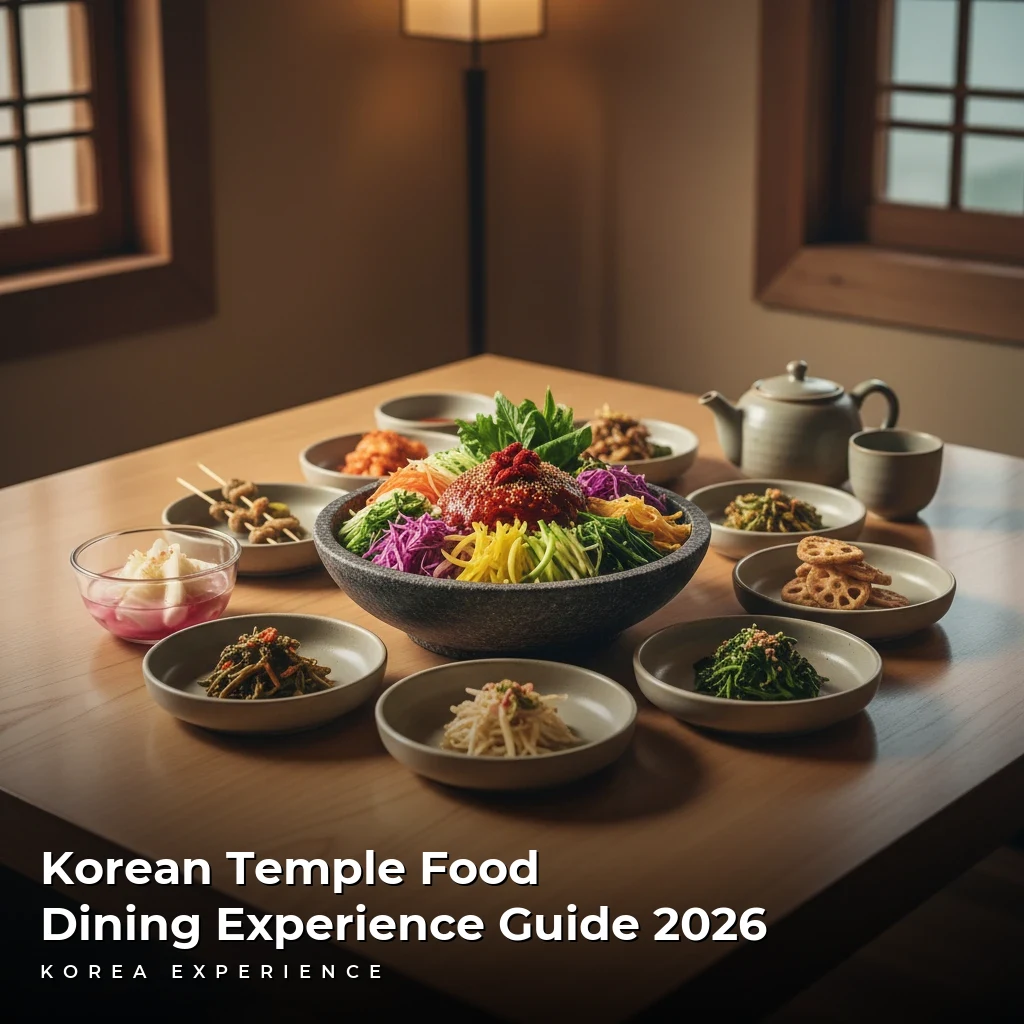
For centuries, Korean Buddhism has championed a vegetarian diet, leading to the development of "Saengchae" – temple food. This cuisine adheres to strict dietary rules, avoiding not only meat, fish, and dairy but also the five "pungent vegetables" (garlic, green onions, chives, wild chives, and leeks), believed to hinder spiritual practice. Temple food emphasizes natural flavors, seasonal ingredients, and mindful preparation, resulting in dishes that are inherently vegan and incredibly healthy.
Dishes like various forms of "Kimchi" (fermented vegetables), though often made without seafood in temples, are prepared with creativity, using fermented beans and other plant-based umami boosters. "Bibimbap" (mixed rice) served in temple style would feature an array of colorful, seasoned vegetables and often wild mushrooms, sans egg or meat. "Japchae" (stir-fried glass noodles) is another staple, typically made with an assortment of vegetables and mushrooms. Exploring temple food is a fantastic way to experience authentic vegetarian and vegan Korean cuisine.
The Modern Plant-Based Revolution in Korea
In recent years, Korea has witnessed a significant surge in plant-based awareness and options, especially in major urban centers like Seoul and Busan. This "green wave" is driven by a combination of factors: increased health consciousness, environmental concerns, and a growing international influence.
This modern movement has led to a proliferation of dedicated vegan restaurants, cafes, and bakeries. From contemporary fusion dishes to veganized versions of traditional Korean comfort food, the choices are expanding rapidly. Supermarkets are stocking more plant-based alternatives, and even some mainstream restaurants are beginning to clearly label vegetarian and vegan options. This makes navigating the country as a plant-based diner much easier than even a decade ago, showcasing a dynamic evolution in plant-based Korea.
Navigating Common Korean Dishes for Vegetarians and Vegans
When exploring vegetarian and vegan Korean cuisine, understanding the nuances of common dishes is key. Many dishes can be naturally plant-based, while others require careful inquiry or modification.
Naturally Plant-Friendly Staples
Many fundamental elements of Korean dining are inherently plant-based.
- Bap (밥): Steamed rice is the cornerstone of almost every Korean meal and is always vegan.
- Banchan (반찬): These are the small, often numerous, side dishes served with a main meal. Many banchan are vegetable-based, such as "Kimchi" (fermented cabbage), "Kongnamul Muchim" (soybean sprout salad), "Sigeumchi Namul" (spinach salad), "Gyeran Mari" (rolled omelet - caution: contains egg, but many other namul are safe), various types of "Jangajji" (pickled vegetables), and "Doraji Namul" (bellflower root salad). Always ask if "Kimchi" contains seafood (see below).
- Japchae (잡채): This popular dish of stir-fried glass noodles with vegetables is often vegan if prepared without meat. Ensure no meat is added.
- Gyeran Jjim (계란찜): Steamed egg, naturally vegetarian but not vegan.
- Dubu Jorim (두부조림): Braised tofu, often savory and spicy, usually vegan if the sauce is checked for fish or meat broth.
- Pajeon (파전) / Buchimgae (부침개): Savory pancakes, typically made with flour, vegetables, and sometimes seafood ("Haemul Pajeon"). A plain "Yachae Pajeon" (vegetable pancake) can be made vegetarian/vegan by ensuring no egg or seafood.
- Guksu (국수): Noodles. Some noodle dishes, especially cold noodle dishes like "Bibim Guksu" (spicy mixed noodles) or "Janchi Guksu" (banquet noodles), can be made vegan by omitting egg garnish and ensuring the broth is vegetable-based.
Dishes Requiring Careful Inquiry
Several beloved Korean dishes are often almost vegetarian or vegan but require a quick check due to common ingredients.
- Kimchi (김치): The national dish. While primarily made from fermented vegetables, traditional "Kimchi" often uses "Jeotgal" (젓갈), a type of fermented seafood (shrimp paste, anchovy sauce) for depth of flavor. Look for "Vegan Kimchi" or "Temple Kimchi" which specifically omits these. Most restaurant kimchi will contain "Jeotgal" unless specified.
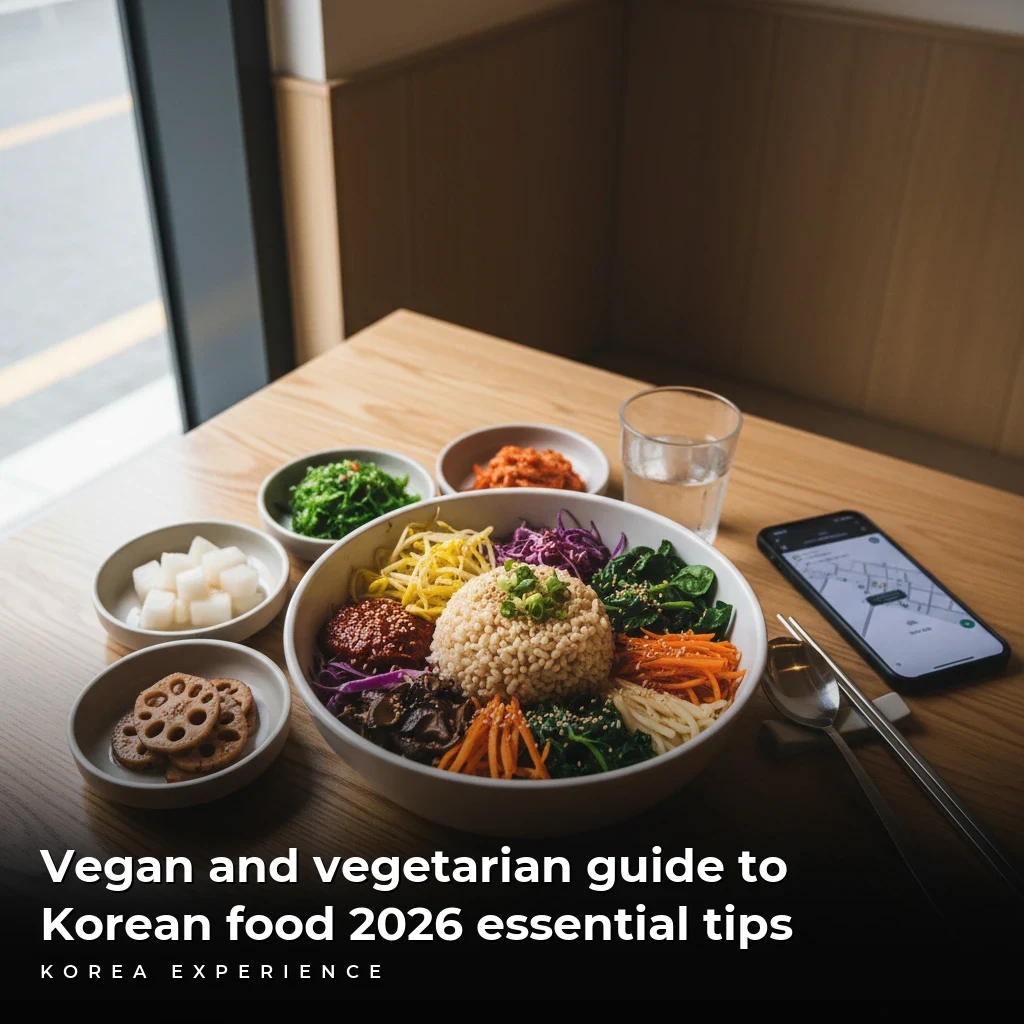
- Bibimbap (비빔밥): A bowl of warm white rice topped with namul, gochujang, and often an egg yolk or fried egg, and sometimes slices of beef. It is incredibly easy to make this vegan by requesting no meat ("Gogi ppaejuseyo") and no egg ("Gyeran ppaejuseyo"). Many places offer tofu or mushroom alternatives.
- Soups and Stews (찌개 / 국): This is where it gets trickiest. Many traditional Korean broths use "Myeolchi Yuksu" (멸치육수 - anchovy broth) or beef broth as a base. Even seemingly vegetarian options like "Doenjang Jjigae" (fermented soybean paste stew) or "Sundubu Jjigae" (soft tofu stew) often use anchovy broth. It's crucial to ask for a vegetable broth ("Chaeso Yuksu" - 채소육수) or confirm no anchovy/meat broth is used.
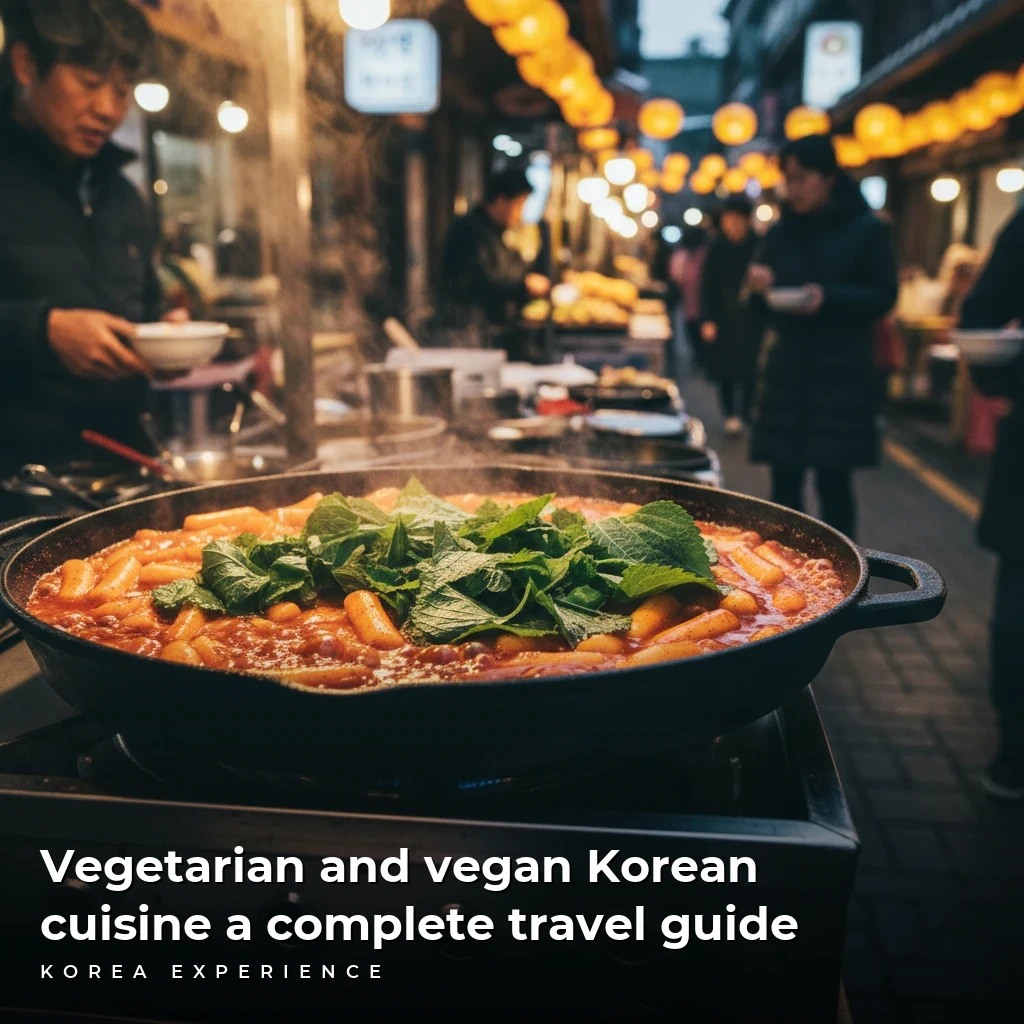
- Tteokbokki (떡볶이): Spicy rice cakes are usually vegetarian, but the sauce often contains fish cakes ("Eomuk" - 어묵), which are fish-based. Ask for it without fish cakes ("Eomuk ppaejuseyo").
Identifying Hidden Animal Products
Beyond the obvious, some ingredients subtly introduce animal products:
- Fish Sauce/Shrimp Paste: Common in "Kimchi" and various sauces.
- Meat Broths: Anchovy, beef, or pork broths are very common bases for soups and stews.
- Egg: Used as a garnish, binder, or in dishes like "Gyeran Mari" or "Gyeran Jjim".
- Dairy: Less common in traditional Korean cuisine, but appearing more frequently in modern fusion dishes or desserts (e.g., cheese "Tteokbokki", milk tea).
- Honey: Used in some traditional desserts or marinades.
Understanding these common pitfalls will significantly enhance your experience of meat-free Korean dishes.
| Common Korean Dish | Naturally Vegetarian/Vegan | Requires Modification (Vegetarian) | Requires Modification (Vegan) | Usually Contains Animal Products |
|---|---|---|---|---|
| Bap (Steamed Rice) | Yes | Yes | Yes | No |
| Kimchi | Often Not | Check for seafood | Check for seafood | Fermented seafood (Jeotgal) |
| Bibimbap | Often Not | Ask no meat | Ask no meat, no egg (Gyeran ppaejuseyo), check gochujang for honey | Meat, Egg |
| Japchae | Often | Check for meat | Check for meat, ensure sauce is plant-based (can contain meat broth or honey) | Meat, sometimes egg garnish |
| Tteokbokki | Yes (sauce) | Ask no fish cakes | Ask no fish cakes (Eomuk ppaejuseyo), check sauce for honey | Fish cakes (Eomuk) |
| Doenjang Jjigae | No (broth) | Ask for vegetable broth | Ask for vegetable broth (Chaeso Yuksu) | Anchovy broth, sometimes meat |
| Sundubu Jjigae | No (broth) | Ask for vegetable broth | Ask for vegetable broth (Chaeso Yuksu) | Anchovy broth, sometimes meat |
| Pajeon / Buchimgae | Depends | Ask no seafood | Ask no seafood, no egg (if using as binder, rare in restaurants but can happen). Specify "Yachae Pajeon" (vegetable pancake) without egg. | Seafood, Egg |
| Kongnamul Guk | No (broth) | Ask for vegetable broth | Ask for vegetable broth (Chaeso Yuksu) | Anchovy broth |
| Dubu Jorim | Often | Ask about sauce | Ask about sauce (ensure no fish sauce, meat broth, honey) | Sometimes fish sauce or broth |
Top Picks for Vegetarian and Vegan Dining in Seoul (and Beyond)
Seoul, as Korea's bustling capital, is at the forefront of the plant-based dining movement, offering an impressive array of options for Seoul vegan restaurants. Outside the capital, while choices may be fewer, dedicated spots and temple food experiences still provide delightful options.
Dedicated Vegan Restaurants in Seoul
Seoul is home to a growing number of establishments entirely dedicated to plant-based dining. These are your safest and often most creative bets.
- Plant Cafe Seoul (플랜트): A pioneer in Seoul's vegan scene, Plant Cafe offers a wide range of Western-inspired vegan comfort food, from burgers and burritos to salads and smoothies, alongside delicious vegan desserts.
- Location: Two branches, one in Itaewon (3rd Floor, 117 Bogwang-ro 60-gil, Yongsan-gu) and another in Yeonnam-dong (129-22 Donggyo-ro, Mapo-gu).
- Approx. Price: 12,000 - 20,000 KRW per main dish.
- Loving Hut (러빙헛): A global vegan chain with multiple locations across Seoul, Loving Hut offers a mix of Korean and international vegan dishes, often in a casual, cafeteria-style setting. Each branch can have a slightly different menu.
- Locations: Numerous, including branches in Sinchon (28-10 Sinchonnyeok-ro, Mapo-gu) and Sinsa-dong (556 Sinsa-dong, Gangnam-gu). Check online for the nearest one.
- Approx. Price: 8,000 - 15,000 KRW.
- Maru JaYeon Sik Kimbap (마루자연식김밥): Specializing in "Kimbap" (seaweed rice rolls), this place is famous for its delicious, healthy, and often vegan rolls. They also offer other simple Korean dishes.
- Location: Multiple, including a popular one near Anguk Station (14 Insadong 8-gil, Jongno-gu).
- Approx. Price: Kimbap rolls usually 4,000 - 7,000 KRW.
- Cook and Book (쿡앤북): A charming vegan restaurant and bookstore in Hongdae offering creative, wholesome vegan dishes, often with a slight Western influence.
- Location: 15 Yanghwa-ro 10-gil, Mapo-gu, Seoul.
- Approx. Price: 10,000 - 18,000 KRW.
Temple Food Experiences
For an authentic, historically rich, and inherently vegan experience, exploring temple food is a must. These establishments provide some of the best vegetarian Korean food that is often naturally vegan.
- Balwoo Gongyang (발우공양): Located near Jogyesa Temple, this Michelin-starred restaurant offers exquisite, refined temple food sets, providing a truly immersive cultural and culinary experience. Reservations are highly recommended.
- Location: 56 Ujeongguk-ro, Jongno-gu, Seoul (within the Templestay building).
- Approx. Price: Set menus from 35,000 - 80,000+ KRW.
- Sanchon (산촌): A long-standing temple food restaurant in Insadong, Sanchon offers a traditional set meal with a variety of seasonal dishes, often accompanied by traditional Korean performances in the evening.
- Location: 14 Gwanhun-ro 16-gil, Jongno-gu, Seoul.
- Approx. Price: Set menus around 30,000 - 45,000 KRW.
- Templestay Programs: Many temples across Korea, including those near Seoul like Jinkwansa Temple, offer templestay programs that often include a temple food meal or cooking class. This is a fantastic way to learn about the philosophy behind the food.
- Contact: Check the official Templestay website for various locations and programs.
Vegetarian-Friendly Local Eateries
Many non-vegan restaurants can still provide delicious plant-based meals with a bit of communication.
- Bibimbap Restaurants: Look for specialized "Bibimbap" eateries. Many offer vegetable-only options or are happy to omit meat and egg. "Jeonju Bibimbap" is a famous regional style; inquire about vegetable-only versions.
- Kalguksu (칼국수) / Sujebi (수제비) Restaurants: Noodle or hand-torn dough soup places might offer a vegetable broth version, especially if tofu or mushroom options are on the menu. Always confirm the broth base.
- Daehan Guksu (대한국수): A popular chain specializing in noodles, some locations may offer clearly labeled vegetable noodle options.
Practical Tips for Plant-Based Travelers in Korea
Successfully navigating vegetarian and vegan Korean cuisine requires preparation, communication, and a willingness to explore. These practical tips will help ensure a smooth and delicious trip.
Essential Korean Phrases for Dietary Needs
Learning a few key phrases can make a world of difference when ordering food. While many Koreans, especially in tourist areas, speak some English, having these phrases ready will be invaluable.
- Gogi an meogeoyo (고기 안 먹어요): I don't eat meat.
- Haesanmul an meogeoyo (해산물 안 먹어요): I don't eat seafood.
- Yuche an meogeoyo (유채 안 먹어요): I don't eat dairy.
- Gaeran an meogeoyo (계란 안 먹어요): I don't eat eggs.
- Jeotgal eopge haejuseyo (젓갈 없게 해주세요): Please make it without fermented seafood (for Kimchi).
- Myeolchi yuksu ppaejuseyo (멸치 육수 빼주세요): Please omit anchovy broth.
- Chaeso yuksu isseoyo? (채소 육수 있어요?): Do you have vegetable broth?
- Vegan-i-eyo (비건이에요): I am vegan. (This is a commonly understood term.)
- Yachaeppun-i-eyo (야채뿐이에요): Just vegetables.
It's helpful to say "juseyo" (주세요) meaning "please give me" or "ppaenaejuseyo" (빼내주세요) meaning "please remove it" after specific ingredients. For example, "Gogi ppaejuseyo" (Please remove meat).
| English Phrase | Romanized Korean | Explanation |
|---|---|---|
| I don't eat meat. | Gogi an meogeoyo. | "Gogi" = meat, "an meogeoyo" = don't eat. |
| I don't eat seafood. | Haesanmul an meogeoyo. | "Haesanmul" = seafood. |
| I don't eat dairy. | Yuche an meogeoyo. | "Yuche" = dairy. |
| I don't eat eggs. | Gaeran an meogeoyo. | "Gaeran" = egg. |
| Please no fermented seafood | Jeotgal eopge haejuseyo. | Useful when ordering Kimchi. |
| Please no anchovy broth. | Myeolchi yuksu ppaejuseyo. | Critical for soups and stews. |
| Do you have vegetable broth? | Chaeso yuksu isseoyo? | "Chaeso" = vegetable, "yuksu" = broth. |
| I am vegan. | Vegan-i-eyo. | Widely understood term. |
| Just vegetables. | Yachaeppun-i-eyo. | Can be used to confirm a dish contains only vegetables. |
Using Translation Apps and Dietary Cards
Beyond memorizing phrases, technology is your friend.
- Translation Apps: Google Translate or Papago (Naver Papago is often preferred for Korean) can translate complex requests in real-time. Type out your dietary needs and show the screen to your server.
- Dietary Cards: Consider printing out a small card in Korean that clearly states your dietary restrictions (e.g., "I am vegan. I do not eat any meat, poultry, fish, seafood, eggs, dairy, honey, or any animal products. Please use vegetable broth only. Thank you.") This can be extremely effective in smaller towns or less touristy areas. You can find templates online or ask a Korean speaker to help you write one.
Shopping for Vegan Groceries and Snacks
For moments when dining out is difficult or you simply want to prepare your own food, grocery stores offer a range of options.
- Convenience Stores (편의점): GS25, CU, 7-Eleven, and E-mart 24 often carry vegan staples like instant ramen (check ingredients carefully, some brands are vegan), nuts, fruits, rice, soy milk, and occasionally even vegan kimbap or sandwiches (though these are less common). Look for products explicitly labeled "vegan" or with a green leaf symbol.
- Supermarkets: Large supermarkets like E-mart, Lotte Mart, and Homeplus have dedicated health food sections that may stock imported vegan products, plant-based meats, and a wider variety of fresh produce. International markets (e.g., in Itaewon) are also good sources.
- Local Markets: Traditional markets are excellent for fresh fruits, vegetables, and dried goods. While you won't find processed vegan items, you can stock up on ingredients for simple meals.
Embrace Side Dishes (Banchan)
Don't underestimate the power of "Banchan"! In many restaurants, these small side dishes are refillable and often include a variety of seasoned vegetables. You can sometimes make a satisfying vegetarian or vegan meal just from the "Banchan" and rice. Always politely ask which ones are "Gogi eopge" (meat-free) or "Haesanmul eopge" (seafood-free).
Beyond Restaurants - Cooking and Culture
Your plant-based Korea experience doesn't have to be limited to restaurants. Engaging with Korean culinary culture through cooking and understanding social norms can greatly enrich your trip.
Exploring Korean Vegan Cooking Classes
For those staying longer or wanting a deeper dive, consider joining a Korean cooking class. Many tourist-focused cooking schools now offer specific vegetarian or vegan options, focusing on traditional dishes that can be easily plant-based. This is a fantastic way to learn to prepare your favorite meat-free Korean dishes and demystify ingredients. Look for classes in Seoul's popular tourist districts like Insadong or Hongdae.
The Rise of Home-Cooking and Online Resources
With increasing demand, online resources for vegan Korean recipes are abundant. Blogs, YouTube channels, and even Korean cooking apps dedicated to plant-based diets can guide you in preparing delicious meals in your own accommodation if you have access to a kitchen. This can be a cost-effective and highly customizable way to enjoy vegetarian and vegan Korean cuisine.
Cultural Nuances of Dietary Requests
While Koreans are generally hospitable, dietary requests, especially for "no anchovy broth" in traditional establishments, might be met with confusion or a polite "it's difficult." It’s important to be patient and understanding. In some cases, it might genuinely be challenging for a small, traditional eatery to alter their established cooking methods. Always be polite, apologetic if necessary, and have a backup plan or a list of dedicated vegan restaurants for such instances.
Regional Vegetarian/Vegan Highlights
While Seoul is undoubtedly the vegan hub, other regions of Korea offer unique plant-based experiences. Exploring these areas can add another dimension to your journey through plant-based Korea regions.
Jeonju and the Bibimbap Experience
Jeonju, a UNESCO City of Gastronomy, is famous for its "Bibimbap." While traditional Jeonju Bibimbap often includes beef and egg, many restaurants in Jeonju are accustomed to serving a vegetable-only version (often called "Yachae Bibimbap"). This city's rich culinary heritage means even its basic vegetable side dishes are exceptional. When in Jeonju, don't miss the opportunity to try this iconic dish in its birthplace, customized to your dietary needs.
Jeju Island's Unique Offerings
Jeju Island, known for its volcanic landscape and fresh produce, also provides unique vegan-friendly options.
- Fresh Produce: Jeju's fertile soil yields delicious citrus fruits (Tangerines, Hallabong) and other seasonal vegetables.
- Black Pork Alternatives: While Jeju is famous for its black pork, many cafes and smaller eateries cater to a health-conscious crowd, offering fresh salads, vegetable-centric meals, and even some dedicated vegan cafes, especially in tourist hubs like Jeju City and Seogwipo.
- Local Specialties: Look for "Jeju Maejang Bibimbap" (buckwheat bibimbap) or "Momguk" (seaweed soup – check for broth base) which can sometimes be adapted.
| Region | Vegan/Vegetarian Specialty | Notes |
|---|---|---|
| Seoul | Diverse dedicated vegan restaurants, Temple food | Hub of modern vegan dining, Michelin-starred temple food experiences, wide range of cuisines. |
| Jeonju | Jeonju Bibimbap (customizable), exceptional Banchan | Famous for "Bibimbap" – ask for "Yachae Bibimbap" (vegetable only). Rich in traditional vegetarian side dishes. |
| Jeju Island | Fresh produce, some vegan cafes, adaptable local dishes | Focus on fresh, local ingredients. Growing number of health-conscious cafes. Look for adaptable noodle or rice dishes. |
| Buddhist Temples | Saengchae (Temple Food) | Available nationwide. Inherent vegan and healthy cuisine, often offered through templestay programs or dedicated restaurants like Balwoo Gongyang and Sanchon. |
| Busan | Dedicated vegan eateries, adaptable seafood-free dishes | Second-largest city, growing vegan scene. Some "Milmyeon" (wheat noodles) or "Naengmyeon" (cold noodles) places can be adapted. |
Frequently Asked Questions about Vegetarian and Vegan Korean Cuisine
Navigating a new culinary landscape always brings questions. Here are some common queries about vegetarian and vegan Korean cuisine.
1. Is all Kimchi vegan?
No, traditional "Kimchi" is often not vegan. Most commonly, "Kimchi" uses "Jeotgal" (fermented seafood, such as shrimp paste or anchovy sauce) for its characteristic umami flavor. However, vegan "Kimchi" (also known as "Temple Kimchi" or "Chaesik Kimchi" - vegetable Kimchi) is available, especially in dedicated vegan restaurants, temple food eateries, or specialty stores. Always ask or look for labels.
2. Can I find vegan options at convenience stores?
Yes, increasingly. While full meals might be limited, convenience stores in Korea offer many naturally vegan snacks like fruits, nuts, roasted seaweed, sweet potatoes, and various beverages (soy milk, fruit juices). Some instant ramens are accidentally vegan (always check ingredients for meat/fish extracts). Look for explicitly labeled vegan products which are becoming more common.
3. Is temple food always vegan?
Yes, by definition, Korean temple food ("Saengchae") is always vegan. It adheres to strict Buddhist dietary principles, excluding all animal products (meat, fish, dairy, eggs) as well as the five pungent vegetables (garlic, green onions, chives, wild chives, and leeks). This makes temple food restaurants and experiences the safest and most authentic vegan dining option.
4. How common are vegan restaurants outside of Seoul?
While Seoul boasts the highest concentration of dedicated vegan restaurants, other major cities like Busan, Daegu, and Gwangju are also seeing a rise in plant-based eateries. In smaller towns, dedicated vegan restaurants are less common. In these areas, your best bet is often temple food, general restaurants with adaptable vegetable-focused dishes (like Bibimbap without meat/egg), or relying on convenience stores and supermarkets for ingredients.
5. What are some naturally vegan Korean snacks?
Many traditional Korean snacks are naturally vegan. These include "Goguma Mattang" (candied sweet potato), "Yakwa" (honey cookies, caution: contains honey, so not strictly vegan for some), various types of "Tteok" (rice cakes – plain ones are vegan, but fillings might not be), dried fruits, roasted chestnuts, and various "Jorim" (braised or simmered dishes) made with vegetables or tofu if checked for broth/sauce. Plain roasted seaweed (Gim) is also a popular vegan snack.
Conclusion: Embrace Your Plant-Based Journey in Korea
Korea’s culinary landscape, while traditionally perceived as meat-heavy, is a treasure trove for those seeking vegetarian and vegan Korean cuisine. From the serene, centuries-old traditions of Buddhist temple food to the dynamic and innovative offerings of modern Seoul vegan restaurants, there’s a surprising depth and breadth of plant-based options waiting to be discovered.
By familiarizing yourself with key dishes, understanding potential hidden animal products, learning a few essential Korean phrases, and leveraging dedicated vegan establishments, you can enjoy an incredibly rich and satisfying culinary journey. Don't be afraid to ask questions, explore diverse neighborhoods, and embrace the vibrant flavors that Korea has to offer.
Your plant-based adventure in Korea will not only be delicious but also a unique opportunity to connect with the country's rich culture and evolving food scene. So pack your bags, prepare your palate, and get ready to savor the delightful and increasingly accessible world of vegetarian and vegan Korean cuisine. Happy eating!
About the Author
Korea Experience Team
Written by the Korea Experience editorial team - experts in Korean medical tourism, travel, and culture with years of research and firsthand experience.
⚠️ Medical Disclaimer
The information provided on this website is for general informational purposes only and does not constitute medical advice. Always consult with qualified healthcare professionals before making any medical decisions.
Continue Reading
Explore more articles you might find interesting
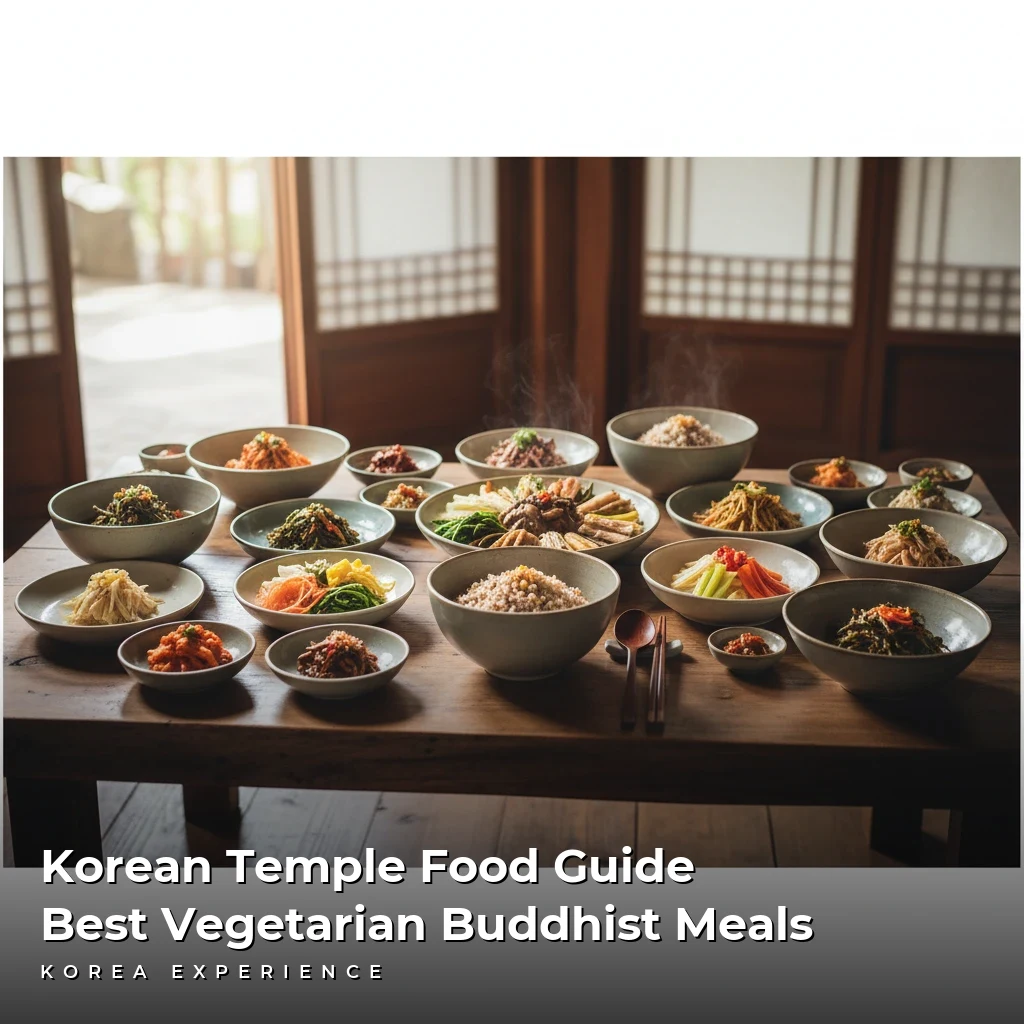
Discover the diverse and healthy world of traditional Korean breakfast foods. From hearty rice soups to banchan-filled spreads, learn what Koreans eat and where to find authentic morning meals.
Explore Seoul's vibrant food markets from Gwangjang's street food to Noryangjin's fresh seafood. Your essential guide for 2026 market adventures.
Explore Seoul's vibrant cafe culture with our expert guide to the best coffee shops and dessert cafes for 2026, offering unique experiences and delicious treats.