Food & Dining

Vegan Temple Food Classes Learning from Monks in Seoul 2026

Discover Seoul's unique vegan temple food classes in 2026, learning ancient culinary traditions and mindful eating from Buddhist monks. Plan your immersive journey.

Unveiling Seoul's Spiritual Cuisine: Vegan Temple Food Classes with Monks in 2026

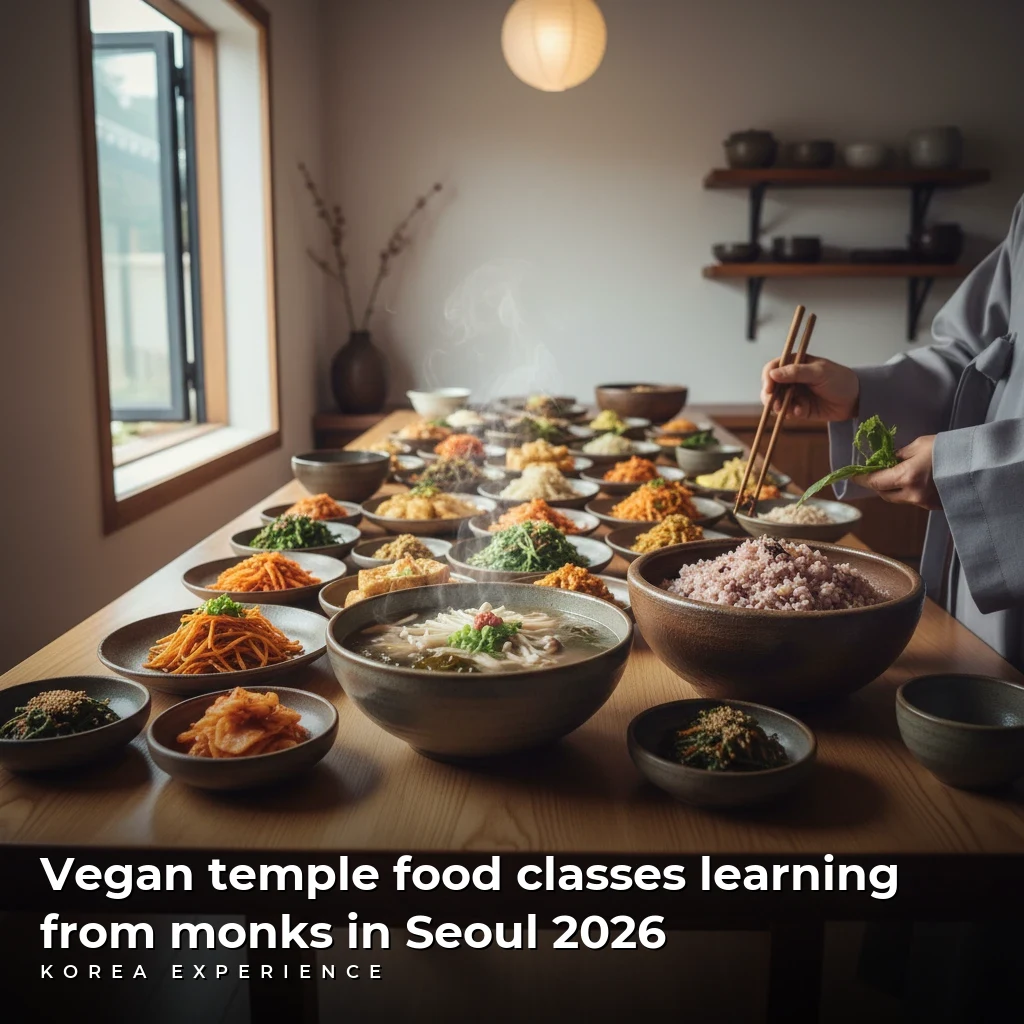
Seoul, a vibrant metropolis where ancient traditions beautifully intertwine with cutting-edge modernity, offers an unparalleled culinary journey for the discerning traveler. While the city's street food and Michelin-starred restaurants often capture the limelight, an increasingly popular and profoundly enriching experience awaits those seeking a deeper connection: Vegan Temple Food Classes Learning from Monks in Seoul 2026. This isn't merely a cooking lesson; it's an immersive dive into the heart of Korean Buddhist culture, a mindful exploration of plant-based cuisine, and a rare opportunity to glean wisdom from monastic practitioners.

In 2026, as global interest in plant-based diets and holistic wellness continues to surge, these unique classes offer international visitors an authentic taste of Korea's spiritual heritage. Imagine mastering time-honored recipes, understanding the philosophy behind each ingredient, and sharing silent meals – all under the gentle guidance of Buddhist monks or nuns. This comprehensive guide will illuminate why learning vegan temple food is an essential experience for your Seoul itinerary, where to find the best classes, what to expect, and practical tips to ensure your journey is as nourishing as the food itself. Prepare to transform your understanding of Korean cuisine and mindful living.

What is Korean Temple Food K-Temple Food?

At its core, Korean Temple Food, often referred to as K-Temple Food, is more than just a diet; it's a culinary philosophy rooted in Buddhist principles of mindfulness, compassion, and harmony with nature. Developed over centuries in Buddhist monasteries, this cuisine is entirely plant-based and aims to nurture both the body and the spirit, fostering spiritual practice rather than hindering it.

Philosophy and Principles of Temple Food

The fundamental philosophy of Temple Food revolves around several key tenets:

  • No Pungent Vegetables (O-Shin-Chae): A defining characteristic is the exclusion of five pungent vegetables: garlic, green onions, chives, leeks, and onions. These are believed to stimulate the senses and interfere with spiritual meditation by promoting anger or sexual desire. Instead, dishes emphasize natural flavors from fresh, seasonal produce.
  • Minimalism and Simplicity: Temple food embraces simplicity, using minimal seasoning to allow the natural taste of ingredients to shine through. The focus is on whole, unprocessed foods.
  • Mindful Eating (Baru Gongyang): Eating is considered a spiritual practice. Meals are often consumed in silence, reflecting on the efforts involved in producing the food and appreciating its essence. The ritual of Baru Gongyang, a communal monastic meal, exemplifies this profound respect, where every grain of rice is valued.
  • Sustainability and Seasonality: Ingredients are primarily sourced locally and seasonally, reflecting a deep respect for the environment and an understanding of nature's cycles. Nothing is wasted, and dishes are designed to be wholesome and easily digestible.
  • Medicinal Qualities: Many ingredients are chosen for their purported health benefits, aligning food with traditional Eastern medicine principles where food is medicine. Fermented foods like jang (Korean sauces like soy sauce and gochujang) are vital for both flavor and gut health.

Key Ingredients and Techniques

Korean Temple Food showcases an incredible array of plant-based ingredients and sophisticated techniques that highlight natural flavors.

  • Fresh, Seasonal Produce: Expect a bounty of vegetables, mountain greens (san-namul), mushrooms, roots, and edible wild plants, all varying with the seasons.
  • Grains and Legumes: Rice, barley, millet, and various beans form the staple base of many meals, providing sustained energy.
  • Fermented Foods: Beyond the five pungent vegetables, fermented foods are central. Doenjang (fermented soybean paste), ganjang (soy sauce), and gochujang (chili paste) are fundamental flavor bases, along with various kimchi made without garlic or seafood products.
  • Natural Seasonings: Instead of artificial additives, natural sweeteners like dried fruits or malt syrup, and flavor enhancers like kelp broth (dashima) and mushroom broth, are used. Sesame oil and perilla oil add richness.
  • Cooking Techniques: Dishes often involve steaming, blanching, sautéing, and stewing. Frying is rare, keeping the food light and healthy. Emphasis is placed on extracting and layering subtle flavors.

Understanding these principles enhances the appreciation of a vegan temple food class. It’s not just about cooking delicious food; it's about connecting with a way of life that cherishes nature, mindfulness, and well-being.

Why Choose Vegan Temple Food Classes in Seoul?

Opting for a vegan temple food class in Seoul offers a multifaceted experience that transcends typical tourist activities, providing a unique blend of cultural immersion, health benefits, and personal enrichment.

A Unique Cultural and Culinary Immersion

Seoul is a hub of dynamic culture, and these classes offer a distinct window into Korean heritage that goes beyond palaces and shopping districts.

  • Beyond the Superficial: Unlike a quick street food tour, a temple food class provides a deeper understanding of the philosophical underpinnings of Korean cuisine and Buddhist culture. You're not just tasting food; you're learning its story and significance.
  • Direct Interaction with Monastic Life: This is a rare opportunity to spend time with Buddhist monks or nuns, who are living repositories of ancient traditions. Their insights into mindfulness, compassion, and simple living are invaluable.
  • Authentic Korean Experience: Temple food represents a pure form of Korean culinary tradition, preserved through centuries within monastic communities. It predates many modern influences and offers a taste of true historical Korean cuisine.
  • Hands-on Learning: Engaging directly in the preparation of dishes fosters a more profound connection than simply observing. You'll learn specific techniques and gain practical skills you can replicate at home.

Health and Wellness Benefits

For those prioritizing health and well-being, vegan temple food classes align perfectly with a holistic lifestyle.

  • Clean, Plant-Based Eating: The entire menu is 100% vegan, devoid of meat, fish, eggs, and dairy, making it an ideal choice for vegans, vegetarians, and anyone seeking clean eating options.
  • Nutrient-Rich Ingredients: With an emphasis on fresh vegetables, grains, legumes, and fermented foods, temple cuisine is packed with vitamins, minerals, fiber, and probiotics.
  • Mindful Approach to Food: The practice of mindful eating taught in these classes can reduce stress, improve digestion, and foster a healthier relationship with food, extending benefits far beyond the meal itself.
  • Detoxifying and Rejuvenating: Many participants report feeling lighter, more energetic, and mentally clearer after consuming temple food, attributing it to the absence of heavy, stimulating ingredients.

Accessibility for International Visitors

Korean Buddhist temples and cultural centers have increasingly recognized the global appeal of temple food, making it accessible for international travelers.

  • English Language Instruction: Many prominent venues offer classes specifically designed for non-Korean speakers, with instruction provided in English or with professional English interpretation.
  • Welcoming Environment: Temples are inherently welcoming spaces, and staff are accustomed to guiding international visitors through the cultural nuances.
  • Convenient Locations: While some temples are nestled in serene mountain settings, several key venues offering classes are easily accessible within or just outside central Seoul, often via public transportation.
  • Diverse Program Options: From short half-day cooking experiences to multi-day temple stays that include cooking, meditation, and ceremonies, there's a program to suit various interests and schedules.

Choosing a vegan temple food class in Seoul in 2026 is more than just booking an activity; it's an investment in cultural understanding, personal wellness, and unforgettable memories.

Top Venues for Temple Food Classes with Monks in Seoul 2026

Seoul and its surrounding areas host several excellent venues where you can experience vegan temple food classes, often led by or associated with Buddhist monks or nuns. Each offers a slightly different atmosphere and program focus.

Balwoo Gongyang (Temple Food Center)

Balwoo Gongyang is arguably the most renowned temple food restaurant in Seoul, located near Jogyesa Temple, the center of Korean Buddhism. Beyond its Michelin-recognized restaurant, it operates a Temple Food Center that frequently hosts cooking classes.

  • Location: Jongno-gu, central Seoul, easily accessible by subway.
  • Program Focus: Emphasizes the sophisticated and refined aspects of temple cuisine. Classes often focus on specific seasonal ingredients or traditional dishes, taught by expert chefs who are often monks or nuns, or have extensive training in temple food.
  • What to Expect: Professional kitchen setting, detailed instruction, and a multi-course meal experience. Classes are typically half-day (2-3 hours) and conclude with enjoying the meal you've prepared.
  • Estimated Price Range (2026): 80,000 - 150,000 Korean Won per person, depending on the specific program and duration.
  • Booking: Highly recommended to book well in advance through their official website or reputable travel platforms. English-speaking staff are available.

Jin Kwan Sa Temple

Nestled at the foot of Bukhansan National Park, Jin Kwan Sa Temple offers a more immersive and tranquil experience. This historic temple is particularly famous for its dedication to temple food and its temple stay programs.

  • Location: Eunpyeong-gu, northern Seoul, a scenic bus ride from central Seoul, offering a sense of escape from the city bustle.
  • Program Focus: Integrates cooking with other temple activities, often as part of a longer temple stay. Classes here tend to be more hands-on and rustic, emphasizing the traditional monastic kitchen experience. They are known for their commitment to preserving the specific temple food traditions.
  • What to Expect: A serene temple environment, potentially including meditation, tea ceremonies, and temple tours alongside the cooking class. Classes might involve preparing 2-3 dishes.
  • Estimated Price Range (2026): Day classes can range from 50,000 - 100,000 Korean Won. Temple stay programs including cooking will be higher, from 100,000 - 200,000 Korean Won per person for an overnight stay.
  • Booking: Essential to book through the official Jin Kwan Sa Temple website or the Korea Temple Stay website. English interpreters are usually available for international groups.

Korea Temple Stay (General Program Information)

While not a single venue, the Korea Temple Stay organization is an invaluable resource for finding temple food experiences across the country, including various temples in and around Seoul that offer specific programs.

  • How it Works: This official portal allows you to search for temples by region, program type (e.g., "culinary experience," "meditation"), and availability. Many smaller, lesser-known temples also offer exceptional and more intimate classes.
  • Program Focus: Varies greatly by temple. Some might focus on specific regional temple foods, others on particular seasonal harvests. Programs can range from short cooking demonstrations to multi-day immersive stays.
  • What to Expect: A wide spectrum of experiences, from quiet, rural temples to more active urban ones. The authenticity is guaranteed, as these are run by the temples themselves.
  • Estimated Price Range (2026): Day programs typically 40,000 - 80,000 Korean Won. Overnight temple stays including cooking are usually 70,000 - 150,000 Korean Won.
  • Booking: Exclusively through the official Korea Temple Stay website (eng.templestay.com). It offers comprehensive information and an integrated booking system in English.

Here's a comparison table summarizing these top options:

FeatureBalwoo Gongyang (Temple Food Center)Jin Kwan Sa TempleKorea Temple Stay (Various Temples)
LocationCentral Seoul (Jongno-gu)Northern Seoul (Bukhansan Park)Across Seoul and surrounding regions
AtmosphereRefined, professional, urbanTranquil, natural, immersiveVaries widely (urban, rural, serene)
Typical ProgramHalf-day cooking class, mealDay class, or cooking as part of Temple StayDay classes, overnight Temple Stays
InstructionExpert chefs (often monastic-trained)Monks/Nuns, temple staffMonks/Nuns, temple staff
English LanguageYes, standardYes, usually with interpreterVaries, many offer English
Estimated Price (2026)80,000 - 150,000 KRW (class)50,000 - 100,000 KRW (class)40,000 - 150,000 KRW (per program)
Booking MethodOfficial website, travel platformsOfficial Jin Kwan Sa or Temple Stay websiteeng.templestay.com

When planning for your Vegan Temple Food Classes Learning from Monks in Seoul 2026, consider your preferred location, the level of immersion you desire, and your budget to select the perfect venue.

What to Expect During Your Temple Food Class Experience

Embarking on a temple food class is an experience rich in cultural learning and sensory engagement. Knowing what to expect can help you prepare and fully embrace the journey.

The Learning Environment

The setting for a temple food class is typically one of calm and reverence, whether in a dedicated temple kitchen or a specialized culinary center.

  • Respectful Atmosphere: Expect a peaceful, quiet environment conducive to learning and reflection. Loud conversations are generally discouraged, promoting a mindful focus on the task at hand.
  • Order and Cleanliness: Monastic kitchens are known for their meticulous order and cleanliness, reflecting the Buddhist principle of purity. Your workspace will be tidy and well-organized.
  • Hands-on and Experiential: These are not passive demonstrations. You will actively participate in washing, chopping, mixing, and cooking ingredients under the guidance of your instructors.

Typical Class Structure

While specific programs vary, a common structure for a temple food class often includes several key components:

  1. Welcome and Introduction: The session usually begins with a warm welcome from the monk, nun, or instructor, followed by an introduction to Korean temple food philosophy, the day's menu, and the ingredients. This often includes a brief meditation or moment of silence to set a mindful tone.
  2. Ingredient Preparation: You'll learn about the seasonal ingredients, their significance, and how to prepare them using traditional techniques. This is where you might learn to julienne vegetables perfectly, make a traditional jang sauce from scratch, or understand the art of soaking and preparing grains.
  3. Cooking Session: Under direct supervision, you'll prepare 2-4 dishes. This is a practical, hands-on experience, where the instructors guide you through each step, offering tips on flavor balance, texture, and presentation.
  4. Mindful Meal (Baru Gongyang or similar): The highlight for many. After cooking, you'll partake in the meal you've collectively prepared. This is often done in silence, or with minimal conversation, to encourage mindful eating and full appreciation of the food. You might learn the proper etiquette of Baru Gongyang, involving special bowls and a ritualistic approach to consuming and cleaning your dishes.
  5. Tea Ceremony or Q&A: Some classes conclude with a traditional tea ceremony (dado) or a Q&A session, providing an opportunity to ask questions about temple life, Buddhist philosophy, or the cuisine itself. This is a valuable chance to gain insights directly from the monastic teachers.

Interacting with Monks and Nuns

Learning directly from monks or nuns is a truly unique aspect of these classes.

  • Guides and Teachers: They serve not just as culinary instructors but also as spiritual guides. Their presence imbues the class with a profound sense of tranquility and wisdom.
  • Respectful Engagement: Always address them respectfully. Monks are typically called Seunim (스님), and nuns are Bhikku-ni Seunim. A polite bow is customary.
  • Opportunities for Insight: During Q&A sessions, seize the opportunity to inquire about their daily life, the deeper meaning of temple food, or aspects of Buddhist practice. Their answers often provide fresh perspectives on life and well-being.
  • Quiet Observance: Observe their demeanor, their movements, and their approach to food preparation. There is much to learn from their peaceful and deliberate actions.

Participating in a vegan temple food class is an intimate encounter with a centuries-old tradition, offering both culinary skills and a serene respite from the modern world.

Practical Tips for Booking and Enjoying Your Class

To ensure your vegan temple food class experience in Seoul is smooth and memorable, here are some essential practical tips.

Booking in Advance

  • High Demand: Temple food classes, especially those taught by monks or at popular temples like Jin Kwan Sa or the Balwoo Gongyang center, are in high demand, particularly among international tourists.
  • Seasonal Peaks: If you plan to visit during peak tourist seasons (spring cherry blossoms, autumn foliage, summer holidays), booking several months ahead is strongly advised. Even off-peak, a few weeks' notice is usually necessary.
  • Online Portals: Utilize official websites like the Korea Temple Stay portal (eng.templestay.com) for a wide range of options, or the specific websites for Balwoo Gongyang and Jin Kwan Sa Temple. Many programs can be filtered by language, date, and type.
  • Confirm English Availability: Always double-check if the class is offered in English or if an English interpreter will be present.

What to Wear and Bring

  • Comfortable and Modest Attire: You'll be standing, cooking, and possibly sitting on the floor (for meditation or dining). Wear loose-fitting, comfortable clothing. Shoulders and knees should be covered as a sign of respect within the temple environment. Avoid overly revealing or noisy clothing.
  • Footwear: You will likely be asked to remove your shoes before entering certain areas, including kitchens and dining halls. Easy-to-remove footwear is recommended.
  • Personal Items: While often provided, bringing your own small notebook and pen for jotting down recipes or reflections can be helpful. A water bottle is also a good idea. Leave unnecessary valuables at your accommodation.
  • Open Mind and Heart: Most importantly, come with a willingness to learn, adapt, and immerse yourself fully in the experience.

Etiquette and Respect

  • Silence and Mindfulness: Many temple activities, especially eating and meditation, are conducted in silence. Try to minimize chatter and embrace the quiet introspection.
  • Respectful Demeanor: Always be respectful towards the monks, nuns, and temple staff. A slight bow is a common greeting and sign of respect.
  • No Alcohol or Smoking: Alcohol consumption and smoking are strictly prohibited on temple grounds.
  • Photography: Ask permission before taking photos, especially of people or during sacred rituals. Some areas may have strict no-photography rules.
  • Cleanliness: Always clean up after yourself. During Baru Gongyang, you'll be taught how to wash your own bowls, reflecting the principle of self-sufficiency and respect for resources.

Getting There

  • Public Transportation: Most temples and centers are accessible via Seoul's efficient subway and bus system. Use navigation apps like Kakao Maps or Naver Maps (which are generally better in Korea than Google Maps for public transport directions) to plan your route.
  • Allow Extra Time: Especially if heading to temples outside the immediate city center (like Jin Kwan Sa), allow ample travel time to account for transfers and finding your way.
  • Temple Stay Shuttle: For longer temple stays, some temples might offer shuttle services from specific subway stations; check with your chosen temple.

Here's a practical checklist to help you prepare:

ItemDescriptionStatus
Booking ConfirmationPrint or save your booking details, including address and contact info.Checked
Comfortable ClothingLoose-fitting, modest attire (shoulders and knees covered).Checked
Easy-to-remove FootwearSlip-on shoes for convenience.Checked
Navigation AppKakao Maps or Naver Maps downloaded and ready.Checked
Water BottleStay hydrated during your class.Checked
Notebook & PenFor recipes, insights, and reflections.Checked
Emergency ContactsLocal contact, embassy details.Checked
Positive AttitudeEmbrace the serene and mindful experience.Checked

By following these tips, you'll be well-prepared to fully enjoy your Vegan Temple Food Classes Learning from Monks in Seoul 2026 and gain a deeper appreciation for this unique aspect of Korean culture.

Beyond the Kitchen: The Broader Temple Stay Experience

While a specific temple food class offers a fantastic introduction, for those seeking an even deeper immersion, combining it with a broader temple stay experience can be profoundly transformative. A temple stay allows you to truly live, albeit briefly, the monastic life and further connect with Korean Buddhism.

Connecting with Korean Buddhism

A temple stay goes beyond just cooking and offers a holistic experience of Buddhist practices.

  • Meditation (Chamseon): Learn basic meditation techniques from monks or nuns, focusing on breath and mindfulness. This practice is central to Buddhist life and complements the mindful eating aspect of temple food.
  • Ceremonies (Yeebool): Participate in morning and evening ceremonial services, observing the rituals, chanting, and bowing. These solemn practices offer a glimpse into the spiritual devotion of monastic life.
  • Tea Ceremony (Dado): Engage in a traditional Korean tea ceremony, a meditative practice that emphasizes grace, peace, and appreciation for the moment.
  • Interacting with Monastics: Spend more time with resident monks and nuns, learning about their daily routines, their journey to monastic life, and their insights on a range of spiritual topics. These conversations are often highlights for many participants.

Exploring Temple Grounds

Temples in Korea are often architectural marvels set amidst breathtaking natural beauty.

  • Traditional Architecture: Wander through courtyards, admire colorful dancheong (traditional decorative patterns), and appreciate the intricate woodworking of the main halls and smaller shrines.
  • Nature Walks: Many temples are situated in serene mountain or forest settings, offering opportunities for peaceful walks or hikes, connecting with the natural environment.
  • Historical Significance: Discover the long history of the temple, often dating back centuries, and learn about its role in Korean history and culture. Look for ancient stone pagodas, relics, and artistic treasures.
  • Photography: The peaceful aesthetics of temples, especially during dawn or dusk, provide incredible opportunities for reflective photography (always respectfully and with permission).

Long-term Stays vs. Day Programs

Temple stay programs cater to various interests and time commitments.

  • Day Programs: Focus on specific activities like a temple food class, a tea ceremony, or a brief meditation session. These are ideal for those with limited time or who prefer a gentle introduction.
  • Overnight Stays: Typically include accommodation, meals (temple food), and participation in various temple activities like morning ceremonies, meditation, and perhaps a cooking class. These offer a more comprehensive experience of monastic life.
  • Multi-day Stays: Some temples offer longer programs, allowing for deeper immersion and more in-depth learning, particularly for meditation or specific crafts.

Here's a comparison table between focusing solely on a day class versus a full temple stay experience:

FeatureVegan Temple Food Day ClassOvernight Temple Stay (including food)
Duration2-4 hours1-2 nights, potentially longer
Primary FocusCulinary skills, food philosophyHolistic immersion, spiritual practices, food
Activities IncludedCooking, mindful meal, intro to philosophyMeditation, ceremonies, tea, temple food, sleep
Interaction with MonksLimited to class instructorsBroader, more frequent interactions
Cultural DepthGood introductionDeep immersion
Cost (Estimated 2026)40,000 - 150,000 KRW70,000 - 200,000 KRW per person, per night
Ideal ForTravelers with limited time, foodiesThose seeking deep cultural/spiritual retreat

For an unforgettable and truly enriching journey into Korean culture and well-being, consider expanding your Vegan Temple Food Classes Learning from Monks in Seoul 2026 into a full temple stay. It's an opportunity for profound reflection, learning, and connection.

Frequently Asked Questions about Vegan Temple Food Classes

To help you plan your visit, here are answers to some common questions about attending vegan temple food classes in Seoul.

Q1: Is the food truly 100% vegan?

Yes, absolutely. Authentic Korean temple food, by its very nature and philosophical underpinnings, is strictly plant-based. It contains no meat, fish, eggs, dairy, or any animal products. Furthermore, it traditionally excludes the five pungent vegetables (garlic, green onions, chives, leeks, onions) that are commonly used in secular Korean cuisine. This makes it an ideal and safe option for strict vegans and those with certain dietary restrictions.

Q2: Do I need prior cooking experience to attend these classes?

No, not at all! These classes are designed for all skill levels, from complete beginners to experienced home cooks. The focus is on learning the philosophy and techniques of temple food, not on demonstrating advanced culinary prowess. Instructors are patient and will guide you step-by-step through the preparation of each dish. It's a learning experience, not a test.

Q3: Are the classes suitable for children or families?

While many classes are geared towards adults, some temples or centers do offer family-friendly programs or can accommodate children with prior arrangement. It's best to check with the specific venue before booking. Children who are mature enough to follow instructions, respect the quiet environment, and have an interest in cooking or culture will likely enjoy the experience. However, very young children might find the duration or the emphasis on silence challenging.

Q4: What's the best time of year to go for a temple food class?

Any time of year can be wonderful for a temple food class, as the cuisine celebrates seasonal ingredients.

  • Spring (April-May): Enjoy fresh greens (namul) and vibrant vegetables. The weather is pleasant for exploring temple grounds.
  • Summer (June-August): Light and cooling dishes are emphasized. It can be warm, but many class facilities are air-conditioned.
  • Autumn (September-November): Known for its abundant harvests of mushrooms, root vegetables, and fruits. The foliage around temples is also spectacular.
  • Winter (December-March): Focus on warming stews, fermented foods, and root vegetables. A serene and quiet time to experience temples. Consider what seasonal produce interests you most, and book accordingly.

Q5: How do I book if I don't speak Korean?

Most popular temple food class venues and temple stay programs have English-language websites or dedicated English booking portals. The Korea Temple Stay official website (eng.templestay.com) is the primary resource for finding and booking programs across Korea in English. For specific centers like Balwoo Gongyang, their official websites usually have an English version or offer booking through international travel platforms. Don't hesitate to email or call them; many have English-speaking staff to assist international visitors.

Conclusion: Embrace the Mindful Journey of Vegan Temple Food

Your journey to Vegan Temple Food Classes Learning from Monks in Seoul 2026 promises to be an extraordinary blend of culinary discovery, cultural immersion, and personal mindfulness. Far more than just a cooking lesson, this experience offers a unique window into the serene and profound world of Korean Buddhist traditions, teaching you not only how to prepare delicious, healthy, plant-based meals but also how to approach food and life with greater intention and appreciation.

Key Takeaways for Your 2026 Experience:

  • Plan Ahead: These unique classes are highly sought after. Book your preferred venue and date well in advance, especially if you have specific dates in mind.
  • Embrace the Philosophy: Go beyond the recipes. Absorb the principles of mindful eating, sustainability, and respect for nature that define temple food.
  • Respect the Environment: Remember that you are entering a spiritual space. Dress modestly, maintain a respectful demeanor, and be open to moments of quiet contemplation.
  • Consider a Temple Stay: For the ultimate immersive experience, pair your cooking class with an overnight or multi-day temple stay to truly connect with the rhythms of monastic life.
  • Bring an Open Mind: This is an opportunity for learning, reflection, and perhaps even a shift in perspective on your relationship with food and your own well-being.

As you plan your travel to Seoul in 2026, make sure to carve out time for this truly special experience. Learning vegan temple food from monks is an unforgettable adventure that will nourish your body, calm your mind, and leave you with a deeper appreciation for the rich cultural tapestry of Korea. Prepare to awaken your senses and embark on a mindful culinary journey unlike any other.

About the Author

Korea Experience Team

Written by the Korea Experience editorial team - experts in Korean medical tourism, travel, and culture with years of research and firsthand experience.

⚠️ Medical Disclaimer

The information provided on this website is for general informational purposes only and does not constitute medical advice. Always consult with qualified healthcare professionals before making any medical decisions.

Continue Reading

Explore more articles you might find interesting