Korean royal court cuisine where to try authentic dishes 2026
Experience the culinary heritage of the Joseon Dynasty. Our 2026 guide covers top-tier Royal Court Cuisine restaurants, reservation tips, and menu essentials.
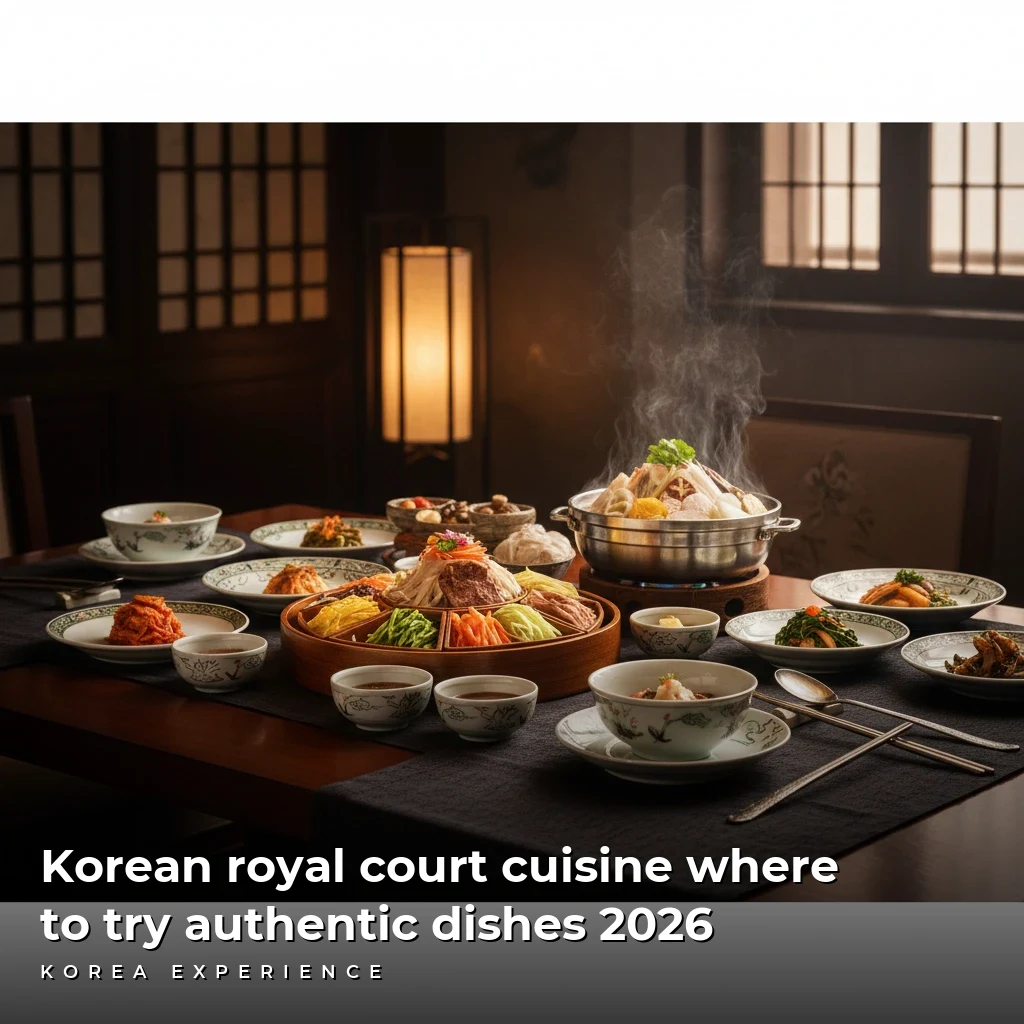
Stepping into the world of Korean Royal Court Cuisine, or Kungjung Eumsik, is far more than a simple dining experience; it is a time-traveling journey back to the Joseon Dynasty (1392–1910). Unlike the fiery, garlic-heavy dishes often associated with modern Korean street food, royal cuisine is defined by subtlety, balance, and mild flavors designed to be easily digested by the King. In 2026, the landscape of fine dining in Seoul has evolved, blending centuries-old recipes with modern gastronomic techniques, offering travelers a unique window into Korea's aristocratic past.
Whether you are a dedicated foodie seeking the origins of Hanjeongsik (full-course meal) or a traveler looking to celebrate a special occasion, understanding where to go and what to order is crucial. The culinary scene in Seoul is fast-paced, with reservation systems becoming increasingly digital and competitive. This guide navigates the best establishments, from heritage guardians to Michelin-starred innovators, ensuring your experience is nothing short of regal.
Key Takeaways
- 1Authentic Royal Cuisine (Surasang) emphasizes 12 distinct side dishes alongside rice and soup.
- 2Top-tier dinner courses in 2026 average between ₩150,000 and ₩300,000 ($115-$230 USD).
- 3Reservations for Michelin-starred venues must be made 30 to 60 days in advance via apps like CatchTable.
Understanding Surasang: The King's Table
Before diving into restaurant recommendations, it is essential to understand what defines this cuisine. Historically, the King's main meals, known as Surasang, were served twice daily—at 10:00 AM and 5:00 PM. These meals were feats of logistical and agricultural coordination, sourcing the finest ingredients from every province of the Korean peninsula. This was not merely indulgence; it was political. By consuming ingredients from different regions, the King was symbolically embracing his people and checking the condition of the harvest.
Related reading: Korean royal court cuisine where to try hanjeongshik.
The philosophy behind the food is based on the harmony of Yin and Yang and the Five Elements. A proper royal table must feature five colors (red, yellow, white, black, and green) and five flavors (salty, sweet, sour, hot, and bitter). While a standard household meal in the Joseon era might have three to five side dishes (banchan), the King was served twelve distinct dishes (12-cheop), excluding rice, soup, and stews.
📋 Royal Dining By The Numbers
In 2026, most restaurants offering Royal Cuisine streamline this into a course meal structure rather than serving everything simultaneously, allowing modern diners to appreciate each dish's temperature and texture. However, the core principle remains: mild seasoning (using soy sauce and salt rather than chili powder) to highlight the natural quality of premium ingredients like Hanwoo beef, abalone, and pine mushrooms.
For more details, check out our guide on 50 Must Try Korean Foods Complete Guide.
Top Authentic Royal Court Cuisine Restaurants in Seoul
Seoul is the epicenter of this culinary tradition. Below are the most prestigious venues where you can experience authentic flavors in 2026.
1. Jihwaja: The Living Heritage
Jihwaja is arguably the most historically significant restaurant on this list. It was founded by the late Hwang Hye-seong, a designated Important Intangible Cultural Property holder who dedicated her life to learning from the last court lady of the Joseon Dynasty. Today, it is arguably the best place to taste recipes that are genetically closest to what King Gojong would have eaten.
Related reading: Best Korean Convenience Store Food Must Try Items.
Located near the National Theater of Korea, the restaurant offers a serene atmosphere. The food here eschews modern fusion trends. Instead, it focuses on the "waiting aesthetics" of fermentation and slow cooking.
Jihwaja(Jihwaja)
The dining experience here typically lasts 90 to 120 minutes. As of 2026, their signature dinner course starts at approximately ₩180,000 ($135 USD). The location is roughly 1.5 kilometers from Gyeongbokgung Palace, making it an ideal dinner stop after a day of historical sightseeing.
Related reading: Gyeongju Traditional Cuisine Historic Recipes and Dining ....
2. La Yeon: The Height of Luxury
Perched on the 23rd floor of The Shilla Seoul hotel, La Yeon offers a breathtaking view of Namsan Park and the city skyline. La Yeon is famous for maintaining its Michelin stars through consistent excellence. Here, traditional recipes are elevated through modern plating and impeccable service.
The sourcing at La Yeon is legendary. They have a dedicated team that travels 500+ kilometers across the country to secure exclusive rights to ingredients, such as specific harvests of red beans or locally sourced sea bass.
La Yeon is not just about food; it is about the 'Omotenashi' level of service. If you are celebrating an anniversary, mention it when booking. They often prepare a special calligraphy card or a complimentary traditional dessert.
Expect a higher price point here. Lunch courses in 2026 begin around ₩195,000 ($145 USD), while dinner can easily exceed ₩350,000 ($265 USD) per person, especially with wine pairings.
3. Korea House: Culture and Cuisine Combined
For travelers who want a more immersive cultural experience, Korea House in Chungmuro is the standard. Operated by the Korea Cultural Heritage Foundation, this venue is built in the style of a traditional Hanok (Korean house).
The unique selling point of Korea House is the option to combine your meal with a traditional performance. The "Simcheong" performance, often running at 7:00 PM, features traditional dance and music. The cuisine is based on the records of the "Uigwe" (Royal Protocols), ensuring historical accuracy.
Korea House(Korea House)
Prices here are more accessible, with lunch sets starting at ₩60,000 ($45 USD). It is located extremely centrally, just 600 meters from Namsan Hanok Village.
Signature Dishes You Must Know
When you sit down for a Royal Court meal, the array of dishes can be overwhelming. Here are the three heavyweights you will likely encounter in 2026.
Sinseollo (Royal Hot Pot)
This is the visual centerpiece of royal cuisine. It is served in a silver vessel with a hole in the center for burning charcoal, similar to a Bundt cake pan shape. The dish contains meatballs, fish pancakes, ginkgo nuts, mushrooms, and vegetables arranged in a colorful circle. The broth is poured over tableside. Historically, this dish represents the harmony of all ingredients.
Gujeolpan (Platter of Nine Delicacies)
Gujeolpan refers to both the octagonal wooden serving tray and the food itself. It consists of eight small piles of julienned ingredients (beef, egg whites, egg yolks, carrots, cucumbers, mushrooms, etc.) surrounding a stack of tiny wheat crepes (miljeonbyeong) in the center. The diner places a bit of each ingredient on a crepe, adds a dab of mustard sauce, and wraps it. It is an interactive, tactile experience.
📊 Gujeolpan Geometry
Galbijjim (Braised Short Ribs)
While common in Korea today, the royal version is distinct. The beef ribs are trimmed of all excess fat, soaked to remove blood, and braised slowly with soy sauce, pear puree, chestnuts, and jujubes. The result is meat so tender it falls off the bone with chopstick pressure, yet retains a structured texture unlike overcooked stew.
Reservation Guide: Securing Your Seat in 2026
The popularity of K-Culture has made securing reservations at top Seoul restaurants difficult. Walk-ins are virtually impossible at places like Jihwaja or La Yeon.
📖 How to Book Royal Cuisine in Seoul
Step 1: Download CatchTable Global
This is the primary reservation app for foreigners in Korea. It supports English and foreign credit cards.
Step 2: Check Booking Windows
Most high-end venues open reservations on the 1st or 15th of the previous month at midnight KST.
Step 3: Prepare Deposit
Expect to pay a deposit of 30,000 to ₩50,000 per person immediately upon booking.
No-Show Penalties
Korean fine dining establishments have strict cancellation policies. Canceling on the same day or a "No-Show" will result in a 100% forfeiture of the deposit, and sometimes the full course fee charged to your card.
Budgeting for Royalty
Is Royal Court Cuisine expensive? Yes, but there is a range. In 2026, inflation has pushed prices up by approximately 15-20% compared to 2023 levels. However, considering the labor intensity—some sauces are fermented for 5 years—the value proposition remains high.
💵 Cost Comparison (Dinner per Person)
La Yeon, Gaon (style), Mingles
Korea House (Lunch), Seokparang (Lunch)
Lunch vs. Dinner
If you are on a budget, aim for lunch. The menu is often 70% similar to dinner but costs 40-50% less. For example, a lunch set at a high-end spot might be ₩120,000 compared to ₩250,000 for dinner.
Modern Interpretations: The "New" Royal
For the traveler who finds traditional royal food too bland or repetitive, "New Korean" fine dining offers a bridge. Chefs like Kwon Woo-joong of KwonSookSoo take royal concepts and modernize them.
At KwonSookSoo, you might find Dok-sang (single table) service, where the meal is served on a personal tray, mimicking the King's solitary dining style, but the flavors might include truffle oil, foie gras, or modern sous-vide textures. Located in Cheongdam-dong, this restaurant requires a 20-minute taxi ride from Gangnam Station.
Traditional vs. Modern Royal Cuisine
| Feature | Traditional (e.g., Jihwaja) | Modern (e.g., KwonSookSoo) |
|---|---|---|
| Flavor Profile | Mild, Natural, Fermented | Complex, Layered, Bolder |
| Plating | Historical Accuracy | Artistic/French Influence |
| Primary Audience | Purists, History Buffs | Gourmands, Trendsetters |
Practical Tips for the Experience
Etiquette
When dining, wait for the eldest or most senior person to lift their spoon before you begin. Do not hold your rice bowl in your hand (unlike in Japan); leave it on the table. Use the spoon for soups and rice, and chopsticks for side dishes.
Dietary Restrictions
Traditional Royal Cuisine is heavy on meat and seafood. While temple food is vegan, royal food is not.
- Gluten: Soy sauce (ganjang) contains wheat. It is difficult to be 100% gluten-free.
- Vegetarians: You must notify the restaurant at least 3 days in advance. Places like Jihwaja are accommodating but need prep time.
What to Wear
While "Smart Casual" is the standard listing, locals tend to dress up for these venues. For men, a collared shirt and trousers are recommended. For women, a dress or smart blouse. Avoid flip-flops or athletic shorts, especially at hotel-based venues.
Royal Court Cuisine: Is it for you?
- ✓Unique historical insight
- ✓Healthy and balanced nutrition
- ✓Impeccable service standards
- ✗Can be perceived as 'bland' to spicy food lovers
- ✗High price point
- ✗Long dining duration (2+ hours)
Conclusion
In 2026, Korean Royal Court Cuisine remains a pillar of Seoul's gastronomic identity. It stands as a testament to a time when food was medicine, art, and politics combined. Whether you choose the panoramic views of La Yeon or the deep historical roots of Jihwaja, you are participating in a 500-year-old ritual.
For the international traveler, the key is managing expectations. Do not come expecting the fire of tteokbokki or the grease of BBQ. Come expecting the subtle aroma of pine nuts, the deep umami of vintage soy sauce, and the elegance of a king.
❓ Frequently Asked Questions
Have more questions?Contact us →
About the Author
Korea Experience Team
Written by the Korea Experience editorial team - experts in Korean medical tourism, travel, and culture with years of research and firsthand experience.
Explore more in Food & Dining
Korean BBQ, street food, Michelin restaurants, and regional specialties — your ultimate guide to eating well in Korea.
Browse All Food & Dining ArticlesContinue Reading
Explore more articles you might find interesting
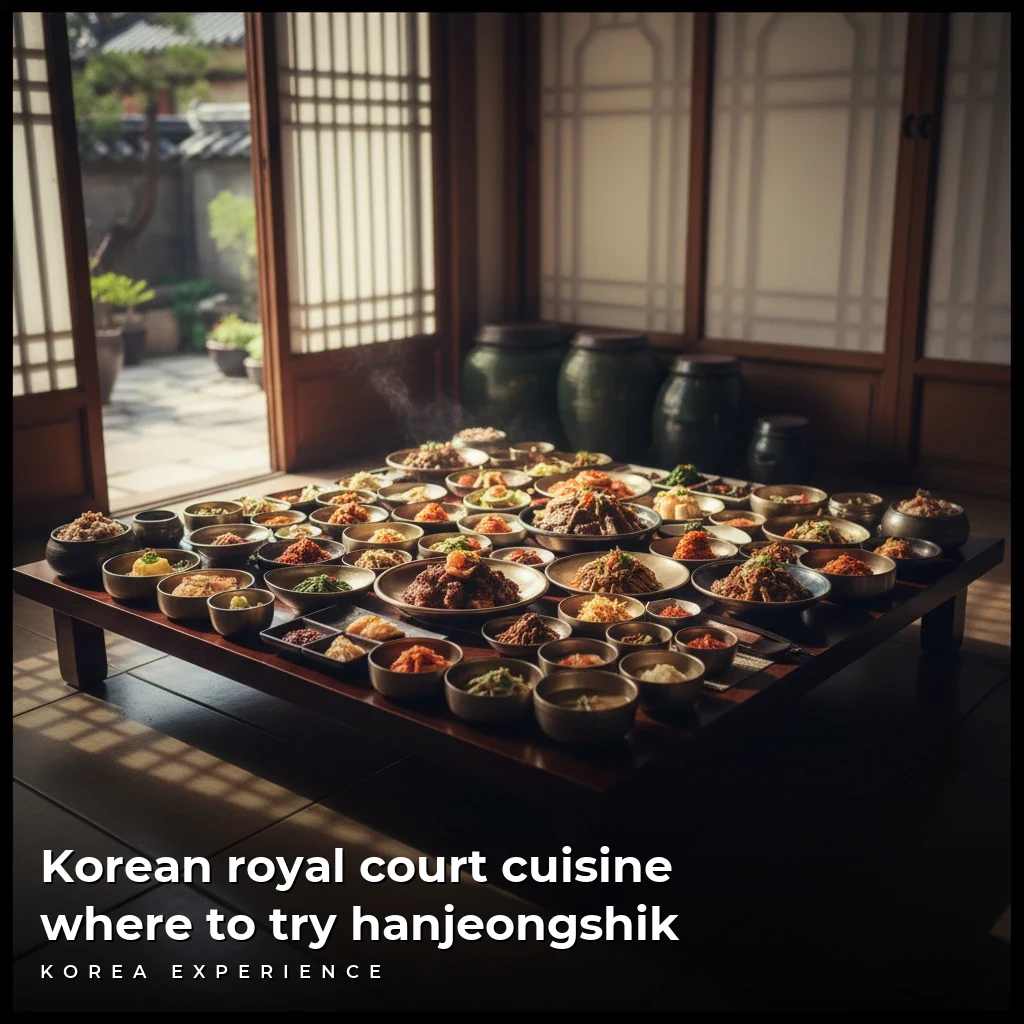
Discover the elegance of Korean Royal Court Cuisine. Our guide covers top Hanjeongshik restaurants, menus, and dining etiquette for 2026 travelers.
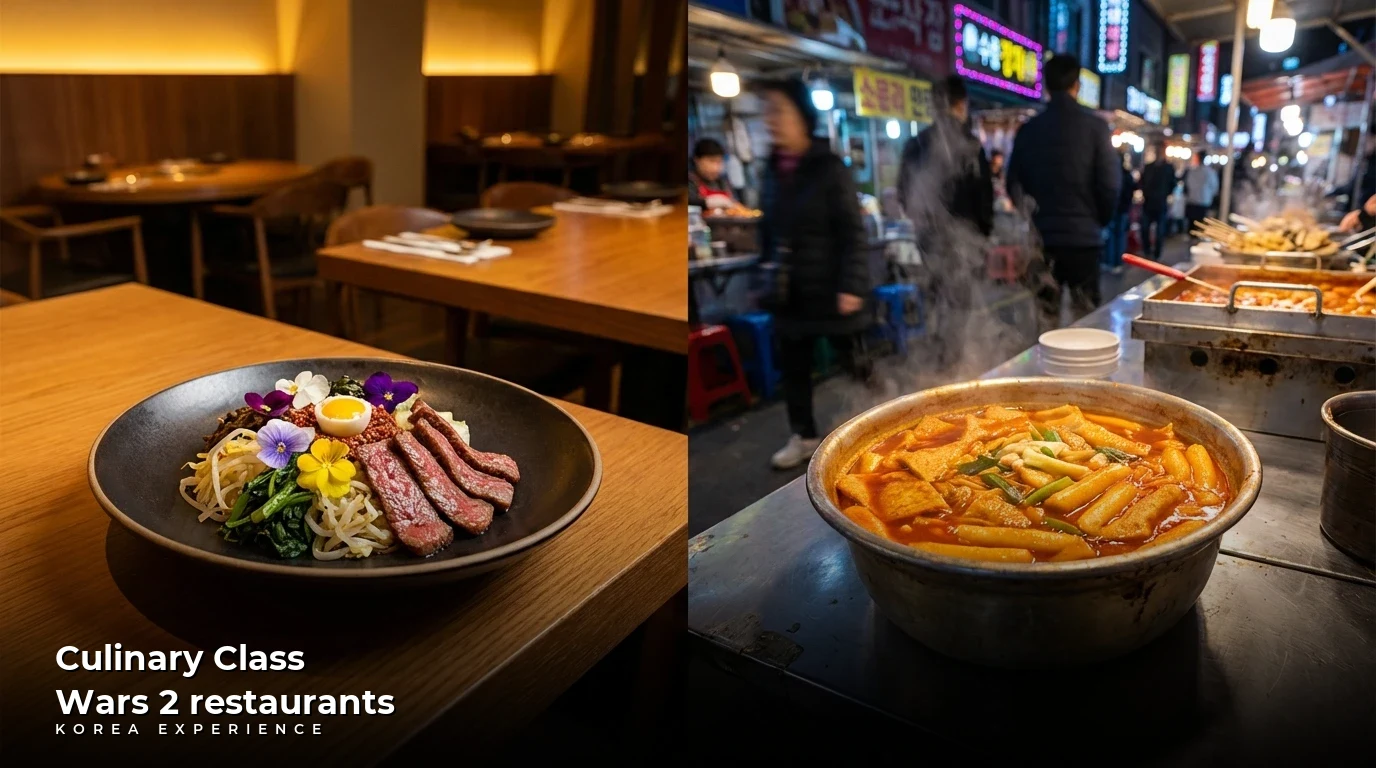
Book tables at Culinary Class Wars 2 spots like Sam Sam Sam where pasta costs 5,000. Learn 2026 reservation hacks for the 100 chefs featured on Netflix.
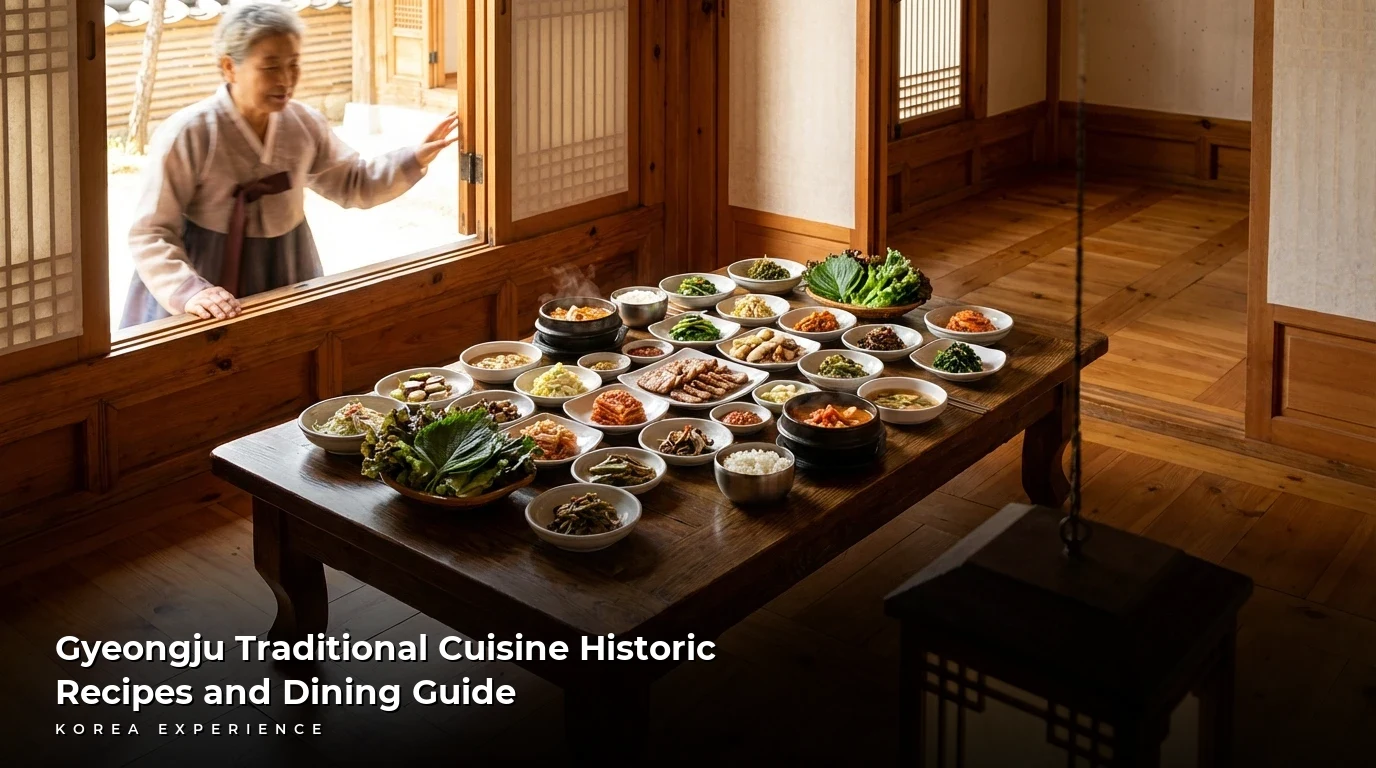
Explore Gyeongju traditional cuisine historic recipes. Discover royal Silla Dynasty dishes, famous ssambap alleys.
Discover the authentic taste of Sokcho with our guide to Squid Sundae and Abai Sundae. Explore history, best restaurants, and travel tips.
Discover the most romantic dining spots in Seoul, from Michelin-starred venues to hidden Hanok gems, complete with reservation tips and pricing.
Discover the authentic charm of Korea's pojangmacha. A complete guide to tent bar locations, menu prices, etiquette, and tips for 2026.