Dior Seongsu luxury vs traditional markets 2026 Seoul guide
Discover how to mix a $15 Dior Seongsu latte with a $3.80 market pancake in 2026. Master the WOWPASS and Climate Card to conquer Seoul on any budget.
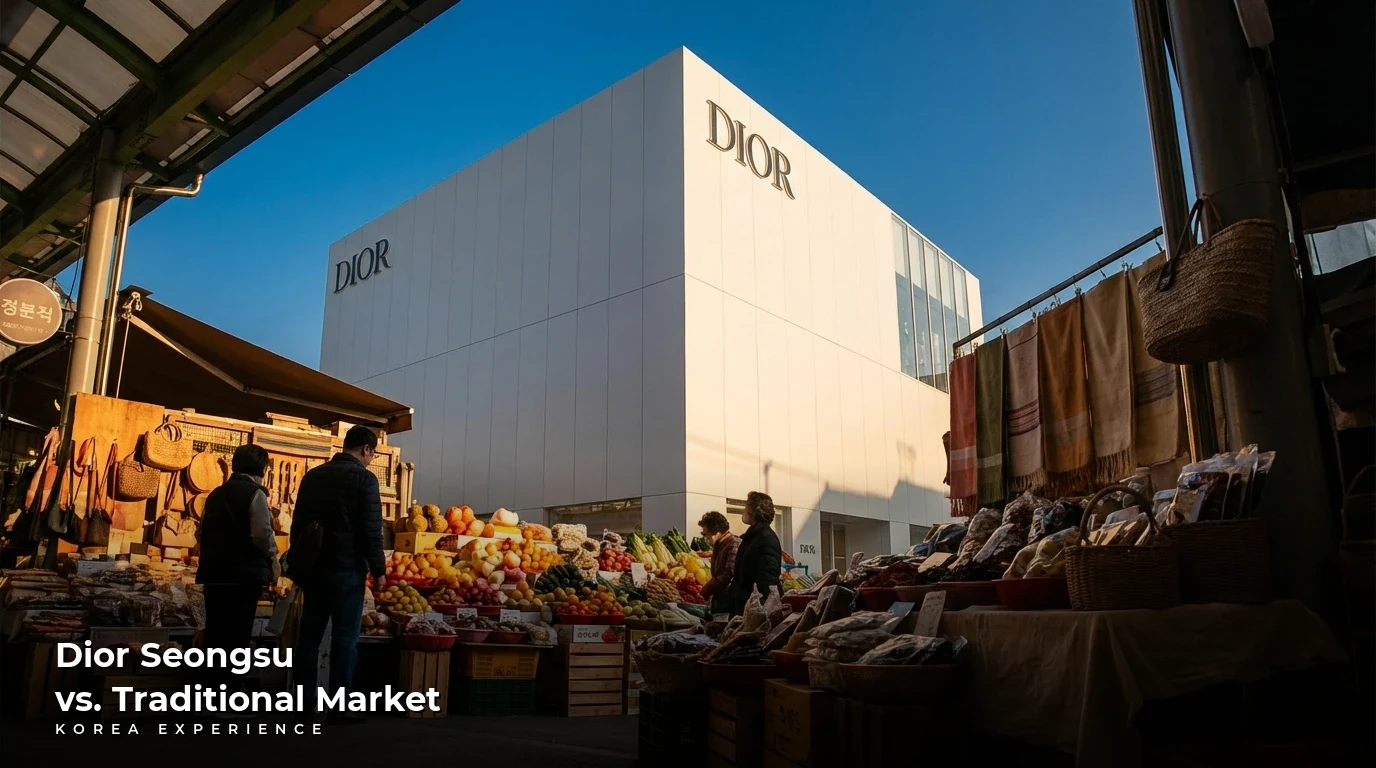
So you are heading to Seoul and wondering if you should blow your budget on a 20,000 KRW latte at Dior Seongsu or feast on sizzling street food at a traditional market for a fraction of the cost. Here is the good news: you do not have to choose, and I am going to show you exactly how to conquer both in the exact same day without losing your mind or your money.
Seoul is a city defined by its breathtaking contradictions. It is a metropolis where ancient palaces sit in the shadows of gleaming corporate skyscrapers, and where hyper-futuristic retail experiences share alleyways with grandmothers who have been frying the exact same recipe of mung bean pancakes since the 1960s. If you want to truly understand the pulse of this dynamic capital, you cannot just stick to the polished luxury of Gangnam or solely rough it in the historic alleys of Jongno. You need to experience the whiplash of doing both, back-to-back.
Key Takeaways
- 1Experience both the ultra-luxury of Dior Seongsu and the raw authenticity of Seoul traditional markets on the same trip to see the two extreme ends of modern South Korea.
- 2The price difference is mind-blowing—a single signature CD logo latte at Cafe Dior costs 20,000 KRW, which buys four entire meals of crispy bindaetteok at the market.
- 3To pull this off seamlessly in 2026, download the WOWPASS app for cashless market payments, grab a Climate Card Tourist Pass, and ask your hotel concierge to secure your Dior reservation.
📋 Quick Facts
The Ultimate Seoul Whiplash
Let us talk about the reality of the contrast you are about to experience. On one side of the street, you have the Dior Seongsu concept store. It is a literal architectural masterpiece. We are talking about a massive, luminous glass-and-metal mesh structure inspired by the iconic Dior flagship at 30 Avenue Montaigne in Paris, plopped right down in the middle of an old industrial Korean neighborhood. The moment you step out of Seongsu Station, the building commands your attention. It glows in the sunlight, surrounded by meticulously manicured French gardens that feel entirely alien to the concrete jungle around it.
If you manage to get a table at Cafe Dior on the top floor, you will be sipping a 20,000 KRW (about $15 USD) latte that has the iconic CD logo delicately dusted in premium cocoa powder on the foam. You will be surrounded by influencers, fashion editors, and tourists dressed in their absolute best, all whispering over 120,000 KRW afternoon tea sets featuring immaculate macarons and financiers. It is beautiful, it is ridiculously expensive, and it screams modern luxury. It is the physical embodiment of the polished, wealthy aesthetic you see in high-budget K-dramas.
But then, you walk ten minutes down the street. Suddenly, the glass facades disappear. The pristine sidewalks give way to uneven pavement. You smell roasted sesame oil, bubbling pork broth, and sizzling fat. Welcome to Ttukdo Youth Market, or if you hop on the subway for ten minutes, the legendary Gwangjang Market. Here, the vibe is entirely different. The lighting is fluorescent, the noise is deafening, and the energy is chaotic.
You are sitting on a tiny plastic stool, bumping elbows with local office workers whose ties are thrown over their shoulders to avoid splashing broth. You hand over a mere 5,000 KRW ($3.80 USD) for a plate of bindaetteok—a savory, deep-fried mung bean pancake that is roughly the size of your face, served with a side of sharp, vinegary onions. There is no delicate cocoa powder dusting here; there is only raw, unfiltered flavor.
That is the magic of Seoul. In the span of a single afternoon, you can go from carrying a designer shopping bag in a pristine boutique to wiping spicy chili sauce off your chin in a market alley that has not changed its recipes in sixty years. Trust me on this one: doing both of these things back-to-back will give you the best travel stories and the most spectacular photo dumps of your entire trip. If you are looking for more ways to navigate this specific neighborhood, checking out The 2026 Survival Guide to Seongsu-dong Pop-ups is highly recommended.
Gwangjang Market Opens
Korea first permanent traditional market is established, setting the foundation for Seoul street food culture.
Ttukdo Market Opens
Ttukdo Market opens in the Seongsu area, eventually becoming one of Seoul top three traditional markets before a temporary decline.
Dior Seongsu Concept Store Launches
On May 1, Christian Dior opens its massive, architectural pop-up store in the gritty, industrial neighborhood of Seongsu-dong.
Climate Card Introduced
Seoul launches its unlimited transit pass to combat carbon emissions, revolutionizing how locals travel.
Market Overcharging Scandal
A high-profile YouTube video exposes overcharging at Gwangjang Market, pushing locals toward smaller markets like Ttukdo and Mangwon.
The 2026 Landscape
The Climate Card expands to allow international credit card top-ups, and Seongsu-dong fully solidifies as the Brooklyn of Seoul, blending hyper-luxury with revived traditional alleys.
How Seongsu Became the Brooklyn of Seoul
To really appreciate how wild this contrast is, you need to understand how we got here. Let us do a quick history lesson, but I promise to keep it fascinating. For decades, Seongsu-dong was not somewhere tourists went. It was the gritty, working-class heart of the manufacturing industry in Seoul. It was famous mostly for being crammed with hundreds of dark, noisy, handmade shoe factories, leather tanneries, and auto repair shops. It was a place of hard labor, not high fashion.
But then, around the mid-2010s, something shifted. Young artists, designers, and cafe owners started looking for cheap rent because neighborhoods like Hongdae and Gangnam had become astronomically expensive. They looked at these massive, abandoned red-brick warehouses in Seongsu and realized they could turn them into incredible, industrial-chic spaces. Places like Daelim Warehouse opened up, keeping the raw concrete, the exposed steel beams, and the faded factory signs, but adding high-end espresso machines, modern art installations, and lush indoor greenery. Almost overnight, the neighborhood transformed. People started calling it the Brooklyn of Seoul.
Then, the luxury brands noticed the organic foot traffic. In May 2022, Christian Dior made a massive statement. Instead of opening their next flagship in the traditionally wealthy, polished neighborhood of Cheongdam-dong, they built the Dior Seongsu concept store right over an old parking lot in this gritty district. It was supposed to be a temporary three-year pop-up, but it fundamentally altered the DNA of the area. Suddenly, you had influencers in head-to-toe designer gear walking past mechanics covered in motor oil. You had lines wrapping around the block for luxury cosmetics right next to wholesale plumbing supply stores.
Meanwhile, what happened to the local markets? Just a few blocks away, Ttukdo Market—which opened back in 1962 and used to be one of the top three markets in Seoul before modern supermarkets nearly killed it—started seeing a massive revival. Young merchants moved into the empty stalls, setting up trendy pubs, natural wine bars, and fusion restaurants right next to grandmothers selling fresh fish and traditional side dishes.
Even with nearby Gwangjang Market facing a bit of local backlash in 2025 over some stalls overcharging tourists, the traditional market scene in Seoul has not died; it just adapted. The result in 2026 is a neighborhood where hyper-luxurious pop-ups and decades-old street food stalls are engaged in a fascinating, thriving tug-of-war.
| Feature | Dior Seongsu Concept Store | Traditional Markets |
|---|---|---|
| Cost | Ultra-Luxury (120,000 KRW for tea set) | Very Budget-Friendly (4,000 to 10,000 KRW) |
| Processing Time | High (Advance reservations required) | Zero (Just walk up and order) |
| Duration and Validity | Originally planned as a 3-year pop-up | Permanent, deeply historical sites |
| Requirements | Korean phone number or App for easy booking | Cash or WOWPASS for payment |
| Best For | Instagram photos, luxury fashion, K-culture | Authentic food, cultural immersion, cheap eats |
| 2026 Changes | Sustained popularity despite 2025 end-date rumors | Increased card acceptance, slight price inflation |
Breaking Down Your Options and Your Budget
Okay, let us get practical. If you are staring at your itinerary and trying to figure out where to spend your time and money, here is the breakdown of what you are actually paying for when you navigate these two extremes.
If you choose the luxury route at Dior Seongsu, you need to be prepared for the price tag. This is not just a coffee shop; it is a curated luxury experience. You can book an Afternoon Tea Set for two for 120,000 KRW, which comes with an immaculate, multi-tiered display of high-end macarons, financiers, and premium tea. Even a basic French toast is going to run you 20,000 KRW.
But here is the thing you need to understand: people are not paying 20,000 KRW because it is the best tasting coffee in the world. As many honest reviews will brutally point out, the latte tastes pretty standard. What you are buying is the aesthetic. You are buying the feeling of being pampered, the exquisite Christian Dior tableware, the impeccable service, and the ability to take flawless photos in an immersive digital garden that changes with the seasons. If you love fashion, K-culture, and luxury, it is a non-negotiable stop. It is a 20,000 KRW entry fee to feel like royalty for an hour.
On the flip side, the traditional market experience is purely about the food, the volume, and the beautiful chaos. If you head over to Gwangjang Market or stay local at Ttukdo, you are entering a completely different world. For digital nomads on a budget, or travelers who just want to eat until they pass out, this is paradise.
For 4,000 KRW, you can get a box of mayak gimbap—literally translated as narcotic rice rolls because the mustard dipping sauce makes them so addictive. For 11,000 KRW, you can sit down to a boiling pot of gamjatang (spicy pork bone soup) that will keep you full for the next twelve hours. The meat literally falls off the bone, and the broth is rich with perilla leaves and crushed sesame. For 5,000 KRW, you get the iconic bindaetteok, a thick, crispy, deep-fried mung bean pancake wrapped in paper to eat while walking. If you have dietary restrictions, navigating these spaces can be tricky, so reading up on Gluten-Free in Korean Traditional Markets: The 2026 Survival Guide is a smart move before you go.
Here is my honest advice: If you are only staying in Seoul for a few days, do not waste half a day waiting in line for a cafe. Go to Dior early in the morning. Take your photos outside in front of the gorgeous architectural facade—which is completely free, by the way. Then, take the money you saved by skipping the 20,000 KRW coffee, walk over to the market, and treat yourself and two friends to an absolute feast of dumplings, pancakes, and rice wine. You get the luxury photos and the authentic food. It is a total win-win.
Pros
- ✓You Get the Full Cultural Spectrum: Spending your morning in a glittering French luxury pavilion and your afternoon eating spicy rice cakes in a 1960s alleyway gives you an unfiltered look at how fast South Korea has developed.
- ✓Your Wallet Stays Balanced: By offsetting the ridiculous cost of a 20,000 KRW cup of coffee with a massive, filling 5,000 KRW market dinner, your daily budget actually evens out perfectly.
- ✓The Photo Aesthetics are Insane: The visual contrast on your social media feed will be spectacular. You get the luminous glass and metal mesh of Dior Paris-inspired architecture right next to the gritty, neon-lit, steam-filled stalls.
Cons
- ✗The Booking Nightmare: Trying to get into Cafe Dior without a Korean Alien Registration Card or a local phone number is incredibly frustrating. The app is geared toward locals.
- ✗Sensory Overload: Traditional markets are loud, crowded, and slightly chaotic. Vendors will yell, people will bump into you, and the smell of fish and fried pork can be overwhelming.
- ✗The Cash Dependency Issue: While 2026 has brought a lot of tech to Korea, about 70 percent of older market stalls still prefer physical cash. If you only brought your foreign Visa card, you might end up hungry.
The Complete Transit and Payment Guide for 2026
Navigating Seoul used to be a little intimidating for first-timers, but the tech landscape in 2026 has made it incredibly easy. You just need to set yourself up properly on your very first day. Let us walk through exactly how to execute this dual-itinerary day without any logistical hiccups.
First, let us talk about transit and money. When you land at Incheon Airport, bypass the expensive tourist traps and head straight for a WOWPASS kiosk or a convenience store. If you are feeling overwhelmed upon arrival, our Incheon Airport Survival Guide 2026: Tips for First-Time Arrivals breaks down exactly where to find these machines.
The WOWPASS is a total game-changer for tourists. It is an all-in-one prepaid card for foreigners that lets you load your home currency (like USD, Euros, or Yen) directly onto the card, converting it to Korean Won at a highly competitive exchange rate. You can use it to tap and pay at almost every store, cafe, and restaurant in the country. It completely eliminates the need to carry massive wads of cash or worry about your home credit card being blocked for international fraud.
But for getting around the city, you need the new hero of Seoul transit: The Climate Card Tourist Pass. Introduced recently by the city government to combat carbon emissions, this pass gives you unlimited rides on the subways and buses within Seoul. A 1-day pass is only 5,000 KRW, a 3-day is 10,000 KRW, and a 7-day is 20,000 KRW. Since a single subway swipe is about 1,400 KRW, you break even after just three or four rides. You buy the physical blank card for 3,000 KRW at a convenience store, and then load the tourist pass onto it at any subway ticket machine using cash.
With your transit sorted, take the Green Line (Line 2) to Seongsu Station. Take Exit 4 and walk straight toward the giant, gleaming Dior structure. If you have a reservation, show the staff your app confirmation. If you do not, ask the staff outside if they are taking walk-ins—sometimes they do on quiet weekday mornings! After you have soaked in the luxury, head back toward Exit 3 of the station and navigate through the maze of old shoe factories toward Ttukdo Market.
When you get to the market, here is how you handle the food: Do not just stop at the first stall you see. Walk deep into the alleys. Look for the stalls that have small, crowded benches filled with middle-aged Korean men in suits or younger locals drinking beer. That is the universal sign for cheap, excellent food. Point at what you want, hold up your fingers for the quantity, and enjoy the feast.
📖 How to Seamlessly Do Dior and the Market in One Day
Step 1: Secure Your Transit and Payment Arsenal
Before you even step out of your hotel, head to a convenience store or subway station. Buy the WOWPASS and the 2026 Climate Card Tourist Pass.
Step 2: Morning Luxury at Dior Seongsu
Arrive at Dior Seongsu right when it opens at 11:00 AM. Take your photos outside first—the metal mesh facade and beautiful gardens look best in the morning light before the crowds get overwhelming. If you managed to secure a cafe reservation, head inside for your 20,000 KRW latte.
Step 3: Explore the Brooklyn of Seoul
Spend an hour walking through Seongsu-dong. Notice how the trendy cafes and indie boutiques are crammed right next to old handmade shoe factories and auto repair shops. This is the neighborhood signature charm.
Step 4: Late Lunch at the Traditional Market
Walk over to Ttukdo Youth Market or take a quick subway ride to Gwangjang Market if you want the massive, overwhelming Netflix-famous experience. Order a crispy bindaetteok and some mayak gimbap.
The Stuff Nobody Tells You
Alright, let us get real for a second. Travel blogs love to paint everything as perfect, but there are a few frustrating quirks about Korea that you need to know before you try to pull this off. I learned some of this the hard way, and I want to save you the headache.
The biggest hurdle you will face as a tourist is the Korean Phone Number issue. South Korea has very strict digital identity laws. To use most booking apps—including CatchTable, which every popular restaurant uses, and the official Dior Seongsu app—you need to verify your identity using a Korean phone number tied to an Alien Registration Card (ARC). If you bought a tourist e-SIM for data, it will not work for these apps. This drives tourists absolutely insane.
So, how do you hack it? If you desperately want to go inside Cafe Dior, do not wait until you arrive to figure it out. Email your hotel concierge a week before your trip and ask them to call the boutique and make the reservation for you. Alternatively, some third-party tour services sometimes offer booking assistance. If you are going for a walk-in, show up at 10:30 AM before they open and smile politely at the door staff—sometimes they take pity on tourists and manually add you to the tablet. If you run into severe language barriers or need immediate tourist assistance, remember that the 1330 Travel Helpline: Your Secret Weapon for Surviving Korea (2026) is available 24/7.
No Korean Phone or ARC? Here is What To Do
This is the single biggest headache for tourists in Korea. You cannot download or verify yourself on apps like CatchTable or the Dior App without a Korean phone number linked to an Alien Registration Card (ARC).
The Solution: Use the WOWPASS app for your spending, as it is specifically designed for tourists and only requires your passport. For restaurant and cafe reservations, you have two choices: use the concierge desk at your hotel to make phone calls on your behalf, or rely on walk-ins during off-peak hours (10:30 AM or 3:00 PM). Trust me, trying to borrow a local phone number rarely works because identity verification in Korea is incredibly strict!
Another thing nobody tells you: while Korea is virtually a cashless society, the traditional markets are the one major exception. Yes, the younger vendors at Ttukdo Market have card readers and will happily take your WOWPASS. But the 75-year-old grandmother who has been frying the best bindaetteok in the city for fifty years? She wants cash. The good news is that you can actually use your WOWPASS at specific machines in subway stations to withdraw physical Korean Won. Always keep a few 10,000 KRW bills folded in your wallet when you head into the market alleys.
Finally, do not get confused by the transit boundaries. The Climate Card Tourist Pass is incredible, but it only works within Seoul city limits. If you try to use it on the AREX train going back to Incheon Airport, or if you try to take a train out to Suwon, the turnstile will flash red and trap you. For airport transit or trips outside the city, just use the T-money function built into your WOWPASS.
Everyone stresses about the Dior reservations, but honestly, the outside of the building is the main attraction anyway. Grab your photos in the garden, skip the overpriced hot chocolate, and spend that money on a massive feast of pork bone soup and soju at Ttukdo Market. That is the real Seongsu experience.
Location Deep Dives
To make your itinerary planning as smooth as possible, here are the exact details for the three main locations you will be navigating during your 24 hours of luxury and budget exploration.
Dior Seongsu Located at 7 Yeonmujang 5-gil in Seongdong-gu, this is your luxury anchor. It is open from 11:00 AM to 8:00 PM, though it is closed on Mondays. You can reach them at +82-2-3280-0104 if your concierge is making a call. It is a 5-minute walk from Seongsu Station Line 2, Exit 4. The highlights are obviously the luminous glass showcase, the rooftop cafe, and the exclusive boutique items. The ultimate insider tip here is that the exterior garden is completely free to enter and photograph even if you do not buy anything.
Ttukdo Youth Market Located at 6-42 Seongdeokjeong 15-gil in Seongdong-gu, this is your local budget haven. Hours vary by vendor, but generally, things are bustling from 9:00 AM to 9:00 PM. It is about a 10-minute walk from Seongsu Station Line 2, Exit 3. The highlights here are the trendy young merchant stalls mixing with cheap Korean BBQ and a vibrant local vibe. Go around 6:00 PM when the young merchants open their pub-style stalls for a great mix of old and new.
Gwangjang Market If you want the massive, overwhelming scale, head to 88 Changgyeonggung-ro in Jongno-gu. The food stalls run from 9:00 AM to 11:00 PM. It is a 1-minute walk from Jongno 5-ga Station Line 1, Exit 8. This is where you find the Netflix-famous kalguksu (knife-cut noodles), mung bean pancakes, and raw beef (yukhoe). Bring physical cash and look for the stalls with Korean office workers sitting at them to ensure the best quality.
Route Comparison: 24 Hours in Seongsu
If you want to see how this all comes together, here is a breakdown of a perfect 8-hour day in Seongsu-dong that blends a $150 luxury budget with a $25 street food budget.
Stop 1: Dior Seongsu (Morning Photos and Coffee) Start your day feeling like royalty. Snap photos outside the stunning architectural facade, then head inside for a highly aesthetic, wallet-draining latte. This will cost you about $15 USD, but the photos will last forever.
Stop 2: Grandmother Gamjatang Walk a few blocks away from the luxury to find a gritty, steaming bowl of famous pork bone soup for lunch. The meat falls right off the bone, the broth is spicy and rich, and it will only cost you about $8 USD.
Stop 3: Amorepacific Beauty Pop-up After lunch, dive back into the luxury side. Browse high-end Korean skincare at one of the sleek, futuristic pop-up stores that define the Brooklyn of Seoul. If you buy a premium serum, expect to spend around $50 USD.
Stop 4: Ttukdo Youth Market End your evening squeezing onto a plastic stool with locals. Drink cheap soju, eat grilled skewers under the neon market lights, and soak in the authentic atmosphere. A full dinner and drinks here will only run you about $10 USD.
Seongsu-dong is the only neighborhood in Seoul where you can effortlessly mix a $150 luxury morning with a $10 budget evening without ever getting on a train. Do both to truly understand the city!
❓ Frequently Asked Questions
Have more questions?Contact us →
Conclusion: Your Action Plan
Seoul is moving faster than almost any other city on earth, and Seongsu-dong is the absolute epicenter of that change. In 2026, it is the only place where you can comfortably bounce between a futuristic, high-end Dior pavilion and a gritty, historic market street in the span of an hour.
Your action plan for your first 24 hours is simple: Go to a convenience store and arm yourself with a WOWPASS and a Climate Card. Head to Seongsu Station early in the morning to catch the Dior Concept store gleaming in the sunlight before the crowds ruin your photos. Treat yourself to one overpriced, aesthetic luxury item, and then balance the scales by getting lost in Ttukdo or Gwangjang Market, eating some of the cheapest and most delicious street food in Asia. Do not stress about the language barrier, keep some cash handy for the older vendors, and embrace the wild, wonderful whiplash that makes this city so unforgettable. Have an amazing trip!
Sources
- Dior Official Store Locator - Confirmed opening times and exact street address for Dior Seongsu.
- Global Retail Alliance - Details on the initial 3-year plan, May 2022 opening, and architectural inspiration.
- NOL World Travel Database - Verified Cafe Dior menu items, 120,000 KRW tea set, and 20,000 KRW toast prices.
- Korea Experience Blog - Insights into Seongsu as the Brooklyn of Seoul and price contrasts between luxury and market eats.
- Klook Travel Guide - Comprehensive data on the 2026 Climate Card Tourist pass pricing and valid zones.
- Museum of Wander - Details on the 2025 Gwangjang market overcharging scandal and current 2026 market prices.
- WOWPASS Official Info - Information on cashless payments for tourists, app features, and T-money integration.
About the Author
Korea Experience Team
Written by the Korea Experience editorial team - experts in Korean medical tourism, travel, and culture with years of research and firsthand experience.
Explore more in Travel & Tourism
From Seoul's neon-lit streets to Jeju's volcanic landscapes — discover the best of Korea with insider travel tips, itineraries, and seasonal guides.
Browse All Travel & Tourism ArticlesContinue Reading
Explore more articles you might find interesting
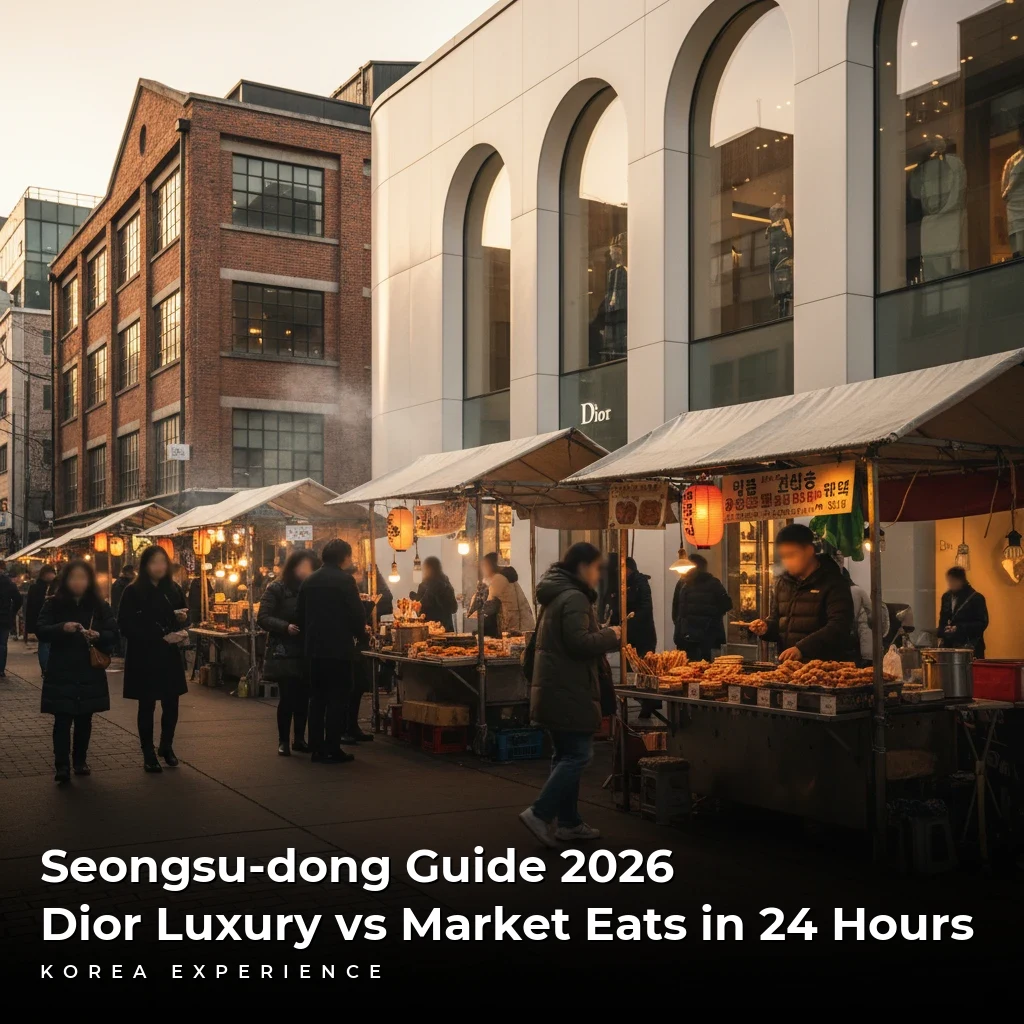
Explore Seoul's trendiest district with our 24-hour itinerary. Compare the ₩200,000 luxury Dior experience against ₩15,000 local market gems in Seongsu.
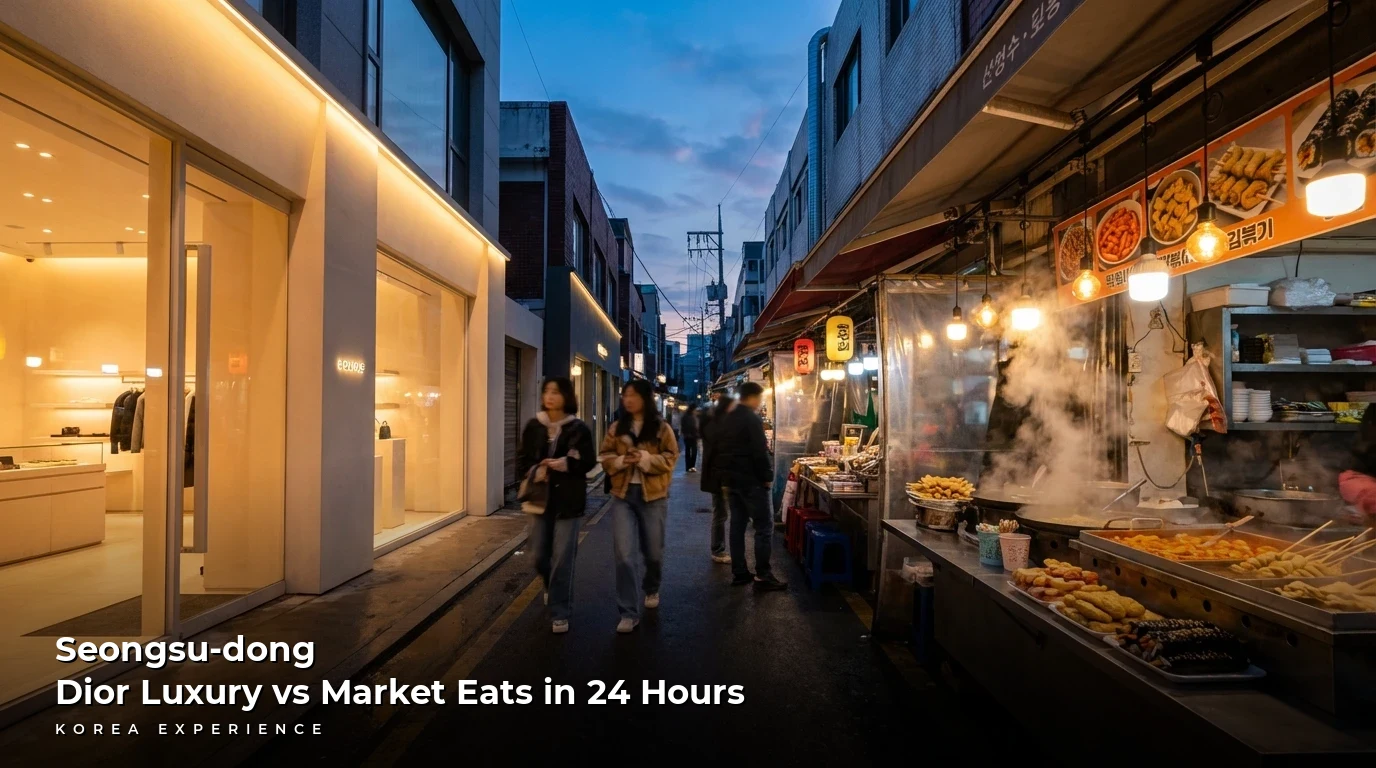
Experience Seongsu-dong's unique dualism: from high-fashion Dior pop-ups to vibrant traditional market food, all in a single day.
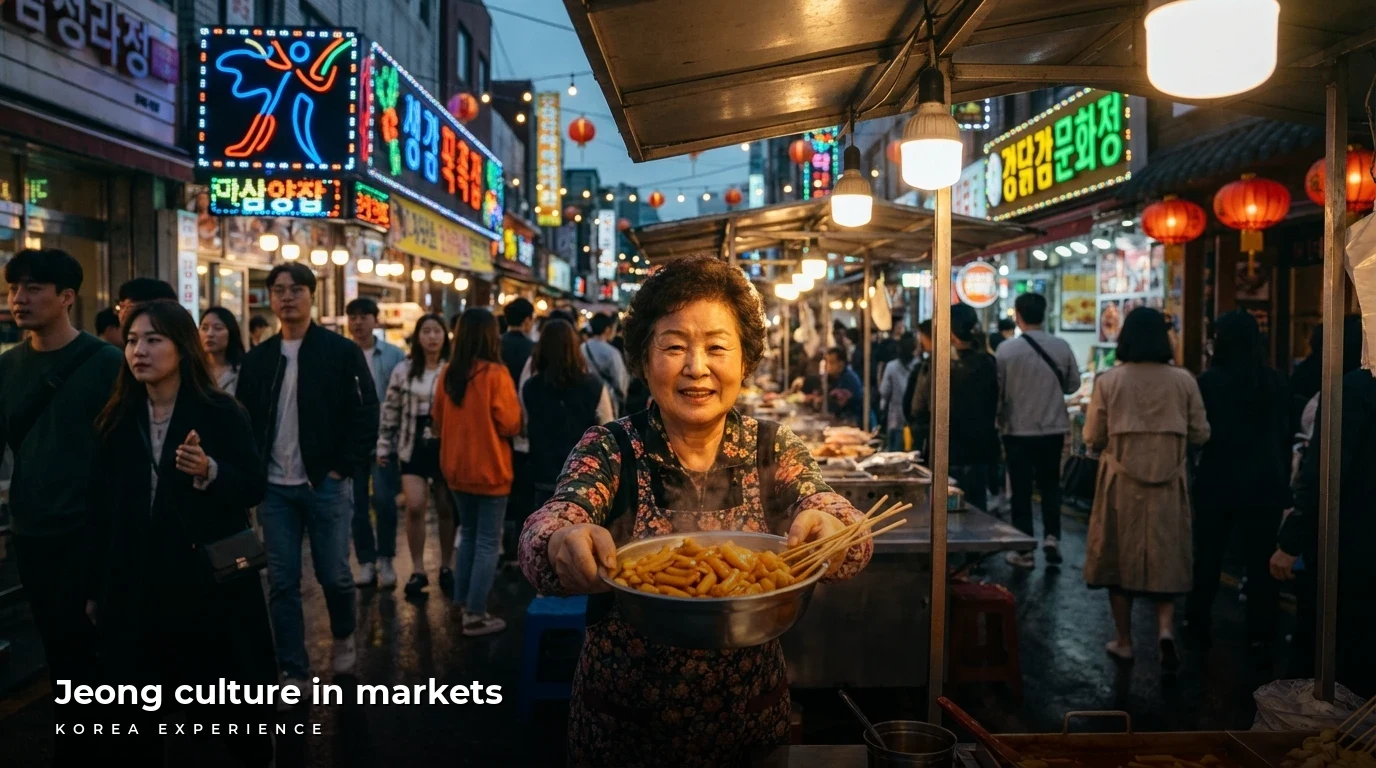
Discover why market vendors give free food. Learn how to navigate 24000 stalls in 2026 using WOWPASS and experience the 16 percent sales boom firsthand.
Discover the best thrifting in Seoul for 2026. From Dongmyo's $1 piles to Seongsu's vintage boutiques, find hidden gems and luxury brands for under ₩50,000.
Discover where to buy K-drama fashion outfits in Seoul and online. A complete guide to luxury malls, streetwear hubs, and wholesale markets for every budget.
Master Seoul transit in 2026. Learn why T-money costs 4,000 KRW, how to rent 1,000 KRW bikes without an ARC, and the truth about the Climate Card for tourists.