2026 safety guide for solo female travelers in South Korea
South Korea is incredibly safe for solo female travelers but requires digital street smarts. Learn to ride the 2,500 KRW Owl Bus and bypass app restrictions.
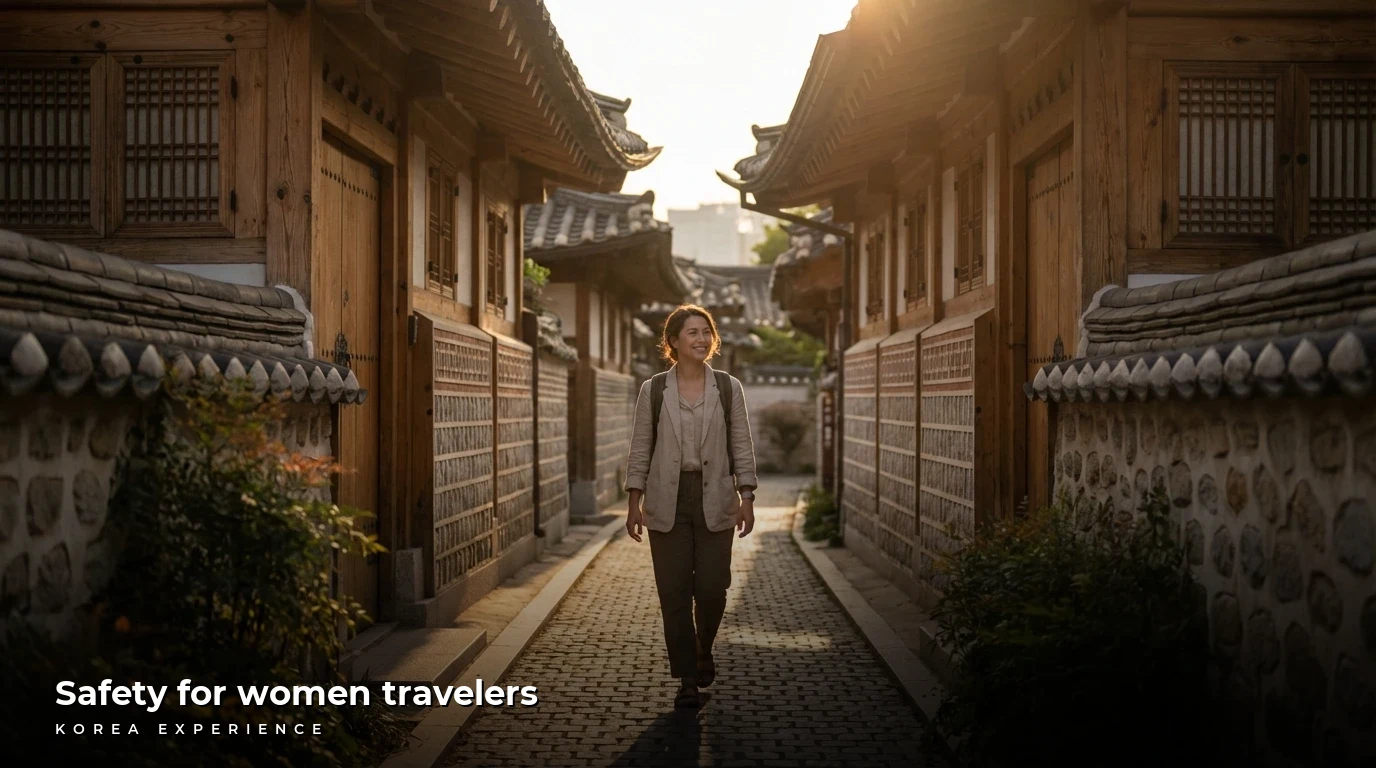
Research suggests that South Korea is generally an incredibly safe destination for solo female travelers, boasting low rates of violent street crime and an excellent public transit system. However, it seems likely that travelers will need to remain vigilant regarding specific localized issues, such as digital sex crimes (molka) and nightlife safety in popular districts like Itaewon and Hongdae. Evidence leans toward the fact that navigating local apps—specifically using Kakao T without a Korean Resident Card (ARC) or utilizing the English-language Ansimi safety app—is the most crucial step for ensuring a smooth, secure trip.
So, you are thinking about packing your bags and heading to South Korea? Maybe you have been binge-watching K-dramas, or you are dying to try authentic street food in Myeongdong, or you just want to experience the flawless aesthetic of Seoul's cafe culture. Whatever your reason, if you are a woman traveling alone, we know exactly what is going through your mind right now. You are probably sitting there scrolling through forums at 2 AM wondering if it is actually safe for you to go there by yourself.
We completely get it. The world can be an intimidating place for solo female travelers, and planning a trip halfway across the globe to a country where you might not speak the language adds a whole extra layer of stress. But we are here to give you the honest, unfiltered, local scoop. We have dug into everything from the latest 2026 app updates to the nitty-gritty details of navigating Seoul at midnight. We are going to talk about the amazing things, like walking home at 3 AM without looking over your shoulder, and the slightly annoying things, like figuring out how to call a taxi when you do not have a local Korean phone number. Grab a cup of coffee, get comfortable, and let us dive into everything you need to know about staying safe, confident, and worry-free in South Korea!
Key Takeaways
- 1South Korea is one of the safest places in the world for women to walk around alone at night, but digital privacy requires active attention.
- 2The basic fare for the magical Seoul Owl Bus is just 2,500 KRW, running safely all night long.
- 3Download the Ansimi safety app and Kakao T before your flight to bypass payment screens using the Pay to Driver feature.
📋 Quick Facts
The truth about safety in South Korea
So, let us get right to the heart of the matter. Is South Korea safe for you as a solo female traveler? The absolute, undeniable short answer is yes. In fact, compared to almost any major city in North America or Europe, Seoul feels like it exists in an entirely different universe of public safety. If you want a comprehensive breakdown of the numbers, you can check out our Is Korea Safe for Solo Travelers? 2026 Safety Index. Picture this: you are walking back to your hotel at 2:00 AM after a late-night Korean BBQ session. In London or New York, your keys would be laced between your fingers and your heart would be racing. In Seoul? You will probably be casually sipping on a banana milk from the GS25 convenience store, passing business people, giggling college students, and an endless array of glowing neon signs. Violent street crime, muggings, and pickpocketing are astonishingly rare here.
Why is it so safe? A huge part of it comes down to a deeply ingrained culture of social trust and an absolutely massive, unblinking network of CCTVs. There are cameras everywhere. If you drop your wallet full of cash on a subway seat, there is a remarkably high chance it will be sitting at the Lost and Found center untouched a few hours later. Because the risk of getting caught doing something terrible on camera is so high, petty theft is practically non-existent. On the global stage, the Georgetown Institute for Women, Peace and Security ranks South Korea 37th out of 181 countries on the WPS Index, a highly respectable position that underscores its structural stability.
But safety is not a monolith. While you do not have to worry about getting robbed, South Korea has its own unique set of modern challenges that women need to navigate. We have to talk about the paradox of Korean safety. Despite the fact that you can walk around at 3 AM without fear of a physical attack, statistics from the Ministry of Gender Equality and Family show that only about 21.6% of Korean women actually feel relatively secure from crime. Why the massive disconnect? It is because the threats here are different. They are not happening in dark alleys; they are happening digitally, behind closed doors, and occasionally in the crowded, chaotic thumping of the club scene.
We are not telling you this to scare you. We are telling you this so you can walk off that plane armed with the street smarts of a local. You do not need pepper spray here; in fact, it is heavily regulated and often illegal to carry without a permit. What you need is digital literacy. You need to know which apps to download, how to spot the signs of a hidden camera, and how to navigate the nightlife without putting yourself in a vulnerable position. Once you understand the landscape, you are going to have the absolute time of your life in one of the most dynamic, vibrant, and welcoming countries on earth.
The background story on digital privacy
To really understand what women in Korea are navigating right now, we have to take a quick trip back in time to talk about a word you will hear whispered in travel forums: Molka. Molka translates directly to secret camera, and over the last decade, it became the dark underbelly of South Korea's incredible tech boom. As smartphone cameras got smaller and cheaper, a deeply disturbing trend emerged where tiny, almost invisible cameras were being hidden in public restrooms, subway stairs, changing rooms, and even cheap motel rooms. Between 2013 and 2018 alone, National Police Agency Data reported over 30,000 molka cases.
By 2018, the women of South Korea had absolutely had enough. In a massive, watershed moment for the country, tens of thousands of women took to the streets of Seoul holding signs that read "My Life is Not Your Porn". It was the largest women's rights protest in South Korean history, and it sent shockwaves through the government. The authorities realized they could not ignore the digital epidemic anymore. In a sweeping move, the Seoul Metropolitan Government literally hired 8,000 workers whose sole job was to daily physically inspect over 20,000 public restrooms across the city with infrared detectors.
Fast forward to today, and the landscape is shifting dramatically. The government is getting highly sophisticated with its countermeasures. Just look at what happened in 2025 at the famous Changgyeonggung Palace. This gorgeous historical site, visited by millions of tourists, installed state-of-the-art, ceiling-mounted thermal sensors in its public restrooms. These sensors do not just look for camera lenses; they detect the heat signatures of hidden electronic devices in real-time and alert security immediately if someone tries to film over a bathroom stall partition. It is essentially a perv-proof bathroom, and it is a massive win for public safety.
Mass Anti-Molka Protests
Tens of thousands of South Korean women took to the streets of Seoul to protest the epidemic of hidden cameras and demand tougher police action.
Massive Bathroom Sweeps
The Seoul Metropolitan Government hired 8,000 workers to physically inspect over 20,000 public restrooms daily for hidden spy cameras.
Birth of UT Taxi App
Uber and TMAP Mobility joined forces to create the UT taxi app, aiming to compete with the local giant Kakao T.
Ansimi App Gets English Support
Seoul's official government safety app, Ansimi, finally launched English, Chinese, and Japanese language support for tourists and expats.
UT Rebrands to Uber Taxi
UT officially rebranded back to Uber Taxi to make it easier for foreign tourists to use their existing home apps without confusion.
High-Tech Palace Restrooms
Changgyeonggung Palace installed permanent ceiling-mounted thermal sensors in its restrooms to detect hidden cameras in real-time.
The tech pushback did not stop at bathrooms. Enter the Ansimi app. Originally launched by the Seoul government to protect local residents, this app acts like a digital bodyguard. It connects your phone directly to Seoul's grid of 70,000 CCTVs. If you feel unsafe walking home, you open the app, and a worker at a control center literally watches your dot on the map, tracking you across the city's cameras until you are safely inside. And if things go south? You just shake your phone hard, and the police are dispatched to your exact GPS location instantly. For years, this incredible tool was locked behind a Korean language barrier, but in a huge victory for tourism in late 2022, they finally updated the app with full English, Chinese, and Japanese support. The city is fighting back, and as a tourist, you get to reap the benefits of this incredibly secure infrastructure.
Breaking down your options for getting around after dark
Okay, so you have spent the whole day cafe-hopping in Seongsu-dong, and now you are out having cocktails in Hongdae. Suddenly, you look at your watch and it is 12:30 AM. The subway has officially shut down for the night. Panic sets in. How are you getting back to your hotel in Gangnam? You have a few options, and depending on your budget and your tech-savvy, they all offer different levels of convenience. Getting around safely at night should not cost you your entire travel budget.
If you want to travel like a true local, Kakao T is the absolute master of Korean transit. It dominates about 90% of the taxi market. The pros? You can get a cab anywhere, anytime, usually within three minutes. It is heavily regulated, incredibly safe, and the drivers follow the GPS perfectly so you do not even have to speak Korean to them. The massive, glaring con? The app is famously hostile to foreigners who do not have a Korean Resident Card (ARC) because it stubbornly insists on linking to a local bank account. But do not worry, we will give you the exact swipe-hack in the step-by-step guide below to bypass this.
Maybe you just cannot be bothered to learn a new app or deal with hacking the Kakao payment screen. Enter Uber. For a while, Uber partnered with a local map company and confusingly rebranded themselves as UT. Foreign tourists were constantly opening their regular Uber apps and getting confused. Realizing this was a marketing nightmare, the company officially rebranded back to Uber Taxi in 2024. The beauty of this is that you literally just open the Uber app you already have installed on your phone from back home. It works seamlessly, it charges your foreign credit card in your home currency automatically, and the English interface is flawless. The only downside? Because Kakao has a monopoly, Uber has fewer cars on the road. You might wait 10 minutes instead of 3, especially if you are outside the main hubs of Seoul.
If you are traveling on a tight budget and the thought of dropping 25,000 KRW on a late-night taxi makes your wallet weep, you need to know about the Owl Bus. Marked with a giant N for Night and a cute little owl icon, these buses operate entirely in the dead of night, from 11:30 PM to 6:00 AM. They were designed specifically for late-night commuters and partygoers. The N26 route, for example, sweeps right through Hongdae, Jongno, and Dongdaemun. The absolute best part? A ride costs a flat 2,500 KRW. That is insanely cheap. Just remember that Seoul is rapidly moving toward a completely cashless bus system in 2026, so you must make sure your T-Money transit card is topped up before you board, because the driver will not accept your paper bills.
| Feature | Kakao T | Uber Taxi | Seoul Owl Bus |
|---|---|---|---|
| Cost | Standard taxi meter (starts around 4,800 KRW) | Standard taxi meter + potential app surcharges | Flat 2,500 KRW per ride |
| Processing Time | Super fast (dominates 90%+ of the market) | Slower, especially outside major Seoul districts | 25-40 minute wait intervals between buses |
| Duration/Validity | 24/7 availability | 24/7 availability | 11:30 PM to 6:00 AM only |
| Requirements | App download, Pay to Driver hack if no ARC | Regular Uber app from home + linked credit card | T-Money card (cash is increasingly not accepted) |
| Best For | Getting a ride instantly anywhere in Korea | Zero-hassle rides for tourists who already use Uber | Safe, budget-friendly transport after the subway closes |
📖 How to Catch a Kakao Taxi Without a Korean Phone Number
Step 1: Download and Bypass the Setup
Download the Kakao T app and sign up using your email or international phone number. Ignore the prompts to register a credit card for automatic payments, as this will fail without a Korean Resident Card (ARC).
Step 2: Request the Right Type of Vehicle
Enter your destination in English and select the General Request or General Taxi option. Do not select premium cars like Blue or Venti, as they require in-app automatic payments.
Step 3: The Crucial Pay to Driver Swipe
Look closely at the payment method at the bottom of the screen. Swipe left on the payment options until you see a button that says Pay to Driver or Pay in Person. Select this option and hit apply.
Step 4: Track Your Ride and Pay in the Cab
Confirm your ride. The app will dispatch a driver and track them on a GPS map. When you reach your destination, hand the driver your physical international credit card or tap your T-Money transit card.
The complete how-to for your digital survival guide
Navigating Korea as a solo female is not about physical muscle; it is entirely about digital preparation. If your phone dies in Seoul, you are going to have a rough time. Let us walk through the exact digital toolkit you need to set up before you step out of your hotel room. If you ever find yourself in a bind, you should also read up on the 1330 Travel Helpline: Your Secret Weapon for Surviving Korea (2026), which provides 24/7 assistance in multiple languages.
First, let us talk mapping. If you open Google Maps in Seoul and try to ask for walking directions, you are going to be staring at a blank, useless screen. Due to long-standing national security laws regarding mapping data, Google Maps is legally crippled here. You must download Naver Map or KakaoMap. Naver is fantastic because its English interface has gotten incredibly robust. Naver will tell you exactly which subway car to board so you are positioned perfectly for the transfer stairs, and it gives you step-by-step walking directions through the labyrinth-like underground malls.
Second, let us talk about the loneliness of solo travel. It happens to the best of us! You want to try that famous spicy stir-fried chicken place, but they have a giant sign saying 2 Portions Minimum and you just cannot eat that much. You need the NomadHer app. NomadHer is a genius global platform created specifically for solo female travelers, and it is massive in Seoul. Every single woman on the app is strictly ID-verified, keeping out creeps and scammers. You can open the app, look at the Find Buddies by Current Location tab, and instantly connect with another girl down the street who also wants to go eat BBQ or explore a night market. It is the safest, most reliable way to make friends on the fly.
Finally, we need to set up your safety net: Seoul Ansimi. Go to the app store, download it, and select English on the home screen. You can log in easily using a basic Kakao account. Play around with it in your hotel room first. Look at the Safe Route feature—it will actually recommend walking paths to your destination that are heavily lined with CCTVs and smart security lights. If you are walking home and feeling nervous, tap the Home Monitoring button. It instantly alerts the autonomous district control center to keep an eye on the cameras in your vicinity. If you are ever genuinely in trouble, you do not even have to unlock your phone or dial 112. Just shake your phone violently. The app detects the motion, triggers an emergency alert, beams your GPS to the police, and can even start transmitting a live 5-second video feed from your phone's camera straight to the authorities. It is James Bond-level security, and it is totally free.
If you\'re ever feeling uneasy walking home late at night, don\'t just clutch your purse—open the Seoul Ansimi app. You can literally request a Safe Return Scout to physically walk you from the subway station straight to your front door for free. It\'s a lifesaver that most tourists have no idea exists!
No Korean Phone or ARC? Here's What To Do
This is the single biggest headache for tourists: South Korea operates on a massive digital verification system that requires an Alien Registration Card (ARC) and a local phone number linked to that ID to do almost anything online.
If you are a tourist without an ARC:
- For Taxis: Use the Pay to Driver swipe trick in Kakao T or simply use your regular Uber app from home.
- For Food Delivery: Since apps like Baedal Minjok require phone verification, ask your hotel front desk to order delivery for you, or use the Shuttle Delivery app, which is entirely in English and accepts international credit cards.
- For Safety: The Seoul Ansimi app opened up to foreign tourists in late 2022. You can now log in using just a Kakao account or basic phone authentication to access emergency reporting and CCTV monitoring.
The stuff nobody tells you about culture and clubs
Alright, we have covered the official apps and the buses, but now we need to sit down and talk about the unspoken rules of the streets—the stuff you only learn after living here.
Let us start with the staring. If you do not look Korean, people are going to stare at you. Older men and women on the subway might look you up and down without breaking eye contact for an uncomfortable amount of time. In Western culture, an intense stare is often a prelude to aggression or catcalling. In Korea, it is almost always just unfiltered curiosity. They might be looking at your hair color, your tattoos, or a shirt style they have not seen before. It feels incredibly intrusive, but 99% of the time, there is zero threat behind it. My advice? Pop your AirPods in, listen to a podcast, and look right past them. Do not take it as a safety threat.
Next, we have to talk about nightlife. Korean club culture in places like Itaewon, famous for expats, and Hongdae, famous for university students, is wild, energetic, and goes until 6 AM. However, this is where you need to be deeply vigilant. Drink spiking is a documented, serious issue in these major party districts. Furthermore, Korean clubs have a heavy culture of hunting, the local term for aggressively trying to pick up women. If you are in a club completely by yourself, you become a very visible target for relentless, unwanted attention. The golden rule here is: never go clubbing alone. Use the NomadHer app to find a squad, or stay at a female-only guesthouse and rally a group of girls from your dorm to go out together. Keep an eye on each other's drinks, and always leave together. You should also be aware of your surroundings on the streets; read our guide on Korean Cults 2026: How to Spot Recruiters in Hongdae & Sinchon to avoid unwanted street solicitations.
Safe accommodations and venues
Choosing the right place to stay can make or break your solo trip. Female-only guesthouses are incredibly popular in Seoul and offer a fantastic layer of security and community. Places like An Guesthouse for Female Only in Gangnam offer 24-hour secure access, ultra-clean bathrooms, and a prime shopping location. Another great option is SeoulPapa Guesthouse in Mapo-gu near Hongdae, which provides free daily breakfast and is located right in the heart of the youth culture district.
Pros
- ✓Built-in Safety and Peace of Mind: Returning to a secure building where only other women are allowed to stay is a massive weight off your shoulders.
- ✓Instant Travel Buddies: Female-only hostels are absolute goldmines for meeting other solo female travelers to share meals and explore with.
- ✓Thoughtful Amenities: Many female-only guesthouses offer dedicated vanity areas, excellent hairdryers, superior cleanliness, and safe luggage storage.
Cons
- ✗Fewer Options in Rural Areas: While Seoul has amazing female-only options, these specialized accommodations practically vanish in smaller coastal towns.
- ✗Shared Bathroom Bottlenecks: Getting ready in the morning can be a strategic nightmare when sharing limited bathrooms with other women.
- ✗No Mixed-Gender Friends Allowed: The strict no men policy means you will have to socialize elsewhere if you meet male friends during your trip.
❓ Frequently Asked Questions
Have more questions?Contact us →
Conclusion: Your action plan
So, what should you do the moment you land and connect to the free Wi-Fi? If you are feeling overwhelmed, take a look at our Incheon Airport Survival Guide 2026: Tips for First-Time Arrivals. First, take a deep breath. You are in one of the most organized, efficient, and physically safe countries on the planet. Your action plan is simple: Download Naver Map so you are not wandering aimlessly. Get your T-Money card at the convenience store and load it with 20,000 KRW so you can hop on the subway or the Owl Bus without blinking. Set up the English version of the Ansimi app and tuck it into a folder on your home screen for peace of mind. And finally, memorize that Kakao T Pay to Driver swipe.
Solo travel is supposed to push your boundaries, but it should not push your anxiety levels. By understanding the quirks of the culture, staying vigilant about digital privacy, and knowing exactly how to use the local tech to your advantage, you are setting yourself up for a flawless adventure. Go eat that street food, explore those ancient palaces, and own the city. You have totally got this!
Sources:
- Dave's Travel Corner - Information on nightlife safety, clubbing alone, staring culture, and dining minimums.
- Emily Luxton Travels - Data on general safety, downloading Naver Maps over Google Maps, and transit efficiency.
- Under30Experiences - Insights into low violent crime, CCTV deterrence, and the specific risks of drink spiking in Hongdae/Itaewon.
- Under30Experiences (Solo Guide) - Firsthand accounts of feeling safe walking at night, the lack of street harassment, and public transit safety.
- Georgetown Institute for Women, Peace and Security - Statistical data placing South Korea 37th on the global WPS index.
- TripPlanKorea (Kakao vs Uber) - The exact step-by-step hack for using the Pay to Driver option on Kakao T without a Korean ARC.
- Seoul Metropolitan Government (Ansimi App) - News report on the Ansimi safety app expanding to include English, Chinese, and Japanese language support for foreigners.
- South China Morning Post - Details on the installation of thermal spy-cam detectors in Changgyeonggung Palace restrooms in 2025.
- Seoul Explorer (Owl Bus) - Fares, routes, and operational details for the late-night Seoul N-Bus service.
- The Korea Times - Business reporting on the rebranding of the UT taxi app back to Uber Taxi to assist foreign travelers.
About the Author
Korea Experience Team
Written by the Korea Experience editorial team - experts in Korean medical tourism, travel, and culture with years of research and firsthand experience.
Explore more in Travel & Tourism
From Seoul's neon-lit streets to Jeju's volcanic landscapes — discover the best of Korea with insider travel tips, itineraries, and seasonal guides.
Browse All Travel & Tourism ArticlesContinue Reading
Explore more articles you might find interesting
The short answer is that South Korea remains one of the safest places on the planet for solo travelers in 2026.
Solo travel in Korea is incredibly safe, with crime rates 50% lower than US cities. Discover top meetup apps, dining tips, and night safety guides for 2026.
Discover why Korea ranks high for safety in 2026. Complete guide to 5 best areas, emergency apps, and daily budgets starting at ₩85,000.
Navigating post-operative exercise in Korea requires careful planning and medical guidance. Learn safe timelines for gym and cardio, ensuring a healthy recovery.
Are Korean medical tourism packages a safe bet or a costly scam? We analyze price differences, hidden fees, and safety data for 2026 travelers.
Understand the crucial safety timeline for flying after plastic surgery in Korea. Learn about risks, recovery, and essential tips for a smooth return journey.