The ultimate 2026 guide to hon-bap: Seoul solo dining spots and apps
With 36.1 percent of households living alone in 2026 Seoul solo dining is booming. Discover the best spots and apps to enjoy Korean BBQ without a local ID.
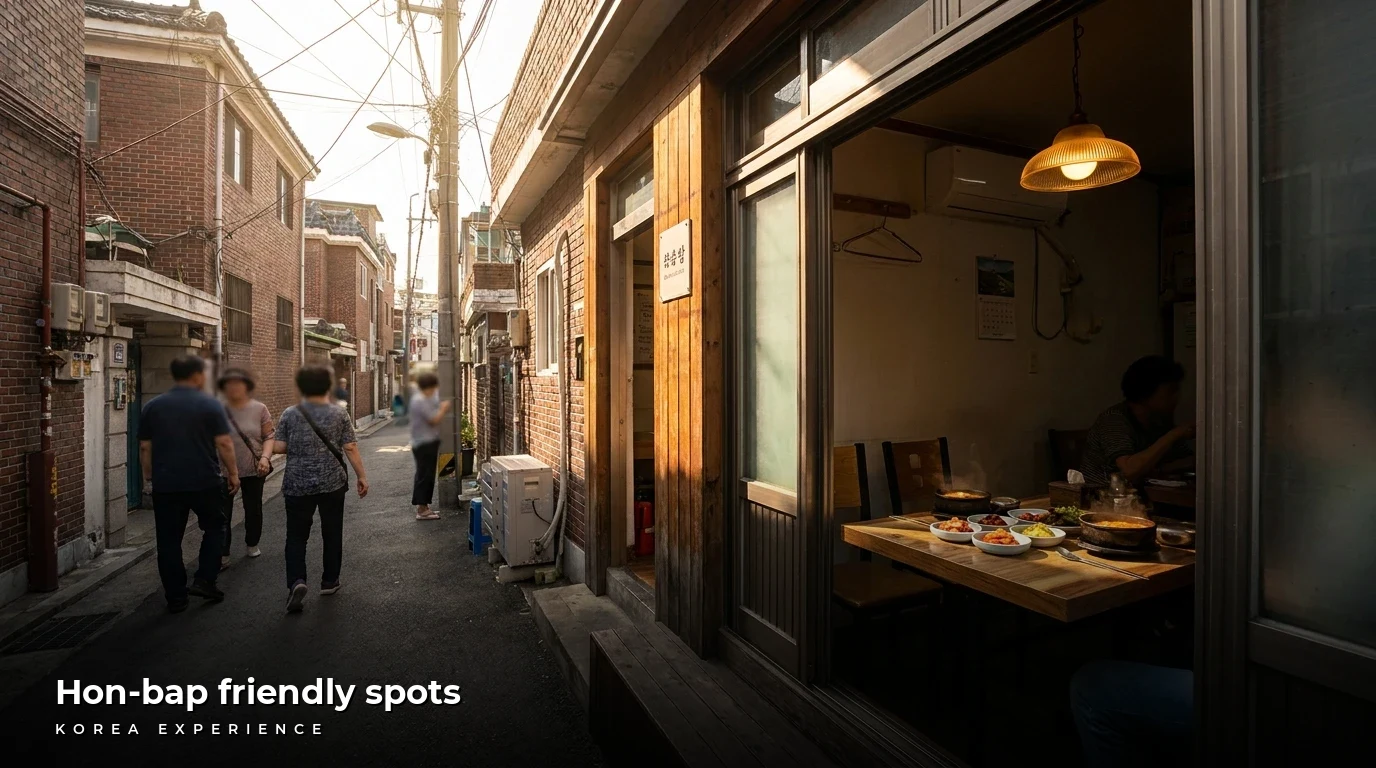
So you are traveling to Seoul alone and terrified you will not be allowed to eat Korean BBQ by yourself? Do not stress. Thanks to the booming hon-bap (solo dining) culture and brilliant new foreigner-friendly applications, you can devour sizzling pork belly, massive hot pots, and late-night delivery without ever needing a dining partner.
Historically, South Korean dining culture has been deeply rooted in communal sharing, reflecting the nation's collectivist agricultural past where meals were shared from central pots. Eating alone was often stigmatized, with solo diners viewed as socially isolated. However, economic pressures, a hyper-competitive job market, delayed marriages, and an aging population have fueled the rise of the honjok (solo tribe). Today, navigating Seoul as a solo diner is not only accessible but luxurious, with establishments offering personal barbecue grills, single-serving menus, and specialized digital reservation systems designed for the modern solo traveler.
Foreign tourists and short-term visitors without a Korean Alien Registration Card (ARC) or local phone number can seamlessly navigate the dining scene using specialized apps like Catch Table Global and Shuttle Delivery, which accept international credit cards and email sign-ups.
Key Takeaways
- 1You absolutely can eat K-BBQ alone. While traditional spots might have a minimum two servings rule, Seoul is now packed with solo-dining specialists like Hongojib, where you get your own private booth, a personal gas grill, and a tablet to order exactly what you want.
- 2Over 36.1 percent of all households in Korea are now single-person households. That is over 10 million people living and eating alone. You are not the weird tourist eating by yourself; you are actually participating in one of Korea's biggest modern lifestyle trends.
- 3Download Catch Table Global and Shuttle Delivery right now. These two apps are your golden tickets because they let you book tables and order food delivery using your international credit card and email address, completely bypassing the dreaded Korean resident ID requirements.
📋 Quick Facts
The Solo Dining Revolution in Seoul
So, you are planning a trip to Seoul, and the anxiety is already kicking in. You have heard the rumors. You have read the travel forums. "Can I eat K-BBQ by myself, or will the restaurant owner literally turn me away?" Here is the short, glorious answer: Yes, you absolutely can eat Korean barbecue alone, and no, you will not be treated like an outcast. The days of starving in your hotel room or surviving solely on convenience store ramen are officially over. South Korea is currently living through a massive solo dining revolution called hon-bap, and the city of Seoul has adapted beautifully to cater directly to you.
Let me paint a picture for you. Imagine walking into a restaurant called Hongojib right in the bustling heart of Myeongdong or Hongdae. Instead of a massive communal table meant for a rowdy group of office workers, you are guided to your own private, wooden-partitioned booth. In front of you is a personal, miniature gas grill. To your right is a digital tablet. Without having to stumble through broken Korean or awkwardly flag down a busy waiter, you tap the screen and order a 100g serving of beautifully marbled pork belly, some beef brisket, and a bowl of rice. A few minutes later, the meat arrives with a beautiful array of free, refillable side dishes known as banchan. You cook the meat exactly how you like it, dip it into a luscious raw egg and garlic soy sauce, and enjoy your meal in absolute, unbothered peace. It is not just a meal; it is an introvert's absolute dream.
And here is the number that proves you are not alone: 36.1 percent. As of recent government data, over 36 percent of all households in South Korea are single-person households. That is over 10 million people living, working, and, most importantly, eating by themselves. The sheer economic power of this demographic has forced the restaurant industry to evolve. While it used to be a point of stress for tourists, solo dining is now a highly profitable, mainstream market. So brush off that anxiety. Whether you want an elaborate barbecue feast, a steaming bowl of kalguksu noodles at Myeongdong Kyoja, or a late-night delivery of crispy fried chicken straight to your hotel door, Seoul in 2026 is ready to serve you. For a deeper dive into how this cultural shift happened, check out our Hon-bap Guide: How to Eat Alone in Korea Like a Local in 2026.
The Shift Begins
Single-person households begin a rapid upward climb, challenging the traditional communal dining culture of Korea.
Drinking Solo Airs
The hit K-drama Drinking Solo airs, helping romanticize and popularize the solo eating and drinking lifestyle.
Rise of the Honjok
The term honjok (solo tribe) officially goes mainstream, breaking down the stigma of eating alone in public spaces.
Catch Table Goes Global
The massive restaurant reservation app Catch Table launches an English version to help foreigners book spots without local IDs.
A Demographic Milestone
Single-person households officially surpass the 10 million mark, making up an astonishing 36.1 percent of all households in the country.
The New Reservation Reality
Digital waitlists become mandatory at hot spots, while the Fair Trade Commission authorizes up to 40 percent penalties for reservation no-shows.
Breaking Down Your Solo Dining Options
Now that you know you can eat alone, let us talk about where you should go. Depending on your mood, your budget, and how much interaction you want to deal with, you have a few distinct paths you can take through the city.
Let us start with the easiest, most anxiety-free option: Premium Department Store Food Halls. If you are a solo traveler and you are feeling a bit overwhelmed by the language barrier, head straight to the basement of The Hyundai Seoul or the Lotte Department Store in Myeongdong. These places are absolute havens for solo diners. It is not like a sad western mall food court; these are high-end culinary hubs featuring outposts of famous restaurants. You can slide up to the bar at a place like Shabuchon by GBZ, get your own personal induction stove, and cook a premium half-chicken shabu-shabu all by yourself. Nobody will look twice at you because department stores are inherently transient, individual spaces.
If you want something a bit grittier and more authentic, you have to hit the Traditional Markets and Noodle Shops. Noodle culture in Korea is naturally geared toward fast, solo dining. At a legendary institution like Myeongdong Kyoja, the line might be out the door, but as a solo diner, you are a VIP. The staff are masters of efficiency and will quickly slot you into an empty seat at a communal table. You sit down, slurp your rich knife-cut noodles, sweat through the intensely spicy garlic kimchi, and leave. Similarly, at Gwangjang Market, pulling up a stool at a food stall to eat raw beef bibimbap or crispy mung bean pancakes while rubbing elbows with locals is a rite of passage.
Then, of course, you have the Dedicated Solo Specialists. We have talked about Hongojib for K-BBQ, but there are also places doing solo Japanese ramen, solo bossam (boiled pork wraps), and aesthetic cafes in trendy neighborhoods like Seongsu-dong. Places like Sonyeo Mill offer beautifully plated, wholesome Korean home-style meals on single trays.
Finally, for the foodies with a higher budget: Fine Dining. You might think Michelin-starred restaurants would reject solo diners, but the opposite is true. High-end dining in Seoul has widely adopted the counter-seating model. As a solo diner, you can book a seat at the chef's counter, watch the culinary theater unfold, and enjoy a multi-course tasting menu without needing a plus-one. If you are looking to splurge, read our comprehensive guide on Solo Fine Dining in Seoul 2026: Michelin Stars to Hon-bap Guide.
Pros
- ✓Total Culinary Freedom: When you dine alone, there are no menu negotiations. You want the super spicy pork belly instead of the mild beef? Get it. You are the master of your own culinary destiny.
- ✓Mental Recharge & Wellness: Traveling is exhausting. The beauty of hon-bap in 2026 is that many cafes and restaurants are designed as quiet sanctuaries for mindful self-care.
- ✓Speed and Efficiency: Solo diners can easily slip into single-seat bars at famous noodle shops or ramen joints while groups of four wait outside for an hour.
Cons
- ✗The Two-Serving Minimum Struggle: Many traditional spots, especially for things like hot pot or old-school K-BBQ, still demand a minimum order of two servings to fire up the grill.
- ✗Missing Out on Giant Communal Dishes: Korean food is inherently communal. When you eat alone, it is hard to try five different dishes and you might miss out on massive army stews meant for four people.
- ✗The Tech and Kiosk Wall: If you wander off the tourist path, you will hit restaurants that use digital iPads at the door demanding a Korean phone number.
The Complete Tech Guide to Dining Alone
Okay, we need to have a serious talk about the tech barrier in Korea. You can know all the best restaurants, but if you do not know how to navigate the digital ecosystem, you will find yourself staring hungrily through the window of a restaurant you cannot get into.
Here is the brutal truth about Korea in 2026: almost everything is tied to digital identity verification. Locals use an Alien Registration Card (ARC) linked to their telecom contract to verify their identity on apps like Naver, Kakao, and the domestic queue applications. If you are a tourist holding a 10-day travel eSIM, you do not have this. In the past, this meant you physically could not put your name on a digital waitlist at a busy restaurant.
Enter your new best friend: Catch Table Global. The developers recognized the tourist nightmare and launched a parallel English app. Before you even board your flight to Incheon, download it. You can create an account using just your email address. It accepts foreign credit cards (Visa, Amex, Mastercard) which is essential because many popular restaurants now require a deposit to hold a reservation. You can browse menus in English, book tables weeks in advance, and secure your spot. If you walk up to a restaurant with a physical kiosk out front, do not walk away! Look at the iPad screen. Usually, in the bottom corner, there is a button for Foreigner or a small QR code. Scan that QR code with your phone, and it bypasses the phone number requirement, linking directly to your Catch Table Global account or email. For a full walkthrough of this system, see our CatchTable Global 2026: Book Korea's Best Restaurants Without a Phone tutorial.
But what about those nights when your feet are covered in blisters from walking around Gyeongbokgung Palace all day, and you just want to eat in your hotel bed? You need food delivery. Again, local apps like Baemin usually require an ARC for payment verification. So, you need to download Shuttle Delivery. This app was built specifically for expats and tourists. It operates fully in English, takes international credit cards, and even accepts PayPal. All you need to do is get your hotel's exact Road Name Address, plug it into Shuttle, and order anything from tacos to authentic Korean fried chicken. You can even use Shuttle to deliver food right to the Hangang River parks if you want to have a solo picnic!
| Feature | Catch Table Global | Shuttle Delivery | Walk-in / Cash |
|---|---|---|---|
| Cost | Free app (Reservations require card deposit) | Delivery fees vary slightly higher than local apps | Free to walk in / standard delivery fees |
| Processing Time | Instant booking / live digital queue | Standard food delivery (30-60 mins) | Wait times can exceed 2-3 hours in person |
| Duration/Validity | Books months in advance or same-day queues | On-demand (11:00 AM to midnight usually) | Varies by restaurant opening hours |
| Requirements | Email address & Foreign Credit Card | Email & Foreign Card / PayPal | Cash or local phone number |
| Best For | Michelin dining, trendy cafes, avoiding lines | Late-night hotel cravings, Hangang Park picnics | Off-the-beaten-path local neighborhood joints |
| 2026 Changes | Implemented strict 40% no-show fee penalties | Expanded multilingual support (10+ languages) | More physical kiosks now feature a QR code for foreigners |
📖 How to Book a Viral Restaurant Without a Local ID
Step 1: Download Catch Table Global Before You Fly
Do not wait until you land at Incheon Airport. Download the English version of the app while you are still at home. You can sign up using just an email address, no Korean telecom verification needed.
Step 2: Search and Secure Your Table
Browse the app for your desired restaurant. You can filter by Solo Dining or specific neighborhoods. If you want to go to a highly-coveted spot, you can book it days or weeks in advance directly through the English interface.
Step 3: The Digital Queue Walk-In Hack
If you did not make a reservation and show up to a restaurant with a huge line and an iPad kiosk out front, do not panic. Look closely at the bottom corners of the tablet screen for a foreigner QR code.
Step 4: Mastering Food Delivery to Your Hotel Room
It is 11 PM and you want Korean Fried Chicken. Skip the local apps that require identity verification. Download Shuttle Delivery. Enter your hotel's exact Road Name Address, pick your food, and pay with your international credit card.
Unwritten Rules and Street-Smart Hacks
Even with the best apps and a list of restaurants, there are a few unwritten rules and street-smart hacks you need to know to truly master solo dining in Seoul. What would a local friend tell you over a cup of coffee?
First, let us talk about the infamous minimum two servings rule. You will encounter this at traditional K-BBQ joints, spicy stir-fried chicken spots, and anywhere with a large shared pot. A lot of tourists see this sign, panic, and leave. Do not! If you really want to eat there, and you have a decent appetite, just confidently walk in, hold up two fingers, and say that you will order two servings. Yes, you will pay double the per-person price, but K-BBQ is relatively affordable. Paying $25 to have a massive, authentic feast all to yourself is totally worth it. The staff will not judge you; they just want to make sure the table meets the minimum spend.
Second, timing is everything. If you want to eat at a place that is not explicitly marketed for solo diners, go during the off-peak golden window between 2:00 PM and 4:00 PM. During the chaotic lunch rush (11:30 AM to 1:00 PM), seating a solo diner at a four-person table hurts the restaurant's bottom line. But at 3:00 PM? The restaurant is empty, the staff are prepping for dinner, and they will happily take your money and let you take your time.
Third, let us talk about app etiquette. I mentioned that Catch Table Global requires a credit card deposit. You need to take this seriously. Because the no-show problem got so bad with tourists, the Korean Fair Trade Commission stepped in. In 2026, the maximum penalty for ghosting a reservation was raised to an aggressive 40 percent of the total menu price. If you book an expensive omakase or fine dining spot and just decide not to go, they will charge your foreign card instantly. If you need to cancel, do it well in advance through the app.
Lastly, if you are absolutely desperate to use the local Baemin app because Shuttle Delivery does not cover your neighborhood, there is a secret hack. Download Baemin, skip the login and account creation screen by tapping the browse option, add your food, and at checkout, select the payment option to pay the driver in person. You can then hand the delivery driver physical Korean Won cash when they arrive at your door. It takes a little bit of translation application magic to navigate the menus, but it is a lifesaver when you are craving late-night snacks! While you are preparing for these little travel hurdles, you might also want to read our Daiso Korea 2026 Survival Guide: Best Items to Save Your Trip & Wallet to pick up essential solo travel gear.
If you really want to try a traditional, old-school Korean BBQ place that isn't on the 'solo friendly' lists, just go between 2:00 PM and 4:00 PM. The lunch rush is over, the dinner rush hasn't started, and the owners are usually more than happy to seat a solo diner. Just confidently hold up two fingers and say 'I will order two servings'. You'll pay a bit more, but having an entire traditional feast to yourself is glorious.
No Local Phone Number or ARC? Here is What To Do
This is CRITICAL for foreign visitors: The Korean internet is locked down by a telecom identity verification system. To use local apps like Baedal Minjok or Kakao, you usually need an Alien Registration Card (ARC).
Your solutions:
- For Reservations: Strictly use Catch Table Global. It was specifically designed in partnership with the Seoul government to let tourists use email and foreign credit cards.
- For Delivery: Use Shuttle Delivery. It is fully in English and takes foreign cards.
- The Concierge Hack: If you want a spot that only takes phone reservations, go old school. Walk down to your hotel lobby and politely ask the concierge to call the restaurant and book it under their name for you.
Top Solo Dining Locations in Seoul
To make your trip planning even easier, we have compiled a list of the absolute best, stress-free solo dining locations across the city. These spots are guaranteed to welcome you with open arms.
Hongojib (Myeongdong Branch) Located right in the heart of the shopping district, this is the ultimate solo K-BBQ restaurant. They feature personal grills, individual privacy partitions, and tablet ordering. You can order exactly the cuts of meat you want without any minimum serving requirements. The insider tip here is to order the sukiyaki set and make sure to dip the thinly sliced beef into the raw egg and garlic soy sauce. It is a complete game changer.
Gwangjang Market If you want the bustling, chaotic energy of a traditional street food market, head to Jongno. The communal benches here are perfect for solo diners. You can order raw beef bibimbap or crispy mung bean pancakes. Do not be shy about sitting next to strangers on the wooden benches; it is the most natural solo dining experience in the city and incredibly budget-friendly.
Shabuchon by GBZ (Lotte Department Store) Hidden in the basement food hall of the Lotte Department Store in Myeongdong, this spot offers solo hot pot and shabu shabu. You get your own personal boiling pot and can enjoy premium food hall hygiene with half-chicken options. Department store food halls are judgment-free zones for solo diners; nobody will look twice if you are eating alone here.
Gyeongju Sikdang (Sangsu) For a more aesthetic experience, this restaurant in the Mapo district features beautiful traditional Hanok architecture. They serve pre-grilled meat sets and turmeric rice. If you want the taste of K-BBQ without smelling like smoke, get their Pork Neck Curry Rice or Meat Set. It comes pre-cooked beautifully on a single tray, making it perfect for one person.
Myeongdong Kyoja (Main Branch) This Michelin Bib Gourmand noodle restaurant is legendary for its rich knife-cut noodles and incredibly fast service. The turnover rate here is insane, and they actually love solo diners because you can easily be slotted into a single seat at a shared table. Be prepared for their famously spicy garlic kimchi!
A 24-Hour Solo Dining Itinerary
Want to see how all of this comes together? Here is a perfect 12-hour route through central Seoul that mixes budget street food with luxurious solo dining experiences.
Start your morning at Myeongdong Kyoja. For just about $8, you can enjoy a steaming, deeply comforting bowl of kalguksu noodles and their spicy garlic kimchi. You will be in and out in 20 minutes, perfectly fueled for a morning of sightseeing.
By mid-day, take the subway to Seongsu-dong. Use your Catch Table Global app to skip the line at a viral, high-end dessert cafe. For around $20, you can enjoy a premium matcha latte and artisanal pastries in total peace, surrounded by Seoul's trendiest locals.
For a late lunch, head over to Gwangjang Market. Squeeze onto a wooden bench at a busy stall. Order a freshly fried mung bean pancake and a small bottle of makgeolli for about $7. It is loud, vibrant, and completely authentic.
Finally, treat yourself to dinner at Hongojib Solo K-BBQ. Sit in your private booth, order the premium beef and pork belly sets on your iPad, and grill your meat to perfection. For $30 or more, you get the ultimate luxury of a private Korean barbecue feast.
The key recommendation here is not to limit yourself to just convenience stores. Mix the incredible affordability of street food markets with the luxury of modern solo-BBQ joints to get the full spectrum of Seoul's culinary scene. And remember, while you are out exploring, it is always good to have the Emergency Ready App Korea 2026: English Alerts & Safety Guide installed on your phone just in case.
❓ Frequently Asked Questions
Have more questions?Contact us →
Conclusion: Your Action Plan
Look, your trip to Seoul should be about incredible experiences, not stressing over where to eat. In 2026, the city is practically begging you to enjoy its food on your own terms. Your action plan is simple: Before you even pack your bags, download Catch Table Global and Shuttle Delivery. Link your credit cards. When you land, make your first meal an easy win by heading to a department store food hall or slipping into the bustling energy of Gwangjang Market.
Once you realize nobody is staring at you, graduate to the ultimate solo experience: walking into Hongojib, firing up your own personal grill, and listening to the sizzle of pork belly while you sip a cold drink. Embrace the honjok lifestyle. Take your time, order exactly what you crave, and relish the fact that you have the freedom to eat your way through one of the world's greatest culinary capitals, entirely at your own pace. You have got this!
Sources:
- LetSeoul Media: History of Gwangjang market, shift in solo dining culture, types of solo food.
- Seoul Explorer Guide: Strategies for solo dining, bar seating, Lotte department store food halls.
- Korea Crate Blog: Solo street food in Myeongdong and traditional markets.
- Korea Tourism Organization (NOL): Sonyeo Mill and Shabuchon by GBZ details.
- TripZilla Solo Guide: Myeongdong Kyoja and Hongojib BBQ features.
- Nomadesim Guide: Details on solo K-BBQ restaurant names and concepts.
- Day To Day Korea: Gyeongju Sikdang Hanok meat sets and Sangsu location.
- Chulalongkorn University ETD: Academic history of Honbap and collectivist Korean dining origins.
- Interesting Korea: Explanation of Honjok, Honsul, and media impact like Drinking Solo.
- The Kraze Magazine: Cultural shift from shared side dishes to individual dining individualism.
- D8a Spring Insights: Social stigma of eating alone and fear of being an outcast.
- 10Mag Korea: Shuttle Delivery app functionality, foreign card usage, and Baemin options.
- K-Campus Reviews: Step-by-step guide to using Baemin without an account or ARC.
- Visit Korea Official: Using Shuttle Delivery for Hangang Park picnics.
- Chosun Ilbo National: 2025 demographic data on 36.1% single-person households.
- Global Nation Inquirer: Statistics on single households passing 10 million.
- Tatler Asia: 70-80% of Koreans trying solo dining and intentional wellness trend.
About the Author
Korea Experience Team
Written by the Korea Experience editorial team - experts in Korean medical tourism, travel, and culture with years of research and firsthand experience.
Explore more in Living in Korea
Everything expats and long-term visitors need to know — from visa requirements and housing to banking, healthcare, and daily life tips.
Browse All Living in Korea ArticlesContinue Reading
Explore more articles you might find interesting
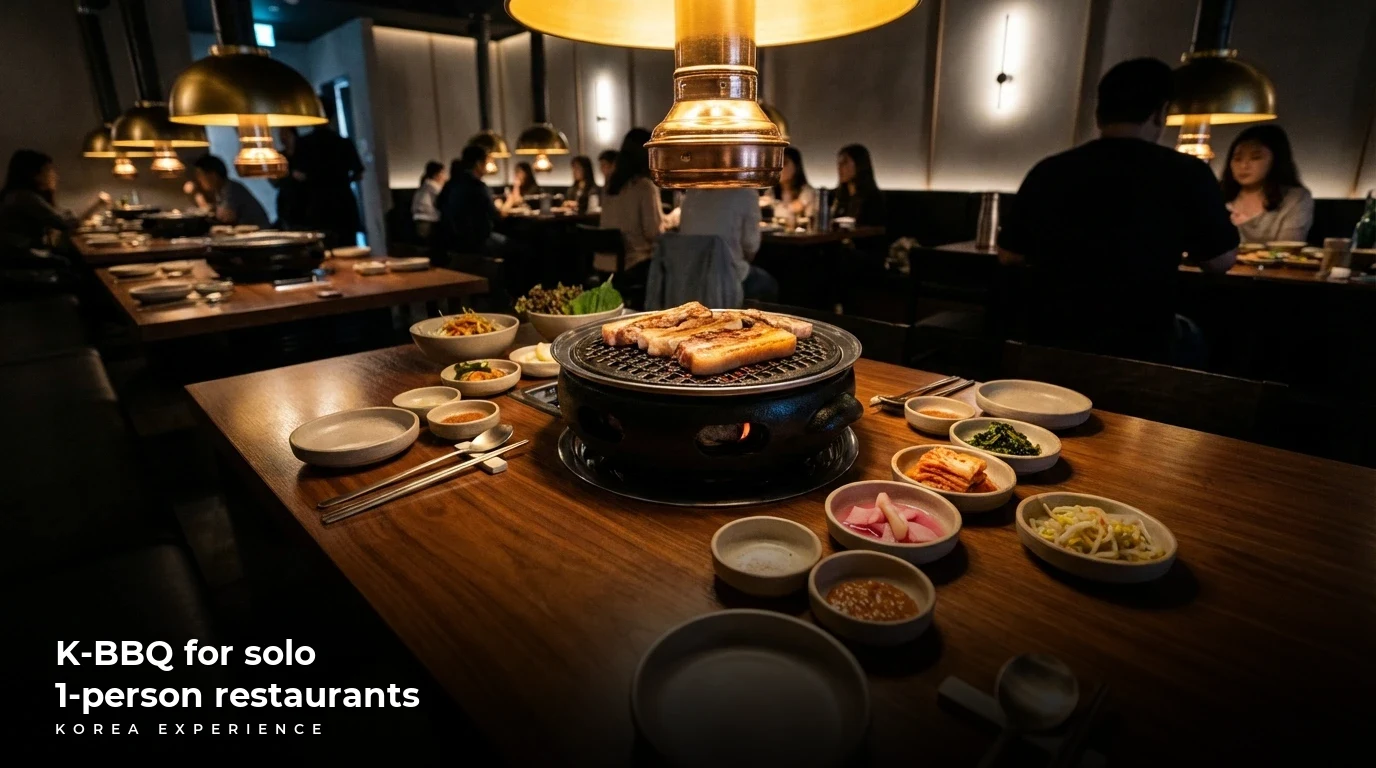
Scared of the X arms? Seoul solo dining scene has exploded with 40% single households. Here is where to find single-serving BBQ spots in 2026.
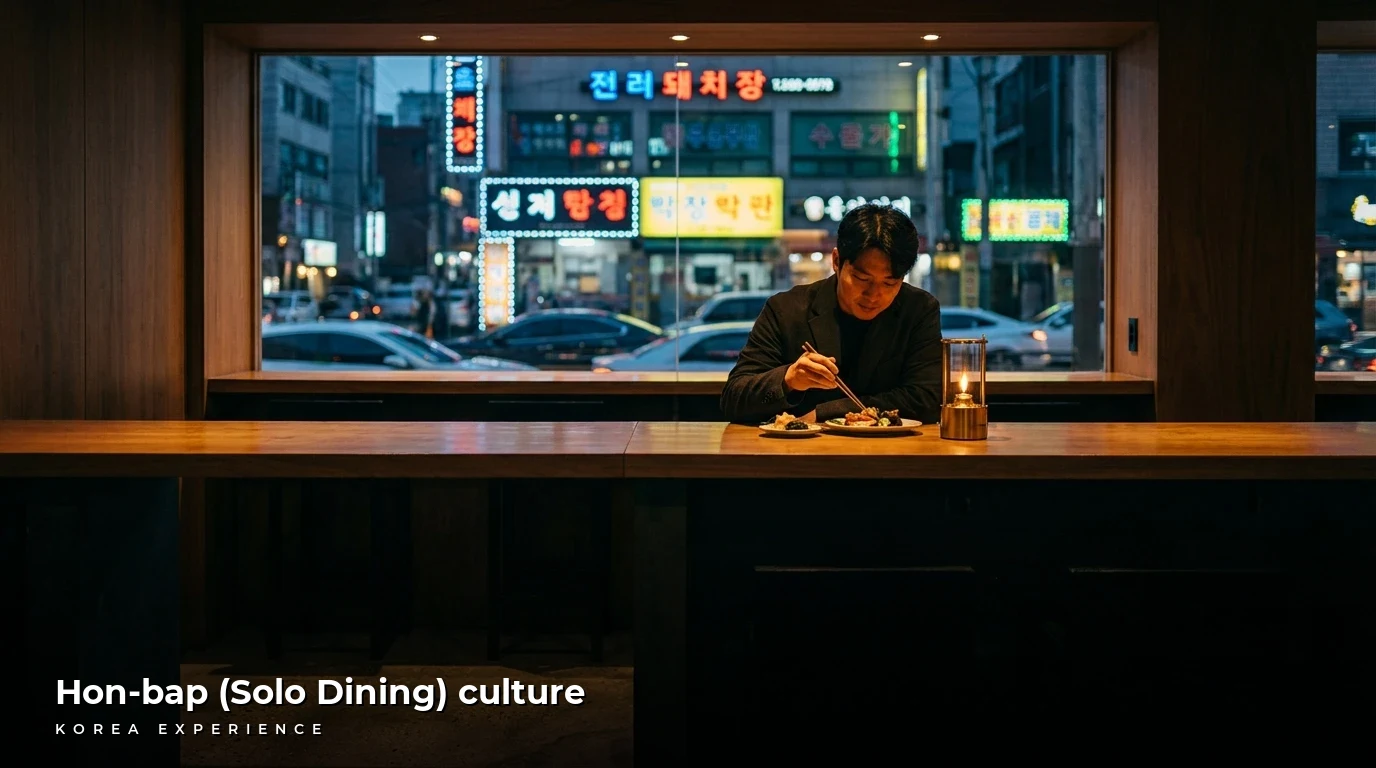
Discover the 2026 solo dining revolution in Seoul where 36.1% of households are single. Learn to navigate BBQ joints and avoid lunchflation prices.
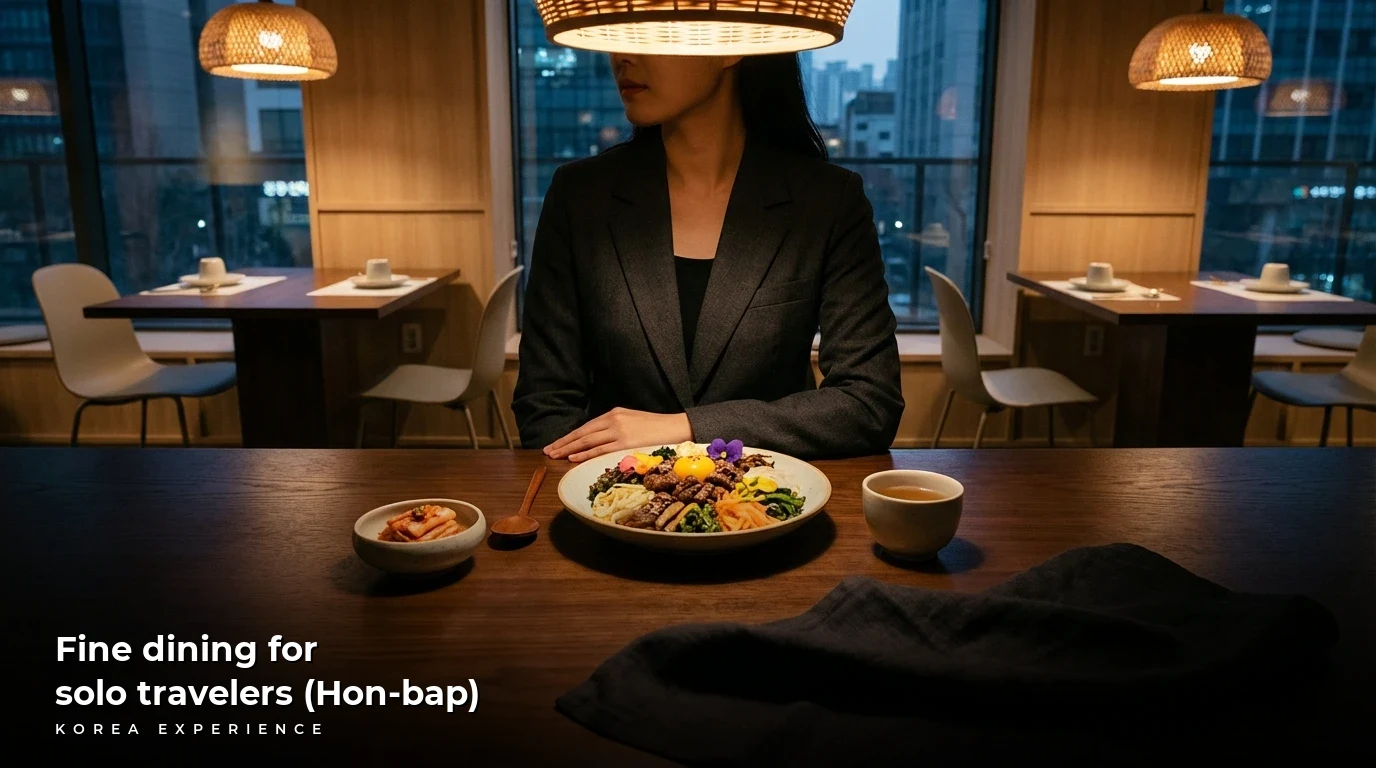
Master Seoul solo dining in 2026 where 36.1% of households are single. Book Michelin spots like Mosu and enjoy Hanwoo beef without feeling awkward.
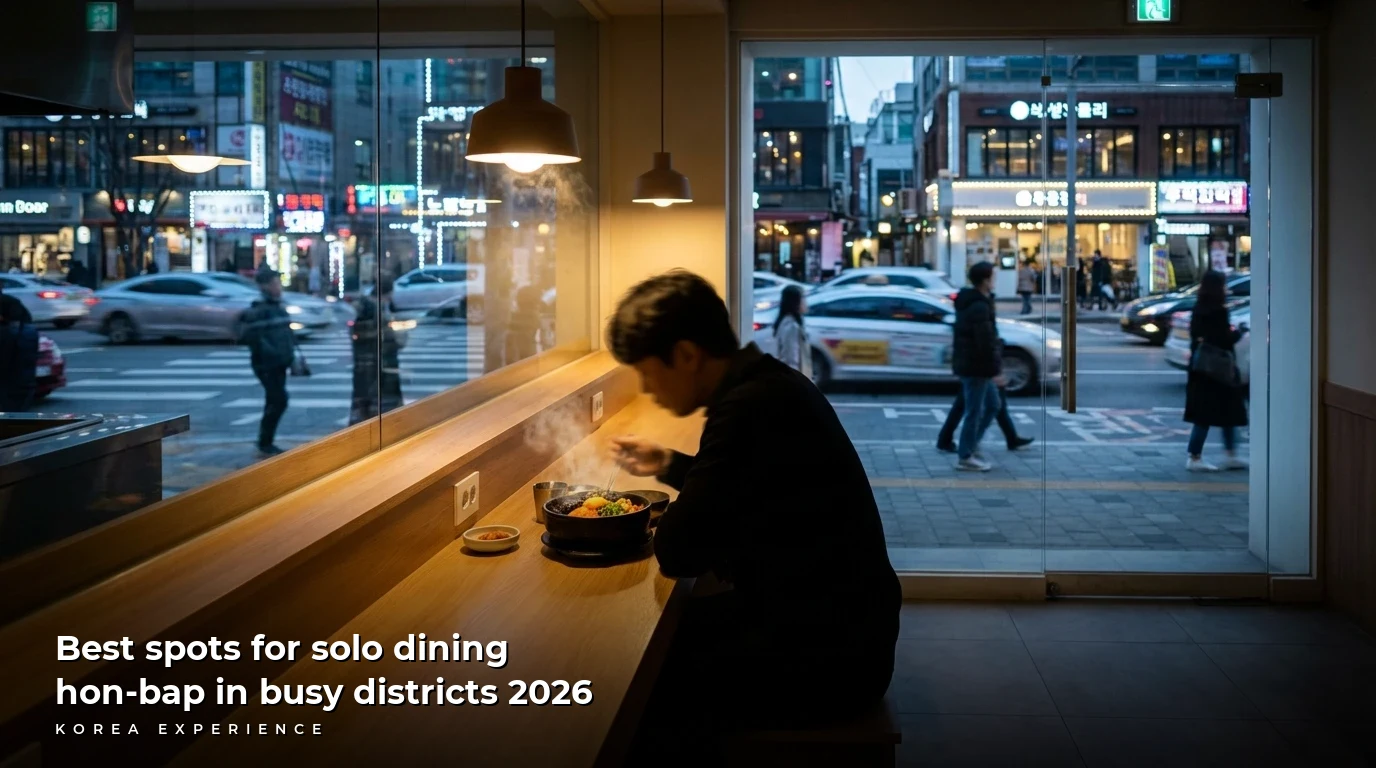
The ultimate guide to solo dining in Seoul. Discover the best Hon Bap spots in Gangnam, Hongdae, and Myeongdong with 2026 prices and tips.
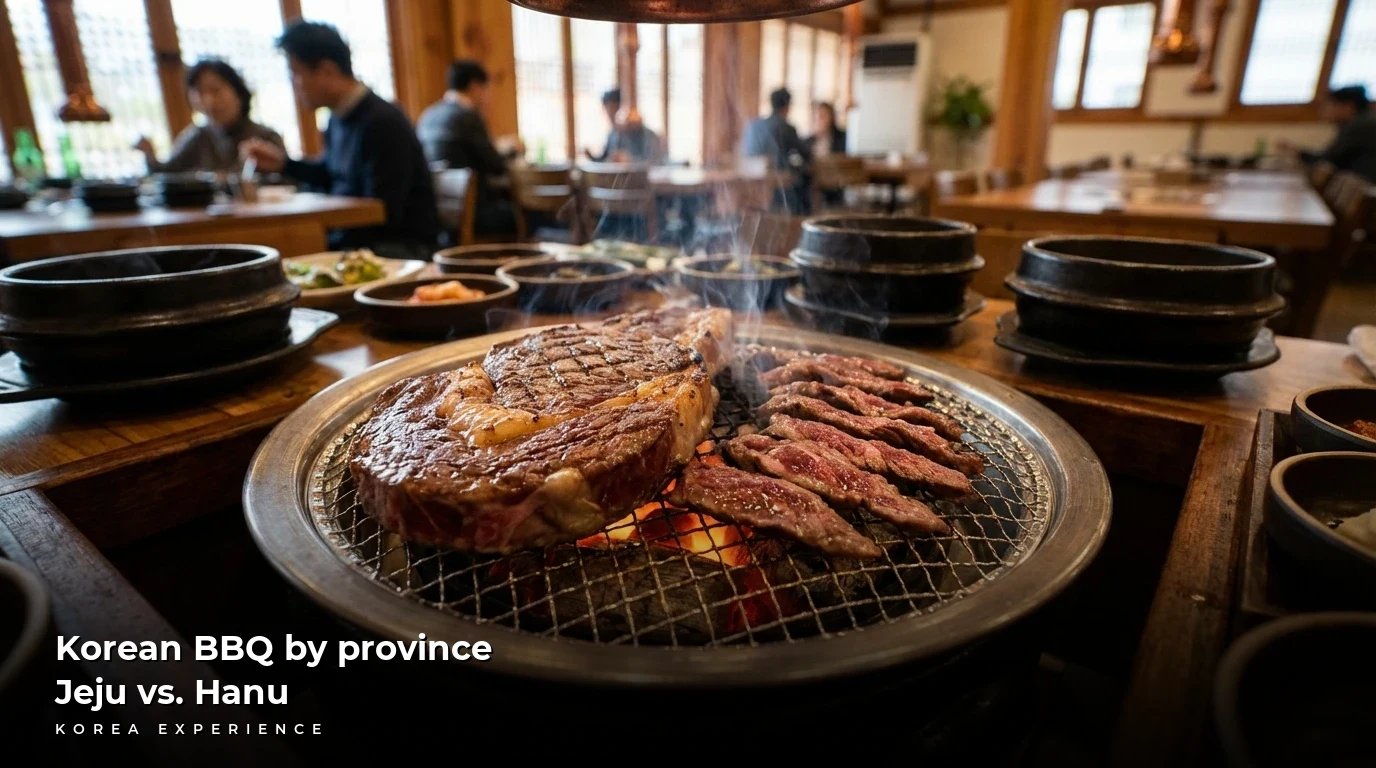
Discover whether to splurge on Jeju black pork or Hanwoo beef in 2026. With wholesale prices up 18.4 percent learn how to book top spots without a local ID.

Discover top makgeolli brewery tastings in Korea for 2026. Learn how to book premium 12 percent ABV craft flights from 30,000 KRW without a local phone number.