How to top up your T-money card with cash in Korea 2026
Learn how to top up your T-money card with cash in 2026. A 30,000 KRW reload at any convenience store is the best way to ride Seoul transit without an ARC.
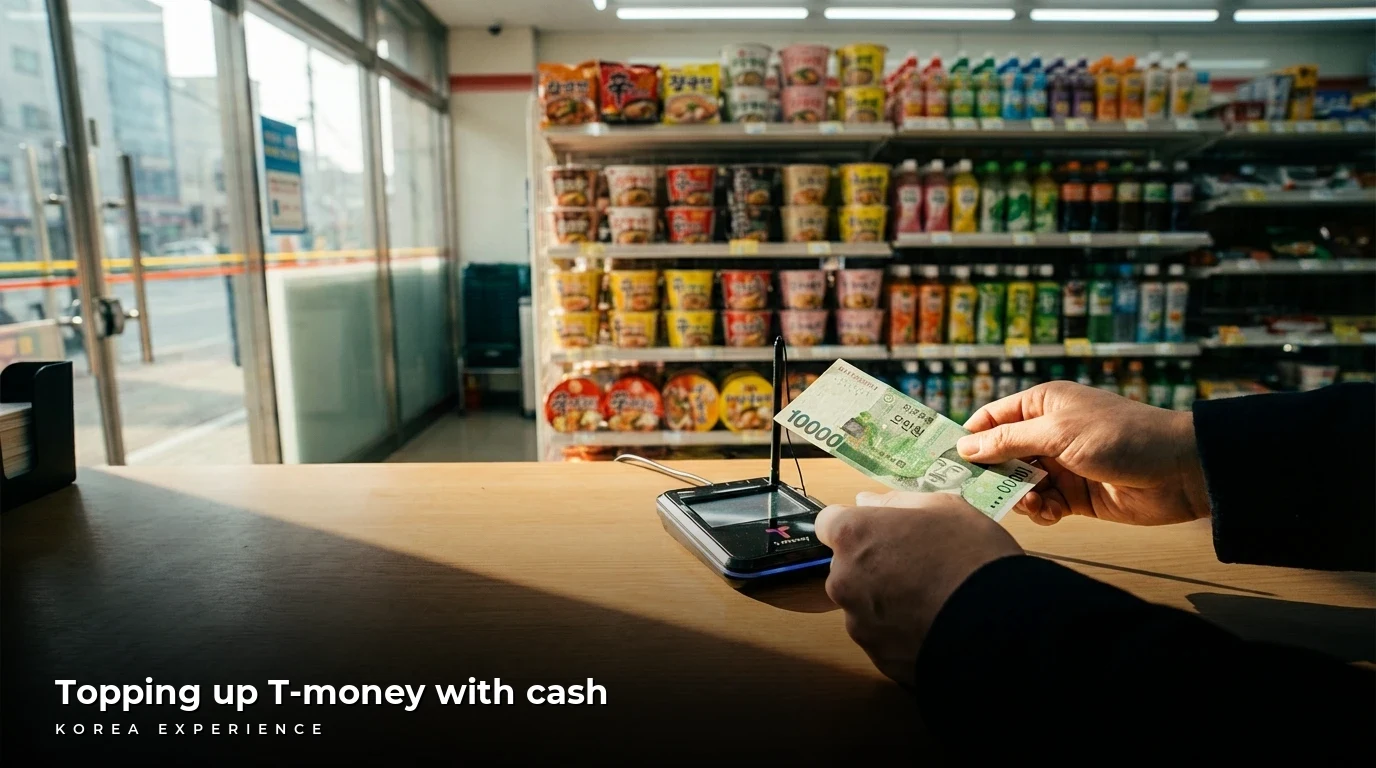
So you have just landed at Incheon International Airport, the neon lights of Seoul are calling your name, and you are staring at a rack of plastic transit cards wondering how to actually get your hard-earned travel funds onto one of them. While the world is rapidly going digital, South Korea's transit system presents a unique quirk for travelers: using physical cash to top up your T-money card is not only the traditional way, it is actually the absolute best, most stress-free method for foreigners.
The evidence leans heavily toward cash being the great equalizer in a country where digital payment apps often require local residency. In this massive deep-dive, we are going to break down every single thing you need to know about navigating the Korean transit system using cash, from your first interaction at the airport convenience store to getting your leftover won refunded before your flight home.
Key Takeaways
- 1Even with all the shiny new 2026 tech updates, physical cash is still king for reloading your T-money card at literally any convenience store or subway station.
- 2A 30,000 KRW (about $22) cash top-up is the absolute sweet spot for a 3-to-4-day trip, covering your initial airport train ride and dozens of subway hops.
- 3Buy the physical card at the airport arrivals hall, hand the cashier a 50,000 KRW bill, and ask them to top it up. You will be on your way in under 60 seconds.
📋 Quick Facts
The Short Answer: How to Top Up Instantly
So, you want to know how to top up your T-money card with cash? The short answer is incredibly simple, and honestly, it is going to be the easiest part of your entire trip to South Korea. You literally just walk into any convenience store—we are talking CU, GS25, 7-Eleven, or emart24—hand your physical T-money card and a crisp Korean Won bill to the cashier, and say, "Chung-jeon-hae ju-se-yo," which simply means "Please recharge this."
That is it. Within ten seconds, the cashier will tap the card on their register pad, ring up the cash, hand the card back to you, and you are ready to conquer the Seoul subway system.
If you are wondering why you should still be using cash in a futuristic cyber-metropolis like Seoul in 2026, it is completely understandable. It feels a bit old-school, right? But here is the reality of being a foreigner in Korea: the digital payment infrastructure here is notoriously locked down. To use the official smartphone apps, you almost always need to verify your identity using a Korean phone number tied to a resident Alien Registration Card (ARC). Since you are just visiting, you likely do not have either of those things. Buying a physical plastic card for about 3,000 to 5,000 KRW and feeding it cold, hard cash bypasses that entire digital headache. It is entirely anonymous, it requires zero app downloads, and it never crashes.
The Ultimate Workaround
This is the most critical piece of advice for tourists. Do not try to use the Mobile T-money app on your smartphone if you are just visiting for a few weeks. The Korean digital infrastructure requires an Alien Registration Card (ARC) and a local Korean phone number tied to your real identity to verify most mobile payment apps. Embracing the plastic card and topping it up with physical Won is the ultimate workaround. It asks for no name, no passport, no ARC, and no phone number. It just works.
Let us talk numbers so you know exactly what to prepare. When you walk up to that convenience store counter or use the ticket vending machines inside the subway stations, you can top up your card in increments of 1,000 KRW. The maximum amount of money you can add in a single transaction is 90,000 KRW, and the absolute maximum balance your T-money card can hold at any given time is 500,000 KRW.
But let us be real—you do not need half a million won on a transit card. If you are touching down at Incheon Airport for a standard three or four-day vacation, the golden rule is to hand the cashier a 30,000 to 40,000 KRW bill right off the bat. With the base subway fare sitting around 1,400 to 1,550 KRW in 2026, a 30,000 KRW top-up gives you about 20 free-flowing rides across the city, plus enough to cover your initial airport express train ride into town.
And do not worry about being stranded. If you burn through that 30,000 KRW taking spontaneous trips across town, topping up is never more than a few feet away. Every single subway station is equipped with automated ticket vending machines that have an English language option. You just place your card on the sensor, hit the reload button, and feed the machine your won bills. Keep your life simple, grab some Korean cash from an airport ATM, and make your T-money card your best friend.
The Background Story of Korean Transit
To really understand why the T-money card is practically a religion in South Korea, we have to look back at how this incredible transit system evolved. It did not just happen overnight. Back in the early 2000s, people were still dealing with magnetic stripe tickets and scrambling for loose change every time they wanted to catch a bus. But in 2004, the Seoul Metropolitan Government rolled out the T-money system, and it completely revolutionized how the city moved. It was not just a subway pass; it was a vision for seamless urban mobility.
T-money System Launch
The Seoul Metropolitan Government officially introduces the T-money system to replace the old magnetic stripe Seoul Bus Card, revolutionizing urban transit.
One Card All Pass Era
T-money becomes a nationwide standard, allowing users to seamlessly tap across different provinces, cities, and transit networks throughout South Korea.
Cashless Pilot Program
Seoul runs a six-month pilot operation removing physical cash fare boxes from 171 buses across eight city lines to test a fully digital system.
Cashless Buses Rollout
Starting March 1, Seoul drastically phases out physical cash boxes on thousands of city buses, forcing all riders to rely strictly on transit cards.
Climate Card Introduced
Seoul introduces the Climate Companion Card, a brand new unlimited transit pass aimed at eco-friendly travel and shifting how long-term visitors commute.
Foreign Credit Card Kiosks
By March 2026, Seoul Metro successfully installs new ticket kiosks accepting foreign Visa and Mastercards in 273 stations, though cash remains the ultimate backup.
Things got really interesting around 2014 when the government pushed the One Card All Pass initiative. Before this, different regions in Korea had their own hyper-local transit cards. Imagine buying a metro card in New York, flying to Chicago, and having to buy a totally different card just to take the bus. That is how Korea used to be. But with the One Card All Pass system, T-money became the undisputed king of nationwide transit. The exact same plastic card you top up with cash in a gritty alleyway in Seoul will work flawlessly on a high-speed KTX feed line, on the coastal buses of Busan, and even on the scenic transit routes of Jeju Island. It became the skeleton key to the entire country.
But the biggest plot twist in the history of Korean transit happened very recently, and it is exactly why you must have a loaded T-money card today. For decades, the iconic visual of a Korean city bus included a clunky, transparent plastic box next to the driver filled with coins and crumpled 1,000-won bills. However, the city realized that maintaining these cash boxes was costing them a staggering 2 billion won a year, while the actual percentage of people paying with physical cash had plummeted to a microscopic 0.6 percent by 2022.
So, in March 2023, Seoul pulled the plug. They began aggressively phasing out cash fare boxes on thousands of city buses. Overnight, 25 percent of the city bus fleet became entirely cashless, and that trend has only accelerated into 2026. This caused a bit of a panic among tourists and the elderly, but the rule is now firm: if you step onto a Seoul city bus today, you cannot pay with cash. You must tap a card. This is why learning how to keep your T-money card loaded with cash at a convenience store is literally a survival skill. The buses will not take your coins, but the GS25 on the corner gladly will.
Now, as we push deep into 2026, the system is evolving again. Seoul has finally started installing brand new EMV-compatible ticket kiosks in 273 major subway stations, allowing tourists to actually use their foreign Visa and Mastercards to top up transit passes for the first time ever. But here is the insider reality: these new machines are rolling out in phases, and the older, cash-only machines are still everywhere. Plus, the convenience stores still run on cash for T-money reloads. So while the tech is catching up, physical cash remains the invincible, unbreakable backbone of your travel experience.
Breaking Down Your Transit Card Options
Okay, let us sit down and really look at your options, because staring at the card rack in a Korean convenience store in 2026 can feel a bit overwhelming. You basically have three major paths when it comes to navigating Seoul: the traditional T-money card, the shiny new Seoul Climate Card, and the all-in-one tourist WOWPASS. Choosing the right one depends entirely on how you travel.
| Feature | Physical T-money (Cash) | Seoul Climate Card | WOWPASS |
|---|---|---|---|
| Cost | 2,500-5,000 KRW card fee + per ride | 3,000 KRW fee + 5,000 to 20,000 KRW passes | 5,000 KRW card fee + top up amounts |
| Processing Time | Instant (under 10 seconds at counter) | Instant (once activated for designated days) | 2-3 minutes at specific kiosks |
| Validity | Balance lasts 5 years, card never expires | Passes last 1, 2, 3, 5, 7, or 30 days | Balance lasts 6 years |
| Requirements | None (No ID, phone, or bank account needed) | None (Cash needed for physical card purchase) | Passport required for initial setup |
| Best For | Casual travelers, multi-city trips | Heavy transit users staying strictly in Seoul | Travelers wanting a combined debit card |
Let us start with the classic T-money Card. This is your old reliable. You pay 3,000 to 5,000 KRW for the card itself, and you load it with cash. Every time you tap the turnstile, the system deducts the exact cost of your ride—usually around 1,400 to 1,550 KRW depending on the distance. This option is absolutely perfect if your itinerary is a bit relaxed. If you are only taking the subway twice a day, or if you plan to travel outside of Seoul to places like Busan, Gyeongju, or Jeju Island, T-money is mandatory. Why? Because the T-money card is accepted nationwide. It does not care what city you are in; it just deducts the cash and opens the gate. For more details on alternative transport, check out our T-money 2026 Guide: Taxis, Bikes & Surviving Seoul Without an ARC.
But what if you are a hyper-active sightseer? Enter the Seoul Climate Card. Introduced recently to combat carbon emissions, this card is essentially an all-you-can-eat transit buffet. For tourists, you can buy short-term passes: 5,000 KRW for 1 day, 8,000 KRW for 2 days, all the way up to 20,000 KRW for 7 days. If you do the math, a standard subway ride is about 1,500 KRW. To break even on the 5,000 KRW daily pass, you only need to ride the subway four times a day. If you are zooming from a cafe in Hongdae to a museum in Gwanghwamun to dinner in Gangnam, the Climate Card will save you a fortune. However, there is a massive catch: The Climate Card strictly works only within the Seoul Metropolitan boundary. If you take a train out to Suwon or hop on a bus to the airport, the card will error out at the gate, and you will have to awkwardly find a station attendant to pay the difference in cash. Read our full breakdown in Seoul Climate Card 2026: Is the Unlimited Transit Pass Worth It?.
Then you have the WOWPASS, which has become super trendy for tourists. This acts as a combined debit card and transit card. You can load it with your home currency at special kiosks, and it automatically converts it to Korean Won for shopping, while a separate wallet on the card acts exactly like a T-money card. It is great, but you need your passport to set it up, and you are tied to their specific kiosks to manage your funds.
So, here is the ultimate scenario advice: If you are doing a heavy 5-day blitz entirely within the borders of Seoul, buy a physical Climate Card at a convenience store and load a 5-day pass onto it. But always keep a standard T-money card with 10,000 KRW cash on it hidden in your wallet. That way, when you inevitably wander out of the Climate Card zone, or you need to pay for an emergency taxi ride in the rain, your trusty cash-loaded T-money card will be there to save the day. You can compare these strategies further in our guide on Climate Card vs. T-Money 2026: Best Seoul Transit Card Compared.
Pros
- ✓Absolute, unshakeable reliability. Handing a 10,000 KRW bill to a convenience store clerk works 100 percent of the time, 24 hours a day.
- ✓Nationwide freedom. A cash-loaded T-money card lets you tap onto local transit systems flawlessly in Busan, Jeju, and beyond.
- ✓Zero digital hassle. You do not need to download buggy apps, you do not need a Korean phone number, and you do not need an ARC.
Cons
- ✗Leftover change anxiety. When it is time to fly home, you might find yourself with 3,400 KRW stuck on the card and face a 500 KRW refund fee.
- ✗No app recovery. If you drop your physical T-money card in a gutter in Hongdae, that cash is gone forever with zero way to recover it.
- ✗The ATM hunt. Since you need Korean Won to top it up at older machines, you actually have to carry physical cash in your wallet.
The Complete How-To Guide
Alright, let us turn this theory into action. We are going to walk you through the exact, step-by-step physical process of getting and maintaining your T-money card from the moment you step off the plane.
📖 How to Master the Cash Top-Up Like a Local
Step 1: Secure Your Physical Card
Before you can load cash, you need the plastic. Walk into any convenience store in the airport arrivals hall and buy a card for 2,500 to 5,000 KRW.
Step 2: The Handover (The Top-Up)
Place the empty card on the counter along with the physical cash you want to load. A 30,000 KRW bill is perfect for a short trip.
Step 3: Using the Subway Kiosks
At any subway station, tap the English button on the ticket machine, place your card on the sensor pad, tap Reload Transit Card, and slide your cash into the bill acceptor.
Step 4: Tapping Like a Pro
When you walk up to the subway turnstile, simply tap the card against the sensor. Do the exact same thing when you exit.
The Airport Acquisition You have cleared immigration at Incheon Terminal 1. You grab your bags and walk through the sliding doors into the arrivals hall. Ignore the expensive taxi touts. Look to your left or right and find a glowing convenience store sign—usually a CU or a GS25. Walk in. You will likely see a spinning rack of transit cards on the counter. Some are plain, some have cute characters, and some might even have K-pop idols on them. The plain ones cost about 3,000 KRW, and the fancy character ones run up to 5,000 KRW. Grab the one you want.
If you are traveling with children or teenagers (ages 6 to 18), do not leave this counter yet! Hand the cashier your child's passport along with the new card. By registering the birth date right there at the register, the cashier will code the card for the Youth Discount. This takes the standard 1,500 KRW fare down to around 900 KRW or less, which adds up to massive savings over a week. Once that is done, hand the cashier a 50,000 KRW bill and ask them to load it. Your card is now active.
The Machine Top-Up Three days later, you are standing in Myeongdong station and your balance is down to 800 KRW. You need to top up. Walk over to the row of bulky ticket vending machines near the turnstiles. On the touch screen, tap the English button in the bottom corner. Next, look for the big button that has the T-money logo on it.
Now, there is a physical plastic tray or a glowing pad on the machine itself. Place your card flat on that pad. Do not move the card while it is thinking! The screen will show your current pathetic balance of 800 KRW. It will then prompt you to select how much you want to add. Tap the 10,000 KRW button. The bill acceptor slot will flash green. Slide your crisp 10,000 KRW bill into the slot. The machine will make a whirring sound, beep loudly, and the screen will update to show 10,800 KRW. Only then should you remove your card.
The Art of Tapping Using the card is where the magic happens, but there is a strict protocol. When you approach the subway turnstile, you do not need to take the card out of your wallet if your wallet is thin enough—the NFC tech is incredibly strong. Just slap your wallet against the sensor pad on the right side of the gate. You will hear a sharp beep.
When you get on a bus, you tap the scanner right next to the driver as you step up. However, the most important rule in all of Korean transit is the exit tap. When you are getting off the bus, you must go to the back doors and tap your card on the scanner there before you step off. If you fail to tap out, the transit system assumes you rode the bus to the absolute end of the line. Not only will they penalize your T-money balance with the maximum distance fare on your next ride, but you will instantly lose your transfer discount! And speaking of transfers, if you tap off a subway and tap onto a bus within 30 minutes, that second ride is basically free. So tap in, tap out, and save your cash.
Tourists always overthink transit cards. Stop worrying about downloading glitchy apps or finding the perfect credit card integration. The most liberating thing you can do on your first day in Seoul is buy a physical T-money card, slap 50,000 cash on it at a GS25, and never think about it again for the rest of your trip. It works for subways, buses, taxis, and even emergency hangover drinks at 3 AM. It is the ultimate golden ticket.
The Stuff Nobody Tells You
Let us talk about the gritty realities and the insider hacks that most travel blogs conveniently gloss over. Because while the T-money system is brilliant, dealing with physical cash and plastic cards has a few edge cases that catch tourists completely off guard.
The biggest shock for visitors happens at the end of the trip. You are heading to the airport, and you realize you accidentally loaded way too much cash onto your card earlier in the week. You have 65,000 KRW sitting on a piece of plastic, and you want that cash back to buy duty-free snacks. You confidently stride into a 7-Eleven, hand them the card, and ask for a refund. The cashier shakes their head and says no. Panic sets in.
Here is the secret rule of T-money refunds: Convenience stores are essentially franchised corner shops. They do not want to act like banks, and they do not want to drain their cash registers handing out massive refunds to tourists. Because of this, the official policy is that convenience stores can generally only process cash refunds for balances under 20,000 KRW. If your balance is 18,000 KRW, they will happily hand you your cash, minus a mandatory 500 KRW service fee.
But what if you have 65,000 KRW? You have to go to the final boss of Korean transit: the official T-money Town customer service center. This is the official headquarters for the card company, and it is located on the first floor of the Seoul City Tower, right next to Exit 10 of Seoul Station. Let me tell you from experience, finding this place is a mini-quest. You have to navigate the sprawling labyrinth of Seoul Station, find Exit 10, go through the revolving doors that say STC Mall, walk past the 7-Eleven, and find the office near the elevators. Once you are there, the lovely English-speaking staff will process your massive refund with zero hassle, completely free of charge. But beware: they are only open Monday through Friday, 9 AM to 6 PM. If your flight is on a Saturday, that money is staying on your card.
Another thing nobody tells you is the AmazingPay T-money hack. If you know you are going to take the luxury Airport Limousine Bus from Incheon into the city, do not buy a standard T-money card. Go to the airport bus ticket office and ask for the AmazingPay T-money card. It costs a flat 50,000 KRW cash. 4,000 KRW covers the card fee, and it comes pre-loaded with 46,000 KRW of transit credit. The kicker? Simply possessing this specific card gets you a 10 percent discount on your airport bus ticket right then and there, and you still have a massive balance to use on subways for the rest of your week.
Finally, let me reiterate the most crucial piece of advice for expats and tourists in 2026: Do not waste your vacation time trying to force Apple Pay or the Mobile T-money app to work on your foreign smartphone. I have watched countless travelers spend hours sitting in their hotel rooms, frustrated, trying to bypass the Korean identity verification screens. Korea's digital security is world-class, which means if you do not have a government-issued Alien Registration Card and a phone plan with KT, SKT, or LG U+, the apps simply will not authenticate you. The physical card and cold, hard cash are not a step backward; they are your VIP pass to avoiding digital bureaucracy. If you need to pick up other essentials while avoiding digital hurdles, read our Daiso Korea 2026 Survival Guide: Best Items to Save Your Trip & Wallet.
❓ Frequently Asked Questions
Have more questions?Contact us →
Conclusion: Your Action Plan
Alright, you are officially a T-money expert. You know the history, you know the math, and you know exactly how to navigate the quirks of the system. Let us condense all this into a bulletproof action plan for your first 24 hours in Korea.
When you land at Incheon, ignore the apps. Walk straight into the arrivals hall convenience store, buy a physical T-money card, and hand the cashier a 50,000 KRW bill to load it up. Use that card to tap your way onto the airport express train or the airport bus, riding smoothly into the heart of Seoul. For the next few days, tap in and tap out religiously, enjoying the seamless transfers and the absolute freedom of not worrying about taxi scams or buying single-ride tickets.
If you find yourself running low, just swing by any GS25 or subway station and feed the machine a crisp 10,000 KRW note. And when your trip is over, pop into a convenience store on your way to the airport to claim your remaining cash refund, minus that little 500 KRW fee. Keep the empty plastic card in your wallet as a souvenir, because trust me—once you experience how effortlessly you can move through Seoul with just a piece of plastic and a little bit of cash, you are going to want to come back. Have an amazing trip, do not forget to tap out, and enjoy the ride!
Sources:
- Pelago T-Money Guide - Top up increments, limits, airport purchase details, convenience store methods.
- Reddit: Topping up T-money Card - Foreigners needing cash, no app top-ups, global ATMs.
- YouTube: T-money Guide - Kiosk UI walk-throughs, character card pricing.
- Wikipedia: T-money - History of the card, nationwide acceptance, One Card All Pass introduction.
- Living Nomads Guide - Refund policies, 500 won fee, machine top-up minimums.
- Korea Insider - 2026 refund policies, card costs, taxi acceptance.
- Korea By Local - Fare structures, 500,000 won max balance, refund fees.
- Reddit: Refund on T-money - Issues refunding 50k+ at 7-Eleven, navigating to T-money Town.
- YouTrip T-Money Guide - Validity periods, limits, 20k refund limits at convenience stores.
- Trazy T-money Guide - Station reloading steps, AmazingPay pricing, partial refunds.
- TripPlanKorea - Airport strategies, credit card limitations.
- Reddit: T-money Budgeting - Budgeting advice for tourists, starting with 20k-40k won.
- Travels with Elle - Climate card vs T-money utility, out of bounds travel.
- Titin Round The World - Multi-city travel necessitating T-money over Climate Card.
- YouTube: Climate Card vs T-Money - Pricing models of both cards, coverage areas.
- Reddit: Comparing Transit Cards - WOWPASS comparisons, 2026 credit card kiosk announcements.
- Korea Experience: Climate Card vs T-Money 2026 - 1,550 won base fare, math on breakeven points for passes.
- Korea Experience: Is it Worth It? - Monthly pass costs, boundaries.
- Korea Times: Foreign Credit Cards on Subway - Rollout of EMV kiosks, ending cash reliance for cards.
- Reddit: Seoul Subway 2026 Update - Navigating exits, 30 min transfer hack, kiosk updates.
- YouTube Short: Kiosk Update - 273 stations getting new credit card kiosks in March 2026.
- The Seoul Guide: T-Money Card - Cash-only legacy kiosks, Youth discount registration, T-money Town rules.
- Asia News Network: Cashless Buses - 2023 rollout of cashless buses, stats on cash fare decline.
- Korea Bizwire: Cashless Buses - Maintenance costs of physical cash boxes on buses.
- Korea Times: Cashless Bus Backlash - How cash-paying passengers handle cashless buses.
- Korea By Local: Cash Free Bus - March 1st 2023 cashless bus mandates.
- Visit Seoul: Bus - Early morning discounts, child/youth fare structures.
- Trazy Blog: AmazingPay - Specifics of the AmazingPay card pricing and benefits.
- Basic Tourists: AmazingPay - Detailed breakdown of the 4,000 won card cost vs 46,000 won credit.
- Korea Locally: T-money Guide - The necessity of T-money, why tourists need to tap out.
- Hanchao: T-money Town - Location details for Seoul City Tower, business hours.
- Konest: T-money Town - Card consolidation services, transition to refund-only center.
- Yale MUN Korea Transit - Transfer discount specifics.
- Reddit: T-money Town Directions - Exact walking directions from Seoul Station Exit 10 to T-money Town.
About the Author
Korea Experience Team
Written by the Korea Experience editorial team - experts in Korean medical tourism, travel, and culture with years of research and firsthand experience.
Explore more in Living in Korea
Everything expats and long-term visitors need to know — from visa requirements and housing to banking, healthcare, and daily life tips.
Browse All Living in Korea ArticlesContinue Reading
Explore more articles you might find interesting
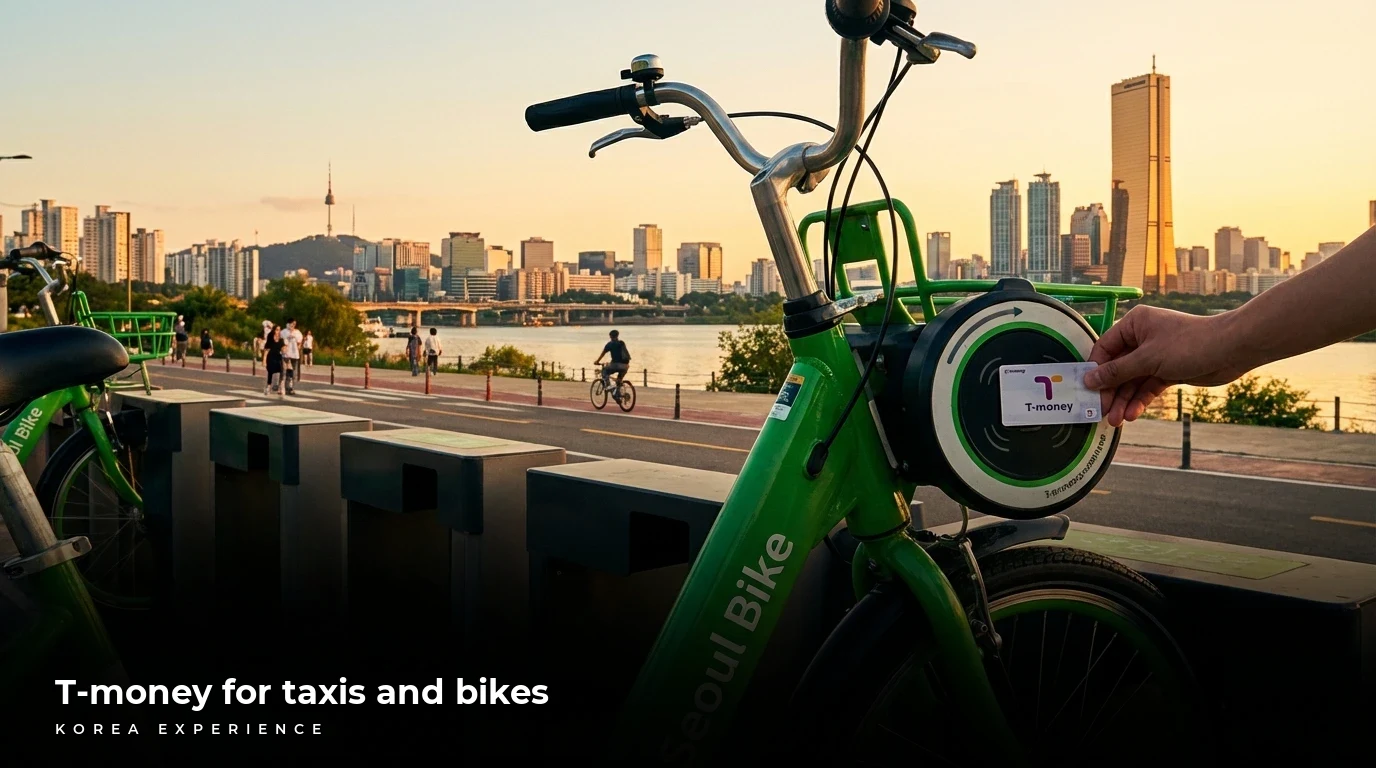
Master Seoul transit in 2026. Learn why T-money costs 4,000 KRW, how to rent 1,000 KRW bikes without an ARC, and the truth about the Climate Card for tourists.

Compare Wowpass vs. Namane for 2026. Learn why the 1,550 KRW subway fare means you need a Climate Card Tourist Pass to save money in Seoul.
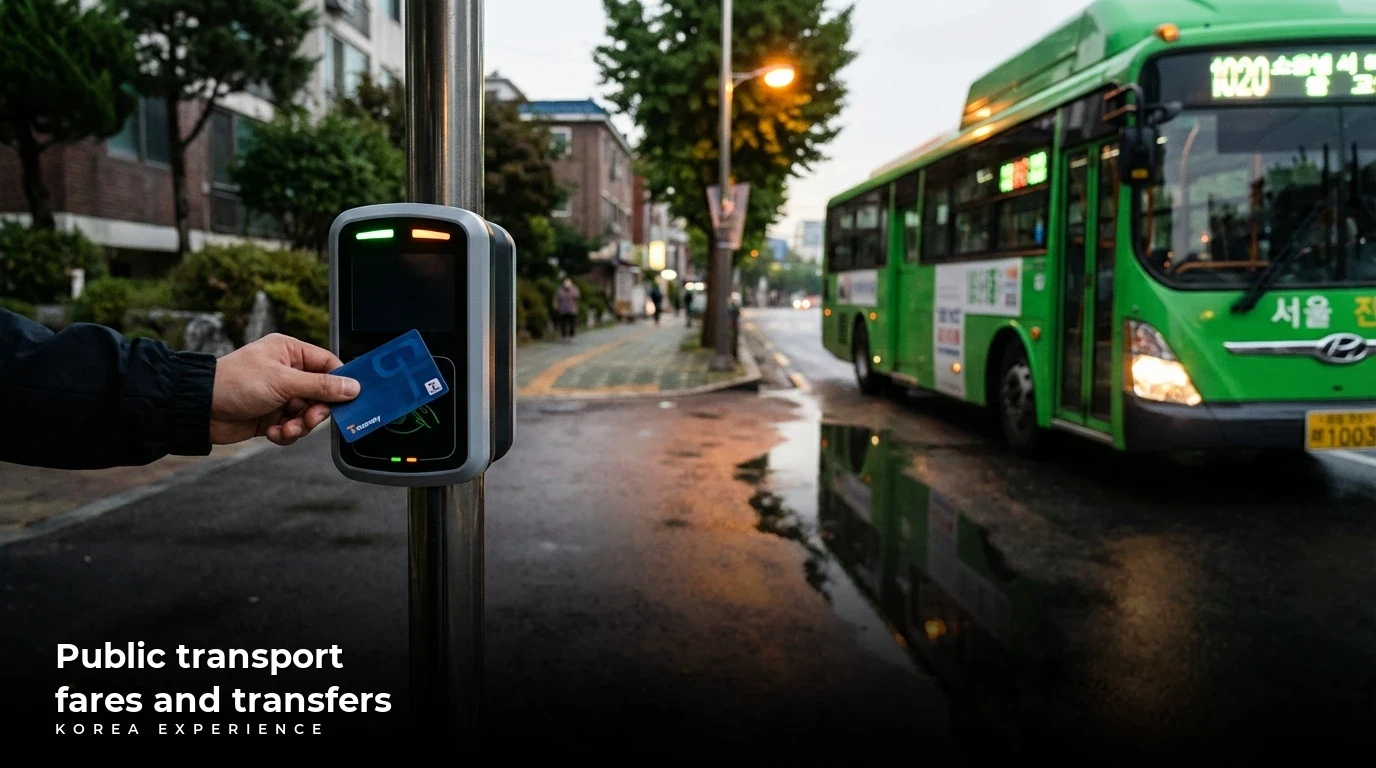
Discover 2026 Seoul transit updates including the 1,550 won base fare and new Climate Card options that save money for travelers taking over 3 rides daily.
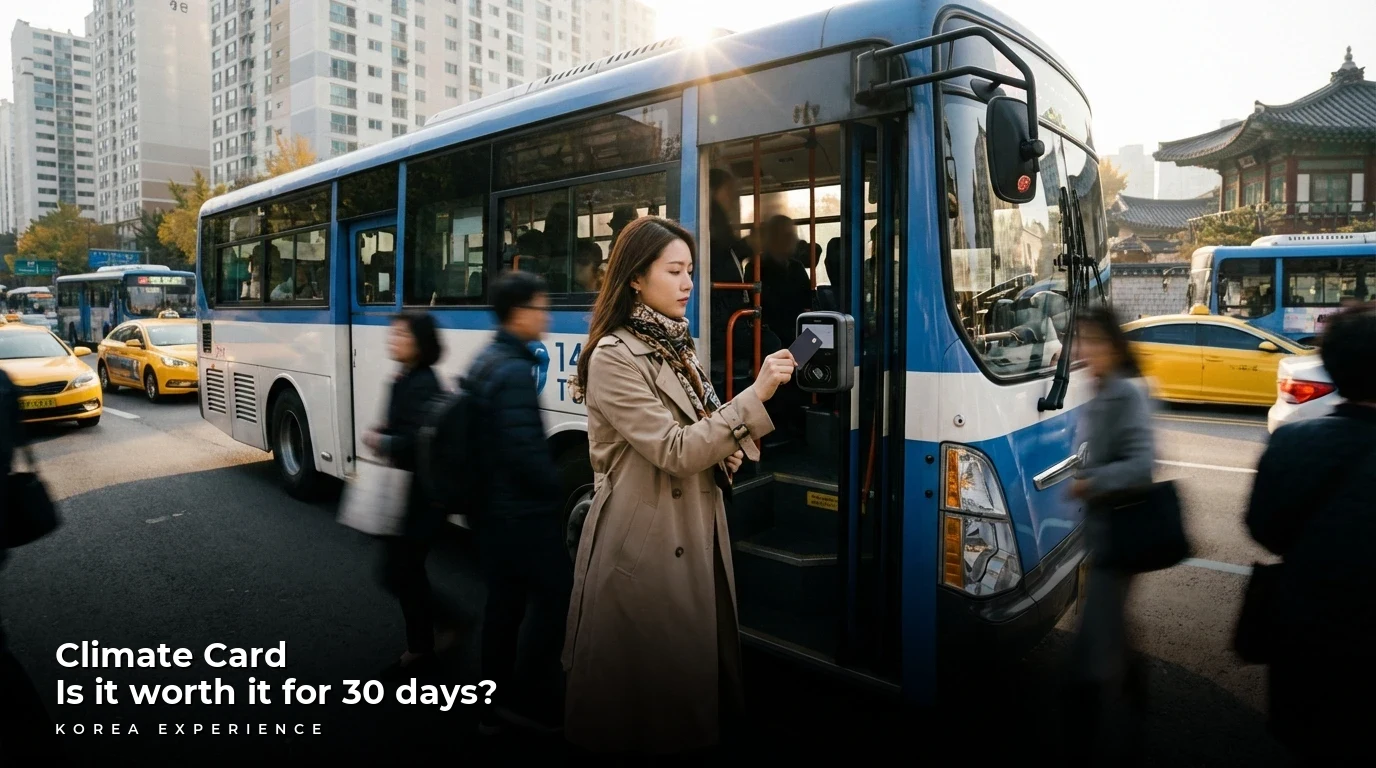
Save money in Seoul with the 2026 Climate Card. We analyze if the 62,000 KRW monthly pass beats T-Money for your 30-day stay based on 40 rides.
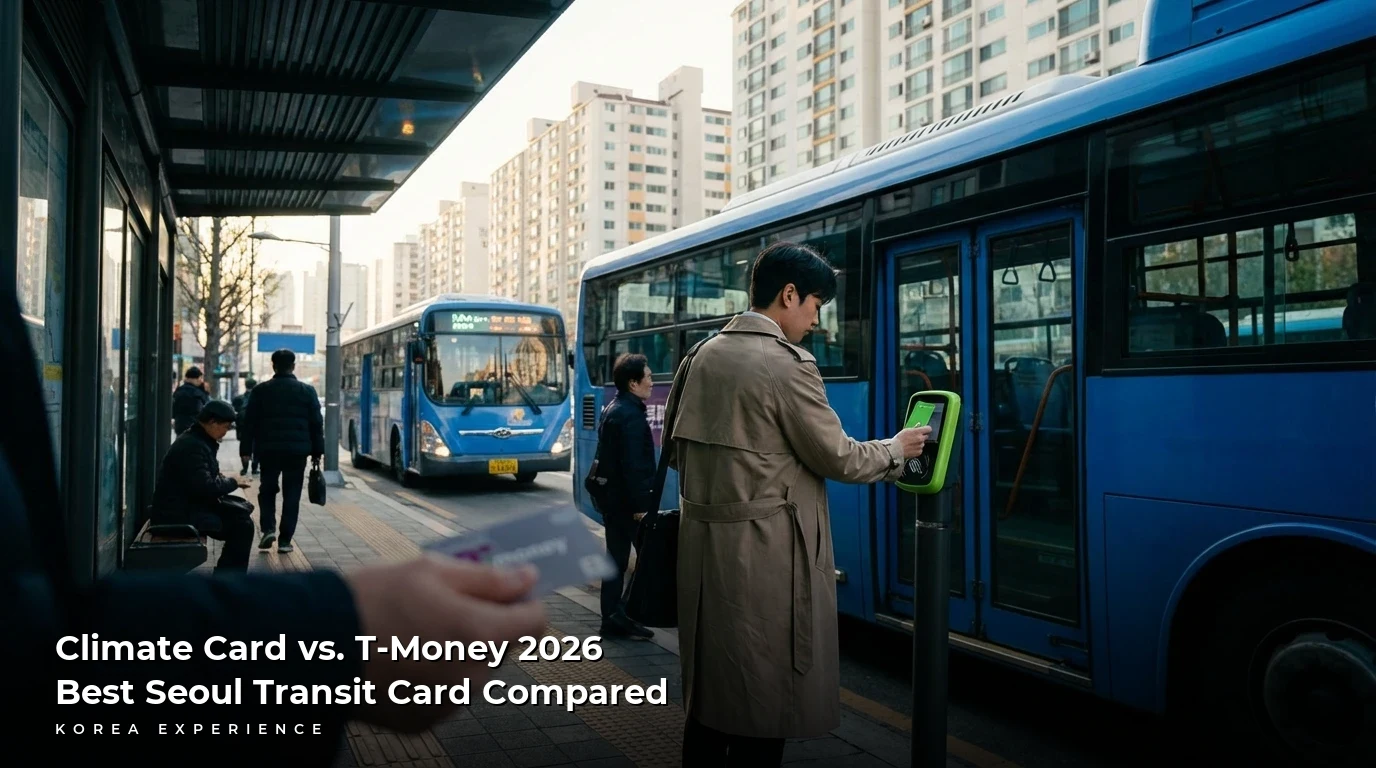
If you're planning to hit more than three spots a day in Seoul, the Climate Card is your absolute best friend.

Navigate Seoul in 2026 without an ARC. Learn how k.ride and Taba let tourists hail cabs for just ₩4,800 using foreign phone numbers and credit cards.