Korean work culture office etiquette for foreigners master guide
Master the nuances of Korean work culture with our comprehensive guide on office etiquette, hierarchy, and business customs for international professionals.
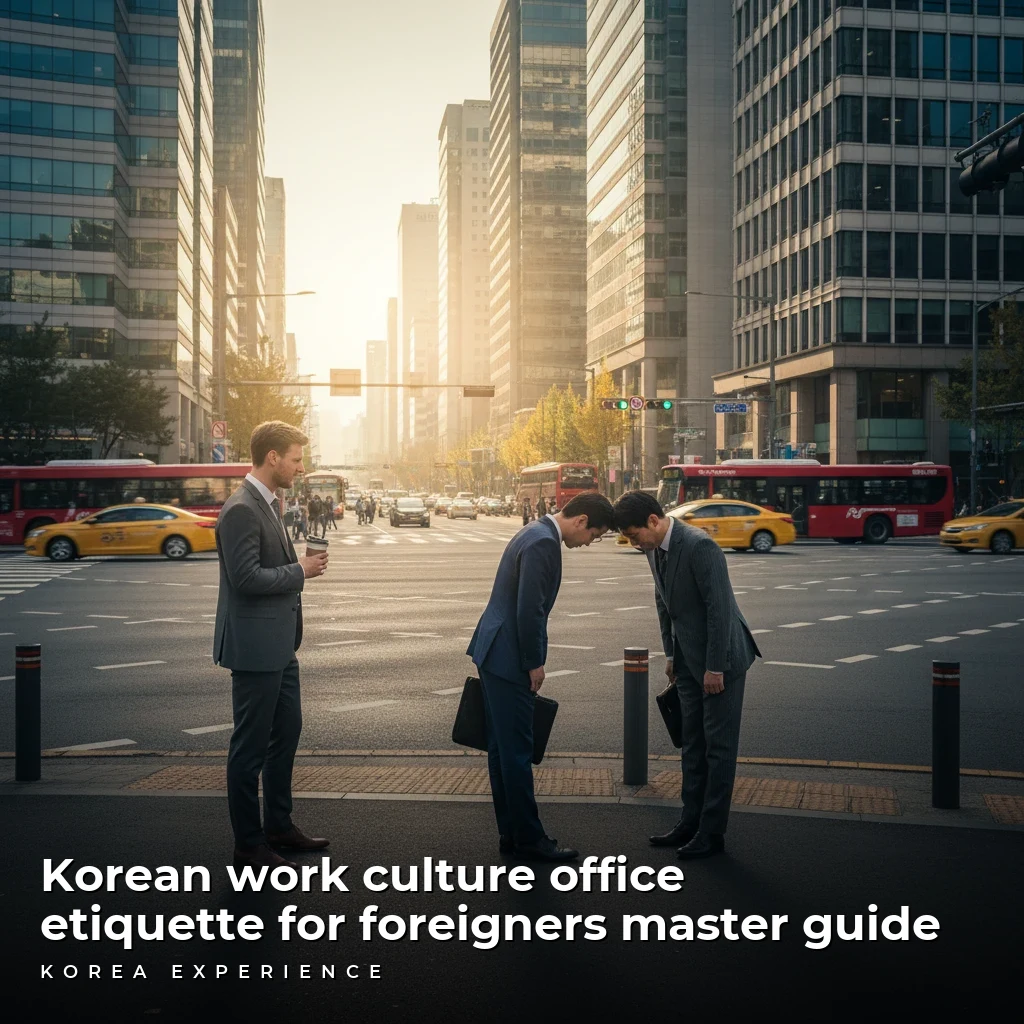
Navigating the professional landscape in South Korea can feel like learning a complex dance where every step, bow, and silence holds significant meaning. For international professionals, expats, and business travelers, understanding Korean work culture is just as vital as your technical skills. While the "Hallyu" wave has popularized Korean music and food, the corporate environment remains deeply rooted in Neo-Confucian values, prioritizing hierarchy, harmony, and the collective group over the individual.
Seoul, a bustling metropolis of over 9.4 million people, serves as the economic heartbeat of the nation. Here, the lines between professional duty and personal sacrifice often blur. However, the landscape is shifting. With the rise of the "MZ Generation" (Millennials and Gen Z), traditional rigidity is slowly meeting modern flexibility. Yet, for a foreigner entering this space, mastering the foundational rules of etiquette is the key to respect and success. Whether you are negotiating a contract in Gangnam or starting a teaching job in Busan, this guide covers every facet of office life.
For more details, check out our guide on Korean work culture what foreigners need to know.
Key Takeaways
- 1Hierarchy dictates all interactions; always identify titles before names.
- 2The 52-hour workweek cap is law, but 'face time' culture often persists.
- 3Hoesik (team dinners) are critical for bonding and career advancement.
The Foundation: Understanding Corporate Hierarchy
In Korean work culture, age and job title are the coordinates that determine your position in the social universe. Unlike flat organizational structures common in Western tech companies, Korean companies operate on a strict vertical hierarchy. This concept is fueled by Confucianism, where respect for seniors (seonbae) by juniors (hubae) is absolute.
For more details, check out our guide on Credit cards in Korea which banks accept foreigners 2026 ....
When you enter a Korean office, you aren't just an employee; you are a specific rank. Addressing someone by their first name is a major faux pas unless you are very close friends of the same age outside of work. In the office, you must use their title.
You might also enjoy our article about D visa student visa and part time work rules guide.
Common Corporate Titles
Understanding the ladder is essential. Here is the typical progression in a Korean conglomerate (Chaebol):
You might also enjoy our article about Finding an apartment in Korea complete guide for foreigners.
- Sawon: Staff/Entry-level employee (usually 0-4 years experience).
- Daeri: Assistant Manager (usually promoted after 4 years).
- Gwajang: Manager (requires roughly 7-8 years total experience).
- Chajang: Deputy General Manager.
- Bujang: General Manager (often requires 15+ years of service).
Never assume you can call a colleague by their English name just because they have one. Always append 'nim' to their title (e.g., Kim-Gwajang-nim) to show proper respect until explicitly told otherwise.
When exchanging introductions, establishing who is senior is the first order of business. This often involves asking for one's age or year of birth early in the conversation. While this may seem intrusive to Western sensibilities, it is merely a tool to establish the correct linguistic register and behavioral protocol.
📊 Corporate Demographics
The Art of the Greeting and Business Cards
First impressions in Korea are cemented within the first 3 to 5 seconds of a meeting. The physical act of greeting is formalized and carries weight.
The Bow
The bow is the standard greeting. For a foreigner, a slight nod is often forgiven, but a proper bow earns immense respect.
- The 15-degree bow: Used for casual greetings with colleagues of similar rank or when passing in hallways.
- The 30-45 degree bow: Used for meeting clients, superiors, or elders.
- Handshakes: Often accompany the bow. Support your right forearm with your left hand to show respect. A one-handed handshake is reserved for superiors initiating the gesture toward subordinates.
Business Card Etiquette (Myeongham)
Your business card is an extension of your face and identity. Treating it poorly is akin to disrespecting the person. Standard Korean business cards are 90mm x 50mm. You should have about 100 cards printed immediately upon arrival or before your trip, costing roughly $20 to $40 for a standard box.
📖 How to Exchange Business Cards
Step 1: Preparation
Have your cards ready in a cardholder, not your wallet or pocket. Ensure they are pristine.
Step 2: Presentation
Present the card with two hands, oriented so the recipient can read it immediately. Bow slightly.
Step 3: Reception
Receive their card with two hands. Study it for 10-15 seconds. Note their title and name.
Step 4: Placement
If seated at a meeting table, place the cards in front of you on the table, arranged by the seating order of the counterparts.
Business Card Taboo
Never write on a person's business card in front of them using red ink. Historically, red names were associated with the deceased in shamanistic records. While this superstition is fading, it is best to avoid it in professional settings.
Working Hours and Office Face Time
The stereotype of the overworked Korean salaryman is rooted in reality, though legislation is attempting to curb it. In 2018, the government introduced a 52-hour workweek cap (40 regular hours + 12 hours overtime), but enforcement varies by industry.
The official hours might be 9:00 AM to 6:00 PM, but leaving exactly at 6:00 PM is often frowned upon, especially if your manager is still at their desk. This is known as nunchi—the art of gauging the atmosphere. If the boss stays, the team stays.
The Reality of Commuting
Seoul has one of the longest average commutes in the OECD. The average one-way commute in the Greater Seoul Metropolitan Area is approximately 50 to 60 minutes.
- Subway Cost: Basic fare starts at roughly $1.10 (₩1,400).
- Taxi Cost: Basic fare is around $3.60 (₩4,800), but traffic can triple the travel time during rush hour (8:00 AM and 6:30 PM).
Typical Daily Schedule
Arrival
Arrive 30 mins early to clean desk/prepare.
Lunch
Team lunch is mandatory. 1 hour sharp.
Official End
Most staff remain for 'finishing up'.
Actual Departure
Junior staff leave after seniors.
Overtime pay is a complex subject. Many companies use a "comprehensive wage system" where a fixed amount of overtime is built into the monthly salary, meaning you might not get extra pay unless you exceed substantial hours.
Hoesik: The Company Dinner Culture
Perhaps the most daunting aspect for foreigners is Hoesik—the company gathering involving food and alcohol. This is not merely a party; it is an extension of work where bonds are forged, grievances are aired, and loyalty is demonstrated.
A typical Hoesik can cost the company between $30 to $80 per person depending on the venue. It usually involves heavy drinking, specifically Soju (a clear distilled spirit, ~$3-4 per bottle in restaurants) and Mekju (beer).
Rounds of Hoesik
The night often proceeds in "rounds" (cha).
- Il-cha (1st Round): Dinner at a restaurant, usually BBQ (Samgyeopsal or Beef).
- I-cha (2nd Round): Moving to a bar or pub for snacks and more drinks.
- Sam-cha (3rd Round): Often Karaoke (Noraebang), costing $20-$30 per hour.
💵 Hoesik Venue Comparison
Korean premium beef, reserved for big wins or executives.
Drinking Etiquette
- Never pour your own drink. Wait for someone to fill your glass, and return the favor.
- Two hands: Hold your glass with two hands when receiving, and hold the bottle with two hands when pouring for a senior.
- Turning away: When drinking with a senior, turn your head slightly away from them to show respect.
Surviving the Alcohol
If you cannot drink for religious or health reasons, state this clearly but politely at the very beginning. However, you should still attend the dinner to socialize. If you do drink, but want to slow down, leave your glass half-full. It will only be refilled if it is empty.
After a late night of drinking, getting home can be expensive. Taxis charge a 20-40% surcharge between 10:00 PM and 4:00 AM. A taxi ride across Seoul at 1:00 AM can easily cost $25-$40.
Digital Etiquette and Communication
Korea is hyper-connected. Internet speeds are among the fastest in the world, averaging over 200 Mbps for mobile data. This connectivity bleeds into work life.
KakaoTalk vs. Email
While email is used for formal documentation and external communication, the messaging app KakaoTalk is the lifeblood of internal operations.
- Availability: It is not uncommon to receive work messages on KakaoTalk as late as 9:00 PM or 10:00 PM, or even on weekends.
- Response Time: The expectation is a rapid response ("Bali Bali" culture). Ignoring a message for hours during the workday is seen as negligence.
- Emoticons: Surprisingly, using cute emoticons is acceptable in semi-formal chats between colleagues to soften the tone of requests.
Work Communication Styles
- ✓High efficiency and speed
- ✓Groups streamline information sharing
- ✓Less formal tone builds camaraderie
- ✗Blurry work-life boundaries
- ✗Pressure to respond instantly
- ✗Risk of miscommunication via text
Indirect Communication
Koreans often use "high-context" communication. They may not say "no" directly to avoid causing loss of face (Kibun). Instead, they might say, "It might be difficult," or "We will think about it." As a foreigner, you must learn to read between the lines. If a request is met with hesitation or silence, it is likely a rejection.
Appearance and Dress Code
Seoul is a fashion-forward city, and appearances matter immensely. The concept of keeping up appearances is tied to professionalism.
Men
- Attire: Conservative suits (navy, charcoal, black) are standard. Ties are essential for client meetings but might be skipped in summer (Cool Biz policy).
- Grooming: Clean-shaven is preferred. Beards are still relatively rare in conservative corporate roles and can be viewed as "messy" unless perfectly groomed.
- Cost: A decent custom-entry level suit in Itae-won or Gangnam starts around $250.
Women
- Attire: Modesty is key regarding necklines. Showing cleavage is considered inappropriate, whereas shorter skirts (to a reasonable degree) are culturally more acceptable than in some Western countries. Shoulders are typically covered.
- Makeup: The "no-makeup" makeup look is standard. Looking tired is unprofessional, so skincare and light makeup are expected.
Yeouido Business District(여의도)
Gift Giving and Corruption Laws
Gift-giving is a love language in Korean business, used to express gratitude and cement relationships. However, you must be aware of the Kim Young-ran Act (Improper Solicitation and Graft Act).
Passed to curb corruption, this law sets strict limits on gifts to public officials, journalists, and private school teachers. While it strictly applies to those sectors, many private companies have adopted similar internal guidelines to remain compliant and ethical.
📋 Kim Young-ran Act Limits
(Note: These limits are subject to occasional revision, specifically regarding agricultural products during holidays, but keeping meals under roughly $23 USD is the safe zone.)
Holiday Gifts
During Chuseok (Korean Thanksgiving, autumn) and Seollal (Lunar New Year, winter), it is customary to exchange gifts.
- Common Gifts: Spam sets (yes, really!), premium fruit baskets (apples/pears costing $50-$80), toiletries, or cooking oil sets.
- Presentation: Wrapping is crucial. Use a Bojagi (traditional wrapping cloth) for an extra touch of class.
Contracts, Salary, and Benefits
When negotiating a job in Korea, look beyond the base salary. The cost of living in Seoul is rising, with a one-bedroom apartment in a central area renting for $800 to $1,200 per month, plus a substantial deposit ("Key money") ranging from $5,000 to $50,000.
The 4 Major Insurances
By law, full-time employees must be enrolled in the 4 Major Insurances. The premiums are shared roughly 50/50 between employer and employee.
- National Pension: ~4.5% of salary deduction.
- Health Insurance: ~3.5% of salary deduction.
- Employment Insurance: ~0.9% of salary deduction.
- Industrial Accident Insurance: Paid fully by the employer.
Expect your take-home pay to be roughly 10% to 15% less than your gross monthly salary after taxes and insurance.
Severance Pay
A unique benefit in Korea is mandatory severance pay. If you work for more than one year, you are entitled to one month's salary for every year worked upon departure. This is a significant lump sum that acts as a forced savings plan.
Employment Types
| Feature | Regular Employee (Jeongyu-jik) | Contractor (Gye-yak-jik) |
|---|---|---|
| Job Security | Very High | Low (1-2 yr contracts) |
| Severance Pay | Guaranteed (1yr+) | Guaranteed (1yr+) |
| Bonuses | Company Performance Based | Fixed or None |
| Termination | Extremely Difficult | End of Contract |
Vacation and Leave
The Labor Standards Act guarantees a minimum of 15 days of annual leave for the first year of employment (accruing 1 day per month if you worked less than a year). This increases every two years.
However, using all your vacation days is a cultural friction point. Taking two consecutive weeks off is rare and often requires approval months in advance. Most Koreans take shorter holidays ("Summer Vacation") of 3 to 5 days, usually in late July or early August.
- Public Holidays: There are roughly 15-16 public holidays ("Red Days") per year.
- Sick Leave: Surprisingly, there is no legal requirement for paid sick leave in Korea aside from work-related injuries. If you are sick with a flu, you often have to use your vacation days.
Tips for Success as a Foreigner
Navigating this environment requires patience. You will make mistakes, but Koreans are generally forgiving of foreigners who show genuine effort to learn the culture.
- Learn the Alphabet: Learning Hangul takes about 3 hours. Being able to read names and menu items instantly elevates your status.
- Be Punctual: In Korea, "on time" is late. Arrive 10 minutes early.
- Communal Cleaning: In smaller offices, it is common for staff to spend 10 minutes cleaning their area or the common space before work starts. Do not sit and watch; grab a rag.
- Lunch is Sacred: Do not eat a sandwich at your desk alone. Join your team. It is the primary time for bonding without alcohol. Lunch usually costs between $7 and $12 (10,000 - ₩15,000).
The concept of 'Jeong' (deep emotional connection/bond) is built over time. You don't get it by just doing your job well. You get it by sharing snacks, complaining about the weather together, and showing vulnerability during team lunches.
Conclusion
Working in Korea is an intense, high-energy experience that pushes professional boundaries. The office culture is a blend of ancient Confucian hierarchy and hyper-modern efficiency. By respecting the hierarchy, participating in the communal culture of Hoesik, and mastering the art of Nunchi, you can transition from an outsider to a valued team member.
The keys are humility and observation. When in doubt, bow, smile, and follow the lead of your senior. The relationships you build here, forged in the fires of late nights and shared meals, often last a lifetime.
❓ Frequently Asked Questions
Have more questions?Contact us →
About the Author
Korea Experience Team
Written by the Korea Experience editorial team - experts in Korean medical tourism, travel, and culture with years of research and firsthand experience.
Explore more in Living in Korea
Everything expats and long-term visitors need to know — from visa requirements and housing to banking, healthcare, and daily life tips.
Browse All Living in Korea ArticlesContinue Reading
Explore more articles you might find interesting
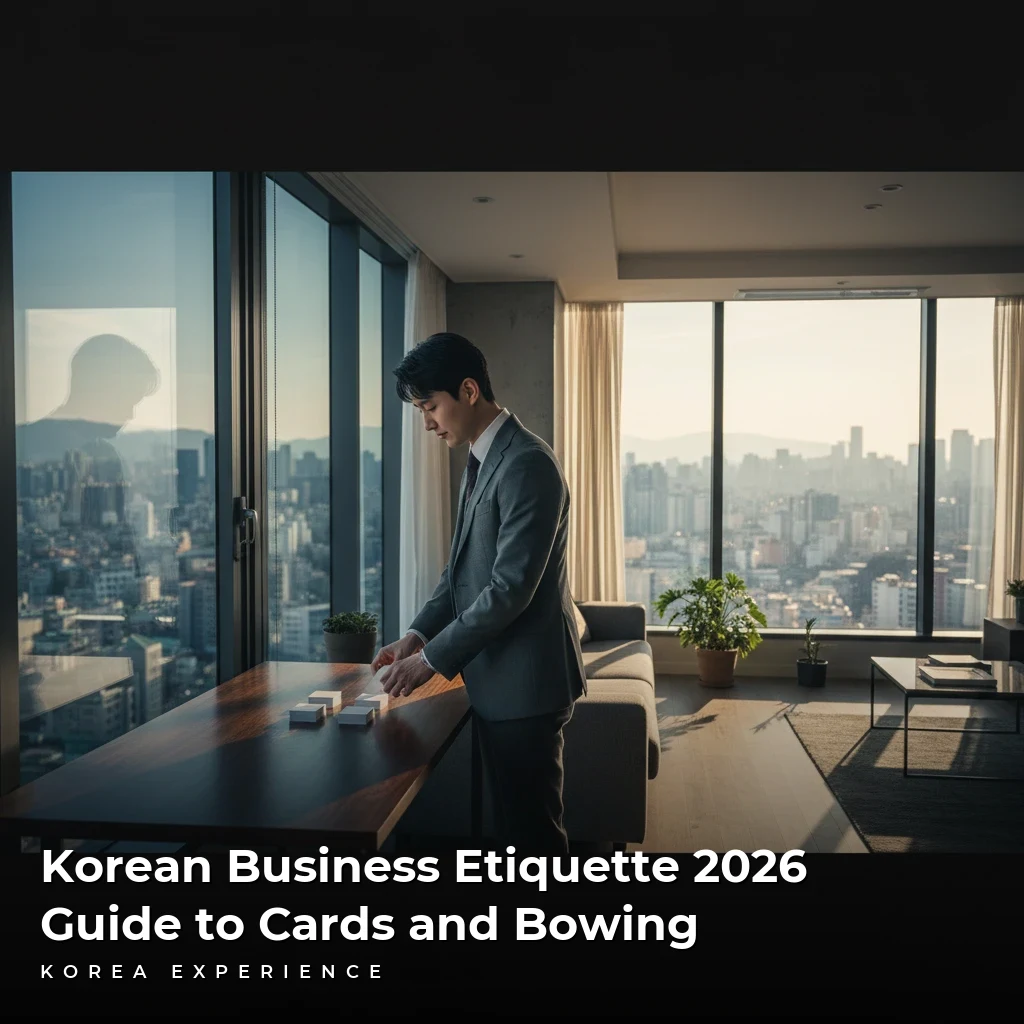
Master Korean business culture in 2026. A comprehensive guide to bowing, business cards, and meeting protocols for international professionals.
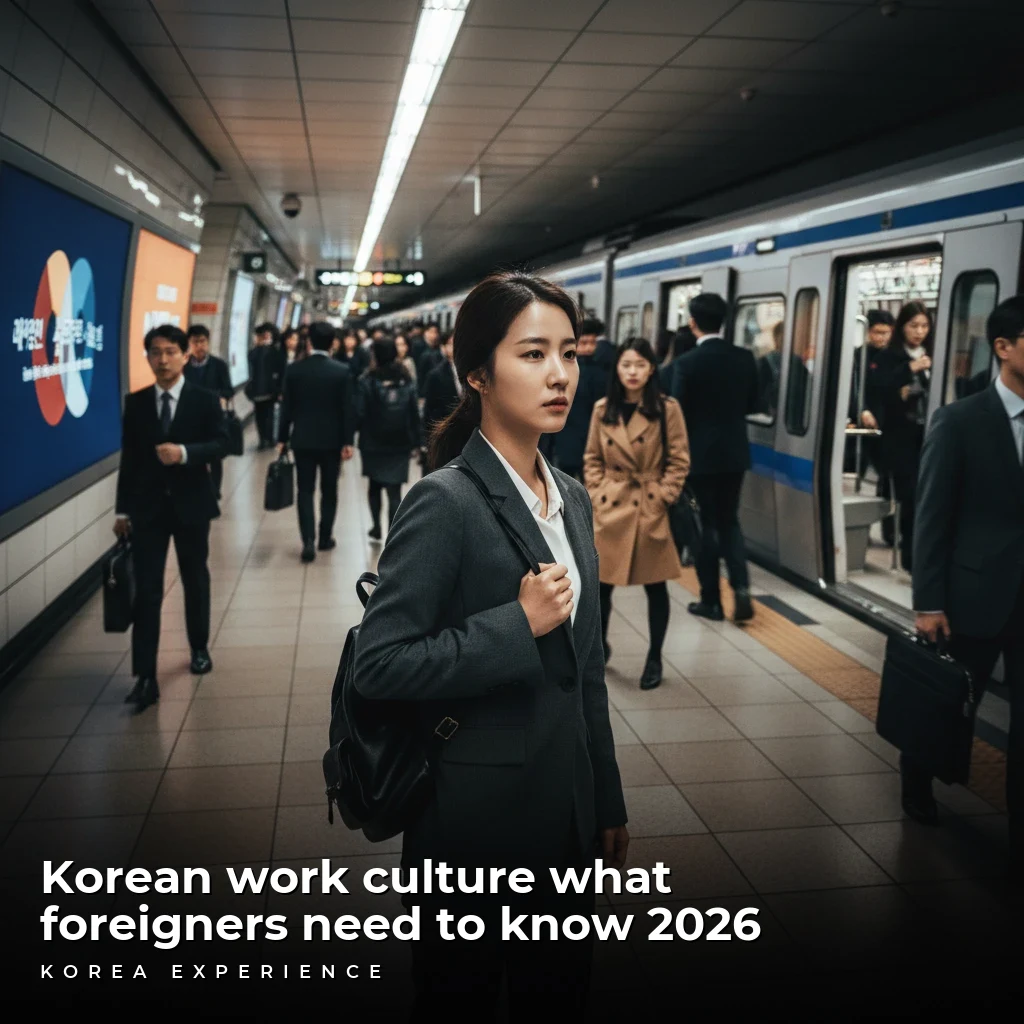
Discover essential insights into Korean work culture in 2026. From hierarchy and etiquette to salaries and visa types, master the professional landscape.
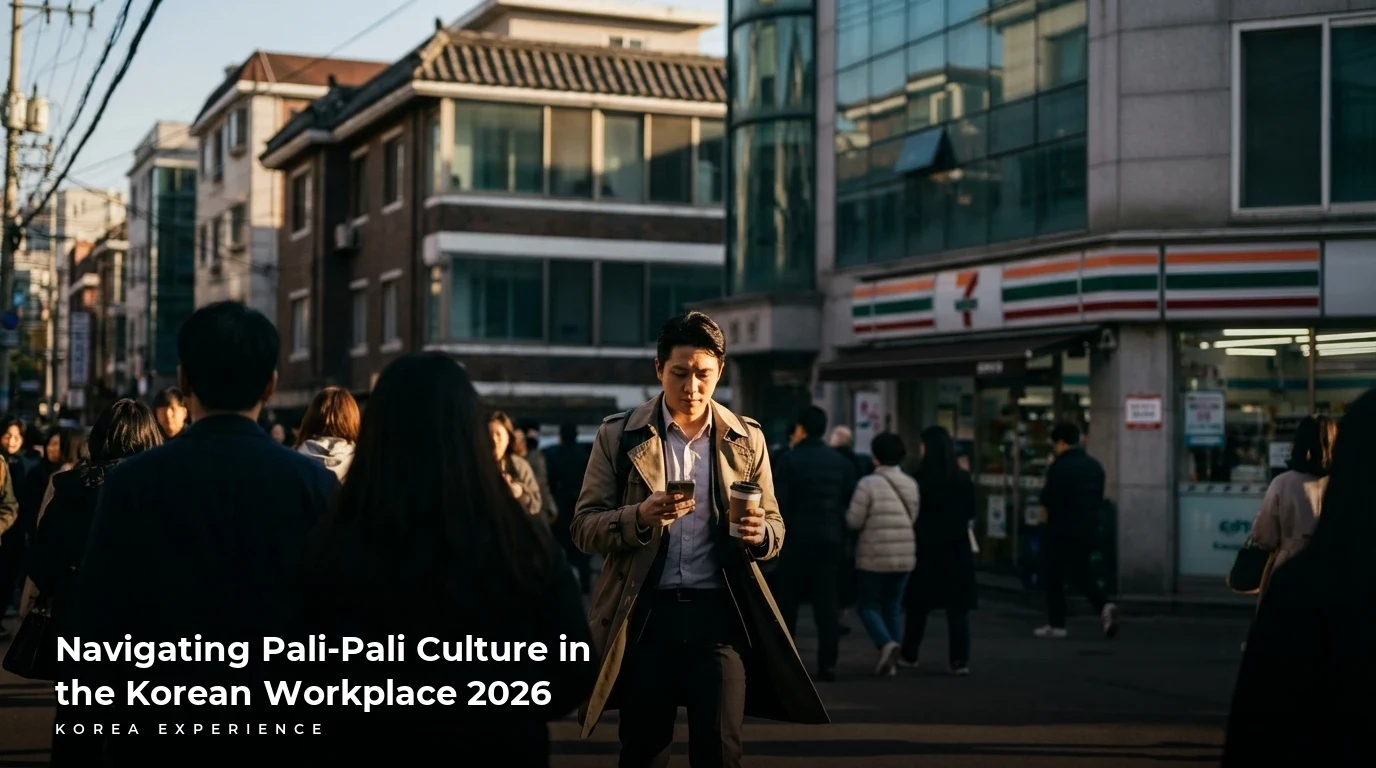
Master the fast-paced Pali-Pali culture in South Korea's workplaces. Essential guide for expats & international professionals in 2026.
Master the art of sending packages from Korea. A complete guide to EMS, box sizes, customs apps, and shipping costs for expats and travelers.
Master the intricate world of Korean side dishes with our comprehensive guide to banchan varieties, dining etiquette, and the best places to buy them in Seoul.
A comprehensive guide to Korean funeral etiquette, the three-day vigil, and condolence money customs for international travelers and expats in 2026.