Korean Business Etiquette Bowing and Business Cards
Navigate Korean business meetings with confidence. Master bowing, business card exchange, and essential etiquette for success in 2026 and beyond.
Mastering Korean Etiquette for Business Meetings: Bowing, Business Cards, and Beyond in 2026
In the increasingly globalized world of 2026, understanding cultural nuances is not merely an advantage but a necessity for international business success. For those venturing into the vibrant Korean market, a firm grasp of Korean etiquette for business meetings can be the difference between a thriving partnership and a missed opportunity. Korea, a nation where tradition beautifully intertwines with hyper-modernity, values respect, hierarchy, and harmony above all else in its professional interactions.
Imagine stepping into a high-stakes meeting in Seoul's bustling Gangnam district, only to falter during the crucial first impression—the exchange of business cards or the respectful bow. Such missteps, though often unintentional, can signal a lack of seriousness or understanding, potentially hindering your long-term prospects. This comprehensive guide is designed for international travelers and expats, offering deep insights into the essential protocols that govern Korean business engagements. From the subtle art of bowing and the sacred ritual of the business card exchange to navigating meeting dynamics and social gatherings, you will learn the practical tips and insider knowledge needed to build strong, respectful, and successful relationships in Korea. By the end of this post, you'll be equipped to approach your Korean business dealings with confidence and cultural competence, setting the stage for prosperity in 2026 and beyond.
The Foundation: Understanding Korean Business Culture
Before diving into specific actions, it's crucial to grasp the bedrock principles of Korean business culture. These foundational elements profoundly influence all professional interactions, shaping expectations and behaviors.
Confucian Influence and Hierarchy (Jikwi and Yeui)
Korean society, particularly its business sphere, is deeply rooted in Confucianism. This philosophical system emphasizes respect for elders and superiors, discipline, and moral conduct. Hierarchy, or jikwi, is paramount. Every individual has a specific position within an organization, and communication and interaction flow according to this order. Understanding this hierarchy means recognizing who is senior, who is junior, and adjusting your level of formality and respect, known as yeui, accordingly. This manifests in everything from seating arrangements to how you address individuals.
Importance of Relationships (Inmaek)
In Korea, business is often less about transactional agreements and more about building enduring relationships, known as inmaek. This network of personal connections and mutual favors is vital for long-term success. Developing inmaek requires time, effort, and sincerity, often extending beyond the boardroom to shared meals, social events, and personal gestures. It's about fostering trust and loyalty, which are seen as essential precursors to effective collaboration. Building inmaek means investing in the human element of your business ventures.
Group Harmony Over Individualism
While Western business cultures often celebrate individual achievement, Korean culture places a strong emphasis on group harmony and collective success. Decisions are typically made through consensus, and individual opinions might be suppressed for the good of the team. This collectivist mindset means that criticism is often delivered indirectly, and direct confrontation is generally avoided. Preserving face, both for oneself and for others, is critical, as public embarrassment can severely damage inmaek. Always prioritize the group's comfort and cohesion.
Mastering the Bow: A Sign of Respect
The bow is perhaps the most iconic gesture of respect in Korea, and mastering its nuances is fundamental to demonstrating proper Korean etiquette for business meetings. It's more than just a greeting; it's a non-verbal affirmation of hierarchy and respect.
Types of Bows and Their Contexts
There isn't a single "standard" bow. The depth and duration of a bow convey different levels of respect and formality:
- Casual Bow: A slight nod of the head, typically exchanged among peers or for minor acknowledgments.
- Formal Bow: The most common bow in business settings. This involves bending from the waist at about a 15-degree angle, with hands either clasped in front or at the sides. This is used when greeting someone of similar or slightly higher status.
- Respectful Bow: A deeper bow, typically 30-45 degrees, reserved for significantly senior individuals, initial introductions to important figures, or expressions of deep gratitude or apology.
- Deepest Bow: A bow of 90 degrees or even a full prostration, rare in business settings but might be seen in highly formal traditional ceremonies or extreme apologies.
When and How to Bow Correctly
In a business context, you will primarily use the formal or respectful bow.
- When to Bow:
- Upon initial introduction to a new contact.
- When greeting senior colleagues or clients.
- When departing a meeting or an interaction.
- When receiving or giving a business card.
- When expressing gratitude or apologies.
- How to Bow:
- Posture: Stand upright with your feet together. Men typically place their hands naturally at their sides; women might clasp their hands politely in front.
- Angle: Bend from the waist, keeping your back straight and your head in line with your spine. Do not drop your head forward independently.
- Duration: Hold the bow for 1-2 seconds. A deeper bow or one to a highly senior person might be held slightly longer.
- Gaze: Traditionally, you would bow with your eyes cast downwards, as looking directly into a superior's eyes during a bow can be seen as disrespectful. After rising, you can make polite eye contact.
- Timing: If someone bows to you, return the bow immediately. If they are significantly more senior, you might bow slightly deeper or hold it for a fraction longer.
Common Mistakes to Avoid
- The "Head Nod" Only: A quick nod is too informal for initial business greetings.
- Bowing from the Neck: Only bending your neck, rather than from the waist, looks awkward and insincere.
- Bowing Too Deeply to Juniors: While showing respect is good, bowing too deeply to someone junior to you can be confusing or even uncomfortable for them, as it inverts the expected hierarchy.
- Bowing with Objects in Hand: Try to have your hands free, especially when receiving or giving cards. If not possible, adapt gracefully, but always prioritize the bow.
- Forgetting to Bow: Failing to return a bow or initiate one in appropriate situations can be seen as rude or ignorant.
The Art of the Business Card Exchange (Myeongham)
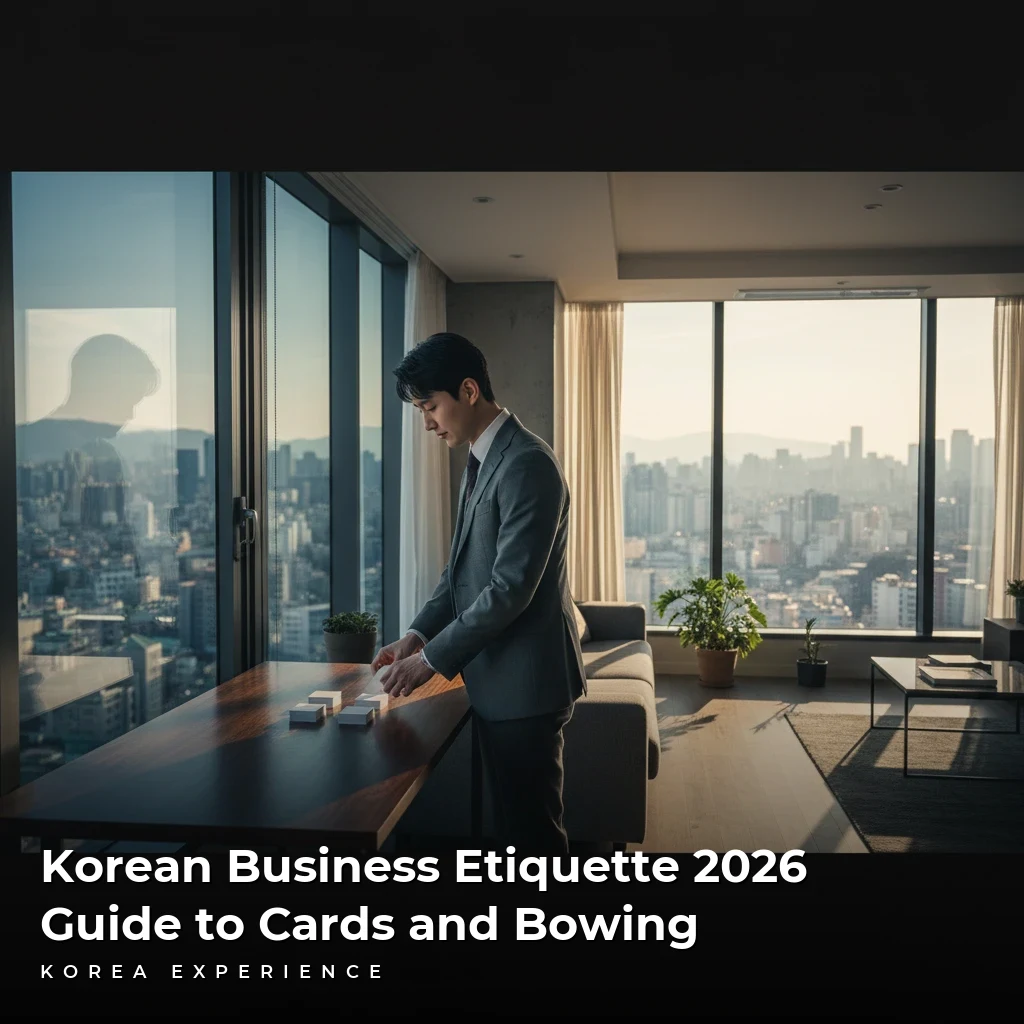
The exchange of business cards, or myeongham, is a highly ritualized and significant aspect of Korean business etiquette. It is often the very first interaction you will have with a new contact and sets the tone for your relationship.
Preparing Your Business Cards (Bilingual, Design)
Your business card is an extension of your professional identity.
- Bilingual Cards: This is almost a necessity. Have your cards printed with English on one side and Korean on the other. Ensure the Korean translation is accurate and uses appropriate professional titles.
- Quality: Invest in high-quality card stock and a professional design. A flimsy or poorly designed card can reflect negatively on you and your company.
- Information: Include your full name, title, company name, and contact information. For multi-layered companies, specifying your department or division can also be helpful.
- Quantity: Bring plenty of cards. You never know how many people you'll meet, and running out is considered unprofessional.
The Two-Handed Ritual (Receiving and Giving)
The exchange itself is a dance of respect:
- Giving Your Card:
- Hold your card with two hands, or with your right hand supported by your left, facing the Korean text towards the recipient.
- Present your card with a slight bow.
- Hand it so the recipient can read it easily.
- State your name and company clearly.
- Offer it to the most senior person first, then proceed down the hierarchy.
- Receiving a Card:
- Receive the card with two hands, or with your right hand supported by your left.
- Receive it with a slight bow.
- Take a moment to carefully read the card. Pay attention to the person's name and title. This shows respect.
- Repeat their name and title aloud to confirm pronunciation and demonstrate engagement.
- Place the card respectfully on the table in front of you during the meeting, or store it carefully in a business card holder. Never put it immediately into your back pocket or wallet, as this is highly disrespectful.
What to Do After Receiving a Card
Once you've received a card, it's not merely a piece of paper; it represents the individual.
- Acknowledge and Read: As mentioned, take a moment to look at the card, read the name and title, and make a mental note. This signifies you respect the person and their position.
- Placement During Meetings: If you're in a meeting with multiple individuals, arrange their cards on the table in front of you in the order they are seated. This helps you remember names and ranks, and shows you value their presence.
- Storage: After the meeting, carefully place the cards in a proper business card holder or a designated spot in your briefcase. Do not fold, write on, or otherwise deface a received card, especially in front of the giver.
Handling Business Cards Respectfully
Respect for the business card extends beyond the initial exchange. It's a continuous demonstration of respect for the person it represents.
- Never Write On It (Without Permission): Writing notes on a card, especially in front of the giver, is considered impolite. If you absolutely must, politely ask for permission first.
- No Fumbling: Keep your own cards organized and easily accessible. Fumbling through your wallet or bag for a crumpled card sends a poor message.
- Treat as an Extension of the Person: Remember that the card is seen as an extension of the individual. Treat it with the same respect you would show them.
Comparison Table: Business Card Etiquette: Korea vs. Western
| Feature | Korea (Etiquette) | Western (General) |
|---|---|---|
| Giving/Receiving | Two hands, slight bow, facing recipient. Read carefully upon receiving. | One hand, often a quick exchange. May or may not read immediately. |
| Reading Card | Required to read immediately, acknowledge name/title. | Optional, often put away quickly. |
| Placement in Meeting | Placed on table in seating order, treated with high respect. | Often pocketed or placed casually on the table. |
| Writing on Card | Generally avoided, unless with explicit permission. | Common to write notes on the back for memory. |
| Bilingualism | Highly recommended, often expected for international business. | Less common, usually English only. |
| Quality | High quality, professional design expected. | Varies, but good quality is appreciated. |
Navigating the Meeting Room: Protocol and Communication
Beyond bowing and business cards, the conduct within the meeting room itself is critical. Understanding the subtle cues and established protocols can significantly impact the flow and outcome of your discussions.
Punctuality and Arrival Etiquette
Punctuality is highly valued in Korea.
- Arrive Early: Aim to arrive 10-15 minutes before the scheduled start time. This demonstrates respect for your hosts' time and allows you to settle in.
- Inform if Delayed: If you anticipate even a minor delay, inform your Korean counterparts as soon as possible.
- Waiting Area: Upon arrival, you might be directed to a waiting area. Do not enter the meeting room until invited.
Seating Arrangements (Sangseok)
Seating is a clear indicator of hierarchy and importance. The most senior person, known as sangseok, typically sits furthest from the door, often facing it, or at the head of the table.
- Observe and Follow: Do not assume a seat. Wait to be directed by your host or observe where the most senior Korean individual sits and take a seat relative to them, usually on the opposite side.
- Guests of Honor: As a guest, you will likely be offered a seat of honor near the most senior Korean representative.
- Order of Seating: Pay attention to the order in which people are seated, as this reinforces the hierarchy you should observe.
Introductions and Addressing Colleagues (Ssajangnim, Bunyeonim)
Formal introductions are common, often initiated by the most senior person present.
- Formal Titles: Always use formal titles when addressing Korean business contacts. Suffixes like "-nim" (님) are crucial. For example, a company president is Ssajangnim (사장님), a director is Bunyeonim (부장님). If you are unsure, using "Mr./Ms. [Last Name] -nim" is a safe bet, or simply "Ssajangnim" for the head of the company.
- Avoid First Names: Do not use first names unless explicitly invited to do so, which is rare in initial business contexts.
- Your Introduction: When introducing yourself, state your full name and company. A slight bow accompanies this.
Communication Styles: Indirectness and Politeness (Nunchi)
Korean communication is often more indirect and nuanced than Western styles.
- Nunchi (눈치): This crucial concept refers to the ability to subtly understand and gauge others' moods, thoughts, and intentions through non-verbal cues and context. Developing nunchi allows you to "read the room" and respond appropriately.
- Avoid Direct "No": Koreans often avoid direct "no" to preserve harmony and face. Instead, they might use phrases like "that might be difficult," "we will consider it," or express general non-committal statements. Understand these as polite rejections or indications of concern.
- Patience: Business discussions may take longer as consensus building and indirect communication unfold. Be patient and allow ample time.
- Active Listening: Demonstrate active listening and engagement. Nodding (but not excessive nodding), maintaining polite eye contact (but not staring), and taking notes are all positive signals.
Body Language and Non-Verbal Cues
- Eye Contact: Maintain polite and moderate eye contact. Direct, prolonged eye contact with a senior person might be perceived as aggressive or challenging.
- Hand Gestures: Avoid overly expressive or flamboyant hand gestures. Keep your movements measured and respectful.
- Pointing: Do not point with a single finger. Instead, use an open hand to gesture.
- Passing Objects: Always pass documents, pens, or other objects with two hands, or your right hand supported by your left, especially when interacting with a senior person.
Comparison Table: Communication Styles: Korea vs. Western
| Feature | Korea (Etiquette) | Western (General) |
|---|---|---|
| Directness | Indirect, emphasis on harmony, "saving face." | Direct, explicit, clear communication. |
| "No" Response | Often expressed indirectly ("it might be difficult," "we will consider it"). | Direct "No" is common and accepted. |
| Decision Making | Consensus-oriented, collective input. | Often individual decision-making, though team input is valued. |
| Hierarchy | Strong emphasis on titles and formal address. | More relaxed with titles, often use first names sooner. |
| Silence | Comfortable with silence, used for reflection. | Often seen as awkward, tendency to fill silence. |
| Feedback/Criticism | Delivered indirectly, privately, or through intermediaries. | Often direct, sometimes public, focus on constructive criticism. |
Dining and Socializing: Building Inmaek Beyond the Boardroom
Much of Korean business relationship building happens outside the official meeting room, particularly over meals and social outings. These occasions are crucial for strengthening inmaek.
Invitations and Accepting/Declining
- Accepting: It is generally expected to accept an invitation to dinner or a social event, especially from a senior figure. Declining too often can be seen as a lack of interest in building the relationship.
- Declining Gracefully: If you must decline, do so with sincere apologies and a plausible reason, expressing regret that you cannot attend. Consider offering an alternative time or suggesting you'd be happy to host another time.
Seating and Ordering Etiquette
- Seating: Similar to meetings, seating at a restaurant follows hierarchy. Wait to be directed to your seat. The most senior person will typically be offered the most comfortable or prominent spot.
- Ordering: The host or most senior Korean individual will usually take the lead in ordering food for the table. As a guest, it's best to allow them to do so. You might be asked for preferences, but deferring to their choices is generally polite.
Pouring Drinks (Soju/Maekju) and Toasting
Drinking is a significant part of Korean social bonding, especially involving soju (a distilled spirit) and maekju (beer).
- Pouring for Others: Always pour drinks for others, especially those senior to you, before pouring for yourself. Use two hands when pouring for a superior. Ensure their glass is never empty.
- Receiving a Drink: When someone pours for you, especially a senior, hold your glass with two hands or support it with your left hand while extending it with your right. Take a small sip immediately after receiving.
- Toasting: Toasts are common. The most senior person usually initiates the first toast. When toasting, slightly lower your glass when clinking with a senior person's glass to show respect.
- Drinking Etiquette: When drinking soju or maekju with a senior, turn your head slightly away from them as you drink, covering your mouth with your hand, especially if you are junior. This is a sign of respect.
- Pacing: It's acceptable to drink slowly, but it can be difficult to refuse altogether. If you don't drink alcohol, politely state you prefer juice or water. Your hosts may still try to persuade you, but persistence with a respectful smile usually works.
Payment and Splitting the Bill
- Host Pays: Typically, the most senior person or the inviter will pay for the entire meal. It's polite to make a token gesture to offer to pay, but expect to be politely refused.
- Avoiding "Dutch Pay": Splitting the bill ("Dutch pay") is not common in formal business dinners and can be seen as less hospitable.
- Reciprocity: If you are hosted, a good way to reciprocate is to invite your Korean counterparts to a meal on another occasion.
Post-Dinner Activities (Noraebang)
After dinner, it's common to move to a second or even third round of activities.
- Noraebang (노래방 - Karaoke Room): This is a very popular post-dinner activity for bonding. Participate enthusiastically, even if your singing isn't perfect. It's about camaraderie.
- Other Activities: Other options might include a coffee shop, a pub, or a simple walk.
- Leaving: It's generally considered impolite to leave early unless you have a very valid reason (e.g., an early flight). Try to stay until the host or most senior person indicates the evening is ending.
Comparison Table: Dining Etiquette: Korea vs. Western
| Feature | Korea (Etiquette) | Western (General) |
|---|---|---|
| Seating | Hierarchical, wait to be seated. | Often more casual, guests may choose seats or be directed. |
| Ordering | Host/senior orders for the table. Defer to their choices. | Guests often order individually, sometimes after consultation. |
| Pouring Drinks | Always pour for others, especially seniors (two hands). Never pour for self. | Self-pouring common, pouring for others is polite but not strictly required. |
| Receiving Drinks | Two hands, take a sip, turn away from senior when drinking. | One hand, often drink immediately. |
| Payment | Host/senior pays the entire bill. | Often split the bill, or one person treats. |
| Declining Alcohol | Can be challenging; polite but firm refusal often accepted eventually. | Generally easier to decline alcohol without pressure. |
| Post-Dinner | Common for multiple rounds of activities (e.g., noraebang). | Less common for extended post-dinner activities, usually ends after meal. |
Gift-Giving and Reciprocity: Strengthening Bonds
Gift-giving is another important way to build and maintain inmaek and show appreciation in Korean business culture. It’s an act of respect and goodwill.
Appropriate Gifts for Business Contacts
- Quality Over Quantity: The gift should be of good quality, but not overly extravagant, which could make the recipient feel indebted.
- Thoughtfulness: A thoughtful gift that reflects your home country or a shared interest can be particularly well-received.
- Avoid Taboos:
- Sharp Objects: Avoid knives, scissors, or other sharp objects, as they can symbolize cutting ties.
- Red Ink: Do not write names in red ink, as it is traditionally associated with death.
- Clocks: Clocks can symbolize running out of time or death.
- Colors: White (mourning) or black (misfortune) wrapping paper should generally be avoided unless specifically known to be acceptable. Bright, festive colors are preferred.
- Popular Gifts: Quality foreign spirits (especially whiskey), chocolates, teas, coffee, or small, well-made crafts from your home country are generally safe choices. Local delicacies from your region are also excellent.
How and When to Present Gifts
- Discreetly: Gifts are typically exchanged at the end of a meeting, or perhaps during a meal, but often discreetly, not as the very first item on the agenda.
- Two Hands: Present and receive gifts with two hands.
- Polite Refusal: The recipient may politely refuse the gift a few times before accepting. This is a custom of humility. Gently insist a few times, emphasizing it's a small token of appreciation.
- Opening: Gifts are often not opened immediately in front of the giver, to avoid any potential awkwardness if the gift is not to their taste.
Reciprocity and Declining Gifts Politely
- Expect Reciprocity: If you give a gift, expect to receive one in return, either immediately or at a later date. This is part of the ongoing inmaek.
- Declining a Gift: If you need to decline a gift, do so very politely and with repeated apologies, explaining your reasons (e.g., company policy) to avoid causing offense.
Modern Considerations and Future Trends (2026 Perspective)
While core traditions remain strong, Korean business etiquette, like any dynamic cultural aspect, is subject to evolving trends, especially in an era of rapid globalization and technological advancement. Looking ahead to 2026, it's important to consider these shifts.
Generational Shifts in Etiquette
Younger generations of Koreans, especially those with international experience, may be more accustomed to Western business practices. While respect for hierarchy and elders will always be present, some of the more rigid aspects of traditional etiquette might be slightly softened. You might find younger colleagues more comfortable with direct communication (though still within respectful bounds) or a slightly more casual approach to certain rituals. However, it's always safer to err on the side of formality, especially in initial interactions. Observe and adapt as you build relationships.
Impact of Globalization and Digitalization
The global nature of business in 2026 means Korean companies are increasingly interacting with diverse international partners. This has led to a greater understanding and tolerance for cultural differences. Digital communication platforms are also influencing etiquette. While face-to-face meetings remain paramount for relationship building, email and video conferencing are common. Ensure your digital communications are still polite, well-structured, and use appropriate titles. Quick response times in digital communication are highly valued.
Remaining Core Values
Despite these changes, the fundamental pillars of Korean business etiquette—respect for hierarchy (jikwi), strong personal relationships (inmaek), and group harmony—will undoubtedly remain central. These values are deeply ingrained in the culture and continue to shape how business is conducted. Foreigners who genuinely strive to understand and respect these core values will consistently find greater success and build more meaningful connections. The future of Korean business etiquette is not about abandoning tradition, but rather integrating it thoughtfully with global best practices.
Frequently Asked Questions (FAQ)
Q1: How deeply should I bow when greeting a Korean business contact?
A1: For initial business greetings, a formal bow (bending from the waist at about a 15-degree angle) is appropriate. For very senior individuals or important clients, a respectful bow (30-45 degrees) shows greater deference. Always return a bow immediately.
Q2: Is it okay to decline a business card if I don't have one to offer in return?
A2: No, it is generally considered impolite to decline a business card. Accept it with two hands, show respect by reading it, and explain apologetically that you currently do not have a card to exchange. You can offer to send your contact information electronically or through other means later.
Q3: Can I use one hand for giving or receiving business cards?
A3: While technically possible, it is strongly advised to use two hands, or support your right hand with your left, when giving or receiving business cards, especially with seniors. Using one hand can be seen as less respectful and too casual in a formal business setting.
Q4: What if I don't drink alcohol at a business dinner?
A4: While alcohol is a significant part of Korean business dining, it is acceptable to not drink. Politely state that you prefer juice or water. Be prepared for your hosts to insist a few times; a polite but firm smile and consistent refusal usually suffice. You can still participate in toasts with a non-alcoholic drink.
Q5: Is direct eye contact considered rude in Korean business meetings?
A5: Direct eye contact should be polite and moderate. Prolonged or intense eye contact with a senior person can sometimes be perceived as challenging or aggressive. It's best to observe your Korean counterparts and adjust your gaze to match their style, generally aiming for respectful, intermittent eye contact.
Conclusion: Cultivating Success Through Respectful Engagement
Navigating Korean etiquette for business meetings, including the intricacies of bowing and business card exchange, might seem daunting at first. However, approaching these customs with a genuine desire to learn and respect the culture will be your greatest asset. From understanding the deep-seated influence of Confucianism and hierarchy (jikwi and yeui) to mastering the ritualistic exchange of myeongham and the art of indirect communication (nunchi), each step is an opportunity to build trust and strengthen your inmaek.
Remember, business in Korea is a marathon, not a sprint. It's about cultivating relationships over time, showing consistent respect, and demonstrating a willingness to adapt. By adhering to the principles outlined in this guide – practicing your bow, meticulously handling business cards, observing seating protocols, understanding nuanced communication, and engaging enthusiastically in social settings – you position yourself for long-term success.
The year 2026 continues to highlight Korea as a vital global player, and your ability to navigate its unique business landscape with confidence and cultural competence will undoubtedly open doors to invaluable partnerships. Embrace the learning journey, observe your Korean colleagues, and always lead with respect. Your efforts will not only facilitate smoother business dealings but also enrich your personal experience of living in or traveling through this fascinating nation. For more insights into navigating life and work in Korea, consider exploring our guides on "Living in Korea: Visa Guide" or "Korean Language Basics for Expats" to further enhance your journey.
About the Author
Korea Experience Team
Written by the Korea Experience editorial team - experts in Korean medical tourism, travel, and culture with years of research and firsthand experience.
⚠️ Medical Disclaimer
The information provided on this website is for general informational purposes only and does not constitute medical advice. Always consult with qualified healthcare professionals before making any medical decisions.
Continue Reading
Explore more articles you might find interesting
Unlock the power of online expat communities in Korea. Find essential resources, make connections, and thrive with our guide to Facebook groups and forums.
Your comprehensive guide to Korean language requirements for jobs in Korea, focusing on TOPIK and practical tips for expats in 2026.
A comprehensive guide for foreigners looking to invest in Korean real estate in 2026, covering legal steps, property types, financing, and key market insights.