Korean dental tourism 2026 implants veneers and whitening guide
A complete guide to dental procedures in Korea for 2026. Save 40-70% on implants, veneers, and whitening with state-of-the-art technology and English service.
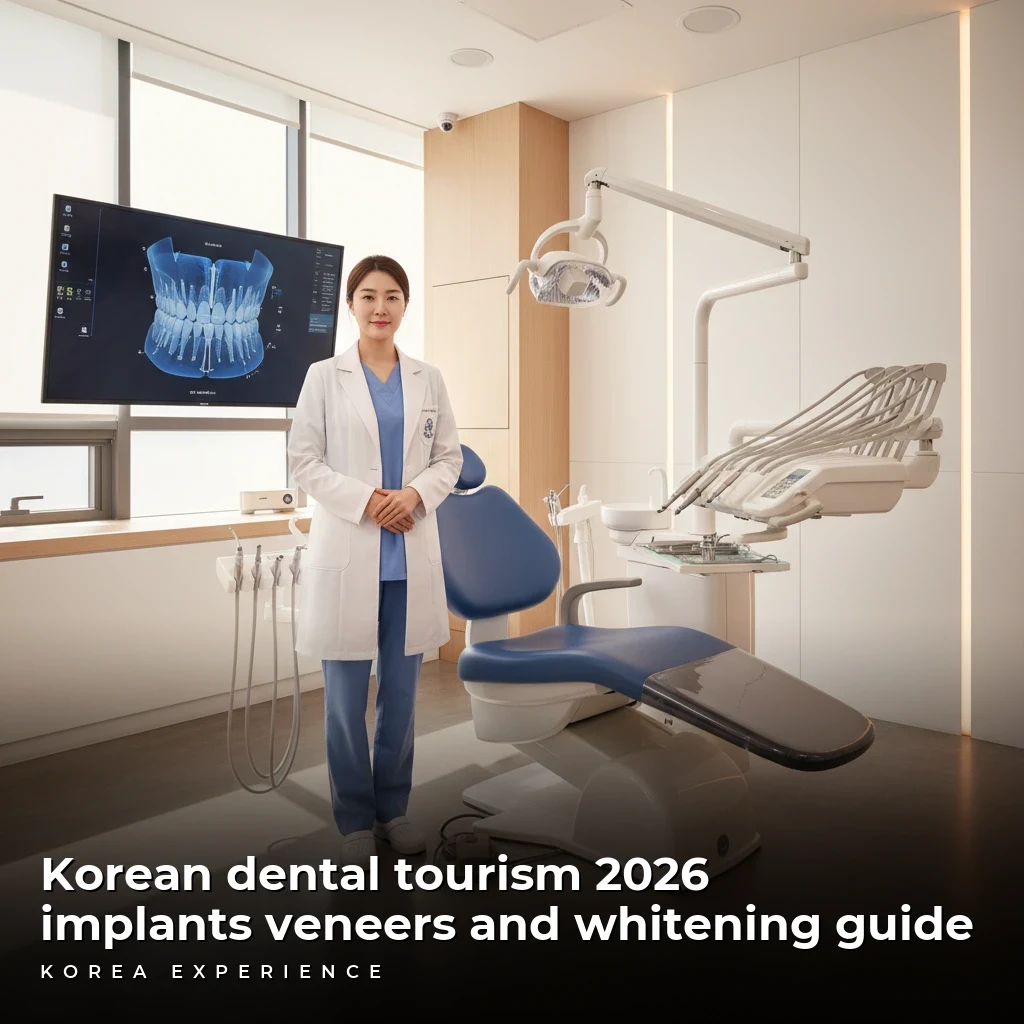
For international travelers looking to combine high-quality dental care with affordable pricing, South Korea has firmly established itself as a top global destination in 2026. If you are considering dental work in Korea, you can expect to pay approximately 30% to 70% less than in the United States or Western Europe, without sacrificing quality. The country is particularly famous for its "One-Day" treatments, where crowns, laminates (veneers), and even some implant procedures are completed within a single visit using advanced CAD/CAM technology. Most major clinics in Seoul's Gangnam district now employ dedicated English-speaking coordinators to assist international patients from consultation to tax refunds.
The short answer: In 2026, Korean dental tourism offers world-class implants ($800–$1,200), veneers ($300–$700), and whitening ($100–$300) at a fraction of Western costs, utilizing cutting-edge digital scanning for same-day results.
Key Takeaways
- 1Save 50-70% on major procedures like implants and veneers compared to US/UK prices
- 2One-Day Dentistry is the standard, utilizing onsite labs to finish crowns in under 4 hours
- 3Osstem (Korean brand) implants offer high durability at 30% lower cost than Swiss brands
- 4International patients are eligible for a 7-8% VAT refund at the airport
- 5Most clinics in Gangnam and Sinsa offer fluent English, Chinese, and Russian support
Medical Disclaimer
The information provided in this guide is for educational purposes only and does not constitute medical advice. Always consult with a qualified dental professional for diagnosis and treatment. In case of a medical emergency in Korea, dial 119. For medical travel assistance, contact the Medical Tourism Information Center at 1339.
Why choose Korea for dental work in 2026?
South Korea’s medical tourism industry has rebounded and evolved significantly by 2026. While plastic surgery often grabs the headlines, dental tourism has seen a massive surge, with over 350,000 international patients visiting specifically for dental procedures last year alone. The appeal lies in a "High Tech, High Speed, Low Cost" triangle that few other countries can replicate.
Unlike the appointment backlogs common in the UK (NHS) or the prohibitive costs in the US, Korean clinics operate with extreme efficiency. It is not improving speed by cutting corners; rather, it is achieved through the aggressive adoption of digital dentistry. In 2026, over 90% of clinics in the Gangnam medical belt utilize intraoral 3D scanners instead of uncomfortable rubber molds, and onsite 3D printers and milling machines allow prosthetics to be manufactured while you wait in the lounge.
📊 Korean Dental Industry Stats 2026
The technology advantage
The standard of care in Korea involves equipment that is often considered "premium" or "optional" elsewhere.
- CT Scans & Panoramic X-rays: Almost every consultation includes a 3D CT scan, often free or included in the consultation fee (approx. ₩30,000 or $22).
- Navigation Surgery: For implants, "Navi-Guide" surgery is standard, using computer modeling to drill with precision within 0.1mm, significantly reducing recovery time.
- CAD/CAM CEREC: This allows for "One-Day Crowns." A robot mills a ceramic block into a tooth shape in about 20 minutes.
Dental implants in Korea: Brands, costs, and procedure
Dental implants are the primary driver for high-value dental tourism. In 2026, Korea is not just a consumer of implant technology but a leading exporter. The domestic market is dominated by Korean brands that have global recognition.
Korean vs. imported implant brands
When you visit a clinic, you will typically be offered a choice between a domestic Korean brand (usually Osstem or Dentium) and an imported premium brand (usually Straumann from Switzerland).
1. Osstem (Korean): Osstem is the "Samsung of dental implants." It holds the largest market share in the Asia-Pacific region and is the 4th largest globally.
- Cost: ₩800,000 – ₩1,200,000 ($600 – $900) per tooth.
- Pros: excellent osseointegration (bonding with bone), significantly cheaper, parts available globally.
- Cons: slightly less historical clinical data than 50-year-old Swiss brands (though Osstem has 25+ years).
2. Straumann (Swiss): The gold standard for global implants.
- Cost: ₩1,300,000 – ₩1,800,000 ($960 – $1,350) per tooth.
- Pros: highest global success rate, faster healing (SLActive surface), lifetime warranty valid anywhere in the world.
- Cons: 30-40% more expensive than Korean brands.
Implant Brand Comparison 2026
| Feature | Osstem (Korea) | Straumann (Swiss) | US Average |
|---|---|---|---|
| Price per Unit | $600 - $900 | $960 - $1,350 | $3,500+ |
| Healing Time | 8-12 Weeks | 4-8 Weeks | 12+ Weeks |
| Global Warranty | Limited | Extensive | Varies |
| Material | Titanium | Roxolid (TiZr) | Titanium |
The implant procedure timeline
For international visitors, timing is critical. While "One-Day Implants" exist, they are not suitable for everyone.
- Visit 1 (The Surgery): Consultation, CT scan, extraction (if needed), and fixture placement. This takes 1-2 hours. If your bone density is good, they place the fixture immediately.
- Recovery: You can usually fly home after 2-3 days once stitches are checked, or use dissolvable stitches.
- The Wait: You must wait 3 to 6 months for the bone to fuse with the implant (osseointegration).
- Visit 2 (The Crown): You return to Korea to have the abutment and final crown attached. This takes 3-5 days to ensure the bite is perfect.
If you cannot return to Korea for the second visit, ask for the 'Fixture Only' surgery. We place the Osstem or Straumann root, and you can have your local dentist in the US or Europe attach the crown after 3 months. We provide all the specifications (Hex driver size, implant diameter) in English for your local doctor.
For those interested in general health and recovery during their stay, consider looking into our guide on Korean healing foods for surgery recovery to speed up your healing process.
Veneers and laminates: The "Hollywood Smile"
While implants are restorative, veneers are the king of aesthetic dentistry in Korea. In 2026, the trend has shifted away from aggressive tooth shaving toward "Non-Prep" or "Minimal-Prep" veneers.
Laminate vs. Minish
Korean clinics often distinguish between standard veneers and "Laminates" or branded procedures like "Minish."
- Standard Veneers: Usually require shaving 0.5mm to 0.7mm of the enamel.
- Minish / Zero-Cut Laminates: These are ultra-thin (0.1mm to 0.2mm) porcelain films. They require little to no anesthesia because the tooth structure is barely touched.
Cost and time
- Cost: ₩400,000 – ₩800,000 ($300 – $600) per tooth.
- Time: 1 day to 3 days.
- Quantity: A full smile makeover (top 6-8 teeth) can be done for roughly $2,500 – $4,000, compared to $15,000+ in the US.
📋 Veneer Quick Facts
The "One-Day" veneer process
- 10:00 AM: Consultation and smile design using AI simulation.
- 11:00 AM: Teeth preparation (if necessary) and digital scanning.
- 12:00 PM: Lunch break for the patient; lab technicians mill and hand-finish the veneers.
- 4:00 PM: Fitting and bonding.
- 5:00 PM: Final polish and check-out.
This efficiency allows travelers to get a full smile makeover without spending their entire vacation in a dental chair. While recovering, you might want to explore low-impact activities. We recommend checking out accessible routes in Seoul for easy walking paths that won't strain you.
Teeth whitening in Korea 2026
Teeth whitening in Korea is viewed as a casual beauty treatment, similar to getting a facial. It is incredibly affordable and efficient.
Office whitening (Zoom Whitening)
The most common procedure uses high-concentration hydrogen peroxide activated by a specialized LED light (often Philips Zoom machines).
- Sessions: Usually consists of three 15-minute cycles in one visit.
- Result: Improvements of 3 to 6 shades.
- Cost: ₩150,000 – ₩350,000 ($110 – $260).
- Pain: Some sensitivity is normal for 24 hours.
💵 Whitening Price Comparison
Official Philips Zoom, less sensitivity
Generic activation light, good results
Home whitening kits
Many patients opt for custom-made trays. Since the clinic already has your digital scan, they can 3D print a custom tray in 1 hour. You are given professional-grade gel to take home.
- Cost: ₩100,000 – ₩200,000 ($75 – $150).
Comprehensive cost breakdown 2026
Budgeting is the most important part of planning medical travel. Below is a detailed breakdown of costs you can expect in Seoul in 2026. Note that these prices often include tax, but as a tourist, you can get the tax back (see the Tax Refund section below).
Detailed Dental Price List 2026 (USD Estimates)
| Procedure | Seoul (Gangnam) | USA (NYC/LA) | Savings |
|---|---|---|---|
| Consultation + CT Scan | $20 - $40 (often free) | $200 - $400 | 90% |
| Implant (Fixture + Crown) | $800 - $1,100 | $3,000 - $5,000 | 75% |
| Sinus Lift (Bone Graft) | $300 - $500 | $1,500 - $2,500 | 80% |
| Zirconia Crown | $350 - $500 | $1,200 - $2,000 | 70% |
| Resin Filling | $70 - $120 | $200 - $400 | 65% |
| Root Canal (Molar) | $150 - $300 | $1,000 - $1,500 | 85% |
| Scaling (Cleaning) | $40 - $60 | $150 - $300 | 75% |
How to choose a clinic: The "Dental Belt"
The majority of dental clinics catering to foreigners are located in the Gangnam-gu district, specifically around Gangnam Station, Sinsa Station, and Apgujeong Station. In 2026, there are over 500 clinics in this 5-mile radius.
What to look for
- Board Certified Specialists: Look for clinics where the surgeons are specialists in "Prosthodontics" (crowns/veneers) or "Periodontics/Oral Surgery" (implants). In Korea, only about 8% of dentists are Board Certified Specialists.
- In-House Lab: Ask, "Do you have an in-house ceramic technician?" This is crucial for "One-Day" treatments.
- English Coordinators: Do not rely on Google Translate. Ensure the clinic has dedicated staff for international patients.
- Transparency: Trustworthy clinics list their prices on their website or will send a PDF price list upon request via WhatsApp or KakaoTalk.
Generic Top-Tier Dental Clinic(강남 예쁜미소 치과 (Example))
Understanding the warranty
Most reputable Korean clinics offer a warranty on their work.
- Implants: Usually 3-5 years for the crown and 5-10 years for the fixture (root).
- Veneers: Usually 1-2 years free repair for chipping.
- Condition: The warranty is typically void if you do not return for check-ups (which is hard for tourists) OR if you don't maintain hygiene. Negotiate the warranty terms: Ask if they will cover the cost of repair at your home dentist if the implant fails within year one.
The step-by-step patient journey
If you are planning your trip for 2026, here is how to structure your dental holiday.
📖 Booking Your Dental Trip
Step 1: Initial Contact (4 weeks out)
Send panoramic X-rays (from your local dentist) via email or WhatsApp to 3-4 Korean clinics for quotes.
Step 2: Booking (2 weeks out)
Confirm the appointment. You usually do not need to pay a deposit for dental work, unlike plastic surgery.
Step 3: Arrival & Sim Card
Arrive in Incheon. Get a local SIM card immediately so the clinic can contact you.
Step 4: The Procedure
Visit the clinic. Bring your passport for the Tax Refund paperwork.
Step 5: Tax Refund (Departure)
Scan your receipts at the airport kiosk to get roughly 7-8% cash back.
Accommodations
For dental patients, staying in Gangnam is most convenient. You want to be close to the clinic in case you need a quick bite adjustment.
- Luxury: Hotels like Andaz Seoul Gangnam or Josun Palace.
- Budget: Ocloud Hotel Gangnam or Dormy Inn (famous for soft pillows and free night noodles).
- Recovery: Since dental recovery is easier than plastic surgery, you don't need specialized "recovery centers," but having a kitchenette (Airbnb) to prepare soft foods is helpful.
Check our guide on best neighborhoods for expats in Seoul to find the area that suits your lifestyle best while you recover.
Pain management and sedation
A major fear for patients is pain. Korean dentistry in 2026 is highly focused on "Pain-Free" experiences.
- Computer-Controlled Anesthesia: Most clinics use a device that injects lidocaine slowly at a computer-controlled pressure, eliminating the "sting" of the needle.
- Sleep Dentistry (Sedation): For larger surgeries (multiple implants), "Conscious Sedation" (Propofol or Midazolam) is available. It costs an extra ₩100,000 – ₩300,000 ($75 – $225). You will sleep through the surgery but wake up quickly.
Sedation Tip
If you opt for sedation (sleep dentistry), you must fast for 8 hours prior. You must also have a guardian to escort you home, or the clinic may require you to stay in the recovery room until fully alert.
Risks and considerations
While the benefits are high, honesty about the risks is required for E-E-A-T (Expertise, Authoritativeness, Trustworthiness).
Dental Tourism in Korea
- ✓Significant cost savings (up to 70%)
- ✓Faster completion times (One-Day)
- ✓Advanced digital technology
- ✓Tax refunds for tourists
- ✗Follow-up care is difficult once home
- ✗Communication barriers if no coordinator
- ✗High-pressure sales for extra treatments
- ✗Travel fatigue affecting healing
The aggressive treatment upsell
Korean dentists can sometimes be more aggressive than Western dentists regarding aesthetic perfection. If you go in for a cleaning, they might point out that your front teeth are slightly crooked and suggest veneers.
- Advice: Be firm about your budget and goals. "I am only here for implants" is a complete sentence.
Post-procedure diet
After implants or whitening, your diet will be restricted.
- Whitening: No curry, kimchi, coffee, or red wine for 48 hours. This is tough in Korea!
- Implants: Soft foods only.
- Recommendation: Juk (Korean rice porridge) is widely available. Chains like "Bonjuk" have extensive menus.
Insurance and payment
Does your insurance cover this?
- US Citizens: Most US dental insurance (Delta, Cigna, etc.) operates on a "Reimbursement" basis for international work. You pay upfront in Korea, get the English receipt and diagnosis charts, and file a claim back home. Check with your provider first.
- Payment Methods: All Korean clinics accept foreign credit cards (Visa, Mastercard, Amex).
- Installments: Installment plans (monthly payments) are generally not available for tourists, only for residents with Korean credit cards.
Payment Process
Diagnostic Fee
Pay approx $30-$50 (often waived if treatment proceeds)
Lump Sum
Pay total cost. Ensure your card limit is raised before travel!
Tax Refund Slip
Receive the Tax Free slip. Keep this safe.
Combining treatments: Beauty and Dental
Many visitors combine dental work with dermatology.
- Sequence matters: If you are getting lip fillers or facial contouring, do the dental work first. Opening your mouth wide for an hour can displace fresh fillers or cause pain in treated areas.
- Botox: Masseter Botox (jawline) can actually help with dental pain if you are a teeth grinder. Many dental clinics in Korea can administer Botox for TMJ pain.
For skin treatments, refer to our guide on best Korean skin clinics in Gangnam to schedule your appointments efficiently.
Final verdict: Is it worth it in 2026?
For simple cavities or a single cleaning, the flight cost usually negates the savings. However, for high-ticket items—specifically implants, multiple veneers, or complex root canals—the math is undeniable. A patient needing two implants and three crowns could save nearly $5,000, which more than covers a luxury vacation in Seoul.
The key to success is research. Do not walk into the first clinic you see. Use the contact methods described, get 2-3 quotes, and verify their experience with international patients.
❓ Frequently Asked Questions
Have more questions?Contact us →
About the Author
Korea Experience Team
Written by the Korea Experience editorial team - experts in Korean medical tourism, travel, and culture with years of research and firsthand experience.
⚠️ Medical Disclaimer
The information provided on this website is for general informational purposes only and does not constitute medical advice. Always consult with qualified healthcare professionals before making any medical decisions.
Explore more in Medical Tourism
World-class medical procedures at competitive prices. From plastic surgery and dermatology to dental care and health checkups — your complete guide to medical tourism in Korea.
Browse All Medical Tourism ArticlesContinue Reading
Explore more articles you might find interesting
A complete guide to senior joint replacement and cataract surgery in Korea. Save 40-60% on robotic procedures with world-class care and recovery facilities.
Get same-day dental implants in Seoul for 1000000 to 1800000 KRW in 2026. Enjoy a 95 percent success rate and save thousands compared to US or UK prices.
Unlock your guide to rhinoplasty in Korea for 2026. Discover costs, top clinics, procedures, and essential tips for a successful medical tourism journey.
Everything you need to know about medical tourism insurance for Korea in 2026, covering complications, costs, provider comparisons, and claim procedures.
Find open pharmacies in Seoul past 1 AM. Learn the 2026 Simya system, 30% night surcharges, and the 13 safety meds available at convenience stores.
A complete guide to same-day medical treatments in Seoul. We analyze safety, costs (saving up to 40%), and efficiency for travelers in 2026.