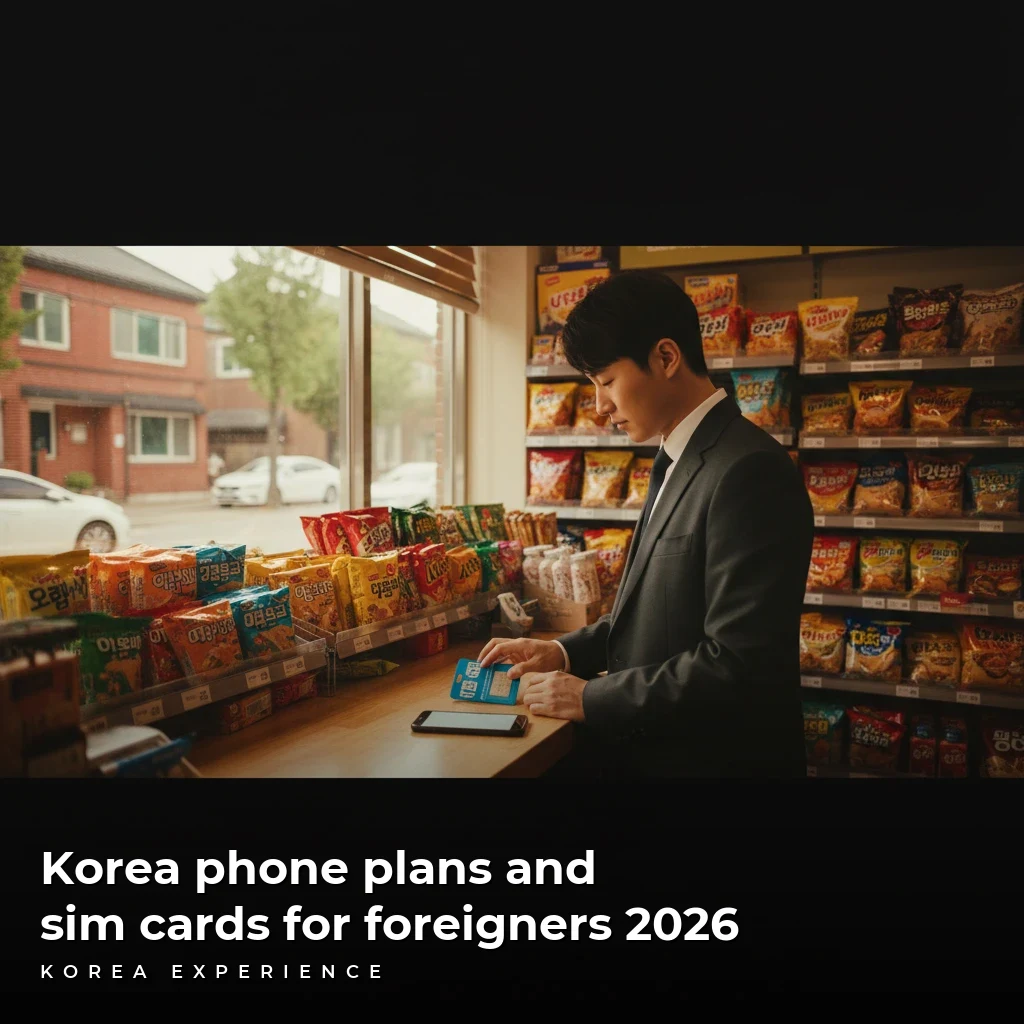
Korea Phone Plans & SIM Cards for Foreigners 2026
Navigating Korea's phone plans and SIM cards as a foreigner in 2026? This guide covers everything from prepaid SIMs to contract plans, eSIMs, and essential tips.
Korea Phone Plans and SIM Cards for Foreigners 2026: The Ultimate Guide
In the hyper-connected digital landscape of South Korea, having reliable mobile service isn't just a convenience – it's an absolute necessity. Whether you're a short-term tourist eager to navigate Seoul's bustling streets, a student embarking on an academic adventure, or an expat settling down for the long haul, understanding Korea phone plans and SIM cards for foreigners in 2026 is crucial. The myriad of options, from major carriers to budget-friendly MVNOs and the rise of eSIMs, can be daunting.
This comprehensive guide is designed to cut through the confusion, providing international travelers and expats with all the up-to-date information they need to choose the best phone plan in Korea. By the end of this post, you'll be equipped with the knowledge to make an informed decision, ensuring you stay connected from the moment you land. We'll cover everything from prepaid SIMs and the latest eSIM technology to long-term contract plans, offering practical tips, price comparisons, and insider advice for a seamless connectivity experience.
Understanding Korea's Mobile Landscape in 2026
South Korea boasts one of the world's most advanced mobile networks, characterized by blazing-fast speeds and extensive coverage. However, the market can seem complex to newcomers. Knowing the key players and technologies is your first step towards finding the perfect phone plan.
The Major Carriers: SK Telecom, KT, LG U+
These three giants dominate the Korean telecommunications market, offering premium services, extensive customer support, and the latest network technologies.
- SK Telecom (SKT): The largest carrier, known for its wide coverage, especially in rural areas, and excellent 5G performance. Often seen as the premium option.
- KT: A strong competitor, KT also offers robust 5G infrastructure and a good balance of coverage and competitive pricing. Many public Wi-Fi hotspots are operated by KT.
- LG U+: While historically the third-largest, LG U+ has significantly expanded its network and services, offering attractive deals and competitive data plans.
All three major carriers provide a range of services tailored to foreigners, including dedicated English-speaking customer service lines and specific plans for those with an Alien Registration Card (ARC).
MVNOs (Al-tteul-pon): The Budget-Friendly Alternative
MVNOs, or Mobile Virtual Network Operators, are a game-changer for budget-conscious foreigners in Korea. These companies lease network infrastructure from the major carriers (SKT, KT, LG U+) but offer their own plans, often at significantly lower prices. MVNOs, sometimes referred to as "Al-tteul-pon" (meaning "thrifty phone"), provide the same reliable network coverage as the big three but without the bells and whistles (and higher prices) of their parent networks. They are an increasingly popular choice for both short-term and long-term residents.
5G vs. LTE Coverage
By 2026, 5G coverage in Korea is virtually ubiquitous in urban centers and expanding rapidly into rural areas. All major carriers and many MVNOs offer 5G plans. While 5G offers incredible speeds, LTE (4G) remains robust, reliable, and more than sufficient for most users' needs. If you're looking to save money, an LTE plan might be a more cost-effective choice, as the speed difference for everyday tasks is often negligible. Ensure your phone supports the necessary frequency bands for 5G (n78/3.5GHz for Korea) if you opt for a 5G plan.
Prepaid SIM Cards: Best for Short-Term Visitors and Flexibility
Prepaid SIM cards are the go-to option for tourists, short-term students, or anyone who prefers not to commit to a long-term contract. They offer immediate connectivity upon arrival and a straightforward top-up system.
Where to Buy Prepaid SIMs
- Incheon International Airport (ICN) & Gimpo Airport (GMP): Dedicated counters for SKT, KT, and LG U+ are available immediately after customs. This is the most convenient option for instant connectivity. You can also find kiosks for some MVNOs or third-party providers.
- Major Carrier Stores: Visit official SKT, KT, or LG U+ stores in major cities (e.g., Myeongdong, Gangnam, Hongdae) for a wider selection and direct assistance.
- Convenience Stores: While less common for initial purchases, some convenience stores might carry basic prepaid SIMs, though activation often requires online registration.
- Online/Pre-Order: Many providers allow you to pre-order SIM cards online and pick them up at the airport or have them delivered to your accommodation. This saves time and often offers better deals.
Top Prepaid SIM Card Options & Prices (2026 Estimates)
Here's a general overview of what you can expect from prepaid SIM cards, focusing on popular options for foreigners. Prices are approximate and subject to change.
| Provider / Type | Data Allotment | Validity | Price Range (KRW) | Notes |
|---|---|---|---|---|
| SKT Tourist SIM | 10GB - 30GB | 5-30 Days | 30,000 - 80,000 | Good coverage, call/SMS included. |
| KT Prepaid SIM | 5GB - Unlimited (throttled) | 7-90 Days | 25,000 - 90,000 | Reliable network, diverse plans. |
| LG U+ Roaming SIM | 3GB - Unlimited (throttled) | 5-60 Days | 20,000 - 75,000 | Competitive prices, strong urban signal. |
| Chingu Mobile (MVNO) | Unlimited (daily cap + throttled) | 30 Days | 30,000 - 45,000 | Popular MVNO for tourists, includes calls. |
| Klook/Trazy SIM | Varies by package | 5-30 Days | 20,000 - 70,000 | Third-party resellers, often competitive. |
Note: "Unlimited (throttled)" typically means a certain amount of high-speed data per day (e.g., 2GB), after which speeds are reduced to 3Mbps or slower, which is still usable for basic browsing and messaging.
Activation Process and Requirements
For prepaid SIMs, you typically only need your passport for identification. The activation process is usually quick, often handled by the staff at the purchase counter. You'll sign a simple form, and they will install and activate the SIM card for you. Ensure your phone is unlocked from your home carrier before arriving in Korea.
Data, Calls, and SMS Bundles
Most prepaid SIM cards for foreigners come with generous data allowances, ranging from a few gigabytes to "unlimited" options (with daily high-speed caps). Local calls and SMS are often included or can be topped up separately. If you plan to make international calls, consider using VoIP apps like KakaoTalk, WhatsApp, or Skype over Wi-Fi, or check if your chosen plan offers international calling minutes.
eSIMs in Korea: The Digital Convenience for Foreigners
eSIM technology has gained significant traction by 2026, offering unparalleled convenience, especially for short-term visitors and those with dual-SIM compatible phones.
What is an eSIM and How Does it Work?
An eSIM (embedded SIM) is a digital SIM card that allows you to activate a cellular plan without needing a physical SIM card. Instead, your phone's internal hardware has a reprogrammable chip that stores your mobile profile. You simply scan a QR code or enter activation details, and your plan is downloaded and activated.
eSIM Availability from Korean Carriers and Third-Party Providers
While Korean major carriers (SKT, KT, LG U+) now support eSIMs for their regular contract plans and some prepaid options, the most popular and flexible eSIM solutions for foreigners come from third-party global eSIM providers. These providers offer easy online purchase and activation, often without the need for physical pickup or registration at a store.
Advantages and Disadvantages of eSIMs
Advantages:
- Instant Activation: Purchase and activate your plan entirely online, often within minutes, before or after arrival. No need to visit a store or wait for delivery.
- Dual SIM Functionality: Use your home country's physical SIM for calls/texts and an eSIM for Korean data, keeping both numbers active.
- Eco-Friendly: No plastic waste from physical SIM cards.
- Flexibility: Easily switch between different local plans or add multiple eSIM profiles.
Disadvantages:
- Device Compatibility: Only newer smartphones support eSIMs. Check your device's compatibility before purchasing.
- Limited Call/SMS: Many travel-focused eSIM plans are data-only, with no local call or SMS capabilities, though some providers offer options with a local number.
- Troubleshooting: Requires some technical comfort; while generally straightforward, technical issues can be harder to resolve without physical support.
Recommended eSIM Providers for Korea (2026 Estimates)
Several international and local providers offer excellent eSIM options for Korea.
| Provider | Data Allotment | Validity | Price Range (USD) | Notes |
|---|---|---|---|---|
| Airalo | 1GB - 20GB | 7-30 Days | 4.50 - 30.00 | Data-only, global coverage, easy top-ups. |
| Holafly | Unlimited Data | 5-90 Days | 19.00 - 99.00 | Unlimited data (throttled after daily cap), data-only. |
| Klook/Trazy eSIM | Varies by package | 5-30 Days | 15.00 - 50.00 | Resellers often offer local carrier eSIMs with call/SMS. |
| KT Global eSIM | 10GB - Unlimited (throttled) | 5-30 Days | 25.00 - 70.00 | Official KT eSIM, often includes a local number. |
| Ubigi | 1GB - 10GB | 7-30 Days | 5.00 - 25.00 | Data-only, good for short trips. |
Postpaid Contract Plans: For Long-Term Residents
If you're planning to stay in Korea for an extended period – think several months to years – a postpaid contract plan offers the most comprehensive and often the most cost-effective solution in the long run. These plans usually come with better rates, more data, and often subsidized phone purchases.
Requirements for Contract Plans (Alien Registration Card, Bank Account)
To sign up for a postpaid contract plan with any major Korean carrier or MVNO, you will typically need:
- Alien Registration Card (ARC): This is the most crucial document. It serves as your primary identification and proof of legal residency. You usually cannot get a contract plan without it.
- Korean Bank Account: For automatic monthly payments.
- Proof of Address: Your ARC usually covers this, but sometimes additional documentation like a utility bill may be requested.
- Passport: For initial identification.
- A Korean Phone Number: Sometimes required for verification during online sign-up, which can be tricky if you don't have one yet. Consider getting a prepaid SIM first.
Major Carrier Contract Plan Overview (SKT, KT, LGU+)
The big three offer a wide array of contract plans, ranging from basic data-only options to premium bundles with unlimited data, international calling minutes, and entertainment perks.
- SKT: Offers various "T Plan" tiers, with attractive benefits for families and those seeking bundled services.
- KT: Features "Super Plans" and "Data On" plans, often with generous data and competitive international call rates.
- LG U+: Known for its "5G Smart" and "Unlimited Data" plans, sometimes bundling home internet or IPTV services.
Expect contract terms to be typically 12 or 24 months. Early termination fees apply, so be sure you understand the commitment.
MVNO Contract Plans: Value for Money
MVNOs are an excellent alternative for long-term residents seeking similar benefits to major carriers but at a lower price point. They often offer no-contract options or shorter contract terms (e.g., 6 months), providing greater flexibility. The registration process is similar to major carriers but can sometimes be more streamlined online.
Contract Tiers and Data Allowances
Korean postpaid plans are structured in tiers, typically based on data allowance:
- Entry-Level (5-15GB/month): Good for light users who mostly rely on Wi-Fi.
- Mid-Tier (30-100GB/month): Suitable for average users who stream, browse social media, and use navigation apps regularly.
- Unlimited (Throttled after high-speed cap): The most popular choice, offering a substantial amount of high-speed data (e.g., 100GB or even "truly" unlimited for premium plans) before throttling to a slower, but still usable, speed.
Most contract plans include unlimited domestic calls and SMS messages. Consider your actual data usage carefully; paying for unlimited data you don't use is unnecessary.
MVNOs: Unlocking Affordable Connectivity in Korea
As mentioned, MVNOs (Al-tteul-pon) are a significant player in the Korean mobile market, particularly appealing to foreigners looking for value. Let's delve deeper.
Why Choose an MVNO?
- Lower Prices: Significantly cheaper than major carrier plans for comparable data and call allowances. Savings can be 30-50% monthly.
- No-Contract or Short-Term Contracts: Many MVNOs offer plans without a lock-in contract, or with flexible 3-month or 6-month terms, ideal if your stay duration is uncertain.
- Same Network Quality: Since they use the networks of SKT, KT, or LG U+, you get the same reliable coverage and speed.
- Variety of Plans: A vast selection of plans, from basic data-only to unlimited options, catering to diverse needs.
Popular MVNOs in Korea
- FreeT: Operates on the KT network, popular for its foreigner-friendly services and online sign-up process.
- LGU+ MVNO (various brands): Numerous smaller MVNOs leverage the LG U+ network, often offering aggressive pricing.
- KT M Mobile: An MVNO directly owned by KT, known for its stable service and online options.
- SK 7 Mobile: An MVNO from SK Telecom, providing good network quality and often competitive rates.
There are dozens of smaller MVNOs as well, each with unique promotions. It's worth comparing several to find the best deal.
How to Sign Up for an MVNO Plan
Signing up for an MVNO plan often involves an online application process. You'll need your ARC, passport, and a Korean bank account for direct debit. Many MVNOs have English-friendly websites or offer limited English support via phone. You typically choose your plan, fill out an online form, upload scanned copies of your documents, and then receive the SIM card by mail within a few business days. Some MVNOs also have kiosks in major cities or allow pickup at specific locations.
MVNO Plan Comparison (2026 Estimates)
This table illustrates typical MVNO offerings for long-term use.
| MVNO (Network) | Data | Calls/SMS | Price Range (KRW/month) | Contract Term |
|---|---|---|---|---|
| FreeT (KT) | 11GB + 2Mbps unlimited | Unlimited | 25,000 - 35,000 | No Contract/12M |
| KT M Mobile (KT) | 70GB + 3Mbps unlimited | Unlimited | 30,000 - 40,000 | No Contract/24M |
| SK 7 Mobile (SKT) | 50GB + 1Mbps unlimited | Unlimited | 28,000 - 38,000 | No Contract/12M |
| Hello Mobile (LGU+) | 100GB + 5Mbps unlimited | Unlimited | 35,000 - 45,000 | No Contract/24M |
| Iyagi Mobile (KT) | 10GB + 1Mbps unlimited | Unlimited | 15,000 - 25,000 | No Contract |
Note: Data plans often combine a fixed amount of high-speed data with unlimited throttled data after the cap.
Essential Tips for Choosing Your Korea Phone Plan
Navigating the options can still be tricky. Here are some essential tips to help you make the best choice.
Device Compatibility (Unlocked Phones, Frequency Bands)
- Unlocked Phone: Your phone must be unlocked from your home country's carrier to use a Korean SIM card. Attempting to use a locked phone will result in "SIM not supported" errors.
- Frequency Bands: Korea primarily uses specific frequency bands for LTE (Band 3, 5, 8) and 5G (n78). Most modern smartphones are globally compatible, but it's wise to check your phone's specifications to ensure it supports Korean networks for optimal performance.
Data Usage Habits: How Much Do You Really Need?
Be honest about your data consumption.
- Light User (5-15GB/month): Mostly Wi-Fi, occasional browsing, messaging.
- Medium User (30-50GB/month):0 Regular streaming, social media, navigation, some tethering.
- Heavy User (50GB+/month): Frequent video streaming, gaming, heavy tethering, working remotely.
- "Unlimited" with throttling: A popular choice for many, offering peace of mind even if you exceed your high-speed allowance.
Understanding Contract Terms and Hidden Fees
Always read the fine print.
- Activation Fees: Some plans, especially contract plans, may have a one-time activation fee.
- Early Termination Fees: A significant penalty if you cancel a contract before its term ends. Be aware of these if your stay duration is uncertain.
- Monthly Base Fees: Understand what's included and what's extra (e.g., international calls, value-added services).
- Device Subsidies: If you purchase a phone with a contract, understand the subsidy structure and cancellation implications.
Customer Service and Language Support
While major carriers offer English customer service, MVNOs may have limited or no English support. Consider your comfort level with Korean or your reliance on translation apps if you choose an MVNO. For major carriers, dial their international customer service lines for English assistance.
Keeping Your Number When Changing Plans
If you decide to switch providers (e.g., from a major carrier to an MVNO) but want to keep your existing Korean phone number, you can usually do so through a process called "number porting." This is common in Korea and fairly straightforward, handled by your new provider.
Wi-Fi Egg (Pocket Wi-Fi) Rentals: An Alternative for Groups
While SIM cards and eSIMs are primary options, Wi-Fi eggs (portable Wi-Fi hotspots) remain a viable alternative, especially for groups or users with multiple devices.
When to Consider a Wi-Fi Egg
- Group Travel: One device can connect multiple phones, tablets, and laptops, sharing the cost.
- Multiple Devices: If you need to connect your phone, tablet, and a work laptop simultaneously.
- Data-Heavy Users (Short-Term): Unlimited data plans are common for Wi-Fi eggs, suitable for heavy usage without constantly checking individual data caps.
- No Unlocked Phone: If your phone is locked to your home carrier and you prefer not to buy a new one.
Rental Locations and Pricing
- Airport Kiosks: Available for rent at major airports like Incheon and Gimpo. You can pick up and return there.
- Online Pre-Booking: Services like Klook, Trazy, or directly from KT/SKT Roaming offer pre-booking with airport pickup.
- Pricing: Typically ranges from KRW 5,000 to KRW 10,000 per day, with discounts for longer rental periods. Most include unlimited data.
Pros and Cons of Wi-Fi Eggs
Pros:
- Shareable: Connects multiple devices simultaneously.
- Unlimited Data: Often comes with unlimited data.
- No SIM Swapping: Keep your home SIM in your phone.
Cons:
- Extra Device: One more device to carry, charge, and worry about losing.
- Battery Life: Requires daily charging, typically lasting 6-8 hours.
- Dependence: Everyone in the group depends on the person carrying the egg.
- Limited Mobility: You need to stay within range of the Wi-Fi egg to use its connection.
Frequently Asked Questions (FAQ)
Q1: Can I use my home country's phone in Korea?
A1: Yes, as long as your phone is unlocked from your home carrier and supports the Korean frequency bands (primarily LTE Bands 3, 5, 8 and 5G Band n78). Most modern smartphones are globally compatible.
Q2: Do I need an Alien Registration Card (ARC) for a phone plan?
A2: For long-term postpaid contract plans, an Alien Registration Card (ARC) is almost always required. For prepaid SIM cards for short-term visitors, your passport is usually sufficient. Some MVNOs might offer specific plans for temporary residents without an ARC, but these are less common.
Q3: What's the cheapest way to get phone service in Korea?
A3: Generally, an MVNO (Mobile Virtual Network Operator) prepaid or no-contract plan offers the cheapest way to get phone service in Korea, especially for long-term stays. For very short visits (under a week), a basic prepaid SIM or an eSIM might be more cost-effective.
Q4: Can I port my number from one carrier to another?
A4: Yes, you can port your existing Korean phone number from one carrier to another. This is a standard process called "number portability" and is usually handled by your new provider when you sign up for a new plan. You will need your ARC and details of your current plan.
Q5: What's the difference between a SIM card and an eSIM?
A5: A traditional SIM card is a physical chip that you insert into your phone. An eSIM (embedded SIM) is a digital SIM profile embedded in your phone's hardware, allowing you to activate a cellular plan digitally without a physical card. eSIMs offer convenience and dual-SIM functionality but require a compatible device.
Conclusion
Staying connected in Korea in 2026 is easier than ever, thanks to a robust telecommunications infrastructure and a wide array of options tailored for foreigners. From the instant gratification of a prepaid SIM or the cutting-edge convenience of an eSIM for short visits, to the economic efficiency of an MVNO or the comprehensive benefits of a major carrier contract for long-term residency, there's a perfect plan for every type of traveler or expat.
Before you arrive, take a moment to assess your needs: How long will you stay? How much data do you typically use? Is your phone unlocked and eSIM compatible? With this guide, you now have the knowledge to confidently choose the best Korea phone plan and SIM card for your adventure. Enjoy seamless connectivity as you explore everything this incredible country has to offer, from navigating its vibrant cities to sharing your experiences with friends and family back home.
About the Author
Korea Experience Team
Written by the Korea Experience editorial team - experts in Korean medical tourism, travel, and culture with years of research and firsthand experience.
⚠️ Medical Disclaimer
The information provided on this website is for general informational purposes only and does not constitute medical advice. Always consult with qualified healthcare professionals before making any medical decisions.
Continue Reading
Explore more articles you might find interesting

Unlock your dream of teaching English in Korea with our comprehensive E-2 Visa guide. Learn requirements, steps, and insider tips for a smooth process.
Unlock Coupang's full potential for expats in Korea with this 2026 guide covering Rocket Delivery, Coupang Wow subscriptions, fresh groceries, and expert tips for seamless shopping.
Unlock Korea's rental market with our guide to English-friendly real estate apps and essential tips for finding your perfect apartment in South Korea.