Korean film festivals calendar for international visitors
The ultimate guide to Korean film festivals including BIFF, Jeonju, and Bucheon. Discover dates, ticket guides, and travel tips for international cinema lovers.
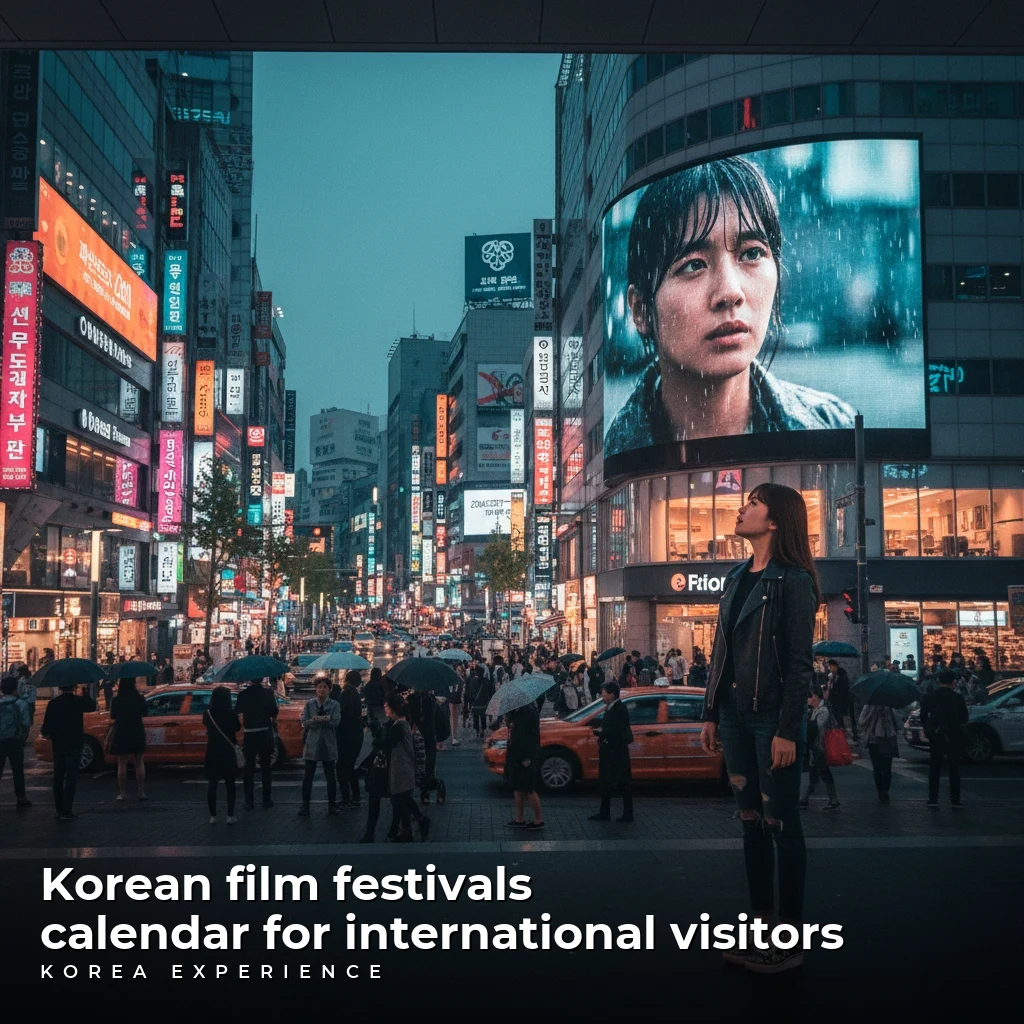
South Korea has rapidly ascended to the pinnacle of global cinema, driven by the historic success of films like Parasite and the cultural phenomenon of Squid Game. However, for true cinephiles, the real magic happens not on Netflix, but at Korea's vibrant array of international film festivals. From the glitz of the Busan International Film Festival (BIFF) to the indie spirit of Jeonju and the genre-bending atmosphere of Bucheon, Korea offers a cinematic calendar that spans the entire year.
For international travelers, navigating these festivals can be a challenge due to language barriers and complex ticketing systems. This guide serves as your comprehensive resource for planning a film-centric trip to Korea in 2026 and beyond. We break down the major festivals, logistical requirements, and local insights to ensure your experience is seamless.
Key Takeaways
- 1BIFF in October is Asia's largest festival, requiring hotel bookings 3-4 months in advance.
- 2Most major festivals offer 80-90% of films with English subtitles.
- 3Jeonju (Spring) and Bucheon (Summer) offer distinct genre experiences outside Seoul.
The Crown Jewel: Busan International Film Festival (BIFF)
Held annually in early to mid-October, the Busan International Film Festival is undisputed as the most significant film festival in Asia. Located in Korea's second-largest city, 325 kilometers southeast of Seoul, BIFF transforms the coastal city into a bustling hub of stars, directors, and industry professionals.
Related reading: Korean film awards shows attending as a tourist guide.
What to Expect at BIFF
The festival centers around the Busan Cinema Center, an architectural marvel holding the Guinness World Record for the longest cantilever roof. Each year, the festival screens approximately 200 to 300 films from 70+ countries. For international visitors, the atmosphere is electric yet accessible. The festival is divided into several programs, including "Gala Presentation" for high-profile premieres and "New Currents" for up-and-coming Asian directors.
📋 BIFF At A Glance
Tickets and Logistics
Tickets for BIFF are notoriously difficult to secure for popular screenings. General screening tickets typically cost around ₩9,000 ($6.75 USD), while opening and closing ceremonies can range from ₩30,000 ($22.50 USD) to higher tiers. The ticketing system usually opens online two weeks before the festival starts.
Ticketing Warning
Opening Ceremony tickets often sell out in less than 5 minutes. International visitors should create an account on the official ticket portal (usually Ticket Link or the BIFF website) at least 24 hours in advance to verify identity requirements.
Where to Stay and Eat
The festival takes place primarily in the Centum City and Haeundae Beach areas. Hotel rates in Haeundae spike by 200% to 300% during the festival week. A standard business hotel that usually costs ₩80,000 ($60 USD) may charge upwards of ₩250,000 ($185 USD).
Busan Cinema Center(Busan Cinema Center)
The Indie Powerhouse: Jeonju International Film Festival (JIFF)
If BIFF is the Cannes of Korea, the Jeonju International Film Festival (JIFF) is its Sundance. Taking place in late April or early May, JIFF focuses on alternative, experimental, and independent cinema. It is located in Jeonju, a city famous for its traditional Hanok Village and gastronomy, roughly 1.5 hours by KTX train from Seoul.
The "Jeonju Cut"
JIFF is unique because it directly funds cinema through the "Jeonju Cinema Project." Three feature films are selected annually to receive production funding of roughly ₩100 million ($75,000 USD) each. This commitment to creation rather than just exhibition attracts a distinct crowd of purist cinephiles.
📊 JIFF Statistics
Combining Culture and Cinema
The festival venue is centered around "Cinema Street" in the downtown area, which is a walkable distance (about 15-20 minutes) or a short taxi ride (₩5,000 / $3.75 USD) from the famous Jeonju Hanok Village. This allows visitors to watch an experimental documentary in the morning and eat authentic Jeonju Bibimbap for lunch.
Don't miss the 'Jeonju Dome' screenings. It's a massive outdoor tent structure set up specifically for the festival. The atmosphere is less formal than a theater, and you can often feel the collective reaction of 2,000 people at once.
Costs and Budgeting for Jeonju
Jeonju is generally more affordable than Busan or Seoul.
- KTX Train (Seoul to Jeonju): ~₩34,000 ($25 USD) one way.
- Accommodation: Hanok stays range from 60,000 to ₩150,000 ($45-$110 USD) per night.
- Food: A high-quality meal averages 12,000 to ₩15,000 ($9-$11 USD).
Genre Heaven: Bucheon International Fantastic Film Festival (BIFAN)
For fans of horror, sci-fi, thriller, and fantasy, BIFAN is the ultimate destination. Held in July in Bucheon, a satellite city located just 25 kilometers west of Seoul (accessible via Seoul Metro Line 1), this festival embraces the weird, the gory, and the imaginative.
The Summer Vibe
Because BIFAN takes place in the height of the Korean summer, where temperatures average 30°C (86°F) with high humidity, the festival leans into "chilling" horror movies as a way to beat the heat. The festival often features "Simya" (Midnight) screenings where audiences watch three genre films back-to-back from midnight until 6:00 AM.
BIFAN Experience
- ✓Easy subway access from Seoul (Line 1 or 7)
- ✓Unique genre selection rarely seen elsewhere
- ✓Energetic, younger crowd
- ✗July weather is hot and rainy (Monsoon season)
- ✗Venues are spread out across the city
- ✗Less English support than BIFF
Exploring Bucheon
BIFAN creates a carnival-like atmosphere. The ticket prices are standard for Korean festivals, sitting at ₩8,000 ($6 USD) for regular screenings. The "Midnight Pass" offers excellent value at approximately ₩20,000 ($15 USD) for three films.
📖 How to Survive a Midnight Screening
Step 1: Stock Up
Buy snacks and caffeine at the convenience store before midnight. Korean theaters allow outside food.
Step 2: Dress Comfortably
Bring layers. The AC is often blasted at freezing temperatures to counter the summer heat.
Step 3: Transport Plan
Subways stop running around midnight. Have the KakaoTaxi app ready for when the screening ends at 6 AM.
Music and Nature: Jecheon International Music & Film Festival (JIMFF)
Taking place in August, JIMFF is Korea's first festival dedicated to music films. Jecheon is a scenic city in North Chungcheong Province, located roughly 2 hours by bus from Seoul Express Bus Terminal. The bus ticket costs approximately ₩15,000 ($11 USD).
The "One Summer Night" Experience
The highlight of JIMFF is the "One Summer Night" program, held by the breathtaking Cheongpung Lake. This event combines a film screening with a live music concert featuring top Korean indie bands and rock groups. It is an outdoor event, so weather plays a factor.
💵 JIMFF Cost Breakdown
Single night concert & movie entry
The setting is distinctly rural compared to the urban intensity of Busan or Seoul. Visitors should expect a "glamping" vibe. Accommodation in Jecheon is limited, so many visitors opt for guesthouses or designated festival camping zones which cost around 20,000 to ₩30,000 ($15-$22 USD) per night.
Seoul's Specialized Festivals
While the major festivals happen outside the capital, Seoul hosts numerous niche festivals throughout the year. These are highly accessible for travelers based in the city, usually requiring only a standard metro fare of ₩1,400 ($1.05 USD).
Seoul International Women's Film Festival (SIWFF)
Usually held in late August, SIWFF is the world's largest international women's film festival. It screens roughly 120 films annually. The festival typically takes place near the Megabox theater in Mapo-gu, a trendy district known for youth culture.
DMZ International Documentary Film Festival (DMZ Docs)
Located in Goyang and Paju, cities just northwest of Seoul near the Demilitarized Zone, this festival takes place in late September. It focuses on themes of peace, reconciliation, and social issues.
- Transport: Take the subway to Baekseok Station (Line 3).
- Unique Feature: Some screenings and tours actually enter the Civilian Control Zone, requiring passport verification 2 weeks in advance.
Seoul Area Festival Comparison
| Feature | SIWFF (Women's) | DMZ Docs | Seoul Independent (SIFF) |
|---|---|---|---|
| Month | August | September | December |
| Primary Location | Mapo-gu (Seoul) | Goyang (Gyeonggi) | Gangnam/Jongno |
| English Subtitles | 95% of films | 80% of films | 50-60% of films |
Practical Guide: Booking Tickets as a Foreigner
This is the most challenging aspect of attending Korean film festivals. Korean websites often require "identity verification" via local phone numbers or an alien registration card (ARC), which tourists do not have.
The "Global Site" Solution
Major festivals like BIFF and JIFF usually launch a separate English ticketing site 2-3 days after the Korean opening. However, for high-demand films, this delay means tickets may be sold out.
Ticket Booking Strategy for Tourists
Check Dates
Confirm official dates on the festival website.
Schedule Release
Download the screening schedule PDF. Mark your top 3 choices per time slot.
Account Setup
Register on the 'Global' ticket page if available. If not, look for 'foreigner' registration options.
Booking
Log in 10 minutes early. Refresh exactly on time. Have a foreign credit card (Visa/Mastercard) ready.
On-Site Ticketing
All festivals reserve roughly 10-20% of tickets for on-site purchase on the day of the screening. If you miss online booking, queue up at the ticket box at 7:00 AM.
Accommodations & Travel Logistics
When traveling for film festivals, your base of operations is critical. Public transport in Korea is efficient, but festival venues can be spread out.
Transportation Costs
- Subway: ₩1,400 base fare + distance fees.
- Taxi: Base fare ₩4,800 (Seoul) / ₩4,800 (Busan). Night surcharge (20-40%) applies from 10 PM or 11 PM to 4 AM.
- Intercity Bus: Excellent option for Jecheon or Jeonju. Premium buses (gold class) offer reclining seats for about 30% more than standard fare.
Internet Connectivity
To book tickets on the fly or check schedules, you need constant data.
- SIM Card: 5-day unlimited data approx. ₩27,500 ($20 USD).
- eSIM: Often cheaper, around $15 USD for 5 days.
Download the Naver Map or KakaoMap app. Google Maps does not work well for walking directions or public transport timing in Korea. Naver Map has an English interface that is essential for finding cinema exits.
Itinerary Planning: A Cinephile's Route
If you are planning a trip specifically for cinema, the best times to visit are:
- Spring (Late April - May): Attend Jeonju IFF, enjoy the mild weather (15-20°C), and visit the filming locations of Mr. Sunshine in nearby Nonsan.
- Autumn (October): The "Golden Month." Attend BIFF in Busan. The weather is crisp (12-18°C), perfect for the outdoor screenings.
Example 3-Day BIFF Itinerary
- Day 1: Arrive in Busan via KTX (2.5 hours). Check into Haeundae hotel. Pick up festival badge/tickets at Busan Cinema Center. Watch an evening gala screening.
- Day 2: Morning screening at Centum City. Lunch at Shinsegae Department Store (world's largest). Afternoon talk session (GV - Guest Visit) with a director. Evening street food at BIFF Square in Nampo-dong (45 mins by subway).
- Day 3: Visit the seaside temple Haedong Yonggungsa (early morning). Watch a final film. Depart.
Conclusion
Attending a film festival in Korea is more than just watching movies; it is an immersion into a culture that deeply values storytelling. Whether you are navigating the crowds at BIFF or enjoying a quiet indie flick in a Jeonju tent, the energy is palpable. While the logistics of ticketing and travel require preparation, the reward is access to world-class cinema at a fraction of the cost of Western festivals, all set against the backdrop of dynamic Korean cities.
Start planning your 2026 trip now—the red carpet awaits.
❓ Frequently Asked Questions
Have more questions?Contact us →
About the Author
Korea Experience Team
Written by the Korea Experience editorial team - experts in Korean medical tourism, travel, and culture with years of research and firsthand experience.
Explore more in K-Culture
K-Pop, K-Drama, traditional arts, and modern culture — dive deep into the cultural phenomena that have captivated the world.
Browse All K-Culture ArticlesContinue Reading
Explore more articles you might find interesting
A comprehensive guide to Korean funeral etiquette, the three-day vigil, and condolence money customs for international travelers and expats in 2026.
The ultimate guide to attending Korean film awards like BIFF and Blue Dragon. Includes ticket strategies, red carpet tips, and costs.
Explore the vibrant Korean indie music scene with our comprehensive guide to the best live music venues, booking tips, and local secrets in Seoul.
A complete guide to attending Seoul Fashion Week 2026 as a visitor. Learn how to get tickets, where to spot celebrities, and navigating DDP like a pro.
Master the basics of the Korean language with our comprehensive guide. From reading Hangul in 2 hours to essential survival phrases for your trip.
The ultimate 2026 guide to Korean fan culture. Master lightsticks, music show applications, birthday cafes, and ticketing warfare like a local expert.