Korean Indie Music Scene Live Music Venues Guide 2026
Explore the vibrant Korean indie music scene with our comprehensive guide to the best live music venues, booking tips, and local secrets in Seoul.
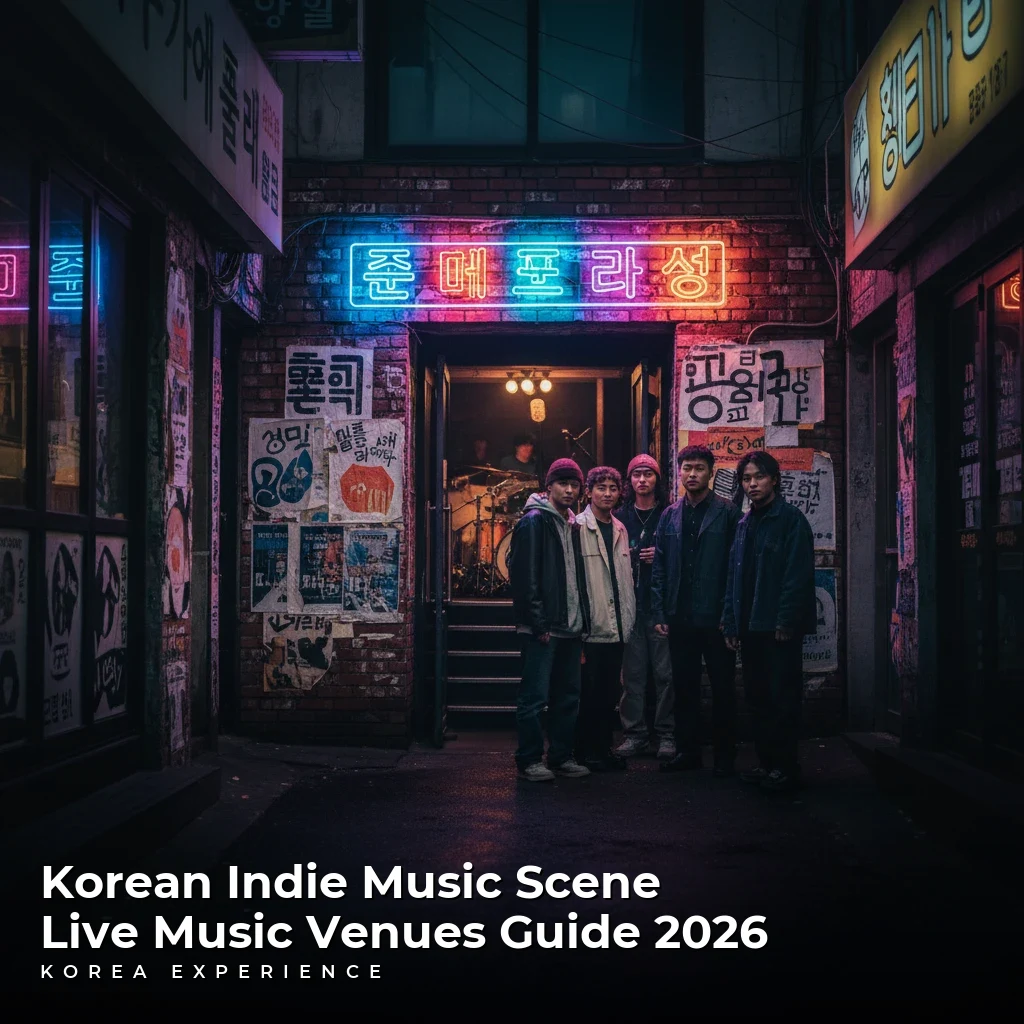
While K-Pop fills stadiums globally, the beating heart of Korea's musical creativity thrives in the basement clubs and intimate halls of Seoul. The Korean indie music scene is a visceral, electric experience that offers travelers a side of the country rarely seen on television. If you want to trade synchronized choreography for raw guitar riffs, experimental jazz, and shoegaze dissonance, you must head to the Hongdae and Hapjeong areas of Mapo-gu.
This guide provides an exhaustive look at the top live music venues in 2026, encompassing everything from legendary rock halls to hidden rooftop acoustic lounges. We break down the costs, the culture, and the logistics to ensure your night out is seamless.
For more details, check out our guide on K indie and underground music best live venues in Hongdae.
Key Takeaways
- 1Hongdae and Hapjeong in Mapo-gu host over 80% of Seoul's indie venues
- 2Average entry fees range from ₩25,000 to ₩55,000 per show
- 3Most shows on weekends start between 6:00 PM and 7:00 PM strictly
The Geography of Sound: Mapo-gu's Musical Ecosystem
To understand the Korean indie music scene, you must first understand its geography. The scene is hyper-concentrated. Approximately 80% of all active live clubs in Seoul are located within the Mapo District (Mapo-gu), specifically clustered around three subway stations: Hongik University (Hongdae), Hapjeong, and Sangsu.
For more details, check out our guide on Korean Traditional Music Gugak Performance Venues Guide.
This concentration is a logistical blessing for travelers. The distance between the furthest venues in this cluster is rarely more than 1.5 kilometers, or a 20-minute walk. You can easily catch an early acoustic set in Sangsu at 5:00 PM and make it to a punk rock show in Hongdae by 7:30 PM without needing a taxi.
Related reading: Best K-Pop concert venues in Seoul ultimate guide.
📊 Mapo-gu Music Density
The area has evolved significantly over the last decade. While the immediate vicinity of Hongik University Station (Exit 9) has become commercialized with busking zones and fashion retail, the "authentic" live club scene has migrated slightly south towards Hapjeong and Sangsu Stations.
Related reading: Ultimate Guide to K-Pop Music Show Recordings in Seoul.
Don't get distracted by the street buskers near Hongik Univ. Exit 9. While fun, they are mostly cover performers. The real original music happens in the basement clubs near Hapjeong Station Exit 5 and Sangsu Station Exit 1. That is where the history is being written.
The Heavyweights: Legendary Rock & Alternative Venues
These are the pillars of the Korean indie music scene. These venues have high production values, professional lighting, and sound systems capable of handling everything from delicate post-rock to thundering heavy metal.
Rolling Hall
Established in 1995, Rolling Hall is the grand patriarch of the Hongdae music scene. It is a standing-only venue that has survived gentrification and changing trends. The venue is spacious, accommodating up to 500 people, and boasts a high ceiling that allows for excellent acoustics.
Rolling Hall(롤링홀)
Rolling Hall hosts a mix of established indie rock bands (like Nell or YB) and rising stars. Because of its size, tickets here often sell out online before the show date. The average ticket price in 2026 sits around ₩55,000 for established acts, while multi-band lineup shows might cost around ₩35,000.
Prism Hall
Located near Hapjeong Station, Prism Hall is renowned among musicians for its impeccable sound engineering. It is slightly smaller than Rolling Hall, with a capacity of roughly 250 to 300 people, creating a more intense atmosphere. The venue frequently hosts "label concerts" where multiple bands from a specific indie label perform back-to-back.
One distinctive feature is the bar layout. Unlike many cramped basements, Prism Hall has a dedicated bar area at the back that doesn't obstruct the view. A bottle of domestic beer here costs ₩7,000, while cocktails range from 10,000 to ₩12,000.
Standing Zones
At venues like Prism Hall and Rolling Hall, your ticket often includes a "queue number" (entry number). You must line up outside 30 minutes before doors open in numerical order. If you arrive late, you lose your spot and enter last.
KT&G Sangsang Madang Live Hall
This is more than a venue; it is a cultural landmark. The Sangsang Madang building is unmistakable with its brutalist concrete butterfly architecture. The live hall is located in the basement (B2), while the upper floors house an art cinema, design shop, and gallery.
The capacity is approximately 400 standing. This venue is funded by a corporate foundation, meaning the equipment is state-of-the-art. Shows here are strictly punctual. If a set is scheduled for 120 minutes, it will likely run exactly that length. It is located 650 meters from Hapjeong Station Exit 3.
📋 Venue Comparison: The Big Three
The Soul of Seoul: Jazz and Acoustic Venues
If you prefer to sit with a glass of whiskey while listening to complex chord progressions, the jazz scene in Seoul is world-class. These venues operate differently than the rock clubs; they usually require a cover charge plus a mandatory drink order.
Club Evans
Club Evans has been the cornerstone of Seoul's jazz scene for over two decades. Located on the second floor rather than a basement, it offers a warm, dark atmosphere. The focus here is strictly on the music. Talking loudly during a set is frowned upon.
Club Evans(클럽 에반스)
Shows typically run from 9:00 PM to 11:00 PM. The cover charge is generally ₩15,000 to ₩20,000, and drinks start at ₩8,000 for beer and ₩12,000 for cocktails. Their "Super Jam Days" on Mondays and Tuesdays are legendary, where professional musicians from different bands improvise together.
Veloso (Hongdae & Mangwon Branches)
Veloso is synonymous with high-fidelity acoustic sound. They have two locations, but the Hongdae branch is the primary spot for travelers. It caters to the "modern folk" and soft rock genre. The venue is seated, and the atmosphere is concert-hall quiet.
This is the place to see acts that focus on lyrical depth and intricate instrumentation. Ticket prices are generally higher here, averaging ₩44,000 to ₩66,000 depending on the artist, as the capacity is limited to about 100 seated guests to ensure intimacy.
Jazz vs. Rock Venue Etiquette
| Feature | Jazz Clubs (Evans) | Rock Clubs (Rolling Hall) |
|---|---|---|
| Entry Method | First come, first seated | Ticket number queue |
| Drink Policy | Mandatory 1 drink order | Optional bar purchase |
| Atmosphere | Quiet, seated, attentive | Standing, moshing, chanting |
The Underground: Experimental and Hidden Gems
For those seeking the avant-garde, the noisy, and the truly independent, you must dig deeper. These venues are often smaller, cheaper, and harder to find, but they offer the most authentic connection to the current youth culture.
Senggi Studio
Located on the top floor of a nondescript building near Hongdae, Senggi Studio is a favorite among the art crowd. It features a stunning rooftop view of the city. The venue focuses on electronic, ambient, and experimental rock.
The capacity is small—perhaps 80 people packed tight. However, the vibe is unmatched. Entry is usually ₩20,000 to ₩30,000 including a free drink coupon (one free drink). It is a 7-minute walk from Hongik University Station Exit 6 (the Gyeongui-Jungang Line side).
Strange Fruit
Strange Fruit is a cultural institution for the expat and local underground community. It is a tiny bar that hosts everything from shoegaze to noise rock and solo acoustic acts. The "stage" is barely elevated, putting you face-to-face with the performers.
There is often no set cover charge; instead, they pass a "donation jar" or charge a small fee of ₩10,000 to ₩15,000. Drinks are incredibly affordable for the area, with Red Rock beer on tap for ₩6,000. It is a place to meet people, as the tight quarters force social interaction.
Cash is Essential
While major venues like Rolling Hall accept international credit cards, smaller underground spots like Strange Fruit or merchandise tables often require cash or domestic bank transfers. Always carry at least ₩50,000 in cash.
Ticketing: How to Get In
Navigating the Korean ticketing system can be the most challenging part for foreigners due to identity verification requirements on local apps. However, the indie scene is becoming more accessible.
📖 How to Buy Indie Concert Tickets
Step 1: Identify the Show
Check Instagram accounts like @gigguide.kr or the specific venue's Instagram. This is where 99% of schedules are posted.
Step 2: Booking Online (Global Sites)
Check Melon Ticket Global or Interpark Global. These sites accept foreign credit cards and do not require Korean phone verification.
Step 3: Direct Booking (DM)
For smaller venues (Senggi, Strange Fruit), you may need to DM the artist or venue to reserve a spot, then pay cash at the door.
Step 4: Door Sales (Hyeonmae)
Most indie shows hold 10-20% of tickets for door sales. Arrive 1 hour before doors open.
The "Live Club Day" Phenomenon
Once a month (usually the last Friday), the "Live Club Day" event allows access to multiple venues with a single wristband. While the format changes yearly, in 2026, the pass typically costs ₩35,000 early bird or ₩45,000 at the door. It is the most cost-effective way to sample 5+ bands in one night.
Budgeting for Your Night Out
Seoul can be affordable or expensive depending on your choices. A night out enjoying live music generally falls into the "mid-range" of travel expenses.
💵 Cost Scenarios per Person
1 major concert ticket (₩66k), BBQ dinner (₩30k), 3 cocktails at a jazz bar (₩40k), taxi home (₩15k).
1 small venue ticket (₩20k), 2 convenience store beers (₩5k), street food dinner (₩10k), subway home (₩1.5k), merch sticker (₩5k).
Recommended Itinerary: The Perfect Saturday in Mapo-gu
To truly experience the culture, you shouldn't just show up for the concert. You should make a day of it. Here is a timeline optimized for geography and venue schedules.
Saturday Indie Journey
Record Shopping
Visit 'Gimbab Records' near Hongdae to browse rare vinyl and local indie releases.
Early Dinner
Eat at a K-BBQ or Dakgalbi spot near Sangsu Station. Venues don't serve food.
The Main Event
Head to Rolling Hall or Prism Hall. Show starts at 19:00. Arrive early for queueing.
The After-Party
Move to a Jazz Bar (Evans) or a vinyl pub (Gopchang Jeongol) to discuss the show.
Last Train / Taxi
Subways close around midnight. Taxis are hard to catch in Hongdae at this time; use Kakao T app.
Pros and Cons of the Seoul Indie Scene
The scene is vibrant, but it has its quirks. Being prepared for the "Cons" will ensure they don't ruin your night.
Seoul Live Music Scene Analysis
- ✓Incredibly safe environment, even late at night
- ✓High technical standard of sound and lighting
- ✓Venues are clustered close together
- ✓Passionate, respectful crowds
- ✗Shows start and end relatively early (rarely past 11 PM)
- ✗Ticketing apps can be difficult for foreigners
- ✗Strict queueing systems can be confusing
- ✗Lack of public transport after midnight
Frequently Asked Questions
❓ Korean Indie Music FAQ
Have more questions?Contact us →
Exploring the Korean indie music scene offers a texture and depth to your travel experience that K-Pop tourism cannot match. It is gritty, emotional, and undeniably authentic. Whether you are banging your head at Rolling Hall or swaying to a saxophone at Club Evans, you are witnessing the raw creative spirit of modern Korea. Grab a ticket, stand in the queue, and let the music speak for itself.
About the Author
Korea Experience Team
Written by the Korea Experience editorial team - experts in Korean medical tourism, travel, and culture with years of research and firsthand experience.
Explore more in K-Culture
K-Pop, K-Drama, traditional arts, and modern culture — dive deep into the cultural phenomena that have captivated the world.
Browse All K-Culture ArticlesContinue Reading
Explore more articles you might find interesting
Explore Seoul's 2026 indie scene from Hongdae to Mullae where entry costs just 20,000 KRW and global apps unlock tickets.
Explore the epicenter of Seoul's art world. Our 2026 guide covers Hannam-dong's top galleries, from Leeum to Pace, with walking routes and dining tips.
Discover the top live music venues in Hongdae for K-Indie and underground rock. A complete guide to tickets, lineups, and vibes for travelers in 2026.
Explore the ultimate guide to K-Drama filming locations and cafe culture in Seoul. Discover iconic spots, prices, and travel tips for fans.
Learn how to attend K Pop music shows like M Countdown and Music Bank in 2026. Includes booking tips, venue maps, and insider advice.
Discover Seoul's best kept secrets for 2026. From Sindang-dong cocktail bars to Mullae art alleys, explore the city like a local. Prices and maps included.