Korean language learning guide for beginners master hangul fast
Master the basics of the Korean language with our comprehensive guide. From reading Hangul in 2 hours to essential survival phrases for your trip.
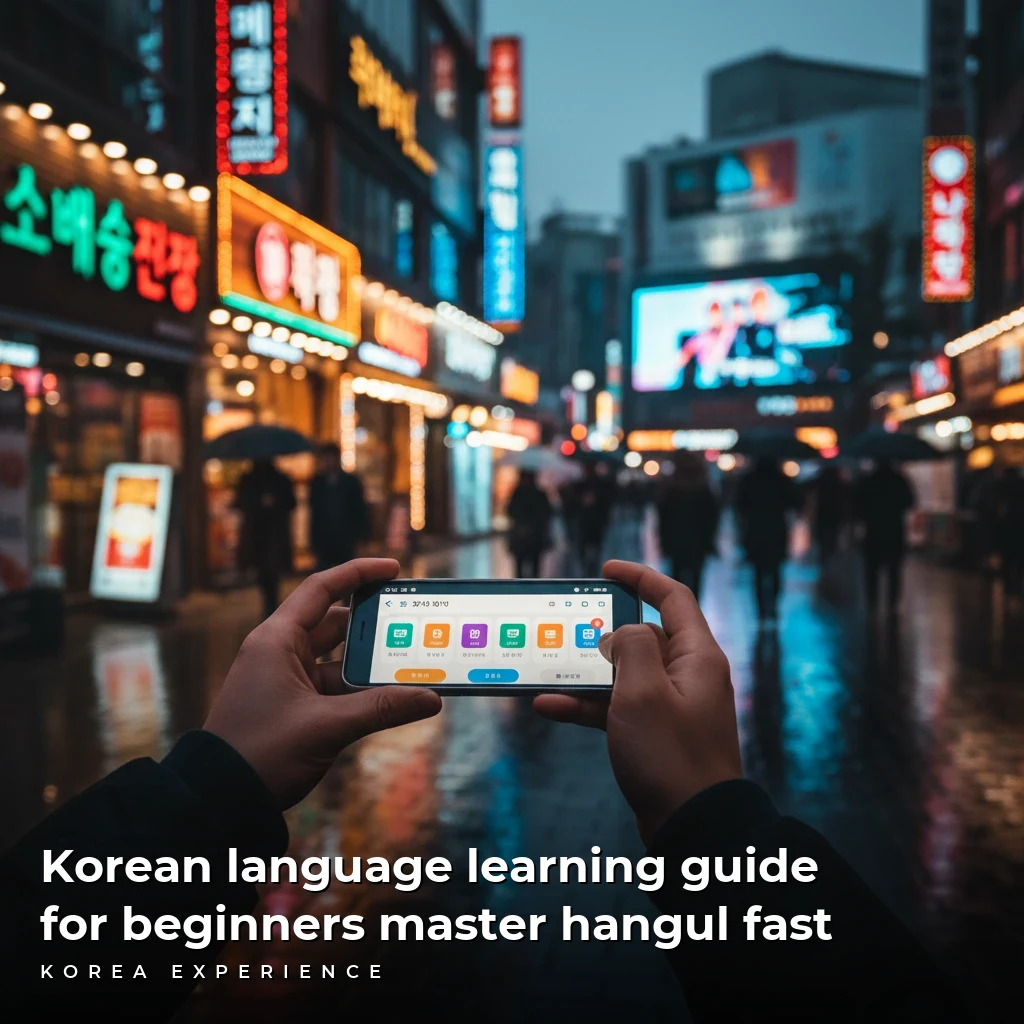
Learning a new language can be daunting, but Korean offers a unique advantage: its writing system, Hangul, was scientifically designed to be easy to learn. Unlike Chinese characters or the multiple scripts of Japanese, Hangul can often be deciphered by a complete beginner in a single afternoon. Whether you are planning a 10-day trip to Seoul or a year-long working holiday, understanding the basics of the language will transform your experience from that of a passive observer to an active participant in Korean culture.
Learn more in our comprehensive guide to Calligraphy classes in Seoul mastering Hangeul art.
Related reading: Top K-Pop dance classes for beginners cover dance studios....
Related reading: Korean Calligraphy Classes Learning Hangeul Art.
You might also enjoy our article about Learning konglish common English words used differently i....
In this guide, we break down the learning process into manageable steps, focusing on high-impact phrases, essential cultural nuances, and the most effective tools available in 2026.
Key Takeaways
- 1You can learn to read the Korean alphabet (Hangul) in just 60 to 90 minutes
- 2University language programs cost approx $1,300 USD per 10-week term
- 3Papago is superior to Google Translate for local Korean context and honorifics
Why Learn Korean? The Foundation of Hangul
Created in 1443 by King Sejong the Great, Hangul is often cited by linguists as the most logical writing system in the world. It consists of 24 basic letters: 14 consonants and 10 vowels. The shapes of the consonants are actually modeled after the shape of the mouth and tongue when making the sound.
📊 Hangul Efficiency
Many travelers make the mistake of relying solely on Romanization (writing Korean sounds with English letters). This is a critical error. Romanization is often inconsistent and hinders correct pronunciation. For example, the Hyundai car brand is pronounced "Hyeondae" in Korean, a sound difficult to replicate without knowing the vowel structure.
Avoid Romanization
Stop using Romanized English immediately after learning the alphabet. It distorts pronunciation. For instance, the romanization "G" can sound like "K" depending on its position in a block. Reading Hangul directly is the only way to achieve accurate pronunciation.
The Structure of a Korean Block
Korean is written in syllable blocks rather than linear strings of letters. Each block represents one syllable and consists of at least one consonant and one vowel.
- Consonant + Vowel (e.g., Ga)
- Consonant + Vowel + Consonant (e.g., Gan)
Once you understand this stacking logic, you can read signs, menus, and subway maps. The Seoul Metro system spans over 350 kilometers with hundreds of stations; being able to read the station names in Hangul allows you to navigate faster than waiting for the English scrolling text on the digital displays.
Essential Survival Phrases and Honorifics
Korean culture is hierarchical, and the language reflects this through "honorifics." There are seven levels of speech, but as a traveler or beginner, you only need to focus on the polite form (known as Haeyo-che), which usually ends in "yo."
📋 Speech Level Basics
The Magic Words
Here are the absolute essentials. Memorizing these will smooth over 90% of your daily interactions.
- Annyeonghaseyo (Hello): Used morning, noon, and night. It literally means "Are you at peace?"
- Gamsahamnida (Thank you): The standard, formal way to say thanks.
- Juseyo (Please give me): This is your survival tool for ordering. "Coffee juseyo" works perfectly.
- Eolmayeyo? (How much is it?): Essential for markets like Gwangjang Market or Namdaemun.
Don't worry about being perfect. Koreans appreciate the effort. If you mix up "hello" and "thank you," no one will be offended. However, using 'Banmal' (casual speech) with strangers is considered rude. Always stick to sentences ending in 'Yo' to be safe.
The Two Number Systems
One of the biggest hurdles for beginners is the dual number system. Korea uses both Sino-Korean (based on Chinese) and Native Korean numbers.
- Sino-Korean (Il, I, Sam, Sa...): Used for money, dates, minutes, and addresses.
- Native Korean (Hana, Dul, Set, Net...): Used for counting items (1 cup, 2 people) and age.
Practical Example: If you buy a coffee at a cafe (average price ₩4,500) at 2:30 PM:
- Price (4,500): Sino-Korean (Sa-cheon O-baek)
- Time (2:30): Native for Hour (Dul-si), Sino for Minute (Sam-sip-bun).
Top Learning Resources and Apps in 2026
The landscape of language learning has shifted significantly with AI. While Duolingo remains popular for gamification, it is often criticized for unnatural sentences. For serious travel preparation, other tools are superior.
Language App Comparison
| Feature | Duolingo | Talk To Me In Korean | Papago |
|---|---|---|---|
| Natural Speech | ❌ | ✅ | ✅ |
| Grammar Logic | ❌ | ✅ | ❌ |
| Travel Utility | ❌ | ❌ | ✅ |
| Cost | Freemium | $12/mo | Free |
Naver Papago vs. Google Translate
In Korea, Naver is the dominant search engine. Their translation app, Papago, is essential. It utilizes Neural Machine Translation specifically optimized for the nuances between Korean, English, and Japanese. Papago is approximately 25-30% more accurate than Google Translate when dealing with Korean honorifics and local slang.
Download Offline Maps
Before arriving at Incheon Airport, download the Korean language pack on Papago. This ensures you can translate menus and signs even if your SIM card data hasn't activated yet.
Structured Learning: Universities vs. Hagwons
If you are planning to stay in Korea for more than a month, you might consider formal education. Seoul is the hub for language learning, with options ranging from intense university courses to flexible private academies (Hagwons).
University Language Institutes (KLI)
The "SKY" universities (Seoul National, Korea, Yonsei) plus Sogang and Ewha offer the most prestigious programs. These are typically 10-week terms meeting 4 hours a day, 5 days a week.
- Yonsei University: Focuses heavily on grammar and reading structure.
- Sogang University: Famous for its speaking-focused curriculum (approx 70% speaking).
- Ewha Womans University: Known for a balanced approach and welcoming environment (co-ed for language program).
Sogang University Korean Language Education Center(서강대학교 한국어교육원)
Cost Analysis
Budgeting is crucial. Living in Seoul can be expensive, with rent for a "One-room" (studio) near universities averaging 600,000 to ₩900,000 ($450-$670 USD) per month, plus a significant deposit (key money) often starting at ₩5 million.
💵 Learning Method Cost Comparison
Intensive, visa-sponsoring, academic credit
Flexible schedule, practical focus, no visa
Practical Application: Ordering Food & Drinks
The "Kiosk" revolution has taken over Korea. Roughly 80% of fast-food chains and cafes in Seoul now use digital kiosks for ordering. While many have an English button, smaller local shops may not.
📖 How to Order Coffee Like a Local
Step 1: Greeting
Enter and say 'Annyeonghaseyo'. Approach the counter or kiosk.
Step 2: Ordering
Say the menu item followed by quantity. 'Ice Americano, han-jan (1 cup) juseyo.'
Step 3: Payment
Insert your card. Most places are cashless. Wait for the buzz/vibration bell.
Step 4: Pickup
When your bell rings, return the buzzer and take your drink. Say 'Gamsahamnida'.
Learning Korean for Travel
- ✓Deeper cultural connection
- ✓Ability to order specific food/dietary needs
- ✓Navigation becomes significantly easier
- ✗Takes time to master honorifics
- ✗Local dialects (Satoori) can be confusing
- ✗Fast-paced native speech is hard to catch
Study Roadmap: From Zero to Conversational
How long does it actually take? According to the Foreign Service Institute (FSI), Korean is a Category V language, meaning it is exceptionally difficult for English speakers, requiring roughly 2,200 class hours for fluency. However, for travel proficiency, the timeline is much shorter.
3-Month Beginner Roadmap
Hangul Mastery
Memorize the alphabet and sound rules. Do not skip this.
Survival Grammar
Learn present/past tense and the polite 'Yo' ending.
Vocabulary Building
Focus on food, numbers, and transport vocab (aim for 500 words).
Listening Practice
Watch K-dramas with Korean subtitles to match sound to text.
The K-Drama Method
Active listening is key. Try watching a show you've already seen, but switch the subtitles to Korean. Since you know the plot, your brain will focus on decoding the text and matching it to the audio.
Navigating Dialects and English Usage
While standard Korean (Seoul dialect) is understood everywhere, traveling outside the capital introduces you to Satoori (dialects). The most distinct is the Gyeongsang dialect found in Busan, South Korea's second-largest city, located about 325km southeast of Seoul (approx 2.5 hours by KTX train).
Busan dialect is more tonal and can sound aggressive to the untrained ear, but it is generally warm and friendly. Don't be discouraged if you can't understand a taxi driver in Busan despite studying standard Korean; even Seoul natives sometimes struggle!
📊 English Proficiency in Korea
In major tourist hubs like Myeongdong, Hongdae, and Gangnam, English is widely spoken. However, once you venture into local "Matjibs" (delicious restaurants) or take a taxi, Korean proficiency becomes a valuable asset. The base fare for a taxi in Seoul is ₩4,800 (as of 2026), and many older drivers do not speak English. Having your destination written in Hangul (large font) on your phone is a pro tip that saves time and confusion.
Conclusion
Learning Korean is a journey that pays dividends immediately. The moment you can read "Bibimbap" on a menu or tell a taxi driver "Here is fine," you stop being a tourist and start becoming a traveler. Start with Hangul today—it will be the best 90-minute investment you make for your trip.
❓ Frequently Asked Questions
Have more questions?Contact us →
About the Author
Korea Experience Team
Written by the Korea Experience editorial team - experts in Korean medical tourism, travel, and culture with years of research and firsthand experience.
Explore more in K-Culture
K-Pop, K-Drama, traditional arts, and modern culture — dive deep into the cultural phenomena that have captivated the world.
Browse All K-Culture ArticlesContinue Reading
Explore more articles you might find interesting
Master essential Konglish terms for your 2026 Korea trip. From ordering coffee to taxi directions, decode common English words used differently in Seoul.
Master the fast-paced Pali-Pali culture in South Korea's workplaces. Essential guide for expats & international professionals in 2026.
Don't let the rain ruin your trip. Here is the ultimate guide to Korea's 2026 monsoon season, featuring 15+ indoor activities and essential survival tips.

Master Korean cooking with our 2026 guide to essential pantry items. Discover the must-have sauces, spices, and ingredients for authentic flavors.
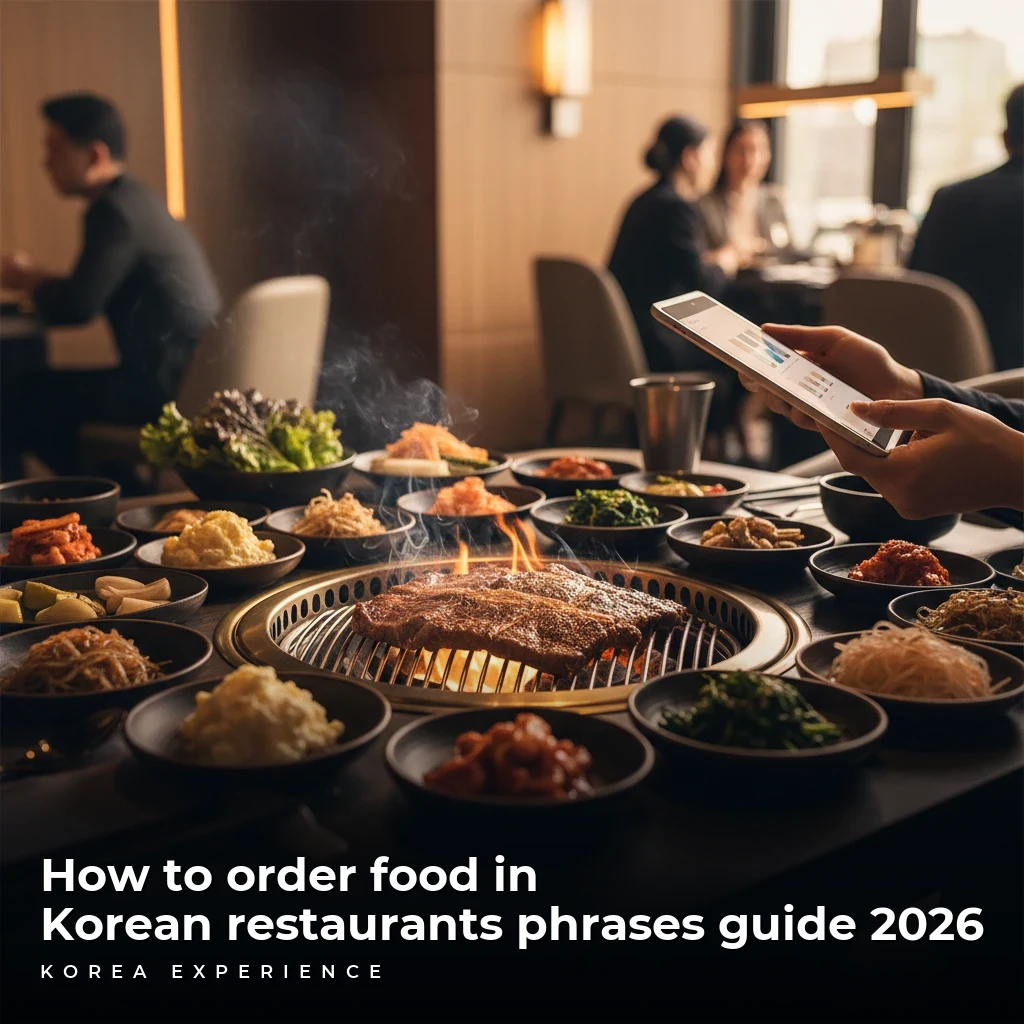
Master the art of dining in Seoul with our essential 2026 guide to Korean restaurant phrases, etiquette, and digital ordering systems.

Master Seoul in 24 hours with this expert guide covering essential sights, food, and nightlife. Unlock the secrets to a dynamic day and night adventure.