Pregnancy and childbirth in Korea a guide for foreign mothers 2026
Everything expats need to know about having a baby in Korea in 2026, from ₩1M government vouchers to booking luxury postpartum care centers.
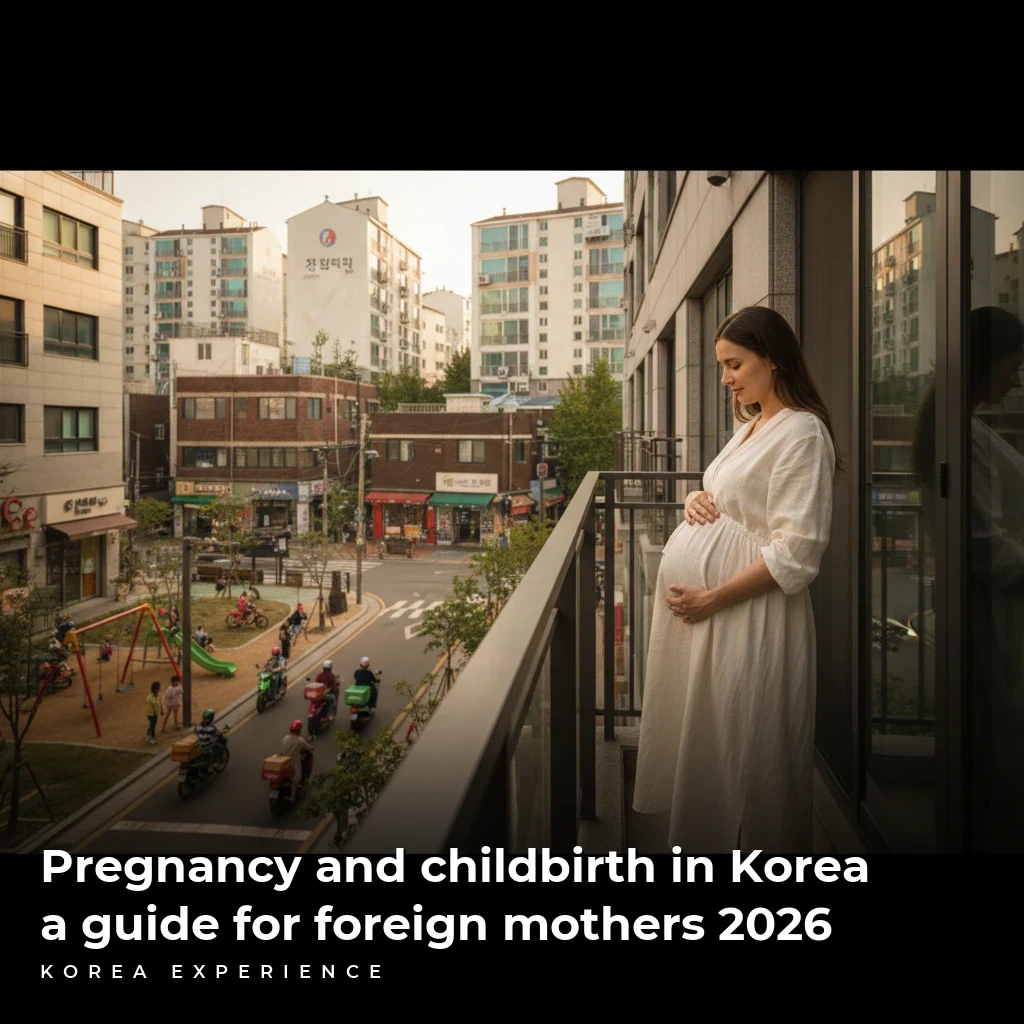
Navigating pregnancy and childbirth in a foreign country can be equal parts exhilarating and terrifying. In South Korea, however, the experience is uniquely supported by a healthcare system that is technologically advanced, efficient, and increasingly accessible to international residents. With the country’s birth rate hovering at record lows in 2026, the government has rolled out the red carpet for expectant mothers, including foreign residents with proper visa status.
If you are planning to grow your family in the Land of the Morning Calm, you are in for a medical experience that often surpasses what is available in the West, particularly regarding ultrasound frequency and postpartum care. However, the administrative hurdles and cultural nuances require preparation.
For more details, check out our guide on Buying property in Korea foreign ownership rules guide.
This comprehensive guide covers everything from the moment you see a positive test result to registering your newborn, tailored specifically for the 2026 landscape.
You might also enjoy our article about Kiosk survival guide.
Key Takeaways
- 1Government vouchers now provide ₩1,000,000 for single pregnancies and ₩1,400,000 for twins.
- 2Postpartum care centers (Sanhujoriwon) must be booked by week 12 due to high demand.
- 3National Health Insurance covers approx 80-90% of delivery costs for registered residents.
1. Confirming Your Pregnancy and Initial Steps
The journey begins with confirmation. Unlike in many Western countries where you might wait until 8 or 10 weeks for a first appointment, in Korea, you can see a doctor immediately.
Learn more in our comprehensive guide to How to register your foreign address change online and of....
Most women visit a specialized "Women's Hospital" or a local OBGYN clinic rather than a general hospital for the initial check. These clinics are ubiquitous; in Seoul, you are rarely more than a 15-minute taxi ride (approx. 4km) from a specialist.
Learn more in our comprehensive guide to Korean labor laws your rights as a foreign employee.
Upon your first visit, usually around 5 to 6 weeks, the doctor will perform a transvaginal ultrasound to confirm the fetal heartbeat. If confirmed, you will receive a "Pregnancy Confirmation Certificate." This piece of paper is your golden ticket to government benefits.
Pro Tip
Ask for the "Pregnancy Confirmation Certificate" immediately. You cannot apply for the National Happiness Card (voucher) or pregnancy badge without it.
The Frequency of Care
One distinct feature of Korean prenatal care is the frequency of ultrasounds. Expect to see your baby every 4 weeks until 28 weeks, then every 2 weeks until 36 weeks, and weekly thereafter. A standard checkup without insurance costs roughly 80,000 to ₩120,000, but with National Health Insurance (NHI), your out-of-pocket expense drops to approximately 10,000 to ₩25,000.
2. The Pregnancy Voucher (Kookmin Haengbok Card)
South Korea offers the "National Happiness Card" (Kookmin Haengbok Card), a government voucher system that covers medical expenses. In 2026, the benefits have increased to combat the low birth rate.
As a foreign resident, you are eligible if you are covered by National Health Insurance. You can apply at major banks (Woori, IBK, Kookmin) or directly at the hospital if they have a dedicated desk.
📊 2026 Voucher Amounts
The card works like a debit card. After your appointment, simply hand it to the receptionist. It covers ultrasounds, blood tests, and even some pharmacy prescriptions related to pregnancy. Most mothers deplete this amount by week 30, so budget accordingly for the final stretch.
3. Choosing Your Care Provider
In Korea, you generally have three options for delivery. Your choice depends on your medical risk level, budget, and desire for English-speaking services.
Option A: Specialized Women's Hospitals
These are the most popular choice. They are large clinics dedicated solely to obstetrics and gynecology. They often have 10+ doctors, short wait times (averaging 20 minutes), and high-end equipment.
Option B: University Hospitals (Tertiary Care)
Recommended for high-risk pregnancies (e.g., pre-eclampsia, placenta previa). They have full NICU facilities. However, wait times can exceed 60 minutes, and the "bedside manner" is often more clinical and rushed.
Option C: Natural Birthing Centers
Rare but available. These focus on drug-free births with midwives. They are significantly more expensive, often costing ₩3,000,000 or more for the delivery package alone, as insurance covers less of the "luxury" aspects of these centers.
Hospital Type Comparison
| Feature | Women's Hospital | University Hospital | Birthing Center |
|---|---|---|---|
| English Support | Moderate | High | High |
| Avg Wait Time | 20 min | 60+ min | 10 min |
| Cost (w/ NHI) | $ | $$ | $$$ |
| NICU Access | Limited | On-site | Transfer required |
If you choose a University Hospital, be aware that you usually cannot choose a specific doctor for delivery. You get whoever is on the duty roster that night. At specialized Women's Hospitals, your primary doctor will often come in even at 3 AM to deliver your baby.
4. The Culture of Technology: 3D Scans and Apps
Korea is a tech-forward society, and pregnancy is no exception. Around week 26-28, you will be offered a 4D ultrasound (where you can see the baby's face clearly). This usually costs an extra 50,000 to ₩80,000 and is rarely covered by insurance as it is deemed "elective," though many mothers use their voucher balance for it.
The "Sebebe" and "MommyTalk" Apps
You won't get printed thermal photos often. Instead, hospitals link to apps like Sebebe or MommyTalk. Immediately after your exam, the ultrasound video is uploaded to the app in High Definition (1080p). You can download, edit, and share these videos with family back home instantly. The download speed is typically under 30 seconds on Korea's 5G network.
The Pink Badge
Visit your local Public Health Center (Bojeonso) to get the "Pink Badge." This keychain lights up a signal on the subway to alert seated passengers that a pregnant woman is nearby. It also grants you free parking in public lots (often 50% off or first 2 hours free).
5. Delivery Day: Procedures and Costs
When labor begins, the efficiency of the Korean medical system shines. However, pain management philosophies may differ from the West.
Pain Management
Epidurals (known as "Mutong Jusa" or "painless injection") are widely available but are administered differently. Doctors often wait until you are 4cm to 5cm dilated. Furthermore, they may turn off the epidural during the pushing phase to ensure you can feel the contractions, a practice that can shock foreign mothers not expecting it.
C-Section Rates
Korea has a high C-section rate, hovering around 50-55% in 2026. This is partly due to the older average age of mothers (now averaging 33.5 years old) and a cultural preference for scheduling births. If you desire a natural birth, you must advocate for yourself strongly or choose a doctor known for supporting natural delivery.
💵 Delivery Costs (with NHI)
2 nights hospital stay, meals included
5-6 nights hospital stay, surgery fees
Note: Without National Health Insurance, multiply these costs by approximately 10. A C-section without insurance can easily cost ₩10,000,000.
6. Postpartum Care: The Sanhujoriwon Experience
This is the crown jewel of giving birth in Korea. A Sanhujoriwon is a specialized postpartum care center where mothers stay for 2 weeks after leaving the hospital. It is a hotel-hospital hybrid designed to help the mother recover while nurses care for the newborn 24/7.
In 2026, approximately 80% of Korean mothers utilize these centers.
What to Expect
- Meals: Three meals and three snacks a day, focusing on seaweed soup (Miyeok-guk) to aid recovery.
- Massages: Daily breast massages for lactation and full-body massages (often an extra cost).
- Education: Classes on bathing, swaddling, and baby CPR.
- Security: Strict visitation rules. Usually, only the husband is allowed, and even he might face restrictions during flu season.
The Cost of Luxury
Prices have risen sharply. In Seoul's Gangnam district, the average cost for a 2-week stay is now ₩5,500,000. In suburban areas like Gyeonggi-do, it averages ₩3,500,000.
Heritage Postpartum Center(헤리티지 산후조리원)
Sanhujoriwon: Is it worth it?
- ✓24/7 professional baby care
- ✓Rapid physical recovery for mom
- ✓Community with other moms
- ✗Expensive (Avg $3,500 USD)
- ✗Strict rules (can feel confining)
- ✗husband may be only allowed guest
7. Administrative Aftermath: Registration and Visas
Once the baby is born, the clock starts ticking for administrative tasks. This is where many foreigners face penalties if they delay.
Post-Birth Admin Timeline
Hospital Certificate
Get the Birth Certificate from the hospital (get 3-4 copies).
Embassy Report
Report birth to your home country's embassy to get a passport.
Immigration
DEADLINE: You must register the baby with Korean Immigration to get an ARC.
The 90-Day Rule
You have exactly 90 days from the date of birth to register your child with the Korean Immigration Office. Failure to do so results in a fine starting at ₩200,000 and increasing weekly.
To register the baby, you need:
- Baby's Passport (this is why you must rush to your embassy).
- Hospital Birth Certificate.
- Parents' Passports and ARCs.
- Passport photo of the baby (studios charge approx ₩25,000 for this).
- Application fee (approx ₩30,000).
Warning: Passport Delays
If your embassy takes longer than 90 days to issue a passport, you must visit Korean Immigration before the 90-day mark with proof that you applied for the passport. They will grant a temporary extension. Do not just wait!
8. Government Subsidies for Foreigners
In 2026, some local governments have expanded birth subsidies to include permanent residents (F-5) and marriage migrants (F-6).
- First Meeting Voucher: A lump sum of ₩2,000,000 provided to the parents upon birth registration. (Eligibility varies strictly by visa type—check with your local Gu-office).
- Electricity Discount: Households with a child under 3 years receive a 30% discount on electricity bills (capped at ₩16,000 per month). Call KEPCO (Dial 123) to apply.
- Parental Leave: Employees with more than 6 months of tenure are entitled to parental leave. The government pays a portion of the salary, capped at ₩1,500,000 per month.
9. Preparing for the Unexpected
While Korea is safe, language barriers in emergencies are real.
- Emergency Number: Dial 119 for medical emergencies. They have interpretation services available 24/7.
- Blood Types: If you have Rh-negative blood (A-, O-, etc.), be aware that this is rare in Korea (< 0.3% of the population). Join the "Rh- Negative in Korea" Facebook group early in your pregnancy to connect with potential donors in case of emergency hemorrhage, as hospitals may not have large stocks immediately available.
📖 How to Apply for Electricity Discount
Step 1: Call KEPCO
Dial 123 from your phone. Press for English service (usually option 7 or 9).
Step 2: Verify Birth
They may ask for the alien registration number of the child to verify age.
Step 3: Confirmation
The discount applies starting the following billing cycle.
Conclusion
Giving birth in Korea in 2026 is a journey defined by high-tech medical care and luxurious postpartum recovery, balanced against bureaucratic navigation. While the language barrier remains the highest hurdle, the quality of care—from the 4D ultrasounds to the nutritious meals at the Sanhujoriwon—often leaves foreign mothers feeling incredibly well-cared for.
By preparing your documents early, budgeting for the "Queen's treatment" at a care center, and understanding the vaccination schedule, you can focus on what matters most: welcoming your new family member.
❓ Frequently Asked Questions
Have more questions?Contact us →
About the Author
Korea Experience Team
Written by the Korea Experience editorial team - experts in Korean medical tourism, travel, and culture with years of research and firsthand experience.
Explore more in Living in Korea
Everything expats and long-term visitors need to know — from visa requirements and housing to banking, healthcare, and daily life tips.
Browse All Living in Korea ArticlesContinue Reading
Explore more articles you might find interesting

So, you are in Seoul, your head is pounding from that 14-hour flight, or maybe you went a little too hard on the spicy tteokbokki—don't worry, I have got you.

Complete guide to pet ownership in Korea covering English-speaking vets, luxury pet hotels, costs, and regulations for expats living in Seoul.
Everything you need to know about the South Korea Working Holiday Visa. Eligibility, application steps, costs, and finding a job in Seoul.

Planning a trip to the edge of North Korea this year? Here is everything you need to know about the current JSA closure, the brand-new 2026 transit rules.
Everything you need to know about medical tourism insurance for Korea in 2026, covering complications, costs, provider comparisons, and claim procedures.

Everything you need to know about getting glass skin in Korea, from Rejuran Healer costs to the best clinics in Gangnam for 2026.