Why You Should Never Use the 'Prayer Pose' in South Korea
Put your hands down! While it looks polite elsewhere, using the 'prayer pose' in Korea is actually a major cultural blunder that makes you look like you're...
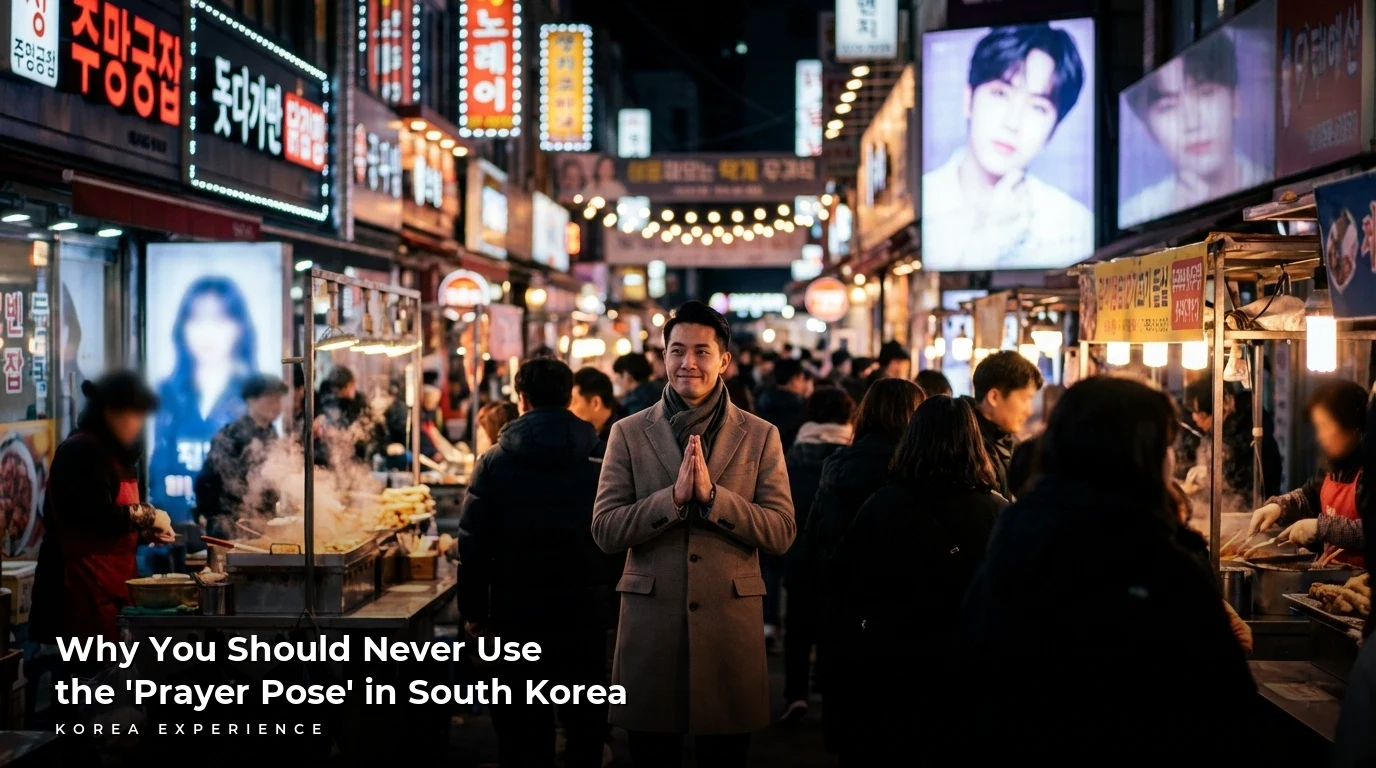
So, you're standing in the middle of Myeong-dong, you've just bought a legendary street-food egg bread, and you want to thank the vendor. You've seen it in movies—maybe a quick bow with your palms pressed together at your chest, right? Stop right there.
For proper greeting gestures in professional settings, see our guide to Korean business etiquette including bowing. Gestures matter in the workplace too. Read about Korean work culture for foreigners.
The short answer is: never do the prayer pose in South Korea unless you are literally inside a Buddhist temple. If you do it on the street, people aren't going to think you're being polite; they're going to think you're confused, or worse, that you're mocking them.
Key Takeaways
- 1Unless you're inside a Buddhist temple talking to a monk, pressing your palms together is not a greeting in Korea—it's a gesture used for desperate begging or religious prayer, and using it in a restaurant or shop is super awkward.
- 2Failing to 'tap off' your new 2026 Climate Card just twice will get your pass suspended for 24 hours—that's basically the cost of four iced americanos down the drain!
- 3If you want to look like you know what you're doing, stick to a simple 15-to-30-degree bow with your hands at your sides, and use the 'CatchTable Global' app to book the best spots without needing a Korean phone number.
Here is the deal: that palms-together gesture (which Buddhists call Hapjang) is a very specific religious move. In secular, everyday Korean life, it has zero place as a greeting. In fact, if you use it in a normal conversation, you're accidentally sending one of two messages: First, you might look like you're begging. Second, it gives off a "Pan-Asian" vibe that locals find kind of annoying.
📋 Korean Etiquette Basics
The Background Story—Why Is Korea Like This?
Look, I get it. You want to be respectful, and in your head, "hands together" equals "respectful Asia." But to understand why this is such a faux pas, we have to look at how Korea's social DNA was built.
Evolution of Korean Greetings
Joseon Era Etiquette
Neo-Confucianism sets the stage for the rigid bowing hierarchy we still see today.
Monarchy Ends
The 90-degree 'royal bow' officially becomes a thing of the past for everyday folks.
K-ETA Launch
South Korea starts requiring electronic travel prep, then quickly pivots to help tourists.
Climate Card Pilot
Seoul launches the first unlimited transit card for subways, buses, and bikes.
K-ETA Suspension
The government extends the visa-free entry exemption to keep the tourism boom going.
Transit Expansion
The Climate Card finally includes Incheon and major Gyeonggi areas for all-day exploring.
For over 500 years during the Joseon Dynasty, Korea was the most Neo-Confucian society on the planet. This wasn't just a religion; it was a total rulebook for how to move your body. Confucianism is all about hierarchy—who is older, who is higher-ranking, and how you show that through physical distance. The bow (Jeol) became the ultimate social currency.
But here's the kicker: Neo-Confucianism was actually pretty anti-Buddhist for a long time. They wanted to separate the secular world (where you bow to elders and the King) from the religious world. So, while monks kept the palms-together Hapjang for their prayers, the rest of society developed a bowing style that kept the hands "empty" and at the sides.
Breaking Down Your Options
So, if you're not doing the prayer hands, what ARE you actually doing? In 2026, you basically have three "gears" for politeness.
Korean Greetings Compared
| Feature | The Secular Bow (Jeol) | The Prayer Pose (Hapjang) | The Thai Wai |
|---|---|---|---|
| Hand Position | Hands at sides or low front | Palms together at heart | Palms together at chest/face |
| Where to Use It | Everywhere in Korea | Buddhist temples ONLY | Thailand and SE Asia |
| Meaning | 'Hello' / 'Thank you' | Spiritual reverence / Prayer | Universal greeting |
| Eye Contact | Look at the floor (downward) | Eyes closed or downward | Varies by status |
| 2026 Risk Level | 0% (Gold standard) | 100% (High cringe factor) | High (Confuses locals) |
| Best For | Shopkeepers, elders, peers | Monks and Buddha statues | Travelers in Bangkok |
Option A: The 15-Degree "Quick Nod" — Your everyday bread and butter. Getting off the bus? 15-degree nod. The guy at the 7-Eleven gives you your change? 15-degree nod. It's casual, fast, and says "I acknowledge you."
Option B: The 30-Degree "Standard Polite Bow" — This is the one you'll use 80% of the time as a tourist. If you're checking into your hotel, meeting a friend's parents, or thanking a waiter for a particularly good meal, go for the 30-degree.
Option C: The 45-Degree "Deep Respect" — You probably won't use this unless you've done something really wrong or you're meeting someone incredibly important (like a CEO or a grandmother on her 80th birthday).
The Standard Korean Bow vs. Prayer Pose
- ✓Gibun Preservation: When you bow correctly, you're protecting everyone's 'mood' or 'face' (Gibun). It shows you respect the local hierarchy without making things weird.
- ✓Instant Respect: Locals will actually be impressed. It signals that you didn't just watch one K-Drama; you actually did your homework on their specific culture.
- ✓Nunchi Points: Using the right greeting shows you have 'quick Nunchi'—the ability to read the room and fit in perfectly with the crowd.
- ✗Orientalist Vibes: The prayer pose makes it look like you think all Asians are the same. It's like trying to speak French to someone in Spain because it's 'all Europe.'
- ✗The 'Begging' Mistake: In a secular context, palms together often means you're begging for a huge favor or forgiveness. It makes a simple 'thank you' feel way too intense.
- ✗Religious Awkwardness: You might be mistaken for a devout Buddhist. If you're just trying to buy banana milk at GS25, that's a lot of spiritual energy for the counter.
The Complete How-To
Look, I learned this the hard way after nearly knocking heads with a sweet old lady in Insadong, so let's walk through the actual "how-to" of being a polite traveler in 2026.
📖 How to Bow Like a Local (And Avoid the Cringe)
Step 1: Fix Your Posture
Stand up straight with your feet together and your hands resting naturally at your sides or front.
Step 2: The Angle Check
Bend from your waist—not just your neck—to about 15 or 30 degrees.
Step 3: Eyes on the Prize (The Floor)
As you go down, look at the floor near the other person's feet.
Step 4: The Recovery
Rise back up smoothly and then you can say your 'Annyeonghaseyo' (Hello) or 'Gamsahabnida' (Thank you).
Trust me, I see tourists doing the 'prayer hands' every day at the palace. It doesn't make us feel respected; it just makes us feel like you've confused Korea with Thailand. If you really want to win over a local, just give a polite 30-degree bow and keep your hands down. It changes the whole vibe of the interaction!
The Stuff Nobody Tells You
Here's the thing: everyone talks about the bowing and the food, but nobody tells you what to do when the technology fails you. Because, let's be honest, it will.
The Two-Hand Rule
When you're handing over your credit card or receiving a bag at a store, always use two hands (or use your left hand to support your right wrist). It's a tiny move that scores you major points for politeness.
The Red Ink Warning
Never, ever write someone's name in red ink. In Korea, that's reserved for the deceased, so doing it to a living person is basically like wishing them bad luck—or worse.
The Subway Seat Protocol
On the subway, you'll notice it's surprisingly quiet. People don't take phone calls, and they definitely don't play music out loud. Those seats at the end of the train cars with the stickers of elderly people or pregnant women? Even if the train is packed and those seats are empty, don't sit in them. Those are culturally reserved.
Pro Tip: The Two-Handed Exchange
Whether it's a business card, a gift, or your credit card at a shop, always use both hands. It signals respect and attentiveness. This small gesture makes an outsized impression on locals.
Red Ink is for the Deceased
Never write someone's name in red ink. In Korea, red ink is traditionally used only for writing the names of the dead. Using it for a living person is considered extremely bad luck—or worse, like you're wishing them harm.
No Korean Phone/ARC? Here's What To Do
The "No-ARC" struggle is real, but in 2026, you've got workarounds. Use CatchTable Global for restaurant bookings (it lets you use your home email and foreign cards). For taxis, the 2026 version of Kakao T finally accepts non-Korean credit cards—just swipe left on the payment screen to find the option! If you're stuck with an app that needs a Korean number, grab an eSIM from Chingu Mobile at the airport—it gives you a 010 number with 90 days of validity using just your passport.
❓ Frequently Asked Questions
Have more questions?Contact us →
Your Action Plan
So, what's your game plan for your first 24 hours in Korea? Honestly, it's all about the first impressions.
When you land at Incheon, grab your Climate Card, head to the nearest GS25 for a banana milk, and practice your first "Two-Handed" payment. When the clerk gives you your change, give that 15-degree nod—hands at your sides, eyes down—and say a clear "Gamsahabnida." You'll see the difference immediately. They'll treat you like a guest, not just another face in the crowd.
The "prayer pose" is a trap. It feels like a shortcut to being polite, but it's actually a detour into a different culture entirely. By sticking to the bow, using the right apps (CatchTable Global is your best friend!), and keeping your Nunchi sharp, you're going to have an incredible trip.
Korea in 2026 is faster, brighter, and more welcoming than ever, but it still honors those deep, quiet traditions of respect. Keep your hands down, your heart open, and your socks hole-free. You've got this!
Sources
- CCorea Cultural Insights - Details on the "bird" bow mistake and prayer pose context
- 90 Day Korean Etiquette Guide - Specifics on two-handed gestures and drinking culture
- VisitKorea Official Site - Information on CatchTable Global and 2026 travel updates
- T-Money/Climate Card Official - 2026 pricing and expansion details for the Climate Card
- Klook Travel Blog - Practical guide for tourists using unlimited transit passes
About the Author
Korea Experience Team
Written by the Korea Experience editorial team - experts in Korean medical tourism, travel, and culture with years of research and firsthand experience.
Explore more in K-Culture
K-Pop, K-Drama, traditional arts, and modern culture — dive deep into the cultural phenomena that have captivated the world.
Browse All K-Culture ArticlesContinue Reading
Explore more articles you might find interesting
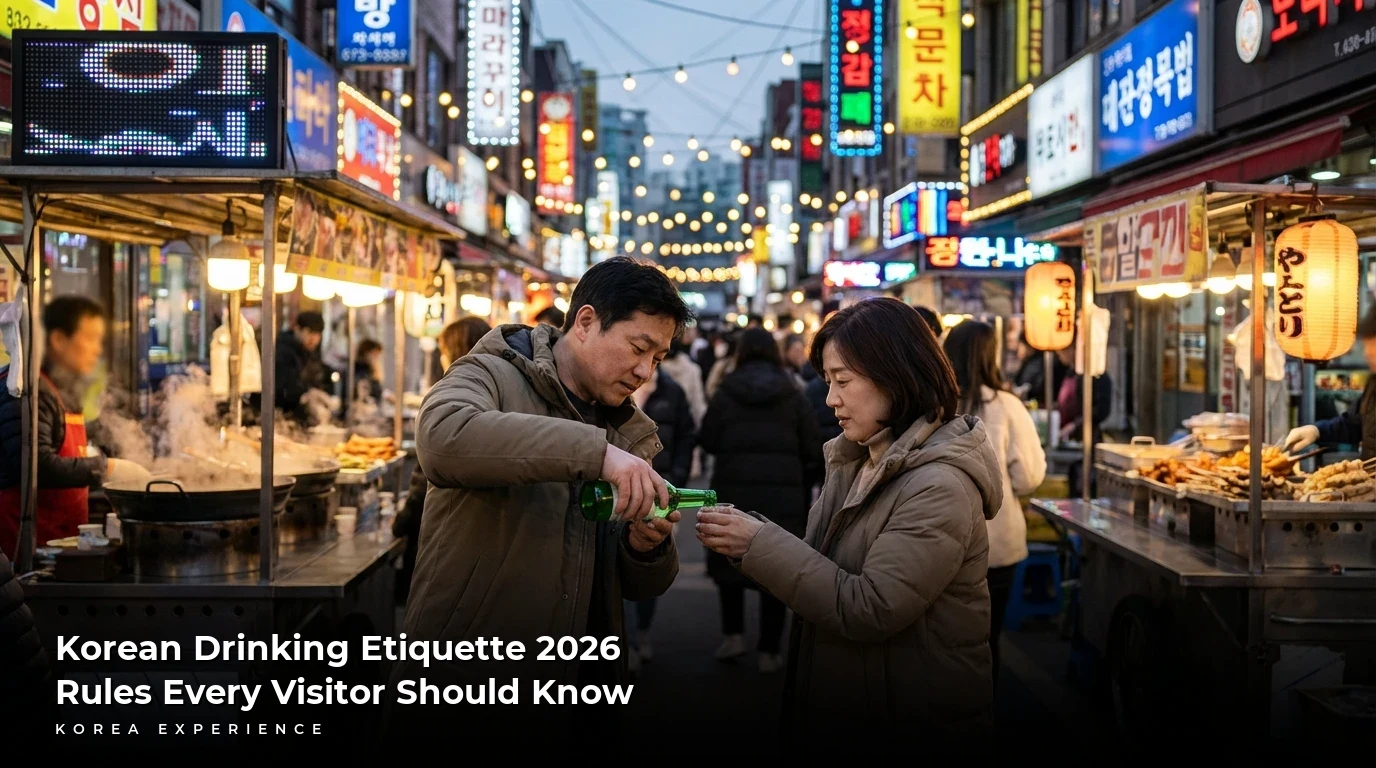
The short answer? Always use two hands when pouring or receiving a drink and never, ever fill your own glass—it's the fastest way to signal you're a tourist.
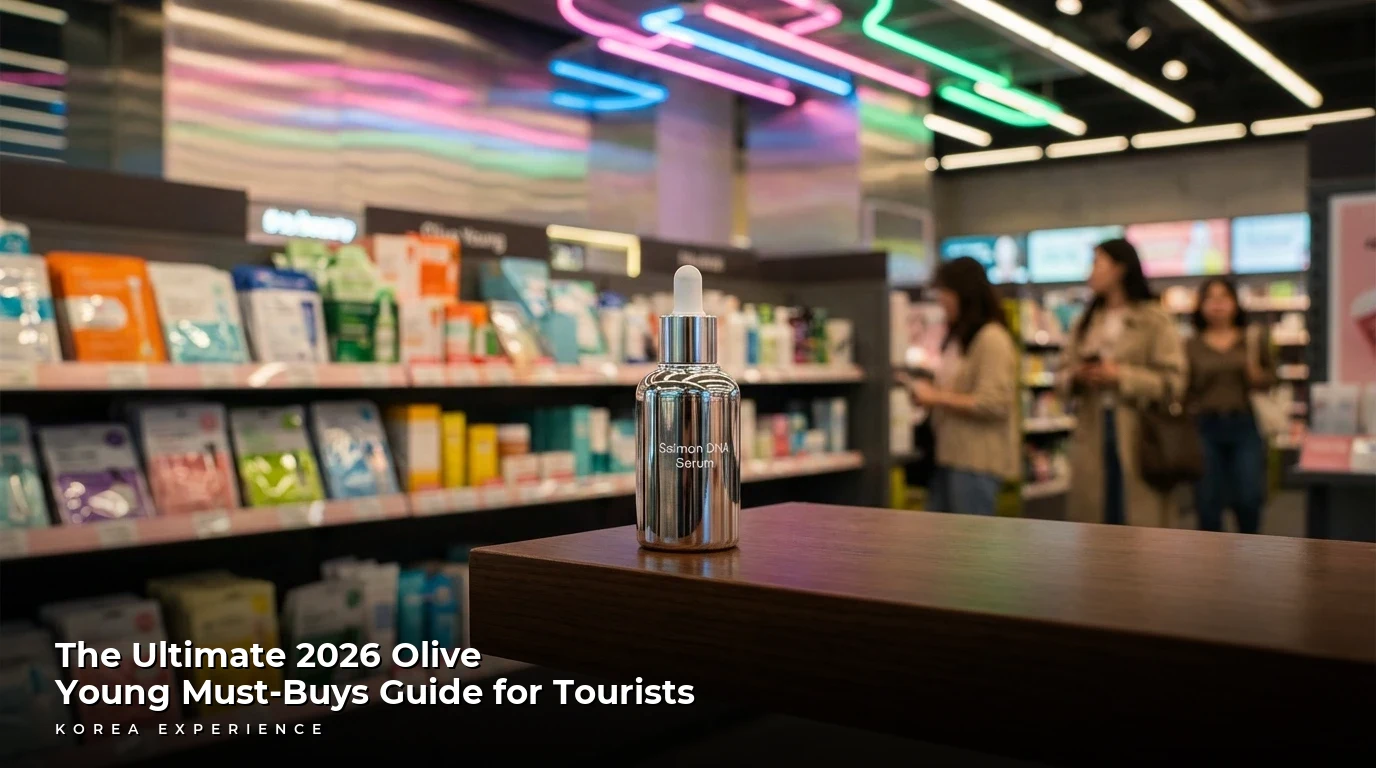
Look, don't get overwhelmed by the rows of neon—I've narrowed down the 2026 Olive Young must-buys to the science-backed heavy hitters like salmon DNA serums...
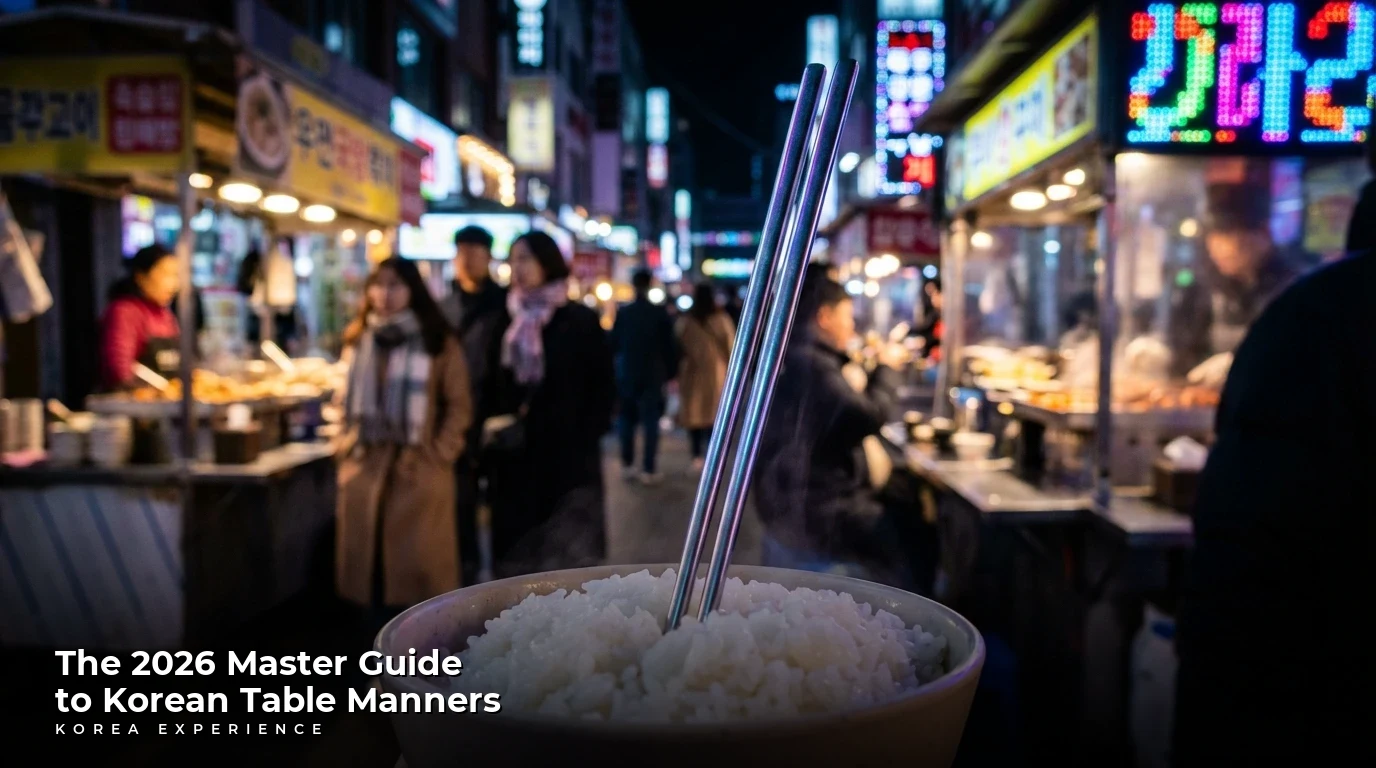
Sticking your chopsticks vertically into your rice is the ultimate no-no in Korea because it looks exactly like a funeral ritual—honestly.
So, you want to stop standing out like a tourist and start navigating Seoul like you've lived here for a decade?
Book top Seoul salons like Bit & Boot for $220–$450 without speaking Korean using 2026 apps. Learn the 3-week booking rule for the full idol experience.
The short answer is yes, you can absolutely call a taxi without a local number by using apps like K.Ride or Uber (UT).