Korean Clinic vs. Hospital: Where to Get Botox in Seoul (2026)
Comparing prices (₩30k vs ₩200k), safety protocols, and service quality to help you choose between clinics and hospitals for Botox in Seoul.
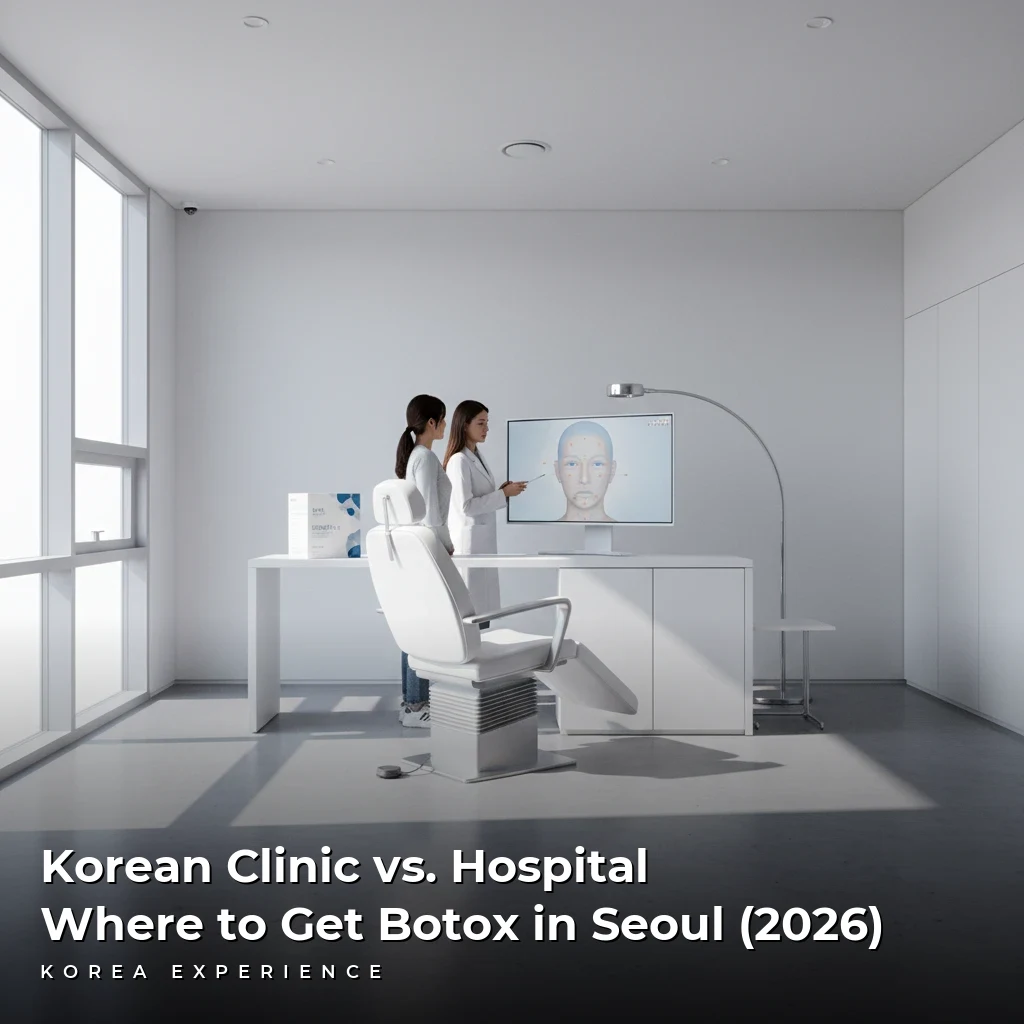
If you are planning a trip to Seoul in 2026 for aesthetic treatments, the most common dilemma isn't just what to get, but where to get it. For standard neuromodulator treatments (Botox), the vast majority of international visitors should choose a specialized dermatology clinic rather than a general hospital. Clinics in Korea are specifically optimized for aesthetic procedures, offering prices that are often 60-70% lower than hospitals, with significantly faster service and English-speaking coordinators dedicated to international patients. General hospitals are world-class but are typically reserved for reconstructive surgery, severe medical dermatological conditions, or patients with high-risk medical histories.
The short answer: For cosmetic Botox in 2026, specialized skin clinics offer the best value (starting at ₩30,000) and efficiency, while hospitals are best reserved for complex medical cases requiring multi-disciplinary care.
Key Takeaways
- 1Clinics are 50-70% cheaper than hospitals for standard Botox injections
- 2Korean 'Factory Clinics' can process patients in 30 minutes but offer less privacy
- 3University Hospitals require referrals and longer wait times (2+ hours)
- 4Domestic Botox brands (Coretox, Nabota) perform equally to imported brands for 40% less cost
Understanding the Korean Medical Landscape: Clinic vs. Hospital
In South Korea, the distinction between a "Clinic" (Ui-won) and a "Hospital" (Byeong-won) is legally defined by bed capacity and facility size, but for the medical tourist, the difference is experiential and financial. As of early 2026, Seoul boasts over 5,000 registered dermatology and plastic surgery facilities, creating a highly competitive market that drives quality up and prices down.
The Specialized Dermatology Clinic (Ui-won)
These are the powerhouses of K-Beauty. Ranging from "Factory Clinics" (high volume, low cost) to "Boutique Clinics" (VIP service, higher cost), these facilities handle 90% of all Botox and filler treatments in the country. They are agile, technologically advanced, and often resemble high-end spas rather than medical facilities.
The General or University Hospital (Byeong-won/Daehak-byeong-won)
These are large-scale medical institutions like Asan Medical Center, Samsung Medical Center, or Seoul National University Hospital. They prioritize safety above all else. While they have aesthetic departments, their primary focus is treating disease. Getting cosmetic Botox here is akin to hiring a structural engineer to hang a picture frame—extremely safe, but overkill and expensive.
Service Comparison: Clinic vs. Hospital
| Feature | Skin Clinic (Factory) | Boutique Clinic | University Hospital |
|---|---|---|---|
| Avg. Wait Time | 15-30 mins | 0-10 mins | 1-3 hours |
| Botox Cost (1 Area) | ₩25,000 | ₩80,000 | ₩200,000+ |
| Consultation Style | Counselor/Sales | Doctor-led | Strictly Medical |
| English Support | High (Coordinators) | Very High | Variable/Medical |
The "Factory" Clinic Experience: Speed and Efficiency
The term "Factory Clinic" (Gongjang-hyeong) is not derogatory in Korea; it describes a business model focused on high volume and efficiency. If you are looking for simple treatments like forehead Botox or masseter reduction, these are the most popular options for travelers.
In districts like Gangnam and Hongdae, these clinics operate with military precision. You check in at a kiosk (often with multiple language options), have a quick consultation with a coordinator (not a doctor) to decide on the treatment units, pay, get numbing cream applied in a waiting area, and then see the doctor for the actual injection, which takes less than 3 minutes.
The Economics of Factory Clinics
In 2026, the price competition is fierce. It is not uncommon to see promotions for Korean brand Botox (like Botulax or Liztox) for as low as ₩19,000 to ₩29,000 (approx. $15-$22 USD) for one area. This is possible because these clinics purchase toxins in massive bulk quantities.
However, the trade-off is personalization. The doctor may not remember your face from one visit to the next. If you have complex facial asymmetry that requires a nuanced approach, the "factory" model might be too standardized for you.
Hidden Costs
While the advertised price might be ₩29,000, verify if VAT (10%) is included. Also, "factory" clinics often upsell. A common tactic is recommending 50 units for the jaw when 25 might suffice, or pushing for "skin boosters" alongside your Botox. Always stick to your researched plan.
For those interested in how these treatments fit into a broader regimen, check out our anti-aging treatments in Korea guide.
The Boutique Clinic: The Middle Ground
If the idea of an assembly line makes you nervous, "Boutique Clinics" are the preferred choice for discerning travelers. These clinics usually require appointments weeks in advance and limit the number of patients they see per day to 20-30, compared to the 200+ at factory clinics.
Why Choose a Boutique Clinic?
Here, the doctor performs the consultation, analyzing your facial muscle movement before a single needle touches your skin. This is critical for procedures like "Skin Botox" (Dermatoxin), where the toxin is injected into the dermis rather than the muscle to tighten pores and lift skin. This requires high skill to avoid freezing facial expressions.
Prices at boutique clinics are higher—expect to pay ₩70,000 to ₩150,000 per area—but you are paying for the doctor's time and artistic eye. For travelers combining treatments, such as pairing Botox with lasers, this environment is far more relaxing.
"For simple procedures like masseter (jaw) Botox, a factory clinic is perfectly fine. The anatomy is straightforward. However, for forehead or eye areas where a millimeter difference causes eyelid drooping, I strongly recommend a boutique clinic where the doctor spends at least 10 minutes analyzing your muscle patterns."
The Hospital Route: When is it Necessary?
You might be wondering, if clinics are so great, who goes to the hospitals? In 2026, hospitals are seeing an influx of patients seeking treatment for Hyperhidrosis (excessive sweating) and Chronic Migraines, which are treated with therapeutic Botox protocols covered by national insurance for residents, but paid out-of-pocket by tourists.
Safety Protocols
University hospitals offer the highest tier of sterility and emergency preparedness. While rare, allergic reactions to the stabilizing proteins in Botox can occur. Hospitals have immediate access to advanced life support and anaphylaxis protocols that a small clinic in a high-rise building might lack.
However, the administrative burden is heavy. You may need a referral letter from a smaller clinic to even book an appointment at a "Big 5" hospital in Seoul. The registration process can take 40 minutes, and you will likely pay a "foreigner healthcare surcharge" that bumps the consultation fee alone to over ₩100,000.
💵 Price Comparison: Forehead Botox (2026 Avg)
Imported Brand (Allergan) + Specialist Fee
Korean Brand (Nabota/Botulax)
Korean vs. Imported Botox Brands in 2026
One of the first questions you will be asked at a Korean clinic is: "Domestic or Imported?" This choice significantly impacts your bill.
Domestic Brands (The Local Heroes)
Korean pharmaceutical companies have mastered toxin manufacturing. The three giants—Medytox (Meditoxin/Coretox), Hugel (Botulax), and Daewoong (Nabota)—dominate 85% of the local market.
- Safety: These brands are K-FDA approved and many are FDA approved in the USA (like Nabota, sold as Jeuveau).
- Price: Typically ₩30,000 - ₩50,000 per area.
- Efficacy: Studies show no significant difference in longevity compared to Western brands.
Imported Brands (The Classics)
Allergan (Botox®) and Xeomin (German) are the prestige options.
- Xeomin: Highly popular in 2026 because it is a "pure toxin" without complexing proteins, reducing the risk of developing resistance (immunity) to Botox after repeated use.
- Price: Typically ₩120,000 - ₩180,000 per area.
- Best For: Long-term users who get injections every 3-4 months and are worried about antibody formation.
If you are curious about the specific chemical differences, read our deep dive on Botox brands in Korea.
📋 Botox Brand Specs
The Step-by-Step Clinic Journey
Navigating a Korean clinic as a foreigner is generally smooth, but knowing the process helps manage expectations. Here is what a typical visit looks like in 2026.
📖 The Clinic Visit Flow
Step 1: Check-in & Lockers
Store your belongings. You will likely wash your own face at a vanity station rather than having a facialist do it.
Step 2: Consultation
Meet with a coordinator to discuss areas and brands. The doctor usually only comes in for the injection.
Step 3: Payment & Tax Refund
Pay upfront. Ask for the 'Tax Refund Slip' immediately. You get roughly 7-8% back at the airport.
Step 4: Numbing & Photos
Application of anesthetic cream (wait time 20-30 mins). Before photos are taken for medical records.
Step 5: The Procedure
The doctor enters, verifies the product (often showing you the unopened box), and injects. Takes 2-5 minutes.
Pain Management
Koreans generally have a low tolerance for pain in aesthetic settings, so clinics are generous with numbing cream. Some clinics even offer "vibration anesthesia" (a small device held against the skin to distract nerves) or cooling sticks (ice rollers) before injection.
Location Strategy: Where to Go in Seoul
Seoul is massive, and traffic in 2026 remains a challenge. Choosing a clinic near your accommodation or planned activities is wise.
Gangnam (Sinsa, Apgujeong, Gangnam Station)
The epicenter. There are literally buildings with 15 floors of nothing but clinics.
- Pros: Highest competition means best prices and latest tech. Most English speakers.
- Cons: Can feel impersonal. Traffic is horrendous.
- Best For: Serious "medical tourists" doing multiple procedures.
- See our guide on best Korean skin clinics in Gangnam.
Hongdae (Mapo-gu)
The youthful hub. Clinics here cater to university students and younger trends.
- Pros: Very affordable. Great for simple procedures like lip fillers or jaw Botox.
- Cons: Fewer board-certified dermatologists compared to Gangnam.
- Best For: Budget travelers and those staying in Western Seoul.
Myeongdong
The tourist hub.
- Pros: extremely foreigner-friendly, often accepting multiple currencies and WeChat/Alipay.
- Cons: often higher prices due to tourist premiums (aka "tourist tax").
- Best For: First-timers who want zero language barriers.
PPEUM Clinic (Gangnam Branch)(쁨클리닉 강남점)
Safety: Avoiding the "Shadow Doctor"
A concern that occasionally surfaces in Korean media is the concept of "Shadow Doctors" (a substitute doctor performing surgery instead of the famous head surgeon). While this is a major risk for surgeries requiring general anesthesia (like rhinoplasty or breast augmentation), it is extremely rare for simple Botox injections because the procedure is so fast and low-risk.
However, a more relevant concern for Botox is dilution. Unethical clinics may over-dilute the toxin with saline to stretch their supply. If you find a deal that seems too good to be true (e.g., ₩10,000 for a full forehead), be wary.
Verification Trick
Ask the doctor to open the Botox bottle in front of you. Reputable clinics will often do this voluntarily to prove they are using fresh, authentic product. You can also ask to keep the box or the empty bottle after the procedure.
To ensure you are booking with a verified facility, look for the "Medical Korea" certification mark often displayed at the entrance, which indicates they are registered to treat foreign patients legally.
Recovery and Aftercare in Korea
One advantage of getting Botox in Seoul is the accessibility of aftercare products. Korean pharmacies (Yak-guk) are everywhere.
Immediate Aftercare Rules:
- Do not lie down for 4 hours post-injection.
- No saunas or Jjimjilbangs for 1 week (heat degrades the toxin).
- No alcohol for 24 hours (increases bruising risk).
If you bruise, you can visit any pharmacy and ask for "Bruise Cream" (Mong-cream). Products containing Vitamin K or Arnica are sold over the counter for roughly ₩8,000 - ₩12,000.
For those looking to pamper themselves after the procedure without heat exposure, consider a cooling facial. Check our recommendations for best in-clinic facial treatments.
Botox Results Timeline
Injection Day
Mild swelling or redness bumps (look like mosquito bites) for 1 hour.
Onset
Muscle movement begins to feel restricted or 'heavy'.
Peak Effect
Full results visible. This is when you should judge if you need a touch-up.
Pros and Cons Summary
To help you finalize your decision, here is a balanced look at choosing a Korean Clinic for your treatment.
Korean Skin Clinics for Botox
- ✓Unbeatable prices (approx. $30 for jaw Botox)
- ✓Advanced techniques like 'Skin Botox' widely available
- ✓High volume means doctors are extremely experienced injections
- ✗Consultations can feel rushed (3-5 mins)
- ✗Upselling culture is aggressive
- ✗Follow-up is difficult if you return to your home country
Conclusion
In 2026, the verdict is clear: For cosmetic Botox, the Specialized Dermatology Clinic is the superior choice over a general hospital. The combination of cost-effectiveness, specialized expertise, and efficiency makes the clinic model the gold standard for medical tourism in Korea.
While the "Factory" style clinics offer incredible value, spending slightly more for a "Boutique" clinic often yields a more comfortable experience and better aesthetic outcomes for first-time visitors. Whichever you choose, ensure you utilize the Tax Refund system and follow strict aftercare protocols to enjoy your rejuvenated look long after your flight home.
❓ Frequently Asked Questions
Have more questions?Contact us →
📊 Medical Tourism Growth
About the Author
Korea Experience Team
Written by the Korea Experience editorial team - experts in Korean medical tourism, travel, and culture with years of research and firsthand experience.
⚠️ Medical Disclaimer
The information provided on this website is for general informational purposes only and does not constitute medical advice. Always consult with qualified healthcare professionals before making any medical decisions.
Explore more in Medical Tourism
World-class medical procedures at competitive prices. From plastic surgery and dermatology to dental care and health checkups — your complete guide to medical tourism in Korea.
Browse All Medical Tourism ArticlesContinue Reading
Explore more articles you might find interesting
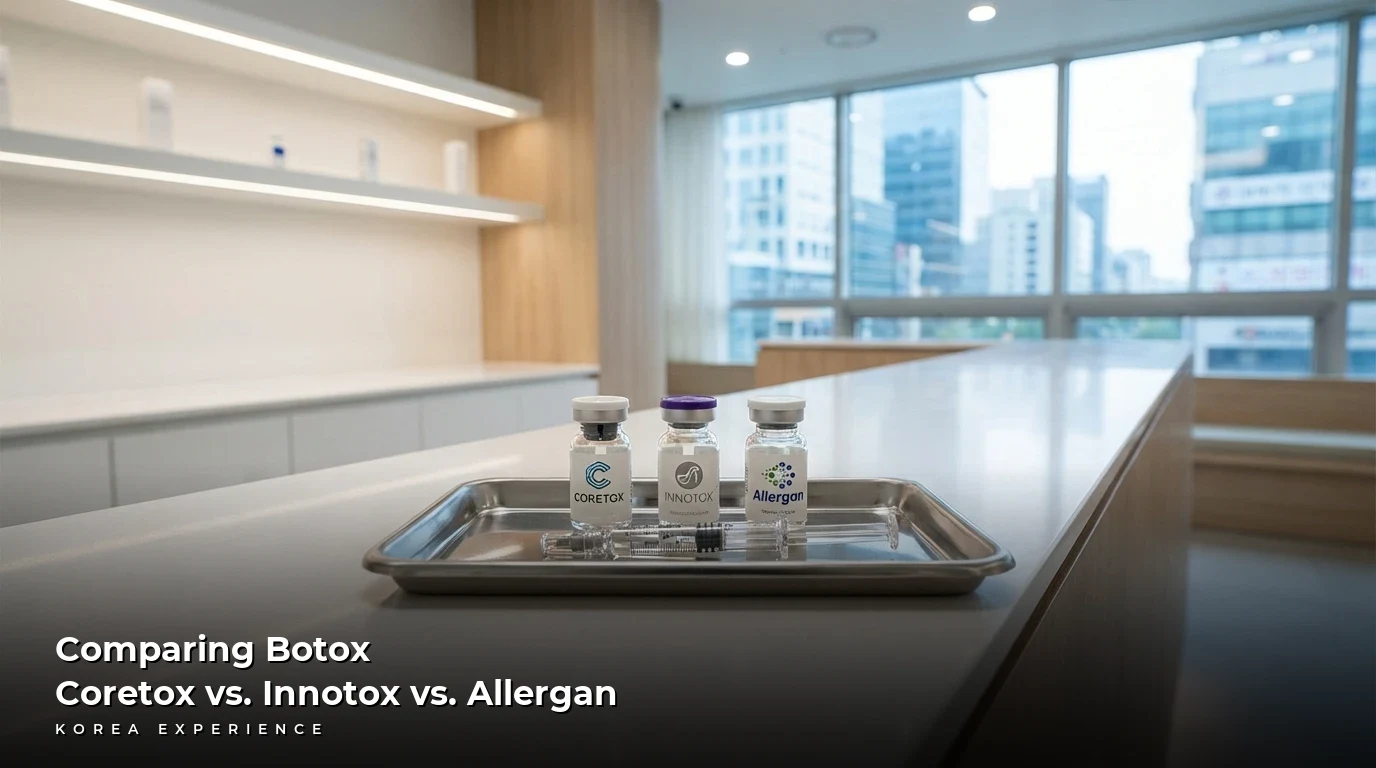
Confused by $20 Botox? We compare Allergan vs Coretox vs Innotox prices (₩25k-₩350k) and safety data to help you save 80% in Seoul.
A complete guide comparing the Big 5 university hospitals against Gangnam boutique clinics, covering safety, costs, and 2026 medical tourism trends.
A comprehensive guide to the top English-speaking skin clinics in Seoul, comparing prices, treatments, and booking processes for international visitors.
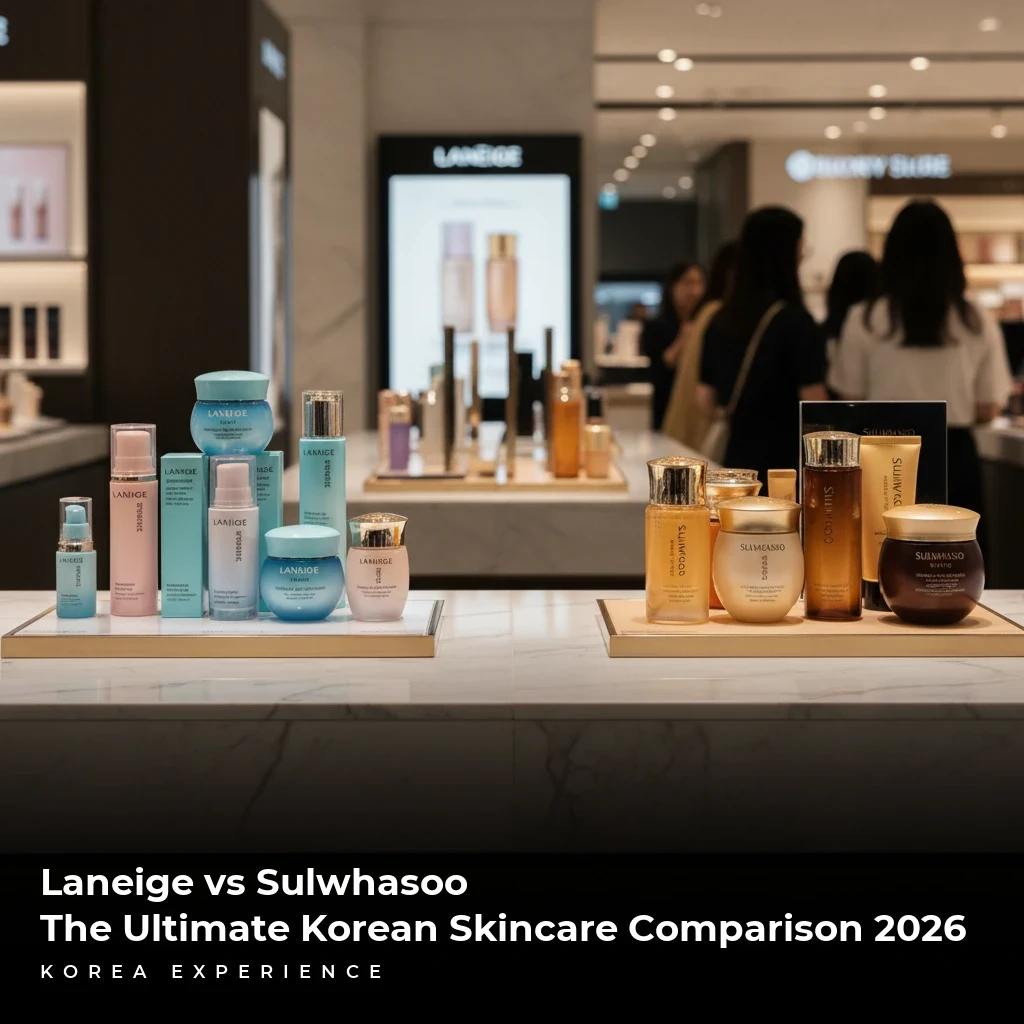
Deciding between Laneige and Sulwhasoo? We compare prices (₩32,000 vs ₩140,000), ingredients, and results to help you choose the best K-beauty brand.
Find open pharmacies in Seoul past 1 AM. Learn the 2026 Simya system, 30% night surcharges, and the 13 safety meds available at convenience stores.
Unlock the secrets to brighter skin in Korea. Compare Glutathione IV drips and topical treatments, including costs, effectiveness, and safety in Seoul clinics.