Korean physical therapy guide for sports injuries while traveling 2026
A complete guide to navigating Korean orthopedics, physical therapy, and sports medicine for travelers in 2026. Costs, clinics, and recovery tips included.
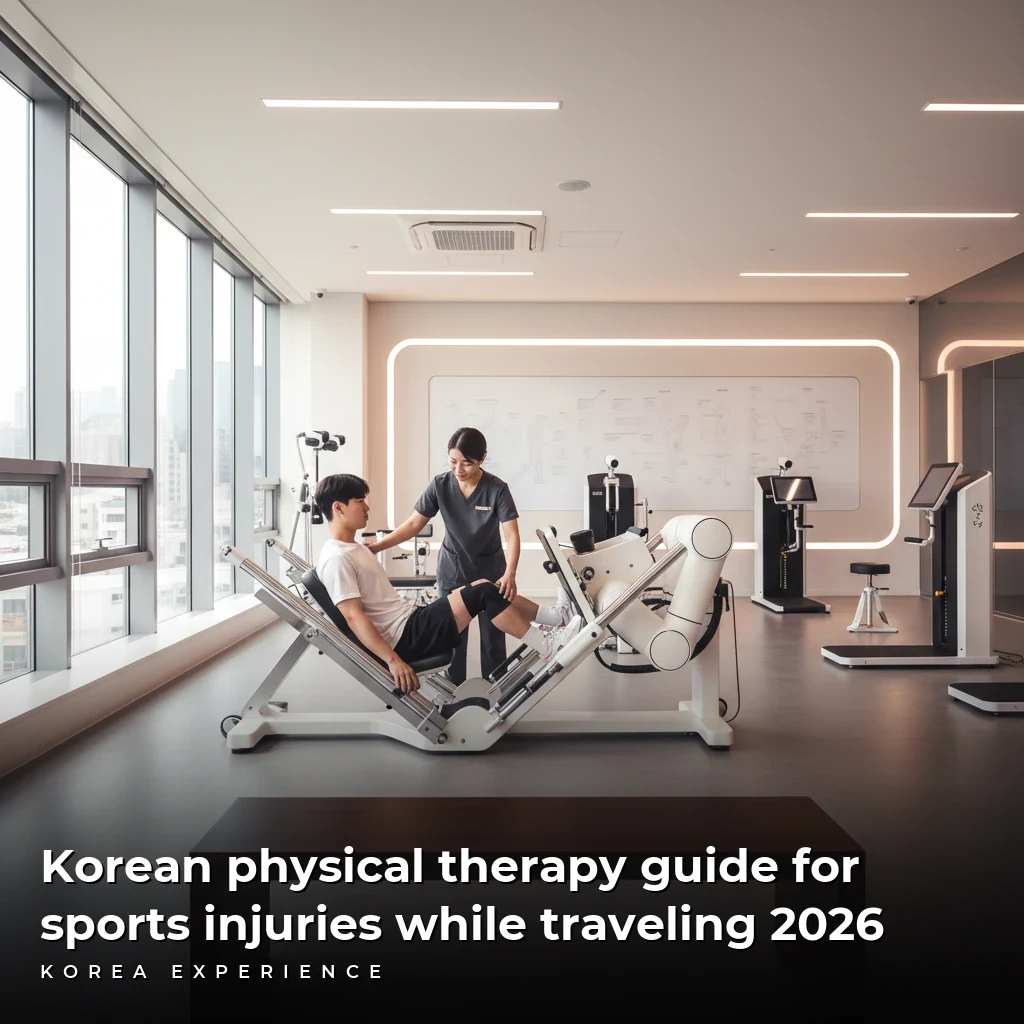
If you suffer a sports injury while traveling in Korea, you are arguably in one of the best places in the world to get it treated quickly and affordably. Unlike many Western countries where seeing a specialist requires a referral and weeks of waiting, the Korean medical system allows for immediate, walk-in access to orthopedic specialists (Jeonghyeong-oekwa) and rehabilitation clinics. In 2026, the integration of AI-assisted diagnostics and advanced manual therapy techniques has made the process even more efficient for international visitors. Most neighborhood clinics are equipped with X-ray machines, ultrasound devices, and comprehensive physiotherapy rooms, allowing you to go from injury to diagnosis to treatment in under 90 minutes.
The short answer: Korean physical therapy is highly accessible, with walk-in orthopedic appointments costing between $30 and $60 without insurance, and comprehensive manual therapy (Dosu) sessions ranging from $80 to $150.
Key Takeaways
- 1Walk-in access to orthopedic specialists is standard, with wait times usually under 30 minutes
- 2Manual therapy (Dosu) is the gold standard for sports rehab but is rarely covered by standard travel insurance
- 3A typical visit including X-ray, consultation, and basic physiotherapy costs less than ₩100,000 ($75 USD)
Medical Disclaimer
The information provided in this article is for educational purposes only and does not constitute medical advice. Always seek the guidance of a qualified health provider with any questions regarding a medical condition. In case of a severe emergency, dial 119 immediately.
The Landscape of Sports Medicine in Korea 2026
Korea’s approach to physical therapy and sports injuries is distinct because of its dual healthcare system. Understanding the difference between Western-style Orthopedics and Traditional Korean Medicine is crucial for getting the right treatment.
In 2026, there are over 25,000 private clinics operating across South Korea. For a sports injury—like a sprained ankle from hiking Bukhansan or a strained knee from walking around Seoul—you primarily have two choices:
- Orthopedics (Jeonghyeong-oekwa): This is Western medicine. They use X-rays, MRIs, CT scans, anti-inflammatory injections, and physical therapy modalities like shockwave therapy (ESWT).
- Pain Medicine / Rehab Medicine: Specialized clinics focusing specifically on non-surgical recovery and rehabilitation.
- Oriental Medicine Clinics (Hanuiwon): Traditional clinics using acupuncture, cupping, and herbal medicine to treat pain and inflammation.
For acute sports injuries (broken bones, torn ligaments), an Orthopedic clinic should always be your first stop for imaging.
📊 Korean Clinic Efficiency
The "Ppalli-Ppalli" (Hurry-Hurry) Medical Culture
The speed of service is shocking to many Western travelers. In the US or UK, an MRI might take weeks to schedule. In Seoul, if a doctor suspects a tear, you can often get an MRI in the same building within 2 hours. This efficiency minimizes the disruption to your travel itinerary.
Cost Breakdown: Insurance vs. Out-of-Pocket
One of the biggest anxieties for travelers is the cost of healthcare abroad. The good news is that even without Korean National Health Insurance (NHIS), prices are reasonable compared to the US or Europe.
If you are a short-term traveler, you will likely pay 100% of the cost out-of-pocket and claim it back from your travel insurance later. Make sure to ask for a "Receipt for Insurance Submission" (Boheom-yong Yeongsujeung) and a "Medical Certificate" (Jindan-seo), which usually costs an extra 10,000 to ₩20,000 ($7.50-$15 USD).
💵 Treatment Cost Comparison (Non-Insured)
Detailed soft tissue scan
1-on-1 Manual Therapy
Digital imaging diagnosis
Pain relief session
Payment Methods
In 2026, essentially all clinics accept foreign credit cards (Visa/Mastercard). However, some smaller neighborhood clinics might prefer local cards or cash. Apple Pay availability has increased significantly, reaching about 65% of clinics in Seoul, but carrying a physical card is still recommended.
For those interested in how to book these services, you can read our guide on booking medical consultations in Korea.
Treatments: What is "Dosu" Therapy?
If you visit a clinic for back pain or a sports injury, the doctor will likely recommend Dosu (도수) Therapy. This is the Korean equivalent of Western manual physical therapy or chiropractic adjustment, but it is performed by a licensed physical therapist under the direction of a medical doctor.
Unlike a general massage, Dosu therapy targets specific skeletal misalignments and muscle imbalances. A session typically lasts 40 to 60 minutes.
Dosu Therapy Insight
Dosu therapy is considered a "non-covered" item by Korean National Insurance, meaning the price is unregulated. Clinics can charge whatever they want. Always ask for the price upfront. If a clinic quotes over ₩200,000 ($150 USD) for a standard session, it is on the very high end.
Physiotherapy Modalities
After seeing the doctor, you will almost always be sent to a "Physiotherapy Room" (Mulli-chilyo-sil). This is a standard part of the treatment package and usually costs very little (approx. 5,000 - ₩10,000). It typically involves a 30-40 minute circuit of:
- Hot Packs (Jjimjil): 10-15 minutes.
- ICT/TENS: Electrical stimulation pads placed on the injury (15 minutes).
- Laser/Ultrasound: Deep tissue warming (5-10 minutes).
- Waterbed Massage: Many modern clinics have heated water massage beds you lie on for 10 minutes at the end.
Step-by-Step Guide to Visiting a Clinic
Navigating a Korean hospital can be intimidating due to the language barrier. However, most receptionists in major areas (Gangnam, Hongdae, Itaewon) can speak basic English, and translation apps like Papago are widely accepted tools of communication in 2026.
📖 How to Get Treated for a Sports Injury
Step 1: Registration
Enter the clinic and hand over your passport. Fill out a simple form with your name and symptoms.
Step 2: Doctor Consultation
Meet the specialist. They will manipulate the joint and ask about pain levels.
Step 3: Imaging
You will be directed to an X-ray room. Changing into clinic shorts/gown is often required.
Step 4: Diagnosis & Plan
Return to the doctor to view your X-rays on a monitor immediately. They will prescribe meds and therapy.
Step 5: Treatment
Proceed to the therapy room for hot packs, ESWT, or Dosu therapy.
Step 6: Pharmacy
Pay at the front desk. Take the prescription slip to the pharmacy (usually on the same floor or ground floor).
"Many foreigners worry about making an appointment. In Korea, for primary orthopedic clinics, appointments are rarely needed. Just walk in. However, avoid lunch time (12:30 PM - 2:00 PM) and Monday mornings, which are our busiest times."
Western Sports Medicine vs. Traditional Korean Medicine
Travelers often ask if they should visit a modern hospital or a traditional Hanuiwon. This is a classic example of medical dualism in Korea.
Modern Orthopedics is best for:
- Acute trauma (falls, twists, pops).
- Structural diagnosis (X-rays, Ultrasound).
- Severe pain requiring strong painkillers.
Traditional Medicine (Hanuiwon) is best for:
- Chronic pain or lingering stiffness.
- Muscle tightness and spasms.
- Sprained ankles (after the fracture is ruled out).
Acupuncture is surprisingly effective for reducing swelling in sprained ankles. The treatment creates micro-traumas that stimulate blood flow to the injured area, accelerating the body's natural healing response.
Orthopedics vs. Oriental Medicine
| Feature | Orthopedics (Seo-yang) | Oriental (Han-bang) |
|---|---|---|
| Diagnosis Tool | X-Ray / MRI / Ultrasound | Pulse / Palpation |
| Primary Treatment | Drugs / Injection / Shockwave | Acupuncture / Cupping / Moxibustion |
| Avg Cost (No Insurance) | ₩40,000 - ₩80,000 | ₩15,000 - ₩30,000 |
| Best For | Acute Injury / Bone Issues | Muscle Pain / Recovery |
For those focusing on holistic recovery, you might also be interested in best Korean healing foods for surgery recovery to supplement your treatment.
Top Clinics and Areas for Foreigners
While there are clinics on every block, some are better suited for international travelers. The "International Healthcare Center" departments in major university hospitals are excellent but expensive (consultation fees start at roughly $80-100 USD). Private clinics in foreigner-dense districts are the sweet spot for value and communication.
Major Sports Medicine Hubs
Jaseng Hospital of Korean Medicine(자생한방병원)
Yonsei Sarang Hospital(연세사랑병원)
Using Local Clinics
If you cannot make it to these large centers, look for signs that say 정형외과 (Orthopedics) or 통증의학과 (Pain Medicine). A clinic with "Sports Medicine" in English on the sign usually indicates the doctor has experience treating athletes and may speak better English.
Advanced Treatments: ESWT and Cryotherapy
In 2026, Extracorporeal Shockwave Therapy (ESWT) is ubiquitous in Korean clinics. It involves a machine delivering high-energy acoustic waves to the injured area. It is highly effective for plantar fasciitis (common among tourists walking 20k steps a day), tennis elbow, and calcific tendonitis.
Warning: ESWT hurts. It feels like a small hammer hitting your deep tissue repeatedly. A session usually involves 1,500 to 2,500 shocks and lasts about 10 minutes.
Cryotherapy (Whole Body) represents the high-end of recovery. Popularized by K-Pop idols and athletes, these chambers drop to -110°C to reduce systemic inflammation. While less common in standard clinics, specialized sports recovery centers in Cheongdam-dong offer this service for approximately 50,000 - ₩80,000 per session.
📋 Therapy Quick Stats
Accessible Travel and Mobility
If your injury is severe enough to require crutches or a wheelchair, Seoul has made significant strides in accessibility by 2026, though challenges remain. Most subway stations now have elevators, but the "last mile" to your hotel can be tricky due to uneven pavement.
Wheelchair rentals are available at most major tourist information centers and some subway stations for free or a nominal deposit. For detailed routes, check out our guide on accessible Seoul best routes for wheelchair and limited mobility.
The Pharmacy Recovery Kit
If your injury is minor and you just want to self-medicate, Korean pharmacies (Yak-guk) are fantastic. You can find them by the "Yak" (약) sign. Pharmacists in Korea are highly trained and can prescribe stronger NSAIDs than you can buy off the shelf in the US.
Pharmacy vs. Clinic for Minor Injuries
- ✓No wait time
- ✓Pharmacists speak decent English
- ✓Very cheap (patches < $3)
- ✗Cannot diagnose fractures
- ✗Painkillers are limited strength
- ✗No physical therapy
Must-buy items for sports injuries:
- Pas (파스): These are medicated adhesive patches. They come in "Cool" (for acute swelling) and "Hot" (for muscle stiffness). Mention the body part (e.g., "Mook" for neck, "Heori" for back) to get the right size.
- Spray Pas: Like Air Salonpas, essentially spray-on ice.
- Compression Bandages: Available in various sizes for 2,000 - ₩4,000.
The Future of Rehab: 2026 Trends
By 2026, Korean sports medicine has integrated AI motion analysis into standard care. High-end clinics now use camera systems to analyze your gait or throwing motion before prescribing exercises. This "Pre-hab" approach is popular among golf tourists visiting Korea.
Furthermore, the line between "beauty" and "health" continues to blur. Many clinics in Gangnam now offer "Body Contouring Rehab," which fixes posture to improve aesthetic appearance—a topic we touch on in our article about best Korean skin clinics in Gangnam.
Typical Treatment Journey
Injury & Diagnosis
Walk-in clinic, X-ray, Splint/Brace, NSAIDs.
Follow-up & Therapy
Re-check swelling. Begin ESWT (Shockwave) or Acupuncture.
Dosu Therapy
Manual therapy to restore range of motion once inflammation subsides.
Return to Activity
Final check. Clearance for sports/hiking.
Practical Tips for Travelers
- Download Naver Map: Google Maps does not work well for walking directions in Korea. Naver Map will show you the nearest "Orthopedics" accurately.
- Keep Your Receipts: You need the specific breakdown of costs for insurance. Ask for a "Se-bu-nae-yeok-seo" (Detailed statement).
- Dress appropriately: If you have a knee injury, wear loose shorts or pants that can be rolled up. If you have a shoulder injury, wear a tank top under your shirt.
❓ Frequently Asked Questions
Have more questions?Contact us →
Dealing with an injury while traveling is never ideal, but Korea’s medical infrastructure makes it as painless as possible. With affordable access to high-tech treatments and a culture of efficiency, you can often get back on your feet—and back to enjoying your trip—faster than you might expect. Whether you choose the high-tech precision of a Gangnam orthopedic surgeon or the holistic approach of a traditional clinic, you are in safe hands.
About the Author
Korea Experience Team
Written by the Korea Experience editorial team - experts in Korean medical tourism, travel, and culture with years of research and firsthand experience.
⚠️ Medical Disclaimer
The information provided on this website is for general informational purposes only and does not constitute medical advice. Always consult with qualified healthcare professionals before making any medical decisions.
Explore more in Medical Tourism
World-class medical procedures at competitive prices. From plastic surgery and dermatology to dental care and health checkups — your complete guide to medical tourism in Korea.
Browse All Medical Tourism ArticlesContinue Reading
Explore more articles you might find interesting
Unlock your guide to rhinoplasty in Korea for 2026. Discover costs, top clinics, procedures, and essential tips for a successful medical tourism journey.
A comprehensive guide to Korea's 2026 stem cell advancements, featuring costs, recovery times, and the latest exosome technologies for global travelers.
A complete guide to hair transplant costs in Korea for 2026, featuring price comparisons, top methods like FUE and DHI, and realistic recovery timelines.
Your comprehensive guide to double eyelid surgery in Korea, covering procedures, costs, recovery, and finding the best clinics for international patients.
A comprehensive guide to navigating Korea's advanced recovery landscape, from traditional kiln saunas to modern cryotherapy clinics.
Explore breast augmentation in Korea 2026: understand costs, find top clinics, learn about recovery, and get practical tips for your medical journey.