Korean Orthodontics 2026: Invisalign vs. Local Clear Aligner Costs
Compare 2026 prices for clear aligners in Seoul. Save up to 50% with local brands (₩1.5M+) vs Invisalign (₩3.5M+) while enjoying world-class dental care.
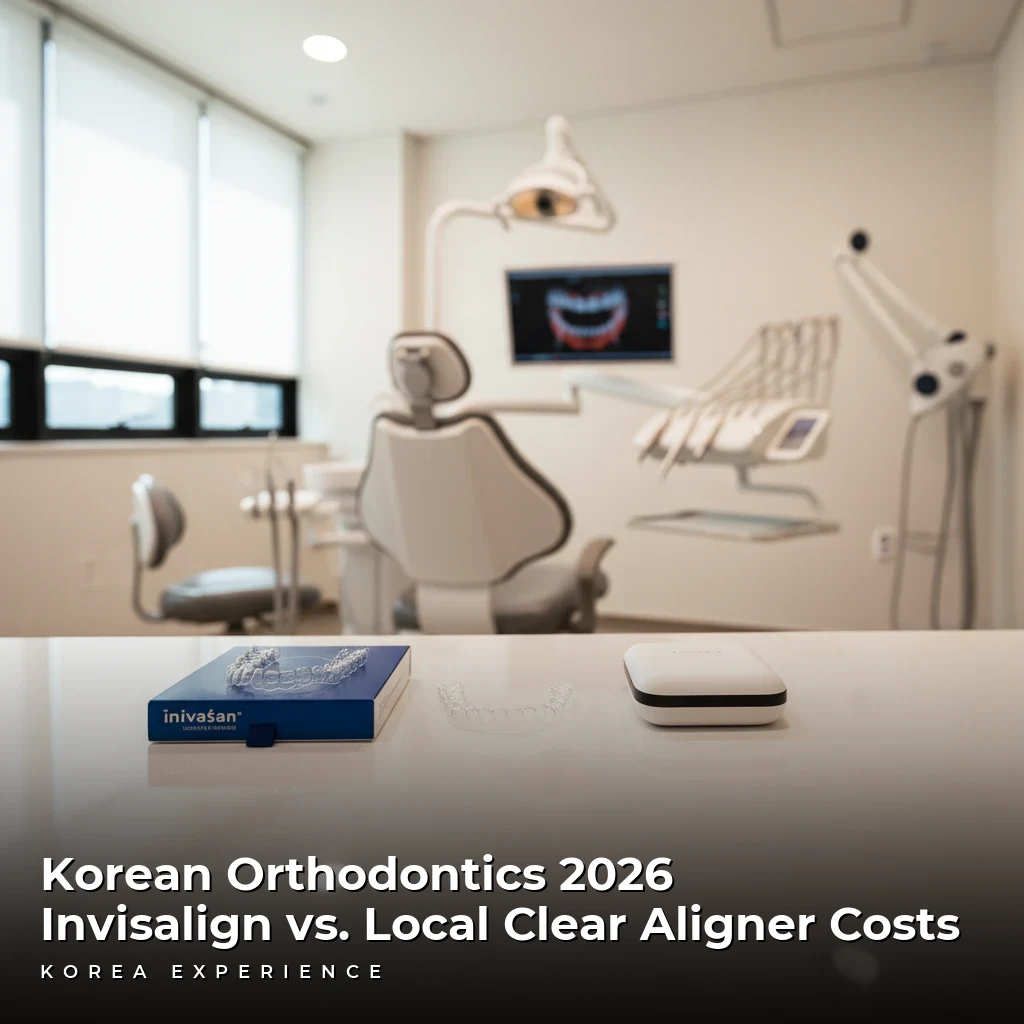
If you are considering orthodontic treatment in 2026, getting clear aligners in South Korea offers a compelling mix of advanced technology and significant cost savings compared to North America or Western Europe. The average cost of a full Invisalign treatment in Korea ranges from 3.5 million to ₩7 million ($2,500–$5,000 USD), whereas local Korean clear aligner brands typically cost between 1.5 million and ₩3 million ($1,100–$2,200 USD), offering a 30% to 60% price reduction compared to global averages.
The short answer: For international patients, local Korean brands like Serafin or Magic Line offer the best value for mild to moderate corrections with a 5-7 day production turnaround, while Invisalign remains the preferred choice for complex bite issues despite the 2-week shipping time.
Key Takeaways
- 1Local Korean aligners cost 40-50% less than Invisalign
- 2Production time for local brands is just 5-7 business days
- 3VAT refunds of approx 7-8% are available for tourists
- 4Most clinics in Gangnam offer English translation services
Understanding the Korean dental landscape in 2026
South Korea has firmly established itself as a global hub for medical tourism, particularly in aesthetics and dentistry. By 2026, the market for "dental tourism" in Seoul has matured, moving beyond simple implants to complex orthodontic procedures. The primary driver for this popularity is the "ppalli-ppalli" (hurry-hurry) culture applied to medical efficiency, combined with extremely competitive pricing due to the high density of clinics in districts like Gangnam and Sinsa.
While the global inflation rate has driven up medical costs in the US and UK, Korean dental prices have remained relatively stable due to fierce domestic competition. For a traveler or an expat living in Korea, this presents a unique opportunity. You are not just paying for the product (the plastic aligners); you are paying for the expertise of the orthodontist. In Korea, becoming a board-certified orthodontist requires a minimum of 4 years of specialized residency after dental school, ensuring a high standard of care.
📋 Orthodontics in Korea 2026
The choice between Invisalign (the global market leader) and Korean domestic brands is the most common dilemma for patients. This guide will dissect the costs, the technology, and the practicalities of undergoing treatment while in Korea.
Cost breakdown: Invisalign vs. Korean brands
The most significant factor for most patients is price. In 2026, the price gap between international brands and domestic Korean solutions has widened, making local options increasingly attractive for budget-conscious medical tourists.
Invisalign pricing in Seoul
Invisalign remains a premium product in Korea. Because the aligners are manufactured abroad (typically in Mexico or the US) and shipped to Korea, there are import costs involved. However, because Korean clinics order in such high volume, the cost is still significantly lower than in the United States, where a similar treatment might cost $6,000 to $8,000 USD.
In Seoul, a "Full" or "Comprehensive" Invisalign package typically costs between ₩3,500,000 and ₩7,000,000 (approximately $2,500 to $5,000 USD). A "Lite" package (for minor corrections involving fewer than 14 aligners) can be found for as low as ₩2,000,000 ($1,500 USD).
Local Korean brand pricing
Domestic brands such as Serafin, Magic Line, See-Through Align, and Graphy utilize the same 3D scanning and printing technology but manufacture the aligners within Korea, often in the Gyeonggi-do province just outside Seoul. This eliminates international shipping costs and brand royalties.
Comprehensive treatment with these brands usually falls in the ₩1,500,000 to ₩3,000,000 range ($1,100 to $2,200 USD). For very minor anterior (front teeth) corrections, prices can drop to ₩900,000 ($650 USD) at promotional clinics.
💵 2026 Aligner Cost Comparison (Estimates)
Global warranty, best for complex bites
Fast production, best for value
It is important to note that these prices usually include the 3D CT scan (valued at roughly 50,000–₩100,000) and the initial set of retainers. However, monthly adjustment fees (wol-bi) of roughly ₩50,000 may apply depending on the clinic's pricing model.
Technology deep dive: Is "Local" just as good?
Many international patients worry that choosing a local brand means compromising on quality. In 2026, this is largely a misconception. South Korea is a world leader in digital dentistry and 3D printing.
The rise of K-Aligners
Korean brands like Serafin have gained CE certification and FDA approval, allowing them to compete on a global stage. They utilize multi-layer polymer materials that are stain-resistant and durable, comparable to Invisalign's SmartTrack material.
The main technological difference lies in the software algorithms used to predict tooth movement. Invisalign has the world's largest dataset of over 14 million smiles, which gives their AI a slight edge in predicting complex movements (like rotating cylindrical teeth or correcting severe crossbites). However, for 90% of cases involving crowding, spacing, or mild open bites, Korean software is equally effective.
Invisalign vs. Korean Local Brands
| Feature | Invisalign | Korean Brands (e.g., Serafin) |
|---|---|---|
| Production Location | USA / Mexico | South Korea |
| Shipping Time | 2-3 Weeks | 5-7 Days |
| Global Doctor Transfer | Possible | Difficult |
| Material | SmartTrack (Patented) | Multi-layer Polymer |
| Cost Efficiency | $$ | $$$$ |
Pro Tip
If you travel frequently between countries, Invisalign is safer because your case can be transferred to an Invisalign-certified doctor in another country. Korean local brands generally require you to finish treatment with the original clinic.
3D Modeling and Direct Printing
One area where Korea is actually ahead of the curve is direct 3D printing. Some advanced clinics in Gangnam now use "Shape Memory Aligner" technology (like Graphy), where the aligner itself is 3D printed rather than thermoformed over a mold. This results in a better fit and more consistent force application.
The treatment process for travelers
Understanding the timeline is crucial for medical tourists. Unlike getting a simple cosmetic procedure, orthodontics is a long-term commitment. However, "hybrid" models are becoming popular in 2026.
The timeline
A typical clear aligner journey in Korea looks like this:
- Consultation (Day 1): X-rays, 3D CT scan, and intraoral scanning (iTero or Trios scanner). The orthodontist analyzes your bite.
- Treatment Plan (Day 3-5): The doctor presents a digital simulation of your teeth movement. You approve the plan.
- Production:
- Korean Brands: 5 to 7 business days.
- Invisalign: 2 to 3 weeks (shipping involved).
- Fitting (Day 7-21): Attachments (small resin buttons) are placed on your teeth, and you receive your first batches of aligners.
- Checkups: Every 6 to 10 weeks.
Visitor Treatment Schedule
Consultation & Scan
3D CT and oral scan (1 hour)
Plan Approval
Review digital simulation
Pickup (Local Brand)
Receive aligners & attachments
Pickup (Invisalign)
Receive aligners & attachments
For travelers who cannot stay in Korea for months, some clinics offer "bulk pickup." After the initial fitting and ensuring the first few trays fit well, the clinic may provide 3-6 months' worth of aligners at once. This allows the patient to fly home and return only for major checkpoints or IPR (Interproximal Reduction - polishing between teeth to create space).
Remote Treatment Risks
While taking all aligners home sounds convenient, if your teeth do not track exactly as predicted, you may need a "mid-course correction" or "refinement." If you are overseas, this is impossible without flying back to Seoul. Ensure your travel budget accounts for potential extra trips.
Finding the best clinics in Seoul
Seoul has thousands of dental clinics, but not all are equipped for international patients. When looking for a clinic for aligners, you should focus on three main districts: Gangnam, Apgujeong, and Sinsa. These areas have the highest concentration of English-speaking staff and board-certified specialists.
Clinic selection criteria
- Specialist Certification: Look for "Orthodontic Specialist" (Kyojung-gwa Jeonmon-ui). Only about 1,700 dentists in Korea hold this specific board certification out of over 30,000 dentists.
- Technology: Ensure they use digital scanners (iTero 5D or Trios 5). Avoid clinics that still use messy putty molds for aligners.
- Tax Refund: Check if the clinic is a registered medical institution for the Tax Refund for Tourists scheme. This can save you roughly 7-8% on the total bill.
Gangnam Clear Dental (Example)(강남 투명 치과)
If you are planning to combine your dental visit with other aesthetic treatments, Gangnam is the ideal location. You can easily schedule a consultation at one of the best Korean skin clinics in Gangnam on the same day, maximizing your medical tourism trip.
Language barriers
While doctors in Gangnam generally speak passable to excellent English (many studied abroad), the nursing staff might not. High-end clinics will have dedicated English coordinators who stay with you throughout the process. Lower-cost clinics might rely on Papago (translation app), which is risky for complex medical explanations.
"Many foreign patients ask for the cheapest factory-style clinics they see on Instagram ads. I advise caution. Orthodontics is not just buying a product; it's a medical treatment. If a clinic offers clear aligners for under 1 million won without a proper doctor consultation, they are likely cutting corners on the diagnosis or using inferior materials that crack easily."
Pros and Cons of getting aligners in Korea
To give you a balanced view, here is a breakdown of the advantages and disadvantages of choosing Seoul for your orthodontic journey.
Korea Orthodontics Analysis
- ✓Significant cost savings (30-50%)
- ✓Advanced 3D scanning technology
- ✓Fast production times for local brands
- ✓Tax refunds available for tourists
- ✗Follow-up visits require travel
- ✗Language barrier in non-premium clinics
- ✗Local brands cannot be serviced globally
- ✗Flight costs may offset savings for short treatments
Aftercare and Retention
The most overlooked part of orthodontic treatment is retention. Once your teeth are straight, they will relapse (move back) if not held in place.
In Korea, fixed retainers (a wire bonded behind the teeth) are standard practice and typically cost 200,000 to ₩300,000 per arch. Removable clear retainers (Vivera or local equivalents) are also essential for nighttime wear.
If you return to your home country, you must ensure you have a local dentist who can repair a bonded retainer if it breaks. Most general dentists can handle this simple repair, even if they didn't do the orthodontic work.
For recovery days, or if you have soreness after a new tray fitting or IPR, sticking to soft foods is recommended. Seoul has excellent options for this. We recommend checking our guide on best Korean healing foods for surgery recovery to find nutritious porridges (Juk) that are gentle on your teeth.
Combining treatments
Many visitors to Korea in 2026 maximize their trip by combining dental work with other non-invasive procedures. Since clear aligner consultations are relatively painless and carry no downtime (other than waiting for the trays), it fits perfectly into a beauty itinerary.
For example, you could schedule your dental scan in the morning and book an anti-aging treatment like Botox or fillers in the afternoon. Since both are located heavily in the Gangnam and Apgujeong districts, logistics are simple. However, avoid lip fillers on the same day as dental impressions or heavy dental work to prevent distorting the filler.
Step-by-Step: Booking your appointment
To ensure a smooth experience, follow this booking guide:
📖 How to Book an Orthodontic Consultation
Step 1: Research & Contact
Shortlist 3 clinics via Google Maps and Instagram. Contact them via WhatsApp or KakaoTalk. Ask specifically: 'Do you have an English coordinator?'
Step 2: Send Photos
Most clinics will ask for selfies of your teeth (front, side, open mouth) to give a rough estimate before you fly.
Step 3: Confirm Schedule
Ensure your trip is long enough. You need at least 7-10 days for local brands or a return trip plan.
Step 4: Tax Refund Info
Bring your physical passport to the clinic to process the tax refund slip.
Statistics on Korean Orthodontics
The market for clear aligners in Korea is exploding. Here are the key figures driving the industry in 2026.
📊 Market Insights 2026
Legal and Safety Disclaimers
While Korea is very safe, medical tourism carries inherent risks. Malpractice laws in Korea are different from those in the US. Compensation limits are generally lower.
Medical Disclaimer
The information in this guide is for educational purposes only and does not constitute medical advice. Always consult with a qualified dentist or orthodontist before starting treatment. Ensure you have appropriate travel insurance that covers medical tourism complications, although standard travel insurance rarely covers elective dental work.
If you encounter a medical dispute, the Korea Medical Dispute Mediation and Arbitration Agency offers services for foreigners. The emergency medical number in Korea is 119, and for medical translation help, you can dial 1339.
Conclusion
In 2026, choosing Korea for clear aligner treatment is a smart financial decision for those willing to manage the logistics of travel. The choice between Invisalign and local brands like Serafin ultimately comes down to the complexity of your case and your travel flexibility.
For simple cosmetic straightening, local brands offer unbeatable value with rapid turnaround times. For complex bite correction, the global reliability of Invisalign, typically available at 30-40% less than Western prices, remains the gold standard.
Whether you are here for a long-term stay or a dedicated medical trip, the quality of Korean orthodontic care is world-class. Just remember to budget for your retainers and enjoy the local food—perhaps some soft tofu stew—while your smile transforms.
For more insights on living costs while you undergo treatment, read our comparison on the cost of living in Seoul vs Busan to help budget your stay.
❓ Frequently Asked Questions
Have more questions?Contact us →
About the Author
Korea Experience Team
Written by the Korea Experience editorial team - experts in Korean medical tourism, travel, and culture with years of research and firsthand experience.
⚠️ Medical Disclaimer
The information provided on this website is for general informational purposes only and does not constitute medical advice. Always consult with qualified healthcare professionals before making any medical decisions.
Explore more in Medical Tourism
World-class medical procedures at competitive prices. From plastic surgery and dermatology to dental care and health checkups — your complete guide to medical tourism in Korea.
Browse All Medical Tourism ArticlesContinue Reading
Explore more articles you might find interesting
Compare Potenza and Morpheus8 costs in Seoul for 2026. Save 70% with prices starting at $215 USD versus $1,500 in the West for skin tightening.

Save 15 to 30 percent on 2026 skin treatments by taking a $65 KTX train to Daegu instead of Gangnam. Compare exact prices, travel costs and VAT refunds.
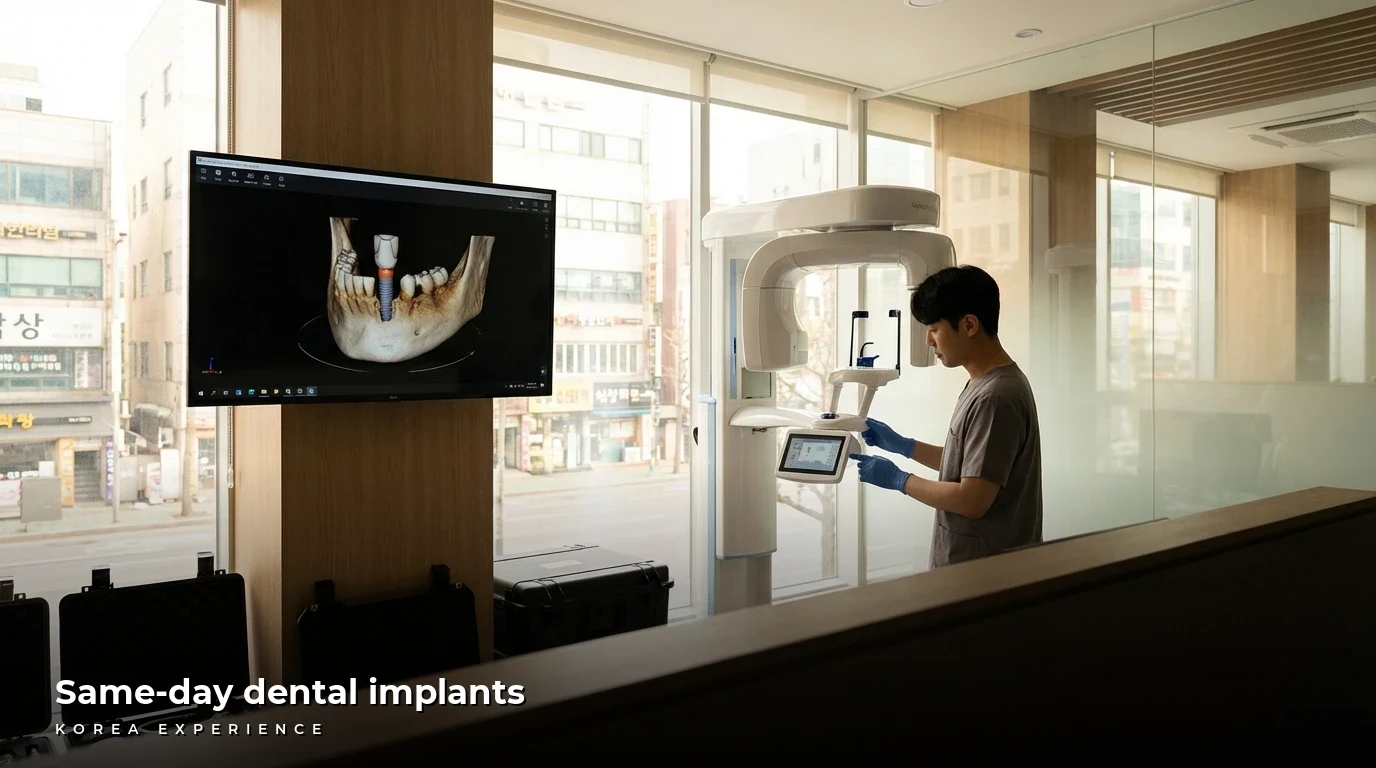
Get same-day dental implants in Seoul for 1000000 to 1800000 KRW in 2026. Enjoy a 95 percent success rate and save thousands compared to US or UK prices.
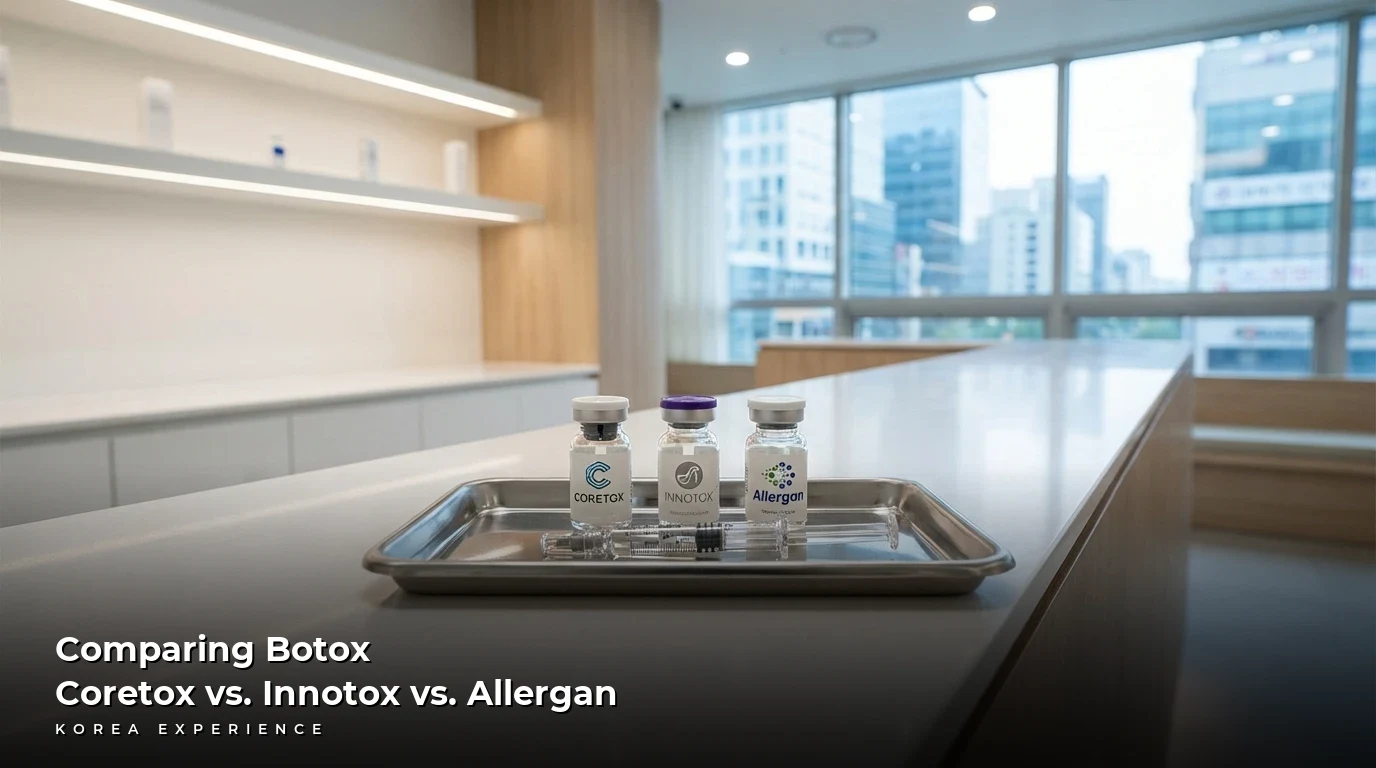
Confused by $20 Botox? We compare Allergan vs Coretox vs Innotox prices (₩25k-₩350k) and safety data to help you save 80% in Seoul.
A complete guide to senior joint replacement and cataract surgery in Korea. Save 40-60% on robotic procedures with world-class care and recovery facilities.
Compare 2026 costs for Ultherapy ($800+), Shurink ($100+), and Thermage in Seoul. Expert guide to pain levels, results, and choosing the right clinic.