Pansori and traditional storytelling performances guide
Discover the soul of Korea through Pansori. A complete guide to traditional storytelling venues, tickets, and etiquette for travelers.
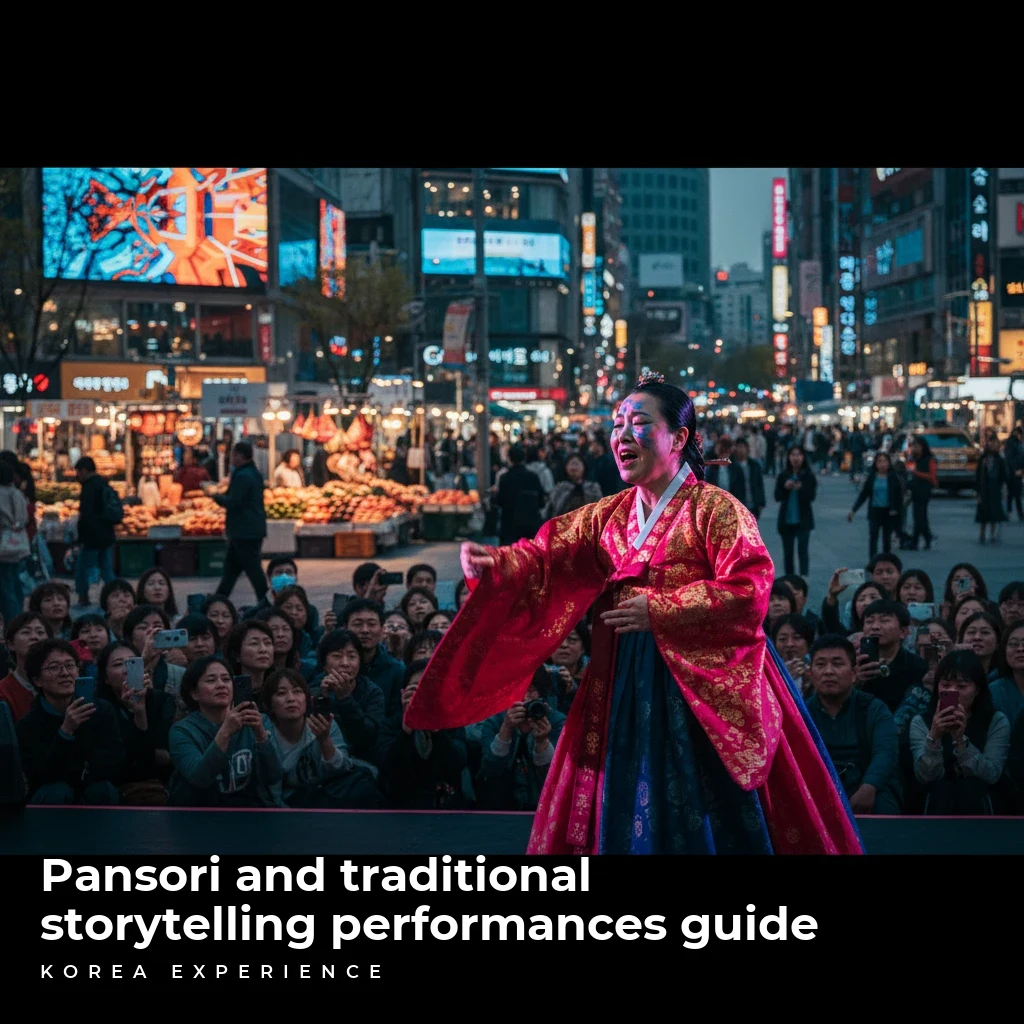
The sound of a single drum beat resonates through the wooden hall, followed by a voice that seems to carry the weight of centuries. This is Pansori, often described as "Korean Opera," but in reality, it is something far more raw and intimate. For international travelers seeking to understand the "Han" (a complex emotion of grief and resentment) that underpins much of Korean culture, attending a Pansori performance is not just an activity; it is a rite of passage.
For more details, check out our guide on Bonsai and Zen gardens finding peace in Korea traditional....
Related reading: Rainy Seoul Evenings.
Related reading: Korean Traditional Architecture Palace Tour Guide and Tips.
Learn more in our comprehensive guide to Korean traditional music and performance guide.
Designated as a UNESCO Intangible Cultural Heritage of Humanity in 2003, Pansori is a genre of musical storytelling performed by a vocalist (sorikkun) and a drummer (gosu). Unlike Western opera, which relies on elaborate sets and orchestras, Pansori relies entirely on the power of the human voice and a single barrel drum to captivate audiences for hours.
Whether you are a music aficionado or a curious traveler, navigating the world of traditional Korean performances can be daunting due to language barriers and venue options. This guide will walk you through exactly where to go, how much to pay, and how to appreciate the art form, ensuring your cultural deep-dive is seamless.
Key Takeaways
- 1Pansori features one singer and one drummer telling epic stories
- 2Tickets typically range from 20,000 to ₩70,000 per person
- 3The National Theater of Korea offers the most foreigner-friendly subtitles
Understanding Pansori: The Sound of the Soul
The word "Pansori" is a compound of pan (a place where people gather) and sori (sound). Originating in the 17th century during the Joseon Dynasty, it began as entertainment for commoners before gaining popularity among the aristocracy (Yangban) in the 19th century.
A performance consists of three main elements:
- Sori: The singing, which ranges from a whisper to a thunderous roar.
- Aniri: Spoken narration used to advance the plot.
- Ballim: Dramatic gestures using a folding fan (buchae) to illustrate the story.
The Role of the Fan
The singer's fan is not just a prop; it is a shapeshifter. In one scene, the singer may hold it folded to represent a sword or a writing brush; in the next, they may snap it open to symbolize the moon or a falling flower.
The Five Madang: Surviving Epics
Originally, there were 12 bodies of work, but only five epic stories, known as the "Five Madang," have survived in their entirety to the modern day. Knowing the basic plot of these helps immensely when watching a performance, even with subtitles.
- Chunhyangga: The most famous love story in Korea, often compared to Romeo and Juliet. It tells of the romance between Mong-ryong (a magistrate's son) and Chunhyang (the daughter of a courtesan). A full performance can last over 8 hours, though tourist versions are condensed to 80-90 minutes.
- Simcheongga: A tale of filial piety involving a daughter who sacrifices herself to the sea god to restore her blind father's sight.
- Heungbuga: A fable about two brothers—one greedy, one kind—and a magical swallow that brings rewards and punishments.
- Sugungga: A satirical story about a rabbit who outwits a dragon king and a turtle in an underwater kingdom.
- Jeokbyeokga: Based on the Chinese historical novel Romance of the Three Kingdoms, focusing on the Battle of Red Cliffs.
📊 Performance Endurance
Top Venues for Pansori in Seoul
Finding an authentic performance that is accessible to non-Korean speakers requires knowing the right venues. Seoul has invested heavily in making traditional arts accessible, with many theaters providing English, Japanese, and Chinese subtitles via screens or smart glasses.
1. The National Theater of Korea (Namsan)
This is the premier venue for large-scale traditional performances. Located on the slopes of Namsan Mountain, it is the home of the National Changgeuk Company of Korea. Changgeuk is a modified version of Pansori where multiple actors play different roles, making it much easier for modern audiences to follow than the traditional one-person show.
The theater is massive, with the main hall (Haeoreum) seating 1,563 people. Shuttle buses run every 10-15 minutes from Dongguk University Station (Line 3) to the theater before performances.
National Theater of Korea(국립극장)
2. Seoul Donhwamun Traditional Theater
For a more intimate experience, head to the Seoul Donhwamun Traditional Theater near Changdeokgung Palace. This venue is unique because it combines a modern acoustic design with the aesthetic of a traditional Hanok. The theater is small, with only 140 seats, ensuring you are never more than 10 meters away from the performers.
Because no microphones or amplifiers are used here ("natural acoustics"), you hear the raw power of the sorikkun. Tickets here are generally affordable, averaging ₩20,000 ($15 USD). It is located just a 5-minute walk from Anguk Station (Line 3, Exit 4).
3. Jeongdong Theater
Located near Deoksugung Palace, Jeongdong Theater is famous for its long-running "Miso" series and other adaptations that mix Pansori with traditional dance and instrumental music. These shows are specifically designed for international visitors. The visuals are spectacular, often utilizing projection mapping and elaborate costumes.
Venue Comparison: National Theater vs. Donhwamun
- ✓National Theater: Grand scale, English subtitles reliable, full cast productions (Changgeuk)
- ✓Donhwamun: Intimate setting, natural acoustics (no mics), authentic raw sound
- ✗National Theater: Higher ticket prices (up to 70k ₩), less interaction
- ✗Donhwamun: Subtitles sometimes limited, smaller production value
Jeonju: The Spiritual Home of Sound
If your itinerary allows for travel outside Seoul, Jeonju is the undisputed capital of Pansori. Located approximately 230km south of Seoul, Jeonju can be reached via KTX train in about 1 hour and 40 minutes (Ticket cost: ~₩34,600 one way).
Jeonju International Sori Festival
Held annually in the fall (usually late September or early October), this festival gathers traditional musicians from all over the world, with Pansori as the centerpiece. The Jeonju Sori Arts Center hosts marathon performances where masters perform the entirety of a story—a feat of endurance that can last 4 to 8 hours.
If you visit Jeonju Hanok Village on a weekend, head to the Chimyeongjasan Martyrs' Shrine area or the Jeonju Sori Culture Center. They often host free, open-air Pansori performances on Saturday afternoons around 2:00 PM. It's casual, and you can leave whenever you like.
Budgeting for Your Experience
Experiencing high-quality traditional music doesn't have to break the bank. In fact, compared to Broadway or West End shows, Korean traditional performances are incredibly affordable due to government subsidies aimed at preserving the arts.
💵 Performance Cost Estimates (2026)
VIP seats at National Theater or Dinner Shows
Small theaters like Donhwamun or Namsan Gugakang
Most tickets can be booked via Interpark Ticket or Melon Ticket global sites, which support English and foreign credit cards. Alternatively, the K-Performance site operated by the Korea Tourism Organization often offers discounts of 10-30% for foreigners.
How to Enjoy Pansori: The Art of "Chuimsae"
Pansori is not a passive experience. In Western classical music, silence is mandatory. In Pansori, silence is awkward. The audience is expected to participate through Chuimsae—exclamations of encouragement.
The drummer (Gosu) leads this, shouting words of encouragement to the singer when they need to catch their breath or emphasize a dramatic moment. The audience is invited to join in.
📖 How to Participate with Chuimsae
Step 1: Learn the Phrases
The two most common phrases are 'Eol-su!' (Excellent!) and 'Jal-handa!' (Good job!).
Step 2: Timing is Key
Don't shout while the singer is singing a complex melodic line. Wait for the pauses or the end of a rhythmic cycle.
Step 3: Follow the Drummer
If the drummer shouts, it's a safe bet that you can shout right after him. It creates a communal energy.
Etiquette Alert
While vocal participation is encouraged, photography and video recording are strictly prohibited in almost all indoor theaters in Korea. Ushers are very vigilant. Save the selfies for the curtain call or the photo zones in the lobby.
Modern Adaptations and Fusion
If 4 hours of wailing vocals sounds intimidating, you might prefer the modern evolution of the genre. "Fusion Gugak" blends traditional Korean instruments and vocal styles with pop, rock, jazz, and electronic music.
The band Leenalchi exploded onto the global scene with their hit "Tiger is Coming" (part of the viral "Feel the Rhythm of Korea" campaign), which is a funk-pop adaptation of the Sugungga story. Their success has opened doors for groups like ADG7 (Ak Dan Gwang Chil), who mix shamanic ritual music with upbeat pop.
Venues like Platform Changdong 61 and Hyundai Card Understage in Hannam-dong often host these contemporary crossover acts. Tickets for these shows are usually in the ₩44,000 to ₩66,000 range.
Traditional vs. Fusion Pansori
| Feature | Traditional Pansori | Fusion/Pop Pansori |
|---|---|---|
| Instrumentation | Drum (Buk) only | Bass, Synth, Drums, Guitar |
| Atmosphere | Solemn, emotional, raw | Upbeat, danceable, energetic |
| Duration | 1.5 to 8 hours | 90 minutes (concert style) |
| Venue | National Theater, Hanok | Clubs, Festivals, Art Halls |
Practical Logistics for Travelers
Best Time of Year
The best seasons for traditional performances are Spring (April-May) and Autumn (September-October). During these months, the royal palaces (Gyeongbokgung, Changdeokgung) often host evening concerts combining architecture and music.
- Royal Culture Festival: Usually held in May and October.
- Deoksugung Palace Concerts: Often free with palace admission (₩1,000).
Getting There
Navigating to these venues is efficient thanks to Seoul's world-class public transport.
- Subway: A single journey costs ₩1,400 (using T-Money card).
- Taxi: Base fare is ₩4,800 (as of 2026). Most drivers use navigation apps, so having the address in Korean (Hangul) is helpful.
📋 Travel Essentials
Why You Should Go
In an era of 15-second TikTok clips and fast-paced entertainment, Pansori demands patience. It asks you to sit, listen, and feel. It bridges the gap between the past and present, offering a window into the Korean soul that K-Pop and K-Dramas simply cannot provide.
Whether you choose a polished 70-minute show at Jeongdong Theater or a raw acoustic session at Donhwamun, the vibration of the drum and the cry of the sorikkun will leave a mark on your memory long after you leave Seoul.
❓ Frequently Asked Questions
Have more questions?Contact us →
About the Author
Korea Experience Team
Written by the Korea Experience editorial team - experts in Korean medical tourism, travel, and culture with years of research and firsthand experience.
Explore more in K-Culture
K-Pop, K-Drama, traditional arts, and modern culture — dive deep into the cultural phenomena that have captivated the world.
Browse All K-Culture ArticlesContinue Reading
Explore more articles you might find interesting
Discover the soul of Korean music. A complete 2026 guide to Pansori and Samulnori performances, venues, tickets, and etiquette for travelers.
Discover the soul of Korea through sound. A complete guide to booking and experiencing traditional Gayageum and Janggu classes in Seoul.
The ultimate guide to Gugak, Pansori, and fusion performances in Seoul. Discover venues, prices, and etiquette for the 2026 travel season.
Discover the best venues for Gugak performances in Seoul. From royal palaces to modern theaters, find ticket info, etiquette, and top cultural experiences.
Discover the top live music venues in Hongdae for K-Indie and underground rock. A complete guide to tickets, lineups, and vibes for travelers in 2026.
Discover the soul of Korean cuisine through its soups. A complete 2026 guide to Kimchi Jjigae, Doenjang Jjigae, and essential dining etiquette.