Busan Yeongdo Sinsun seafood guide 2026: Haenyeo and local gems
Discover the freshest seafood in Busan. From a $52 Haenyeo diver platter to a 10,000 KRW raw fish soup, explore the ultimate 2026 coastal dining guide.
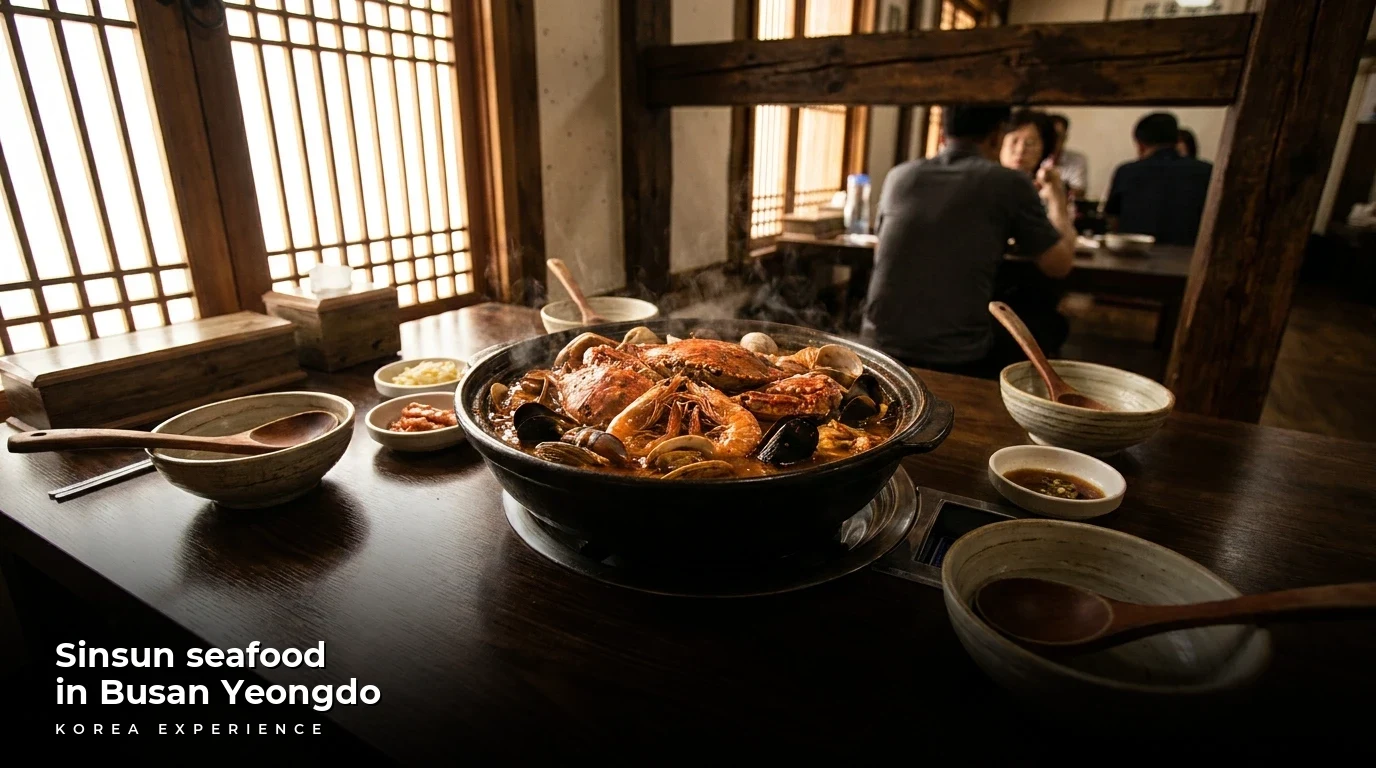
When you cross the bridge from the bustling, neon-lit mainland of Busan onto the rugged, windswept island of Yeongdo, the atmosphere shifts immediately. The air smells sharper, heavy with salt and the metallic tang of the shipyards. You have entered the historical maritime heart of the city, a place where the ocean dictates the rhythm of daily life. For culinary travelers in 2026, Yeongdo represents the absolute pinnacle of a very specific craving: the desire for "Sinsun" seafood.
Sinsun, meaning fresh, is not just an adjective here; it is a dining philosophy, a cultural heritage, and in some cases, the literal name of the best hidden restaurants on the island. Whether you are looking to balance a silver tray of wild-caught sea urchin on jagged coastal rocks while listening to the breathing whistles of traditional female divers, or you simply want to sit in an air-conditioned room and devour a massive, budget-friendly bowl of spicy cold raw fish soup, Yeongdo delivers an unparalleled seafood experience.
This comprehensive guide will break down everything you need to know about navigating the Yeongdo seafood scene in 2026. We will explore the legendary Yeongdo Haenyeo Village, the fiery late-night clam tents of Gamji Beach, and the unassuming local neighborhood joints that serve up the best value meals in the city. Prepare your palate, wear comfortable shoes, and let us dive into the freshest catch in Busan.
Key Takeaways
- 1Yeongdo offers three distinct seafood experiences: the cultural Haenyeo Village for ocean-side raw plates, Gamji Beach tents for late-night grilled clams, and local neighborhood restaurants for budget-friendly feasts.
- 2A budget of 70,000 KRW (roughly $52 USD) is the sweet spot for two people to share a premium Haenyeo seafood platter, sea urchin gimbap, seafood ramyeon, and local soju right on the coastal rocks.
- 3To beat the crowds and secure the best ocean views, arrive at the Yeongdo Haenyeo Culture Exhibition Hall around 3:00 PM, bringing a loaded WOWPASS or physical cash for seamless transactions.
📋 Quick Facts
The True Meaning of Sinsun in Yeongdo
Let us clear up a common point of confusion for international visitors relying on translation apps. If you ask a local Busan resident where to find "Sinsun seafood in Yeongdo," you are stepping into a linguistic double-meaning that will dictate exactly what kind of dinner you are going to have.
In the Korean language, the word translates literally to "fresh." When most domestic tourists rave online about getting fresh seafood in the Yeongdo district, they are talking conceptually. They are referring to the elemental experience of eating fish, sea squirt, and abalone that was pulled from the freezing ocean waters just hours prior by the island's legendary female divers. They are talking about sitting on the jagged, mossy rocks at the Yeongdo Haenyeo Village, feeling the salty sea spray on their faces, and eating raw sea cucumber that tastes like the pure, unadulterated ocean. It is less of a traditional restaurant meal and more of a visceral, interactive dining event.
However, because the word implies such high quality, there are actually beloved, specific local restaurants that use it as their proper name. The two most famous establishments are Sinsun Hoetjip (Fresh Raw Fish Restaurant) located in the Dongsam-dong neighborhood, and Sinsun Mulhoe (Fresh Cold Raw Fish Soup) tucked away in the bustling alleys of the Namhang market area.
If you walk into the latter, you are not getting the Instagram-famous rocky ocean view. What you are getting is an absolute culinary masterpiece of local, working-class Busan cuisine. For a mere 10,000 KRW, the aunties running the shop will drop a massive, frosty bowl of spicy, icy raw fish soup in front of you. The owner, a chef with decades of culinary experience, also brings out free braised mackerel, fresh lettuce wraps, and a bubbling pot of spicy fish bone stew. It is a feast designed to refuel the local shipyard workers, offering staggering value and profound flavor.
If you are exploring the broader Busan seafood guide fresh fish markets and restaurants, understanding this distinction is crucial. Are you in the mood for the windswept, cultural romance of eating wild sea urchin on the coastal rocks, or the unpretentious comfort of a local neighborhood joint that feeds you like family? In Yeongdo, you have the luxury of choosing both.
The Haenyeo Legacy and Yeongdo's Maritime History
To truly appreciate the seafood you are about to consume, you must understand the historical fabric of the island you are standing on. Yeongdo is not just another scenic district; it is the beating maritime heart of Busan.
Back in 1876, the opening of Busan Port transformed the northern edge of Yeongdo into a massive industrial and shipbuilding zone. Massive freighters, cranes, and dry docks dominated the skyline. But the southern and western edges of the island remained wild, defined by sheer cliffs, dense pine forests, and churning, treacherous ocean currents.
Enter the Haenyeo. While you may have heard of the famous female divers of Jeju Island, many of those incredible women migrated to the coastal areas of Busan, particularly Yeongdo, bringing their deep-sea diving culture with them. These women, many of whom are now grandmothers in their seventies and eighties, dive deep into the freezing ocean without any oxygen tanks or modern breathing apparatus. They hold their breath for minutes at a time, surfacing with a unique, high-pitched whistle known as the sumbisori to release the pressure in their lungs. They carry traditional nets, filling them with wild abalone, sea cucumber, conch, and sea urchin.
For decades, the Yeongdo Haenyeo Village was a wildly informal, almost guerrilla-style affair. The divers would set up ramshackle tents and plastic tarps right on the rocks by the crashing waves. Visitors would hand them cash, they would slice up the catch on a weathered wooden board, and everyone would eat sitting on overturned milk crates. It was chaotic, slightly unregulated, and incredibly romantic.
Busan Port Opens
Yeongdo emerges as a critical maritime and industrial hub, laying the foundation for its rich, working-class seafood culture.
K-Food Media Boom
The Yeongdo Haenyeo Village is heavily featured on national television shows, popularizing the iconic sea urchin gimbap combination.
Geopark Designation
Taejongdae Park, the southern tip of Yeongdo, is designated as part of the Busan National Geopark, boosting eco-tourism.
Local Buzz for Sinsun Mulhoe
Local neighborhood spots gain serious traction for offering massive 10,000 KRW meals, contrasting the pricier tourist destinations.
Haenyeo Village Modernization
The old shoreline tents are consolidated into the modern Yeongdo Haenyeo Culture Exhibition Hall, formalizing the market.
Digital Payment Shift
Cards and digital wallets like WOWPASS are now widely accepted across the Yeongdo seafood scene, replacing the cash-only era.
In recent years, the local government stepped in to preserve the culture and clean up the shoreline. They constructed the shiny, modern Yeongdo Haenyeo Culture Exhibition Hall. Today, the grandmothers operate out of the clean, organized first floor of this building. The red plastic tubs of the past have been replaced by aerated glass water tanks. But do not worry—the spirit remains exactly the same. You still buy the seafood directly from the divers, load it onto a retro silver tray, and hike down to the rocks to eat by the sea. They simply upgraded the infrastructure.
Breaking Down Your Yeongdo Seafood Options
With so many incredible dining modalities on one island, it helps to categorize the experiences based on your travel style, budget, and culinary preferences. Let us break down the big three options for fresh seafood in Yeongdo.
Option A: The Culture Seeker (Yeongdo Haenyeo Village)
If you are visiting Busan for a few days and want that ultimate, core-memory experience, this is your destination. You come here for the legendary sea urchin gimbap. You purchase two rolls of standard Korean seaweed rice rolls, buy a plate of fresh sea urchin, and physically scoop the creamy, bright orange urchin onto the rolls yourself. The briny, sweet taste of the sea urchin mixing with the sesame oil of the rice is an absolute flavor explosion. Paired with a steaming bowl of spicy seafood ramyeon and a plastic cup of local soju while watching the sunset over the waves, it is an unbeatable, cinematic moment. This is best for couples, photographers, and adventurous eaters who do not mind sitting on plastic stools on slippery rocks.
Option B: The Night Owl (Gamji Beach Clam Tents)
Perhaps you are not a fan of raw, squishy sea creatures. If you want your seafood cooked, head down to the Gamji Beach area near Taejongdae. Here, you will find an entire street of pocha, or tent restaurants. This is where the party happens. You order a grilled clam set for about 50,000 KRW, and they bring out a massive, tiered tray of scallops and clams. You cook them over a roaring charcoal fire right at your table, topping them with butter, onions, and handfuls of mozzarella cheese. When the clam juice boils with the melted cheese, you scoop it up. It is decadent, loud, and incredibly fun. If you want to master the local drinking culture while you are here, check out our guide on Mastering the Pour: The Ultimate 2026 Guide to Korean Drinking Etiquette. This spot is best for groups of friends, late-night drinking sessions, and people who prefer cooked food.
Option C: The Budget Foodie (Local Neighborhood Spots)
If you are a digital nomad, a solo traveler, or a budget-conscious foodie tired of paying tourist premiums, you need to hit the local spots. Head to the Namhang Market area. For 10,000 KRW, you can sit in a comfortable, air-conditioned room and be treated like royalty by the restaurant staff. The spicy, icy raw fish soup will cool you down on a brutal Korean summer day, and the generous side dishes provide incredible value. If you are traveling alone and want more tips on eating well, our guide to Solo Fine Dining in Seoul 2026: Michelin Stars to Hon-bap Guide offers great insights into the solo dining culture. These local spots are best for budget travelers, solo diners, and those seeking absolute authentic local flavors away from the Instagram crowds.
| Feature | Haenyeo Village | Local Spots (Mulhoe) | Gamji Beach Clam Tents |
|---|---|---|---|
| Cost Estimate | 30,000 - 70,000 KRW | 10,000 - 40,000 KRW | 50,000 - 80,000 KRW |
| Vibe & Setting | Outdoors, rocky shore, ocean breeze | Indoors, traditional, air-conditioned | Semi-outdoors, tent style, fiery grills |
| Signature Dish | Sea Urchin Gimbap & Raw Seafood | Cold spicy raw fish soup & Sashimi | Grilled Clams with cheese & butter |
| Best Time to Go | Afternoon (closes around 18:00) | Lunchtime or early dinner | Late night (open until 01:00 AM) |
| Target Audience | Culture seekers, photographers | Budget travelers, authentic foodies | Groups, late-night drinkers |
Pros
- ✓The Ultimate Ocean View: Sitting on the rocky coastline hearing the waves crash just feet away is a cinematic experience.
- ✓Cultural Immersion: Eating seafood harvested by traditional female divers and learning about their incredible legacy.
- ✓Flavor Explosions: The legendary combination of creamy sea urchin on top of sesame-oil brushed seaweed rice rolls.
Cons
- ✗The Tourist Premium: Prices for raw seafood platters at the village are steep compared to the actual volume of food provided.
- ✗Rustic Logistics: Carrying a heavy tray of food down slippery, mossy rocks requires balance and ruins the experience in bad weather.
- ✗Assertive Service: The hardworking grandmothers operate in a fast-paced, chaotic environment; do not expect quiet, polite restaurant service.
The Step-by-Step Guide to the Haenyeo Village
Visiting the Haenyeo Village can be slightly intimidating if you do not speak the language and are unfamiliar with the unwritten rules of the market. Here is exactly how to execute the perfect afternoon feast.
📖 Mastering the Yeongdo Haenyeo Village Experience
Step 1: Getting to Yeongdo Island
From Nampo Station (Subway Line 1), take Exit 6. Walk to the bus stop and board Bus 7, 71, or 508. Ride for 15-20 minutes until you reach the Nam High School stop. Sit on the right side of the bus for stunning coastal views.
Step 2: Ordering at the Exhibition Hall
Walk to the 1st floor of the Yeongdo Haenyeo Culture Exhibition Hall. Approach the water tanks and point to the 30,000 KRW small mixed platter, add a plate of sea urchin for 10,000 KRW, and grab two rolls of gimbap.
Step 3: The Tray Balancing Act
Once you pay, they will load your plates, dipping sauces, chopsticks, and drinks onto a retro silver tray. Carry this tray out the back door and carefully navigate the rocky shoreline to find a flat spot for your plastic table.
Step 4: Crafting the Perfect Bite
Take a slice of the simple seaweed rice roll, dip it lightly in soy sauce, and scoop a generous portion of the creamy sea urchin on top. Eat it in one bite, followed by a sip of ice-cold local soju.
Most tourists only know about the Haenyeo Village, but if you want to know what the locals actually eat, you have to go to the raw fish soup spots near the Namhang Market. For 10,000 won, you get a massive bowl of icy, spicy raw fish soup, plus mackerel stew and spicy fish bone broth on the side. It is the best kept secret in Yeongdo, and it is where the shipyard workers go to eat.
Essential Survival Tips for 2026 Travelers
While the romantic image of eating seafood by the ocean is alluring, the reality of traveling in a foreign country requires some practical preparation. Here is the unfiltered truth about navigating Yeongdo.
First, there is an ongoing domestic debate regarding the prices at the Haenyeo Village. If you search Korean social media, you will find locals complaining about the high costs. They are not entirely wrong. Paying 30,000 KRW for a platter that consists of one sliced sea cucumber, a handful of sea squirt, and some conch is objectively expensive for the sheer volume of food. If you took that same money to a local neighborhood restaurant, you would get a massive plate of premium flounder with ten side dishes. You must shift your mindset: at the Haenyeo Village, you are paying for the seat fee, the ocean view, and the cultural novelty of the female divers. Accept that, and you will have a fantastic time.
Second, the weather dictates absolutely everything. If it is heavily raining, or if it is the dead of winter with howling ocean winds, the outdoor seating is miserable, and sometimes the vendors will not even set the tables up outside. Always check the weather app. If conditions are poor, pivot immediately to the Gamji Beach clam tents where you are shielded from the elements by heavy tarps and the radiant heat of the charcoal grills.
Third, let us discuss hygiene and nature. You are eating raw seafood on wet rocks. There are seagulls everywhere. They are essentially flying raccoons, and they are not scared of humans. Do not leave your food unattended while taking photos. Additionally, the restroom is located back inside the main Exhibition Hall building on the second floor. It is clean and modern, but if you have consumed a few bottles of soju down on the slippery rocks, that hike back up to the bathroom is going to require careful footing.
Digital Payments and Queueing in Yeongdo
Korea has heavily transitioned to digital table-ordering tablets and reservation apps that often require a Korean phone number or Alien Registration Card (ARC) to queue. If you want to learn more about navigating these systems, read our CatchTable Global: Book Michelin Restaurants in Korea (2026) guide.
However, here is your survival strategy for Yeongdo: 1. The Haenyeo Village is totally analog. You do not need an app to queue. Just walk up to the tanks, point, and pay. 2. Payment Methods: While the grandmothers used to demand cash transfers, they now fully accept credit cards. However, foreign Visa or Mastercards sometimes fail on older card readers. Bring physical Korean Won, or better yet, get a WOWPASS or Namane Card at the airport. These prepaid cards function exactly like local Korean debit cards and will work flawlessly at every tent, market, and restaurant in Busan. If you need to grab cash or snacks before heading to the island, check out our guide on GS25 vs. CU: The Ultimate 2026 Guide to Korean Convenience Store Feasts.
The Culinary Anatomy of a Haenyeo Platter
If you have never eaten freshly harvested, wild-caught Korean seafood, the textures and flavors can be surprising. The standard 30,000 KRW small platter at the Haenyeo Village usually features a rotating cast of marine life depending on the season and the morning catch.
Sea Squirt: Bright orange and bulbous, this is often the most polarizing item on the plate. It has a squishy, slightly chewy texture and an incredibly potent flavor that tastes exactly like a gulp of seawater mixed with iodine and a hint of sweetness. Locals consider it the ultimate palate cleanser.
Sea Cucumber: Served sliced into thick, translucent rings, raw sea cucumber is all about texture. It is incredibly crunchy, almost cartilaginous, with a very mild, clean flavor. It is best enjoyed dipped heavily into the sweet and spicy red chili paste provided on your tray.
Conch: Sliced thin, raw conch offers a satisfying, dense chewiness that is less crunchy than sea cucumber but firmer than fish sashimi. It has a subtle, sweet oceanic flavor that pairs beautifully with a dab of wasabi and soy sauce.
Abalone: If you upgrade your platter, you might receive raw abalone. Unlike the soft, buttery texture of cooked abalone, the raw version is remarkably crisp and crunchy, with a pristine, sweet flavor that is highly prized in Korean cuisine.
Navigating the Namhang Market
If you decide to take the budget-friendly route and visit the local raw fish soup restaurants, you will find yourself in the Namhang Market area. This is a working-class neighborhood, far removed from the polished tourist zones of Haeundae or Gwangalli.
Walking through the market, you will see bubbling vats of pork soup, vendors selling vibrant red chili flakes, and tanks filled with massive flatfish. When you enter a spot like Sinsun Mulhoe, do not expect English menus. Simply hold up one finger and say "Mulhoe, hana-yo" (One raw fish soup, please).
The dish arrives as a mountain of shredded cabbage, pear, and cucumber, topped with a generous mound of fresh, white-fleshed sashimi, all sitting in a partially frozen, slushy broth made of gochujang (red chili paste), vinegar, and sugar. You mix it all together until the ice melts slightly, creating a vibrant, spicy, sweet, and sour soup. You are given a bowl of warm rice to eat alongside it, and the contrast between the icy, spicy fish and the warm, comforting rice is a revelation.
❓ Frequently Asked Questions
Have more questions?Contact us →
Conclusion: Your Perfect Yeongdo Itinerary
If you want the ultimate, foolproof Yeongdo seafood itinerary for 2026, here is exactly what you should do. Sleep in, grab a light pastry and coffee for breakfast, and take the bus up the winding coastal roads to the Yeongdo Haenyeo Village around 3:30 PM. Buy the sea urchin, the seaweed rice rolls, and the spicy seafood noodles. Carry your silver tray down to the rocks and eat as the afternoon sun begins to set, taking in the salty breeze and the incredible views of the ships passing in the distance.
Once the sun goes down and the ocean gets chilly, pack up your tray and return it to the grandmothers. Catch a quick taxi over to the Gamji Beach area. Walk into one of the glowing, warm clam tents, order a sizzling platter of cheese-covered scallops, and drink local Busan soju until midnight while the waves crash against the pebbles outside. It is the perfect blend of raw cultural history and modern, indulgent Korean nightlife. You will leave the island very full, slightly tipsy, and with a profound appreciation for the freshest seafood in South Korea.
Sources:
- Wanderlog - Context on fresh seafood packing and raw fish quality in Busan.
- Klook - Details on the cultural exhibition hall and fresh sea squirt offerings.
- Daum Cafe - Critical local review detailing the 10,000 KRW raw fish soup in Namhang-dong.
- KoreaToDo - Vital transportation details, bus numbers, and walking routes to the Haenyeo Village.
- DiningCode - Pricing, operating hours, and menu details for the Taejongdae clam tents at Gamji Beach.
- Tistory Blogs - Firsthand accounts of the Haenyeo village modernization, the transition from tents to the new building, pricing, and the card payment shift.
- Grokipedia - Historical context on the 1876 opening of Busan Port and Yeongdo's maritime heritage.
- VisitBusan - Official tourism details regarding the Geopark designation and coastal trails.
About the Author
Korea Experience Team
Written by the Korea Experience editorial team - experts in Korean medical tourism, travel, and culture with years of research and firsthand experience.
Explore more in Food & Dining
Korean BBQ, street food, Michelin restaurants, and regional specialties — your ultimate guide to eating well in Korea.
Browse All Food & Dining ArticlesContinue Reading
Explore more articles you might find interesting
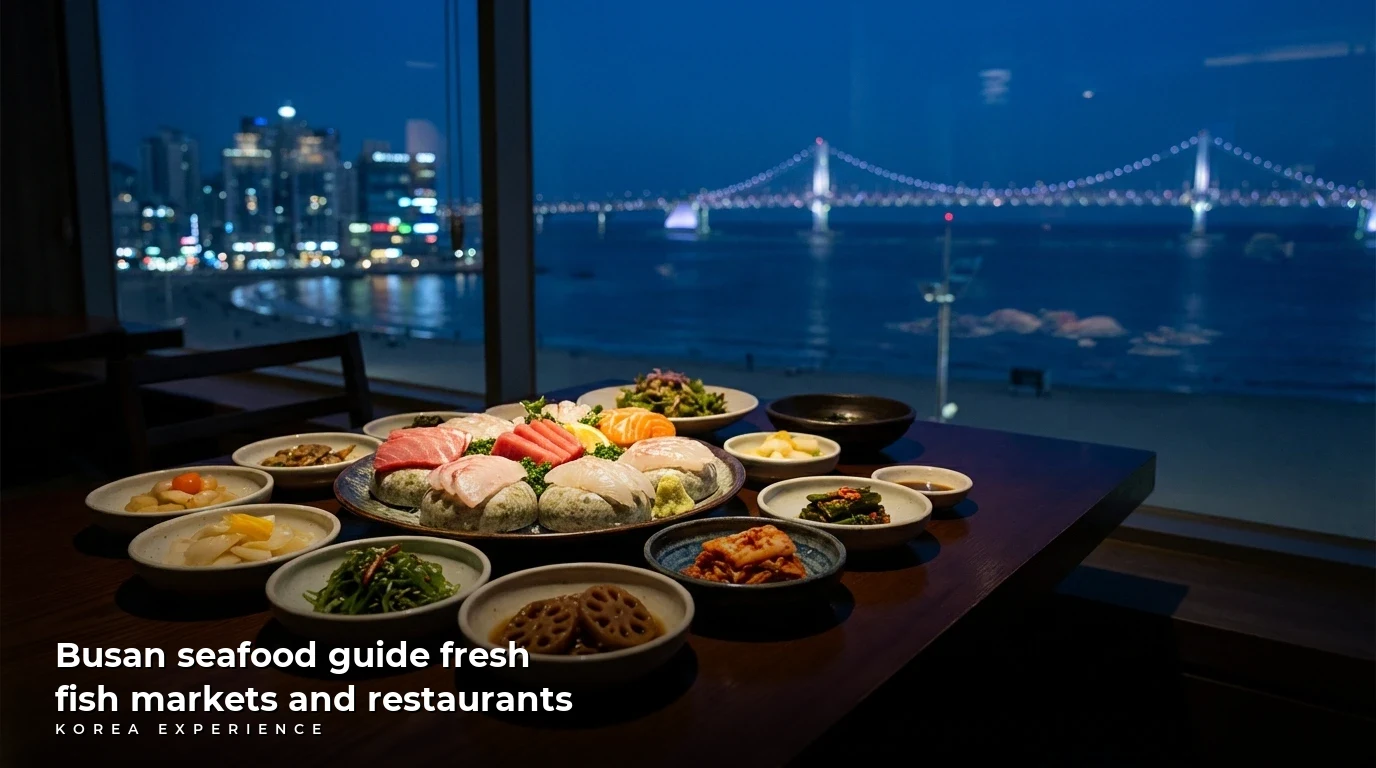
Explore the ultimate Busan seafood guide. Discover Jagalchi Market, Gwangalli raw fish centers, and top local restaurants for fresh catches.
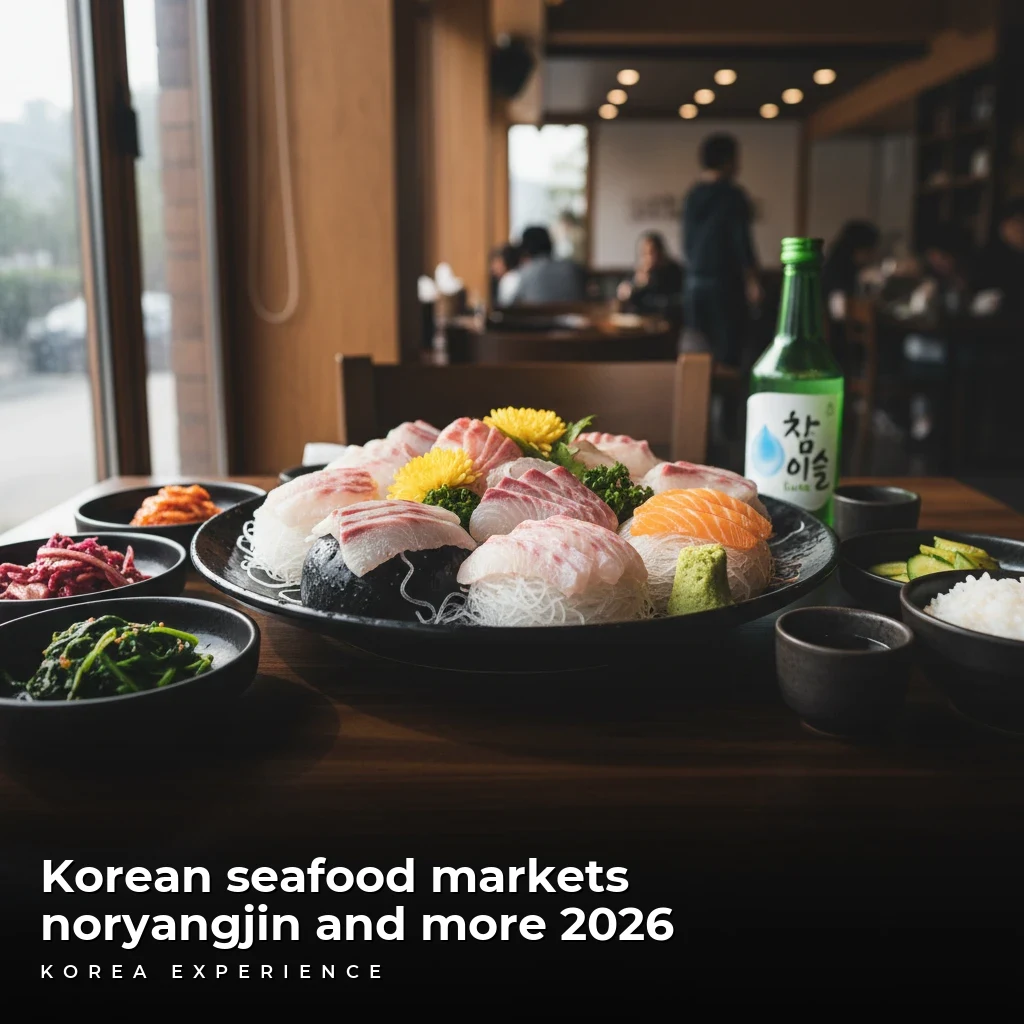
The ultimate 2026 guide to Noryangjin and Korea's top seafood markets. Discover prices, dining etiquette, and hidden gems for the freshest sashimi.
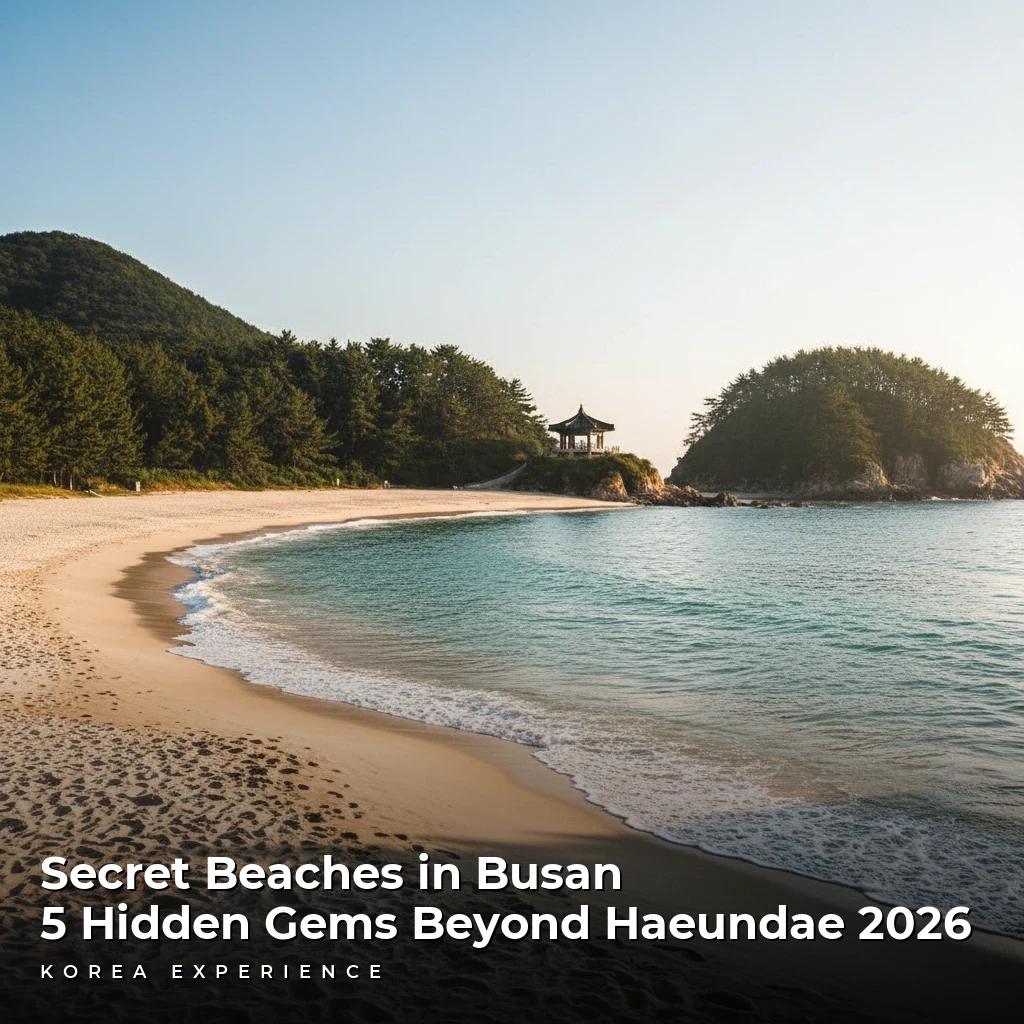
Discover 5 secret beaches in Busan beyond Haeundae. From surfing at Songjeong to Dadaepo's ₩0 fountain shows, explore Korea's coast like a local.
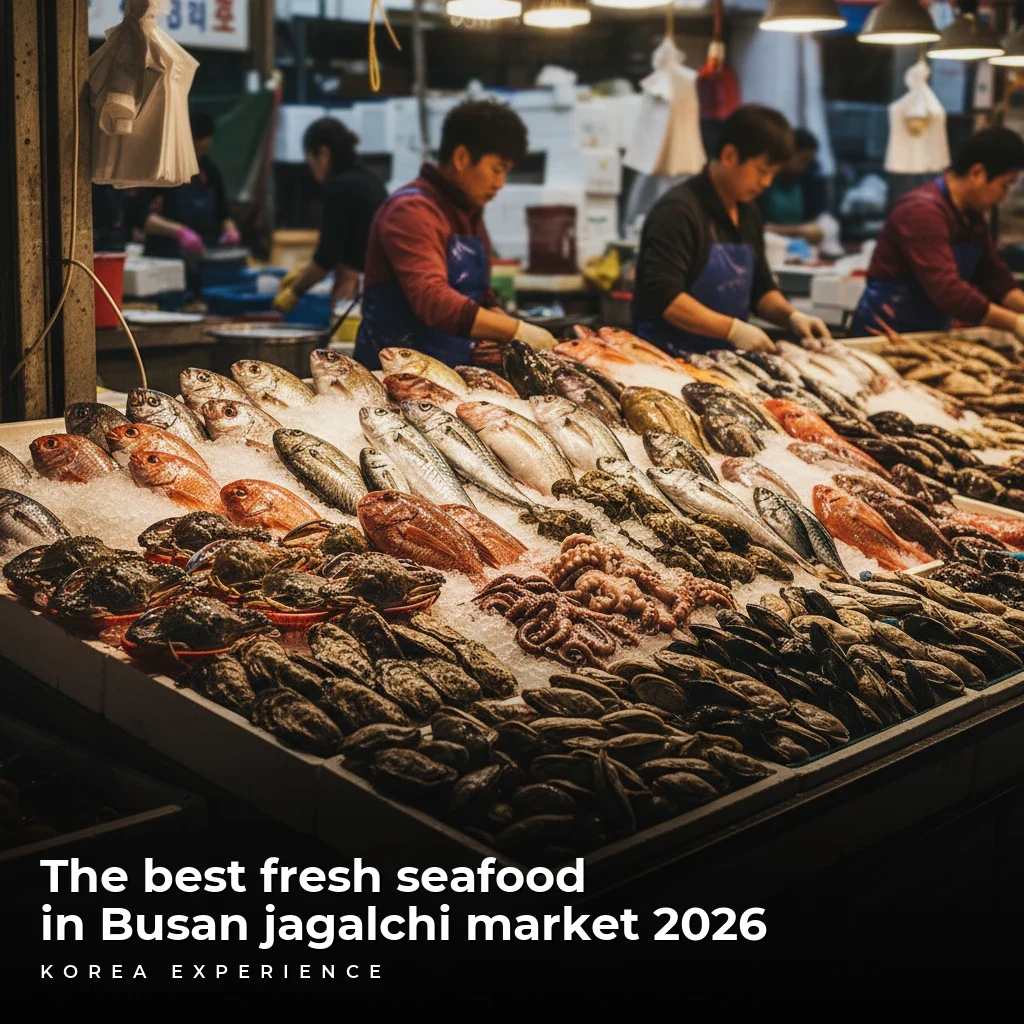
Discover the best fresh seafood in Busan Jagalchi Market 2026 with our expert guide on pricing, top stalls, and dining tips for travelers.
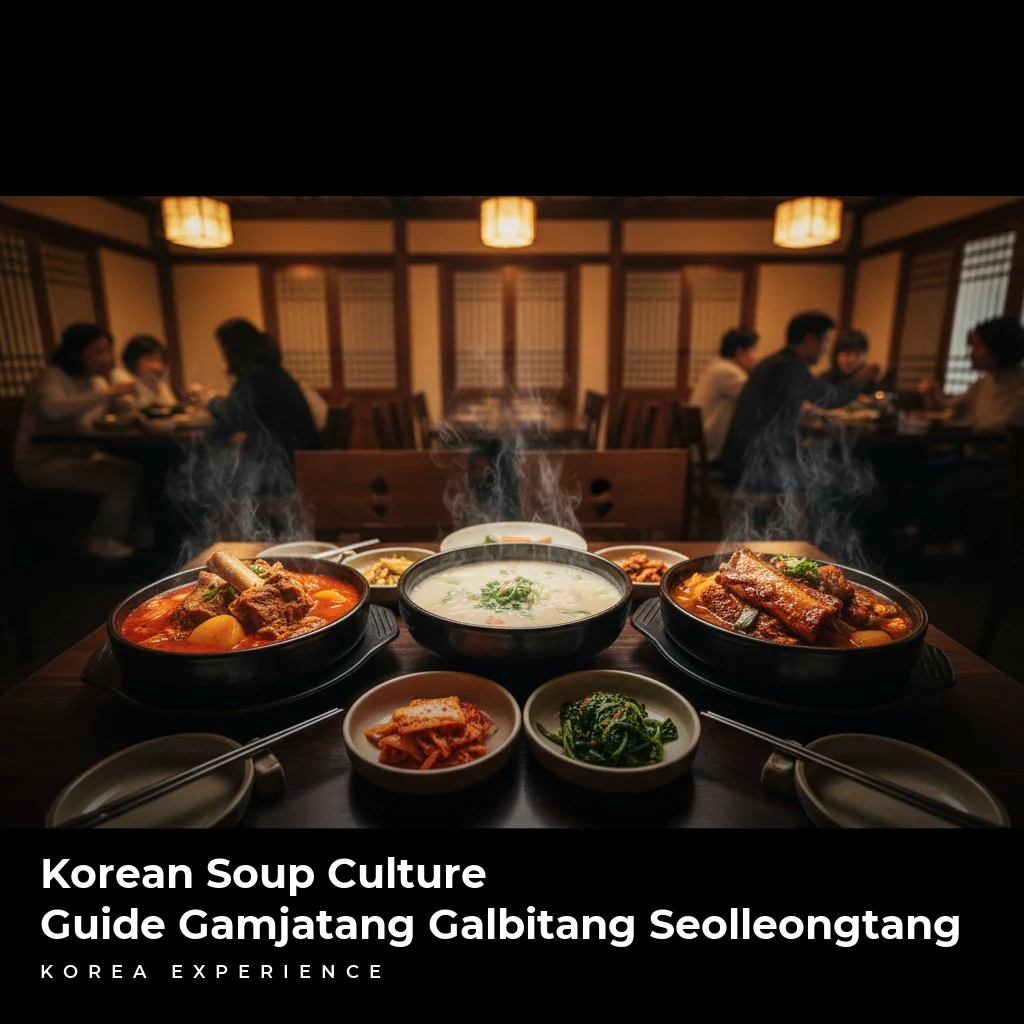
Discover the heart of Korean dining with our deep dive into Gamjatang, Galbitang, and Seolleongtang. Learn where to eat, how to order, and local etiquette.
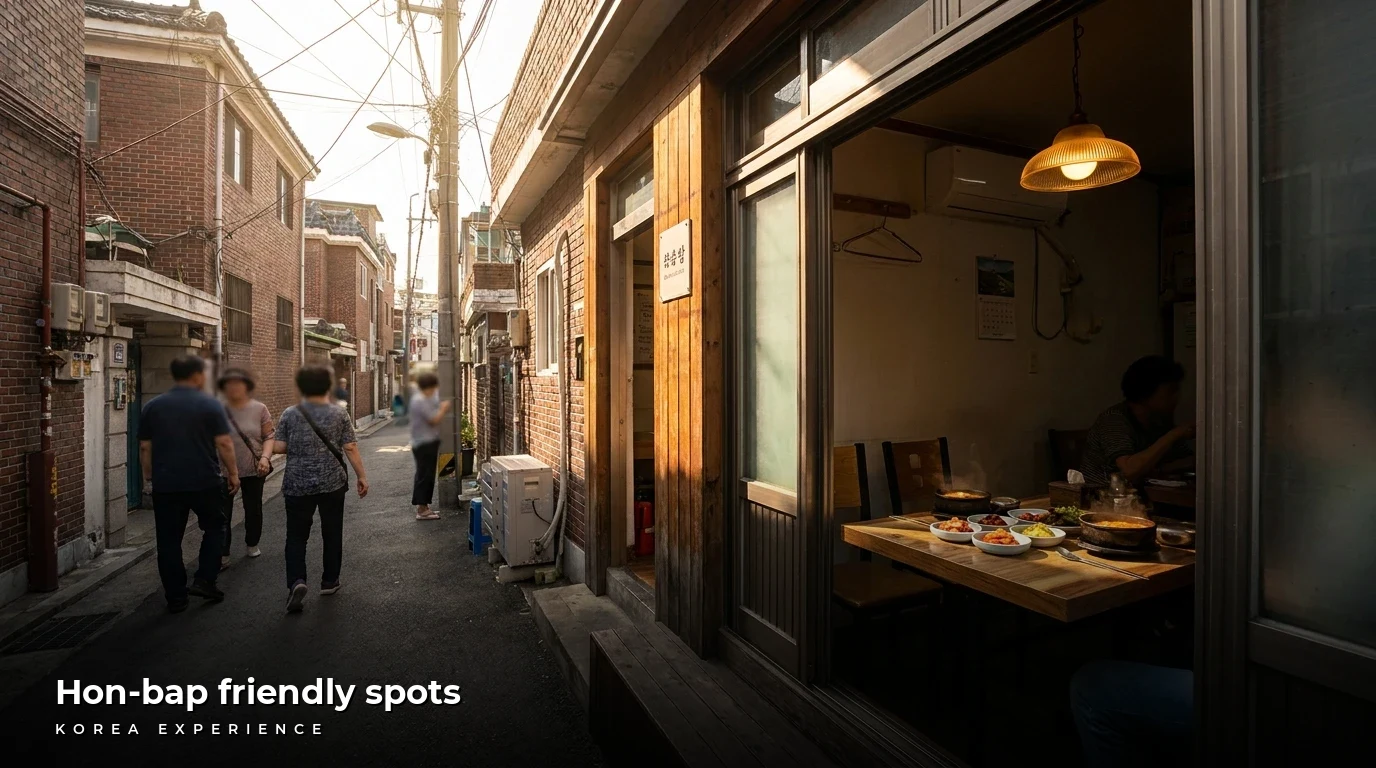
With 36.1 percent of households living alone in 2026 Seoul solo dining is booming. Discover the best spots and apps to enjoy Korean BBQ without a local ID.