Tattoo removal in Korea: The latest laser tech for stubborn ink 2026
Discover top 2026 laser tattoo removal in Korea. Picosecond tech removes ink 40% faster with prices starting at ₩50,000 per session.
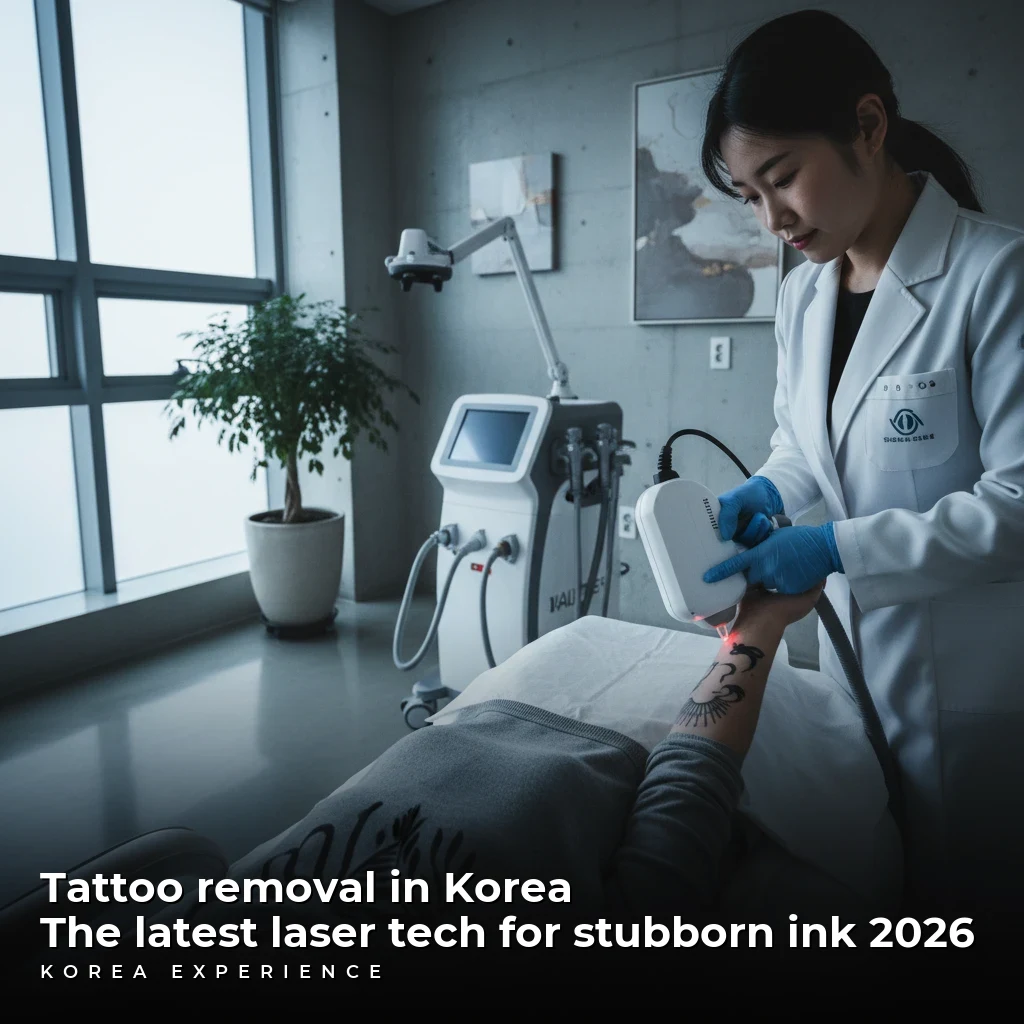
Tattoo removal in Korea has evolved rapidly in 2026, leveraging the world's most advanced Picosecond laser technology to treat stubborn ink with fewer sessions and less pain than traditional methods. If you are seeking to erase a past decision, correct a cosmetic eyebrow tattoo, or simply clear canvas space, Seoul's dermatology clinics offer a standard of care that is globally unmatched. The combination of high-powered lasers (specifically the 450-picosecond pulse width machines), board-certified dermatologists, and competitive pricing makes Korea the premier destination for this procedure.
The short answer: Korean clinics utilize 2026-generation Picosecond lasers (like PicoSure Pro and StarWalker) that shatter ink particles into dust-like debris 40% more effectively than older Q-Switch models. Treatments typically cost 50-70% less than in Western countries, with sessions starting around ₩50,000 ($38 USD) for small tattoos, and recovery times are accelerated through advanced post-care protocols.
Key Takeaways
- 1Picosecond lasers in Korea operate at 450ps speeds, shattering ink 40% faster than older tech
- 2Average cost is ₩50,000-₩150,000 ($38-$115) per business card-sized area
- 3Downtime is minimal with advanced Korean hydrocolloid dressings (Duoderm)
Why Korea dominates the global tattoo removal market
In 2026, South Korea continues to solidify its reputation as the "Plastic Surgery Capital of the World," but the dermatology sector—specifically laser treatments—has seen the highest growth rate, increasing by 18% year-over-year since 2023. While tattoos have become increasingly popular among the younger Korean demographic (with an estimated 3 million Koreans possessing at least one tattoo), the demand for removal has risen in parallel due to changing employment standards and aesthetic preferences.
This high domestic demand has created a hyper-competitive market. Clinics in Gangnam and Cheongdam-dong invest heavily in the absolute latest hardware to attract clients. In many Western countries, a clinic might use a laser machine for 10 years to maximize return on investment. In Seoul, a laser is considered "old" after 3 years. This means as a medical tourist, you are almost guaranteed access to the 2026 industry standard, not technology from 2015.
Furthermore, Korean dermatologists treat a high volume of pigment issues. Because Asian skin is more prone to post-inflammatory hyperpigmentation (PIH), Korean doctors are experts at calibrating lasers to remove ink without burning the surrounding melanin. This expertise is crucial for patients with darker skin tones who are often turned away by Western clinics fearing scarring.
📊 Korean Laser Efficiency
Understanding the technology: Picosecond vs. Nanosecond
To understand why removal in Korea is superior, you must understand the physics. Traditional tattoo removal used Q-Switched lasers, which operate in nanoseconds (one billionth of a second). These lasers heat the ink particles to break them up. This is a photothermal effect.
The current standard in Korea, the Picosecond Laser, operates in picoseconds (one trillionth of a second). This is 1,000 times faster.
The Photoacoustic Effect
Because the energy is delivered so rapidly, it creates a "photoacoustic" effect rather than a thermal one. Imagine a rock (the ink). A nanosecond laser heats the rock until it cracks into pebbles. A picosecond laser hits the rock with a shockwave that shatters it into sand.
Your body's immune system (specifically white blood cells called macrophages) can flush out "sand" much easier than "pebbles." This is why patients in Korea often see results in 5-8 sessions, whereas traditional methods might take 15-20 sessions over two years.
Laser Tech Comparison 2026
| Feature | Q-Switch (Old) | Picosecond (Korea Standard) |
|---|---|---|
| Pulse Speed | Nanosecond | Picosecond (1/trillionth) |
| Mechanism | Thermal (Heat) | Acoustic (Sound/Shock) |
| Risk of Scarring | Moderate | Very Low |
| Colors Treated | Limited (mostly black) | Full Spectrum (incl. green/blue) |
The cost of tattoo removal in Korea vs. the World
Cost is usually the primary driver for medical tourists. In the United States or the UK, tattoo removal is often priced per square inch, with a single session for a medium-sized tattoo costing between $200 and $500.
In Korea, the pricing structure is different. It is generally based on the complexity and the laser shot count, but the baseline is significantly lower due to the volume of patients.
2026 Price Breakdown
For a standard black ink tattoo, roughly the size of a business card (approx. 5cm x 9cm), you can expect to pay:
- Economy Clinics: ₩50,000 - ₩80,000 ($38 - $60 USD) per session.
- Premium Dermatology Clinics: ₩100,000 - ₩200,000 ($75 - $150 USD) per session.
- Full Sleeve Removal: ₩1,500,000 - ₩2,500,000 ($1,150 - $1,900 USD) per session (often discounted as a package).
💵 Cost Per Session (Business Card Size)
Includes skin regeneration care & English translation
Fast service, basic numbing, domestic lasers
It is important to note that most tattoos require multiple sessions. If you are living in Korea or planning a long-term stay, purchasing a "package" of 5 or 10 sessions usually grants an additional 10-20% discount. For short-term travelers, single sessions are still highly economical compared to Western rates.
For a broader context on how medical costs fit into general travel budgets, check our guide on the cost of living in Seoul vs Busan.
The Procedure: What to expect step-by-step
If you are booking a session in Seoul for the first time, the efficiency might surprise you. Korean clinics run like well-oiled machines. Here is the typical timeline for a 2026 appointment.
📖 Your Tattoo Removal Appointment
Step 1: Registration & Consultation
You will check in via tablet. A consultant (Siljangnim) will assess the ink depth and skin type using a skin scanner.
Step 2: Numbing
A high-strength lidocaine cream is applied to the area. It is covered with plastic wrap to maximize absorption.
Step 3: The Laser Treatment
The doctor performs the procedure. Cold air (Zimmer cooler) is blown on the skin simultaneously to reduce pain.
Step 4: Cooling & Dressing
Immediate ice pack application followed by antibiotic ointment and a sterile dressing.
Pain Management
Does it hurt? Yes. Tattoo removal is universally acknowledged to be more painful than getting the tattoo itself. However, Korean clinics are very generous with numbing agents.
In 2026, many premium clinics also offer "Air Cooling" systems (Zimmer Cryo) that blast -30°C air onto the skin during the laser shots. This numbs the nerve endings instantly, reducing pain perception by about 40-50%. If you have a very low pain tolerance, you can request injectable anesthesia (local lidocaine shots) for an extra fee, usually around ₩10,000 - ₩20,000.
Medical Disclaimer
We are travel experts, not doctors. The information here is for educational purposes. Always consult with a board-certified dermatologist before undergoing laser treatments.
Eyebrow and Cosmetic Tattoo Removal
A unique sub-niche of tattoo removal in Korea is the correction of semi-permanent makeup (microblading). Because eyebrow embroidery is so common in Korea (market penetration is over 40% for women in their 20s-40s), the technology to remove bad work is incredibly refined.
Unlike body tattoos, cosmetic ink often contains iron oxide. If treated with the wrong laser wavelength, the iron can oxidize and turn the eyebrows bright red or even black instantly. Korean dermatologists use specific low-fluence settings on 1064nm lasers to gently break down this pigment without damaging the eyebrow hair follicles.
If you have old, discolored microblading (often turning salmon-pink or blue-grey over time), a trip to a Korean clinic can correct this in 1-3 sessions. This is significantly faster than body ink because cosmetic pigment is deposited more superficially in the dermis.
Where to go: Choosing the right clinic
Seoul has hundreds of clinics, but for tattoo removal, you want a "Dermatology Specialist" (Look for the logo "피부과 전문의"). General practitioners can legally operate lasers, but specialists have 4+ years of extra residency training specifically in skin interactions.
For foreign travelers, the districts of Gangnam and Sinsa are the most foreigner-friendly, often having in-house English translators.
Clean Skin Clinic (Representative)(클린피부과)
For a curated list of top-tier facilities, specifically focusing on foreigner-friendly services, read our guide to the best Korean skin clinics in Gangnam. If you are looking for broader options across the city, check our guide to dermatology clinics for foreigners.
Recovery and Aftercare in Korea
One of the major advantages of getting treated in Korea is the accessibility of superior aftercare products. In the West, you are often told to just "put Vaseline on it." In Korea, the standard of care involves Hydrocolloid Dressings (commonly known as pimple patches or Duoderm).
"Do not let the scab dry out. In Korea, we keep the wound moist using Duoderm patches for 3-5 days. This prevents hard scabbing and reduces the risk of scarring by 80%. You can buy these at any Olive Young or pharmacy for about 3,000 won."
The 4-Week Healing Timeline
- Day 1-3: The area will be red, swollen, and may blister. This is normal. Keep it covered with the patch.
- Day 4-7: Blisters subside. skin may peel. It will itch. Do not scratch.
- Week 2-3: The skin looks healed on the surface, but the immune system is actively carrying away ink.
- Week 4-6: The tattoo gradually fades. It will look lighter weeks after the session than it did immediately after.
While recovering, diet plays a role. Korean culture emphasizes foods that promote skin regeneration. You might want to explore Korean healing foods for surgery recovery to boost your immune system's ability to clear the ink.
Stubborn Colors: Blue, Green, and Red
Not all ink is created equal. Black ink absorbs all laser wavelengths, making it the easiest to remove. However, colored tattoos require specific wavelengths.
- Red/Orange/Yellow: Requires a 532nm wavelength.
- Green/Blue: The hardest to remove. Requires a 755nm (Alexandrite) or 730nm wavelength.
- Black/Grey: Best treated with 1064nm.
Many budget clinics in other countries only possess a 1064nm laser, meaning they cannot effectively treat green or blue ink. Korean clinics typically utilize "Dual" or "Tri-wavelength" Pico machines (like the PicoWay or PicoPlus) that can switch wavelengths instantly. If you have a multi-colored tattoo, verify the clinic has a 755nm or 730nm handpiece before booking.
Pros and Cons of Removal in Korea
To give you a balanced view, here is an analysis of the benefits and potential drawbacks of traveling to Korea for this specific procedure.
Tattoo Removal in Korea
- ✓Technology is 3-5 years ahead of most Western clinics
- ✓Cost is roughly 50-70% cheaper
- ✓High expertise in treating Asian and darker skin tones
- ✓Pharmacies stock superior aftercare products cheaply
- ✗Multiple sessions require multiple trips or long stays
- ✗Language barrier in non-international clinics
- ✗Wait times can be long at popular factories
- ✗Sun exposure restrictions may limit your travel itinerary
Strategy for Travelers: How to Plan
Since tattoo removal requires 6-8 weeks between sessions, how does this work for a traveler?
Scenario A: The Expat/Student If you are living in Korea, simply book a package. Most clinics offer a "10-session guarantee" package where if the ink isn't gone after 10 sessions, subsequent treatments are free or heavily discounted.
Scenario B: The Frequent Visitor If you visit Korea 2-3 times a year (e.g., for business or shopping), you can treat the tattoo efficiently over 2 years. The long gaps between sessions are actually good for removal, as it gives the body more time to flush the ink.
Scenario C: The One-Time Tourist If you are only in Korea once for a week, you can do one session to jump-start the process. A single Pico session in Korea can sometimes be as effective as 2-3 sessions of older tech back home. You can start the heavy lifting in Seoul and finish with maintenance sessions in your home country.
The Removal Journey
Session 1
First pass. Significant frosting (white bubbles) occurs.
Session 2
Ink is less dense. Laser power is increased.
Session 3
Shading begins to disappear. Linework breaks up.
Session 4+
Targeting stubborn remnants. Intervals may extend to 10-12 weeks.
Common Mistakes to Avoid
- Sun Exposure: You cannot laser tanned skin. If you spend your first 3 days in Korea hiking or at the beach without sunscreen, the clinic may refuse to treat you to avoid causing permanent white spots (hypopigmentation).
- Swimming: You cannot soak the treated area for at least 7 days. This means no jjimjilbang (Korean saunas) or hotel pools immediately after your session. Plan your itinerary accordingly.
- Drinking Alcohol: Korea has a heavy drinking culture, but alcohol causes vasodilation (expanding blood vessels), which increases swelling and bleeding risk. Avoid soju for 3-7 days post-treatment.
Conclusion
Tattoo removal in Korea represents the perfect intersection of medical innovation and value. By utilizing 2026-era Picosecond technology, Korean dermatologists offer a solution that is faster, safer, and significantly more affordable than global averages. Whether you are correcting a cosmetic brow tattoo or removing a large sleeve, the clinics in Seoul provide world-class care.
Just remember that tattoo removal is a marathon, not a sprint. Even with the best technology in the world, patience is required. But starting that journey in Korea gives you the best possible head start.
❓ Frequently Asked Questions
Have more questions?Contact us →
About the Author
Korea Experience Team
Written by the Korea Experience editorial team - experts in Korean medical tourism, travel, and culture with years of research and firsthand experience.
⚠️ Medical Disclaimer
The information provided on this website is for general informational purposes only and does not constitute medical advice. Always consult with qualified healthcare professionals before making any medical decisions.
Explore more in Medical Tourism
World-class medical procedures at competitive prices. From plastic surgery and dermatology to dental care and health checkups — your complete guide to medical tourism in Korea.
Browse All Medical Tourism ArticlesContinue Reading
Explore more articles you might find interesting
Compare Diode, Alexandrite, and IPL laser hair removal in Korea. Discover 2026 prices starting at ₩5,000, best machines, and effectiveness for your skin type.
A complete guide comparing PicoSure and Q-Switch lasers for tattoo removal in Korea, including costs, pain levels, and success rates for 2026.

Discover the top 10 vegan K-beauty brands for 2026. From Klairs to Melixir, find cruelty-free skincare in Seoul with prices starting at $15 USD.
Compare Kakao T and Uber in Korea for 2026. Discover prices starting at ₩4,800, foreign card tips, and how to navigate Seoul like a local.
Discover the top rooftop bars in Seoul for 2026. From Gangnam luxury to Hongdae vibes, find prices, dress codes, and the best sunset spots starting at ₩15,000.

Discover Korea's best farm stays for 2026. From strawberry picking in Nonsan to Hanok stays in Andong, find prices starting at ₩50,000 per night.