Urban legends and ghost stories of Seoul historical sites 2026
Explore the chilling history of Seoul through haunted palaces and dark tourism spots. Discover ghost stories and practical visiting tips for 2026.
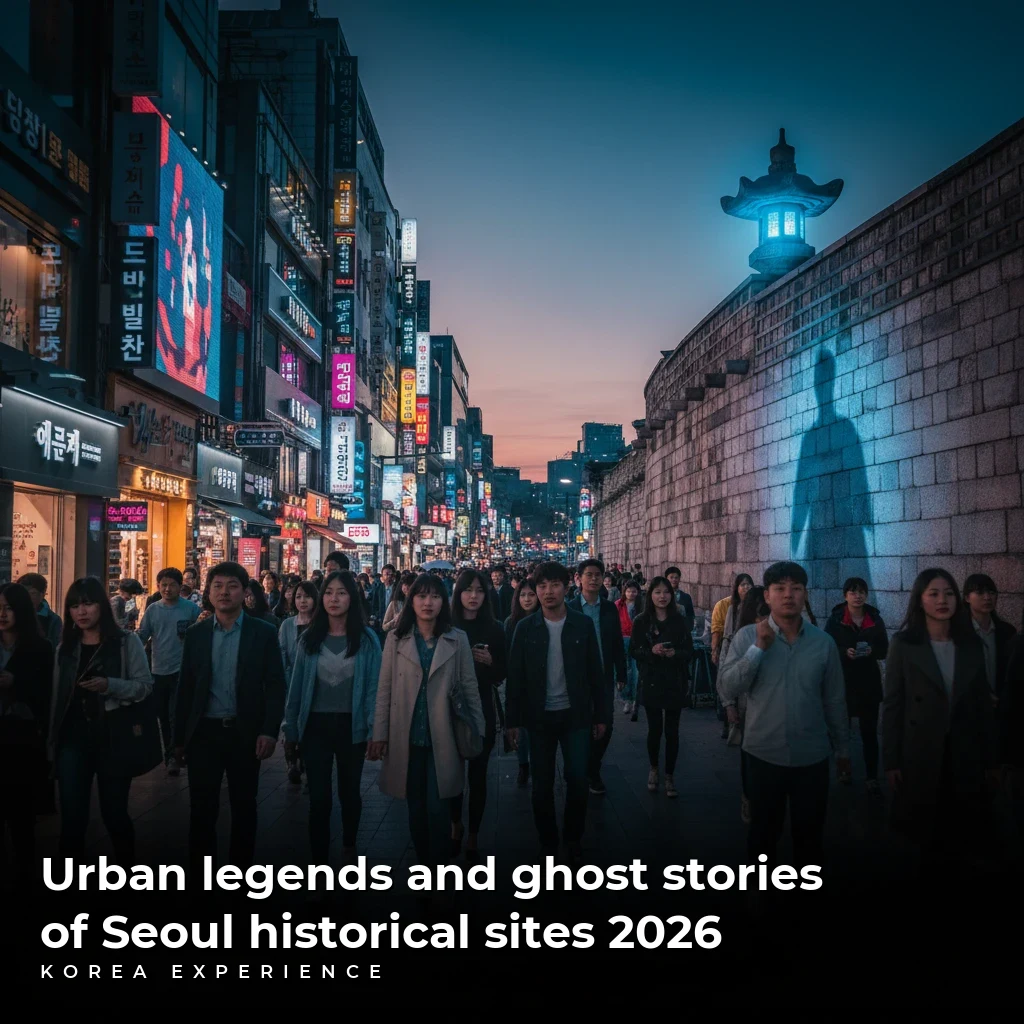
Seoul is a metropolis defined by its striking duality. While the neon skyline of Gangnam represents the future, the ancient alleyways and palaces north of the Han River harbor centuries of secrets. For international travelers in 2026, exploring the urban legends and ghost stories of Seoul historical sites offers a compelling alternative to standard sightseeing. It provides a window into the Korean psyche, where shamanism, Confucian tragedy, and modern history collide.
Beneath the polished surface of K-Pop and cosmetic clinics lies a city that has witnessed 600 years of dynastic bloodshed, colonial occupation, and war. These events have birthed a rich tapestry of folklore that locals still whisper about today. Whether you are a skeptic or a believer, visiting these sites adds a layer of atmospheric depth to your travel itinerary. From the weeping spirits of the palaces to the dark echoes of former prisons, this guide uncovers the spectral side of South Korea's capital.
You might also enjoy our article about BTS tour in Seoul 2026 ultimate ARMY guide to holy sites.
Key Takeaways
- 1Gyeongbokgung Palace night tours (April-October 2026) offer the most atmospheric ghost-hunting experience.
- 2Seodaemun Prison requires a respectful demeanor; it is a memorial site with an entry fee of ₩4,000.
- 3Shamanistic rituals are still performed on Inwangsan Mountain, a 338-meter peak accessible via a 1.5-hour hike.
Gyeongbokgung Palace: The Cursed Axis
Gyeongbokgung is not just the main royal palace; it is the epicenter of Seoul's most enduring urban legends. The primary legend revolves around the Feng Shui war waged during the early 20th century. Historical accounts suggest that during the Japanese colonial period (1910–1945), the occupiers deliberately severed the "vein of energy" (Baekdudaegan) flowing from Bugaksan Mountain to the palace to suppress the Korean spirit.
For more details, check out our guide on Historical Accuracy in K-Dramas.
The Iron Stakes Legend
A persistent rumor claims that iron stakes were driven into the ground throughout the palace complex and surrounding mountains to cut off the earth's energy. While the South Korean government conducted a massive removal project in the 1990s and 2000s, removing dozens of stakes, legends persist that many remain hidden deep underground, causing restless energy in the area.
The Assassin in the Queen's Quarters
The most tragic and historically verified ghost story centers on Okho-ru Pavilion within the palace grounds. This was the site of the 1895 assassination of Empress Myeongseong. Visitors often report a sudden drop in temperature and an overwhelming sense of sorrow near the Geoncheonggung residence, located at the rear of the complex. As of 2026, this area remains open to the public, and it is approximately a 15-minute walk from the main Gwanghwamun Gate.
Practical Visiting Information (2026)
To experience the eerie beauty of Gyeongbokgung, the "Starlight Tour" is highly recommended. These night openings occur twice a year, usually in spring and autumn. The limited tickets, capped at 2,500 visitors per night, sell out within minutes.
📋 Gyeongbokgung Night Tour Facts
Gyeongbokgung Palace(Gyeongbokgung)
The Blue House (Cheong Wa Dae): Presidential Misfortune
Located directly behind Gyeongbokgung Palace, the Blue House (Cheong Wa Dae) served as the presidential residence and office for decades until it was opened to the public in 2022. However, for nearly 74 years, it was the subject of a persistent urban legend: the "Blue House Curse."
The Feng Shui Dilemma
Feng Shui masters have long argued that the location of the Blue House is geographically inauspicious. It sits on a site that was historically used as a rear garden for the palace, a place for rest rather than ruling. The "curse" is often cited to explain the tragic fates of nearly every former South Korean president—ranging from assassination and suicide to imprisonment and impeachment. The legend suggests that the strong energy flowing from Bugaksan Mountain hits the site too directly, overwhelming the occupants.
📊 Visitor Statistics 2026
Since opening to the public, the grounds have become a major tourist attraction. However, sensitive visitors often describe the atmosphere as heavy or oppressive, particularly near the main office building. The complex covers approximately 250,000 square meters, so a full tour requires about 90 minutes of walking.
"While the Blue House is beautiful, locals still whisper about the 'energy' there. When you visit, take note of the stone statues guarding the entrance. Many elderly Seoulites believe the spirits of the land are still unsettled by the decades of political turmoil. It is best to visit on a sunny afternoon rather than an overcast day."
Seodaemun Prison History Hall: Echoes of Agony
If Gyeongbokgung is about royal tragedy, Seodaemun Prison History Hall is about raw, human suffering. Built by the Japanese colonial government in 1908, this facility housed Korean independence activists who were tortured and executed. Later, it was used by military dictatorships to imprison pro-democracy activists. It is widely considered the most haunted site in Seoul.
The Execution Building and the Corpse Tunnel
The most chilling section of the prison is the Execution Building (dating back to 1923) and the hidden tunnel used to secretly transport corpses out of the facility to hide evidence of torture. The tunnel spans about 40 meters, though visitors can only view a portion of it.
Legends state that visitors often feel invisible hands touching them or hear phantom footsteps in the wooden floorboard hallways of the cell blocks. Security guards working the night shift have reported seeing shadows moving in cells that have been locked for decades. The "Torture Room" exhibit, which features realistic mannequins and sound effects, is terrifying enough, but the palpable sense of dread in the actual solitary confinement cells is what affects visitors most.
Visitor Discretion Advised
The exhibits at Seodaemun Prison are graphic and emotionally heavy. The basement torture chambers recreate scenes of water torture and fingernail removal. This site is not recommended for young children or those sensitive to depictions of violence.
📖 How to Navigate Seodaemun Prison
Step 1: Start at the Exhibition Hall
Learn the history of the independence movement. The timeline covers 1908 to 1987.
Step 2: Walk the Cell Blocks
Enter the red brick buildings. Cells are preserved in their original state. The temperature is naturally 2-3 degrees cooler inside.
Step 3: The Execution Ground
Located at the back of the complex. Observe the 'Wailing Poplar Tree' which legend says refused to grow due to the grudges of the executed.
Seodaemun Prison History Hall(Seodaemun Hyeongmuso)
Inwangsan Mountain: The Shaman's Stronghold
Inwangsan Mountain offers a different kind of spiritual experience. Unlike the tragic ghosts of the prisons or palaces, Inwangsan is the domain of animistic spirits and shamans (Mudang). Rising 338 meters above sea level, this mountain has been considered sacred since the founding of the Joseon Dynasty.
The Seonbawi Rocks and Goblin Lights
The most famous site on the mountain is the Seonbawi (Zen Rocks), strange rock formations that are said to resemble monks. Legend has it that these rocks were the subject of a supernatural battle between a Buddhist monk and a Confucian scholar during the founding of Seoul. Today, it remains a premier site for Gut (shamanistic rituals).
hikers ascending the mountain at dusk in 2026 often report seeing flickering lights in the forest that cannot be explained by flashlights or the city below. These are locally referred to as Dokkaebi-bul (Goblin Fire). If you hike here, you will frequently smell incense and hear the rhythmic chanting or bell-ringing of shamans praying for clients.
Inwangsan Spiritual Hike Timeline
Start at Dongnimmun
Exit 2. Walk past the apartment complex toward the temple entrance.
Inwangsa Temple
Pass through the temple gates. You will see offerings of fruit and soju.
Seonbawi Rocks
Reach the sacred rocks. Observe the prayers but do not take photos of people praying.
The Summit
Reach the peak for a view of Seoul's city lights vs. the dark mountain.
Night Hiking Inwangsan
- ✓Incredible views of N Seoul Tower and Lotte Tower
- ✓Authentic shamanistic atmosphere
- ✓The fortress wall is illuminated at night
- ✗Steep stairs can be dangerous in the dark
- ✗Some shamanistic sites can feel intimidating
- ✗Wild boars are occasionally sighted (rare)
The Han River: The Mul-Gwishin (Water Spirits)
The Han River is the lifeline of Seoul, stretching over 494 kilometers (with roughly 40km passing through Seoul proper). While it is now a hub for picnics and cycling, it holds a dark place in Korean folklore as the home of Mul-gwishin, or water ghosts.
The Legend of the Dragging Wet Hand
Korean folklore dictates that Mul-gwishin are the spirits of those who drowned. Lonely in the cold water, they seek to pull the living down to join them. This legend was historically used to keep children away from the dangerous riverbanks. In modern times, the legend has evolved to focus on the Mapo Bridge, unfortunately known for suicide attempts.
However, recent years have seen a transformation. The bridge has been equipped with AI-surveillance and higher railings, reducing incidents significantly by 2026. Still, late-night fishermen often claim to hear splashes where there are no fish and voices calling from the water near the dark pillars of the older bridges like Dongjak Bridge.
💵 Han River Experience Costs (2026)
Safe, illuminated 70-min tour with jazz music.
Ramyun and beer by the water's edge.
Changdeokgung Secret Garden: Shadows of the Harem
Changdeokgung Palace is a UNESCO World Heritage site, beloved for its Biwon (Secret Garden). However, this beautiful 78-acre garden hides dark secrets regarding the royal concubines. The competition for the King's affection was deadly, involving poisoning, curses, and voodoo dolls.
The Well of the Concubines
Deep within the garden lies areas where court ladies were said to have been drowned or executed for treason. The most persistent story involves the spirits of ladies-in-waiting who were silenced to protect royal secrets. Tour guides will not explicitly tell ghost stories during the standard tour, but those with a keen eye can spot the talisman papers sometimes tucked into the eaves of older, restoration-pending structures on the periphery of the grounds.
Visiting the Secret Garden requires a separate ticket (₩5,000) in addition to the general palace admission (₩3,000). The tour takes 90 minutes and involves walking approximately 2.5 kilometers over uneven terrain.
Palace Ghost Vibes Comparison
| Feature | Gyeongbokgung | Changdeokgung | Deoksugung |
|---|---|---|---|
| Primary Vibe | Grand & Political | Melancholic & Secluded | Modern & Tragic |
| Haunted Spots | Okho-ru Pavilion | Secret Garden Wells | Stone Wall Road |
| Night Access | Limited (Spring/Fall) | Moonlight Tour only | Always until 21:00 |
| Crowd Level | Very High | Controlled/Low | Medium |
Dark Tourism: Guided Ghost Tours in 2026
For travelers who prefer a curated experience, several "Dark Tour" operators have emerged in Seoul. These tours blend history with folklore, providing English-speaking guides who are experts in local legends.
In 2026, the trend has moved towards "storytelling audits," where guides use tablets to show historical photos of crime scenes overlaying the current view.
Booking Advice
Most ghost tours start around 20:00. Even in summer, Seoul nights can get breezy near the mountains or river, so bring a light jacket. Tours typically cost between $30 and $50 USD per person and last about 2 to 3 hours.
The Chonggyecheon Stream Mystery
Often included in these tours is the Cheonggyecheon Stream. Before its restoration in 2005, it was covered by a highway and surrounded by shantytowns. Bridges here have a history dating back to the Joseon era, where beggars and refugees often died under the arches during harsh winters. Some sections of the wall beneath the Ogansugyo Bridge are rumored to have been built using stones from desecrated tombs, leading to rumors of bad luck for those who walk the path alone after midnight.
Conclusion
Exploring the urban legends of Seoul offers a profound way to connect with the city's past. The stories of Gyeongbokgung, Seodaemun, and Inwangsan are not just tales to scare children; they are the cultural scars of a nation that has endured immense hardship. By visiting these sites in 2026, you acknowledge the history that lies beneath the futuristic veneer of South Korea.
Whether you hear the weeping of a queen in the palace or simply enjoy the cool night air on the city walls, the ghosts of Seoul are an integral part of the travel experience. They remind us that in a city of 9.4 million people, no one is ever truly alone.
❓ Frequently Asked Questions
Have more questions?Contact us →
About the Author
Korea Experience Team
Written by the Korea Experience editorial team - experts in Korean medical tourism, travel, and culture with years of research and firsthand experience.
Explore more in K-Culture
K-Pop, K-Drama, traditional arts, and modern culture — dive deep into the cultural phenomena that have captivated the world.
Browse All K-Culture ArticlesContinue Reading
Explore more articles you might find interesting
Explore Seouls 5 Grand Palaces with our expert guide to Korean traditional architecture. Discover hidden spots, Secret Garden tips, and Royal Pass details.
Explore the ultimate guide to K-Drama filming locations and cafe culture in Seoul. Discover iconic spots, prices, and travel tips for fans.
Explore the most iconic K Drama filming locations in Seoul for 2026. From Queen of Tears to Goblin, discover prices, transit tips, and photo spots.
Discover the ultimate 2026 BTS tour in Seoul. Explore 15+ must-visit locations, from HYBE HQ to rookie-era eateries, with costs and travel tips.
Explore Seoul's Big 3 K-pop HQs with subway fares at 1,550 KRW. Find the SM Kwangya store open daily and discover hidden fan cafes near HYBE.
Discover the best traditional Korean hanbok experience in Seoul with rental tips, pricing guides, and hidden photo spots for 2026 travelers.