Korean food delivery apps coupang eats to baemin guide 2026
Master Korean food delivery apps in 2026. From Coupang Eats to Baemin, learn how to order like a local with our complete English guide.
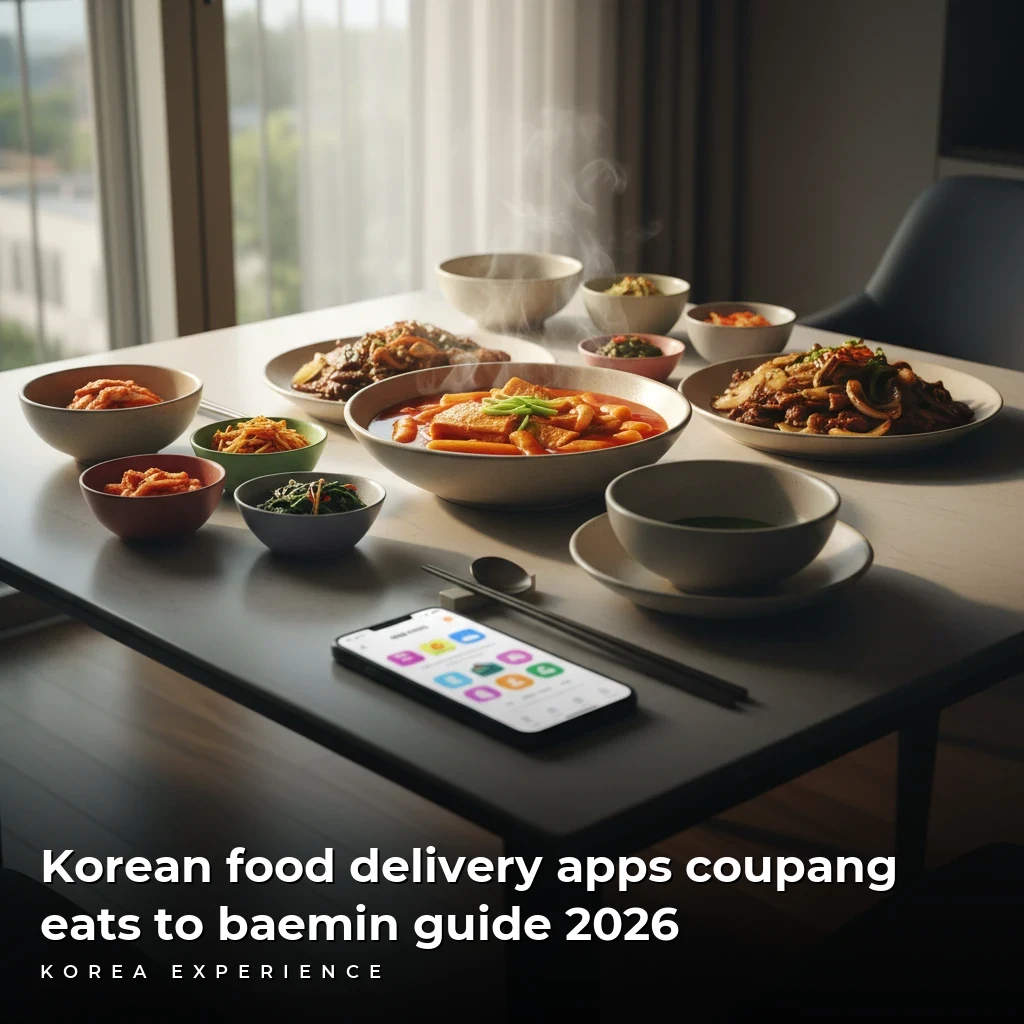
The sound of motorbikes buzzing through narrow alleyways is the unofficial soundtrack of modern Seoul. In South Korea, "Baedal" (delivery) is not just a service; it is a cultural phenomenon that has reached new heights of efficiency in 2026. Whether you are craving crispy fried chicken by the Han River or a steaming bowl of kimchi stew in your Gangnam hotel room, the ability to summon food to your doorstep is a superpower every traveler needs to master.
While the convenience is undeniable, the language barrier and verification systems can be daunting for international visitors. The landscape has shifted significantly over the last few years, with apps like Coupang Eats aggressively targeting English speakers and Baedal Minjok (Baemin) expanding its technological dominance.
You might also enjoy our article about Best food apps for English speakers TableCheck vs CatchTable.
Key Takeaways
- 1Coupang Eats offers the best native English interface for travelers
- 2Average delivery time in Seoul is now under 24 minutes
- 3Most apps require a Korean phone number for identity verification
The Evolution of Korean Delivery in 2026
The Korean food delivery market has matured into a sophisticated ecosystem valued at over 27 trillion won (approximately $20 billion USD). In 2026, the competition between the major platforms has moved beyond just speed; it is now about user experience and AI-driven logistics.
Related reading: Best Korean Convenience Store Food Must Try Items.
For the international traveler, the primary challenge remains digital identity. South Korea uses a strict "Real Name Identity Verification" system tied to local phone numbers. However, recent updates in late 2025 have made it slightly easier for tourists with short-term SIM cards to access these services, provided the SIM supports voice and text (SMS) verification.
You might also enjoy our article about Chuncheon Dakgalbi Street Guide South Korea Spicy Chicken....
📊 Delivery Market Stats 2026
The average delivery fee has stabilized between 3,000 and ₩4,500 ($2.25 - $3.40 USD) for standard orders, though "One-App" (single delivery per trip) services command a premium. Understanding which app suits your specific situation—whether you have a Resident Registration Number (ARC) or just a travel SIM—is crucial for avoiding hunger-induced frustration.
Learn more in our comprehensive guide to Exploring Korea Traditional Market Street Food Tours.
The Big Three: Comparing Your Options
Choosing the right app depends entirely on your Korean proficiency and your payment methods. While there are dozens of niche apps, three giants dominate 90% of the market share.
Delivery App Showdown 2026
| Feature | Coupang Eats | Baemin (Baedal Minjok) | Shuttle Delivery |
|---|---|---|---|
| English Interface | ✅ | ❌ | ✅ |
| Intl. Credit Cards | ✅ | Difficult | ✅ |
| Restaurant Variety | High | Very High | Medium |
| Avg Delivery Fee | ₩3,000 | ₩2,500 | ₩6,000 |
1. Coupang Eats: The Traveler's Best Friend
If you do not read Korean, Coupang Eats is your safest bet. As a subsidiary of the e-commerce giant Coupang, this app mimics the user interface of Uber Eats or DoorDash. In 2026, roughly 75% of the app's interface is automatically translated into English based on your phone's language settings.
Why it wins for tourists: Coupang Eats was the pioneer of "One Service, One Delivery," meaning the driver picks up only your order and comes straight to you. This results in food arriving hotter and faster. The average distance covered by a Coupang driver per trip is 2.4 kilometers, usually completed in under 18 minutes from pickup.
Payment Success
Coupang Eats accepts international Visa and Mastercard directly within the app without requiring complex domestic payment gateways like KakaoPay.
2. Baedal Minjok (Baemin): The Local Powerhouse
Baemin is the undisputed king of volume, boasting over 300,000 registered restaurants nationwide. If a restaurant exists in Korea, it is on Baemin. The downside? The app is almost entirely in Korean. However, the visual icons for food categories (Chicken, Pizza, Korean Stews) make it navigable with a bit of intuition and translation help.
The "B-Mart" Advantage: Baemin isn't just for prepared food. Their "B-Mart" service delivers groceries, chargers, emergency toiletries, and even socks in under 30 minutes. The average B-Mart basket size in 2026 is ₩35,000, proving its popularity for quick essentials.
3. Shuttle Delivery: The Concierge Service
Shuttle was built specifically for the expat community. While its delivery fees are higher—often starting at 5,000 to ₩7,000—it offers full English customer support. If your order goes wrong, you can chat with a human in English to resolve it.
Step-by-Step Guide: Ordering on Coupang Eats
For most readers of this guide, Coupang Eats provides the path of least resistance. Here is how to set it up efficiently.
📖 Setting Up Coupang Eats
Step 1: Download & Verify
Download the app. Use your Korean SIM number (starting with 010) to receive the 6-digit SMS code.
Step 2: Set Address
Use the map pin feature. It is more accurate than typing English addresses. Drag the pin to your exact hotel entrance.
Step 3: Add Payment
Go to 'My Eats' > 'Payment Management'. Scan your international card. You may be charged a temporary $1 pending fee for verification.
Step 4: Place Order
Browse by category. Look for the 'Cheetah' icon for priority delivery.
Don't trust the English search bar completely. If you want specific Korean food, search for the English dish name (e.g., "Bibimbap") but also try browsing the category icons. The translation algorithm sometimes misses popular local spots that only use Korean titles.
Breaking Down the Costs: Is it Expensive?
Korea is known for affordable dining, but delivery fees have risen with inflation. In 2026, the "free delivery" era is mostly over, replaced by a tiered system. However, compared to Western standards, it remains incredibly affordable because tipping is not expected or required.
The minimum order amount is a key metric to watch. Most restaurants set a minimum cart value between ₩12,000 and ₩15,000 (approx $9-$11 USD) to qualify for delivery.
💵 Cost Breakdown: Fried Chicken Order
Includes delivery fee + cheese balls
Standard fried chicken + radish
📋 Delivery Economics 2026
Advanced Tactics: Mastering Baemin with Translation Tools
If you are brave enough to tackle Baedal Minjok because you want access to that specific famous stew place, you will need a strategy. The app blocks text copying, which makes standard translation apps difficult to use.
The Screen-Translation Hack: Android and iOS users should utilize the "Screen Translate" feature of the Naver Papago app or Google Lens. By taking a screenshot of the Baemin menu and sharing it to Papago, you can decipher complex menus in seconds.
Understanding "Review Events": You will often see banners in the app promising "Service" (free items). This is a "Review Event."
- The restaurant promises a free side (cheese sticks, cola, fried dumplings).
- You write "Review Event" in the request box when ordering.
- You are honor-bound to leave a 5-star photo review after eating. Participating in these events can save you roughly ₩4,000 per order in value.
Address Format Warning
Korea uses a "Road Name Address" system. An address looks like: "24, Sejong-daero 12-gil, Jongno-gu." Always double-check your dong (neighborhood) and ho (unit number). A mistake of one digit can send your driver to a building 500 meters away.
What to Eat: Delivery Classics
You haven't truly experienced Korea until you've ordered "Chimaek" (Chicken and Beer) to a picnic mat by the Han River. Yes, delivery drivers can find you in public parks—there are designated "Delivery Zones" marked with numbers (e.g., Yeouido Park Delivery Zone 2).
Here are the top categories ordered in 2026, based on volume data:
- Fried Chicken: The absolute staple.
- Jajangmyeon (Black Bean Noodles): The speed king. Often arrives in 15 minutes.
- Tteokbokki (Spicy Rice Cakes): Soul food.
- Jokbal (Braised Pigs' Feet): A late-night drinking favorite.
Kyochon Chicken (Dongdaemun Branch)(교촌치킨 동대문점)
Delivery Speed by Food Type:
- Chinese Food (Jajangmyeon): 12-18 minutes. (These restaurants often employ their own drivers to bypass app algorithms).
- Pizza: 25-35 minutes.
- Fried Chicken: 35-45 minutes. (Chicken takes 20 minutes to fry fresh).
- Sushi: 20-30 minutes.
Solving the Payment Puzzle
For international visitors, payment is the highest hurdle. Korean apps are designed for the domestic financial ecosystem (Naver Pay, Kakao Pay, Samsung Pay).
The "Meet and Pay" Option: In the past, you could select "Pay Cash/Card to Driver." In 2026, this option has largely vanished from Coupang Eats and Baemin to streamline logistics and protect drivers. It is now only available at some independent mom-and-pop shops ordering via phone.
Foreign Card Issues: If your transaction fails on Coupang Eats:
- Check if your bank blocked the transaction (foreign merchant detection).
- Ensure "3D Secure" is enabled on your card.
- Try a different network (switch from Visa to Mastercard).
Using International Cards
- ✓Earn travel points/miles
- ✓No need to carry cash
- ✓Instant refund if order cancels
- ✗Occasional 'Payment Failed' errors
- ✗Requires 3D Secure authentication
- ✗Small foreign transaction fees
Etiquette and Disposal: Be a Good Guest
Korean apartments and hotels have strict recycling rules. When you finish your meal, you are often left with a mountain of plastic containers.
- Leftovers: Food waste must be separated from packaging. Do not throw chicken bones or soup into the general trash bin.
- Rinsing: Rinse the plastic containers (especially the red chili stains) before putting them in the recycling bin.
- Hotel Rules: If staying in a hotel, bag everything up tightly and leave it outside your door or call housekeeping. Do not leave open food containers in the room; the smell of garlic and kimchi lingers.
The Full Delivery Journey
Order Placed
Restaurant accepts order within 2 mins
Cooking Complete
Rider assigned and picks up food
Arrival
Rider rings bell or leaves at door
Disposal
Separate waste and recycle plastics
Navigating Specific Locations
Hotels: Most hotels do not allow delivery drivers to go up to guest rooms for security reasons. You will usually have to meet the driver in the lobby. The app will notify you when the driver is "Arriving Soon" (approx. 500 meters away). Go down then.
University Dorms: Similar to hotels, there is usually a designated drop-off table at the main gate or lobby.
Parks (Han River): This is the ultimate experience. You cannot just say "Han River Park." You must find the "Delivery Zone" (Baedal Zone). These are small shelters or open areas with large signs. Tell the app: "Yeouido Hangang Park, Delivery Zone 2."
FAQ: Common Delivery Questions
❓ Frequently Asked Questions
Have more questions?Contact us →
Conclusion
Navigating the world of Korean food delivery in 2026 is an adventure in itself. It opens up a culinary map that extends far beyond the tourist restaurants of Myeongdong. Whether you are using the English-friendly Coupang Eats or hacking your way through Baemin with screenshots, the reward—steaming hot, delicious Korean food delivered to your door at 2 AM—is well worth the effort.
Remember to prepare your payment method, know your exact address format, and always keep your phone sound on to catch that "arriving now" notification. Happy eating!
About the Author
Korea Experience Team
Written by the Korea Experience editorial team - experts in Korean medical tourism, travel, and culture with years of research and firsthand experience.
Explore more in Food & Dining
Korean BBQ, street food, Michelin restaurants, and regional specialties — your ultimate guide to eating well in Korea.
Browse All Food & Dining ArticlesContinue Reading
Explore more articles you might find interesting

A comprehensive guide to buying Korean ginseng and energy tonics in 2026.
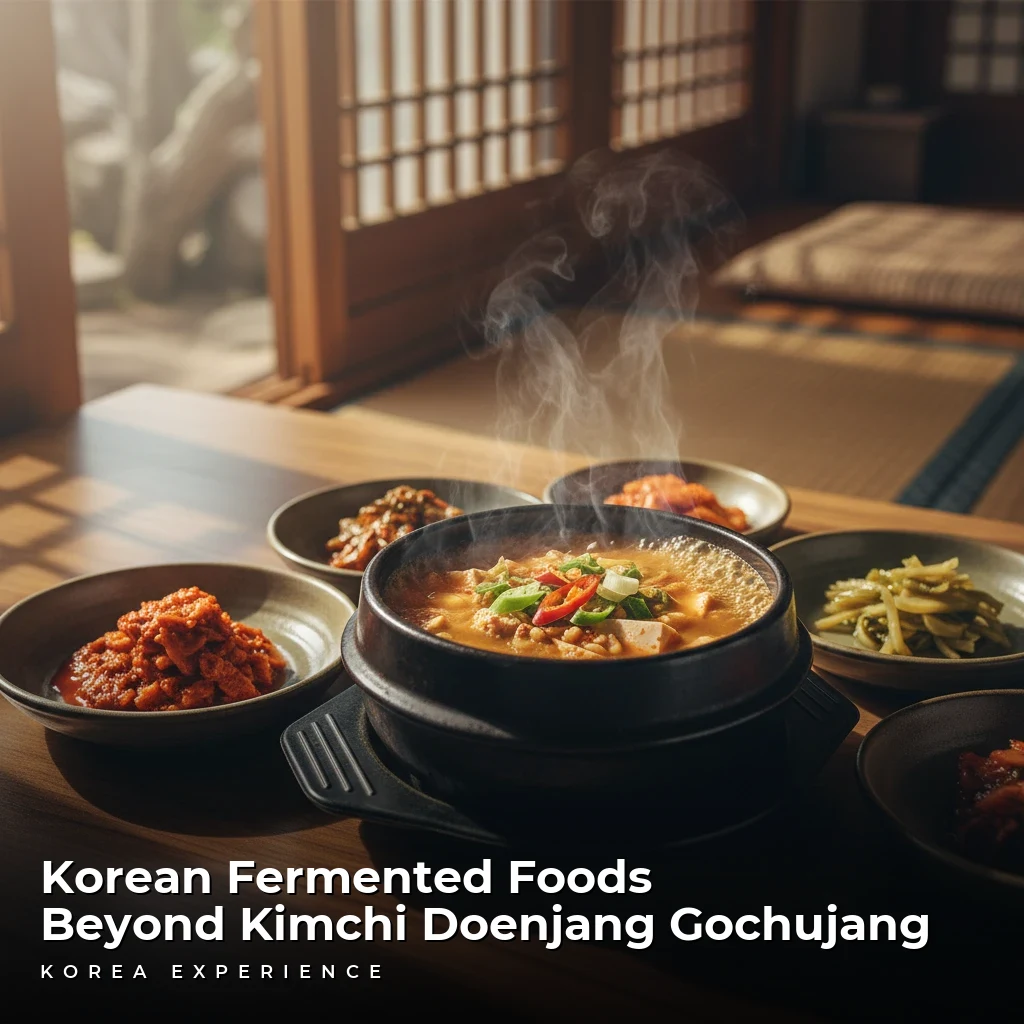
Discover the deep flavors of Cheonggukjang, Jeotgal, and Jangajji. A comprehensive guide to Korea's lesser-known fermented treasures for foodies.

Master the art of recovery in Seoul. From savory Haejangguk soups to convenience store elixirs, here is your essential guide to Korean hangover cures.
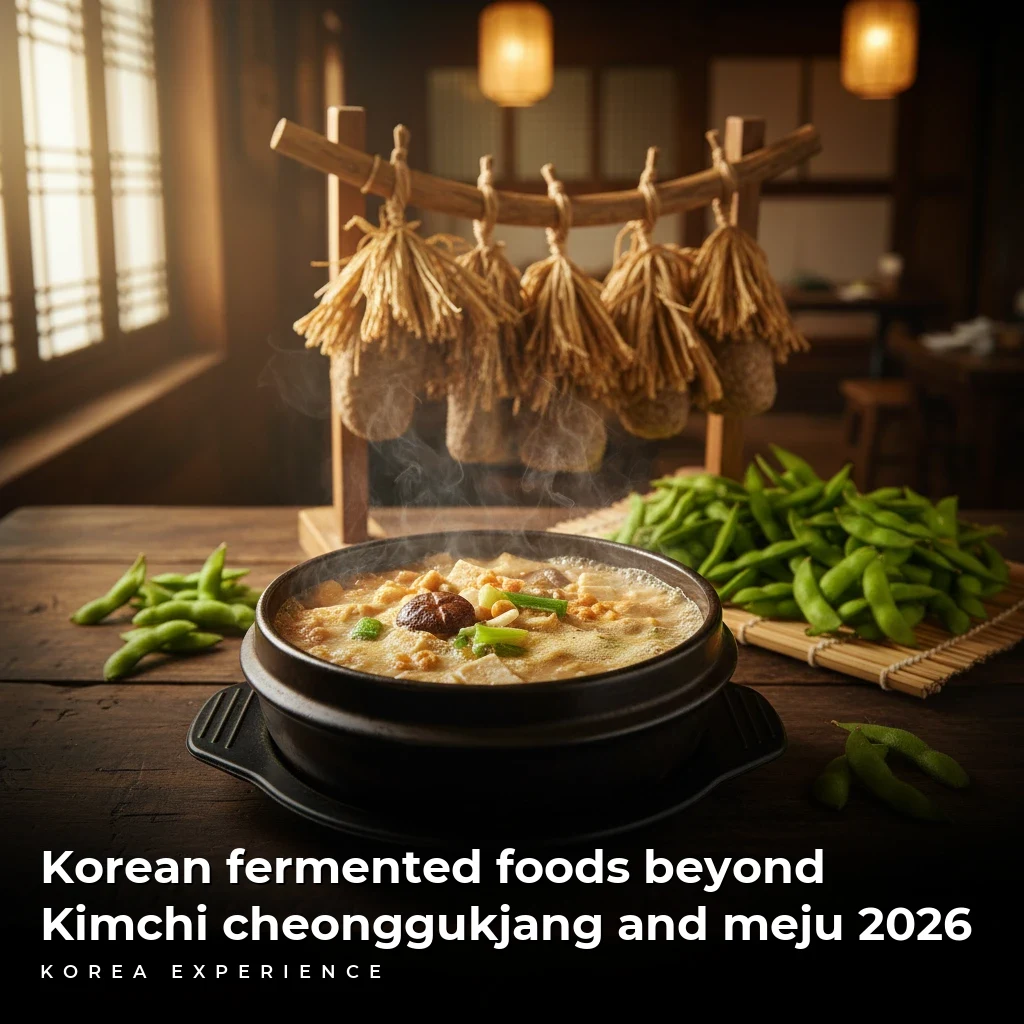
Discover the deep flavors of Korean fermented foods beyond kimchi. A comprehensive 2026 guide to Cheonggukjang and Meju for adventurous travelers.
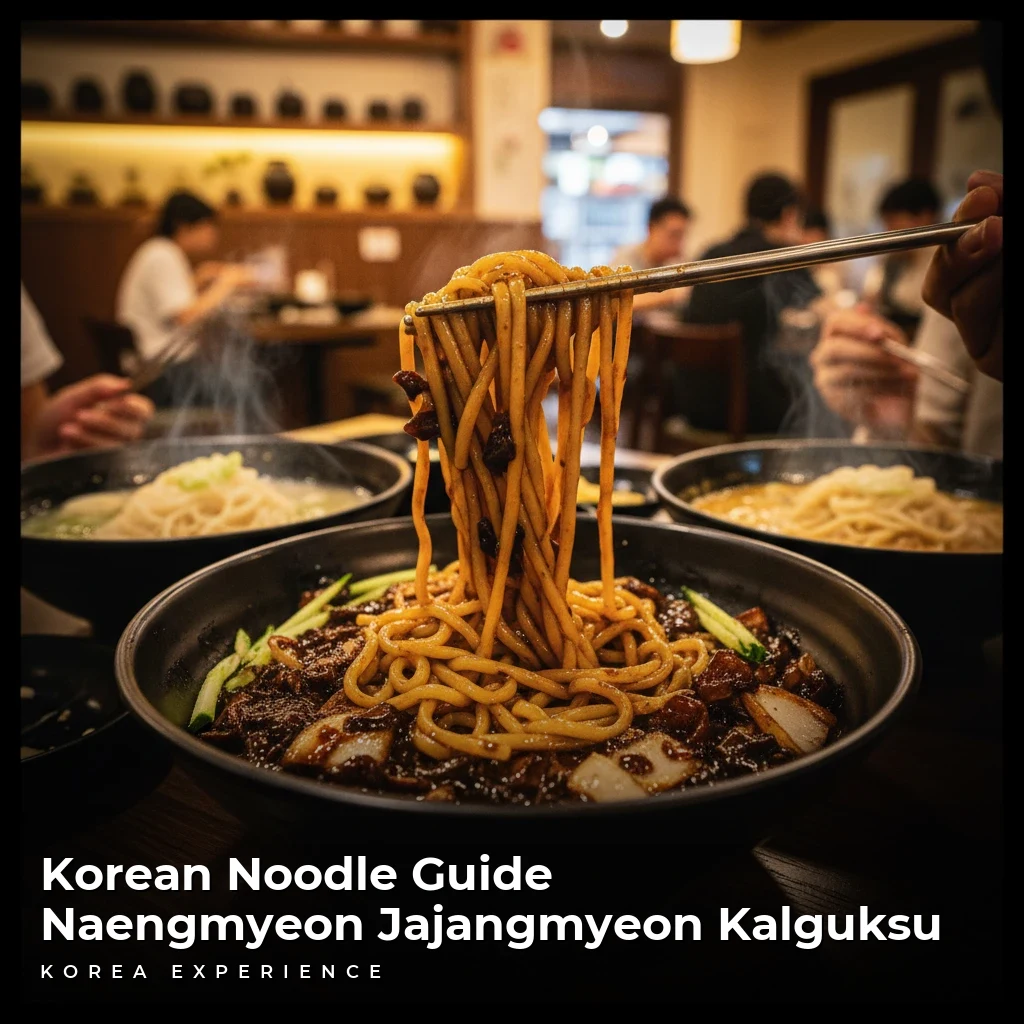
Discover the ultimate Korean noodle guide covering Naengmyeon, Jajangmyeon, and Kalguksu. Learn where to eat, how to order, and local etiquette tips.
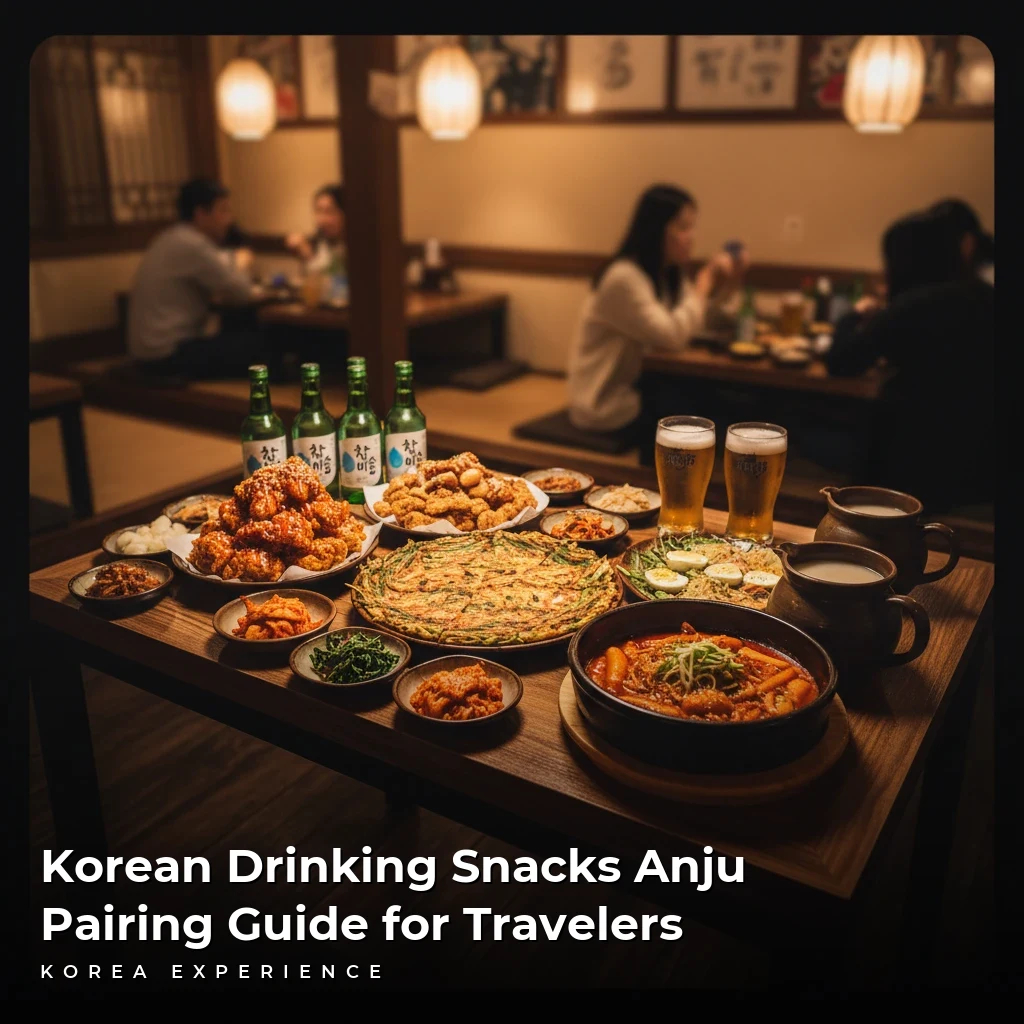
Master the art of Korean Anju pairings with our expert guide to Soju, Makgeolli, and Beer snacks for the ultimate local dining experience