Best spots for solo dining hon-bap in busy districts 2026
The ultimate guide to solo dining in Seoul. Discover the best Hon Bap spots in Gangnam, Hongdae, and Myeongdong with 2026 prices and tips.
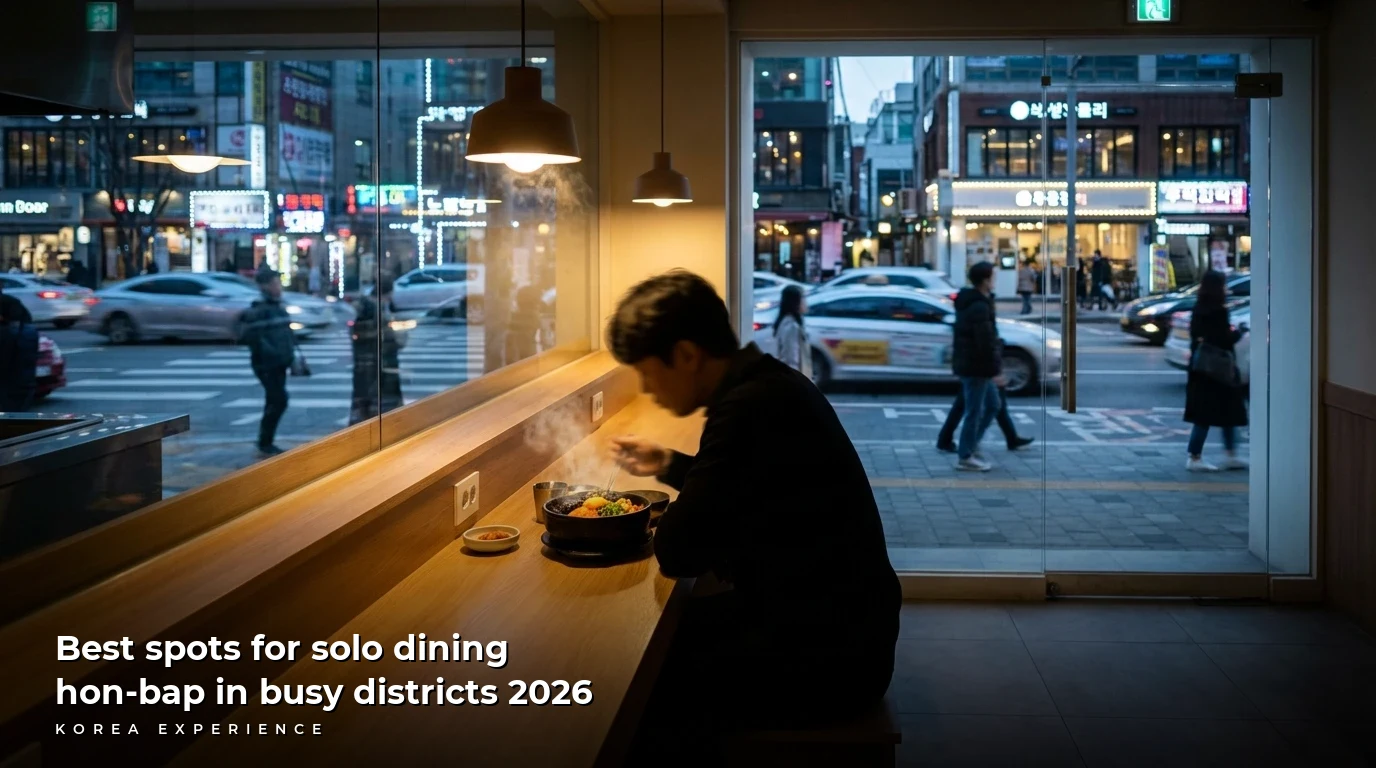
Seoul has undergone a culinary revolution. By 2026, the stigma once associated with eating alone has not only evaporated but has been replaced by a celebration of independence known as Hon Bap (solo dining). With single-person households in South Korea surpassing 42% of the population this year, restaurants have rapidly adapted. From Gangnam's high-tech automated booths to Hongdae's cozy fusion counters, the city is now a haven for the solo traveler.
Related reading: Affordable Fine Dining 5 Michelin-Starred Lunch Menus in ....
You might also enjoy our article about Gluten free dining in Korea celiac safe options guide.
Related reading: Group dining best places for large parties in Seoul.
Related reading: Gyeongju Traditional Cuisine Historic Recipes and Dining ....
For international visitors, however, navigating busy districts during peak hours can still be daunting. The lunch rush in Seoul is intense, characterized by rapid table turnover and queues that can stretch down the block. This guide cuts through the noise, providing you with verified, solo-friendly sanctuaries in the city's most frantic areas. We analyze the best spots based on accessibility, English service availability, and the "awkwardness factor"—ensuring your meal is as comfortable as it is delicious.
Key Takeaways
- 1Over 60% of Gangnam restaurants now offer dedicated solo-dining partitions or bar seating in 2026.
- 2The average cost for a premium solo lunch set in major districts is between 12,000 and ₩18,000 ($9-13 USD).
- 3Kiosks with multilingual support are now standard in 85% of fast-casual dining spots, eliminating language barriers.
The Evolution of Hon Bap: 2026 Trends
The concept of Hon Bap has matured from convenience store meals to a sophisticated dining category. In 2026, we see a distinct rise in "partitioned dining," influenced heavily by privacy-focused designs. Restaurants are no longer just tolerating solo diners; they are designing spaces specifically for them.
📊 Solo Dining Growth
This shift is driven by technology. The integration of table-side tablets and AI-driven ordering systems means you can complete an entire meal—from ordering to payment—without speaking a single word. This is a massive advantage for travelers who may not speak the language. However, timing is still everything. In business districts, the "Golden Hour" for lunch is strictly 11:30 AM to 1:00 PM. Venturing out during this window often results in 20-minute wait times.
Pro Tip
To avoid the office crowds in districts like Yeouido and Gangnam, plan your lunch for 1:15 PM. Most office workers must be back at their desks by 1:00 PM, clearing out restaurants rapidly.
District 1: Gangnam – Efficiency Meets Quality
Gangnam is the pulsating heart of Seoul’s business world. Here, solo dining is synonymous with speed and efficiency. The average office worker in Gangnam spends approximately ₩13,500 ($10 USD) on lunch and allocates only 40 minutes for the actual meal. Consequently, restaurants here are optimized for fast service without sacrificing quality.
Top Pick: The Cubicle K-BBQ
Korean BBQ was traditionally the "Level 9 Boss" of solo dining, nearly impossible to do alone. In 2026, specialized "1-Person BBQ" chains have exploded in Gangnam. These spots feature personal grills and ventilation hoods at bar seats, allowing you to enjoy Hanwoo beef or Samgyeopsal without the need for a group.
Solo Grill Master Gangnam(Hon-Gogi Gangnam)
The typical set menu here includes 150g of meat, rice, soup, and three side dishes, costing around ₩16,000 ($12 USD). This is a stark contrast to traditional BBQ places where you must order a minimum of two servings (approx. ₩36,000 or $27 USD).
The Modern Gukbap Experience
For a more traditional but equally efficient meal, modern Gukbap (soup with rice) franchises near Sinnonhyeon Station offer pristine, bright interiors that feel more like cafes than old-school soup kitchens.
📋 Gangnam Dining Facts
If you are in Gangnam Station underground shopping center, don't ignore the food court at the end of the fashion aisle. The pork cutlet (Tonkatsu) spots there are legendary, cheap (under ₩11,000), and 90% of customers are eating alone.
District 2: Hongdae & Yeonnam-dong – Trendy and Casual
Hongdae (Hongik University area) and the adjacent Yeonnam-dong cater to a younger demographic, including students and digital nomads. The vibe here is significantly more relaxed than Gangnam. The average meal price is lower, hovering around 10,000 to ₩13,000 ($7.50-9.75 USD), and the "awkwardness" of eating alone is virtually non-existent due to the individualistic youth culture.
The Mazesoba Craze
Japanese-influenced Mazesoba (soupless mixing noodles) has become a staple in Hongdae. These shops usually consist entirely of counter seating surrounding an open kitchen, making them perfect for solo diners. You hand over your ticket from the kiosk, sit at the bar, and eat.
Yeonnam Noodle Bar(Yeonnam Myeon)
Distance is a factor in Hongdae; the best spots in Yeonnam-dong are often a 10 to 15-minute walk (approx. 800 meters) from the subway station. However, the walk through the Gyeongui Line Forest Park is scenic and part of the experience.
Fusion Bento Boxes
Another rising trend in 2026 is the premium "Dosirak" (Bento) cafe. Unlike convenience store bentos, these are made-to-order meals served on nice trays. They target students who want a healthy, balanced meal alone. Prices range from ₩9,000 to ₩14,000.
Hongdae Solo Dining Analysis
- ✓Cheaper average prices
- ✓Very high English proficiency among staff
- ✓Trendy, Instagrammable interiors
- ✗Long queues on weekends
- ✗Some spots are deep inside alleyways
- ✗Loud music is common
District 3: Yeouido – The Department Store Strategy
Yeouido is the financial island of Seoul. It is notoriously difficult for casual dining due to the sheer volume of finance workers. However, the game changed with The Hyundai Seoul and the renovated IFC Mall. For a traveler, the best strategy here is to utilize the premium food courts.
The food court at The Hyundai Seoul (located on B1) is a curator of famous restaurants from around the country. In 2026, they have implemented a "smart queuing" system via an app, but you can also use on-site kiosks. The seating area features communal tables with dividers, specifically placed for solo diners.
📖 How to Navigate The Hyundai Seoul Food Court
Step 1: Secure a Seat First
Unlike Western food courts, here you often reserve a seat first using the tablet on the table, or by placing a personal item (safe in Korea) if it's open seating.
Step 2: Order via Kiosk
Go to the central kiosks. Select 'English', browse the 20+ restaurant menus, and pay.
Step 3: Wait for Alert
You will receive a buzzer or a text message (if you have a Korean number). Pick up your food from the specific restaurant stall.
Expect to pay a premium here. Lunch averages ₩18,000 to ₩25,000 ($13-19 USD), but the quality is top-tier. The walking distance from Yeouido Station (connected via underground walkway) is about 500 meters, taking roughly 7-10 minutes.
District 4: Myeongdong – Avoiding the Tourist Traps
Myeongdong remains the primary hub for tourists. While street food is an option, sometimes you want a sit-down meal. The challenge in Myeongdong is avoiding overpriced mediocrity. The best solo spots here are the historic noodle houses that have served quick meals for decades.
Myeongdong Dining Options
| Feature | Street Food | Tourist Restaurant | Local Noodle House |
|---|---|---|---|
| Avg Price | ₩6,000/item | ₩35,000+ | ₩11,000 |
| Solo Friendly | Very | Low | High |
| Authenticity | Modern/Fusion | Low | High |
The Legendary Kalguksu
Famous Knife-Cut Noodle places in Myeongdong are chaotic but incredibly efficient. You sit, you order (often just one item on the menu), you pay upfront, and eat. It is the original fast food. Even in 2026, a bowl costs around 11,000 - ₩12,000 ($8-9 USD).
Garlic Warning
The kimchi served at Myeongdong's famous noodle spots is renowned for being incredibly garlic-heavy. If you have a business meeting or a date afterwards, bring breath mints!
Technology & Ordering: The Kiosk Barrier
By 2026, approximately 90% of quick-service restaurants in Seoul utilize kiosks. While most have English interfaces, the translation can sometimes be clunky.
The Modern Ordering Process
Select 'Eat In'
Choose 'Mae-jang' (Store) vs 'Po-jang' (Takeout).
Menu Selection
Photos are universal. Look for 'Best' tags.
Payment
Insert your foreign credit card. IC chip facing up is standard.
Self Service
Get water and kimchi from the self-bar while waiting.
💵 Cost of Solo Dining by District (2026 Estimates)
Student-friendly prices
Leveling Up: The Hon Bap Hierarchy
In Korea, there is a humorous "Level" system for solo dining. Understanding this helps you gauge your bravery.
- Level 1: Convenience Store (GS25, CU).
- Level 2: Student Cafeteria / Food Court.
- Level 3: Fast Food (McDonalds, Lotteria).
- Level 4: Gimbap / Bunsik (Snack) Restaurants.
- Level 5: Chinese / Noodle Restaurants.
- Level 6: Famous Restaurants / Matjib.
- Level 7: Family Restaurants.
- Level 8: Korean BBQ / Grilled Meat.
- Level 9: Pubs / Drinking Alone.
In 2026, due to the prevalence of solo booths, Level 8 (BBQ) has effectively dropped to a Level 5 difficulty in terms of social awkwardness, provided you go to the right establishment.
Safety and Etiquette
Is it safe to leave your bag while you go to the self-bar? In Korea, yes. The CCTV density is among the highest in the world. A 2025 crime safety report noted that theft of personal items in restaurants remains statistically negligible. You will frequently see laptops and phones left unattended on tables as "seat savers."
However, etiquette matters.
- Don't linger: Especially during the 11:30 - 13:00 rush. If you have finished eating and there is a queue, it is polite to leave promptly.
- Tray Return: In most solo-focused spots (food courts, fast casual), you are expected to return your tray to the return rack.
❓ Frequently Asked Questions
Have more questions?Contact us →
Solo dining in Seoul is no longer just a necessity; it is a cultural experience. Whether you are grabbing a quick bowl of noodles in a standing booth in Myeongdong or grilling premium beef in a private cubicle in Gangnam, the city in 2026 is designed to accommodate the solo traveler with efficiency and flavor. Enjoy your meal—or as Koreans say, Jal Meok-get-seumnida!
About the Author
Korea Experience Team
Written by the Korea Experience editorial team - experts in Korean medical tourism, travel, and culture with years of research and firsthand experience.
Explore more in Food & Dining
Korean BBQ, street food, Michelin restaurants, and regional specialties — your ultimate guide to eating well in Korea.
Browse All Food & Dining ArticlesContinue Reading
Explore more articles you might find interesting
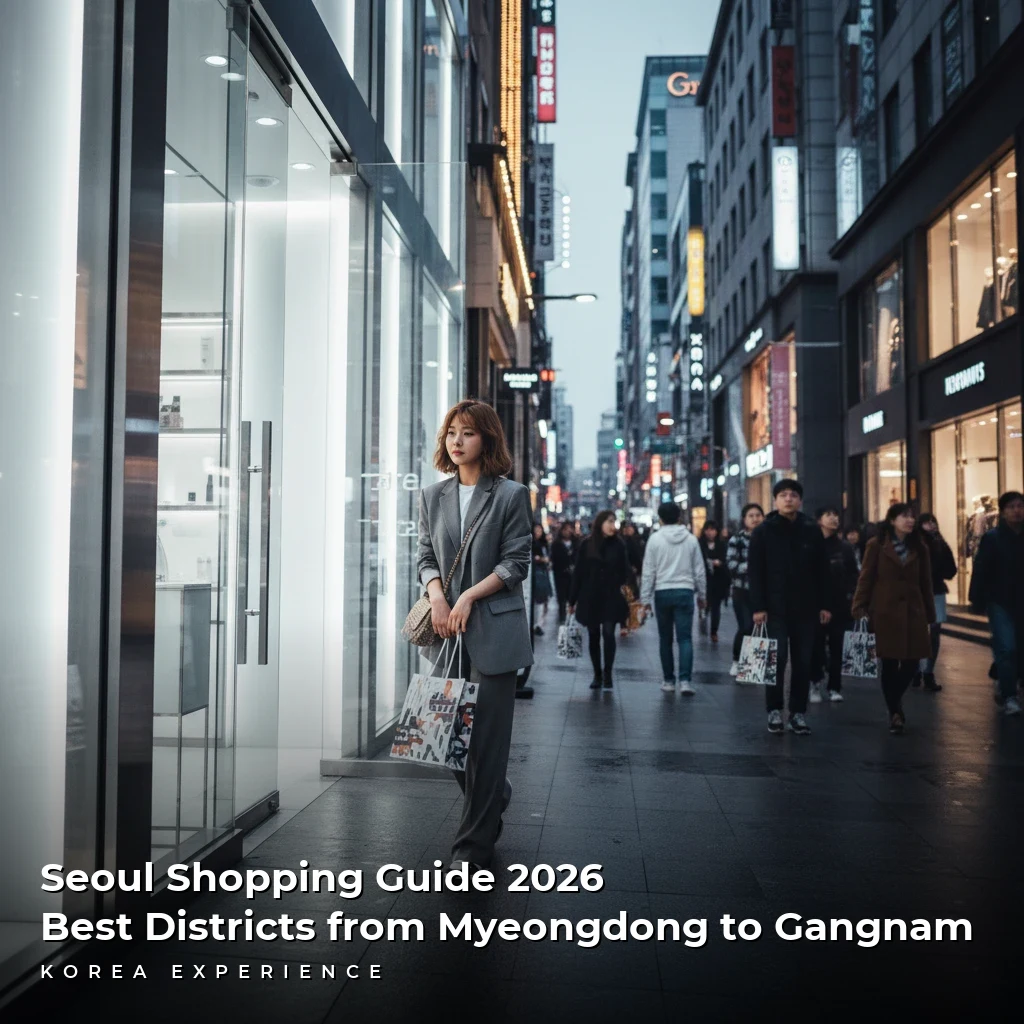
Discover Seoul's top 7 shopping districts for 2026. Compare Myeongdong beauty prices, Gangnam luxury, and Hongdae vintage fashion with tax refund tips.
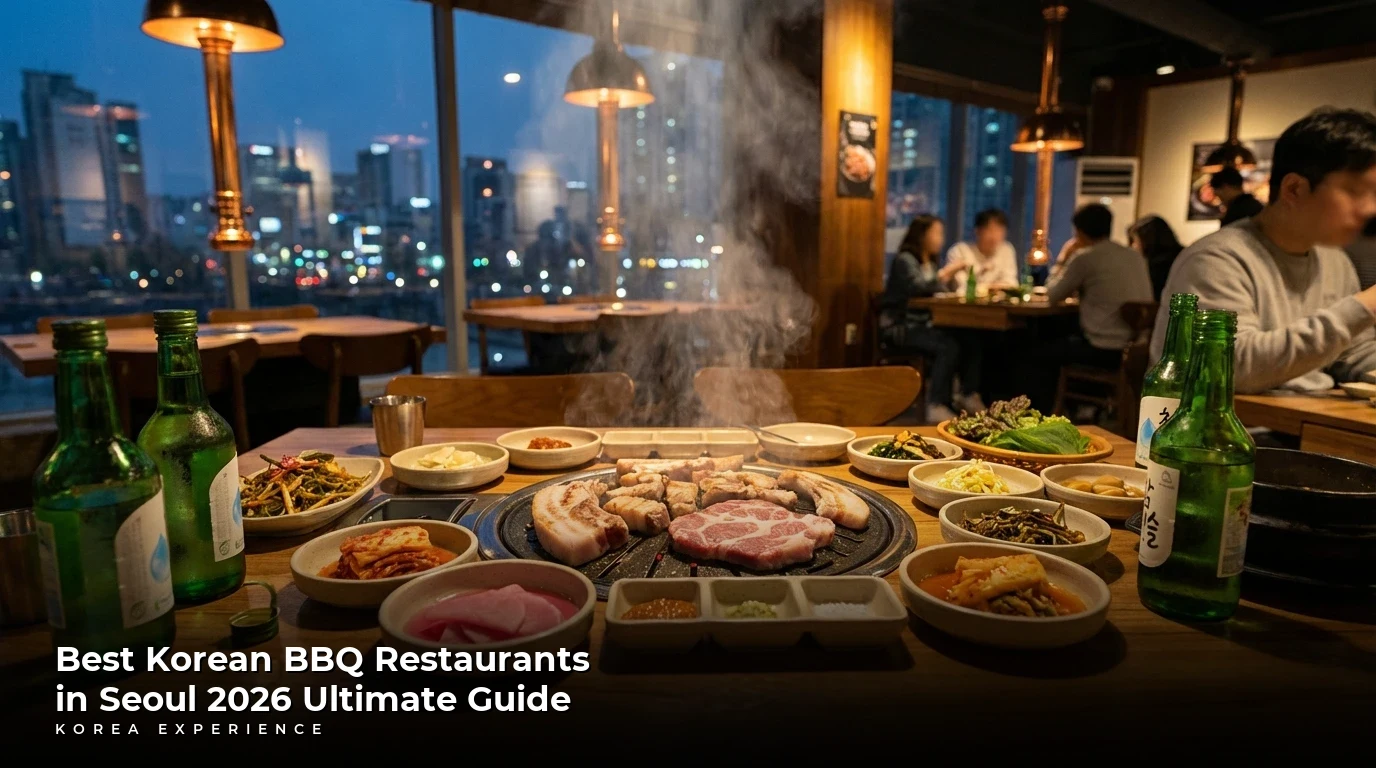
Discover the top Korean BBQ spots in Seoul for 2026. From premium Hanwoo beef to authentic Jeju pork, explore the best grills in Gangnam and Hongdae.
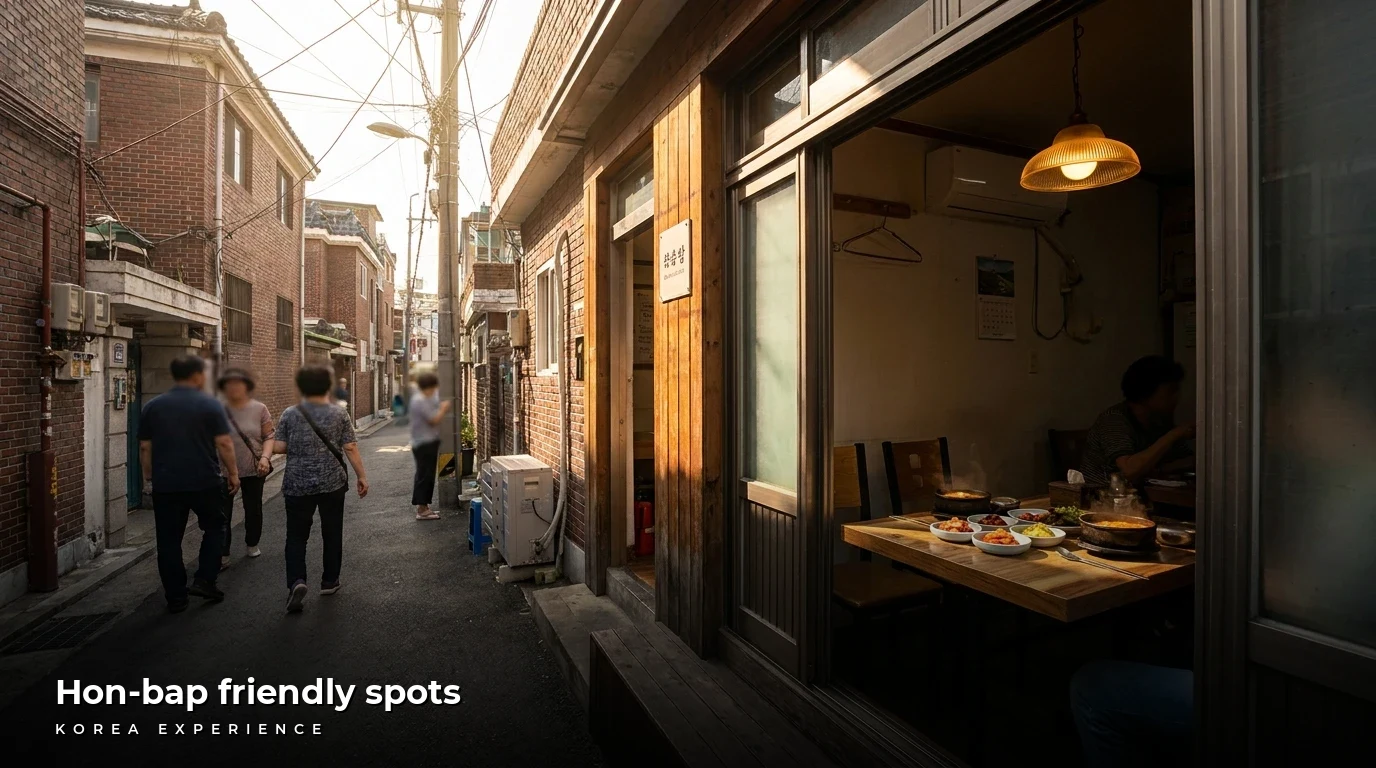
With 36.1 percent of households living alone in 2026 Seoul solo dining is booming. Discover the best spots and apps to enjoy Korean BBQ without a local ID.
Discover the top rooftop bars in Seoul for 2026. From Gangnam luxury to Hongdae vibes, find prices, dress codes, and the best sunset spots starting at ₩15,000.
Explore the ultimate guide to K-Drama filming locations and cafe culture in Seoul. Discover iconic spots, prices, and travel tips for fans.
Explore the most iconic K Drama filming locations in Seoul for 2026. From Queen of Tears to Goblin, discover prices, transit tips, and photo spots.