Group dining best places for large parties in Seoul
Discover the top restaurants for large group dining in Seoul. From K-BBQ to private Hanjeongsik, find venues catering to 8+ people.
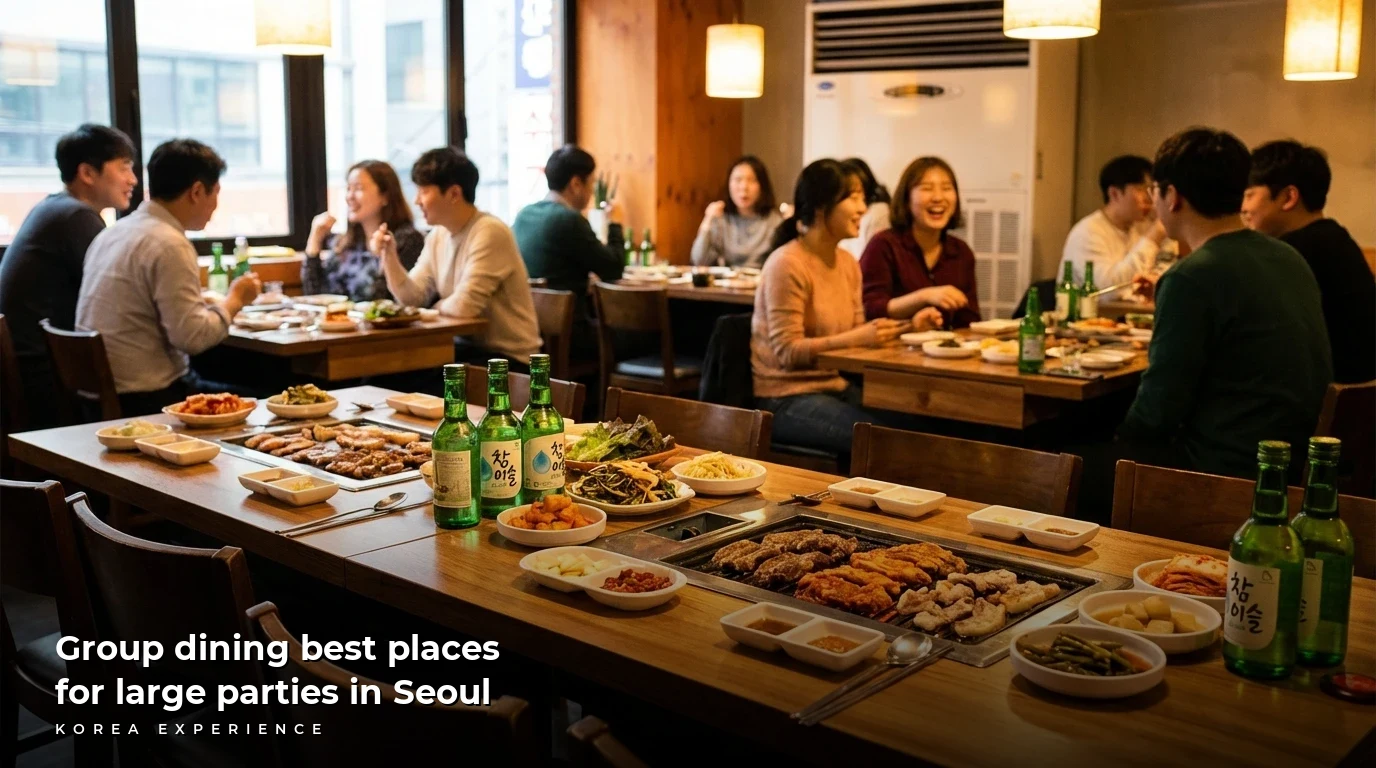
Finding a restaurant that can comfortably accommodate large groups while delivering exceptional food is a challenge in any major city. In Seoul, however, group dining is not just a logistical necessity; it is a fundamental cultural pillar. Whether you are planning a corporate retreat, a family reunion, or a celebratory dinner with a tour group, South Korea’s capital offers a staggering array of venues designed specifically for communal feasting.
Navigating the dining landscape for parties of 8, 12, or even 20+ people requires local insight. While many small eateries (known as sikdang) are designed for rapid turnover of couples or solo diners, the city is dotted with expansive halls and private room establishments tailored for Hoesik (company dinners) and large gatherings.
Related reading: Affordable Fine Dining 5 Michelin-Starred Lunch Menus in ....
This guide explores the best places for group dining in Seoul, categorized by cuisine and atmosphere, ensuring your large party experiences the very best of Korean hospitality without the stress of cramped seating or split tables.
Learn more in our comprehensive guide to Best Korean fried chicken places in Seoul 2026 guide.
Key Takeaways
- 1Reservations are mandatory for groups of 6+ at popular venues, often requiring a deposit via CatchTable.
- 2Korean BBQ and Chicken Halls are the most logistics-friendly options for groups exceeding 10 people.
- 3Private rooms (Room-Sikdang) often require a minimum spend, averaging ₩50,000 per person.
Understanding Korean Group Dining Culture
Before diving into specific recommendations, it is essential to understand the ecosystem of large-party dining in Korea. The concept of "sharing" is central to Korean cuisine. Unlike Western dining, where individual entrees are the norm, Korean meals are communal. This structure inherently supports group dining, but it also dictates the type of service you will receive.
For more details, check out our guide on Best spots for solo dining hon-bap in busy districts.
In 2025, statistics showed that nearly 45% of evening dining expenditure in Seoul was attributed to groups of four or more. This high demand means the best venues are competitive. For international travelers, the most critical factor is the "Table Turn" time. Most popular group venues operate on a strict 2-hour dining window during peak evening hours (6:00 PM to 8:00 PM).
You might also enjoy our article about Gluten free dining in Korea celiac safe options guide.
Pro Tip
When booking for large groups (8+ people), always ask for a "Private Room" rather than a "Hall Table." In Korean, ask for a "Room" (pronounced Room). This ensures noise control and dedicated service, which is crucial for maximizing conversation in boisterous BBQ restaurants.
1. Premium Korean BBQ: The Crowd Pleaser
Korean BBQ (Gogi-gui) is the quintessential group dining experience. It is interactive, customizable, and naturally celebratory. For large parties, the primary concern is ventilation and table arrangement. You want a venue where tables can be pushed together or where private suites are available.
Born & Bred (Majang-dong)
Located near the famous Majang Meat Market, this is the pinnacle of Hanwoo (premium Korean native beef) dining. It is ideal for high-budget corporate groups or special occasions. The venue offers a "Speakeasy" style private dining experience in the basement for groups up to 12, featuring a chef's omakase course.
Why it works for groups: The layout is specifically designed for high-end hosting. Unlike cramped street-side BBQ joints, the spacing here allows for 1.5 meters between tables, ensuring comfort. The ventilation system is state-of-the-art, meaning your group won't leave smelling entirely of smoke—a common complaint with groups of 10+ people in smaller venues.
Born & Bred(본앤브레드)
Wangbijib (Myeongdong & Jongno Branches)
For groups seeking accessibility and high-quality marinated ribs (Galbi) without the astronomical price tag of Hanwoo omakase, Wangbijib is a reliable favorite. They have multiple branches, but the Jongno store is particularly spacious for large parties.
Unlike many BBQ places where you cook yourself, the staff here grills the meat for you at a separate station or tableside. This is a game-changer for large groups (15+ people), as it allows guests to focus on conversation rather than managing charcoal fires.
📋 BBQ Logistics
Price Comparison: BBQ Options
When planning for a large group, budget is often the deciding factor. Below is a comparison between a premium beef experience and a high-quality pork experience.
💵 Group BBQ Budget Estimator (Per Person)
150g Beef Omakase + Alcohol
200g Pork + Stew + Soju
2. Hanjeongsik: Traditional Full-Course Feasts
If your group includes elderly travelers, children, or those who prefer a quieter atmosphere, a traditional Hanjeongsik restaurant is the superior choice. These meals involve a table full of side dishes (banchan), soups, and main courses served simultaneously or in courses.
Samcheonggak (Seongbuk-dong)
This venue is a historic cultural complex nestled in the mountains of northern Seoul. It was famously a venue for high-level political meetings in the 1970s. Today, it serves as a stunning location for large groups ranging from 10 to 200 people.
The distance from downtown Seoul (approx. 15 minutes by taxi from Anguk Station) provides a serene escape. The set menus generally start at ₩120,000 per person. The dining rooms are traditional hanok structures, offering a floor-seating aesthetic with the comfort of western-style tables (vital for international guests not used to sitting cross-legged).
"At Samcheonggak, request the 'Ilhwadang' building for lunch. The view of the mountains creates a calm atmosphere that is impossible to find in Gangnam. It is perfect for closing business deals or impressing in-laws."
Tosokchon Samgyetang (Gyeongbokgung)
While primarily known for its Ginseng Chicken Soup, Tosokchon is a machine when it comes to handling large groups. The venue is a massive, labyrinthine Hanok complex capable of seating over 400 people.
Group Logistics: They do not take reservations for lunch due to the massive lines, but for dinner groups of 10+, they can often accommodate you in a private annex if you arrive before 6:00 PM. The service is incredibly fast; the average time from ordering to serving is under 10 minutes, making it ideal for tour groups on a schedule.
📊 Venue Capacity Stats
3. Large-Scale Buffets: The Universal Solution
For diverse groups where dietary restrictions vary (some vegan, some halal, some carnivores), high-end hotel buffets in Seoul are the safest and most impressive option. Seoul's buffet culture is distinctively "premium," focusing on seafood and live stations.
Viking's Wharf (Jamsil Lotte World Mall)
This is distinct as the world's first "Lobster All-You-Can-Eat" buffet. It is located inside the Lotte World Mall. The price is fixed in USD (usually $110 per adult), payable in Won based on the daily exchange rate.
Why for groups: They have massive long tables and private rooms. The primary appeal is the limitless supply of fresh steamed lobster and grilled seafood. For a group of 10, the value proposition is high because you avoid the "who ordered what" bill-splitting nightmare. Everyone pays the flat entry fee.
Reservation Alert
Viking's Wharf opens reservations on the 1st of the previous month. For a group of 8+, you must call or book online the moment reservations open, as weekend slots fill up within 3 hours.
Buffet vs. Traditional Dining for Groups
| Feature | Viking's Wharf (Buffet) | Traditional BBQ |
|---|---|---|
| Dietary Flexibility | ✅ | ❌ |
| Bill Splitting | Easy (Flat rate) | Complex |
| Interaction | Low (Self-serve) | High (Communal) |
| Time Limit | Strict 2 Hours | Flexible |
4. Modern Fusion & Chicken Halls
For a more casual, boisterous atmosphere—perhaps a "pre-game" dinner or a celebration for younger travelers—the Chicken Halls of Seoul are unmatched.
Kyochon Pilbang (Itaewon)
This is not your standard delivery chicken spot. Kyochon Pilbang is a 330-square-meter flagship store designed as a speakeasy. You enter by pulling a giant calligraphy brush. The interior is dark, sleek, and modern, with large communal tables perfect for groups of 12-15.
The menu includes exclusive items not found in delivery branches, such as chicken omakase and craft beer pairings. It is located in Itaewon, making it a perfect starting point for a night out.
Logistics:
- Average Cost: ₩35,000 per person (Food + 2 Drinks).
- Noise Level: High. Good for parties, bad for speeches.
- Location: 5 minutes from Itaewon Station.
📖 How to Organize a 'Chimaek' Night for 15+ People
Step 1: Pre-order Platters
Do not order individual portions. Order 'Platters' or 'Sets' which include fries and sides.
Step 2: Pitcher Strategy
Order 3000cc beer towers/pitchers rather than individual pints to speed up service.
Step 3: Seating
Arrive at 6:30 PM. By 7:30 PM on Fridays, wait times for large tables exceed 90 minutes.
5. Strategic Location Guide: Where to Go?
Choosing the right restaurant is often about choosing the right neighborhood. Seoul is vast, and moving a group of 15 people across the city during rush hour (6:00 PM - 7:30 PM) is a logistical nightmare.
Gangnam & Yeoksam
- Best For: Corporate dinners, high-end BBQ, upscale Izakayas.
- Vibe: Professional, polished, expensive.
- Transport: Congested. Ensure your restaurant is within 300m of a subway exit.
Hongdae & Yeonnam-dong
- Best For: Students, younger travelers, casual drinking.
- Vibe: Energetic, loud, artistic.
- Warning: Most venues here are small. Look for "Pocha" (tent bars) or large franchises for groups.
Jongno & Insadong
- Best For: Families, cultural immersion, traditional food.
- Vibe: Historic, calmer, early closing times (many kitchens close by 9:00 PM).
Private Rooms vs. Main Hall Seating
- ✓Control over noise levels
- ✓Easier for toasts/speeches
- ✓Dedicated server attention
- ✗Often requires minimum spend
- ✗Can feel isolated from the 'vibe'
- ✗Reservation required weeks ahead
6. How to Book and Manage Large Parties
Technology has revolutionized dining in Korea. Gone are the days of calling with broken Korean. However, for large groups, specific protocols remain.
The App Ecosystem
For groups, CatchTable is the gold standard. It has an English interface and allows you to filter by "Group Booking" or "Private Room." Naver Maps is essential for checking real-time availability, though it requires some Korean navigation skills or translation tools.
Deposits and Cancellations
Korea has cracked down on "No-Shows." For parties of 6 or more, expect to pay a deposit ranging from ₩20,000 to ₩50,000 per person at the time of booking.
- Refund Policy: Usually 100% refundable if canceled 2 days prior.
- Late Policy: If the group is more than 15 minutes late, the reservation is often voided without refund.
The Group Dinner Timeline
Book Venue
Secure reservation on CatchTable for popular spots.
Confirm Count
Restaurants prepare ingredients based on headcount. Update if needed.
Arrival
Entire party should arrive together. Seating is often held until 80% arrive.
7. Paying the Bill (The Dutch Pay Dilemma)
In the past, one senior person usually paid the entire bill. However, among younger generations and travelers, "Dutch Pay" (splitting the bill) is common.
The Logistics of Splitting: Most busy restaurants in Seoul will not split the bill on 10 different credit cards at the register during peak hours. It causes a massive queue and frustrates staff.
- Solution: One person pays the full amount, and everyone transfers money to them.
- Traveler Tip: If you are a group of tourists, use an app like Splitwise. If you absolutely must split cards, ask the staff before the meal if they allow "Split Payment" (Bun-hal Gyeol-je).
📊 Payment Preferences
Conclusion
Dining in a large group in Seoul is an exhilarating experience that mirrors the city's communal spirit. Whether you choose the smoky, energetic atmosphere of a Gangnam BBQ joint, the refined elegance of a Hanjeongsik course, or the boundless variety of a luxury buffet, the key to success lies in preparation.
Book early using CatchTable, respect the reservation times, and choose a venue that matches your group's energy level. With the right planning, your group dinner will transform from a logistical headache into the highlight of your Korean journey.
❓ Frequently Asked Questions
Have more questions?Contact us →
About the Author
Korea Experience Team
Written by the Korea Experience editorial team - experts in Korean medical tourism, travel, and culture with years of research and firsthand experience.
Explore more in Food & Dining
Korean BBQ, street food, Michelin restaurants, and regional specialties — your ultimate guide to eating well in Korea.
Browse All Food & Dining ArticlesContinue Reading
Explore more articles you might find interesting
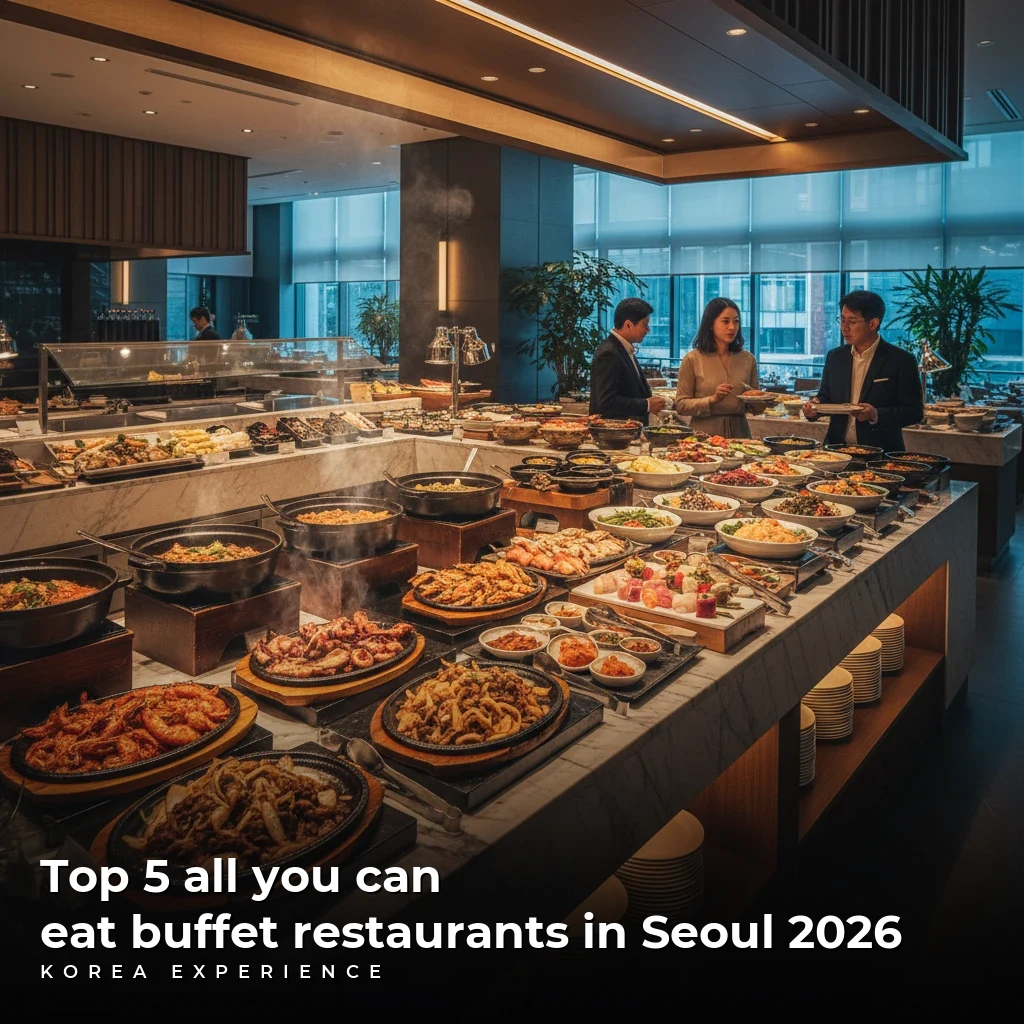
Discover the best all you can eat buffets in Seoul for 2026. From luxury hotels to budget BBQ, find pricing, locations, and expert dining tips.
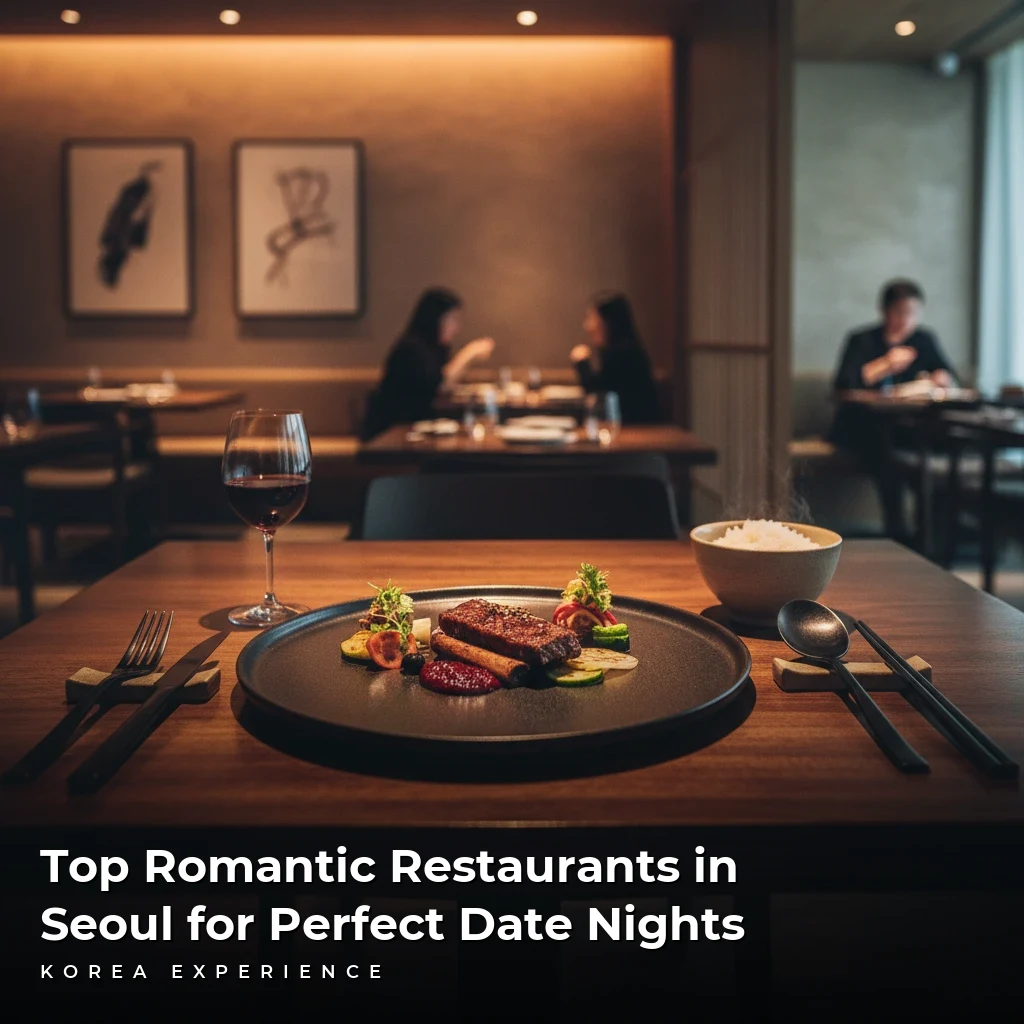
Discover the most romantic dining spots in Seoul, from Michelin-starred venues to hidden Hanok gems, complete with reservation tips and pricing.
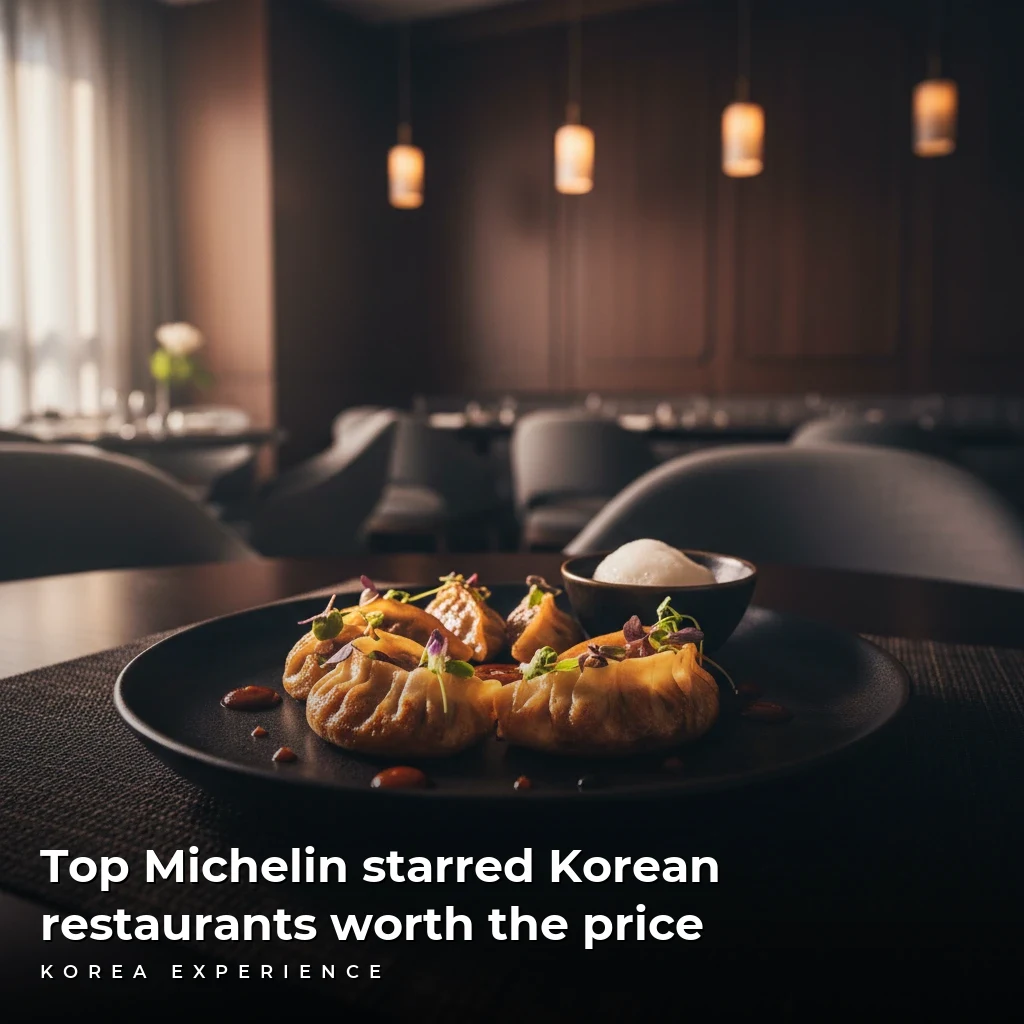
Discover the best Michelin starred Korean restaurants in Seoul. We rank fine dining options by value, experience, and taste for your 2026 trip.
Discover the best late night dining 24 hour restaurants in Seoul. From sizzling BBQ in Gangnam to comforting soups in Hongdae, eat like a local at 3 AM.
Discover the best family dining spots in Korea featuring large playrooms, safe menus, and verified facilities for stress-free meals with children.
Discover authentic dining spots in Seoul with our guide to hidden gem restaurants locals recommendations, featuring prices and locations.