Homeschooling and Alternative Education in Korea 2026 Guide
Discover the complete guide to homeschooling and alternative schools for expats in Korea 2026 including costs, legalities, and community resources.
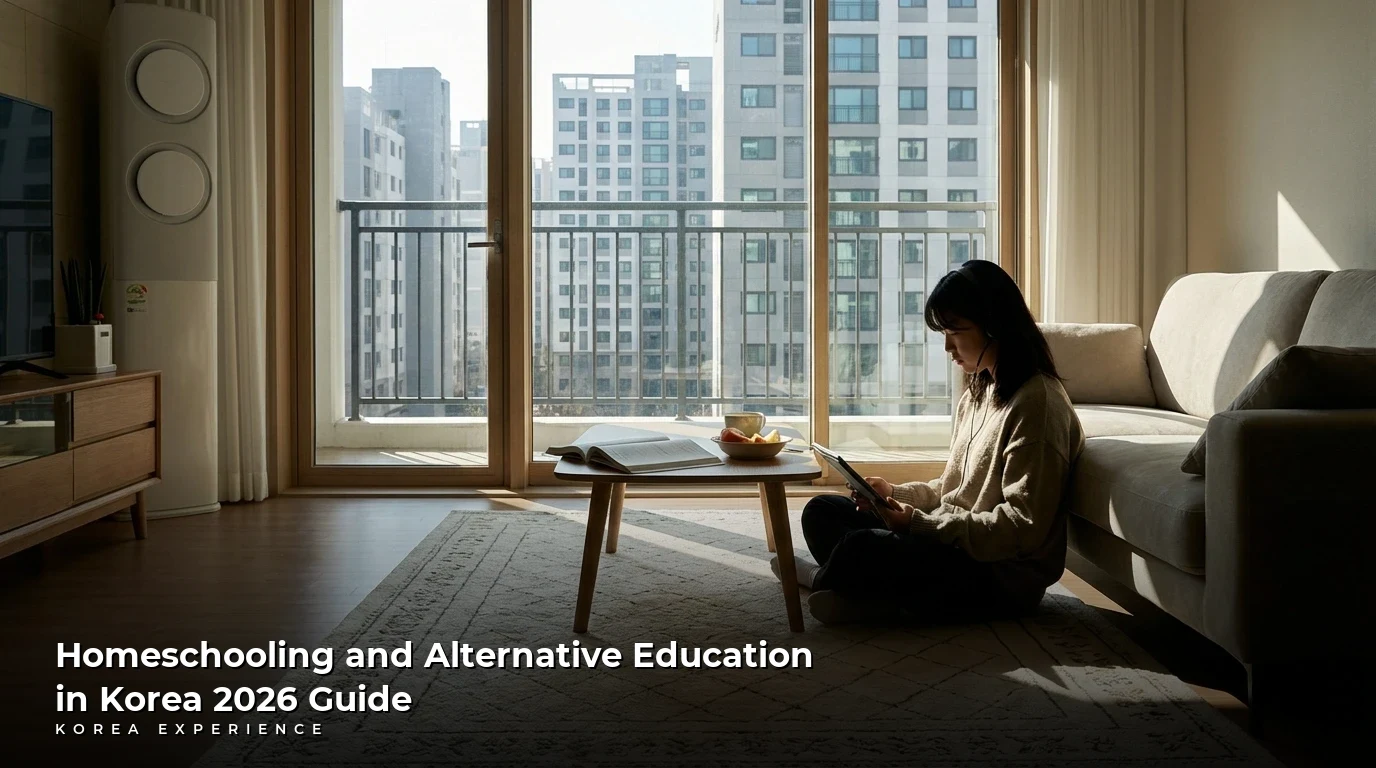
For many expatriate families moving to or living in South Korea, the education conversation typically revolves around two polarized options: the hyper-competitive local Korean public school system or the exorbitantly expensive international schools. However, as we move into 2026, a third path has widened significantly. Homeschooling and alternative education (known locally as Daean Hakgyo) have evolved from niche choices into robust, viable lifestyle strategies for global families residing in Seoul, Busan, and beyond.
The educational landscape in Korea is famous for its intensity. With students spending an average of 12 to 16 hours a day on academic pursuits, many expat parents—and an increasing number of Korean parents—are seeking balance. Whether you are a digital nomad family on a one-year stay or long-term residents holding F-series visas, navigating the non-traditional education sector requires specific knowledge of legal grey areas, resource allocation, and community building.
Related reading: Best neighborhoods for expats in Seoul.
Key Takeaways
- 1Homeschooling remains a legal grey area for Koreans but is generally overlooked for expat children holding foreign passports
- 2Alternative schools (Daean Hakgyo) offer tuition rates 50% to 70% lower than top-tier international schools
- 3Seoul and Gyeonggi-do host over 40 active expat homeschooling co-ops as of early 2026
The Legal Landscape of Homeschooling in Korea
The most pressing question for any parent considering this path is: "Is it legal?" The answer in 2026 remains nuanced, often described as a "permissive grey area" for foreign nationals.
You might also enjoy our article about Best weekend getaways for expats to beat city burnout.
Under the Elementary and Secondary Education Act, education is compulsory for Korean nationals from ages 6 to 15 (covering elementary through middle school). Technically, keeping a Korean child out of school is a violation of this law. However, for foreign nationals (children holding non-Korean passports), the South Korean government generally does not enforce compulsory education laws.
Learn more in our comprehensive guide to Changing visa status while in Korea guide for expats.
If your child holds dual citizenship (Korean and another nationality), the situation is more complex. The local district office (Gu-office) may inquire why a Korean citizen is not enrolled. In 2026, the fine for non-attendance for Korean citizens is technically up to ₩1 million (approximately $750 USD), though it is rarely enforced if the parents can prove alternative educational arrangements are being made.
For more details, check out our guide on Home insurance for expats what to cover in Korea.
Dual Citizen Warning
If your child is a dual citizen, they are treated as a Korean national while inside Korea. To homeschool a dual citizen without harassment from local education boards, some families choose to temporarily suspend their Korean residency notification or apply for a deferment based on "study abroad" if they travel frequently. Always consult an immigration lawyer for your specific case.
For purely expat families, you are essentially invisible to the Ministry of Education. This grants you immense freedom but means you have zero support from the state—no textbooks, no subsidies, and no automatic diverse diplomas recognized by Korean universities.
Alternative Schools: The Daean Hakgyo Option
If full homeschooling feels too isolating, but international schools (which can cost between $30,000 and $50,000 USD annually) are out of budget, Alternative Schools are your middle ground.
Daean Hakgyo are schools established to provide education different from the standard public curriculum. As of 2026, there are over 300 registered alternative schools across the peninsula, with a high concentration in Gyeonggi-do, roughly 30 to 60 minutes outside of central Seoul.
These schools generally fall into two categories:
- Accredited: Recognized by the Ministry of Education. Graduates get a Korean diploma. These usually follow 70% of the national curriculum.
- Non-Accredited: Fully independent. Graduates must take the GED (Korean or American) to enter university.
📊 Alternative Education Growth
For expats, the "International Alternative Schools" are the sweet spot. These are non-accredited institutions that teach primarily in English, use American or British curriculums (like ACE, A Beka, or AP), but operate under the alternative school license. They offer a school environment for a fraction of the price of big-name international schools like SIS or KIS.
💵 Annual Tuition Comparison 2026
Full IB, huge campus, high entry barrier
English instruction, smaller facilities, Christian-based usually
These alternative schools often cost between ₩800,000 and ₩1,500,000 per month. They are frequently run by religious organizations, so parents should be aware that chapel and religious studies might be mandatory components of the curriculum.
The Rise of Micro-Schools and Pods
A significant trend in 2026 is the emergence of "Micro-schools" or learning pods, particularly in expat-heavy districts like Yongsan-gu (Seoul), Bundang (Seongnam), and Songdo (Incheon).
These are not official schools but organized groups of 5 to 10 families who hire tutors collectively or rotate teaching duties. This model allows for high socialization and shared costs. In areas like Yeonhui-dong or Itaewon, you can find rented studio spaces where 8 students meet daily from 9:00 AM to 2:00 PM.
The cost effectiveness of this model is attractive. A qualified private tutor in Korea charges between ₩40,000 and ₩80,000 per hour. When split among five families, high-quality personalized instruction becomes affordable.
Don't try to build a pod from scratch immediately. Join the 'Homeschooling in Korea' Facebook group first. Attend the Friday park meetups at Yongsan Family Park. Trust is huge here; most pods are invitation-only and form after families have hung out socially for 3-6 months.
Structuring the Curriculum: Logistics in Korea
One of the biggest advantages of living in Korea while homeschooling is the world-class internet infrastructure. With standard home fiber speeds averaging 500 Mbps to 1 Gbps, online curriculums like K12, Calvert, or Wolsey Hall Oxford run seamlessly.
However, physical resources can be a hurdle. Getting English-language textbooks is easier than it was a decade ago, but still requires planning.
Sourcing Materials
- Coupang: The "Amazon of Korea" now stocks a surprising amount of Scholastic and Pearson workbooks. Delivery is often overnight or within 24 hours ("Rocket Delivery").
- Aladin & Kyobo Bookstores: Large branches (like Gwanghwamun Kyobo) have dedicated foreign book sections. You can order online and pick up in-store to save shipping.
- International Shipping: ordering directly from the US or UK usually incurs a shipping fee of $20 to $60 USD and takes 5 to 10 days. Be aware of the customs clearance limit; orders over $150 USD (including shipping) may attract import duties.
📖 How to Set Up Your Home Classroom in Korea
Step 1: Secure High-Speed Internet
Ensure you have KT, SK, or LG U+ gigabit internet installed.
Step 2: Purchase Furniture
Visit the massive IKEA in Gwangmyeong or Goyang. Alternatively, use 'Karrot Market' (Danggeun) app for second-hand deals.
Step 3: Library Access
Register at your local Gu (district) library. Most have an 'English Library' section.
Leveraging the Hagwon System
Here lies the secret weapon of homeschooling in Korea: The Hagwon (Private Academy). While many criticize the pressure hagwons put on Korean students, for homeschoolers, they are a resource for specialized à la carte education.
You do not need to be enrolled in a Korean school to attend a hagwon. You can use them to outsource subjects you are not comfortable teaching, such as advanced math, music, or art.
The "Art and Sport" Strategy
Most homeschoolers finish their core academic work by 1:00 PM. This is exactly when the local elementary schools finish, and the neighborhood hagwons open.
- Taekwondo: Almost mandatory for social integration. A daily hour-long class costs roughly 150,000 to ₩180,000 per month. The vans will often pick your child up from your apartment complex.
- Art/Piano: Very common and affordable. Expect to pay 120,000 to ₩160,000 per month for 3-4 sessions a week.
- Coding/Robotics: Korea is a tech hub. Academies in Gangnam or Pangyo offer intense coding courses for 200,000 to ₩400,000 per month.
📋 Hagwon (Academy) Quick Facts
Using hagwons allows your child to socialize with local Korean children in a structured environment without the pressure of the full school day. It also aids immensely in Korean language acquisition.
Socialization and Field Trips
Korea is arguably one of the best countries in the world for educational field trips. The public transit system is safe, clean, and cheap (roughly ₩1,400 per ride for adults, less for kids), allowing you to turn the entire city into a classroom.
Educational Hotspots
- Museums: The National Museum of Korea and the War Memorial of Korea are massive, world-class, and free. They offer English audio guides and vast outdoor spaces.
- Palaces: Gyeongbokgung and Changdeokgung offer history lessons in real life. Entry is cheap (₩3,000), and wearing a Hanbok (traditional dress) gets you in for free.
- Science Centers: The Gwacheon National Science Museum is a favorite among homeschoolers, featuring a planetarium and insectarium.
Gwacheon National Science Museum(National Science Museum)
Cost Analysis: Is it Really Cheaper?
When compared to International Schools, homeschooling is drastically cheaper. However, compared to the Korean public school system (which is essentially free regarding tuition), it is an investment.
If you choose a full-service online curriculum (e.g., $1,500 - $3,000 USD/year), plus three hagwons (approx. ₩500,000/month), and monthly field trips, your annual education budget might land around 10 to ₩12 million (approx. $7,500 - $9,000 USD).
Compare this to the 40+ million won required for top-tier international schools, and the savings are substantial—enough to fund family travel around Asia during the off-season.
Education Path Comparison 2026
| Feature | International School | Homeschooling | Local Public School |
|---|---|---|---|
| Annual Cost (Est.) | $35,000+ | $3,000 - $9,000 | <$1,000 |
| Language | English | English | Korean |
| Flexibility | Low | High | None |
| Legal Status (Expat) | Legal | Grey Area | Legal |
Challenges and Considerations
It is important not to romanticize the experience. Homeschooling in Korea comes with specific isolation risks. The local culture is group-oriented; during school hours (8:30 AM to 1:00 PM for elementary, longer for older kids), playgrounds are empty. Your child will stand out if they are seen playing outside during these hours.
Furthermore, the language barrier is real. If you do not speak Korean, navigating the websites for museum reservations or finding specific art classes can be frustrating. You will rely heavily on translation apps like Papago or Google Lens.
Homeschooling in Korea: Pros and Cons
- ✓Huge cost savings vs International Schools
- ✓Flexible schedule for travel
- ✓Access to world-class, safe infrastructure
- ✓High-quality, affordable private tutors (Hagwons)
- ✗Social isolation during school hours
- ✗Lack of government support/resources
- ✗Legal grey area for dual citizens
- ✗Language barrier for booking activities
How to Connect with the Community
Community is the lifeline of the expat homeschooler. In 2026, the community is decentralized but active.
- Facebook Groups: "Homeschooling in Korea" and "Expat Parents Korea" are the main hubs.
- KakaoTalk Open Chats: Search for "Homeschool" or "English Education" in the open chat function of KakaoTalk. Many location-specific pods communicate here.
- Religious Organizations: Many international churches in Seoul (like those in Hannam-dong or Gangnam) have homeschooling ministries or support groups that meet weekly.
First Month Timeline for New Homeschoolers
Legal & Logistics
Ensure visa status is secure; set up internet and learning space.
Curriculum Check
Test internet speeds with online platforms; order books via Coupang.
Outsourcing
Visit local Taekwondo or Art Hagwons to register for afternoon classes.
Socializing
Attend your first meetup or field trip via the Facebook groups.
Conclusion
Homeschooling in Korea in 2026 is no longer a fringe movement for expats; it is a sophisticated lifestyle choice that leverages the country's safety, technology, and private education infrastructure while bypassing the intense academic pressure of the local system. Whether you choose a pure home-based approach, join a micro-school pod in Songdo, or utilize a hybrid model with local hagwons, the key is proactive planning and community engagement.
By stepping off the traditional treadmill, you open up the opportunity to explore the rich history and culture of Korea on your own terms, turning your time in the "Land of the Morning Calm" into an extended, immersive field trip.
❓ Frequently Asked Questions
Have more questions?Contact us →
About the Author
Korea Experience Team
Written by the Korea Experience editorial team - experts in Korean medical tourism, travel, and culture with years of research and firsthand experience.
Explore more in Living in Korea
Everything expats and long-term visitors need to know — from visa requirements and housing to banking, healthcare, and daily life tips.
Browse All Living in Korea ArticlesContinue Reading
Explore more articles you might find interesting
A complete guide to finding English-speaking therapy in Seoul. Covers costs, insurance, top clinics, and mental health resources for expats in 2026.
A complete step-by-step guide to exchanging your foreign driving license in South Korea, including document requirements, costs, and exam details.
A complete guide to becoming a Korean citizen including requirements, the KIIP program, costs, and the interview process.
Navigating Seoul's international school landscape for your child's education can be complex. This 2026 guide simplifies choices for expat families.
Complete guide to pet ownership in Korea covering English-speaking vets, luxury pet hotels, costs, and regulations for expats living in Seoul.
Master the art of sending packages from Korea. A complete guide to EMS, box sizes, customs apps, and shipping costs for expats and travelers.