Busan Travel Guide 2026: Beaches, Temples & Street Food
Discover the best of Busan in 2026. From Haeundae Beach to Haedong Yonggungsa Temple, explore top spots, costs, and itineraries for your trip.
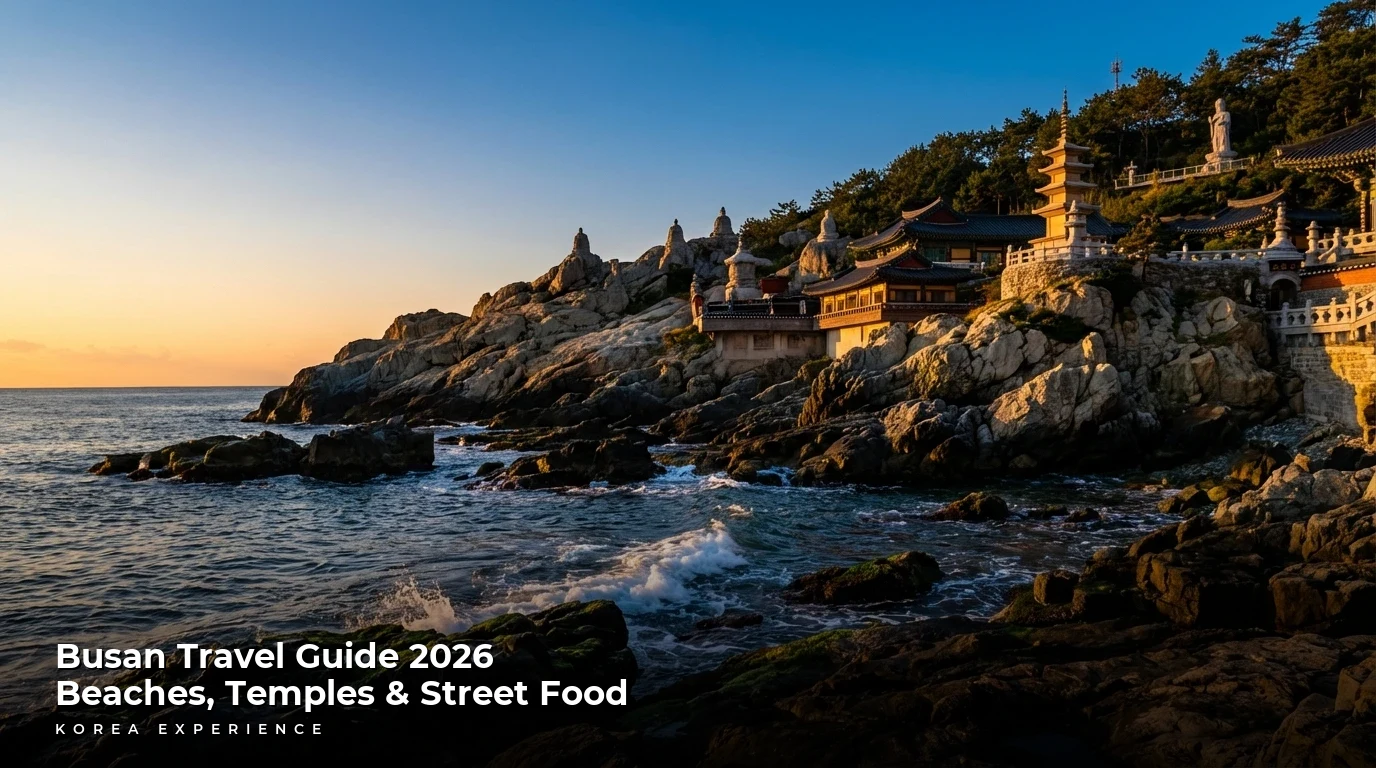
Busan, South Korea's second-largest city, offers a dynamic blend of coastal relaxation, urban energy, and deep-rooted tradition that rivals Seoul in every way. Located on the southeastern tip of the Korean peninsula, roughly 325 kilometers (202 miles) from the capital, this port city of 3.3 million people is the perfect destination for travelers seeking seafood feasts, golden beaches, and stunning cliffside temples. Whether you are looking to hike the Geumjeongsan mountain trails, party in Seomyeon, or simply relax by the ocean, Busan provides a distinct maritime culture that feels more laid-back than the frenetic pace of Seoul.
The short answer: You need at least 3 days to experience Busan properly, focusing on Haeundae for beaches, Nampo-dong for street food, and the Haedong Yonggungsa Temple for culture.
Key Takeaways
- 1The KTX train from Seoul takes just 2.5 hours and costs approximately ₩59,800 one-way
- 2Gwangalli Beach offers better night views with its drone show, while Haeundae is better for swimming and luxury hotels
- 3The Visit Busan Pass (24h/48h) can save tourists up to 40% on attraction fees in 2026
Getting to Busan: Logistics and Transport
Reaching Busan has never been easier in 2026. Most international travelers arrive either via Gimhae International Airport (PUS) or by high-speed train from Seoul. The KTX (Korea Train eXpress) remains the most popular method, with trains departing every 15 to 20 minutes from Seoul Station. The journey takes roughly 2 hours and 30 minutes, reaching speeds of 300 km/h.
For budget travelers, express buses are available from the Seoul Express Bus Terminal, taking about 4 hours and costing between ₩25,000 and ₩40,000 depending on the luxury level of the coach. However, the time saved by the train usually outweighs the cost difference for short-term visitors.
📋 Transport Quick Facts
Once you arrive at Busan Station, you are immediately connected to the city's extensive metro system. The Busan Metro is slightly cheaper than Seoul's, with a base fare of roughly ₩1,450 (using a T-Money card) for distances under 10km.
The Tale of Two Beaches: Haeundae vs. Gwangalli
No guide to Busan is complete without addressing the rivalry between its two most famous beaches. While the city boasts seven public beaches, Haeundae and Gwangalli capture 80% of the tourist traffic. Choosing where to stay or spend your day depends entirely on the vibe you are seeking.
Haeundae Beach: The Luxury Resort Vibe
Haeundae is the most famous beach in Korea. Stretching 1.5 kilometers with a width of 30-50 meters, it is lined with 5-star hotels like the Westin Josun and Paradise Hotel. In 2026, the area has continued to develop, offering high-end dining and the Sky Capsule train at Blueline Park, which offers retro-style coastal views.
Haeundae Blueline Park(해운대 블루라인파크)
Gwangalli Beach: The Nightlife and Views
Located just west of Haeundae, Gwangalli offers a stunning view of the Gwangan Bridge (Diamond Bridge). It is the preferred spot for younger crowds, boasting a long strip of cafes, bars, and pubs facing the ocean. The Saturday Night Drone Show, a permanent fixture as of 2026, features 600 to 1,000 drones lighting up the sky at 8:00 PM and 10:00 PM, creating a spectacle that draws thousands.
Beach Showdown: Haeundae vs. Gwangalli
| Feature | Haeundae | Gwangalli |
|---|---|---|
| Primary Vibe | Luxury Resort | Urban Nightlife |
| Best For | Swimming & Families | Couples & Photos |
| Key Landmark | LCT Tower | Gwangan Bridge |
| Crowd Density | Extremely High | High |
For those visiting in late summer or early autumn, check our guide on the best time to visit Korea to avoid the typhoon season which typically peaks in September.
Spiritual Solace: Haedong Yonggungsa Temple
While most Korean temples are tucked away in deep mountain valleys, Haedong Yonggungsa is unique because it sits perched on seaside cliffs. Built in 1376 during the Goryeo Dynasty, this temple offers one of the most picturesque sunrises in the country.
The temple motto, "At least one of your wishes will be answered here through your heart-felt prayers," attracts visitors from all over Asia. In 2026, entrance to the temple remains free, though parking costs ₩3,000.
Best Time to Visit
Arrive before 8:00 AM to avoid the tour bus crowds. The golden hour light hitting the pagoda and the ocean spray is spectacular for photography. If you are staying in Haeundae, a taxi will cost about 12,000 - ₩15,000 and takes 20 minutes.
The path to the temple is lined with statues of the 12 Zodiac animals. Visitors often stop to pose with their animal sign. Once inside, the 108 steps lead down toward the water, symbolizing the 108 anguishes of Buddhism that you leave behind as you descend.
📖 How to Pray at a Korean Temple
Step 1: Enter the Courtyard
Enter through the side doors, not the center (reserved for spirits).
Step 2: Light a Candle or Incense
Optional donation (usually 1,000-₩5,000). Light incense with a candle, not a lighter.
Step 3: The Bow
Kneel and bow three times (Sam-bae) facing the Buddha statue.
Cultural Immersion: Gamcheon Culture Village
Often called the "Machu Picchu of Busan" or "Santorini of the East," Gamcheon Culture Village is a vibrant cluster of pastel-colored houses built into a steep mountainside. Originally a refugee settlement during the Korean War in the 1950s, it was transformed in 2009 into an artistic hub.
Navigating Gamcheon can be tricky due to the winding alleyways. The best strategy is to purchase a stamp map for ₩2,500 at the Tourist Information Center near the entrance. Collecting stamps at designated spots not only guides you through the best installations but also earns you postcards as souvenirs.
Gamcheon Culture Village
- ✓Incredible photo opportunities
- ✓Unique history and art
- ✓Affordable street snacks
- ✗Very steep walking
- ✗Can get overcrowded by 11 AM
- ✗Residential area (must be quiet)
The "Little Prince and Desert Fox" statue remains the most popular photo spot, often commanding a queue of 30 to 45 minutes on weekends. For a different perspective, head to the "Sky Garden" rooftop of the community center for a panoramic view of the village meeting the port.
A Culinary Adventure: Street Food and Seafood
Busan’s cuisine is distinct from Seoul’s, characterized by strong flavors, spicy broths, and an abundance of seafood. If you want to dive deep into the specific markets, read our detailed Busan night markets guide.
BIFF Square and Nampo-dong
The Nampo-dong area, home to the Busan International Film Festival (BIFF) Square, is ground zero for street food. The absolute must-try item here is Ssiat Hotteok. Unlike the standard honey-filled pancakes found in Seoul, the Busan version is cut open and stuffed with a mixture of sunflower seeds, pumpkin seeds, and nuts.
In 2026, the average price for a Ssiat Hotteok is ₩2,000 to ₩2,500. You will see long lines, but the vendors are incredibly fast, serving a pancake every 15 seconds.
💵 Busan Street Food Index 2026
Seed-stuffed pancake
Per skewer
Jagalchi Fish Market
Jagalchi is Korea's largest seafood market. The ground floor is a wet market where you can see octopuses, crabs, and fish of every size splashing in tanks. The second floor consists of restaurants where you can have your purchase cooked immediately (a system called chodang).
The "table setting fee" usually costs 5,000 to ₩6,000 per person, and spicy soup preparation is an additional ₩10,000. While tourist-friendly, it can be intimidating. For a deeper dive into how to navigate this, check our Busan seafood guide.
Locals often skip the main Jagalchi building for the outdoor stalls along the water for grilled fish (Saengseon-gui). You can get a set meal with grilled mackerel, galchi (hairtail), and side dishes for about ₩12,000 per person. It's authentic, smoky, and delicious.
Modern Luxury: Marine City and Centum City
For travelers interested in modern architecture and shopping, the Haeundae and Centum City areas are world-class. Centum City is home to the Shinsegae Department Store, which holds the Guinness World Record for the world's largest department store.
Inside, you will find Spa Land, one of the best jimjilbangs (Korean sauna) in the country. It uses natural spring water pumped from 1,000 meters underground. Entry fees in 2026 have adjusted to roughly ₩23,000 for a 4-hour session, but it is worth every won for the variety of themed saunas and relaxation rooms.
Nearby, "The Bay 101" in Marine City offers the best night view of the futuristic skyline. It’s a yacht club complex with restaurants and pubs. The reflection of the skyscrapers on the water provides a cyberpunk aesthetic that photographers love.
📊 Busan Tourism Stats 2026
Where to Stay: Choosing Your Base
Selecting accommodation in Busan can define your trip. The city is long and spread out; traveling from the west (Nampo-dong) to the east (Haeundae) takes about an hour by metro.
Seomyeon: The Central Hub
Seomyeon is the geographic center of Busan and the intersection of Metro Lines 1 and 2. It is the most practical place to stay if you plan to explore both the cultural west and the coastal east. It is also a nightlife haven, bustling with youth culture, underground shopping malls, and cafes. For budget considerations between cities, you might find our article on cost of living comparison helpful for planning.
Nampo-dong: The Old Downtown
Stay here if you are a foodie or history buff. You are walking distance to Jagalchi Market, Gukje Market, and BIFF Square. It has a grittier, more authentic feel compared to the polished east side.
Haeundae/Gwangalli: The Resort Life
Stay here if your priority is ocean views and relaxation. It is further from the KTX station (40-50 mins), but waking up to the sound of waves is a major draw.
Recommended Itineraries
To help you plan, here is a route that mixes high-end experiences with local budget-friendly stops.
24 Hours in Haeundae: Beach & Sky
The Dualism Concept: Experience the best of both worlds — premium luxury moments paired with authentic budget-friendly experiences in one route.
Blue Line Park Capsule
Private aerial tram
Beach Walk & Market
Haeundae Market Snacks
Start with the Sky Capsule in the afternoon for views, then head to the market for dinner.
Perfect Day in West Busan
Gamcheon Village
Beat the crowds for photos
Jagalchi Lunch
Fresh grilled fish set
BIFF Square
Street food dessert
Yongdusan Park
Busan Tower views
Practical Tips for 2026
The Visit Busan Pass
Introduced a few years ago and refined for 2026, the Visit Busan Pass is an essential tool for sightseers. It functions similarly to the Discover Seoul Pass.
- 24-Hour Pass: ~₩55,000
- 48-Hour Pass: ~₩85,000 It includes free entry to over 30 attractions, including Lotte World Adventure Busan, Haeundae Beach Train, Busan Tower, and Spa Land. If you visit just three major attractions, the pass pays for itself.
Language and Navigation
While English is widely spoken in tourist areas like Haeundae, it is less common in older markets like Gukje. Google Maps works for transit, but Naver Map is superior for walking directions. Papago is the essential translation app.
Taxi Warning
During rush hour (5:30 PM - 7:30 PM), traffic in Busan can be gridlocked, especially around the Centum City and Hwangnyeong Tunnel areas. The metro is always faster during these times.
Connectivity
Busan offers free public Wi-Fi on all city buses and in major tourist zones. However, for seamless navigation, getting a SIM card is recommended.
Hidden Gems: Beyond the Top Spots
If you have extra time, consider visiting Taejongdae Resort Park on the southern tip of Yeongdo island. A Danubi Train takes you around the cliffs for ₩4,000. The lighthouse views are breathtaking, and on clear days, you can see Japan's Tsushima Island, which is only about 50km away.
Another rising hotspot is Huinnyeoul Culture Village. Like Gamcheon, it is a cliffside village, but it sits directly above the ocean. It was a filming location for the movie "The Attorney" and offers a more tranquil, blue-and-white aesthetic compared to Gamcheon's colorful chaos.
Conclusion
Busan in 2026 remains a city of striking contrasts. You can start your day praying at a 14th-century temple, eat a lunch of fish caught that morning, and end your evening watching a futuristic drone show over a suspension bridge. It offers a warmth—both in climate and hospitality—that is distinct from the rest of the peninsula.
Whether you are budgeting ₩50,000 or ₩500,000 a day, Busan accommodates every style of travel. The combination of accessibility via the KTX, the value of the Visit Busan Pass, and the sheer variety of landscapes makes it a non-negotiable stop on any Korean itinerary.
❓ Frequently Asked Questions
Have more questions?Contact us →
About the Author
Korea Experience Team
Written by the Korea Experience editorial team - experts in Korean medical tourism, travel, and culture with years of research and firsthand experience.
Explore more in Travel & Tourism
From Seoul's neon-lit streets to Jeju's volcanic landscapes — discover the best of Korea with insider travel tips, itineraries, and seasonal guides.
Browse All Travel & Tourism ArticlesContinue Reading
Explore more articles you might find interesting
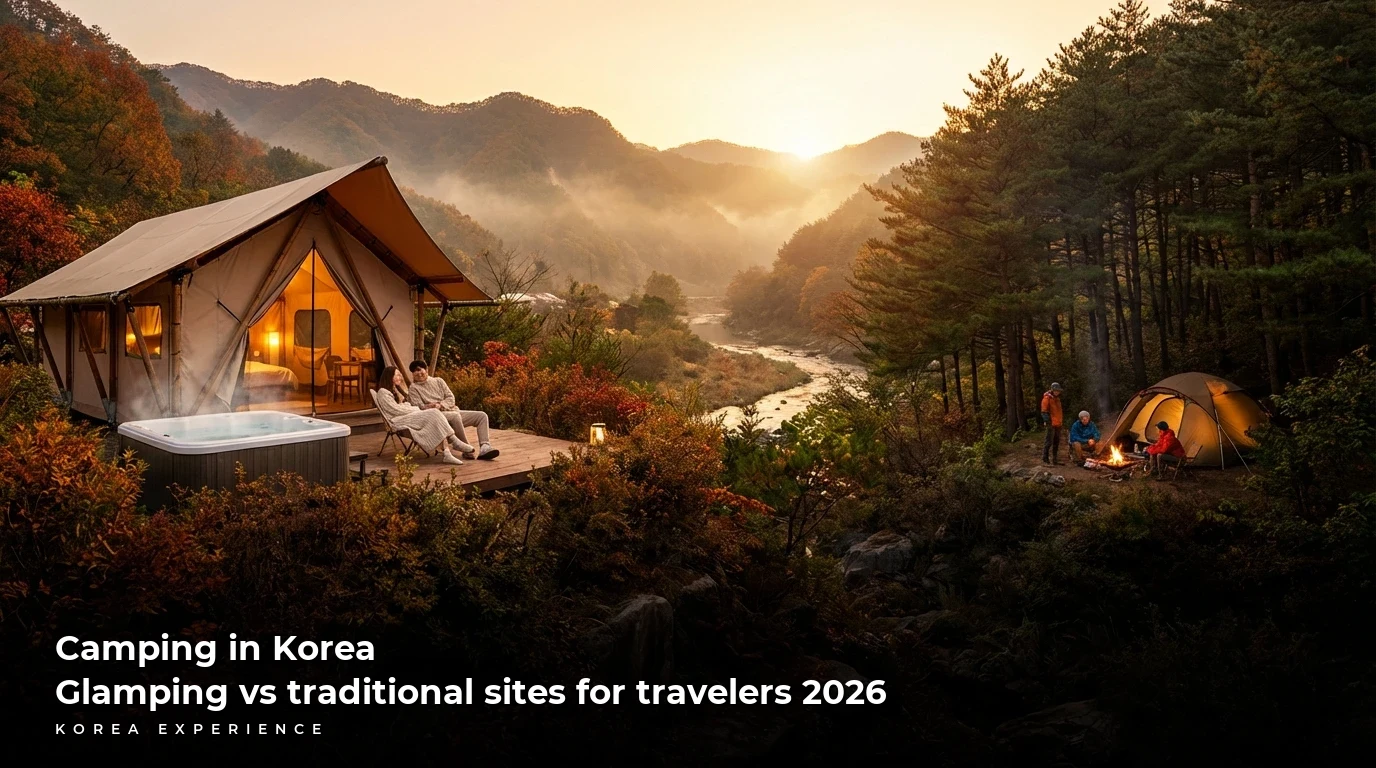
Compare Korean glamping ($150+) vs traditional camping ($30) in 2026. Discover booking tips, best seasons, and amenities for the perfect outdoor stay.
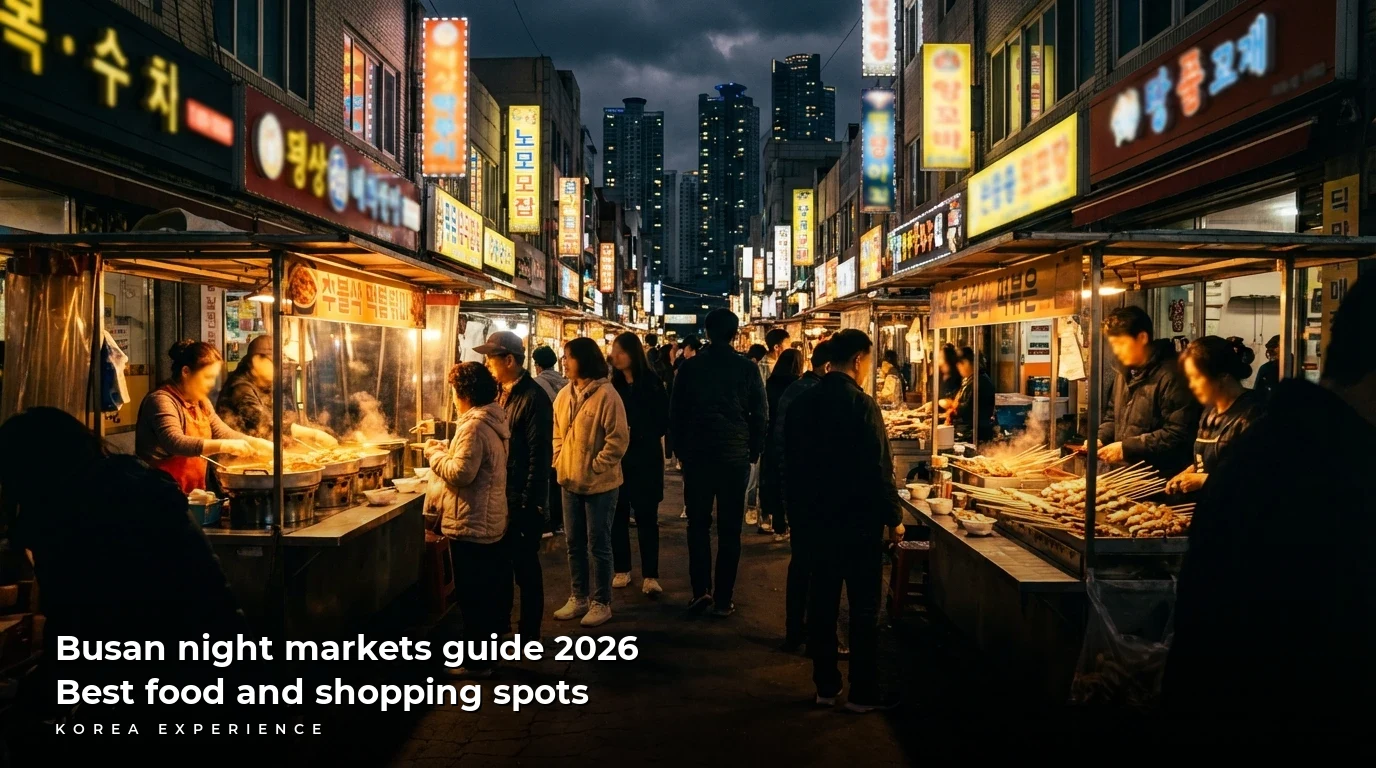
Discover the best Busan night markets in 2026. From Bupyeong Kkangtong's street food to Haeundae's seafood, find prices, hours, and transport tips.
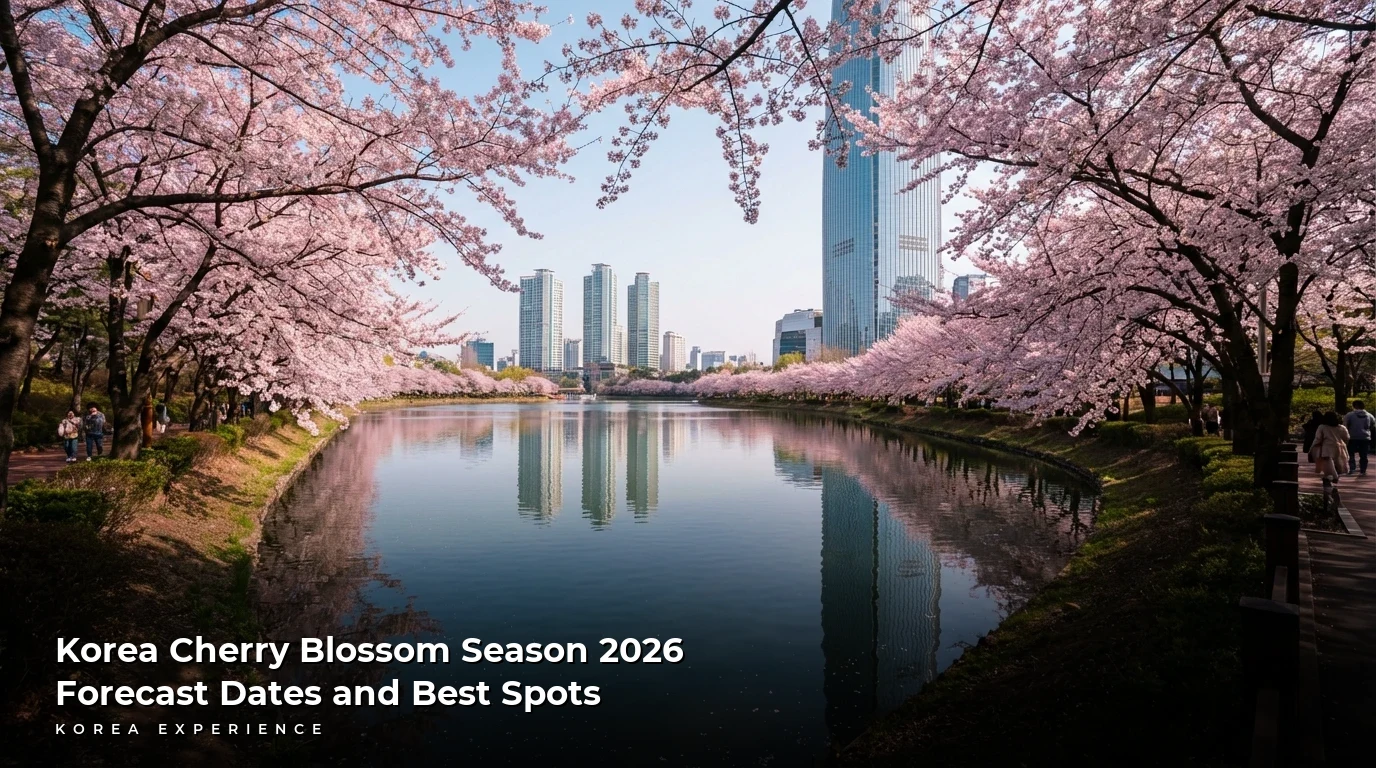
Planning a trip for Korea's 2026 cherry blossoms? Here is the full forecast, from Jeju's March 22nd bloom to Seoul's April 4th peak, plus top viewing spots.
Learn to explore Seoul on a $50 daily budget in 2026. Includes cost breakdowns for hostels, the Climate Card transit pass, and cheap eats under ₩7000.
Discover Korea's top coastal cycling routes. From the 234km Jeju Fantasy Path to the East Coast trail, get maps, rental costs, and itinerary tips.
Discover how to backpack Korea on $45/day in 2026. Complete guide to best hostels, cheap street eats like tteokbokki under $3, and free palace entry hacks.