Best Time to Visit Korea: Month-by-Month Weather Guide 2026
Discover the best time to visit Korea with our 2026 guide. We break down weather, costs, and festivals month by month to help you plan the perfect trip.
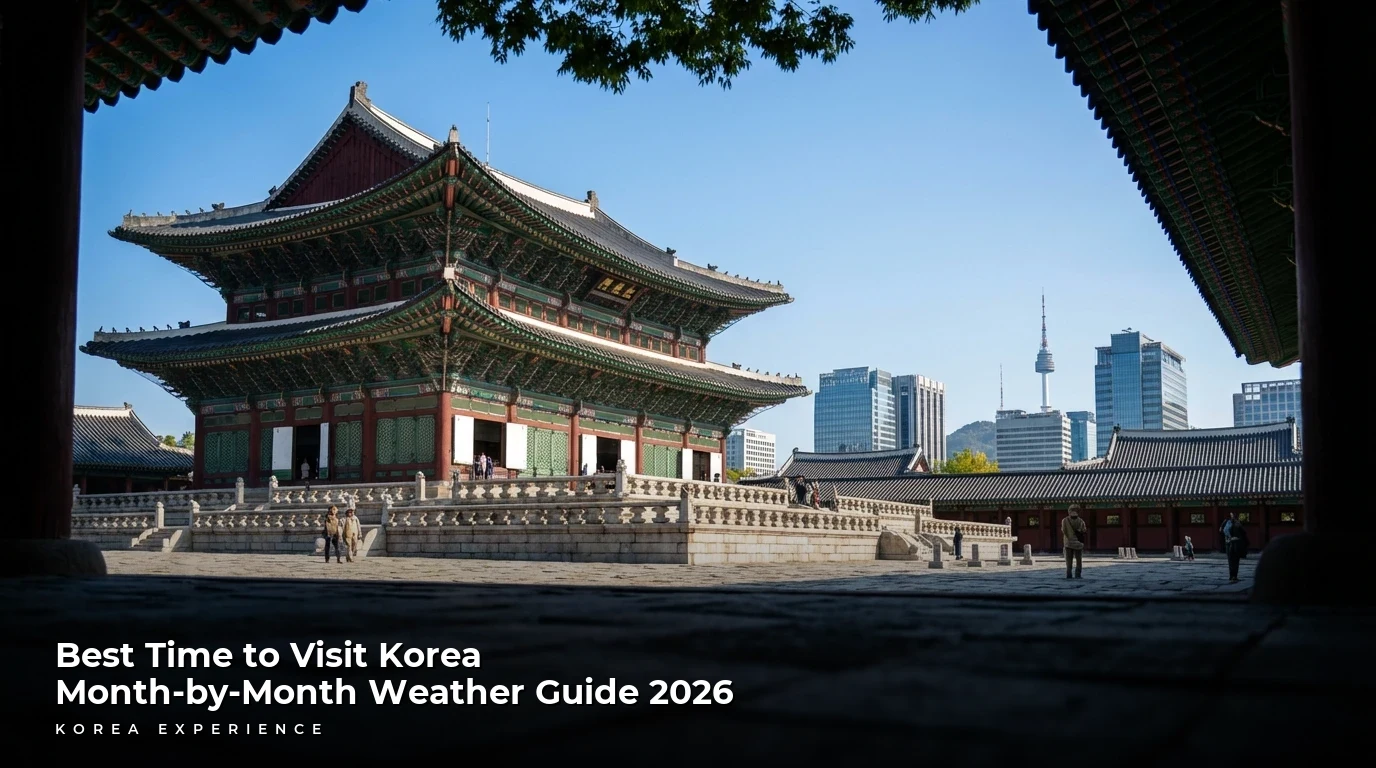
Deciding the best time to visit Korea depends largely on your tolerance for extreme temperatures and your desire to see specific seasonal phenomena like cherry blossoms or autumn foliage. For the vast majority of travelers, late September to early November (Autumn) and April to May (Spring) offer the most comfortable climate, with daytime temperatures averaging 15°C to 22°C (59°F–72°F) and low humidity. However, these are also the most expensive and crowded times to visit.
The short answer: The absolute best time to visit Korea is usually mid-October for stunning fall foliage and crisp weather, or mid-April for cherry blossoms. If you are on a budget, consider mid-November or early March.
Key Takeaways
- 1Peak Season (April, Oct): Perfect weather (15-20°C), highest prices, requires booking hotels 3-4 months in advance.
- 2Budget Season (Jan-Feb, July-Aug): Extreme weather brings hotel prices down by 30-40%.
- 3Monsoon Warning: The 'Jangma' rainy season runs from late June to late July, with humidity reaching 90%.
Understanding Korea's Four Distinct Seasons
Korea has four clearly defined seasons, and the contrast between them is stark. Unlike many Southeast Asian destinations with a wet and dry season, Korea experiences a Siberian winter and a tropical-feeling summer. Understanding this cycle is crucial for packing and itinerary planning.
📋 Seasonal Overview 2026
Spring (March to May)
Spring is arguably the most popular time for international tourists. The country thaws from the freezing winter, and colors return to the landscape.
- Temperature: 5°C to 23°C (41°F to 73°F).
- Highlights: Cherry blossoms, canola flowers, and comfortable hiking weather.
- Drawbacks: Yellow Dust (fine dust pollution) is most severe during these months.
Summer (June to August)
Summer starts pleasantly but quickly becomes oppressive.
- Temperature: 23°C to 35°C+ (73°F to 95°F+).
- Highlights: Beach festivals, water parks, and icy foods like Bingsu and Naengmyeon.
- Drawbacks: High humidity (80-90%) and the monsoon season (Jangma).
Autumn (September to November)
Often cited by locals as the "Cheon-go-ma-bi" season (sky is high and horses are fat), implying perfect weather and harvest abundance.
- Temperature: 5°C to 25°C (41°F to 77°F).
- Highlights: Vibrant red and orange foliage, clear blue skies, and harvest festivals like Chuseok.
- Drawbacks: Large crowds at national parks.
Winter (December to February)
Winter is long, dry, and intensely cold due to Siberian winds.
- Temperature: -10°C to 5°C (14°F to 41°F).
- Highlights: Skiing, street food (hotteok, odeng), and Christmas displays.
- Drawbacks: It is bone-chillingly cold; outdoor sightseeing can be painful without thermal wear.
Month-by-Month Weather and Travel Guide
To help you plan with precision, here is a detailed breakdown of what to expect in Korea every month of the year.
January: Deep Winter and Snow Festivals
January is statistically the coldest month of the year. The average temperature in Seoul hovers around -2.4°C (27°F), but wind chills can make it feel like -15°C (5°F).
- What to Wear: Heavy down jacket (long padding is the local style), thermal underwear (Heatech), wool socks, scarf, and gloves are non-negotiable.
- Events: Hwacheon Sancheoneo Ice Festival and Taebaeksan Mountain Snow Festival.
- Crowds & Cost: Low crowds in cities, but ski resorts in Gangwon-do will be packed. Flight prices are generally lower, often dropping to $800-$1,000 for long-haul flights from North America.
- Pro Tip: This is the best time for shopping, as malls are warm and January sales are common.
Winter Skin Care
The air in January is extremely dry. Humidity drops below 30%. Bring heavy moisturizers and lip balm. You will see many locals using portable humidifiers in cafes and offices.
February: The Gradual Thaw
Late February sees the graduation season in Korea. It is still freezing, but the harsh bite of January begins to fade. Temperatures range from -4°C to 4°C (25°F to 39°F).
- What to Wear: Keep the winter coat, but you might skip the heavy thermals on sunny afternoons.
- Events: Graduation ceremonies (flower bouquets everywhere) and the end of ski season.
- Crowds & Cost: Still considered off-peak. Accommodation prices remain reasonable, averaging ₩100,000 ($75 USD) per night for mid-range hotels.
March: The Awakening and Air Quality
March is tricky. Early March feels like winter; late March feels like spring. The average temperature rises to 5.7°C (42°F).
- What to Wear: Layers are key. A trench coat or light puffer jacket is ideal.
- The Yellow Dust Warning: March often brings "Hwangsa" (Yellow Dust) from the Gobi Desert. PM10 levels can spike over 150µg/m³.
- Events: Jeju Fire Festival usually takes place in early March.
- Travel Insight: If you visit in late March, head to the southern regions (Busan, Jeju) to see the first cherry blossoms before they hit Seoul.
April: Cherry Blossom Peak
April is the superstar of Korean tourism. The weather is delightful, averaging 12.5°C (55°F).
- What to Wear: Cardigans, blazers, and light jackets.
- Events: Yeouido Spring Flower Festival and Jinhae Gunhangje Festival (the largest blossom festival).
- Crowds & Cost: High. Hotel prices in popular areas like Hongdae or Myeongdong can surge by 30-50%. You must book KTX trains to southern cities 30 days in advance as they sell out in minutes.
- Visuals: For the best photography spots, consider visiting the Historic KDrama Sets, where traditional architecture meets blooming flowers.
📊 Cherry Blossom Economics
May: The Perfect Month
Many expats consider May the best month to live in Korea. It’s warm but not hot, sunny, and green. Average temps are 17.8°C (64°F).
- What to Wear: T-shirts with a light jacket for the evening.
- Events: Buddha’s Birthday (Lotus Lantern Festival) is a spectacular sight with thousands of glowing lanterns in downtown Seoul.
- Crowds & Cost: High, but slightly less frantic than the peak cherry blossom week in April. Outdoor seating at cafes becomes highly coveted.
June: Early Summer
Early June is lovely, but late June marks the beginning of the heat and humidity. Temps climb to 22.2°C (72°F).
- What to Wear: Short sleeves, shorts, and breathable fabrics (linen).
- Events: Ultra Korea (EDM festival) usually happens in June.
- Travel Insight: This is your last chance to enjoy outdoor activities comfortably before the monsoon.
July: The Monsoon (Jangma)
July is hot, wet, and sticky. The "Jangma" rainy season brings torrential downpours. It rains roughly 16 days out of the month. Average humidity hits 80-90%.
- What to Wear: Rain boots, quick-dry clothes, and sandals. Umbrellas are sold at every convenience store for ₩5,000 ($4 USD).
- Events: Boryeong Mud Festival (perfect since you get wet anyway).
- Crowds & Cost: International tourism dips, but domestic travel is high. Avoid traveling during heavy rain alerts as flights and ferries to Jeju are often cancelled.
- Indoor Strategy: This is the time to explore indoor attractions. Read our guide on COEX Mall for a full day of indoor entertainment.
August: The Oven
August is the hottest month. Temperatures regularly exceed 30°C (86°F) and feel like 40°C due to humidity. This is known as "Sambok" heat.
- What to Wear: As little as socially acceptable. Portable electric fans are a must-have accessory (sold everywhere for ₩10,000).
- Events: Busan Sea Festival.
- Crowds & Cost: The first week of August is the traditional Korean summer vacation period. Traffic out of Seoul is horrendous. Beaches in Busan and Gangneung are packed shoulder-to-shoulder.
Visiting in August
- ✓Great for water parks and beaches
- ✓Exciting nightlife and festivals
- ✓Bingsu (shaved ice) tastes amazing
- ✗Oppressive humidity
- ✗Crowded beaches (vacation peak)
- ✗Risk of typhoons
September: The Transition
Early September can still be hot and typhoon-prone, but late September is magnificent. The humidity breaks, and the sky turns a deep, clear blue.
- What to Wear: Short sleeves early in the month, transitioning to light layers by the end.
- Events: Chuseok (Korean Thanksgiving) often falls in September or October.
- Warning: During Chuseok, millions of Koreans travel to their hometowns. Train tickets are impossible to get, and many shops/restaurants close for 1-2 days. Check the specific dates for 2026 before booking.
October: Peak Autumn Foliage
October is the "Second Peak Season." The mountains burn with reds and oranges. It is hiking season. Average temps are 14°C (57°F).
- What to Wear: Light sweaters, denim, trench coats.
- Events: Seoul International Fireworks Festival, Busan International Film Festival (BIFF).
- Crowds & Cost: Seoraksan National Park will be incredibly crowded. If you want to hike, start at 4:00 AM to beat the tour buses.
- Recommendation: For hiking spots, check our guide on Autumn Colors.
November: Crisp and Quiet
November sees the leaves fall and the temperature drop to 7°C (45°F). It is a shoulder season with fewer tourists.
- What to Wear: Winter coats come back out. Scarves are recommended for the wind.
- Events: Seoul Lantern Festival usually takes place along the Cheonggyecheon Stream.
- Crowds & Cost: A great time for budget travelers. Flight prices dip before the December holiday rush.
December: Festive Winter
December is cold but festive. Department stores compete with massive Christmas light displays.
- What to Wear: Full winter gear.
- Events: Christmas festivals, lighting ceremonies.
- Crowds & Cost: High demand for "hocance" (hotel + vacation) among couples for Christmas. Book fine dining restaurants 2 months in advance.
High Season vs. Low Season (2026 Estimates)
| Feature | Peak (Apr/Oct) | Low (Jan/July) |
|---|---|---|
| Avg Hotel Cost (3-star) | ₩150,000 | ₩90,000 |
| Flight Cost (USA-ICN) | $1,400+ | $900-$1,100 |
| Crowd Level | Very High | Low |
| Booking Lead Time | 3-4 Months | 1 Month |
Detailed Itineraries Based on Weather
Your itinerary should adapt to the weather. Attempting to climb a mountain in July is dangerous due to heatstroke risk, just as visiting a water park in November is impossible.
The "Dualism" Approach to Seasonal Travel
In Korea, you can often find contrasting experiences close to each other. Here is how to balance your trip depending on the season.
The Monsoon Escape Route (July)
The Dualism Concept: Experience the best of both worlds — premium luxury moments paired with authentic budget-friendly experiences in one route.
Starfield COEX Library
Iconic indoor photography spot and high-end shopping.
Goto Mall
Underground shopping heaven safe from rain.
When it rains, go underground. Seoul has extensive underground shopping networks connecting subway stations.
Spring and Autumn: Outdoor Focus
During the good months, focus on walking-heavy districts.
- Hanbok Rental: Wearing traditional dress gets you free entry into palaces. Check our Hanbok Rental Guide for tips.
- Café Hopping: Visit Seongsu-dong or Ikseon-dong where you can sit in semi-outdoor spaces.
- Hiking: Bukhansan is accessible by subway, but for lighter walks, Namsan Tower is perfect.
Summer and Winter: Indoor/Specialty Focus
- Museums: The National Museum of Korea is massive, free, and climate-controlled.
- Cafes: Korea's café culture is built for extreme weather. You can spend hours in a themed café.
- Department Stores: The Hyundai Seoul or Shinsegae are destinations in themselves with pop-up stores and food courts.
Air Quality: The Silent Factor
When discussing the best time to visit Korea, we must address air quality. "Fine Dust" (Mise-monji) is a year-round concern but peaks in Spring and Winter.
Don't rely on just looking out the window. A day can look sunny but have hazardous PM2.5 levels. Download the app 'MiseMise' (미세미세). If the screen is red or black, wear a KF94 mask. Most locals wear masks on bad air days, not just for illness but for lung protection.
Air Quality by Season:
- Best Air: Late August, September, October (often aided by typhoons clearing the air).
- Worst Air: March, April, May (Yellow Dust from deserts).
- Winter Inversion: January and February can have stagnant air days where pollution gets trapped in the valleys.
Practical Planning Tips
Booking Windows
- Flights: Book 4-5 months in advance for April/October travel to get direct flights under $1,200.
- KTX Trains: Tickets open 30 days before departure at 7:00 AM Korean Standard Time. For Chuseok and Lunar New Year, there is a special lottery system that is difficult for foreigners to navigate; it's better to avoid travel on those specific 3 days.
What to Pack
- Deodorant: Hard to find in Korea (western brands are rare and expensive). Bring your own if visiting in Summer.
- Shoes: You will walk 15,000 to 20,000 steps a day. Leave the heels at home unless you are taking taxis everywhere.
- Adapter: Korea uses Type F (two round pins) and 220V.
Budgeting for Seasons
While flight prices fluctuate, daily costs in Korea are relatively stable, with the exception of accommodation.
- Food: A meal at a kimbap shop is ~₩5,000 ($4) year-round. BBQ is ~₩20,000 ($15) per person.
- Transport: Subways are cheap (₩1,400 base fare). Taxis start at ₩4,800 (Seoul 2026 rates).
For a deep dive on handling money and costs, check our article on Budget Travel in Korea.
📖 How to Survive the Korean Summer Heat
Step 1: Buy a Portable Fan
Available at Artbox or Daiso. Don't walk outside without one.
Step 2: Dress in Linen
Uniqlo and Spao sell 'Airism' or 'Cooltech' clothing. Cotton gets heavy with sweat.
Step 3: Eat Samgyetang
Locals eat boiling hot ginseng chicken soup on the hottest days (Boknal) to 'fight heat with heat'.
Frequently Asked Questions
❓ Best Time to Visit Korea FAQ
Have more questions?Contact us →
Final Verdict
If you are planning your trip to Korea for 2026, aim for mid-October. You get the visual splendor of the changing leaves, the comfortable temperatures for walking thousands of steps, and the clear blue skies that make for perfect photos.
If you cannot make it in autumn, late April is your second-best bet, offering flowers and festivals, though you must prepare for slightly worse air quality.
No matter when you visit, Korea offers a distinct charm. Winter has its cozy tea houses and snowy temples; summer has its energetic nights and beach vibes. Pack the right clothes, download the right apps, and you will have an unforgettable experience.
For more inspiration on where to go once you arrive, explore our guide to Best Day Trips from Seoul.
About the Author
Korea Experience Team
Written by the Korea Experience editorial team - experts in Korean medical tourism, travel, and culture with years of research and firsthand experience.
Explore more in Travel & Tourism
From Seoul's neon-lit streets to Jeju's volcanic landscapes — discover the best of Korea with insider travel tips, itineraries, and seasonal guides.
Browse All Travel & Tourism ArticlesContinue Reading
Explore more articles you might find interesting
Discover the best romantic couple getaways and honeymoon destinations in Korea for 2026. From Jeju Island luxury to Seoul city lights, plan your perfect trip.
Discover 10 secret autumn spots in Korea away from crowds. Includes 2026 peak foliage dates, transport costs, and specific hiking routes for the perfect trip.

Plan your 2026 Jeju trip with our guide on the best seasons (April/October), rental car costs (₩50,000/day), and top 10 scenic spots for nature lovers.
Discover the best neighborhood to stay in Seoul based on your trip style, from Myeongdong's convenience to Hongdae's nightlife and historic Jongno.
Discover Seoul's best winter spots for 2026. From ₩1,000 skating at City Hall to luxury spas, find temperatures, costs, and festivals in this complete guide.
Discover the best of Busan in 2026. From Haeundae Beach to Haedong Yonggungsa Temple, explore top spots, costs, and itineraries for your trip.