Budget Backpacking Korea: Hostels & Street Food Guide
Discover how to backpack Korea on $45/day in 2026. Complete guide to best hostels, cheap street eats like tteokbokki under $3, and free palace entry hacks.
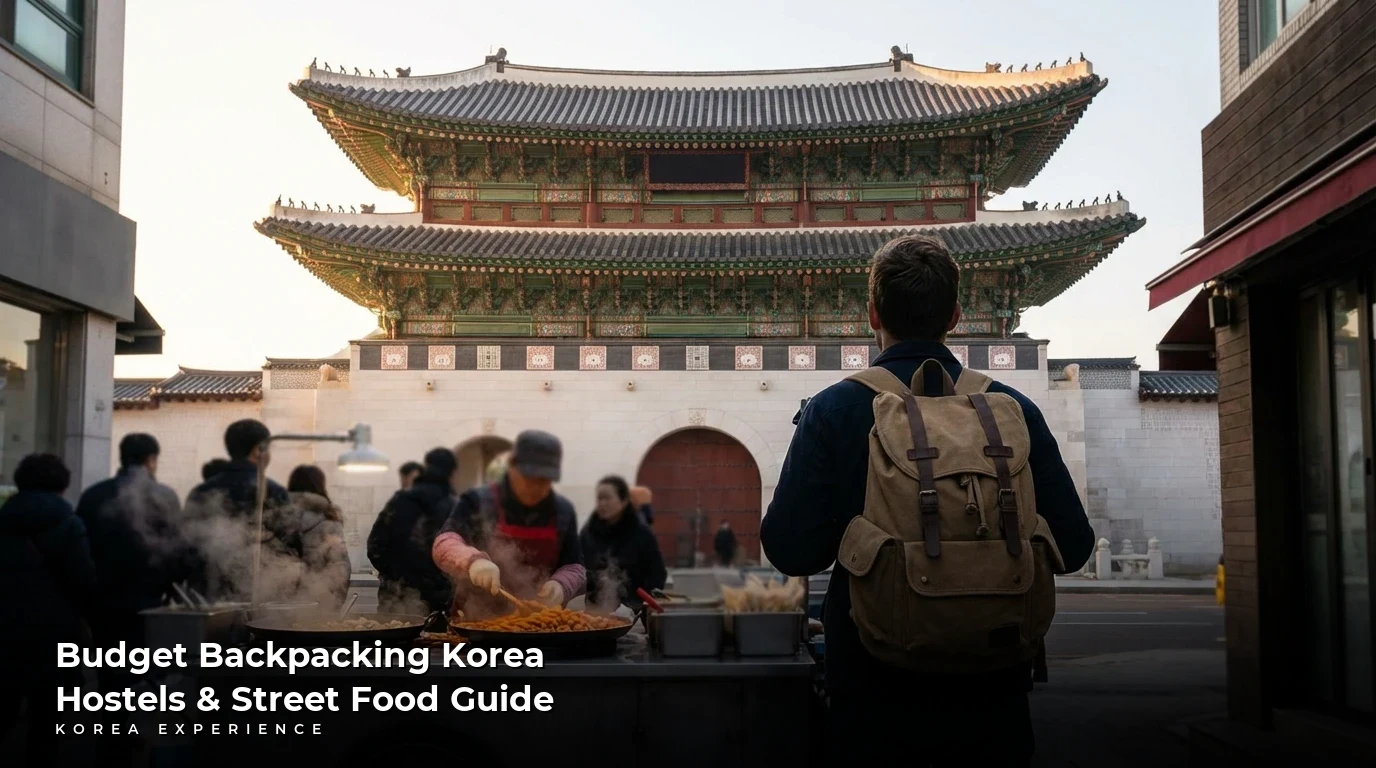
Can you travel South Korea on a tight budget without missing out on the K-culture experience? Yes, absolutely. While Seoul consistently ranks as one of the more expensive cities in Asia, savvy backpackers can comfortably explore the country for approximately ₩60,000 to ₩80,000 ($45–$60 USD) per day in 2026. This daily budget covers a bunk in a clean hostel (approx. ₩25,000), three hearty meals mixing convenience stores and local restaurants (₩25,000), and public transport plus attractions (₩10,000). By leveraging the country's efficient public transit, massive street food culture, and abundance of free historical sites, you can reduce costs significantly compared to Western Europe or Japan.
The short answer: You can backpack Korea for $45/day by sleeping in guest houses or Jjimjilbangs, eating at "Kimbap Cheonguk" style diners, utilizing the T-Money transit card, and visiting free national museums.
Key Takeaways
- 1Budget ₩60,000 ($45 USD) per day for a comfortable backpacking experience in 2026
- 2Jjimjilbangs (saunas) offer overnight stays for as low as ₩12,000-15,000
- 3Wearing a Hanbok grants free entry to all five Grand Palaces in Seoul
Understanding the Korean Won and Daily Costs
Before diving into logistics, it is crucial to understand your purchasing power. As of early 2026, the exchange rate hovers around 1,300 to ₩1,350 per 1 USD. This exchange rate remains favorable for international travelers, effectively giving you a 20-30% discount compared to prices a decade ago.
The "Pali-Pali" (hurry-hurry) culture of Korea means efficiency is high and costs for services are often lower than expected because volume is high. However, coffee can be deceptively expensive (often ₩5,000+ for an Americano), while a full meal might only cost ₩8,000.
📊 Daily Backpacker Budget Breakdown (2026)
To stay strictly within budget, you need to understand the "Convenience Store Economy." Korea has over 50,000 convenience stores. A decent lunch of a dosirak (bento box) costs just ₩4,500 to ₩5,500, whereas a Western-style brunch in Gangnam will set you back ₩22,000.
Budget Accommodation: Hostels, Goshiwons, and Saunas
Accommodation is your biggest fixed cost. Fortunately, Korea offers distinct tiers of budget housing that are generally cleaner and safer than counterparts in Europe or Southeast Asia.
Hostels and Guesthouses
The standard for backpacking. In 2026, a dormitory bed in popular areas like Hongdae (Seoul) or Seomyeon (Busan) averages ₩22,000 to ₩30,000 ($16-22) per night. These almost always include free WiFi, filtered water, and often a simple breakfast of toast, eggs, and coffee.
When booking, look for "Guesthouses" rather than just "Hostels." In Korea, guesthouses are often family-run converted apartments that offer a more intimate, local experience.
Pro Tip: The Breakfast Hack
Most Korean guesthouses serve breakfast from 8:00 AM to 10:00 AM. Since lunch prices in business districts peak between 11:30 AM and 1:00 PM, eat a heavy guesthouse breakfast and push your lunch to 1:30 PM to avoid crowds and potentially find "end of lunch rush" discounts.
Jjimjilbangs (Korean Saunas)
For the ultimate budget experience, you can sleep in a Jjimjilbang. These are 24-hour bathhouses. You pay an entry fee of ₩12,000 to ₩18,000, get a uniform (shorts and t-shirt), soak in the tubs, and then sleep on heated floors in a large communal room.
- Pros: Cheapest option, cultural immersion, access to baths/saunas.
- Cons: No privacy, sleeping on the floor with a hard pillow, potential snoring noise.
- Luggage: Most have large lockers, but they may not fit a massive 60L hiking backpack.
Goshiwons (Examination Study Rooms)
Originally designed for students studying for bar exams, these are tiny cubicles (about 3-5 square meters) available for rent. While usually monthly, many now accept weekly travelers.
- Cost: ₩150,000 - ₩200,000 per week.
- Best for: Solo travelers staying 2+ weeks who want privacy over space.
- Included: Usually free rice, kimchi, and ramen in a shared kitchen.
💵 Accommodation Cost Comparison (Seoul 2026)
Private room, gym, daily cleaning
Shared room, social vibe, free breakfast
Sleeping on floor, sauna access included
Strategic Transportation: T-Money and Walking
Transport costs can add up if you aren't careful. The backbone of your travel will be the T-Money card. This rechargeable IC card works on subways, buses, taxis, and even at convenience stores across the entire country.
The Subway System
Seoul's subway is world-class. The base fare in 2026 is approximately ₩1,500 for the first 10km. Transfers between subway lines and buses are free up to 4 times within 30 minutes (or 60 minutes at night).
- Budget Rule: Never take a taxi alone. The base taxi fare starts at ₩4,800 (2026 rates) and jumps quickly. A 20-minute ride can easily cost ₩15,000, which is the price of three days' worth of street food.
Intercity Travel: Bus vs. Train
To move between cities (e.g., Seoul to Busan), you have two main options:
- KTX (High-Speed Train): Fast (2.5 hours) but expensive (₩59,800 one way).
- Express Bus (Gosok Bus): Slower (4 hours) but significantly cheaper (₩25,000 to ₩36,000).
For a backpacker, the Premium Bus is a hidden gem. For about ₩40,000 (still cheaper than KTX), you get a lie-flat seat with privacy curtains, effectively saving you a night's accommodation if you take a night bus.
Seoul to Busan: Travel Options
| Feature | KTX Train | Express Bus | Mugunghwa Train |
|---|---|---|---|
| Cost | ₩59,800 | ₩26,000 | ₩28,600 |
| Time | 2.5 Hours | 4 Hours | 5.5 Hours |
| Comfort | High | Medium/High | Low |
If you are planning to visit multiple cities, check out our guide on budget travel in Korea for more specific route planning.
Street Food and Cheap Eats: Survival Guide
Food is where you can save the most money without feeling deprived. Korean street food is legendary, high quality, and regulated for hygiene more strictly than in many other countries.
The "Bunsik" Experience
"Bunsik" refers to inexpensive Korean dishes made from flour. Look for restaurants with "Gimbap" (김밥) in the name, like "Gimbap Cheonguk" (Kimbap Heaven).
- Gimbap (Rice Rolls): ₩3,500 - ₩4,500 per roll. One roll is a light meal; two is a feast.
- Ramyeon (Instant Noodles with add-ons): ₩4,000 - ₩5,000. Served with kimchi and radish.
- Donkatsu (Pork Cutlet): ₩8,000 - ₩9,000. A massive portion of fried pork, rice, and salad.
Street Stalls (Pojangmacha)
You will find these red or orange tented stalls everywhere.
- Tteokbokki (Spicy Rice Cakes): ₩4,000 per serving.
- Eomuk (Fish Cake Skewers): ₩1,000 - ₩1,500 per stick. Pro Tip: The broth is free. You can drink as much as you want from the paper cups provided.
- Hotteok (Sweet Pancakes): ₩2,000. A calorie-dense winter snack filled with brown sugar and nuts.
Gwangjang Market(광장시장)
Convenience Store Dining (CVS)
Korean convenience stores (GS25, CU, 7-Eleven, Emart24) are the lifeblood of budget travelers. They offer seating areas, microwaves, and hot water.
- Dosirak (Bento): ₩5,000. Includes rice, meat, and side dishes.
- Samgak Gimbap (Triangle Rice Ball): ₩1,200. The ultimate $1 snack.
- 4-Can Beer Deals: 4 large cans of imported or craft beer for ₩11,000 or ₩12,000.
For a deep dive into what to buy, read our must-try convenience store food guide.
Free and Low-Cost Activities
One of the best aspects of backpacking Korea is that the best sights are often the cheapest.
The Grand Palaces
There are five grand palaces in Seoul. The largest, Gyeongbokgung, costs ₩3,000 to enter. However, there is a famous loophole.
📖 How to Enter Seoul Palaces for Free
Step 1: Find a Hanbok Rental Shop
Shops surround Gyeongbokgung Station. Rentals start at ₩15,000 for 2 hours.
Step 2: Get Dressed
Staff will help you dress and do your hair (usually included).
Step 3: Walk to the Palace Gate
Go to the ticket booth.
Step 4: Show Your Hanbok
You do not need to buy a ticket. The guard will wave you through for free entry.
If you want to know more about rental styles, check out our Hanbok rental guide.
Hiking National Parks
Hiking is the national pastime. Unlike in many countries where national parks have entrance fees, most Korean national parks, including Bukhansan in Seoul, abolished entrance fees years ago.
- Bukhansan: Accessible by subway. The hike to Baegundae Peak takes 4-5 hours round trip. Cost: ₩0.
- Namsan Park: You can walk up to N Seoul Tower instead of taking the cable car (saving ₩14,000). The stairs take about 40 minutes.
Museums
The National Museum of Korea (Yongsan) and the National Folk Museum (inside Gyeongbokgung) are completely free. They are world-class facilities with English descriptions. The War Memorial of Korea is also free and offers a poignant look at the country's history.
Culture Day
The last Wednesday of every month is "Culture Day." Many museums, galleries, and even movie theaters offer free admission or 50% discounts. If your trip aligns with this date, plan your paid activities for this day.
Itinerary Strategy: The "Base Camp" Method
To save money on transport, avoid moving accommodation every night. Pick a "base camp" in a central hub and do day trips.
Seoul Base Camp
Stay in Hongdae or Jongno.
- Day 1: Gyeongbokgung (Free with Hanbok), Bukchon Hanok Village (Free), Insadong (Window shopping).
- Day 2: Hiking Bukhansan (Free), Gwangjang Market (Budget food).
- Day 3: Han River Park. Rent a mat (₩2,000) and order delivery chicken or buy snacks from a CVS.
Busan Base Camp
Stay in Seomyeon (central) or Gwangan (beach).
- Day 1: Haeundae Beach and Dongbaek Island walk (Free).
- Day 2: Gamcheon Culture Village (Free to walk, map costs ₩2,000).
- Day 3: Haedong Yonggungsa Temple (Free entry).
For a detailed breakdown of costs in the southern port city, see our Busan travel guide.
24 Hours in Seoul: Luxury Meets Budget
The Dualism Concept: Experience the best of both worlds — premium luxury moments paired with authentic budget-friendly experiences in one route.
Luxury Hanbok Shoot
Professional photographer + Premium Hanbok
Selfie + Basic Rental
Standard Hanbok rental + phone tripod
Fine Dining Royal Cuisine
Full Hanjeongsik course
Gwangjang Market Feast
Bindaetteok and Gimbap
The budget route offers a more energetic, authentic atmosphere at 15% of the price.
Money-Saving Hacks for 2026
Beyond the basics, here are specific optimizations for the modern traveler.
1. Water is Free
Never buy bottled water in restaurants. Every Korean restaurant, from the cheapest noodle shop to high-end BBQ, provides free filtered water. In 2026, most public parks and subway stations also have reliable Arisu (Seoul tap water) fountains. Bring a refillable bottle.
2. Tax Refunds
Korea has an "Immediate Tax Refund" system. For purchases between ₩30,000 and ₩500,000 at participating stores (Olive Young, Lotte Mart, Uniqlo), show your passport at the checkout counter. The tax (about 6-7%) is deducted immediately. You don't need to queue at the airport.
3. Connectivity
Don't use roaming.
- SIM Card: A 10-day unlimited data SIM costs about ₩35,000.
- WiFi: Seoul has extensive free public WiFi on buses and subways (SSID: Public WiFi Free or Seoul_Secure). If you are on an extreme budget, you can survive without a SIM card by hopping between cafe and subway WiFi, though navigation becomes harder.
"Many travelers waste money on 'Airport Limousine Buses' which cost ₩17,000. Take the AREX 'All-Stop' train instead. It takes only 10 minutes longer but costs roughly ₩4,750. It's the exact same track, just different seats!"
Solo Travel vs. Group Budgeting
Traveling solo in Korea has historically been slightly more expensive for food because of the communal dining culture (BBQ places often require 2 servings minimum). However, the rise of "Hon-bap" (eating alone) culture means this is changing.
Solo Travelers
- Stick to: Stews (Jjigae), Noodles, Bibimbap, and fast food.
- Avoid: Large format BBQ places or Jjimdak restaurants unless they have a designated "1 person menu."
- Housing: Dorms are your friend.
Groups (2-4 People)
- Savings: You can split Airbnb costs (often cheaper than 4 hostel beds) and share Taxi fares.
- Food: You can access the best value meals—Dakgalbi (Spicy Chicken Stir fry) and Samgyeopsal (Pork Belly). Splitting a ₩40,000 BBQ meal four ways is just ₩10,000 each for a feast.
For those attempting a sleepless adventure to maximize time and money, check our 24-hour Seoul itinerary.
Seasonal Considerations for Budgets
The time of year you visit impacts your wallet.
- Cheapest (Winter: Jan-Feb): Flights are cheap, hostels have vacancies. Warning: Heating costs are included in hotels, but you need heavy winter gear (which is bulky/expensive). Street food like Hotteok is best now.
- Expensive (Summer: Jul-Aug): Korean school holidays drive up domestic tourism prices. It is hot, humid, and monsoon season.
- Best Value (Shoulder: Mar-May, Sep-Nov): Great weather means you can walk everywhere (saving transport costs) and hike for free entertainment.
📋 Budget Travel Quick Facts
Final Thoughts
Backpacking Korea in 2026 is an exercise in smart choices, not deprivation. The infrastructure is built for efficiency, allowing you to cover vast distances cheaply. The food culture is inherently democratic—some of the best flavors are found in standing stalls, not Michelin restaurants. By mixing the free historical sites with cheap but delicious Bunsik meals and utilizing the clean, safe hostel network, you can experience the dynamic energy of the "Land of Morning Calm" without breaking the bank.
❓ Frequently Asked Questions
Have more questions?Contact us →
About the Author
Korea Experience Team
Written by the Korea Experience editorial team - experts in Korean medical tourism, travel, and culture with years of research and firsthand experience.
Explore more in Travel & Tourism
From Seoul's neon-lit streets to Jeju's volcanic landscapes — discover the best of Korea with insider travel tips, itineraries, and seasonal guides.
Browse All Travel & Tourism ArticlesContinue Reading
Explore more articles you might find interesting
Learn to explore Seoul on a $50 daily budget in 2026. Includes cost breakdowns for hostels, the Climate Card transit pass, and cheap eats under ₩7000.
Complete guide to Korea's bike rentals. Master Seoul's Ttareungi (₩1,000), ride Busan's coast, and cycle Jeju's 234km path with our 2026 expert tips.
Discover the best Busan night markets in 2026. From Bupyeong Kkangtong's street food to Haeundae's seafood, find prices, hours, and transport tips.
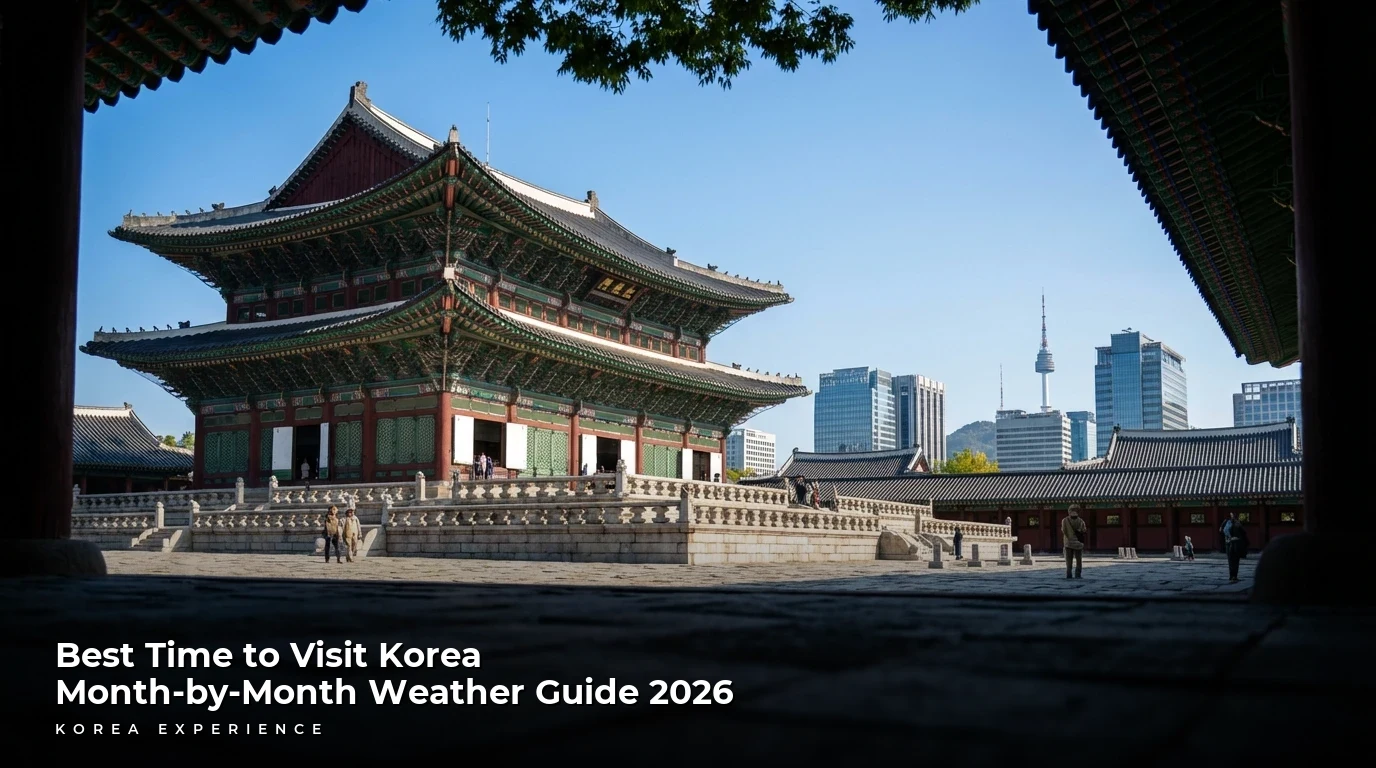
Discover the best time to visit Korea with our 2026 guide. We break down weather, costs, and festivals month by month to help you plan the perfect trip.
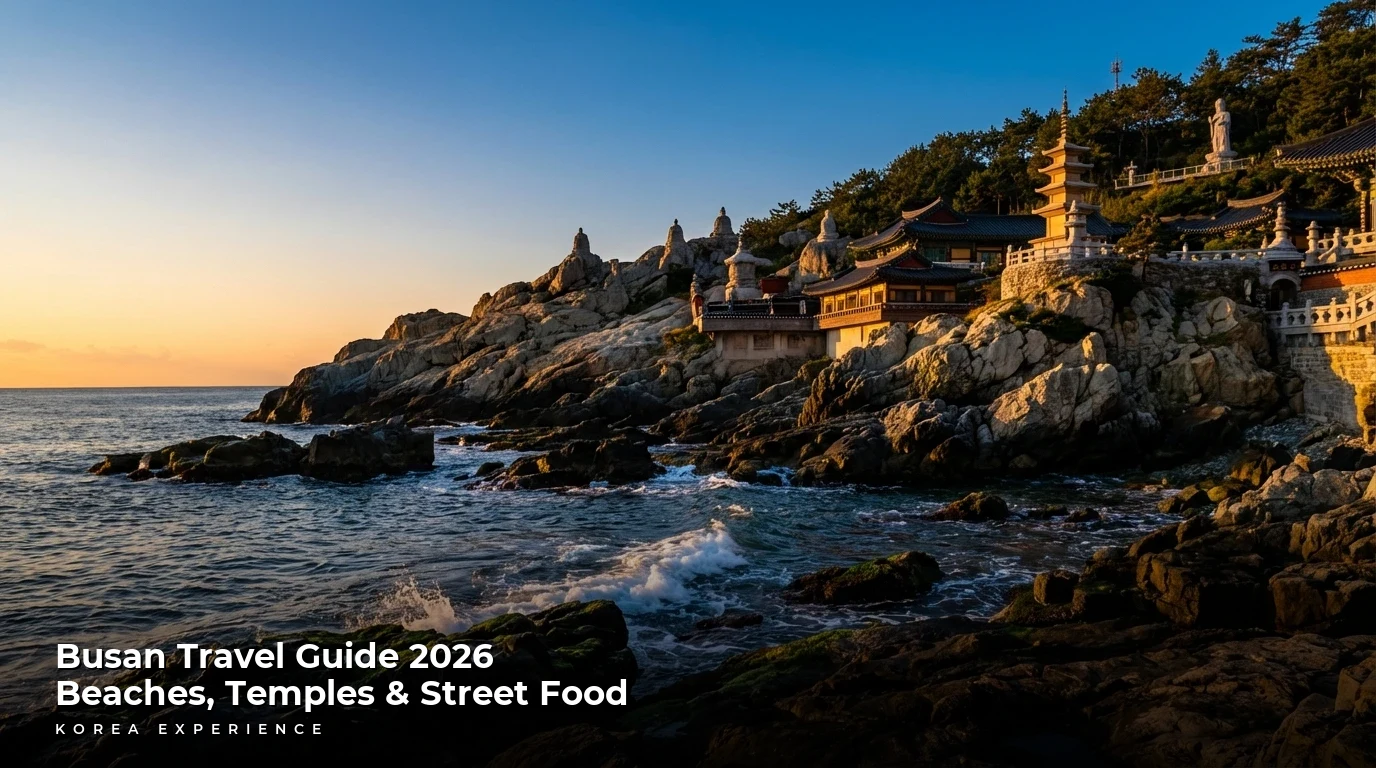
Discover the best of Busan in 2026. From Haeundae Beach to Haedong Yonggungsa Temple, explore top spots, costs, and itineraries for your trip.
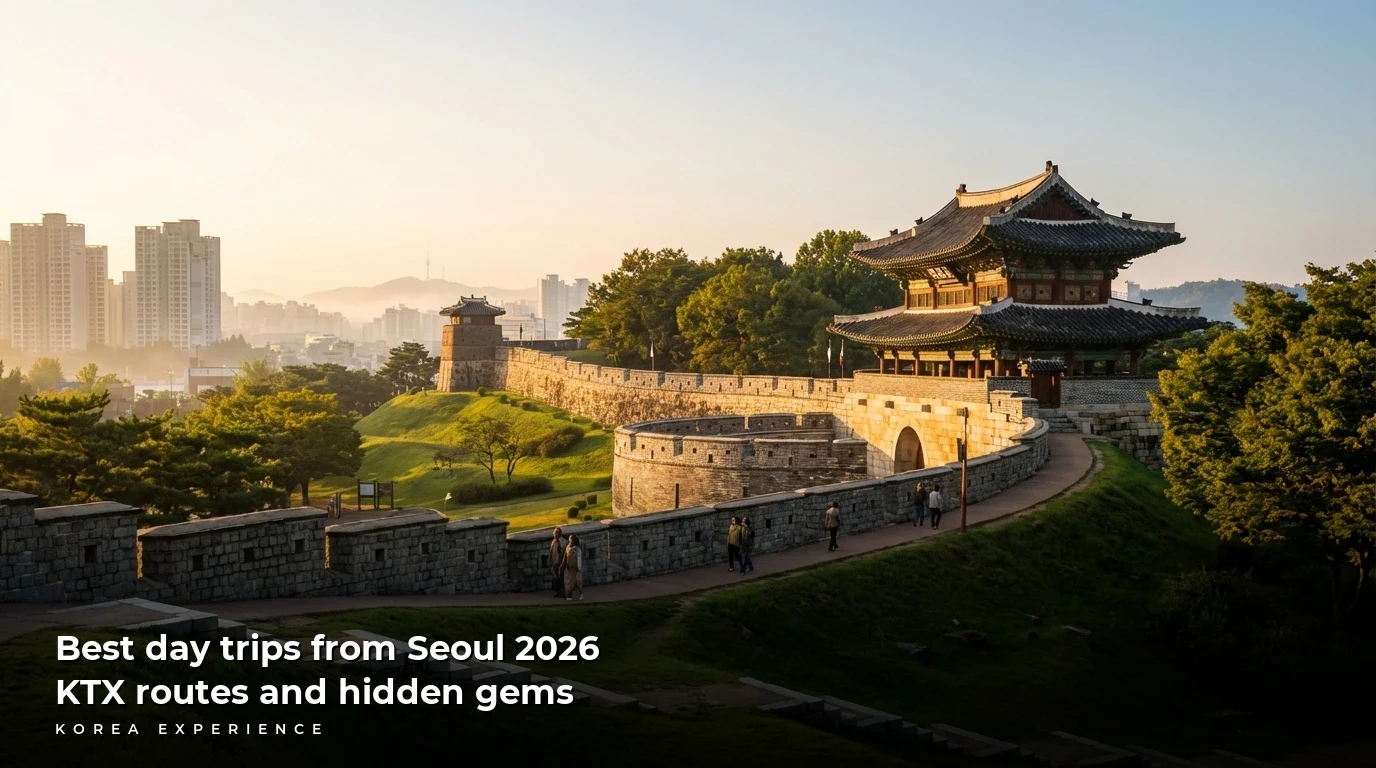
Discover the top day trips from Seoul for 2026. Includes KTX schedules, costs under ₩50,000, and travel times for Suwon, Nami Island, and the DMZ.