Korean Paper Art Hanji Crafts Workshops for Travelers
Discover the delicate beauty of Hanji Korean paper art. Find authentic Hanji crafts workshops across Korea, perfect for unique cultural immersion and creating lasting memories.
The vibrant tapestry of Korean culture offers an endless array of experiences for the curious traveler. While K-pop and Korean dramas capture global attention, the country's rich artistic traditions provide equally captivating journeys. Among these, the art of Hanji, traditional Korean paper, stands out as a unique and deeply immersive cultural experience. For international visitors and expats looking to delve deeper than the surface, Korean Paper Art Hanji Crafts Workshops offer an unparalleled opportunity to connect with Korea's heritage through the creation of beautiful, handcrafted art.
Imagine yourself meticulously layering sheets of naturally dyed paper, transforming simple materials into an elegant lantern, a practical jewelry box, or a decorative fan. This isn't just a craft; it's a meditative practice that reveals the patience, precision, and profound beauty inherent in Korean artistry. If you've ever sought a hands-on cultural activity that yields a tangible, meaningful souvenir, then exploring Hanji workshops should be at the very top of your Korean itinerary. This comprehensive guide will illuminate everything you need to know about embarking on your own Hanji crafting adventure, from understanding the history of this remarkable paper to finding the perfect workshop and creating your own masterpiece.
Discovering Hanji: The Soul of Korean Paper Art
Before you pick up your first brush or piece of paper, it's essential to understand what makes Hanji so special. "Hanji" translates simply to "Korean paper" (Han for Korea, Ji for paper), but its significance extends far beyond its literal meaning. It is not merely paper; it is a cultural artifact, a testament to centuries of Korean craftsmanship and ingenuity.
The Origins and Making of Hanji
Hanji's story begins with the inner bark of the mulberry tree, known in Korea as "dak" (Paper Mulberry tree). Unlike wood pulp-based papers, Hanji is renowned for its exceptional strength, durability, and unique texture. The traditional process of making Hanji is an intricate and labor-intensive one, involving numerous steps:
- Harvesting and Steaming: Dak branches are harvested, then steamed and stripped of their outer bark.
- Boiling and Rinsing: The inner bark is boiled with lye to soften it, then meticulously rinsed to remove impurities.
- Beating and Macerating: The softened fibers are beaten for hours, breaking them down into a fine pulp. This step is crucial for Hanji's famous strength.
- Adding Mucilage: A natural sticky substance called "dakpul," extracted from the roots of the Aibika plant, is added to the pulp. This acts as a binding agent and allows the fibers to disperse evenly in water.
- Sheet Formation: Using a finely woven bamboo screen called a "bal," the artisan skillfully dips and scoops the pulp solution, forming thin, uniform sheets of paper. This "webal" technique (meaning "single layer" or "double layer" depending on how it's done) is what gives Hanji its distinct cross-directional fiber arrangement, contributing to its incredible strength and resistance to tearing.
- Drying: The wet sheets are carefully transferred to wooden boards or heated surfaces to dry, often flattened under weights.
This painstaking process results in a paper that is not only robust but also breathable, resistant to insects and water, and naturally acid-free, allowing it to last for a thousand years without yellowing or deteriorating – hence the Korean saying, "Jong-i cheonnyeon, bi-dan olhae" (Paper lasts a thousand years, silk lasts for a year).
Hanji's Cultural Significance and Uses
Historically, Hanji was far more than a surface for writing or painting. Its remarkable properties made it indispensable in various aspects of Korean life:
- Art and Calligraphy: As an ideal medium for ink, Hanji provided the canvas for countless masterpieces of calligraphy and traditional painting.
- Architecture and Furnishings: Its insulating and breathable qualities made it perfect for covering doors (changhoji), windows, and even entire walls in traditional Hanok houses. Furniture like wardrobes, chests, and stationery boxes were often lacquered with layers of Hanji for durability and beauty.
- Everyday Items: From sturdy storage boxes (ham) and decorative lanterns (deung) to practical fans (bucha) and even armor, Hanji's versatility knew no bounds.
- Crafts and Dolls: Intricate paper dolls, known as Hanji-inhyung, and various other decorative crafts utilized its flexible and durable nature.
Today, Hanji continues to inspire contemporary artists and artisans, blending traditional techniques with modern aesthetics. Its cultural significance is deeply ingrained, representing resilience, natural beauty, and the enduring spirit of Korean craftsmanship. Participating in a Hanji craft workshop is thus not just about making something beautiful; it's about connecting with a living piece of Korean history.
Why Attend a Hanji Crafts Workshop in Korea?
For international travelers and expats, engaging in a Hanji crafts workshop offers a rich tapestry of benefits that extend beyond simply acquiring a new skill. It's an opportunity for deep cultural immersion and personal enrichment.
Cultural Immersion and Authentic Experience
Unlike passively observing historical sites, a Hanji workshop provides a hands-on, interactive journey into Korean culture. You'll learn about the traditions surrounding Hanji directly from local artisans, often in charming traditional settings. This active participation fosters a deeper appreciation for the country's heritage and offers insights into the values of patience, precision, and respect for natural materials that are central to Korean artistry. It's a chance to truly "live" a part of Korean history.
Create a Unique and Meaningful Souvenir
Forget generic magnets or mass-produced trinkets. The item you create in a Hanji workshop will be a truly unique and personal souvenir. It's not just a beautiful object; it's a tangible memory of your time in Korea, imbued with your own effort and creativity. Every time you look at your Hanji lantern or jewelry box, you'll be reminded of the cultural experience and the skills you learned. This makes for a far more meaningful keepsake or gift for loved ones back home.
Relaxation and Mindfulness
The process of Hanji crafting is inherently meditative. The repetitive motions, the careful selection of colors and textures, and the focus required to assemble delicate components can be incredibly calming and therapeutic. In today's fast-paced world, taking time to engage in such a mindful activity can be a welcome respite, allowing you to de-stress and reconnect with your inner creativity. It's an excellent way to unwind after a busy day of sightseeing or working.
Learn a New Skill and Expand Your Artistic Horizons
Even if you consider yourself artistically challenged, Hanji workshops are designed to be accessible to all skill levels. Expert instructors guide you through each step, ensuring a successful outcome. You'll learn fundamental paper crafting techniques, understand the properties of different types of Hanji, and develop an eye for traditional Korean aesthetics. This newfound skill might even spark a new hobby or appreciation for paper art upon returning home.
Connect with Locals and Fellow Travelers
Workshops often provide a relaxed and friendly environment, perfect for connecting with local instructors who are passionate about their craft. Many workshops also attract a diverse group of participants, offering opportunities to meet fellow travelers from around the world and share your Korean experiences. This social aspect adds another layer of enjoyment to the workshop, fostering new friendships and shared memories.
Types of Hanji Crafts You Can Create
The versatility of Hanji means there's a vast array of beautiful and functional items you can learn to create in a workshop. From simple to intricate, there's a project to suit every interest and skill level.
Hanji Lanterns (Hanji Deung)
Perhaps one of the most popular and visually striking Hanji crafts, lanterns are both decorative and functional. Workshops often guide you through creating small tabletop lanterns or more elaborate standing lamps. You'll learn to construct a basic frame (often pre-made for beginners), then meticulously cut, layer, and glue pieces of colored Hanji onto it, creating intricate patterns and a warm, diffused glow when lit. These are truly stunning pieces to take home.
Hanji Jewelry Boxes (Hanji Ham) and Storage Boxes
These practical and elegant boxes are another workshop favorite. You'll typically start with a pre-formed wooden or cardboard base. The focus then shifts to decorating it with multiple layers of Hanji, often in contrasting colors or patterns. Techniques like "Jieumsae" (the traditional method of joining paper without glue, using folds) or applying decorative elements like "chilbo" (enamelware) inspired patterns might be introduced. The result is a sturdy, beautiful box perfect for keepsakes.
Hanji Stationery and Bookmarks
For a quicker, more accessible project, many workshops offer the chance to create personalized stationery sets, notebooks, or bookmarks. This often involves decorating plain paper with Hanji scraps, creating collage-like designs, or learning simple paper-folding techniques. These are excellent choices for beginners or those with limited time, offering a taste of Hanji art without extensive commitment.
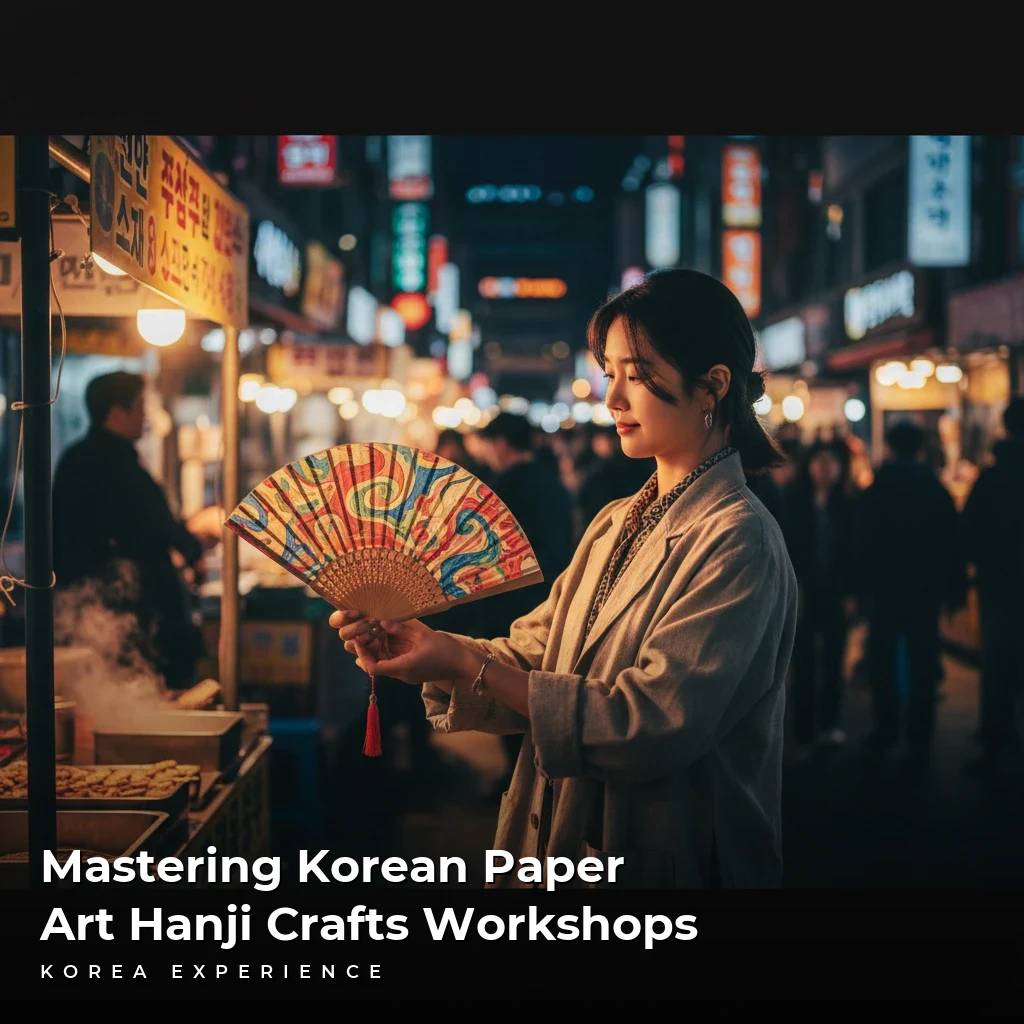
Hanji Fans (Hanji Bucha)
Traditional Korean fans are not just for cooling; they are works of art. Workshops often allow you to decorate a blank fan frame with delicate Hanji, perhaps painting it with traditional motifs or adding calligraphic elements. This craft showcases Hanji's ability to hold shape and its elegant texture.
Hanji Dolls (Hanji Inhyung) and Figurines
More advanced workshops might delve into creating three-dimensional Hanji dolls or figurines. This involves sculpting forms with wire or paper, then meticulously layering strips of wet Hanji over the form, often requiring multiple drying and layering stages. These projects demand more time and patience but result in incredibly detailed and unique art pieces.
Decorative Items and Wall Hangings
Beyond functional objects, you can also create purely decorative Hanji items, such as wall hangings, small framed art pieces, or decorative panels. These projects often emphasize the beauty of Hanji itself, focusing on its texture, natural colors, and how light interacts with the paper. Some workshops might even allow you to experiment with pressing dried flowers or leaves into the Hanji for an organic touch.
Finding Your Perfect Hanji Workshop: Locations and Options
Korea, particularly its cultural heartlands, offers numerous opportunities to participate in Hanji crafts workshops. From bustling city centers to serene traditional villages, you're sure to find a setting that suits your preferences.
Hanji Workshops in Seoul
Seoul, as the capital, boasts a wide array of options, making it easy to integrate a workshop into your sightseeing itinerary.
- Insadong: This historic neighborhood is synonymous with traditional Korean culture and art. You'll find several dedicated Hanji craft stores and small studios offering workshops. Many are run by multi-generational artisans. Look for signs advertising "Hanji Gongbang" (Hanji Workshop) or "Hanji Experience." Prices typically range from 30,000 to 70,000 Korean Won per person, depending on the complexity of the project and duration. A great option is to simply walk through the main street and side alleys – you'll often see workshops visibly advertising.
- Bukchon Hanok Village and Samcheong-dong: Nestled between Gyeongbokgung and Changdeokgung palaces, these areas are perfect for a cultural deep dive. Some traditional Hanok houses have been converted into craft studios, offering workshops in an authentic setting. The ambiance here adds an extra layer of charm to the experience.
- National Folk Museum of Korea: Occasionally, the museum offers special Hanji craft programs, particularly during traditional holidays or as part of temporary exhibitions. While not a permanent workshop, it's worth checking their event schedule for unique, often free or low-cost, opportunities.
- Seoul Global Cultural Center: Located in Myeongdong, this center frequently hosts various cultural workshops, including Hanji crafting, aimed specifically at international visitors. They often have English-speaking instructors and a rotating schedule of programs. Check their website for current offerings and booking information.
Regional Hanji Workshop Experiences
Venturing outside Seoul can offer a different, often more profound, Hanji experience, especially in areas renowned for their traditional crafts.
- Jeonju: Often called the "City of Hanji," Jeonju is perhaps the most significant center for traditional Korean paper. The Jeonju Hanji Museum is a must-visit, offering insights into Hanji's history and production. Many workshops in Jeonju focus on the traditional process and higher-quality crafts. You can even find workshops that allow you to participate in making the paper itself, a truly unique experience. Expect workshops to be integrated into the Jeonju Hanok Village experience.
- Gyeongju: The ancient capital of Silla, Gyeongju, also has a rich tradition of crafts. While perhaps less focused on Hanji than Jeonju, some cultural centers and craft villages offer workshops that might include Hanji art as part of a broader traditional craft program.
- Traditional Craft Villages: Throughout Korea, various traditional craft villages (e.g., in Andong or Suwon) often feature workshops dedicated to local specialties, and Hanji is a common element. These can offer a more rustic and intimate experience.
Comparing Workshop Types
| Feature | Beginner-Friendly Workshop (e.g., Seoul) | Immersive/Advanced Workshop (e.g., Jeonju) |
|---|---|---|
| Typical Duration | 1.5 - 3 hours | 3 - 6 hours (or multi-session) |
| Project Complexity | Simple lanterns, small boxes, bookmarks, fans (pre-made bases) | Intricate jewelry boxes, larger lamps, dolls, paper-making (from scratch) |
| Language Support | Often English-speaking instructors or translation apps available | May require some Korean understanding; fewer dedicated English programs |
| Cost Range | 30,000 - 70,000 KRW | 50,000 - 150,000+ KRW (depending on materials and duration) |
| Focus | Fun, quick cultural experience, tangible souvenir | Deep dive into techniques, history, higher craftsmanship |
| Booking | Often walk-in available or easy online booking | Recommended to book in advance, especially for specific programs |
What to Expect at a Hanji Crafting Session
Walking into a Hanji workshop for the first time can be an exciting experience. While each studio has its unique style, there's a general flow you can anticipate.
Welcoming and Introduction
Upon arrival, you'll typically be greeted by the instructor, often an experienced Hanji artisan. The session will usually begin with a brief introduction to Hanji, its history, and the specific project you'll be creating. This is a great opportunity to ask any initial questions about the paper or the craft. Some workshops might even offer a short video or demonstration of traditional Hanji making.
Project Selection and Materials
Most workshops offer a selection of projects based on time and skill level. For example, you might choose between a small stationery box, a decorative mirror, or a basic lantern. Once you've selected your project, you'll be provided with all the necessary materials: various colors and textures of Hanji, pre-formed bases (if applicable, such as a wooden box frame or wire lantern structure), glue, brushes, scissors, and any decorative elements.
Step-by-Step Guidance
The core of the workshop involves hands-on crafting with clear, step-by-step instructions from your instructor. They will demonstrate each stage, from cutting and tearing the Hanji to applying glue, layering the paper, and adding intricate details. Don't worry if your Korean isn't fluent; many workshops cater to international visitors with English-speaking staff or visual aids, and the nature of the craft makes it easy to follow along through demonstration.
- Cutting and Tearing: You'll learn the difference between cutting Hanji with scissors for sharp edges versus tearing it for a softer, more organic look.
- Gluing and Layering: Mastering the application of glue and the careful layering of Hanji is key to creating a smooth, durable finish.
- Pattern Creation: Depending on your project, you might learn to create traditional patterns, apply decorative motifs, or experiment with your own designs.
- Finishing Touches: This could involve smoothing out edges, adding decorative embellishments, or applying a final protective coating.
Creating Your Masterpiece
The process is often meditative, requiring patience and attention to detail. You'll likely spend the majority of the workshop meticulously working on your craft, with the instructor offering personalized assistance and tips. The atmosphere is generally relaxed and encouraging, allowing you to focus on your creativity.
Completion and Takeaway
By the end of the session, you'll have a completed Hanji craft to proudly take home. Many workshops provide a small box or bag for safe transport. Some might also offer information on how to care for your Hanji artwork to ensure its longevity. It's a truly rewarding moment to hold your finished piece, knowing you created it with your own hands.
Practical Tips for a Memorable Hanji Workshop Experience
To ensure your Hanji crafting adventure is as enjoyable and fulfilling as possible, consider these practical tips and insider knowledge.
Booking in Advance (Especially for Groups or Specific Dates)
While some smaller studios in Insadong might accommodate walk-ins, it's always advisable to book your Hanji workshop in advance, especially if you're traveling with a group, have a specific date in mind, or are targeting a popular studio. Online booking platforms (like Klook, Trazy, or directly through the studio's website) make this process easy. This ensures availability and often allows you to secure an English-speaking instructor if needed.
Language Considerations
Many Hanji workshops in tourist-heavy areas of Seoul (Insadong, Myeongdong) or those catering specifically to international visitors (like the Seoul Global Cultural Center) will have English-speaking instructors or at least staff who can assist with translation. When booking, inquire about language support if you're concerned. Even if the instructor's English is limited, the visual nature of the craft often makes it easy to follow along. Don't be shy to use translation apps on your phone if necessary!
What to Wear
Hanji crafting involves glue and occasionally natural dyes. While instructors usually provide aprons, it's wise to wear comfortable clothes that you don't mind getting a little messy. Loose-fitting attire is also good, as you might be seated for an extended period.
Group vs. Private Workshops
Consider whether you prefer a group setting or a private session. Group workshops are often more affordable and offer a chance to interact with other participants. Private workshops, while pricier, offer more personalized instruction and flexibility in terms of project choice and pace. Many studios offer both options.
Combining with Other Activities
Hanji workshops typically last 1.5 to 3 hours, making them easy to combine with other cultural activities. For example:
- In Seoul: Visit a workshop in Insadong, then explore the traditional tea houses and antique shops, or walk over to Bukchon Hanok Village.
- In Jeonju: Attend a Hanji workshop, then explore the Jeonju Hanok Village and sample its famous bibimbap.
- In Gyeongju: Pair a workshop with a visit to a temple or a historical site like Bulguksa Temple or Seokguram Grotto.
Care for Your Finished Hanji Craft
Once you've completed your masterpiece, ensure you know how to care for it. Generally, Hanji crafts are quite durable, but they should be kept away from excessive moisture and direct sunlight to prevent fading or damage. If your craft is a lantern, ensure you use an appropriate light source (often LED, which generates less heat). The instructor can provide specific care instructions for your particular project.
Beyond the Workshop: Bringing Hanji Home and Further Exploration
Your Hanji workshop experience doesn't have to end once you've completed your craft. There are many ways to continue appreciating and incorporating this beautiful paper into your life.
Purchasing Hanji Supplies and Products
If you've fallen in love with Hanji, you might want to purchase supplies to continue your crafting journey at home or acquire finished Hanji products as gifts or decor.
- Insadong and Jeonju Hanji Street: These areas are prime locations for buying authentic Hanji paper, crafting tools, and a wide variety of readymade Hanji products, from stationery and lamps to intricate boxes and dolls. Look for specialized Hanji stores (Hanji Jeom).
- Department Stores and Souvenir Shops: Many larger department stores in Korea will have sections dedicated to traditional crafts, often featuring high-quality Hanji items. Souvenir shops in cultural areas will also carry a selection, though quality may vary.
- Online Retailers: For those looking to continue their hobby back home, several online retailers (some specializing in Korean crafts) ship Hanji and related supplies internationally.
Visiting Hanji Museums and Galleries
To deepen your understanding of Hanji, consider visiting dedicated museums and galleries.
- Jeonju Hanji Museum: As mentioned, this museum in Jeonju offers an unparalleled look into the history, production, and artistic applications of Hanji. It's an educational and inspiring visit.
- National Folk Museum of Korea (Seoul): While not exclusively about Hanji, this museum often features extensive displays of traditional Hanji artifacts, showcasing its diverse historical uses in everyday life, architecture, and art.
- Private Galleries: Keep an eye out for smaller art galleries in cultural districts like Insadong or Samcheong-dong, which often feature contemporary Hanji artists pushing the boundaries of this ancient material.
Exploring Other Korean Traditional Crafts
The world of Korean traditional crafts is vast and fascinating. If you enjoyed your Hanji experience, you might also be interested in:
- Bojagi (Korean Patchwork): Creating beautiful, often colorful, wrapping cloths from scraps of fabric.
- Minhwa (Folk Painting): Learning to paint traditional Korean folk art, often depicting symbolic animals or everyday life scenes.
- Ceramics (Doja or Celadon): Trying your hand at pottery, a deeply rooted Korean art form.
- Lacquerware (Najeonchilgi): Decorating items with mother-of-pearl inlay, a truly exquisite and intricate craft.
These additional craft experiences offer further avenues for cultural immersion and provide more opportunities to create unique, handcrafted souvenirs.
Comparing Popular Hanji Craft Projects
| Project Type | Difficulty Level | Time Commitment | Average Cost (KRW) | Skills Learned | Best For |
|---|---|---|---|---|---|
| Hanji Bookmark | Easy | 1 hour | 20,000 - 30,000 | Basic cutting, layering, decoration | Quick souvenir, children, first-timers |
| Hanji Jewelry Box | Medium | 2-3 hours | 40,000 - 70,000 | Precise cutting, careful gluing, surface design | Practical item, elegant gift |
| Hanji Table Lantern | Medium-Hard | 2.5-4 hours | 50,000 - 90,000 | Frame assembly, intricate paper cutting/layering, lighting | Stunning decor, immersive experience |
| Hanji Fan | Easy-Medium | 1.5-2 hours | 30,000 - 50,000 | Decorating existing frame, traditional motifs | Unique accessory, summer souvenir |
| Hanji Doll/Figurine | Hard | 3-5+ hours | 80,000 - 150,000+ | Sculpting, delicate layering, multiple drying stages | Serious crafters, long-term project |
Frequently Asked Questions About Hanji Workshops
Here are some common questions international visitors have about Hanji crafts workshops:
1. Do I need prior experience for Hanji workshops? Absolutely not! Most Hanji workshops, especially those catering to tourists, are designed for beginners with no prior crafting experience. Instructors provide clear, step-by-step guidance, and many projects come with pre-formed bases to simplify the process. The focus is on enjoying the cultural experience and creating something beautiful, not on mastering advanced techniques.
2. Are Hanji workshops suitable for children? Yes, many workshops are family-friendly and suitable for children, often starting from ages 6-8 and up. Younger children might require more assistance from parents. Projects like bookmarks, simple stationery, or small fans are often good choices for kids due to their shorter duration and less intricate steps. Always check with the specific workshop about their age recommendations and if they offer special family programs.
3. What is the typical cost of a Hanji workshop? The cost varies depending on the project's complexity, the workshop's duration, the materials used, and the location. Generally, expect prices to range from 20,000 Korean Won for a simple, quick project (like a bookmark) to 150,000 Korean Won or more for larger, more intricate items or multi-session classes. Most popular workshops for tourists fall within the 30,000 to 70,000 Korean Won range per person for a 2-3 hour session.
4. Can I take my finished craft home? Yes! The primary goal of a Hanji workshop is for you to create and take home your very own handcrafted souvenir. Instructors will provide instructions on how to properly handle and transport your finished piece, and some workshops might even offer a protective box or bag. Ensure your craft is fully dry before packing it, especially if you're flying soon after.
5. Are Hanji workshops available in English? Many Hanji workshops in major tourist areas of Seoul (like Insadong) and those specifically targeting international visitors (e.g., Seoul Global Cultural Center) offer instruction in English or have English-speaking staff. Even if direct instruction is limited, most artisans are adept at communicating through demonstration, and the visual nature of the craft makes it easy to follow along. When booking, it's always best to inquire about language support if it's a concern.
Conclusion
Embarking on a Hanji crafts workshop in Korea is more than just a fleeting activity; it's an invitation to connect with a profound aspect of Korean heritage. It's an opportunity to step away from the usual tourist trail and immerse yourself in a mindful, creative process that culminates in a truly unique, personal souvenir. From the ancient history of the dak tree to the delicate layers of paper transformed into art, the journey of Hanji crafting is both educational and deeply rewarding.
Whether you're a seasoned traveler seeking authentic cultural experiences, an expat looking to deepen your understanding of your adopted home, or simply someone who appreciates the beauty of handmade art, a Korean Paper Art Hanji Crafts Workshop promises an unforgettable experience. So, on your next visit to Korea, set aside some time, roll up your sleeves, and discover the delicate strength and enduring beauty of Hanji. You'll leave not just with a beautiful craft, but with a piece of Korea's soul woven into your own memories.
About the Author
Korea Experience Team
Written by the Korea Experience editorial team - experts in Korean medical tourism, travel, and culture with years of research and firsthand experience.
⚠️ Medical Disclaimer
The information provided on this website is for general informational purposes only and does not constitute medical advice. Always consult with qualified healthcare professionals before making any medical decisions.
Continue Reading
Explore more articles you might find interesting

Unlock Korea's cultural charm with our complete Hanbok rental guide. Discover styles, compare prices, find top shops, and get essential tips for an unforgettable experience.
Unlock the dream of attending iconic K-Pop music shows Inkigayo and Music Bank in Korea. Learn about applications, fan culture, and insider tips.
Explore the fascinating balance between historical facts and creative storytelling in Korean period dramas. Learn how to distinguish authenticity from artistic license, enhancing your viewing.