Buying Compression Garments in Seoul: The Complete Medical Guide 2026
Find the best medical compression garments in Seoul for post-surgery recovery. Detailed guide on locations, prices, and sizing in Gangnam and beyond.
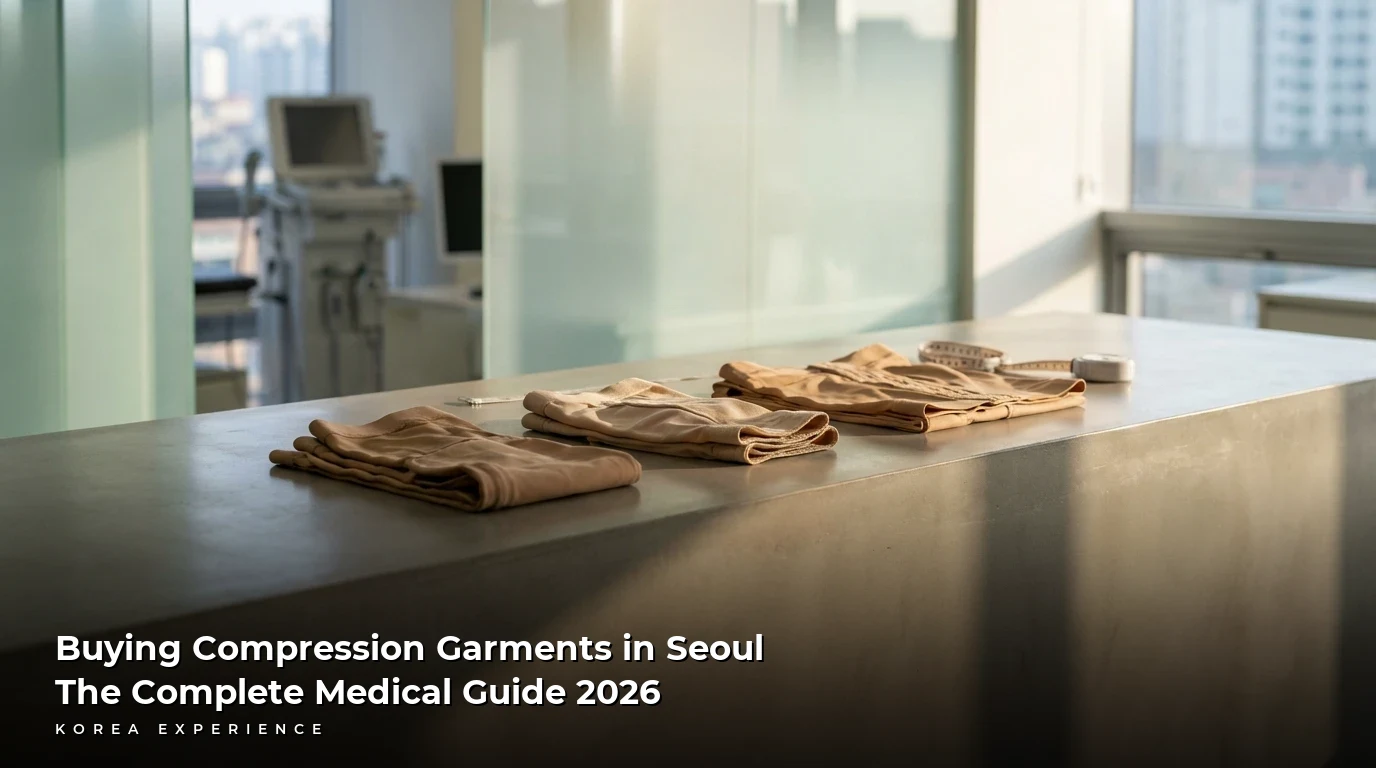
If you are looking for where to buy compression garments in Seoul, the most reliable locations are the specialized medical supply stores located in the Apgujeong and Sinsa-dong districts of Gangnam, specifically near plastic surgery clinics. For general compression stockings or travel socks, Jongno 5-ga's Medical Instrument Street offers the widest selection at wholesale prices. Most plastic surgery clinics will offer to sell them to you directly, but purchasing independently from a medical supply store often saves you 20% to 40% while providing a wider range of sizing options.
The short answer: For post-surgery garments (liposuction, tummy tucks), visit the specialized medical supply shops near Apgujeong Station (Line 3, Exit 4). For general compression (DVT, varicose veins), head to the wholesale medical stores at Jongno 5-ga Station (Line 1, Exit 5).
Key Takeaways
- 1Specialized stores in Gangnam offer custom fitting for post-op patients
- 2Buying directly from a medical supply store saves 30-₩50k vs. clinics
- 3Jongno 5-ga is the best hub for generic compression stockings and socks
- 4Korean sizes run 1-2 sizes smaller than US/EU standards
Why Buying Compression Garments in Seoul is Different
Seoul is arguably the plastic surgery capital of the world, and because of this, the infrastructure for post-operative care is exceptionally developed. Unlike in many Western countries where you might have to order medical-grade shapewear online and hope it fits, Seoul offers a tactile, service-oriented experience.
In 2026, the market for medical garments in Korea has evolved to include high-tech fabrics that offer antimicrobial properties and cooling effects—essential for Korea's humid summers. However, navigating this market as a foreigner can be tricky due to language barriers and the distinct separation between "fashion shapewear" and "medical compression."
When you buy in Seoul, you are rarely just buying a product; you are buying a fitting service. Most specialized shops in Gangnam employ staff who are experienced in dealing with post-surgical swelling (edema). They know exactly how much a garment should stretch to accommodate the initial swelling while still providing the necessary 20-30 mmHg or 30-40 mmHg of pressure required for proper healing.
📊 Market Insights
Primary Location: The "Gangnam Belt" (Apgujeong & Sinsa)
If you have undergone liposuction, a tummy tuck, or breast augmentation in Korea, you will likely be recovering in Gangnam. This area is home to over 500 clinics, and naturally, the supporting businesses have clustered here.
The area specifically between Apgujeong Station (Line 3) and Sinsa Station (Line 3) is the epicenter. Here, you will find "Medical Device Stores" (Eu-ryo-gi-sa) tucked away in the basements or second floors of buildings surrounding the major clinics.
What to Expect in Gangnam Stores
These shops are not typical retail spaces. They often look clinical, with fitting rooms designed for patients who may still have drains or bandages. The staff are accustomed to seeing fresh surgical wounds and will help you into the garment—a process that can be physically difficult to do alone immediately after surgery.
- Average Cost: ₩100,000 to ₩250,000 ($75 - $190 USD) for a full-body suit.
- Service: Professional measuring and fitting included.
- Turnaround: Immediate for standard sizes; 1-2 days for custom alterations.
Gangnam Medical Supply Hub(Gangnam Uiryogi)
Medical Disclaimer
Always consult your surgeon before purchasing a garment independently. The level of compression (mmHg) and the positioning of zippers or seams can critically affect your surgical results and blood circulation.
Secondary Location: Jongno 5-ga Medical Street
For those who do not need post-liposuction garments but are looking for compression stockings for Deep Vein Thrombosis (DVT), varicose veins, or simply for comfortable travel, Jongno 5-ga is the place to go.
Located north of the Han River, this area is famous for its wholesale pharmacy street. Surrounding the large pharmacies are dozens of medical instrument shops selling everything from wheelchairs to blood pressure monitors and, of course, compression stockings.
Why Go to Jongno?
The primary advantage here is price and variety of brands. You will find major international brands like Sigvaris and Jobst alongside high-quality domestic Korean brands. Prices here can be 30% to 50% lower than in Gangnam or department stores.
- Average Cost: ₩25,000 to ₩60,000 ($19 - $45 USD) for knee-high or thigh-high stockings.
- Vibe: Chaotic, busy, wholesale market atmosphere.
- Language: Less English support than Gangnam; having a picture of what you want is helpful.
📖 How to Shop at Jongno 5-ga
Step 1: Arrival
Take Subway Line 1 to Jongno 5-ga Station and exit via Exit 5.
Step 2: Locate Stores
Walk straight for 50 meters. You will see shops with wheelchairs and crutches displayed outside.
Step 3: Ask for Compression
Show a photo of compression stockings or say 'Ap-bak-sTa-king' (Compression Stocking).
Step 4: Check Pressure
Verify the mmHg on the box. 20-30 mmHg is standard medical grade; 15-20 mmHg is for mild swelling.
Clinic vs. Retail Store: The Price and Service Comparison
Many travelers wonder if they should just buy the garment from their clinic. While convenient, it is rarely the most cost-effective option. However, for major surgeries, the convenience may outweigh the cost.
If you are already spending significant money on surgery, check out our guide on best plastic surgery clinics for foreigners in Seoul to see which ones include garments in their surgery packages.
💵 Cost Comparison: Clinic vs. Outside Store
Includes fitting assistance, guaranteed doctor approval, zero travel time.
Requires travel, wider brand selection, same medical quality.
The "Clinic Markup" Explained
Clinics often charge a premium because they keep stock on hand and handle the sterilization and washing of the first garment you wear immediately post-op. If you need a second garment (highly recommended for hygiene purposes as you will wear it 24/7 for weeks), buying the second one from an external store is a smart financial move.
Understanding Korean Sizes and Measurements
This is the most critical section for international visitors. Korean sizing is not consistent with Western sizing. A size "Medium" in the US or Europe is often a "Large" or "Extra Large" in Korea.
However, medical compression garments are not sold by "S, M, L" labels alone. They are sold by circumference measurements.
Key Measurements You Must Know
Before you shop, or when you are at the store, you will need measurements for:
- Thigh Circumference: Measured at the widest part.
- Calf Circumference: Measured at the widest part.
- Ankle Circumference: Measured at the narrowest part (critical for graduated compression).
- Waist and Hips: For abdominal binders and full body suits.
"Never buy a compression garment in Korea based on your clothing size. I have seen patients buy a 'Large' because they wear 'Large' shirts, and it cuts off their circulation. Always, always use a tape measure. If you are between sizes, medical staff usually recommend sizing up for the first week post-op due to swelling, then sizing down later."
Types of Garments Available in Seoul
Seoul's market caters to specific procedures. Here is what you can find and the approximate price points for 2026.
1. Facial Bands (Ddaeng-gimi)
Used for V-line surgery, jaw reduction, or facial liposuction.
- Where to buy: Pharmacies in Gangnam or specialized stores.
- Price: ₩15,000 - ₩45,000.
- Note: These are widely available even in larger Olive Young stores sometimes, but medical-grade ones from pharmacies offer better tension.
2. Arm Sleeves (Boleros)
Used for arm liposuction (brachioplasty). These often connect across the back to prevent slipping.
- Where to buy: Specialized stores only.
- Price: ₩80,000 - ₩120,000.
- Fit Tip: Ensure the underarm area is not digging in, as this can damage lymph nodes.
3. Abdominal Binders
Used for tummy tucks or abdominal liposuction.
- Where to buy: Medical supply stores near major hospitals (Asan Medical Center, Samsung Medical Center) or Gangnam specialized shops.
- Price: ₩40,000 - ₩90,000.
- Design: Look for ones with multiple velcro panels for adjustable tension.
4. Full Body Suits (Fajas)
The standard for lower body liposuction.
- Where to buy: Specialized Gangnam stores.
- Price: ₩120,000 - ₩250,000.
- Feature: Many Korean brands feature a "crotchless" or zipper design for bathroom ease, which is essential.
Custom-Made Garments: The Ultimate Fit
For patients with unique body proportions (e.g., a very small waist but wide hips, typical of BBL patients), off-the-rack garments may not work. Seoul offers rapid custom manufacturing.
Several shops in Apgujeong offer a "rush" custom service. They will measure you in the morning and have a custom-sewn garment ready by the next afternoon. This service typically costs an additional 30,000 to ₩50,000 but is worth it to prevent skin necrosis from ill-fitting pressure points.
Custom Garment Process
Measurement
Visit store for detailed 15-point measurement.
Fabric Selection
Choose between 'Powernet' (strong) or 'Coolmax' (breathable).
Fitting
Try on the garment. Adjustments are made immediately on-site.
Online Shopping Options: Coupang and Gmarket
If you are staying in Korea for a longer period or have a Korean friend to help, ordering online is significantly cheaper.
Coupang (Korea's Amazon) has a vast selection of medical garments. Search for:
- "Uiryoyong Apbak Star-king" (Medical Compression Stockings)
- "Liposuction Garment" (often searchable in English, or "Jibang-hubeeb bok")
However, the downside is the inability to try them on. Returns in Korea are fast, but if you are recovering from surgery, you cannot wait 2 days for a return and exchange. We generally recommend online shopping only for replacement garments once you already know your exact size and brand preference.
If you are ordering to your accommodation, make sure you know the difference between standard hotels and other stays. Check our guide on Airbnb vs. Recovery Hotels for Medical Tourists to ensure you can receive packages easily.
Tax Refunds and Payment
Medical compression garments purchased at specialized medical supply stores may be eligible for tax refunds if the store is a participating "Tax Free" merchant, but this is less common than in department stores.
- Payment: All specialized stores accept international credit cards (Visa, Mastercard).
- Insurance: International travel insurance usually reimburses these costs if prescribed by a doctor for a condition (like DVT), but you must pay upfront. Post-cosmetic surgery garments are almost never covered by insurance.
- Receipts: Always ask for a "Yeong-su-jeung" (Receipt) and a transaction detail sheet if you plan to claim it with your insurance back home.
📋 Payment & Logistics
Washing and Maintenance of Korean Garments
The water in Korea is generally soft, but the detergents can be harsh. To maintain the elasticity of your expensive garment:
- Hand wash only with cold water.
- Use a neutral detergent (Wool Shampoo is a common Korean brand available at any convenience store).
- Never use a dryer. Korean apartments usually have drying racks; use them. Heat destroys the elastic fibers (Lycra/Spandex).
- Dry flat in the shade.
If you are staying in a recovery hotel or an Airbnb, ensure you have space to dry these garments, as they can take 12-24 hours to dry completely due to the thick fabric. This is another reason why buying two garments is essential.
Best Brands to Look For
While you will find international giants, keep an eye out for these domestic Korean leaders which offer high quality at lower price points:
- Marena: Technically international, but the dominant player in the Korean post-op market. High quality, comfortable, higher price.
- Lipomed: Another premium standard often sold in clinics.
- Local "Shop Brands": Many of the medical supply stores in Apgujeong manufacture their own "house brand" garments. These are often unbranded but are made of excellent, durable Powernet fabric and are significantly cheaper (₩80,000 vs ₩150,000). Do not dismiss them; they are often made in the same factories as the premium brands.
Brand Comparison
| Feature | Marena (Import) | Korean House Brand | Pharmacy Generic |
|---|---|---|---|
| Price | $$$ | $$ | $ |
| Durability | High | High | Medium |
| Custom Fit | No | Yes | No |
| Comfort | Excellent | Good | Basic |
Navigating the Language Barrier
While many doctors speak English, the staff at medical supply stores might not. Here are essential phrases to screenshot or learn:
- "I had liposuction." = Ji-bang hu-beeb su-sul haess-eo-yo.
- "I need a compression garment." = Ap-bak-bok i pir-yo-hae-yo.
- "Please measure me." = Chi-su jae-ju-se-yo.
- "It is too tight." = Neo-mu kkway-kki-eo-yo.
- "It is too loose." = Neo-mu heol-leong-hae-yo.
If you are struggling with communication, Papago (the Naver translation app) is far superior to Google Translate for Korean-English medical terminology.
Combining Your Trip with Recovery
Buying your garment is just step one. Recovery in Seoul involves eating well to reduce swelling (pumpkin juice is the local secret!) and getting around comfortably.
For transport back to your accommodation with your new garment (and potentially after surgery), avoid the subway during rush hour. Taxis or private vans are best. Check out our comparison of Airport Limousine Bus vs AREX Express Train if you are planning your departure logistics, as traveling with compression garments and luggage can be cumbersome.
Furthermore, swelling reduction is heavily tied to diet in Korean culture. After you pick up your garment, you might want to find places serving pumpkin porridge or light, healthy meals. Our guide to best Korean healing foods for surgery recovery covers exactly what to eat to fit into that new garment faster.
Conclusion
Finding the right compression garment in Seoul is a straightforward process if you know where to look. For post-surgical needs, the Apgujeong/Sinsa area is your undisputed best option due to the expertise of the staff and the ability to get custom fittings. For general medical compression, Jongno 5-ga offers the best value.
Don't underestimate the importance of this purchase. A high-quality, well-fitted garment is just as important as the surgery itself for determining your final result. By buying locally in Seoul, you ensure a better fit, save money compared to clinic prices, and have access to professional advice that you simply cannot get from an online order.
❓ Frequently Asked Questions
Have more questions?Contact us →
About the Author
Korea Experience Team
Written by the Korea Experience editorial team - experts in Korean medical tourism, travel, and culture with years of research and firsthand experience.
⚠️ Medical Disclaimer
The information provided on this website is for general informational purposes only and does not constitute medical advice. Always consult with qualified healthcare professionals before making any medical decisions.
Explore more in Medical Tourism
World-class medical procedures at competitive prices. From plastic surgery and dermatology to dental care and health checkups — your complete guide to medical tourism in Korea.
Browse All Medical Tourism ArticlesContinue Reading
Explore more articles you might find interesting
Complete 2026 guide to recovery hotels in Seoul. Compare prices (₩100k-500k/night), find nursing services, and book the perfect aftercare stay.
Discover Korea's best underground shopping streets. Save up to 70% on fashion in Goto Mall, Gangnam, and Busan with our 2026 guide to prices and locations.
Discover the safest recovery hotels in Gangnam for post-surgery care, featuring adjustable beds, 24/7 concierge, and clinic proximity for 2026 travelers.
Comprehensive guide to mental health resources for medical tourists in Korea. Find English-speaking counselors, recovery centers, and costs in 2026.
Compare Seoul's top medical districts: Gangnam for value, Apgujeong for expertise, and Cheongdam for luxury. Find the right fit for your 2026 surgery.
Discover the top Korean recovery foods for medical tourists. From pumpkin porridge for deswelling to abalone for stamina, including prices and locations.